When do women start menopause: ages, stages, and what to expect
TL;DR: Menopause is 12 straight months without a period. The average age in the United States is 51, and the normal range runs 45 to 55. Perimenopause, the transition into it, usually starts 4 to 10 years earlier, often in the mid-40s. Genetics, smoking, and certain medical treatments can move that timing by years.
What is menopause in women?
Menopause is a single day, not a season. It is defined as the moment 12 consecutive months have passed since a woman's last menstrual period, with no other medical explanation for the absence [1]. Everything after that 12-month mark is postmenopause.
What drives it is the ovaries winding down. The follicles that produce eggs and estrogen gradually run out. Once follicle counts drop low enough, estrogen and progesterone production falls sharply, cycles stop, and the body settles into a new hormonal baseline.
Being precise here matters, because "menopause" gets used loosely to mean the entire midlife hormonal transition, which spans decades. The clinical picture has three distinct phases: perimenopause (the transition in), menopause (the 12-month marker), and postmenopause (everything after). Most of what people call "menopause symptoms," the hot flashes, mood swings, and irregular periods, actually happen during perimenopause, before the official marker is even reached.
Menopause is a normal biological event, not a disease. But the hormonal changes carry real consequences for bone density, cardiovascular risk, and metabolism, which is why knowing your own timeline is useful.
What is the average age for menopause to start?
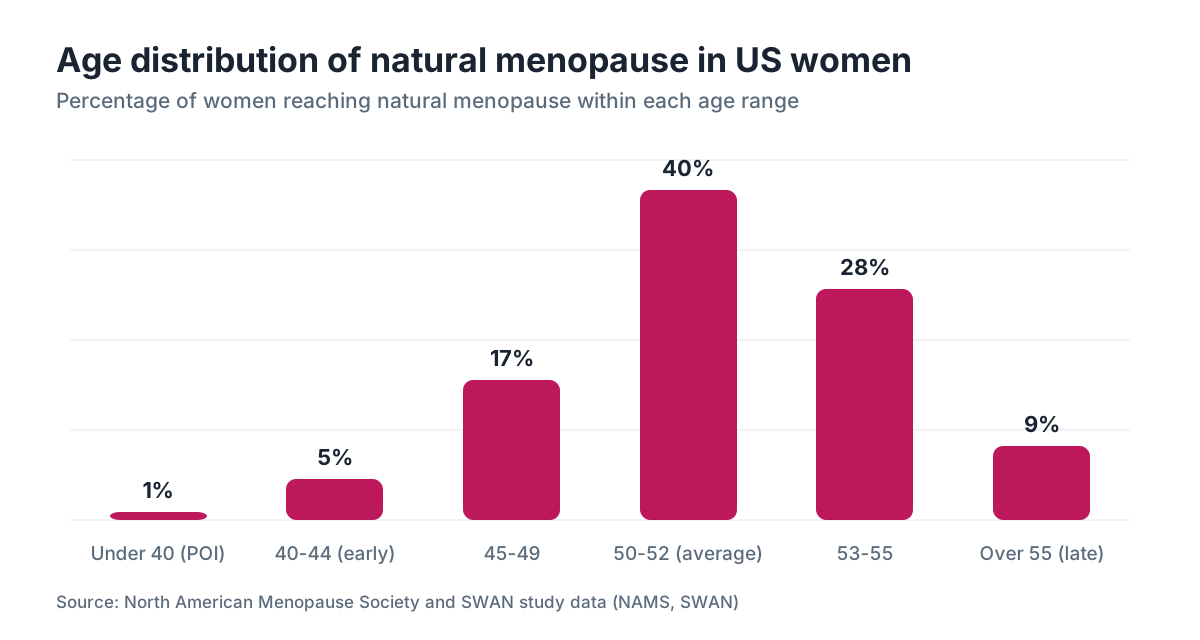
The average age of natural menopause in the United States is 51 [1]. That figure comes from large population studies and is the number cited by the North American Menopause Society (NAMS) and the National Institute on Aging.
The normal range is wider than most women expect. Natural menopause anywhere from ages 45 to 55 sits within the typical window [2]. Reaching it before 45 is called early menopause. Before 40 is primary ovarian insufficiency (POI), a separate clinical condition that affects roughly 1% of women [3].
There is real variation by ethnicity. The Study of Women's Health Across the Nation (SWAN), a multi-site study that followed more than 3,000 women for over two decades, found that Black women reached menopause about 8.5 months earlier than white women on average, Hispanic women trended earlier too, and Japanese-American women in the cohort reached it slightly later [4]. The differences are modest but consistent, and researchers point to genetics, body composition, and environmental exposures.
So if someone tells you menopause "happens at 51," that is accurate as a population average, useless as a personal prediction. Your mother's age at menopause is probably the single best clue you have.
What age does perimenopause start, and how long does it last?
Perimenopause, sometimes called the menopausal transition, is the phase when the ovaries begin their gradual wind-down but have not stopped. Estrogen production becomes erratic rather than cyclical, and that irregularity produces most of the symptoms people call "menopause" [2].
For most women, perimenopause starts in the mid-to-late 40s, though it can begin in the late 30s. The average duration is about 4 years, with a range from a few months to more than 10 years [11]. The transition is officially underway when cycles become noticeably irregular, meaning cycles that run 7 or more days longer or shorter than your usual pattern, or when you skip 60 or more days between periods.
Symptoms during perimenopause can hit hard precisely because estrogen is fluctuating, not simply declining. On days estrogen surges, some women get breast tenderness or bloating. On days it drops, hot flashes and broken sleep arrive. This seesaw is different from postmenopause, when estrogen settles at a consistently low level and the acute symptoms often ease.
One thing catches many women off guard. You can still get pregnant during perimenopause. Ovulation continues, just unpredictably, so contraception stays relevant until you have gone 12 full months without a period.
For a closer look at what influences when your own transition begins, the perimenopause age guide covers what the research shows.
What factors make menopause start earlier or later?
Genetics is the strongest predictor. If your mother or older sisters went through menopause early, your odds of the same rise considerably. This holds across studies, though no single gene has been pinned down as the driver.
Smoking is the most modifiable risk factor for early menopause. Current smokers reach menopause 1 to 2 years earlier than nonsmokers on average, a finding replicated across multiple large cohorts [4]. Tobacco's toxins damage ovarian follicles directly and interfere with estrogen metabolism.
Body weight has a tangled relationship with timing. Very low body fat, common in women with a history of eating disorders or extreme endurance training, is tied to earlier menopause. Higher body fat can delay it slightly, because fat tissue converts androstenedione into estrone, a weaker estrogen that partly sustains the cycle. Neither extreme is a goal, but that mechanism explains the association.
Medical and surgical factors can accelerate the timeline dramatically. Removal of both ovaries (bilateral oophorectomy) causes immediate surgical menopause at any age. Chemotherapy and pelvic radiation can damage follicles and trigger POI or early menopause, depending on age and dose [3].
Autoimmune conditions, including thyroid disease and rheumatoid arthritis, are linked to earlier ovarian aging in some research. Chromosomal conditions like Turner syndrome hit the ovaries directly. Nulliparity (never having been pregnant) shows a modest association with earlier menopause in some studies, weaker than smoking or genetics.
What does not appear to move timing much: birth control use, age at first period, or diet, at least not in ways researchers have isolated cleanly.
What are the early signs that menopause is approaching?
The earliest reliable signal is a change in your cycle. Periods arriving more than a week early or late, heavier or lighter bleeding, or skipped months are the hallmark of the menopausal transition [2]. Many women first notice their cycles shortening in their early-to-mid 40s, a sign the follicular phase is compressing.
Hot flashes and night sweats are the most recognized early signs. Vasomotor symptoms affect roughly 75% of women going through the transition in the US [1]. They can start years before the last period, and for about 10 to 15% of women they continue for more than a decade afterward.
Sleep disruption often shows up before hot flashes do. Many women report waking at 3 or 4 a.m. with no obvious flash, which may reflect estrogen's role in sleep architecture independent of vasomotor events.
Vaginal dryness, less lubrication during sex, and urinary urgency or frequency can appear in perimenopause and usually worsen in postmenopause. Grouped clinically as genitourinary syndrome of menopause (GSM), these are among the most undertreated parts of the transition.
Mood changes, brain fog, and rising anxiety get reported by a large share of perimenopausal women. Whether these come from hormonal shifts directly, from wrecked sleep, or both is genuinely hard to separate in any single woman.
For a full breakdown of the symptom picture and how it changes over time, the menopause overview goes deeper.
How do doctors confirm menopause?
For most women over 45 with classic symptoms and irregular or absent periods, menopause is a clinical diagnosis. No blood test is required. You count 12 months without a period, and the diagnosis is made [1].
Blood tests earn their place in specific situations. Follicle-stimulating hormone (FSH) rises as the ovaries stop responding to hormonal signals. An FSH consistently above 30 mIU/mL is associated with menopause, but it is not diagnostic alone, because FSH swings widely during perimenopause. One elevated reading can mislead you [5].
Estradiol below 30 pg/mL, alongside elevated FSH and absent periods, adds supporting evidence. Anti-Mullerian hormone (AMH), which reflects remaining ovarian reserve, sometimes gets used in younger women being worked up for POI.
For women under 45 with symptoms, testing matters more, because the differential includes thyroid disorders, pregnancy, and primary ovarian insufficiency, each with different implications and treatments [12]. The Endocrine Society recommends that women diagnosed with POI before 40 get a thorough evaluation, including karyotype testing in some cases, given the health risks involved [3].
If you are on hormonal contraception, diagnosing perimenopause is harder because the pill or hormonal IUD masks cycle changes. Stopping contraception briefly to watch cycle behavior, or measuring FSH during a hormone-free interval, is the usual approach.
What is premature menopause and early menopause?
Premature menopause means ovarian failure before age 40. The preferred clinical term now is primary ovarian insufficiency (POI) rather than "premature ovarian failure," because the ovaries do not always shut down completely. About 5 to 10% of women with POI still have intermittent ovarian function, and even occasional ovulation, years after diagnosis [3].
POI affects roughly 1 in 100 women under 40 and about 1 in 1,000 under 30 [3]. The Endocrine Society lists causes including chromosomal conditions (such as Turner syndrome and Fragile X premutation), autoimmune disease, and medical treatments. In many cases the cause is never found.
Early menopause is different from POI. It refers to natural menopause between ages 40 and 44. Both POI and early menopause carry higher risks than menopause at the average age: more osteoporosis, because bones lose estrogen protection for extra years, higher cardiovascular risk, and, in some studies, a modestly raised risk of cognitive decline [6]. Hormone therapy is generally recommended for women with POI at least until the average age of menopause (around 51), unless a specific contraindication exists [3].
Surgical menopause, from removal of both ovaries, can happen at any age. Unlike natural menopause, it is abrupt. Estrogen drops from normal premenopausal levels to near zero within 24 hours, and symptoms can be severe. Women who go through surgical menopause young face the same long-term risks as POI and usually benefit from hormone therapy.
How does menopause affect bone density, heart health, and metabolism?
Estrogen protects bone. When it drops at menopause, bone breakdown outpaces bone formation, and women can lose 1 to 2% of bone mass per year in the first several years of postmenopause. Some women lose up to 20% of their bone density in the 5 to 7 years after their last period [6]. That is why osteoporosis hits postmenopausal women hardest, and why a bone density test is recommended for women over 65, or earlier for those with risk factors.
Heart disease rates in women climb sharply after menopause. Before the transition, women have lower rates than age-matched men. After it, that gap narrows fast. Estrogen shapes cholesterol metabolism, arterial elasticity, and inflammatory markers, so losing it matters for cardiovascular risk [7].
The metabolic changes are real and maddening. Insulin sensitivity tends to fall, fat shifts from hips and thighs to the abdomen, and resting metabolic rate slows. Weight creeps up even without changes to diet or activity. The average woman gains roughly 1.5 pounds per year during the transition, and where that weight lands shifts toward the belly [8].
Bad sleep makes all of it worse. Poor sleep worsens insulin resistance, raises cortisol, and pushes up appetite hormones like ghrelin. For women dealing with significant weight concerns alongside menopause symptoms, GLP-1 receptor agonists have drawn interest, and the semaglutide for weight loss page covers what the evidence shows for women in this stage.
What treatment options exist for menopause symptoms?
Hormone replacement therapy (HRT), more precisely called menopausal hormone therapy (MHT), is the most effective treatment for hot flashes and genitourinary symptoms. For women under 60 or within 10 years of their last period who have no contraindications, the consensus from NAMS, the Endocrine Society, and the British Menopause Society supports its use [1][7].
HRT takes several forms. Estrogen-only therapy is for women who have had a hysterectomy. Women with an intact uterus need progestogen added to protect the uterine lining. The progesterone options differ, and those differences matter because not all progestogens carry the same risk profile. The progesterone article explains how bioidentical progesterone compares to synthetic progestins here.
Delivery method matters too. Transdermal estrogen (patch, gel, or spray) does not carry the elevated clot risk tied to oral estrogen, because it skips first-pass liver metabolism [9]. The estrogen patch page has the specifics on options, doses, and use.
For women who cannot or would rather not use systemic hormones, FDA-approved non-hormonal options include fezolinetant (Veozah), a neurokinin B antagonist approved in 2023 specifically for hot flashes, and low-dose paroxetine (Brisdelle). Neither treats the genitourinary or skeletal effects of estrogen loss the way systemic hormones do.
Local vaginal estrogen (cream, ring, or tablet) treats genitourinary symptoms with minimal systemic absorption and is considered safe for many women who cannot take systemic hormones, including most breast cancer survivors, per NAMS guidance [1].
If you are sorting through HRT options and want clinical support, WomenRx offers telehealth consultations with clinicians who specialize in menopause hormone management, so you are not stuck with a provider who sees menopause twice a year.
For a full breakdown of HRT types, risks, and benefits, see the hormone replacement therapy guide.
How is postmenopause different from perimenopause?
Postmenopause starts after the 12-month mark and lasts the rest of your life. The good news comes first: the hormonal volatility of perimenopause is over. Estrogen settles at a consistently low (not zero, but low) level, and for many women the acute hot flashes ease, sometimes a lot.
The long-term health effects, though, accumulate in postmenopause. Bone loss continues, more slowly after the initial rapid phase. Cardiovascular risk keeps rising. Genitourinary symptoms often get worse over time without treatment, because vaginal and urethral tissues grow progressively more atrophic.
Postmenopause also brings cognitive changes many women find harder to say out loud. Verbal memory, processing speed, and concentration can shift. Whether that comes from estrogen loss, aging, poor sleep, or some mix is still an open research question. The SWAN study found perimenopausal women scored lower on certain memory tests than premenopausal women, with some but not full recovery in postmenopause [4].
Think of postmenopause less as "after menopause" and more as a new hormonal chapter with its own maintenance list: bone density monitoring, cardiovascular screening, metabolic tracking, and an ongoing conversation about whether hormone therapy (or a local vaginal option) still makes sense for you.
Can you predict when your own menopause will start?
Not to the year, but within a reasonable range. Your mother's age at menopause is the best single predictor you have. If she reached natural menopause at 48, you likely land toward the earlier end of the normal range. If she was 55, you probably have more time.
AMH (anti-Mullerian hormone) testing gives a rough read on ovarian reserve, and some researchers have built predictive models pairing AMH with age. A 2020 study in the Journal of Clinical Endocrinology and Metabolism found AMH a reasonable predictor of time to menopause in late-reproductive-age women, but the confidence intervals are wide enough that it is not a reliable personal forecast [5].
The most practical move is tracking your own cycle changes starting in your early 40s. When cycles start shortening or getting less predictable, you are likely entering perimenopause. That is your cue to talk with a clinician about symptom management, a bone health baseline, and cardiovascular risk factors, whether you are 43 or 49.
For a focused look at the age ranges and what drives them, when does menopause start and menopause age have more on population data and individual predictors.
Frequently asked questions
What is menopause in women?
Menopause is the point when a woman has gone 12 consecutive months without a menstrual period, marking the end of reproductive function. It is driven by the ovaries running low on follicles and sharply cutting estrogen and progesterone production. The average age in the US is 51. Everything before that 12-month mark is perimenopause; everything after is postmenopause.
What is the earliest age menopause can start?
Natural menopause before age 40 is called primary ovarian insufficiency (POI) and affects about 1% of women. Between 40 and 44 it is called early menopause. Removal of both ovaries can cause menopause at any age. Women with POI or early menopause face higher risks for osteoporosis and heart disease and generally benefit from hormone therapy until at least age 51.
How long does perimenopause last before menopause?
The average duration is about 4 years, but the range is wide: some women transition in under a year, others live with a decade of perimenopausal changes. It usually starts in the mid-to-late 40s. The transition ends when 12 consecutive period-free months are reached. During perimenopause, ovulation is erratic but not gone, so pregnancy is still possible.
Does smoking affect when menopause starts?
Yes. Current smokers reach menopause 1 to 2 years earlier than nonsmokers on average. Tobacco's toxins damage ovarian follicles directly and disrupt estrogen metabolism. This is the most clearly modifiable risk factor for early menopause. Former smokers show reduced risk compared to current smokers, though the effect of quitting on ovarian aging is less studied than its cardiovascular benefits.
Can a blood test confirm menopause?
For women over 45 with typical symptoms and absent periods, menopause is a clinical diagnosis and no blood test is required. FSH above 30 mIU/mL and estradiol below 30 pg/mL are supporting evidence but not diagnostic alone, because both fluctuate during perimenopause. Blood testing is most useful in women under 45, where ruling out pregnancy, thyroid disease, and primary ovarian insufficiency matters.
What is the difference between perimenopause and menopause?
Perimenopause is the transitional phase when cycles turn irregular and symptoms like hot flashes and broken sleep begin. Menopause is a single point in time: 12 consecutive months without a period. Perimenopause can last 4 to 10 years before that marker. Most symptoms people attribute to menopause actually happen during perimenopause, while estrogen is still present but erratic.
Does menopause affect weight and metabolism?
Yes. Insulin sensitivity drops, fat shifts from the hips toward the abdomen, and resting metabolic rate slows. Women gain roughly 1.5 pounds per year during the transition on average. Disrupted sleep compounds it by raising cortisol and ghrelin. These changes come partly from estrogen loss and partly from age-related factors, which makes maintaining weight genuinely harder after menopause.
Does race or ethnicity affect menopause timing?
Yes, modestly. SWAN study data show Black women reached menopause about 8.5 months earlier than white women on average. Hispanic women also trended earlier, Japanese-American women slightly later. The differences are statistically consistent but small in absolute terms. Genetics, body composition, and environmental exposures are thought to contribute. No single ethnicity has a dramatically different profile that should change clinical management.
Is hormone therapy safe for menopause symptoms?
For women under 60 or within 10 years of their last period without specific contraindications, NAMS and the Endocrine Society support hormone therapy as safe and effective for hot flashes and genitourinary symptoms. Transdermal delivery carries lower clot risk than oral estrogen. Women with an intact uterus need progestogen added. An individual risk assessment with a knowledgeable clinician is the right starting point.
What happens to bones during and after menopause?
Estrogen protects bone. After menopause, bone breakdown outpaces formation, and women can lose 1 to 2% of bone mass per year in the first several years of postmenopause. Some women lose up to 20% of their total bone density in the 5 to 7 years after their last period. This accelerated loss is the main reason osteoporosis disproportionately affects postmenopausal women and why baseline bone density screening matters.
Can menopause cause anxiety and depression?
Perimenopausal women have higher rates of depressive symptoms than premenopausal women, with some studies showing a two-to-threefold increased risk of clinically significant depression during the transition. Whether this comes directly from estrogen fluctuation, from disrupted sleep, or from midlife stressors is hard to separate. Hormone therapy helps some women; others do better with antidepressants, therapy, or a combination.
What is surgical menopause?
Surgical menopause happens when both ovaries are removed (bilateral oophorectomy), sending estrogen from normal premenopausal levels to near zero within 24 hours. Unlike natural menopause, it is abrupt. Hot flashes and other symptoms can be severe. Women who undergo surgical menopause young face the same long-term bone and cardiovascular risks as primary ovarian insufficiency and typically benefit from hormone therapy.
Does taking birth control pills mask menopause symptoms?
Yes. Hormonal contraception suppresses the natural cycle and can mask irregular bleeding, the earliest signal of perimenopause. Women on the pill may not notice cycle changes that would otherwise flag the transition. FSH can be measured during a hormone-free interval for a rough read on ovarian status, but interpreting it takes clinical context. Menopause cannot be officially confirmed while on hormonal contraception.
At what age should women start preparing for menopause?
The mid-to-late 30s is a reasonable time to set baselines: a lipid panel, blood pressure, a bone density conversation with your doctor, and awareness of your cycle patterns. Perimenopause can begin as early as the late 30s. Starting a relationship with a menopause-informed clinician before symptoms turn disruptive means you decide from information rather than desperation when things shift.
Sources
- North American Menopause Society (NAMS), Menopause 101: A primer for the perimenopausal years
- National Institute on Aging, What is menopause?
- Endocrine Society, Primary Ovarian Insufficiency clinical practice guideline
- Study of Women's Health Across the Nation (SWAN), SWAN overview and publications
- Journal of Clinical Endocrinology and Metabolism, AMH as a predictor of time to menopause (2020)
- Bone Health and Osteoporosis Foundation, Osteoporosis fast facts
- American Heart Association, Menopause and cardiovascular disease risk
- National Heart, Lung, and Blood Institute, Menopause and weight gain
- FDA, Estradiol transdermal prescribing information and labeling guidance
- NIH Office of Research on Women's Health, Menopause overview
- MedlinePlus (National Library of Medicine), Menopause