What is menopause? symptoms, stages, and what to do
TL;DR: Menopause is the point when a woman has gone 12 consecutive months without a menstrual period, marking the end of ovarian hormone production. The average age in the U.S. is 51. The years leading up to it, called perimenopause, can last 4 to 10 years and cause most of the symptoms women blame on 'going through menopause.'
What exactly is menopause?
Menopause is a single point in time, not a phase. It is defined as 12 consecutive months without a menstrual period, with no other medical cause. That 12-month mark is when a woman is officially in menopause. Before that point she is in perimenopause. After it she is postmenopausal.
The biology is straightforward. The ovaries run out of functional follicles, so estrogen and progesterone production drops sharply and permanently. The pituitary gland responds by pumping out follicle-stimulating hormone (FSH) at much higher levels, trying to push the ovaries back to work. FSH above 40 mIU/mL on two tests taken at least a month apart is consistent with menopause, though no single lab value makes the diagnosis on its own [1].
The word 'menopause' comes from the Greek for month (men) and cessation (pausis). Every woman with functioning ovaries reaches it if she lives long enough. It is a biological transition, not a disease. That said, the hormonal shift it produces is real, measurable, and for many women profoundly disruptive.
What are the three stages: perimenopause, menopause, and postmenopause?
There are three distinct stages, and confusing them is one reason women feel so lost talking to their doctors.
Perimenopause is the transition. Ovarian function becomes erratic. Cycles shorten, then lengthen, then turn unpredictable. Estrogen swings wildly rather than declining in a smooth line, which is exactly why symptoms can be so intense during this stage. The North American Menopause Society (NAMS) states perimenopause typically lasts 4 to 8 years, though some women experience it for as long as 10 years [2]. You can get pregnant during perimenopause. Contraception matters until 12 months after the last period.
Menopause itself is that single retrospective moment: you look back and realize it has been 12 months since your last period. Most women reach this point between ages 45 and 55, with the U.S. median at 51 [3].
Postmenopause is everything after. Hormone levels settle at a new, lower baseline. Symptoms often ease over time, though some women have hot flashes for 10 or more years past their last period. The long-term concerns, bone loss and cardiovascular risk, come to the front in this stage.
See our deeper look at perimenopause age and when does menopause start if you're trying to figure out where you are right now.
What are the most common symptoms of menopause?
The symptom list is long and genuinely varied. Some women sail through with only mild changes. Others describe perimenopause as derailing their careers, marriages, and sense of self. Both experiences are real.
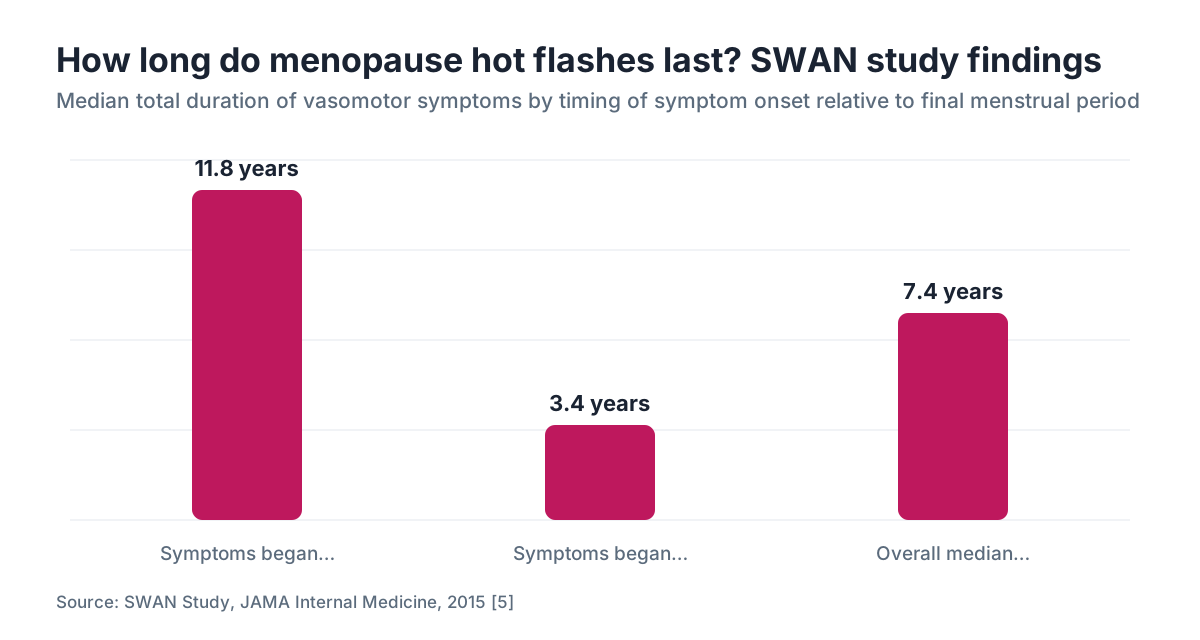
Vasomotor symptoms, hot flashes and night sweats, are the most studied. About 75 to 80 percent of women in the U.S. experience them [4]. The Study of Women's Health Across the Nation (SWAN), which followed more than 3,300 women for over two decades, found the median total duration of vasomotor symptoms is 7.4 years, and women who start having them before their final period tend to have them longer [5].
Genitourinary syndrome of menopause (GSM) is probably the most underreported category. It covers vaginal dryness, thinning of vaginal tissue, urinary urgency, and pain with sex. Unlike hot flashes, GSM gets worse over time without treatment rather than better.
Other common symptoms include:
- Sleep disruption (often tied to night sweats, but sometimes on its own)
- Mood changes, irritability, and rising anxiety
- Brain fog and trouble concentrating
- Joint pain
- Weight gain, especially around the abdomen
- Changes in libido
- Hair thinning
- Skin dryness
Not every symptom traces directly to low estrogen. Some, like poor sleep, are downstream effects. Fix the night sweats, and sleep often improves on its own.
At what age does menopause happen?
The average age of natural menopause in the United States is 51, according to data from the Study of Women's Health Across the Nation [3]. The normal range runs from roughly 45 to 55.
Menopause before age 40 is called premature ovarian insufficiency (POI), affecting about 1 in 100 women. Between ages 40 and 45 it is called early menopause [1]. Both carry higher cardiovascular and bone health risks than natural menopause at the median age, and both generally call for hormone therapy until at least age 51 regardless of whether the woman has symptoms.
Surgical menopause, which happens when both ovaries are removed (bilateral oophorectomy), starts immediately at any age. The hormonal drop is abrupt rather than gradual, and symptoms tend to hit harder.
Genetics is the strongest predictor of when a woman will reach menopause. Asking your mother when she finished her periods is genuinely useful. Smoking is the biggest lifestyle factor: it consistently moves the average age of menopause up by 1 to 2 years [6].
For a fuller breakdown, see menopause age.
How is menopause diagnosed?
For most women over 45, menopause is a clinical diagnosis. A doctor notes the 12-month absence of periods and rules out other causes like pregnancy, thyroid disease, or high prolactin. No lab test is required.
For women under 45, or when the picture is unclear, blood tests help. FSH and estradiol are the usual first step. An FSH consistently above 40 mIU/mL and an estradiol below 20 pg/mL support the diagnosis [1]. Anti-Mullerian hormone (AMH), which reflects ovarian reserve, can add information but is not a standard diagnostic test for menopause itself.
One thing to know: FSH swings hard during perimenopause. A single high result does not confirm menopause. That is why the guidelines call for two tests at least a month apart, and even then the clinical picture matters more than any single number.
Check thyroid function (TSH) at this stage. Hypothyroidism is common in midlife women and can mimic or worsen nearly every menopause symptom.
What causes the symptoms? The hormone picture explained
Estrogen is more than a reproductive hormone. It has receptors in the brain, bones, cardiovascular system, skin, bladder, and gut. When estrogen drops, all of those systems feel it.
Vasomotor symptoms happen because estrogen tunes the hypothalamic thermostat. Without enough of it, the thermostat becomes hypersensitive to small temperature changes and triggers the flush-and-sweat response even when body temperature barely moves [4].
Bone loss speeds up because estrogen normally restrains osteoclast activity (the cells that break down bone). In the first five to seven years after the final period, women can lose 2 to 3 percent of bone density a year [7]. This is why bone health takes center stage in postmenopause care. A bone density test (DEXA scan) is generally recommended at age 65, or earlier for women who had early menopause or other risk factors.
Cardiovascular risk rises because estrogen has favorable effects on LDL, HDL, and blood vessel flexibility. Losing it partly explains why women's heart disease rates begin to converge with men's after menopause.
Progesterone also declines. Its roles outside reproduction are less studied, but low progesterone is linked to sleep disruption and anxiety in some women. For more on progesterone specifically and its role in this transition, that article goes deep.
What treatments actually work for menopause symptoms?
Hormone therapy (HT) is the most effective treatment for vasomotor symptoms. NAMS states directly that hormone therapy is the most effective treatment for hot flashes and night sweats, and that for healthy women under 60 or within 10 years of menopause onset, the benefits generally outweigh the risks [2]. The Endocrine Society and the American College of Obstetricians and Gynecologists echo that position.
The Women's Health Initiative (WHI) trial published in 2002 did real damage to menopause care by overstating breast cancer and cardiovascular risks. Years of reanalysis have clarified that the risks were largely confined to older women (average age 63 in the study) starting HT long after menopause, not the typical perimenopausal or newly postmenopausal woman who is actually looking for treatment [8].
Hormone therapy comes in many forms. Systemic estrogen, available as patches, gels, sprays, and pills, treats hot flashes, night sweats, bone loss, and GSM. Women with a uterus need a progestogen alongside estrogen to protect the uterine lining. Women without a uterus take estrogen alone. Local vaginal estrogen (cream, ring, or tablet) treats GSM with minimal systemic absorption and is considered safe even for many women who cannot use systemic HT.
The estrogen patch is one of the most studied delivery methods. Transdermal delivery skips first-pass liver metabolism, which matters for cardiovascular risk.
Non-hormonal options with real evidence include:
- Fezolinetant (Veozah): FDA-approved in 2023 specifically for moderate to severe hot flashes; it blocks neurokinin B signaling in the hypothalamus [9].
- SSRIs and SNRIs: Paroxetine (low-dose, FDA-approved as Brisdelle for hot flashes), venlafaxine, and escitalopram all cut hot flash frequency meaningfully.
- Gabapentin: Reduces hot flashes, particularly the nighttime ones.
- Cognitive behavioral therapy (CBT): Has good trial evidence for reducing how much hot flashes bother you, even when it doesn't reduce their frequency.
For an overview of the full evidence landscape, our hormone replacement therapy and menopause pages cover the clinical details.
WomenRx offers telehealth evaluation for hormone therapy, which can help if your current provider is not comfortable prescribing it.
Does menopause cause weight gain, and what can you do about it?
Yes, though the cause is more complicated than 'hormones make you fat.' Average weight gain during the menopause transition is about 1.5 kg (roughly 3 to 4 pounds) a year during perimenopause, and body fat shifts from the hips and thighs toward the abdomen even without weight gain [10]. That abdominal shift matters clinically because visceral fat carries more cardiovascular and metabolic risk than subcutaneous fat.
Estrogen helps regulate metabolism and fat distribution. Losing it does not cause massive weight gain on its own, but it does tip the scales toward visceral fat. Declining muscle mass (sarcopenia), which speeds up after 50, also lowers resting metabolic rate.
Hormone therapy appears to blunt the abdominal fat shift, though it does not cause weight loss.
GLP-1 receptor agonists like semaglutide (Ozempic, Wegovy) and tirzepatide (Mounjaro, Zepbound) are increasingly used by midlife women who gained significant weight during the transition. These are prescription medications with strong trial evidence for weight loss, 15 to 21 percent of body weight in the STEP and SURMOUNT trials respectively [11]. They are not menopause treatments, but they address a consequence of the transition that HT alone does not fully resolve for every woman.
If you are considering a GLP-1, see semaglutide for weight loss and semaglutide vs tirzepatide for an honest comparison.
What are the long-term health risks linked to menopause?
The hormonal changes of menopause have real, measurable downstream effects on long-term health. Understanding them is not about being alarmed. It is about making informed decisions on treatment and screening.
Osteoporosis: Bone loss speeds up sharply in the early postmenopause years. By age 70, a woman who reached natural menopause at 51 and got no treatment may have lost 20 to 30 percent of her peak bone mass [7]. The U.S. Preventive Services Task Force recommends screening with DEXA at age 65, or younger for women with risk factors including early menopause [13].
Cardiovascular disease: CVD is the leading cause of death in postmenopausal women. Losing estrogen's protective effects, combined with the usual aging-related changes in blood pressure and cholesterol, drives that risk upward.
Cognitive changes: The data here is genuinely uncertain. Some observational studies suggest early estrogen exposure is protective against dementia, but clinical trials have not confirmed a benefit from starting HT in older postmenopausal women. The NAMS position is that the evidence is insufficient to recommend HT specifically for cognitive protection [2].
Genitourinary syndrome: Left untreated, GSM keeps getting worse and can significantly affect quality of life, sexual function, and urinary health.
Is hormone therapy safe? what the current evidence says
This is the question that has caused more confusion, fear, and undertreatment than any other in women's health over the past 25 years.
The short answer: for most healthy women under 60 who are within 10 years of their final period, the benefits of hormone therapy outweigh the risks. That is the stated position of NAMS [2], the Endocrine Society, and the British Menopause Society.
The risks are real but context-dependent. The combination of oral conjugated equine estrogen plus medroxyprogesterone acetate used in the WHI did show a small increased risk of breast cancer (roughly 8 additional cases per 10,000 women per year after 5 or more years of use) [8]. But estrogen-only therapy (for women without a uterus) showed a reduced risk of breast cancer in the same trial. Transdermal estrogen with micronized progesterone appears to carry lower risks than oral estrogen with synthetic progestins, based on observational data, though head-to-head randomized data is limited.
Risk is also personal. A woman with a history of estrogen-receptor-positive breast cancer or active cardiovascular disease has a different calculation than a healthy 48-year-old with severe hot flashes.
The Endocrine Society's 2015 clinical practice guideline states: "For women with bothersome menopausal symptoms who are under age 60 or within 10 years of menopause onset and have no contraindications, the benefits of hormone therapy outweigh the risks" [12].
That is a direct quote from a major medical society. Worth knowing, because many women are still being told by well-meaning but outdated providers that HT is categorically too dangerous to try.
What is surgical or medical menopause and how is it different?
Natural menopause is a gradual process. Surgical menopause is immediate. When both ovaries are removed, estrogen drops to near zero within 24 hours. Symptoms tend to be more abrupt and often more severe than in natural menopause.
About 600,000 hysterectomies are performed in the U.S. each year, and roughly half involve removing the ovaries [6]. Women who have a hysterectomy but keep their ovaries will still reach natural menopause at their genetically programmed time, though without periods there is no obvious marker to date it.
Chemotherapy and pelvic radiation can also cause ovarian failure, sometimes temporarily, sometimes permanently. This is called medical or chemical menopause. Hormone therapy is typically recommended for women who enter surgical or medical menopause before the natural age of 51, both for symptom relief and to protect long-term bone and cardiovascular health.
If your ovaries are being removed as part of a planned surgery and you are premenopausal, talk with your surgeon and a menopause specialist before the procedure, not after. It makes a real difference in how prepared you are.
How do you know if you're in perimenopause vs. menopause right now?
The honest answer is that telling perimenopause apart from early postmenopause in real time is harder than most people expect, because you can only confirm menopause looking backward, after 12 months without a period.
During perimenopause, cycles turn irregular before stopping. A useful clinical marker is a change in cycle length of more than 7 days compared to your normal, occurring in at least two cycles out of ten. That pattern, defined in the STRAW+10 staging system, marks the early menopausal transition [3].
If you are having hot flashes, night sweats, or mood changes but your periods still come (even irregularly), you are almost certainly in perimenopause, not menopause. Many women feel stuck in a diagnostic limbo here, hit with significant symptoms but told 'you're not in menopause yet.' Technically correct. Clinically unhelpful, because perimenopause symptoms are real and treatable.
A blood test can sometimes clarify things, but FSH swings so much in perimenopause that a single result often misleads. If you are 45 or older and having symptoms, the clinical picture usually tells you more than any lab value.
Frequently asked questions
What is the difference between perimenopause and menopause?
Perimenopause is the transition phase when ovarian function becomes erratic and cycles grow irregular, lasting on average 4 to 8 years. Menopause is the specific point when a woman has gone 12 consecutive months without a period. Most symptoms people associate with menopause actually happen during perimenopause, before that 12-month mark is reached.
What age does menopause usually start?
The average age of natural menopause in the U.S. is 51, with the normal range falling between 45 and 55. Perimenopause, when symptoms typically begin, usually starts in the mid-to-late 40s. Menopause before age 40 is called premature ovarian insufficiency and carries higher health risks, particularly for bones and the heart.
Can you still get pregnant during menopause?
You can get pregnant during perimenopause as long as you are still ovulating, even irregularly. Pregnancy is not possible after menopause is confirmed (12 consecutive months without a period). Contraception is recommended until a woman has gone a full 12 months without a period if she wants to avoid pregnancy during the transition.
How long do menopause symptoms last?
The SWAN study found the median total duration of hot flashes is 7.4 years. Women who develop vasomotor symptoms before their final period tend to have them longer. Some women have symptoms for more than 10 years postmenopause. Genitourinary symptoms like vaginal dryness tend to persist and worsen without treatment rather than resolving on their own.
Is hormone therapy safe for hot flashes?
For healthy women under 60 or within 10 years of their last period, NAMS and the Endocrine Society both state the benefits of hormone therapy generally outweigh the risks for treating hot flashes. The calculation changes for women with a history of hormone-sensitive breast cancer, active cardiovascular disease, or untreated blood clots. Individualized assessment with a knowledgeable provider matters.
What does menopause feel like physically?
Hot flashes are the signature symptom: a sudden wave of heat, usually in the face and chest, often followed by sweating and a chill. Night sweats wreck sleep. Vaginal dryness and discomfort during sex are very common. Many women also notice joint aches, brain fog, fatigue, mood swings, and a clear shift in where body fat lands, mostly toward the abdomen.
Does menopause cause anxiety and depression?
Perimenopause significantly raises the risk of depression and anxiety, even in women with no prior mental health history. Estrogen swings affect serotonin and norepinephrine systems in the brain. Sleep loss from night sweats compounds the problem. Some women respond well to hormone therapy alone; others need antidepressants or therapy alongside hormonal treatment. Both are legitimate approaches.
What blood tests confirm menopause?
FSH and estradiol are the primary tests. An FSH consistently above 40 mIU/mL with estradiol below 20 pg/mL supports a menopause diagnosis, but tests need repeating at least a month apart because levels fluctuate widely during perimenopause. For women over 45 with classic symptoms and absent periods, lab testing is often unnecessary; the clinical picture is enough.
What is premature menopause?
Menopause before age 40 is called premature ovarian insufficiency (POI) and affects about 1 in 100 women. Between 40 and 45 it is called early menopause. Both can result from genetic conditions, autoimmune disease, or medical treatments like chemotherapy. Women with POI have higher long-term risks of osteoporosis and cardiovascular disease and are generally advised to use hormone therapy until at least age 51.
Does menopause cause weight gain?
Menopause is associated with an average gain of about 1.5 kg a year during perimenopause, plus a shift of body fat toward the abdomen even without overall weight gain. Lower estrogen, declining muscle mass, and aging all contribute. Hormone therapy can reduce the abdominal fat shift but does not cause significant weight loss on its own.
What is the difference between menopause and postmenopause?
Menopause is the 12-month mark confirming the end of menstrual periods. Postmenopause is everything that comes after. In postmenopause, hormone levels settle at a low baseline, vasomotor symptoms often (but not always) improve over time, and the longer-term concerns shift to bone density and cardiovascular health rather than cycle irregularity.
Are there non-hormonal treatments for menopause symptoms?
Yes. Fezolinetant (Veozah), FDA-approved in 2023, cuts hot flashes without hormones by blocking a brain signaling pathway. Low-dose SSRIs and SNRIs (paroxetine, venlafaxine, escitalopram) also reduce hot flash frequency. Gabapentin helps particularly with night sweats. Cognitive behavioral therapy has solid evidence for reducing the distress that comes with hot flashes even when frequency stays the same.
How does menopause affect bone health?
Estrogen restrains the bone-resorbing cells called osteoclasts. After menopause, without that restraint, women can lose 2 to 3 percent of bone density a year in the early postmenopause years. Over a decade this adds up to serious fracture risk. A DEXA scan is recommended at age 65, or earlier for women with early menopause or other risk factors. Hormone therapy, bisphosphonates, and adequate calcium and vitamin D all help.
Can lifestyle changes reduce menopause symptoms?
Somewhat, but the evidence is modest compared to medical treatment. Regular aerobic exercise reduces hot flash severity in some studies. Avoiding common triggers like alcohol, spicy food, and heat helps. Keeping a healthy weight lowers vasomotor symptom severity. Cognitive behavioral therapy reduces symptom bother. Use these strategies alongside, not instead of, medical treatment for moderate to severe symptoms.
Sources
- ACOG Practice Bulletin, American College of Obstetricians and Gynecologists
- North American Menopause Society (NAMS), Menopause Practice: A Clinician's Guide
- STRAW+10 Staging System, Climacteric (2012), published by the Menopause Society
- NIH National Institute on Aging, menopause information page
- SWAN Study (Study of Women's Health Across the Nation), JAMA Internal Medicine 2015
- CDC National Center for Health Statistics, hysterectomy data
- NIH National Institute on Aging, bone health and menopause information
- Women's Health Initiative (WHI) trial reanalysis, JAMA 2002 and subsequent publications
- FDA Drug Approval for Veozah (fezolinetant), FDA.gov
- SWAN Study, body composition findings, American Journal of Epidemiology 2009
- STEP 1 Trial (semaglutide) and SURMOUNT-1 Trial (tirzepatide), NEJM 2021 and 2022
- Endocrine Society Clinical Practice Guideline on Menopause, Journal of Clinical Endocrinology and Metabolism 2015
- U.S. Preventive Services Task Force, osteoporosis screening recommendation