What to avoid while taking progesterone (complete guide)
TL;DR: While taking progesterone, avoid alcohol (it stacks sedation), grapefruit (it blocks CYP3A4 metabolism), CNS depressants like benzodiazepines or opioids, and rifampin or some anticonvulsants (they drop blood levels). Smoking speeds progesterone clearance. Your route matters most: vaginal and topical forms carry far fewer interaction risks than oral micronized progesterone, which runs the full gauntlet.
Why does progesterone interact with so many things?
Progesterone shares its main exit route with hundreds of common drugs, foods, and supplements. That's the whole story in one sentence. The liver breaks it down mostly through the CYP3A4 enzyme, the same enzyme that clears everything from statins to St. John's Wort [1]. When two things compete for one door, blood levels swing.
Oral micronized progesterone (brand name Prometrium in the US) carries the most interactions because it passes through the liver before it ever reaches your bloodstream. Vaginal progesterone (Crinone, Endometrin, compounded suppositories) delivers to the uterus with far less systemic absorption, so it skips most of the drug and food interactions below. Over-the-counter topical creams are their own category: absorption runs low and unpredictable, so they may not protect the uterine lining, but they don't carry strong interaction risks either. Route decides almost everything here.
The FDA prescribing information for Prometrium names CYP3A4 inducers and inhibitors, sedatives, and alcohol as the main categories of concern [2]. What the label doesn't say in plain English is how ordinary many of these interactions are. A glass of wine. A grapefruit. A sleep aid you've taken for years. That gap is what this article closes.
For background on how progesterone fits into hormone therapy, the progesterone and hormone replacement therapy articles cover the pharmacology and clinical uses.
Should you avoid alcohol while taking progesterone?
Yes, and this is the interaction that catches most women off guard. Oral micronized progesterone converts to neuroactive steroids, mainly allopregnanolone, which act on the GABA-A receptors in your brain. Alcohol hits the exact same receptors [3]. Stack them and the sedation compounds. Women on oral progesterone who have even one or two glasses of wine often report dizziness, poor coordination, and next-day grogginess that's clearly worse than either thing alone.
The Prometrium prescribing label puts the mechanism on record: "Patients who have a history of clinical depression should be carefully observed and the drug discontinued if the depression recurs to a serious degree" [2]. That warning ties directly to how progesterone acts on the same GABAergic system alcohol pushes on.
Here's the practical version. If you take oral progesterone at bedtime (the standard approach, because the sedation works for you then), keep alcohol at least three to four hours ahead of your dose. Wine with dinner at 6 p.m. and a pill at 10 p.m. is a smaller risk than a nightcap at 9:30 and a pill at 10. No study has pinned down a precise safe window, so widen the gap as much as you can if you're going to drink at all.
Vaginal progesterone users get much less systemic allopregnanolone, so for them the alcohol interaction barely registers.
Which drugs interact with progesterone?
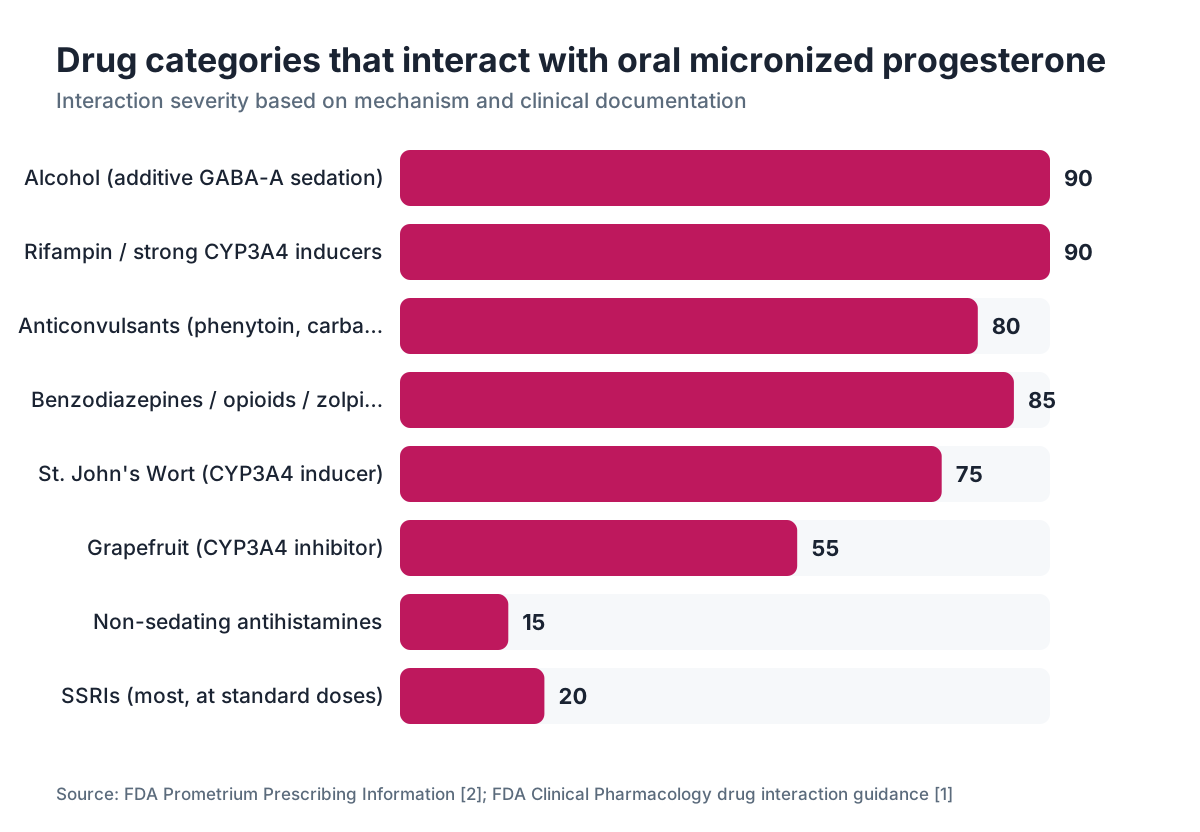
The table below sorts the main categories. Every one is documented, either in the FDA label or in peer-reviewed pharmacokinetic studies.
| Drug category | Examples | Effect on progesterone | Clinical significance | |---|---|---|---| | CYP3A4 inducers | Rifampin, carbamazepine, phenytoin, phenobarbital, St. John's Wort | Lowers progesterone blood levels | Contraceptive failure risk; inadequate uterine protection | | CYP3A4 inhibitors | Ketoconazole, clarithromycin, grapefruit compounds | Raises progesterone levels | Increased sedation, excess progesterone effects | | CNS depressants | Benzodiazepines, opioids, sleep aids (zolpidem), antihistamines | Additive sedation via GABA-A | Falls, cognitive impairment, over-sedation | | Alcohol | Ethanol | Additive GABA-A sedation | See section above | | Estrogens | Estradiol (any route) | Minor PK interaction; estrogen raises progesterone receptor expression | Usually the intended combination in HRT | | Anticoagulants | Warfarin | Progesterone may alter clotting factors | Monitor INR if starting or stopping progesterone |
Rifampin is the strongest CYP3A4 inducer on the list and can drop circulating progesterone sharply. Women on rifampin for tuberculosis who depend on progesterone-containing contraceptives or menopausal HRT need dose adjustments or a different progestogen [1]. Phenytoin and carbamazepine, used for epilepsy and some mood disorders, are also strong inducers. Phenobarbital is older but still shows up in some epilepsy protocols, and it carries the same risk.
Anticonvulsants earn extra attention. A woman on long-term antiepileptics who starts progesterone for perimenopause symptoms can end up with unexpectedly low progesterone levels. Her physician may need to check serum levels rather than dose by symptoms alone.
The benzodiazepine and opioid interactions are not rare edge cases. Plenty of women in perimenopause and menopause are already on lorazepam or zolpidem for the anxiety and insomnia that progesterone is meant to ease. Adding oral progesterone to a zolpidem prescription without adjusting doses is how a 2 a.m. fall happens.
Does grapefruit affect progesterone levels?
It can. Grapefruit and grapefruit juice contain furanocoumarins that shut down CYP3A4 in the wall of your intestine, and they do it irreversibly until your body makes new enzyme [4]. Because oral progesterone leans on CYP3A4 for first-pass metabolism, eating grapefruit near your dose can raise absorption in ways you can't predict. Unpredictable is the operative word: the effect depends on how much you ate, when you ate it relative to the pill, and how much CYP3A4 your body makes.
The FDA maintains a consumer page on grapefruit interactions that covers CYP3A4 substrates broadly [4]. Prometrium sits in clinical pharmacology databases as a CYP3A4 substrate, which puts it in range. One grapefruit segment three hours before your pill won't send you to the ER. It just makes steady blood levels harder to hold.
For most women the move is simple. Take oral progesterone at bedtime with water, two or more hours after dinner, and keep grapefruit products several hours away from your dose. Oranges, lemons, and most other citrus are fine.
What foods or supplements should you avoid with progesterone?
Grapefruit is the one food with a solid CYP3A4 case (covered above). Past that, the real food list is shorter than most supplement blogs suggest.
St. John's Wort (Hypericum perforatum) is a strong CYP3A4 and P-glycoprotein inducer. The FDA flagged its interactions with CYP3A4 substrates in a public health advisory back in 2000 [5]. Taken alongside oral progesterone, it can pull progesterone blood levels down substantially. Many women in perimenopause reach for St. John's Wort for mood, which makes this combination both common and easy to miss.
High-dose black cohosh gets used for hot flashes and has some reported CYP activity, but its clinical effect on progesterone specifically is barely mapped. Nobody has good data here; the closest evidence is in vitro work and case reports, not clinical trials.
High-fat meals taken with oral progesterone actually push its bioavailability up, which cuts both ways. The pharmacokinetic data behind the label found a high-fat meal raised peak serum levels (Cmax) roughly threefold compared to fasting [2]. That's why some prescribers say take it with food if sedation is a problem (slower, steadier absorption is gentler) while others say bedtime, empty stomach. Pick one protocol with your prescriber and hold it steady. Swinging meal composition is an underappreciated reason progesterone blood levels jump between draws.
Soy isoflavones at high supplemental doses (100 mg or more daily) have weak estrogenic effects on paper, but their interaction with prescribed progesterone isn't well characterized. Soy from food won't matter.
Can you take herbal supplements while on progesterone?
Some are fine. Some are a real problem. Here's the honest breakdown.
St. John's Wort: avoid it (see above). Valerian root has modest GABA-A activity, so stacking it on oral progesterone adds a layer of sedation you probably didn't sign up for. Melatonin at physiological doses (0.5 to 3 mg) looks safe with no known pharmacokinetic interaction, though the combined bedtime sedation is worth clocking. Ashwagandha (KSM-66 or Sensoril) shows up constantly for stress and sleep, and its effect on CYP3A4 reads inconsistently across the literature, so the safe move is to mention it to your prescriber.
Magnesium is fine. Vitamin D is fine. High-dose zinc has no documented interaction with progesterone metabolism. Fish oil at standard doses (1 to 2 g EPA/DHA) is fine.
The rule of thumb is short. If a supplement is sold for sleep, anxiety, or hormone balance, ask before you add it on top of oral progesterone, because the GABAergic and estrogenic effects can overlap in ways that are hard to call in advance.
Does smoking affect progesterone?
Yes. Cigarette smoke carries polycyclic aromatic hydrocarbons that induce CYP1A2 and CYP3A4, speeding the clearance of many hormones including estrogen and progesterone [6]. Women who smoke break progesterone down faster, which means lower blood levels for the same dose.
That's one reason smoking sits badly with menopause hormone therapy. It lowers circulating estrogen (worsening the symptoms you're treating) and clears progesterone faster at the same time. If you smoke and use progesterone for uterine protection alongside estrogen, that protection may be thinner than your prescriber assumes.
Smoking also raises thrombosis risk sharply, and while micronized progesterone is considered lower clotting risk than synthetic progestins, the picture for a smoker on HRT is unfavorable across the board. The Menopause Society (formerly NAMS) advises against starting hormone therapy in current smokers over 35 without documented clinical necessity [7].
Are there specific activities to avoid while on oral progesterone?
Driving is the one to take seriously. Oral micronized progesterone produces measurable psychomotor impairment within one to two hours of a dose, which is exactly why nearly every prescriber says take it at bedtime [2]. Take it in the morning or before an evening drive and you're dealing with slowed reaction time and sedation on the order of a low-dose antihistamine. This is documented, not hypothetical.
Heavy machinery, financial decisions that need a sharp head, and anything demanding balance and coordination (some gym work, road cycling) all carry raised risk if you dose oral progesterone at a time other than bedtime. If your schedule genuinely forces a daytime dose, vaginal progesterone is worth raising with your provider, since it skips the CNS effects.
Sex isn't off the table, but vaginal progesterone suppositories and gels want a stretch of abstinence (or a barrier method) around insertion, and the base in many suppositories can degrade latex condoms. If you're using vaginal progesterone and still need contraception, sort out the timing and method with your prescriber.
High-intensity exercise right after an oral dose isn't formally off-limits, but exercise speeds gastric emptying and raises hepatic blood flow, which can shift absorption. The evidence there is thin. Consistent habits (same time, same food context, same activity) matter more than any single workout.
What conditions make progesterone riskier to take?
The Prometrium prescribing information lists several absolute or strong relative contraindications [2]. These are the ones that matter most for women using it in menopause or perimenopause.
Active or past breast cancer: progesterone receptors sit on many breast tumors. The Women's Health Initiative (both the combined estrogen-plus-progestin arm and later analyses) raised concern that synthetic progestins increase breast cancer risk more than estrogen alone [8]. Micronized progesterone is thought to carry lower risk than medroxyprogesterone acetate, but it isn't risk-free, and a personal history of hormone-receptor-positive breast cancer is a serious caution. Menopause Society guidance calls for an individual risk-benefit talk with an oncologist before any hormone therapy in breast cancer survivors [7].
Undiagnosed vaginal bleeding: progesterone is often prescribed for uterine protection, but if bleeding hasn't been worked up, adding progesterone can mask or muddy the diagnosis of endometrial disease. Rule out hyperplasia or cancer first.
Active liver disease: because progesterone is heavily liver-metabolized, impaired liver function can let it accumulate and drive serum levels up. Oral progesterone should generally be avoided with active hepatitis, cirrhosis, or notably raised liver enzymes.
History of blood clots (DVT, PE): natural progesterone has a friendlier coagulation profile than synthetic progestins, but it isn't neutral. A prior clot means a thorough risk-benefit discussion, often with hematology input.
Peanut allergy: this one surprises people. Prometrium capsules use peanut oil as the vehicle, and the FDA label carries a warning. Women with a documented peanut allergy should use a different progesterone formulation, usually vaginal [2].
For women in perimenopause or heading toward menopause, these risks make more sense in context. The hormone replacement therapy article covers the full risk-benefit picture of combined therapy.
Does progesterone interfere with thyroid or adrenal medications?
The thyroid piece is more layered than it looks. Progesterone and levothyroxine (T4) are both CYP3A4 substrates to some degree, but the bigger issue is estrogen, which usually rides alongside progesterone in HRT. Estrogen raises thyroid-binding globulin (TBG), which can lift total T4 while free T4 holds steady. Progesterone has been reported to nudge TBG down and partly offset estrogen's effect, but the net result depends on estrogen dose and route [9].
Here's the practical read. If you start progesterone (especially combined estrogen-progesterone HRT) while on levothyroxine, recheck free T4 and TSH about 6 to 8 weeks later. Your thyroid dose may need adjusting. This scenario is common in the 40 to 55 range, where thyroid disease and perimenopause tend to cluster.
On the adrenal side, hydrocortisone and other glucocorticoids share some structure with progesterone and compete for corticosteroid-binding globulin (CBG). High-dose progesterone can bump cortisol off CBG and raise free cortisol briefly. At physiological HRT doses this doesn't mean much clinically. For a woman with Addison's disease on replacement hydrocortisone, though, flag the new progesterone prescription to her endocrinologist.
Managing thyroid or adrenal conditions alongside menopause is easier with a provider set up to monitor these together instead of treating each in isolation.
What are the signs that something is wrong while taking progesterone?
Mild sedation, breast tenderness, bloating, and mood shifts in the first one to three weeks are normal adjustment symptoms that usually settle. Not emergencies.
Call your prescriber within a day or two for: depression that persists or clearly worsens after the first two to three weeks, severe dizziness that doesn't track with dose timing, irregular or unusually heavy breakthrough bleeding after months of stable therapy, or new breast lumps.
Get same-day or emergency care for: a severe headache that's new or sudden, vision changes, one-sided leg swelling or pain with redness (possible DVT), shortness of breath or chest pain (possible PE), jaundice or severe right-sided abdominal pain (possible liver problem), or anaphylaxis signs like hives or throat swelling in women with peanut sensitivity.
The most-missed signal is depression. Progesterone's metabolite allopregnanolone has a paradoxical effect in some women: instead of calm, it brings anxiety, irritability, or low mood [3]. This shows up more in women whose GABA-A receptors have desensitized, which may tie to a history of premenstrual dysphoric disorder. If you have PMDD or severe PMS in your history, tell your prescriber before starting oral progesterone. Vaginal progesterone or a low-dose continuous oral regimen may suit you better.
Seeing progesterone as part of your wider hormonal picture is easier with access to your hormone replacement therapy records and a provider who reads the whole chart.
How does your route of progesterone affect what you need to avoid?
Route changes the interaction profile substantially. Here's the working summary.
Oral micronized progesterone (Prometrium or compounded capsules): highest interaction risk. Every CYP3A4 concern applies. Alcohol, grapefruit, CNS depressants, and enzyme inducers all count. Take it at bedtime. Skip driving for several hours after a dose.
Vaginal progesterone (suppositories, gel, rings): first-pass liver metabolism is mostly bypassed. Systemic drug interactions run minimal. The alcohol sedation issue isn't meaningful. Food timing doesn't matter. The real avoidances are timing around intercourse, latex condoms (many oil-based suppository bases degrade them), and other vaginal medications that shift pH and could affect release.
Topical creams (OTC): absorption is highly variable, often too low for uterine protection, and systemic levels too low to drive drug interactions in most women. The concern here is efficacy, not safety. Don't lean on OTC progesterone cream as a substitute for prescribed progesterone if you have a uterus and take estrogen.
Injectable progesterone (mainly fertility protocols): similar CYP3A4 drug-interaction concerns to oral, but without the first-pass effect on bioavailability. The sedation concern is lower, because allopregnanolone from a slow intramuscular depot builds less sharply.
If you're unsure which route fits and you're somewhere in the perimenopause-to-menopause window, the perimenopause age article helps place you in the transition.
Frequently asked questions
Can I take ibuprofen or acetaminophen while on progesterone?
Yes, both are generally fine. Ibuprofen (an NSAID) and acetaminophen have no clinically meaningful interaction with progesterone at standard doses. Acetaminophen clears through glucuronidation and sulfation, not CYP3A4. Ibuprofen runs mostly through CYP2C9. Neither shifts progesterone blood levels much. Heavy NSAID use has its own effects on kidney function and blood pressure, worth watching on their own.
Can I drink coffee or caffeine while taking progesterone?
Coffee and caffeine have no meaningful pharmacokinetic interaction with progesterone. Caffeine clears through CYP1A2, not CYP3A4, so it doesn't compete for progesterone's exit route. Some women find caffeine worsens breast tenderness or anxiety, which are also progesterone side effects, so the two can amplify each other in how you feel. That's comfort, not a drug interaction. No need to give up coffee.
Is it safe to take antihistamines like Benadryl or Zyrtec with progesterone?
Use caution with diphenhydramine (Benadryl). It sedates through anticholinergic and histamine-1 blockade, and combined with oral progesterone at bedtime the sedation adds up. Falls and next-day grogginess are real. Non-sedating antihistamines like cetirizine (Zyrtec) or loratadine (Claritin) are much less of a concern because their CNS effects are minimal. If you need a nightly antihistamine, say so when your progesterone dose is being set.
Can I take melatonin with progesterone?
Low-dose melatonin (0.5 to 3 mg) has no known pharmacokinetic interaction with progesterone and doesn't work through GABA-A, so it doesn't add the sedation risk that benzodiazepines or alcohol do. Higher doses (5 to 10 mg) with oral progesterone can deepen morning grogginess. Start at the lowest effective dose. Most sleep researchers point to physiological doses under 1 mg as the target anyway.
Does progesterone affect birth control pills?
If you take combined oral contraceptives that already contain a synthetic progestin, adding prescribed progesterone creates redundancy rather than a clean interaction. More relevant: CYP3A4 inducers (rifampin, carbamazepine, St. John's Wort) can cut the effectiveness of both hormonal contraceptives and progesterone supplements at once. If you use progesterone for fertility support or cycle regulation and also rely on oral contraceptives, ask your prescriber whether the combination is intentional or the roles overlap.
Can I exercise while taking progesterone?
Yes, and exercise is encouraged for the bone, heart, and mood benefits that go with hormone therapy. The one caveat is timing: skip high-intensity or high-fall-risk exercise within one to two hours of an oral progesterone dose, because peak sedation lines up with peak absorption. Most women dose oral progesterone at bedtime precisely to dodge this. Morning and afternoon workouts are fine. Vaginal progesterone has no meaningful exercise interaction.
Can progesterone affect blood sugar or interact with diabetes medications?
Progesterone can modestly affect insulin sensitivity, though less than synthetic progestins. Some studies show natural progesterone has a neutral-to-mild negative effect on glucose tolerance at higher doses. For most women with well-controlled type 2 diabetes on metformin, this isn't a clinical problem, but glucose monitoring in the first few months after starting progesterone is reasonable. Insulin-dependent diabetics should flag the new prescription to their endocrinologist.
Is it safe to take magnesium with progesterone?
Yes. Magnesium glycinate, citrate, or malate have no documented interaction with progesterone metabolism. Magnesium is often recommended alongside progesterone for perimenopausal insomnia or anxiety, since it supports GABA signaling on its own. The combination is considered safe and possibly complementary. Magnesium oxide has lower bioavailability and a stronger laxative effect; glycinate is better tolerated.
What happens if I accidentally miss a dose of progesterone?
Take the missed dose as soon as you remember, unless it's almost time for the next one, in which case skip it and resume your normal schedule. Don't double up. For uterine protection, a single missed night rarely causes breakthrough bleeding right away, but repeated misses over weeks can leave the endometrium underprotected if you're on continuous combined therapy. Contact your prescriber if you're missing doses often.
Can I take antidepressants while on progesterone?
Most SSRIs (sertraline, escitalopram) and SNRIs (venlafaxine, duloxetine) have no major pharmacokinetic interaction with progesterone. Fluoxetine is a CYP3A4 inhibitor at higher doses and could modestly raise progesterone levels, usually not clinically significant at standard doses. The interaction to watch is pharmacodynamic, not pharmacokinetic: if progesterone is worsening depression or anxiety, that needs managing separately from the antidepressant. Tell your prescriber about both medications.
Do I need to avoid soy while taking progesterone?
No. Dietary soy at normal food levels (tofu, edamame, soy milk) has no documented clinical interaction with progesterone. High-dose soy isoflavone supplements (above 100 mg daily) have weak phytoestrogenic effects, but their impact on prescribed progesterone metabolism isn't well studied. If you're taking high-dose isoflavone supplements for hot flashes alongside progesterone, mention it to your prescriber. Cutting soy from your diet isn't warranted on current evidence.
How long do I need to avoid alcohol after taking oral progesterone?
There's no firm cut-off time in the clinical literature. Oral progesterone peaks in serum roughly one to three hours after a dose and has a half-life around 16 to 18 hours, though the neuroactive metabolite allopregnanolone peaks and clears somewhat faster. The conservative approach most clinicians use is to avoid alcohol for at least three to four hours before your bedtime dose. Drinking well ahead (early dinner wine, pill at bedtime) is lower risk than drinking close to your dose.
Can I take progesterone with blood pressure medications?
Most antihypertensives (amlodipine, lisinopril, metoprolol, hydrochlorothiazide) have no significant pharmacokinetic interaction with progesterone. Amlodipine is itself a CYP3A4 substrate and mild inhibitor, which could in theory modestly raise progesterone levels, but that's rarely meaningful at standard doses. Some women notice a slight blood pressure drop when starting progesterone; if you're already on antihypertensives, checking your BP in the first weeks is sensible.
Sources
- FDA, Drug Development and Drug Interactions Table (Clinical Pharmacology)
- FDA, Prometrium (progesterone) Prescribing Information
- Bäckström T et al., The Role of Hormones and Hormonal Treatments in Premenstrual Syndrome, CNS Drugs, 2003
- FDA, Grapefruit Juice and Some Drugs Don't Mix
- FDA, Drug Safety and Availability (St. John's Wort interaction guidance, 2000 Public Health Advisory)
- Michnovicz JJ et al., Cigarette smoking and effects on estrogen and progesterone metabolism, Am J Obstet Gynecol, 1993, PMID 8447352
- The Menopause Society (formerly NAMS), 2022 Hormone Therapy Position Statement
- Rossouw JE et al., Risks and Benefits of Estrogen Plus Progestin in Healthy Postmenopausal Women, JAMA 2002
- Arafah BM, Increased need for thyroxine in women with hypothyroidism during estrogen therapy, NEJM 2001
- Endocrine Society Clinical Practice Guidelines
- de Lignieres B et al., Oral micronized progesterone bioavailability, Maturitas 1999, PMID 10341019