What is perimenopause? Symptoms, timeline, and what to do
TL;DR: Perimenopause is the hormonal transition leading up to menopause. It starts on average in a woman's mid-to-late 40s, sometimes as early as 35. Estrogen and progesterone swing erratically for 4 to 10 years, driving hot flashes, irregular periods, broken sleep, and mood changes. It ends 12 months after your final period, the point that marks menopause.
What exactly is perimenopause?
Perimenopause means "around menopause." It is the multi-year stretch when your ovaries gradually make less estrogen and progesterone and your cycles turn unpredictable before they stop for good. The North American Menopause Society (NAMS) defines it as beginning when a woman first notices cycle irregularity and ending one year after her final period, the moment she reaches menopause. [1]
Here is the part nobody explains. Perimenopause is not a single event. It is a transition that can run close to a decade, with hormones swinging up and down instead of sliding down a clean line. That is why symptoms feel chaotic. Your estrogen can spike one week and crash the next, so the same month brings breast tenderness, then hot flashes, then nothing.
Many women land in a clinic convinced their thyroid is broken or they are simply too stressed, because nobody told them that erratic periods, 3 a.m. wake-ups, and sudden anxiety at 45 are textbook perimenopause. They are.
Perimenopause is not a disease. It is a normal biological stage. Normal does not mean you have to white-knuckle through it.
When does perimenopause start, and how long does it last?
The average age of onset is 47, and the range runs from the mid-30s to the early 50s. [2] The average duration is 4 to 8 years, though roughly 10 percent of women live in it for a decade or more. [3] If your mother went through early perimenopause, your timeline probably tracks hers.
For detail on timing by age group, see our article on perimenopause age.
The transition splits into two phases. Early perimenopause shows up as cycle-length changes of 7 days or more. Late perimenopause starts once you go 60 or more days without a period, and that is usually when the worst symptoms hit. [4] FSH (follicle-stimulating hormone) climbs as the brain tries to coax increasingly reluctant ovaries into making estrogen.
Smoking, chemotherapy, some autoimmune conditions, and a family history of early menopause all push the start date earlier. Women who have had one ovary removed often see earlier onset too. On the later side, having had more pregnancies is loosely tied to a slightly later transition, but the effect is small.
One number worth holding onto: the median age of natural menopause in the United States is 51. [2] Do the math. If perimenopause averages 7 years and menopause lands at 51, many women feel the first signs around 44. Your mileage will vary.
What are the most common perimenopause symptoms?
The symptom list is long, and that length is part of why perimenopause gets missed. The symptoms sort into a few groups.
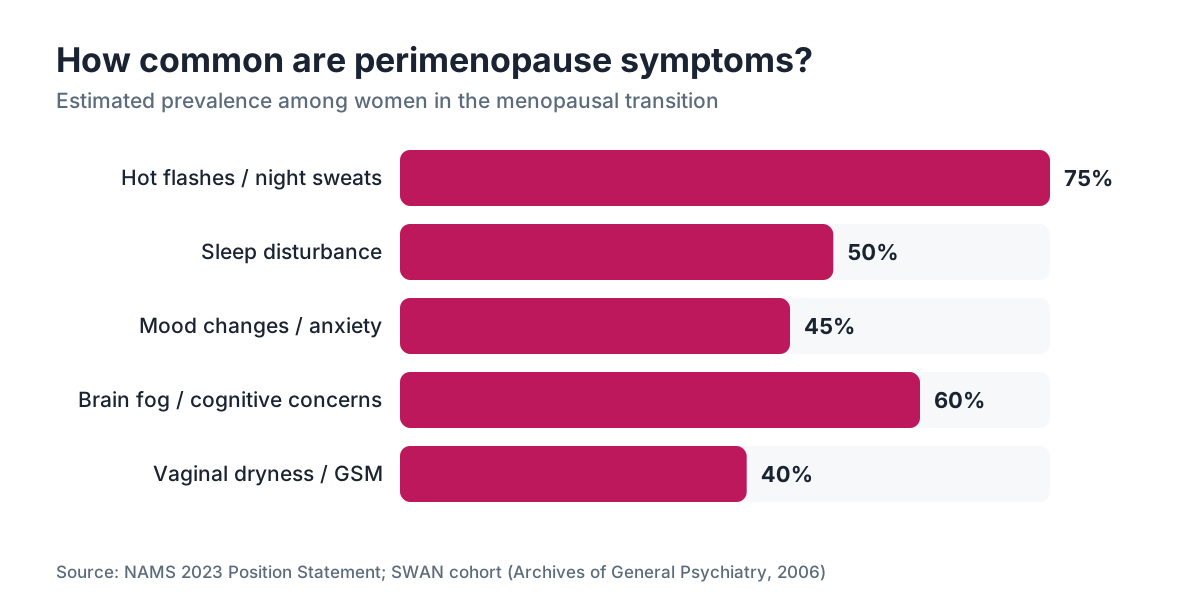
Vasomotor symptoms (hot flashes and night sweats) are the most recognized. About 75 percent of women in the menopausal transition get them. [5] A hot flash typically lasts 1 to 5 minutes and can hit a couple of times a week or dozens of times a day. Night sweats are hot flashes during sleep, and they drive a lot of the insomnia.
Menstrual changes are usually the first sign. Cycles shorten, lengthen, turn heavy, or skip. A period that ran like clockwork for 30 years suddenly comes at 21 days, then 45, then arrives with a flow that lands you in the ER. Heavy bleeding is common in perimenopause but still needs a look, because fibroids or polyps can amplify it.
Sleep disruption hits a large majority of perimenopausal women, both from night sweats and from independent changes in sleep architecture. This is more than tiredness. Women describe lying awake at 3 or 4 a.m. with a racing mind, a pattern that shrugs off melatonin and basic sleep hygiene.
Mood and cognitive symptoms include anxiety (often new or worse), irritability, low mood, and "brain fog," the trouble pulling up a word or holding concentration. SWAN (Study of Women's Health Across the Nation) longitudinal data found perimenopausal women had higher rates of depressive symptoms than premenopausal women, even after adjusting for life stress. [6]
Genitourinary symptoms include vaginal dryness, pain during sex, urinary urgency, and recurrent UTIs. Hot flashes often ease after menopause. These do the opposite and worsen over time without treatment. The formal term is genitourinary syndrome of menopause (GSM).
Other symptoms include joint pain, heart palpitations, shifts in libido, headaches, and skin changes. Many go unreported because women chalk them up to aging rather than hormones.
| Symptom | Approximate prevalence in perimenopause | |---|---| | Hot flashes / night sweats | ~75% [5] | | Sleep disturbance | ~40-60% | | Irregular periods | nearly universal | | Mood changes / anxiety | ~40-50% [6] | | Vaginal dryness / GSM | ~30-50%, rising post-menopause | | Brain fog / memory concerns | ~60% report subjective change |
How is perimenopause diagnosed?
Perimenopause is mostly a clinical diagnosis. A doctor asks about symptoms and menstrual history and weighs your age. No single blood test says "yes, you are in perimenopause." [1]
FSH is sometimes measured, and an elevated result (generally above 25 to 30 mIU/mL on a day-2 to day-5 draw) points to diminishing ovarian reserve. But FSH swings hard during perimenopause, so one normal reading rules out nothing. Estradiol is just as variable. Anti-Mullerian hormone (AMH) is a steadier marker of ovarian reserve, but it is not yet standard for diagnosing perimenopause.
Thyroid function (TSH) should be checked, because hypothyroidism and perimenopause share a lot: fatigue, weight gain, mood changes, irregular cycles. Missing a thyroid problem because you blamed everything on perimenopause is a real and common mistake.
If periods turn dramatically heavier or irregular in ways that do not fit the usual pattern, a pelvic ultrasound and possibly an endometrial biopsy make sense to rule out structural causes. The workup is not complicated. It does require a clinician who takes the whole picture seriously.
What causes perimenopause hormone changes?
The driving event is the steady drop in viable ovarian follicles. You are born with roughly 1 to 2 million; by puberty that number falls to around 300,000 to 500,000. [7] By the mid-40s the remaining follicles respond less to FSH, ovulation gets spotty, and the corpus luteum (which makes progesterone after ovulation) forms less reliably.
Progesterone tends to fall first, which is why anovulatory cycles (cycles without ovulation) show up early. Estrogen takes a messier path. It can spike higher than normal in early perimenopause as the pituitary floods the system with FSH trying to stimulate the ovaries. Those spikes bring breast tenderness, bloating, and heavy periods, symptoms that feel like too much estrogen even while the overall trend heads down. That is why early perimenopause can seem to contradict itself.
Eventually follicle supply drops below the level needed to keep meaningful estrogen going, vasomotor symptoms intensify, cycles stop, and menopause arrives. For more on progesterone and its role in this transition, that article covers the science.
What treatments actually work for perimenopause symptoms?
Women deserve a straight answer here, not a hedge.
Hormone therapy is the most effective treatment for vasomotor symptoms and GSM, full stop. NAMS states that for women under 60 or within 10 years of menopause onset with no contraindications, the benefits of hormone therapy outweigh the risks. [1] The 2002 Women's Health Initiative scared a generation of women and doctors off hormones based on findings that mostly applied to older women on a specific oral formulation, and the evidence has since been reappraised. Transdermal estrogen (patch, gel, or spray) skips the first-pass liver effect and carries a lower clot risk than oral estrogen. For women with a uterus, progesterone has to be added to protect the uterine lining.
For specific delivery methods, our article on the estrogen patch covers transdermal options, and hormone replacement therapy covers the full landscape.
Non-hormonal prescriptions include SSRIs and SNRIs (paroxetine, venlafaxine, desvenlafaxine) and, as of 2023, fezolinetant (Veozah), an FDA-approved neurokinin B receptor antagonist made for vasomotor symptoms. [8] These are legitimate choices for women who cannot or would rather not use hormones.
Lifestyle genuinely matters. Regular aerobic exercise cuts hot flash frequency modestly in most studies. Dodging triggers (alcohol, caffeine, spicy food, hot rooms) helps some women a lot. Cognitive behavioral therapy for menopausal symptoms has solid trial data for sleep and mood. No lifestyle change wipes out severe vasomotor symptoms for most women, but these moves shift things enough to be worth doing.
Supplements are mostly a weak bet. The data on black cohosh, phytoestrogens, and evening primrose oil is thin and inconsistent, and NAMS notes the evidence does not support most of them for hot flashes. That does not make them harmful. It means do not bank on them.
Telehealth platforms like WomenRx let you consult a clinician and build a personalized plan without waiting months for a gynecology slot, which matters when symptoms are wrecking your work and sleep now.
Does perimenopause cause weight gain, and can GLP-1s help?
Yes, and yes, with nuance.
The perimenopausal transition comes with an average weight gain of about 1.5 pounds a year, and, more to the point, a shift in fat from the hips and thighs toward the belly. [9] This happens even when you eat the same, because falling estrogen changes how the body stores fat. Abdominal fat has more estrogen receptors than peripheral fat, so as estrogen drops, belly fat piles on preferentially. Muscle mass also declines with age (sarcopenia), which lowers resting metabolic rate.
This is not a willpower failure. It is metabolic physiology.
GLP-1 receptor agonists like semaglutide (Ozempic, Wegovy) and tirzepatide (Mounjaro, Zepbound) are increasingly used by perimenopausal and postmenopausal women whose weight has stopped responding to their old approaches. The STEP 1 trial found semaglutide 2.4 mg produced an average body weight reduction of 14.9% at 68 weeks. [10] SURMOUNT-1 found tirzepatide produced up to 20.9% average weight loss. [11] Neither trial was built for perimenopausal women, so we lack disaggregated data on that subgroup, but the physiological logic for using these drugs during a metabolic shift holds up.
For more, see our articles on semaglutide for weight loss and semaglutide vs tirzepatide.
Hormone therapy and GLP-1s work on different mechanisms. Some women do well on one, some on both. The combination is not contraindicated, but it should be managed by a clinician who understands both.
How does perimenopause affect bone density and long-term health?
Estrogen is a primary protector of bone. When it falls, bone breakdown speeds up. Women can lose 1 to 2 percent of bone density a year in the years right around menopause, against about 0.5 percent a year before the transition. [12] Osteoporosis is mostly a postmenopausal condition, but the slide starts in perimenopause.
A bone density test (DEXA scan) is recommended at age 65 for most women, or earlier for anyone with risk factors: early menopause, low body weight, smoking, or a family history of hip fracture. A baseline DEXA in the late perimenopause years gives you numbers to act on instead of finding serious bone loss years down the line.
Cardiovascular risk climbs after menopause too. Estrogen relaxes blood vessels and tamps down inflammation in them. Early perimenopause, before major estrogen loss, may be the moment to lock in heart habits: blood pressure control, lipid management, no smoking, regular exercise.
The point is bigger than managing today's symptoms. The hormonal changes in this transition shape the tissues and systems that decide your health at 70 and 80.
Is there anything that makes perimenopause start earlier or later?
Yes. Several factors consistently line up with earlier onset.
Smoking is the most modifiable one. Smokers reach menopause, on average, 1 to 2 years earlier than nonsmokers. [3] The mechanism is direct toxic damage to ovarian follicles from cigarette chemicals.
Chemotherapy and pelvic radiation can trigger premature ovarian insufficiency (POI), which is separate from perimenopause but shares many features. POI means menopause before age 40 and affects roughly 1 percent of women. [7]
Body weight has a mixed relationship with timing. Women with very low body fat tend to reach menopause a bit earlier. Very high body fat may nudge it later, since fat tissue converts androgens to estrogen, but the effect is small and does not make obesity protective.
Genetics is the strongest predictor. Variants in genes tied to DNA repair and follicle development have been linked to earlier menopause in genome-wide studies. If your mother and maternal aunts went through early perimenopause, tell your doctor.
For how age interacts with all of this, the perimenopause age and when does menopause start articles go deeper.
How is perimenopause different from menopause?
The distinction is simpler than it sounds. Menopause is a single point in time: the day marking 12 straight months without a period. Everything before it (the irregular cycles, the swinging symptoms, the hormonal chaos) is perimenopause. Everything after is postmenopause. [1]
In practice, women use the words interchangeably, which confuses both the women and sometimes their doctors. If you are still having any periods, even sporadic ones, you are in perimenopause. Go a full year with none and you have crossed into menopause and are postmenopausal.
This line matters clinically because contraception rules differ. Perimenopausal women can still ovulate, even rarely, and can get pregnant. Pregnancy at 45 or 46 is uncommon but not impossible. Standard guidance is contraception until 24 months after the last period if you are under 50, or 12 months after if you are over 50.
See our full article on menopause for what changes once you cross that line, and menopause age for how timing varies across populations.
What should you actually do right now if you think you're in perimenopause?
Track your cycles. An app or a plain calendar with notes on cycle length, flow, and symptoms hands a clinician real data instead of vague memory. Bring 3 to 6 months of it to your appointment.
Get baseline labs. At minimum: TSH (to rule out thyroid disease), a complete metabolic panel, fasting lipids, and, if your clinician is open to the full picture, FSH and estradiol. Add AMH if you want a read on ovarian reserve, knowing it does not predict how bad your symptoms will be.
Find a clinician who takes this seriously. Not every primary care provider is trained in menopause medicine. NAMS keeps a directory of certified menopause practitioners at menopause.org. If access is the barrier, telehealth now lets you see a knowledgeable clinician from anywhere.
Do not assume you have to wait it out. The median perimenopausal woman has symptoms strong enough to affect daily life and sleep. That is not a minor inconvenience. Evidence-based treatments exist. The real question is which one fits your risk profile and preferences, and that conversation is worth having with someone who knows the evidence.
If you want to explore telehealth, WomenRx offers clinician consultations for hormone therapy and other perimenopause treatments, with no long wait lists.
Frequently asked questions
Can you get pregnant during perimenopause?
Yes. Ovulation can still happen even with irregular cycles, so pregnancy is possible throughout perimenopause. The risk is lower than in your younger years but real. Standard guidance is to use contraception until 12 consecutive months without a period if you are over 50, or 24 months if you are under 50 at your last period. Discuss options with your clinician, since some contraceptives also ease perimenopausal symptoms.
What's the difference between perimenopause and PMS?
PMS happens in the luteal phase of a regular cycle and clears when your period starts. Perimenopausal mood and physical symptoms are less predictable, often unhooked from cycle phase, and can drag on for weeks rather than days. Women with a history of severe PMS or PMDD often report perimenopausal mood symptoms hit them harder. The underlying hormonal picture differs, and so does the treatment approach.
Do all women get hot flashes during perimenopause?
No, though most do. About 75 percent of women in the menopausal transition get vasomotor symptoms. Severity ranges widely: some women have mild, rare flashes; others have dozens a day that wreck work and sleep. Women of Black ancestry report more frequent and more severe hot flashes on average, and women of Asian ancestry report them at lower rates, based on SWAN cohort data.
How do I know if my anxiety is from perimenopause or something else?
This is genuinely hard to untangle. Perimenopausal anxiety often shows up as new worry, early-morning waking dread, or a sense of unease out of proportion to what is happening. If it started around the same time as cycle changes or broken sleep, perimenopause is worth considering. A thorough workup with thyroid labs and a mood screen is the right start, ideally with a clinician who takes both hormones and mental health seriously.
Is hormone therapy safe during perimenopause?
For most women under 60 and within 10 years of menopause onset with no contraindications (certain hormone-sensitive cancers, active clot disorders, unexplained vaginal bleeding), NAMS says the benefits outweigh the risks. Transdermal forms carry a lower clot risk than oral estrogen. The absolute increase in breast cancer risk with combined estrogen-progestogen therapy is small and context-dependent. This is a conversation for a knowledgeable clinician, not a blanket yes or no.
Can perimenopause cause depression?
It can raise the risk. SWAN longitudinal data found perimenopausal women had roughly twice the odds of a high depression score compared to premenopausal women, even after adjusting for life stress and prior depression. Women with a history of depression or premenstrual mood disorders are especially vulnerable. Estrogen acts directly on serotonin and dopamine pathways, which may explain the link. Options include hormone therapy, antidepressants, or both.
What blood tests diagnose perimenopause?
No single test diagnoses it definitively. FSH above 25 to 30 mIU/mL (measured on cycle days 2 to 5) points to diminishing ovarian reserve, but FSH swings hard during this phase and a normal result does not rule perimenopause out. TSH should always be checked to exclude thyroid disease. AMH is a steadier marker of ovarian reserve but is not yet standard. Diagnosis is mostly clinical: symptoms plus menstrual history plus age.
What does perimenopause feel like in your 30s?
Early perimenopause in the late 30s often feels like worsening PMS, new anxiety or irritability, shorter cycles, and trouble sleeping. Hot flashes may or may not show up early. Because 35 to 40 feels too young for menopause, these symptoms get blamed on stress, thyroid, or depression first. If you are in your late 30s with irregular cycles and mood changes, ask your doctor to check FSH and thyroid together.
Can perimenopause cause heart palpitations?
Yes. Palpitations are a recognized vasomotor symptom and hit a meaningful minority of perimenopausal women, often alongside or just before hot flashes. They are usually benign and tied to fluctuating estrogen affecting the autonomic nervous system. Still, new palpitations deserve an EKG to rule out arrhythmia, especially with chest pain, dizziness, or fainting. Do not blame them on hormones before ruling out cardiac causes.
Will perimenopause symptoms go away on their own?
Hot flashes ease for most women after menopause, though for some they last a decade or more. Genitourinary symptoms (vaginal dryness, urinary urgency) usually worsen over time without treatment rather than resolving. Sleep and mood generally improve once the acute hormonal transition finishes, but the timeline is unpredictable. Waiting it out is a legitimate choice; so is treating now. Neither is wrong as long as it is informed.
How does weight gain in perimenopause differ from regular aging?
Both aging and estrogen decline contribute, but perimenopause adds a specific pattern: fat redistributes from hips and thighs to the belly even without a change in total weight. That visceral fat carries greater metabolic and cardiovascular risk than peripheral fat. Some studies estimate an average gain of 1.5 pounds a year during the transition. The shift responds poorly to the diet and exercise that worked in your 30s, which is why so many women feel the usual approach quit on them.
Do I still need birth control during perimenopause?
Yes, until menopause is confirmed. Because ovulation can still occur, unintended pregnancy is possible. Standard guidance is contraception for 12 months after the last period if you are over 50, or 24 months if you are under 50 at your last period. Low-dose hormonal contraceptives can also quiet perimenopausal symptoms in some women. Discuss timing and method with your clinician, especially if you are also starting hormone therapy.
What is premature ovarian insufficiency and is it the same as perimenopause?
Premature ovarian insufficiency (POI) is the loss of normal ovarian function before age 40, affecting about 1 percent of women. It shares features with perimenopause (erratic cycles, low estrogen, vasomotor symptoms) but is a distinct diagnosis. POI can be autoimmune, genetic, or treatment-induced, and women with POI face higher risks of osteoporosis and cardiovascular disease that call for earlier, more aggressive management than typical late-40s perimenopause.
Sources
- North American Menopause Society (NAMS), Menopause Practice: A Clinician's Guide
- National Institute on Aging (NIH), What Is Menopause?
- Office on Women's Health, U.S. Department of Health and Human Services, Menopause
- Stages of Reproductive Aging Workshop (STRAW+10), Climacteric, 2012
- American College of Obstetricians and Gynecologists (ACOG), The Menopause Years
- Study of Women's Health Across the Nation (SWAN), Archives of General Psychiatry, 2006
- European Society of Human Reproduction and Embryology (ESHRE), Guideline on Premature Ovarian Insufficiency
- FDA, Approval of Fezolinetant (Veozah) for Vasomotor Symptoms
- Greendale GA et al., Weight Gain During the Perimenopause Transition, Journal of Climacteric, 2019
- Wilding JPH et al., STEP 1 Trial, New England Journal of Medicine, 2021
- Jastreboff AM et al., SURMOUNT-1 Trial, New England Journal of Medicine, 2022
- National Institute of Arthritis and Musculoskeletal and Skin Diseases (NIH), Osteoporosis