What is menopause? symptoms, stages, and what to do next
TL;DR: Menopause is the day you have gone 12 straight months without a period. It marks the end of ovarian reproductive function. The average age in the United States is 51. The years before it, called perimenopause, usually bring the worst symptoms. Real treatments exist, including hormone therapy, non-hormonal drugs, and specific lifestyle changes.
What exactly is menopause?
Menopause is a single moment, not a phase. It is the day you can look back and count 12 full months since your last period. After that day you are postmenopausal. Before it, even if your cycles are chaotic and you get hot flashes every hour, you are still in perimenopause.
The biology is simple. Your ovaries slow their production of the estrogen and progesterone that ran your cycle. Follicle counts fall. The feedback loop between your ovaries and your brain, the hypothalamic-pituitary-ovarian axis, gets noisy and then goes quiet. Ovulation and menstruation stop [10].
That description sounds tidy. The experience rarely is. Perimenopause can run anywhere from two to ten years before you hit that 12-month mark, so most women spend a long stretch in hormonal flux before they ever cross the official finish line [2].
One thing worth saying plainly: menopause is not a disease. It is a normal transition. Normal does not mean you have to grit your teeth through it. The symptoms are real, the long-term effects on bone and heart tissue are real, and good care changes how the whole thing goes.
What are the three stages of menopause?
Clinicians split the transition into three stages, plus two early categories. Knowing which one you are in matters, because it changes what your symptoms mean and which treatments fit.
Perimenopause is the run-up. Estrogen swings erratically. Periods come closer together, farther apart, heavier, lighter, or skip. Hot flashes, broken sleep, mood shifts, and vaginal dryness can all start here. The average length is about four years, though some women get a full decade [2]. You still ovulate on and off during perimenopause, so pregnancy is still on the table.
Menopause is one retrospective milestone: 12 straight months without a period. You cannot know you have reached it until a year has already passed. The average age in the U.S. is 51, with a normal range of roughly 45 to 55 [3].
Postmenopause is every year after. Hot flashes often ease over time, but genitourinary changes, bone loss, and rising cardiovascular risk do not fix themselves. Plenty of women feel better in postmenopause than they did during perimenopause. Plenty of others find that untreated symptoms drag on for years.
There is also premature menopause (before 40) and early menopause (40 to 45). Both carry higher long-term risk, especially for bone and heart, and both deserve prompt attention [3]. See perimenopause age and menopause age for more on timing.
| Stage | Timing | Key feature | |---|---|---| | Perimenopause | 2-10 years before last period | Irregular cycles, fluctuating estrogen | | Menopause | Day of 12-month period-free anniversary | Estrogen production largely ceased | | Postmenopause | All years after menopause | Stable but low estrogen, long-term risk management | | Premature menopause | Before age 40 | Requires prompt treatment | | Early menopause | Ages 40-45 | Higher long-term health risk than average |
What are the most common menopause symptoms?
The list is long and the severity swings wildly between women. Some sail through with barely a ripple. Others find these years genuinely debilitating. Both are real.
Hot flashes and night sweats (vasomotor symptoms) get the most airtime. About 75 percent of women get them [4]. A hot flash is a sudden wave of heat in the face and chest, usually with sweating and sometimes chills. Night sweats are the same thing during sleep. They wake you, you throw off the covers, then you are cold. Do that several times a night and sleep deprivation piles up fast.
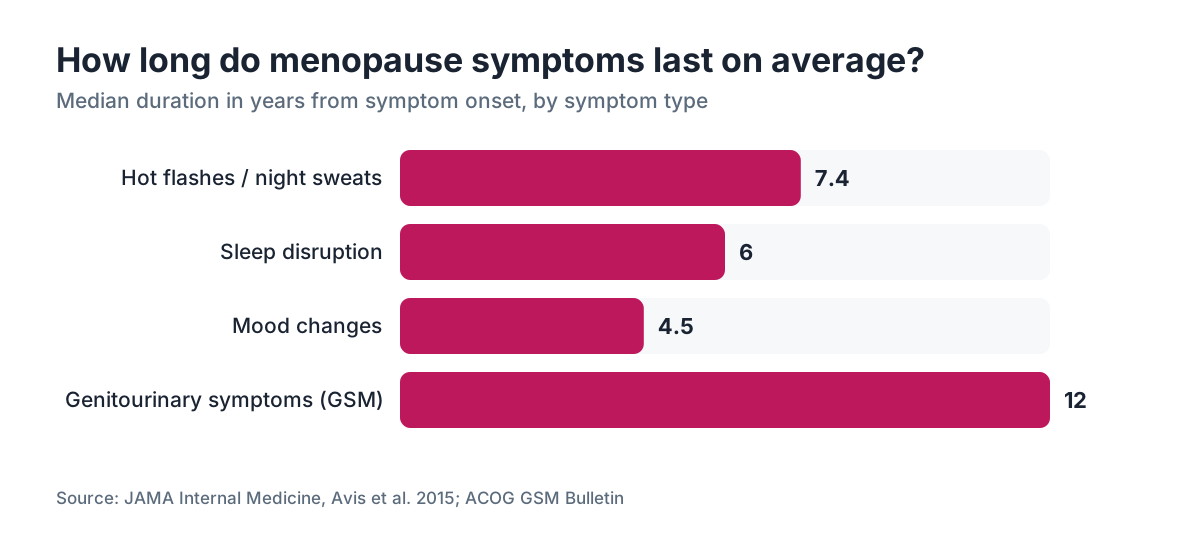
Genitourinary syndrome of menopause (GSM) goes underreported because it embarrasses people. It covers vaginal dryness, thinning vaginal walls, painful sex, urinary urgency, and repeat UTIs. Hot flashes tend to fade over time. GSM does the opposite, getting worse if untreated, because it comes from ongoing low estrogen rather than the transition itself [5].
Mood and thinking shift for many women: anxiety, low mood, irritability, trouble concentrating, and what most people call brain fog. Broken sleep alone can cause every one of those, so separating the direct hormone effect from the fallout of bad sleep is genuinely hard.
Other common ones: joint pain, weight changes (especially belly fat), lower libido, thinning hair, and dry skin. The weight gain is partly hormonal and partly age, and in any one woman those two are nearly impossible to pull apart.
Over the long run, low estrogen speeds bone loss and raises fracture risk. Estrogen also protected the cardiovascular system, and after menopause a woman's heart disease risk climbs toward that of a man the same age [10].
How is menopause diagnosed?
For most women over 45 with irregular or absent periods and classic symptoms, menopause is a clinical diagnosis. No blood test is needed to confirm it [10].
That said, FSH (follicle-stimulating hormone) and estradiol sometimes get checked. FSH rises as the ovaries stop responding to hormonal signals. An FSH above 40 mIU/mL on two tests at least a month apart is often called consistent with menopause [3]. Here is the catch. During perimenopause, FSH swings hard from week to week. One high reading does not confirm menopause, and a normal reading does not rule it out.
Blood tests earn their keep in specific spots: women under 45 where premature ovarian insufficiency needs sorting out, women who had a hysterectomy but kept their ovaries (no period to track), or women on drugs that mess with cycle regularity.
Thyroid trouble and other conditions mimic menopause closely. A basic thyroid panel is worth running if you have not had one lately. If hot flashes are severe and the picture does not fit, your clinician may check further.
What causes early or premature menopause?
Premature ovarian insufficiency (POI), sometimes still called premature menopause, hits about 1 percent of women before age 40 [3]. It is not the same as ordinary menopause. In POI the ovaries stop working normally but may still release an egg now and then, so fertility is not always gone (though it is badly reduced).
Causes include autoimmune conditions, genetics (fragile X premutation carriers run higher risk), and some cancer treatments. Chemotherapy and pelvic radiation are common medical triggers. Surgical menopause, where the ovaries come out during a procedure like an oophorectomy, causes menopause instantly with a hormonal cliff instead of a gradual slope. That sudden drop is why surgical menopause usually produces harsher symptoms.
Smoking pulls menopause earlier by one to two years on average [3]. Body weight, genetics, and ethnicity also shift timing. Black women on average reach menopause slightly earlier than white women, and Japanese and Chinese women slightly later, though these are population patterns with huge individual spread.
What are the treatment options for menopause symptoms?
The options run wider than most women expect. The North American Menopause Society (NAMS) and the Endocrine Society both call hormone therapy the most effective treatment for hot flashes and GSM in the right candidates [1][6].
Hormone therapy (HT), also called menopausal hormone therapy or MHT, replaces some of the estrogen (and, for women with a uterus, progesterone) the ovaries no longer make. It is the strongest option for hot flashes and night sweats. It prevents bone loss. It treats GSM. For women under 60 or within 10 years of their last period who have no contraindications, NAMS says the benefits generally outweigh the risks [1]. The WHI study in 2002 scared a generation of women and doctors off HT, but later analysis showed the risk sat mostly in older women who started HT more than 10 years past menopause. Timing drives almost everything here.
Estrogen comes as pills, patches, gels, sprays, and vaginal products. See estrogen patch for how the delivery methods compare. Progesterone gets added for uterine protection in women who still have a uterus. Micronized progesterone (Prometrium) is increasingly preferred over older synthetic progestins on tolerability data. More at hormone replacement therapy.
Non-hormonal medications work for women who cannot or would rather not take hormones. Fezolinetant (brand name Veozah), a neurokinin B receptor antagonist, got FDA approval in 2023 specifically for moderate to severe hot flashes [7]. Older options include low-dose antidepressants (paroxetine, venlafaxine), gabapentin, and oxybutynin. They are less effective than estrogen but useful when hormones are off the table.
Vaginal estrogen deserves its own line. Local vaginal estrogen (cream, ring, tablet, or suppository) puts a very low dose straight into vaginal tissue with little systemic absorption. It works well for GSM and is considered safe even for most breast cancer survivors, though that conversation belongs with your oncologist [5].
Lifestyle approaches help with several symptoms. Regular aerobic exercise eases hot flash severity in some studies, though the data are mixed. Cognitive behavioral therapy has solid evidence for cutting how much hot flashes bother you even when it does not cut how often they happen. Losing weight may lower the vasomotor load. Some women get relief from dropping triggers like alcohol, caffeine, and spicy food.
GLP-1 receptor agonists like semaglutide belong in this conversation too. Weight gain during menopause is real, and the metabolic shifts of this stage make it harder to lose on diet alone. Semaglutide for weight loss covers the details. Clinicians at practices like WomenRx treat the hormonal and metabolic changes together, which often beats treating them one at a time.
Bone health needs active work. Every postmenopausal woman should talk fracture risk with her clinician. Enough calcium, enough vitamin D, and a bone density test at the right intervals are the floor. Hormone therapy helps hold bone. Bisphosphonates and related drugs treat osteoporosis once it shows up.
Does hormone therapy cause breast cancer?
This is the question nearly every woman asks, and it deserves a straight answer instead of a shrug.
The WHI trial published in 2002 found a statistically significant rise in breast cancer in one arm: women on combined estrogen-progestin (conjugated equine estrogen plus medroxyprogesterone acetate) [8]. The increase ran about 8 extra cases per 10,000 women per year after 5 years of use. Real, but small in absolute terms.
The other arm, women who had had a hysterectomy and took estrogen alone, showed a lower breast cancer risk [8].
Later research points to the type of progestogen mattering. Micronized progesterone appears to carry less breast cancer risk than synthetic progestins, though the long-term data are thinner than anyone would like. The NAMS 2022 position statement calls "the risk of breast cancer associated with menopausal hormone therapy a complex issue" and puts the absolute increase for combined HT at "less than 1 additional case per 1,000 women per year" for most regimens [1].
Duration of use and personal risk factors (family history, breast density, lifestyle) all count. A woman with severe hot flashes, no family history, and an intact uterus is having a different conversation than a BRCA carrier. This is a call to make with a clinician who knows your history, not a single answer for everyone.
How does menopause affect bone density and heart health?
Estrogen is a main regulator of bone remodeling. When it falls at menopause, bone breakdown outpaces bone building. Women lose an average of 1 to 2 percent of bone density a year in the first five years after menopause, and up to 20 percent over the decade that follows [9]. That is why osteoporosis hits women far more than men.
The USPSTF recommends bone density screening (DXA scan) for all women 65 and older, and for younger postmenopausal women with risk factors [9]. A bone density test at the right time catches trouble before a fracture does.
The heart is more tangled. Estrogen does several protective jobs: it helps keep cholesterol profiles favorable, keeps arteries flexible, and lowers inflammation. After menopause, LDL rises and HDL often drops. Cardiovascular risk climbs sharply in the postmenopausal years and eventually passes that of premenopausal women the same age.
Whether HT protects the heart hangs on timing. The "timing hypothesis," or "window of opportunity," holds that HT started near menopause may protect the heart, while HT started more than 10 years out in older women with existing atherosclerosis may not be safe. This stays one of the most argued questions in menopause medicine [6].
What is the difference between menopause and perimenopause?
Perimenopause is the transition. Menopause is the destination. Women mix these up constantly, because most of the symptoms people pin on menopause (hot flashes, irregular periods, mood swings, bad sleep) actually happen during perimenopause.
Perimenopause usually starts in the mid-to-late 40s, though it can begin in the late 30s for some. Hormone levels swing wide and without warning. Estrogen can spike to surprisingly high levels one month and crash the next, which is part of why moods lurch. That week-to-week variation trips up a lot of women, and some clinicians too.
You can get the full timeline at when does menopause start and perimenopause age. The short version: if your periods are changing and you are in your 40s, you are almost certainly in perimenopause, and it is worth talking to a clinician rather than waiting for your periods to stop cold.
Can you still get pregnant during perimenopause?
Yes. This catches a lot of women off guard. During perimenopause you are still ovulating, just unpredictably. An ovulation is an ovulation, and an unintended pregnancy is still possible.
Fertility drops steeply during perimenopause, but it does not reach zero until menopause is confirmed. NAMS recommends staying on contraception until 12 months after the last period in women over 50, and 24 months after the last period in women under 50 [1]. The longer window for younger women exists because sporadic ovulations tend to hang on a bit longer.
Surprise perimenopausal pregnancies carry higher risks for mother and baby, including higher rates of chromosomal abnormalities and pregnancy complications. If there is any chance of pregnancy and you do not want one, contraception is worth raising.
What should you ask your doctor about menopause?
A good menopause visit covers more than whether you are "in menopause yet." These are the questions worth putting on the table:
What stage am I in, and does that change my options? The answer shapes everything else.
Do I have any contraindications to hormone therapy? Your personal and family history of blood clots, certain cancers, liver disease, and uncontrolled high blood pressure all matter here.
What are my options for hot flashes specifically? Get a real head-to-head of HT versus non-hormonal drugs for your situation.
What about bone density, and when should I get a DXA scan?
What is my cardiovascular risk profile now, and how should I track it over time?
Are my symptoms hurting my quality of life enough to treat? That call is always yours, but a good clinician helps you weigh it rather than dismissing you or pushing one product.
If your current provider waves off menopause symptoms, that is a real problem. Menopause training among clinicians is uneven. Looking for someone with specific menopause training, such as a NAMS-certified practitioner or a telehealth platform built around women's hormonal health, is a fair move. WomenRx is one option for women who want a specialist.
Are there natural or herbal remedies that help with menopause symptoms?
Here the evidence is weaker than the marketing, and honesty beats comfort.
Black cohosh is the most studied herbal supplement for hot flashes. Trial results conflict. Some women report relief. Randomized trials generally show a modest or no significant effect over placebo, and the placebo response in hot flash trials is itself large, around 20 to 30 percent [4]. It seems safe for most women short-term, though rare cases of liver toxicity have turned up.
Phytoestrogens (soy isoflavones, red clover) bind weakly to estrogen receptors. Evidence for symptom relief is mixed. Safety in women with hormone-sensitive cancers is unclear, and most oncologists advise caution.
Melatonin helps you fall asleep but does nothing about the night sweats waking you up.
Mind-body approaches, specifically cognitive behavioral therapy (CBT) and clinical hypnosis, have better evidence than most supplements. CBT lowered hot flash bother scores in several well-run trials without cutting the actual number of flashes [4]. It works on the distress rather than the physical event.
The honest read: if you want to skip hormones and non-hormonal drugs, a few of these may help a little. None match prescription treatment for moderate to severe symptoms.
Frequently asked questions
What age does menopause usually happen?
The average age of menopause in the United States is 51, with most women reaching it between 45 and 55. Menopause before 40 is called premature ovarian insufficiency, and between 40 and 45 is early menopause. Both carry higher long-term health risks and warrant prompt evaluation. Genetics and smoking are the strongest predictors of when you will reach it.
How do I know if I'm in menopause or perimenopause?
If your periods are irregular, changing in frequency or flow, and you have symptoms like hot flashes or broken sleep, you are almost certainly in perimenopause. You reach menopause only after 12 straight months without a period. A blood test is not required to diagnose either stage in most women, though FSH and estradiol are sometimes checked to rule out other causes.
What is the difference between menopause and perimenopause?
Perimenopause is the transition, when hormones fluctuate and symptoms begin, often lasting 4 to 10 years. Menopause is the specific milestone of 12 consecutive period-free months. Most symptoms women blame on menopause actually happen during perimenopause. After menopause you enter postmenopause, where estrogen stays consistently low.
Is hormone replacement therapy safe?
For healthy women under 60 or within 10 years of menopause, NAMS states the benefits of hormone therapy generally outweigh the risks. Safety depends on your personal and family health history, the type of hormones, and timing. Estrogen alone has a different risk profile than combined estrogen-progestogen. A clinician who knows your history can help you weigh the specifics.
Can menopause cause weight gain?
Yes. Hormonal changes around menopause shift fat toward the abdomen and slow metabolic rate, even without changes in diet or activity. Age-related muscle loss adds to it. GLP-1 medications and evidence-based diet and exercise strategies can help. Hormone therapy may also reduce abdominal fat in some women, though it is not marketed as a weight-loss treatment.
How long do hot flashes last?
Hot flashes last an average of 7 to 10 years for most women, though about 10 percent have them longer. A 2015 study in JAMA Internal Medicine found the median duration was 7.4 years from symptom onset, and women who started having them before their last period had the longest run. Effective treatments exist and work quickly for most women.
Does menopause affect mental health?
Yes. The perimenopausal window is linked with higher risk of depression and anxiety even in women with no prior mood disorder. Broken sleep, hormonal swings, and life circumstances all feed it. Hormone therapy can help mood in some perimenopausal women. If mood symptoms are severe, they deserve treatment in their own right rather than waiting for menopause to pass.
What is surgical menopause?
Surgical menopause happens when both ovaries are removed (bilateral oophorectomy), which ends ovarian hormone production immediately. Because the drop is sudden rather than gradual, symptoms are often harsher than in natural menopause. Hormone therapy is generally recommended after surgical menopause in women who are not yet past the age of natural menopause, especially for bone and heart protection.
Can menopause cause vaginal dryness and painful sex?
Yes. Genitourinary syndrome of menopause (GSM) affects up to 50 percent of postmenopausal women and includes vaginal dryness, thinning tissue, painful intercourse, and urinary symptoms. Unlike hot flashes, GSM does not improve without treatment. Local vaginal estrogen works well and carries minimal systemic absorption. Non-hormonal moisturizers give partial relief.
What is the best diet during menopause?
No single diet erases menopause symptoms, but evidence supports eating for bone health (enough calcium and vitamin D), heart health (Mediterranean-style patterns), and weight management. Calcium needs for postmenopausal women not on hormone therapy are 1,200 mg per day. Phytoestrogen-rich foods like soy may help modestly with hot flashes in some women, though the data are mixed.
When should I start worrying about bone density?
Bone loss speeds up sharply at menopause, but fractures often do not appear until decades later. The USPSTF recommends DXA bone density screening for all women at 65 and for younger postmenopausal women with risk factors. Risk factors include smoking, low body weight, family history of fracture, and certain medications. A baseline DXA early in postmenopause gives you data to act on.
What does menopause do to the heart?
Estrogen supports arterial health and keeps cholesterol profiles favorable. After menopause, LDL tends to rise, HDL may fall, and cardiovascular disease risk climbs sharply. Postmenopausal women eventually reach heart disease rates similar to men the same age. Blood pressure, lipids, and blood sugar should be watched more closely in the postmenopausal years.
Are GLP-1 medications relevant for menopause?
GLP-1 receptor agonists like semaglutide address the weight gain and metabolic changes that often ride along with menopause. They do not treat hot flashes or other hormonal symptoms directly. But weight loss on a GLP-1 may lower the vasomotor load, and some research suggests better sleep and mood with significant weight reduction. They fit best as one piece of a broader menopause plan.
Do I need a blood test to diagnose menopause?
Usually not. For women over 45 with classic symptoms and changing or absent periods, menopause and perimenopause are diagnosed clinically. FSH and estradiol tests earn their place when menopause is suspected in women under 45, when there is no period to track (such as after a hysterectomy), or when symptoms are atypical and other conditions need ruling out.
Sources
- North American Menopause Society (NAMS), 2022 Hormone Therapy Position Statement
- NIH National Institute on Aging, Menopause overview
- Endocrine Society, Clinical Practice Guideline on Menopause
- Avis NE et al., Duration of menopausal vasomotor symptoms over the menopause transition, JAMA Internal Medicine, 2015
- American College of Obstetricians and Gynecologists (ACOG), Practice Bulletin on Genitourinary Syndrome of Menopause
- Endocrine Society, Scientific Statement on Cardiovascular Endocrinology and Menopause
- FDA Drug Approval, Fezolinetant (Veozah) 2023
- Writing Group for the Women's Health Initiative (WHI), Risks and Benefits of Estrogen Plus Progestin in Healthy Postmenopausal Women, JAMA, 2002
- U.S. Preventive Services Task Force (USPSTF), Osteoporosis Screening Recommendation
- NIH Office of Women's Health, Menopause basics