What is a bone density test and do you actually need one?
TL;DR: A bone density test (DEXA scan) uses low-dose X-rays to measure bone mineral density and screen for osteoporosis. The U.S. Preventive Services Task Force recommends routine screening for all women 65 and older, and for younger postmenopausal women with fracture risk factors. The test takes 10 to 20 minutes and is painless. Your result is a T-score: -1.0 or above is normal; -2.5 or below means osteoporosis.
What is a bone density test, exactly?
A bone density test measures how much mineral (mostly calcium and phosphorus) is packed into a segment of bone. Denser bone is stronger bone. It fractures less easily under the loads of everyday life.
The standard method is dual-energy X-ray absorptiometry, or DEXA (sometimes written DXA). It sends two low-energy X-ray beams through your body, usually at the hip and lumbar spine, and calculates how much radiation the bone absorbed versus the soft tissue around it. The scan takes 10 to 20 minutes. You stay fully clothed. The radiation dose is tiny, about one-tenth the dose of a standard chest X-ray, roughly what you'd absorb from a few hours of natural background radiation [1].
Other tools exist. Quantitative CT (QCT) gives a 3-D density picture but costs more and delivers more radiation. Peripheral DEXA (pDEXA) scans the wrist or heel for quick screening in some clinics. Hip-and-spine DEXA is still the gold standard, because those are the sites where a broken bone does the most damage.
The number the test produces is your bone mineral density (BMD), measured in grams per square centimeter. That raw number gets converted into two scores: a T-score and a Z-score. The T-score is the one almost every bone conversation revolves around.
How do you read a T-score and Z-score?
Your T-score compares your bone density to a healthy young adult at peak bone mass, typically a 30-year-old of the same sex. Here is the World Health Organization classification that virtually every doctor uses [2]:
| T-score | Category | |---|---| | -1.0 and above | Normal | | -1.0 to -2.4 | Osteopenia (low bone mass) | | -2.5 and below | Osteoporosis | | -2.5 and below with a fracture | Severe osteoporosis |
A T-score of -1.8 means your bone density sits 1.8 standard deviations below peak. That is osteopenia, not full osteoporosis. It still matters. Osteopenia raises your lifetime fracture risk, and it usually means your doctor will want to repeat the scan sooner and talk through lifestyle changes.
The Z-score compares you to people your own age and sex. A Z-score below -2.0 means your bones are unusually thin even for your age group, which often starts a hunt for a hidden cause: long-term corticosteroids, proton-pump inhibitors, thyroid disorders, malabsorption, or other conditions that quietly drain bone. Z-scores matter most in premenopausal women and younger patients.
Neither score tells you your absolute fracture risk by itself. That is why most clinicians pair DEXA results with FRAX, a free calculator from the University of Sheffield that factors in your age, weight, smoking history, family history of hip fracture, and other variables to produce a 10-year probability of a major osteoporotic fracture [3].
Who should get a bone density test?
The U.S. Preventive Services Task Force (USPSTF) recommends screening for osteoporosis in women 65 and older, and in postmenopausal women younger than 65 whose 10-year fracture risk equals or exceeds that of a 65-year-old white woman with no additional risk factors (roughly a 9.3% 10-year risk on FRAX) [4].
The Bone Health and Osteoporosis Foundation and the North American Menopause Society (NAMS) add a longer list of situations that make earlier testing reasonable [5]:
- Any postmenopausal woman with a fracture from minor trauma (a fall from standing height or less)
- Postmenopausal women who stopped having periods before age 45, whether from surgery, chemotherapy, or premature ovarian insufficiency
- Women taking medications known to thin bone: corticosteroids (prednisone 5 mg/day or more for three or more months), aromatase inhibitors used for breast cancer treatment, some anticonvulsants, long-term heparin
- Women with conditions that drive bone loss: rheumatoid arthritis, celiac disease, inflammatory bowel disease, hyperparathyroidism, hyperthyroidism
- Heavy smokers or heavy drinkers
- Women with very low body weight (BMI under 19) or a history of anorexia
Premenopausal women almost never need routine DEXA screening. A doctor may still order one if you've had a fragility fracture or have a condition known to cause secondary osteoporosis.
Men are not the focus here, but for context: guidelines generally recommend screening men at 70, or at 50 if they carry major risk factors.
How often should you get a bone density test?
This is where guidelines get specific, and where most rescreening questions come from. There's no single universal interval. How long you can wait depends heavily on your baseline T-score.
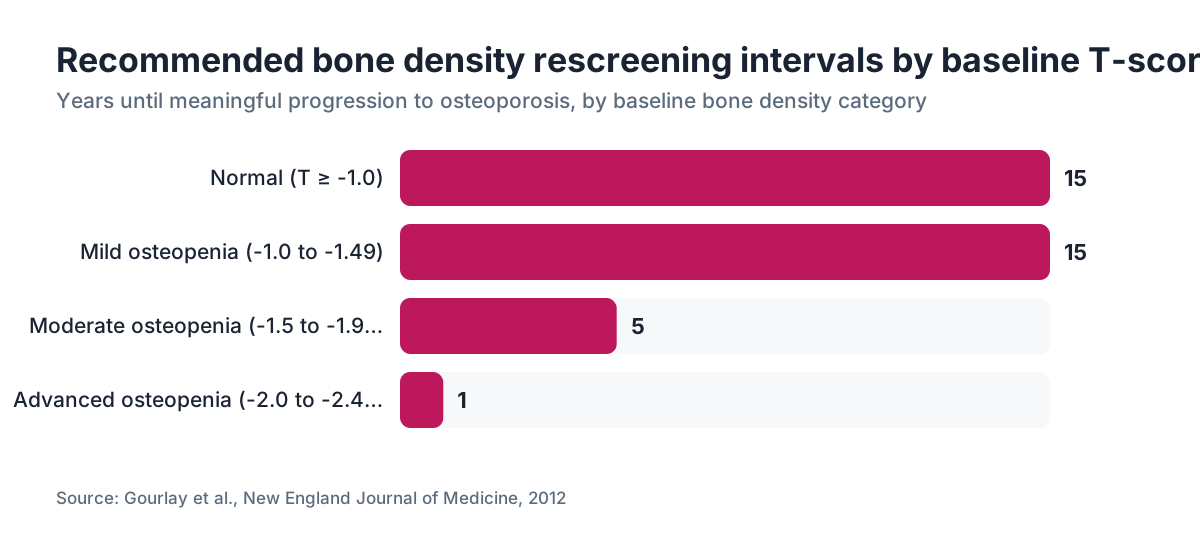
A 2012 study in the New England Journal of Medicine followed nearly 5,000 older women and found that women with normal baseline density or mild osteopenia (T-score above -1.5) could wait about 15 years before meaningful progression to osteoporosis. Women with moderate osteopenia (T-score -1.5 to -1.99) had a reasonable rescan interval of about 5 years. Women with advanced osteopenia (T-score -2.0 to -2.49) showed meaningful progression in about 1 year [6].
Here's what most clinicians do with that:
| Baseline T-score | Suggested rescreening interval | |---|---| | Normal (-1.0 and above) | 10-15 years | | Mild osteopenia (-1.0 to -1.49) | 10-15 years | | Moderate osteopenia (-1.5 to -1.99) | 3-5 years | | Advanced osteopenia (-2.0 to -2.49) | 1-2 years | | Osteoporosis (-2.5 and below) | 1-2 years (or per treatment protocol) |
On bone-protective medication (a bisphosphonate, denosumab, or hormone therapy), your clinician will typically retest every 1 to 2 years to see whether treatment is working. After a fragility fracture, expect closer monitoring.
What about perimenopause? Most guidelines say a baseline DEXA in your mid-40s doesn't change outcomes in an otherwise healthy woman. The exception is a major risk factor from the list above. For most women, a first scan at 65 (earlier if symptomatic or high-risk) is the right call. Perimenopause and early menopause do speed up bone loss, so if you want to know your starting point, a baseline scan in early menopause is a fair conversation to have with your doctor.
What happens to bone density during menopause?
Estrogen is bone's best friend. It slows the osteoclasts, the cells that break bone down, and keeps remodeling in balance. When estrogen drops through perimenopause and menopause, osteoclast activity outpaces bone formation. Bone loss accelerates.
The numbers are steep. Women typically lose 1 to 2 percent of bone mass per year in the years around their final period. Some lose up to 3 to 5 percent per year in the first few years after menopause [7]. By her mid-70s, a woman may have lost 30 to 40 percent of her peak bone mass if nothing intervenes.
Hip fractures are the consequence that matters most. About 300,000 Americans are hospitalized for hip fractures each year, and the majority are postmenopausal women. Roughly 20 percent die within a year, and many who survive never regain their independence [7].
For women thinking about menopause and bone health at the same time, this is the whole point of DEXA screening: catch the loss early, while treatment still changes the trajectory, and you may prevent the fracture that changes everything.
Perimenopause, the transition before menopause, can start years before periods stop. Knowing perimenopause age and when menopause starts helps you time your first scan.
Does hormone replacement therapy protect bone density?
Yes, and the evidence is strong. Hormone replacement therapy (HRT) preserves bone density and reduces fracture risk in postmenopausal women. The Women's Health Initiative found that women taking combined estrogen-progestin therapy had a 34 percent reduction in hip fractures compared to placebo [8].
HRT is not FDA-approved as first-line treatment for osteoporosis in women who are otherwise asymptomatic, because dedicated bone drugs (bisphosphonates, denosumab) have stronger fracture-trial data and fewer systemic effects to weigh. For a woman already taking HRT for hot flashes or broken sleep, though, the bone protection is a real secondary benefit.
Stop HRT and the protection fades within a few years. That's why women who discontinue should get a DEXA scan roughly 1 to 2 years later, to see where they've landed.
Progesterone's role in bone is murkier than estrogen's. Some observational data hints at a mild bone-preserving effect, but the evidence is much thinner. You can read more about progesterone and its full range of effects elsewhere on this site.
If you're weighing menopause symptoms against your bone health, providers who work in this space, including those at WomenRx, can read your DEXA results alongside your hormone profile and help you think through the trade-offs.
Can GLP-1 weight loss medications affect bone density?
Yes, and it's a question women on semaglutide or tirzepatide should take seriously. Large weight loss, by any method, is linked to a drop in bone mineral density. Part of the mechanism is mechanical: less body weight means less load on bones, and less load means weaker bone-building signals. Part is hormonal: fat tissue produces estrogen, so losing fat can lower estrogen.
Data from the STEP trials (which studied semaglutide for weight loss) showed measurable reductions in bone mineral density at the hip and spine in participants who lost substantial weight [9]. The reductions were modest in absolute terms but real, and they tracked with how much weight came off.
This doesn't make GLP-1 medications bad for bone. For most women with obesity, the net health math includes lower cardiovascular risk, better metabolic function, and less joint load, all of which can support the musculoskeletal system indirectly. It does mean three things:
- Women on GLP-1s at the age or risk level for screening should not skip their DEXA.
- Adequate protein (to hold onto lean mass), resistance exercise, and enough vitamin D and calcium matter more during rapid weight loss, not less.
- If you had osteopenia or borderline scores before starting a GLP-1, a follow-up DEXA 1 to 2 years into treatment is reasonable.
For how semaglutide and semaglutide vs tirzepatide compare across several health measures, those pages are worth reading alongside this one.
What does the bone density test procedure actually involve?
You lie on a padded table. The scanner arm passes slowly over your hip, then your lower spine. You hold still for a few minutes per site. No injections, no enclosed tube, no contrast dye. You keep your clothes on as long as they carry no metal, since zippers and belt buckles can interfere.
Preparation is almost nothing. Skip calcium supplements in the 24 hours before the scan, because high calcium in the gut can occasionally throw off soft-tissue readings. Tell the technician if you've had a barium X-ray or nuclear medicine scan in the prior 7 to 10 days, since leftover contrast can inflate density numbers. If you're pregnant, the test waits.
Results usually come back within a few days. The report goes to your ordering physician, who should walk you through the T-score, Z-score, and what they mean for you specifically. Some imaging centers hand you a patient-friendly written explanation. Many don't. Go in knowing what to ask, and the whole appointment runs 30 minutes or less from check-in to door.
How much does a bone density test cost?
Cost swings hard depending on your insurance and where you live. Here's a realistic picture.
With Medicare Part B: DEXA screening for osteoporosis is a covered preventive benefit for eligible at-risk women, with no cost-sharing (no copay, no deductible) when a Medicare-participating provider orders it. Covered frequency is once every 24 months, or more often when medically necessary [10].
With private insurance: Most ACA-compliant plans cover DEXA as a preventive service with no out-of-pocket cost for women who meet USPSTF screening criteria (age 65+, or younger postmenopausal women with risk factors). Diagnostic DEXA, ordered because of a fracture or symptoms, typically counts toward your deductible.
Without insurance: Cash-pay prices run about $75 to $300 at hospital radiology departments. Free-standing imaging centers often charge $100 to $150. Some mobile screening vans charge $35 to $75 for a peripheral scan of the wrist or heel, but that's a screening tool, not a diagnostic DEXA.
If cost is the barrier, the Bone Health and Osteoporosis Foundation runs a provider locator, and many county health departments hold periodic free or reduced-cost screening events.
What if your bone density test shows osteopenia or osteoporosis?
A low score is information, not a sentence. Plenty of women with osteopenia never fracture. Some with osteoporosis do. The job is to understand your own trajectory and act early enough to bend it.
Osteopenia: Most women with mild-to-moderate osteopenia don't need prescription medication. The things that actually move bone are lifestyle-based: weight-bearing exercise (walking, hiking, dancing, strength training), adequate calcium (1,000 mg/day for women under 50, 1,200 mg/day for women 51 and older, ideally from food), vitamin D (the Endocrine Society recommends 1,500 to 2,000 IU/day to keep serum levels above 30 ng/mL in adults at risk for deficiency) [11], not smoking, limiting alcohol, and fall-proofing your home.
Osteoporosis: Prescription treatment is usually warranted. First-line drugs are bisphosphonates: alendronate (Fosamax), risedronate (Actonel), or zoledronic acid (Reclast, an annual IV infusion). They inhibit osteoclast activity and have solid fracture-reduction data. Denosumab (Prolia) is an injection every six months that cuts fracture risk in postmenopausal women with osteoporosis. For severe cases or very high fracture risk, anabolic agents like teriparatide (Forteo) or romosozumab (Evenity) build new bone rather than just slowing loss.
HRT as part of the picture: If you're also managing menopause symptoms and your doctor has already raised hormone replacement therapy or an estrogen patch, the bone benefit of estrogen is real and worth weighing in the overall plan.
The NAMS position statement on osteoporosis states: "Estrogen therapy is effective for the prevention of postmenopausal bone loss and has been shown to reduce the risk of osteoporosis-related fractures, including hip fractures" [5].
What lifestyle changes actually improve bone density?
Exercise is the most underused bone intervention there is, and the type matters. Aerobic walking helps a little. Resistance training and impact work drive far stronger bone-building signals. Studies consistently show that progressive weight training two to three times per week improves spine and hip BMD in postmenopausal women by roughly 1 to 3 percent over one to two years [12]. That's meaningful when the alternative is losing 1 to 2 percent a year.
High-impact activities like jumping, dancing, and brisk hiking generate ground reaction forces that stimulate osteoblasts, the bone-building cells. Even 10 to 20 minutes of them, several times a week, counts. Swimming and cycling are excellent for the heart but do almost nothing for bone density, because they carry no weight.
Calcium from food beats supplements for most people. Good sources: dairy (milk, yogurt, hard cheese), fortified plant milks, sardines with bones, white beans, and leafy greens like kale and bok choy. If diet falls short, supplemental calcium can fill the gap (calcium citrate absorbs better than calcium carbonate, especially if you take acid-blocking medication). Split the dose. 500 mg at a time absorbs better than 1,000 mg at once.
Vitamin D lets calcium get absorbed at all. Many American women are deficient without knowing it. A 25-hydroxyvitamin D blood test tells you where you stand; most experts aim for a level of 40 to 60 ng/mL.
Smoking damages bone directly, lowering estrogen and impairing bone cell function. More than two drinks a day is linked to lower bone density and higher fall risk. Both are things you can change.
Are there risks or limitations to a bone density test?
DEXA is about as low-risk as medical tests get. The radiation dose, roughly 1 to 10 microsieverts depending on the machine and protocol, is genuinely trivial [1]. No contrast agents, no needles, no enclosed tube.
The limitations are worth knowing. DEXA measures areal bone mineral density, a 2-D projection of a 3-D structure. So a larger person, or someone with tall vertebral bodies, can look denser simply because more bone is projected onto a flat area. This is one reason Z-scores exist: they at least compare you to people of similar age.
DEXA also can't separate real bone loss from artifacts like aortic calcification, old vertebral fractures, or osteophytes (bone spurs), all of which push apparent spine density up. That's common in older women, who can show a normal or even high spine T-score while their bone quality is genuinely reduced. Hip measurements tend to be more reliable in older populations.
And DEXA reports density, not bone quality. Two women can share a T-score and carry very different fracture risk, because architecture, microstructure, and turnover rate differ. That's part of why FRAX adds predictive value beyond the scan.
One more thing. Different machines and software versions produce results you can't always compare directly. If you're tracking bone density over time, get every scan on the same machine (or at least the same scanner model) at the same facility. It's the most reliable way to see real change.
Frequently asked questions
At what age should a woman get her first bone density test?
The USPSTF recommends a first DEXA at age 65 for average-risk women. If you are postmenopausal and younger than 65 but have risk factors, such as early menopause before 45, long-term steroid use, a previous fracture, low body weight, or a family history of hip fracture, a first scan before 65 is appropriate. Talk to your doctor about your specific profile to set the right timing.
How often should you get a bone density test after the first one?
It depends on your T-score. Women with normal density or mild osteopenia can usually wait 10 to 15 years before rescanning. Moderate osteopenia warrants a rescan in 3 to 5 years. Advanced osteopenia or osteoporosis typically calls for a repeat scan in 1 to 2 years, or sooner if you start prescription bone therapy. Medicare covers DEXA every 24 months for eligible beneficiaries.
Is a bone density test the same as a DEXA scan?
Yes. A bone density test almost always refers to a DEXA (dual-energy X-ray absorptiometry) scan. DEXA and DXA are the same thing, just different spellings. Other tests like quantitative CT or peripheral DEXA also measure bone density, but when your doctor orders a bone density test, they almost certainly mean a hip-and-spine DEXA scan.
What T-score means you have osteoporosis?
A T-score of -2.5 or lower, at either the hip or lumbar spine, meets the World Health Organization's definition of osteoporosis. A T-score between -1.0 and -2.4 is osteopenia (low bone mass). A score of -1.0 or above is normal. These thresholds came from population data in postmenopausal white women and are now used broadly across demographic groups.
Does menopause cause bone density to drop?
Yes, significantly. Estrogen suppresses bone breakdown, so when estrogen drops at menopause, osteoclast activity accelerates. Women typically lose 1 to 2 percent of bone mass per year in early menopause, and some lose up to 3 to 5 percent annually in the first few years after their final period. This is why osteoporosis is far more common in postmenopausal women than in men of the same age.
Can hormone therapy (HRT) improve bone density?
HRT preserves and modestly improves bone density in postmenopausal women. The Women's Health Initiative found a 34 percent reduction in hip fractures in women taking combined estrogen-progestin therapy. HRT is not FDA-approved as primary osteoporosis treatment when bone protection is the only goal, but it is a recognized prevention option for women who also have menopause symptoms. Bone benefit diminishes when HRT is stopped.
Do GLP-1 medications like semaglutide affect bone density?
Data from STEP trials showed that significant weight loss with semaglutide was associated with modest reductions in hip and spine bone mineral density. The effect appears to track with how much weight is lost. Women on GLP-1s who are at bone-screening age should not skip their DEXA. Resistance exercise, adequate protein, calcium, and vitamin D become especially important during rapid weight loss.
How do you prepare for a bone density test?
Almost no preparation is needed. Avoid calcium supplements in the 24 hours before your scan, since large amounts of calcium in the gut can occasionally affect readings. Tell the technician about any recent barium or nuclear medicine contrast studies (within 7-10 days). Wear clothes without metal hardware. Pregnancy is a contraindication. Otherwise, you can eat, drink, and take your usual medications normally.
How long does a bone density test take?
The DEXA scan itself takes 10 to 20 minutes. The machine measures two sites, usually the hip and lumbar spine. Your total time at the facility is typically 30 minutes or less, including check-in and the brief setup. Results are usually available within a few days, sent to your ordering physician, who then reviews them with you.
What exercises help build bone density in postmenopausal women?
Weight-bearing and resistance exercises are most effective. Progressive strength training two to three times per week can improve spine and hip BMD by 1 to 3 percent over one to two years. High-impact activities like brisk walking, dancing, hiking, and jumping also stimulate bone formation. Swimming and cycling are excellent for the heart but do not meaningfully improve bone density because they are non-weight-bearing.
Is a bone density test covered by insurance?
For most women, yes. Medicare Part B covers DEXA every 24 months (or more often if medically necessary) for eligible at-risk women, with no cost-sharing. ACA-compliant private plans cover DEXA as a preventive service with no out-of-pocket cost for women meeting USPSTF criteria (65+, or younger postmenopausal women with risk factors). Without insurance, cash prices range from roughly $75 to $300 at hospital radiology centers.
What is the difference between a T-score and a Z-score on a bone density test?
A T-score compares your bone density to that of a healthy young adult at peak bone mass. It is used to diagnose osteopenia and osteoporosis. A Z-score compares you to people your own age and sex. A Z-score below -2.0 suggests your bone loss is abnormal even for your age, which prompts investigation for secondary causes like medication side effects, malabsorption, or hormonal disorders.
Can osteoporosis be reversed with treatment?
Full reversal is rare, but meaningful improvement is achievable. Anabolic medications like teriparatide (Forteo) and romosozumab (Evenity) stimulate new bone formation and can raise BMD by 9 to 13 percent at the spine over 18 to 24 months of treatment. Antiresorptive drugs like bisphosphonates and denosumab slow or stop bone loss and cut fracture risk significantly, though they produce more modest density gains.
What is a FRAX score and how is it different from a T-score?
A FRAX score estimates your 10-year probability of a major osteoporotic fracture (spine, hip, forearm, or shoulder) by combining your T-score with clinical risk factors: age, sex, weight, height, family history, smoking, alcohol intake, prior fractures, and certain medications. A T-score alone tells you bone density; FRAX tells you actual fracture risk. Many clinicians use a FRAX score above 20 percent for major fracture as a threshold for prescribing bone medication.
Sources
- MedlinePlus / National Library of Medicine: Bone density scan (DEXA)
- World Health Organization: WHO criteria for diagnosis of osteoporosis
- University of Sheffield: FRAX Fracture Risk Assessment Tool
- U.S. Preventive Services Task Force: Osteoporosis to Prevent Fractures, Screening (2018)
- North American Menopause Society: NAMS Menopause Practice guidelines on osteoporosis
- Gourlay ML et al., New England Journal of Medicine, 2012: Bone-Density Testing Interval and Transition to Osteoporosis in Older Women
- National Institutes of Health, Office of Dietary Supplements: Calcium fact sheet for health professionals
- Women's Health Initiative Investigators, JAMA 2002: Risks and Benefits of Estrogen Plus Progestin in Healthy Postmenopausal Women
- Wilding JPH et al., NEJM 2021 (STEP 1 trial): Once-Weekly Semaglutide in Adults with Overweight or Obesity
- Medicare.gov: Bone mass measurements coverage
- Endocrine Society Clinical Practice Guideline: Evaluation, Treatment, and Prevention of Vitamin D Deficiency (2011)
- Kohrt WM et al., Medicine and Science in Sports and Exercise 2004: Physical activity and bone health position stand (ACSM)