What is the lowest dose of estrogen for menopause?
TL;DR: The lowest dose estrogen patch on the US market delivers 0.014 mg (14 mcg) of estradiol per day. For broader symptom relief, most clinicians start at 0.025 mg/day. Oral and gel options go as low as 0.5 mg and 0.25 mg respectively. The right dose is the one that controls your symptoms at the smallest effective amount, per FDA and NAMS guidance.
What is the lowest dose of estrogen approved for menopause?
The FDA has approved a 0.014 mg per day transdermal estradiol patch (brand name Menostar) specifically for the prevention of postmenopausal osteoporosis. That is the lowest estrogen patch dose on the US market. It is not approved to treat hot flashes or other vasomotor symptoms, because the dose is too low to reliably suppress them. [1]
For symptom relief, the lowest dose estrogen patch that most manufacturers and clinicians consider a true "starting" dose is 0.025 mg per day. Patches in this range (brands include Vivelle-Dot, Climara, and generics) are approved for both vasomotor symptoms and bone preservation. [2]
Other delivery forms go even lower in milligram terms because they use different absorption math. FDA-approved oral estradiol tablets start at 0.5 mg daily. Estradiol gels (Divigel, EstroGel) are available in doses as low as 0.25 g per pump, delivering roughly 0.0215 mg of estradiol per day. Vaginal estradiol products for genitourinary symptoms only sit at microgram doses (the 10 mcg vaginal insert, Vagifem, is a common example) and are considered local therapy, not systemic. [3]
The core principle, stated in the Menopause Society (NAMS) 2023 position statement, is that clinicians should use the lowest dose that achieves the treatment goal for each individual woman. [4]
How do estrogen patch doses compare across products?
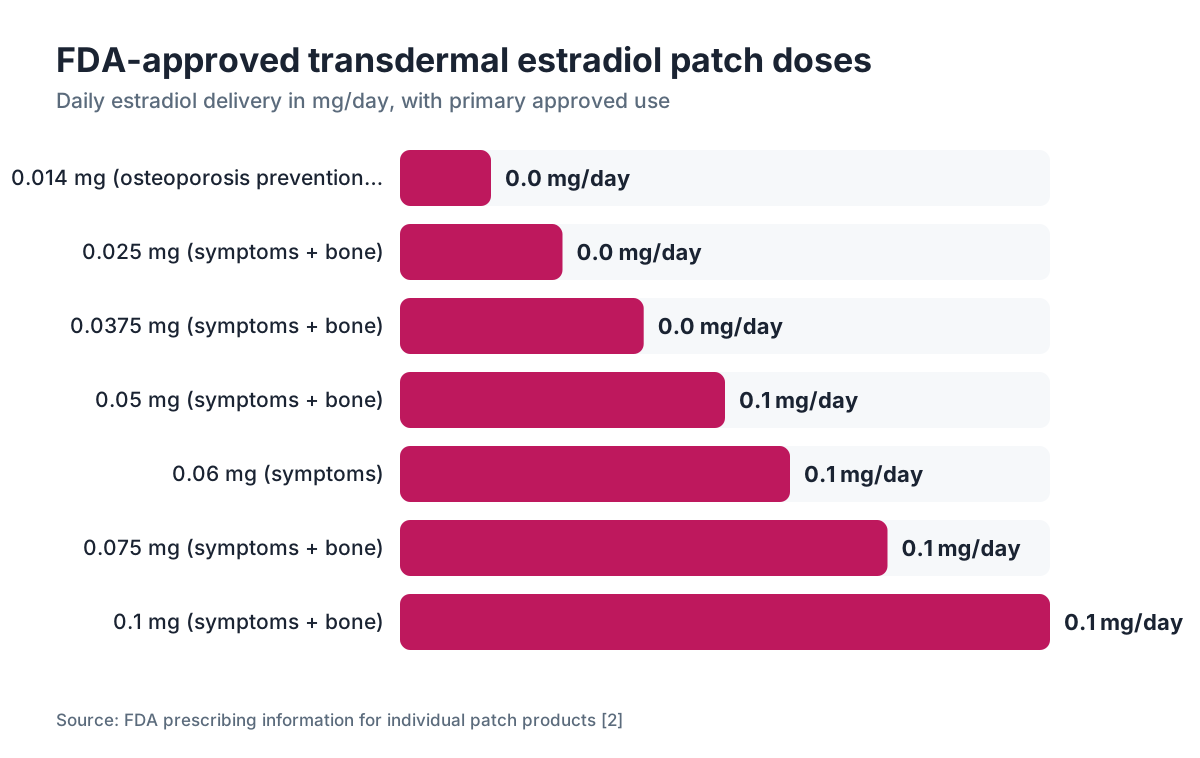
Patch doses are expressed in milligrams of estradiol released per day. The table below shows the main FDA-approved transdermal estradiol patch dose tiers, from lowest to highest. Generic equivalents exist at most dose levels.
| Dose (mg/day) | Change interval | Primary FDA-approved uses | |---|---|---| | 0.014 mg | Weekly | Osteoporosis prevention only | | 0.025 mg | Twice weekly or weekly | Vasomotor symptoms, osteoporosis prevention | | 0.0375 mg | Twice weekly or weekly | Vasomotor symptoms, osteoporosis prevention | | 0.05 mg | Twice weekly or weekly | Vasomotor symptoms, osteoporosis prevention | | 0.06 mg | Twice weekly | Vasomotor symptoms | | 0.075 mg | Twice weekly or weekly | Vasomotor symptoms, osteoporosis prevention | | 0.1 mg | Twice weekly or weekly | Vasomotor symptoms, osteoporosis prevention |
Source: FDA prescribing information for individual patch products [2]
A few things stand out in this table. The 0.014 mg patch is its own category: it keeps serum estradiol in a range that preserves bone but does not reliably stop hot flashes. Women who need both bone protection and symptom relief almost always need at least 0.025 mg. Women whose only concern is vaginal dryness and urinary symptoms can often use local vaginal estrogen at doses so small they produce negligible systemic absorption. [3]
What is the lowest dose of estrogen patch that actually controls hot flashes? The honest answer is that it varies by person. Some women get meaningful relief at 0.025 mg. Others need 0.05 mg or higher. The Women's Health Initiative used 0.625 mg conjugated equine estrogen orally, which sits on the higher end. Newer evidence supports starting low and titrating up rather than starting high. [5]
Why does the "lowest effective dose" principle matter so much?
FDA-approved labeling for estrogen therapies directs prescribers to use the lowest effective dose for the shortest duration consistent with the treatment goal. That language sits in the approved labeling itself. [2] It got emphasized hard after the Women's Health Initiative (WHI) results published in 2002 and 2004 raised questions about breast cancer and cardiovascular risk at the higher doses used in older postmenopausal women. [5]
What those early WHI headlines obscured is that the study enrolled women who were, on average, 63 years old at enrollment, well past the typical menopause transition, and used doses higher than most current practice. Later reanalysis and newer research showed that women who start hormone therapy close to menopause (the "timing hypothesis" or "window of opportunity") appear to have a more favorable risk profile than women who start a decade later. [6]
None of that changes the practical clinical principle: start low, give it 8 to 12 weeks, assess symptom control and side effects, and adjust. Women are not all the same. Absorption through skin varies by body site, hydration, and individual metabolism. A 0.025 mg patch in one woman may produce serum estradiol of 20 pg/mL; in another woman the same patch produces 45 pg/mL. [4]
Too-low dosing leaves symptoms undertreated. Too-high dosing can bring breast tenderness, bloating, headaches, and potentially higher long-term risk. Getting the dose right matters for both comfort and safety. [4]
What is the lowest oral estrogen dose for menopause?
Oral estradiol (not conjugated equine estrogen) is available in 0.5 mg tablets, the lowest approved tablet dose in the US. [3] The older standard of 0.625 mg conjugated equine estrogen (Premarin) was used in the WHI and is still prescribed, but 0.625 mg CEE is not the same as 0.625 mg estradiol. Bioidentical oral estradiol at 0.5 mg is a low-dose option.
Oral estrogen goes through first-pass liver metabolism, which is why the milligram numbers look higher than patch doses. A 0.5 mg oral estradiol tablet produces systemic effects roughly comparable to a 0.025 mg patch in many (not all) women, though the oral route raises clotting factors and sex hormone-binding globulin because of that liver passage. [6] That is one reason many menopause specialists now prefer the patch or gel for women with any elevated clotting risk.
Compounded "bi-est" and "tri-est" oral formulas are also used, but they lack FDA approval, are not standardized across pharmacies, and have no head-to-head safety data against approved products. The Endocrine Society and NAMS both recommend FDA-approved formulations as the default. [4]
Is there a lowest dose for vaginal estrogen specifically?
Local vaginal estrogen is a separate category. It targets genitourinary syndrome of menopause (GSM), which includes vaginal dryness, painful sex, and urinary urgency. These products are designed to minimize systemic absorption.
The lowest-dose vaginal options include the 10 mcg estradiol vaginal insert (Vagifem and generics) and the 4 mcg insert (Yuvafem). The vaginal ring Estring releases about 7.5 mcg per day. Premarin vaginal cream at low doses (0.5 g, two to three times per week after an initial daily course) is another option. [3]
Because systemic absorption from these local products is very low, NAMS states that women who use local vaginal estrogen for GSM alone generally do not need to add progestogen, even if they have a uterus. That is a meaningful practical point: women who take systemic estrogen and have a uterus must add progesterone to protect the uterine lining, but local vaginal therapy at low doses typically does not trigger that requirement. [4] Talk it through with your prescriber; this is not a one-size-fits-all rule.
To understand the progesterone piece of the hormone therapy picture, including who needs it and which forms exist, that context matters a lot here.
How do doctors decide what estrogen dose to start with?
Most menopause-focused clinicians start with 0.025 mg/day via patch (or the gel equivalent) and reassess at 8 to 12 weeks. If symptoms persist and labs or symptoms suggest low systemic levels, the dose goes up. If a woman is very sensitive to hormones or has specific risk factors, the clinician may start even lower. [4]
Factors that push toward a lower starting dose include a history of migraines that worsen with hormonal fluctuation, elevated baseline cardiovascular risk, current use of medications that affect estrogen metabolism (some anticonvulsants, for example), and a woman's own comfort level with hormonal therapy.
Factors that push toward a higher starting dose include severe hot flashes disrupting sleep every night, documented low bone density, surgical menopause (ovaries removed), or premature ovarian insufficiency, where estrogen needs tend to be higher because the woman is replacing levels that should naturally be present for years more. [4]
Serum estradiol testing is not always required, but it helps when someone is not responding to an apparently adequate dose, or when symptoms look like over-dosing. There is no universally agreed "therapeutic range" for menopause symptom relief. Most clinicians aim for serum estradiol between roughly 40 and 100 pg/mL for symptom control, though practice varies. [4]
If you want individualized guidance and lab review without waiting months for a gynecology appointment, telehealth platforms like WomenRx offer clinician-supervised hormone evaluation and prescribing that includes dose selection based on your symptom picture and history.
Does the lowest dose of estrogen protect bone density?
The 0.014 mg/day patch (Menostar) was approved for osteoporosis prevention because clinical data showed it could slow bone loss even at that low dose. The registration study for FDA approval showed statistically significant preservation of lumbar spine bone mineral density compared to placebo at two years. [1]
At 0.025 mg/day, the evidence for bone protection is stronger. Multiple trials show that standard patch doses in the 0.025 to 0.05 mg range slow the rate of bone loss compared to no treatment, and some data show increases in bone mineral density over two to three years of use. [7]
Bone density declines fastest in the first few years after menopause. If bone protection is a primary goal, your clinician should confirm the dose is adequate, either by checking a bone density test at baseline and after one to two years of therapy, or by monitoring bone turnover markers. A dose that controls hot flashes does not automatically protect your skeleton, particularly at the 0.014 mg level. [7]
Weight-bearing exercise, adequate calcium and vitamin D, and avoiding smoking do not replace estrogen but work alongside it. For women who cannot take estrogen, alternatives like bisphosphonates exist and are separately evaluated.
What about compounded low-dose estrogen, is it a real option?
Compounding pharmacies can prepare custom estradiol doses (patches, creams, troches, capsules) in concentrations not available commercially. Women sometimes turn to compounded hormone therapy when they want a dose lower than 0.025 mg systemically, or a particular delivery format.
The FDA has noted that compounded hormone therapy is not FDA-approved and lacks the same standardization as commercial products. Potency, sterility, and stability can vary by compounding pharmacy. [8] NAMS and the Endocrine Society both recommend preferring FDA-approved products when they exist in a suitable dose and form, reserving compounding for situations where no FDA-approved option meets the clinical need. [4]
That said, compounding is legal and sometimes clinically useful. A woman who needs a 0.02 mg/day patch (not a commercially available dose), or a cream formulated without certain preservatives, may have a legitimate reason. The key is using a licensed, accredited compounding pharmacy (look for PCAB accreditation) and a clinician who monitors response with labs and symptom checks rather than treating it as set-and-forget. [8]
What are the signs that your estrogen dose is too low?
The most obvious sign is persistent symptoms. Hot flashes continuing at the same frequency and intensity after 8 to 12 weeks on a stable dose suggest the dose is not adequate for you. Night sweats disrupting sleep, ongoing brain fog, continued vaginal dryness despite systemic therapy, and mood instability that was present before starting and has not improved are all signals to reassess. [4]
Some women feel better within two to four weeks at an appropriate dose. Others take the full eight to twelve weeks. If you are at the 12-week mark and still have moderate-to-severe symptoms, a dose increase is worth discussing. Going from 0.025 mg to 0.05 mg/day is a common step up.
Low bone density on a repeat scan after one to two years of treatment is another sign the dose may be inadequate for skeletal purposes, even if your hot flashes have improved.
Blood levels help but are imperfect. A serum estradiol below 40 pg/mL while on systemic therapy often correlates with undertreated symptoms, though some women genuinely feel fine at lower levels. If you are using a patch and your level is very low, check the application site. Skin on the abdomen and buttocks absorbs more reliably than the outer thigh in some studies. Rotating sites, keeping the patch dry for the first hour after application, and avoiding lotions on the application area are all practical absorption tips. [4]
What are the signs your estrogen dose is too high?
Breast tenderness is the most common complaint at too-high estrogen levels. Other over-dose signs include headaches (especially around patch change days), bloating, nausea, and spotting or breakthrough bleeding if you are also on cyclic progestogen. [4]
If you have any of these, do more than pull the patch and quit. Talk to your prescriber. Often a dose reduction (say, from 0.05 mg to 0.025 mg) or a different delivery form resolves the issue. Sometimes the problem is the progestogen type rather than the estrogen dose, particularly if the symptom is mood changes or bloating.
Women with estrogen-sensitive conditions, including certain types of uterine fibroids or a history of estrogen-receptor positive breast cancer, need individualized risk-benefit assessment with their oncologist or a specialist. The standard lowest-effective-dose guidance applies, but the risk-benefit math is different. [4]
How does perimenopause change the dose picture?
Perimenopause is not the same as postmenopause, and this changes the dose picture. During perimenopause, the ovaries are still producing estrogen but erratically. Some weeks estrogen runs high; others it crashes. Adding a fixed-dose estrogen patch on top of fluctuating ovarian production can over-dose you in high-estrogen weeks and under-dose you in crash weeks. [9]
For this reason, some clinicians prefer to manage perimenopause symptoms with low-dose oral contraceptives or other approaches before transitioning to postmenopausal hormone therapy after the final menstrual period is confirmed (typically 12 consecutive months without a period). Others do prescribe low-dose estrogen therapy in perimenopause, particularly for women in their mid-to-late 40s with clear symptoms and no contraindications. [9]
If you are in your 40s and wondering whether symptoms signal perimenopause or something else, the perimenopause age overview and the when does menopause start explainer both address timing and symptom overlap in practical terms.
For perimenopausal women who do use a patch, the 0.025 mg dose is still typically the starting point, with close follow-up. Because ovarian function is so unpredictable in perimenopause, symptom-based monitoring (rather than just lab numbers) matters especially during this phase. [4]
How do you find the right prescriber for low-dose estrogen therapy?
Finding someone who actually knows menopause medicine well matters more than it should. Many primary care providers got limited training in menopause hormone therapy and default to either refusing to prescribe or prescribing high doses without titration. The Menopause Society (formerly NAMS) maintains a clinician finder at menopause.org that lists certified practitioners. [4]
Telehealth has expanded access here. For women in states where telehealth prescribing is available, platforms that specialize in women's hormones can often schedule an initial visit far faster than a local OB-GYN. WomenRx offers exactly this for hormone replacement therapy, with clinician review of your symptom picture, history, and relevant labs before any prescription is written.
Bring these to any prescriber visit: a log of your symptoms (frequency, severity, time of day), your last bone density scan if you have one, a list of current medications, and any personal or family history of breast cancer, blood clots, stroke, or cardiovascular disease. That context lets a clinician calibrate a dose recommendation to you rather than a default.
The estrogen patch article on this site goes deeper on how patches work mechanically, how to apply them correctly, and what to do if one falls off, which is practical information once you have a prescription in hand.
Frequently asked questions
What is the lowest dose of estrogen for menopause available in the US?
The lowest FDA-approved systemic estrogen dose for menopause is the 0.014 mg per day transdermal estradiol patch (Menostar), approved for osteoporosis prevention only. For hot flash relief, the lowest commonly prescribed patch dose is 0.025 mg per day. Oral estradiol starts at 0.5 mg. Vaginal estradiol for local genitourinary symptoms goes as low as 4 to 10 mcg and is not considered systemic therapy.
What is the lowest dose estrogen patch for menopause symptoms like hot flashes?
The lowest estrogen patch dose typically used for vasomotor symptoms (hot flashes, night sweats) is 0.025 mg per day. The 0.014 mg patch is FDA-approved only for bone protection and does not reliably suppress hot flashes. Some women do get partial symptom relief at 0.025 mg; others need 0.05 mg or higher. An 8 to 12 week trial at a starting dose is standard before adjusting.
Is 0.025 mg estrogen patch enough for menopause symptoms?
For many women, yes. The 0.025 mg per day patch is the standard low starting dose for systemic estrogen therapy, and clinical trials show it reduces vasomotor symptom frequency significantly compared to placebo. However, roughly 30 to 40 percent of women do not get adequate relief at this dose and need a step up to 0.05 mg. Response varies by individual absorption and baseline estradiol levels.
How do I know if my estrogen dose is too low?
Persistent hot flashes, night sweats, sleep disruption, brain fog, and vaginal dryness after 8 to 12 weeks on a stable dose are the main signals. A serum estradiol level below roughly 40 pg/mL while on systemic therapy also suggests undertreatment in many women, though labs alone are not the whole story. Discuss dose adjustment with your prescriber rather than stopping and restarting.
Do I need progesterone with low-dose estrogen therapy?
If you have a uterus and are taking systemic estrogen (patch, gel, oral), yes, you need progestogen to protect the uterine lining from endometrial hyperplasia and cancer. This applies at any systemic dose, including 0.025 mg patches. Women using only local vaginal estrogen for genitourinary symptoms generally do not need progestogen. Women without a uterus do not need it either. See the progesterone article for form and dosing options.
What is the lowest dose of estrogen that protects against bone loss after menopause?
The FDA approved the 0.014 mg per day estradiol patch specifically for osteoporosis prevention, making it the lowest documented bone-protective systemic estrogen dose. At 0.025 mg per day, the evidence for bone preservation is stronger across multiple trials. For confirmed low bone density, your prescriber may also consider bone mineral density monitoring alongside estrogen to verify the dose is working.
Can I use estrogen cream or gel at a lower dose than the patch?
In milligram terms, yes. Estradiol gels like EstroGel come in doses starting around 0.025 g per day (delivering roughly 0.0215 mg estradiol). Compounded creams can be made at even lower concentrations. However, gel absorption varies more with application technique than patches do. The lowest approved gel dose is not necessarily lower in systemic effect than the 0.025 mg patch; it depends on actual absorption in your skin.
Is it safe to stay on a low dose of estrogen long term?
The Menopause Society's 2023 position statement says that for women under 60 or within 10 years of menopause without contraindications, the benefits of hormone therapy generally outweigh the risks, and there is no arbitrary time limit for appropriate candidates. Long-term use at the lowest effective dose, with regular reassessment (usually annually), is considered reasonable. Women with certain risk factors need individualized evaluation.
What is the difference between bioidentical and conventional low-dose estrogen?
Bioidentical estradiol has the same molecular structure as the estrogen your ovaries produced. FDA-approved estradiol patches, gels, and pills are bioidentical by this definition. Conjugated equine estrogen (Premarin) is not bioidentical. The distinction matters less than people think for safety; what matters more is dose, route, and whether your prescriber is monitoring your response. FDA-approved bioidentical products are standardized; compounded ones are not.
Can I cut an estrogen patch to get a lower dose?
Technically some matrix-type patches can be cut to deliver a proportionally lower dose, and some clinicians do recommend this for fine-tuning. Reservoir-type patches should not be cut because cutting breaches the drug reservoir. The FDA does not officially endorse cutting patches. If you need a dose between standard increments, discuss with your prescriber whether cutting your specific patch type is appropriate or whether a gel or cream would give better control.
Does age affect what estrogen dose is appropriate?
Yes, in two ways. Women starting hormone therapy closer to menopause (under 60, or within 10 years of menopause) appear to have a more favorable risk profile than women starting later, which influences the risk-benefit calculation even if it does not change the dose per se. Older women or those starting therapy more than a decade after menopause are generally treated more cautiously, with lower doses and more frequent reassessment of ongoing need.
What happens if I stop low-dose estrogen suddenly?
Symptoms often return, sometimes abruptly, within weeks of stopping. Hot flashes and night sweats can come back at the same severity or worse than before therapy. Gradual tapering (reducing dose before stopping) is commonly recommended to smooth the transition, though evidence that tapering beats abrupt discontinuation is limited. If you want to stop estrogen, discuss a tapering plan with your prescriber rather than just removing the patch.
Is local vaginal estrogen really a different category from systemic low-dose estrogen?
Yes. Low-dose vaginal estrogen (10 mcg inserts, 4 mcg inserts, Estring ring at 7.5 mcg per day) treats genitourinary symptoms locally with minimal systemic absorption. It does not reliably treat hot flashes or protect bone at these doses. Women who only need GSM treatment can use vaginal estrogen without meaningful systemic effects, and without progestogen even if they have a uterus, per NAMS 2023 guidance.
How long does it take for a low-dose estrogen patch to work?
Most women notice some symptom improvement within two to four weeks. Full effect at a given dose takes 8 to 12 weeks. Clinicians typically schedule a follow-up at the 8 to 12 week mark to assess response before deciding whether to stay at the current dose or adjust. Bone-protective effects take longer to see on a DXA scan, typically 12 to 24 months of consistent use.
Sources
- FDA, Menostar (estradiol transdermal system) prescribing information
- FDA, Vivelle-Dot (estradiol transdermal system) prescribing information
- FDA, Approved Drug Products with Therapeutic Equivalence Evaluations (Orange Book)
- The Menopause Society (NAMS), 2023 Hormone Therapy Position Statement
- Writing Group for the Women's Health Initiative Investigators, JAMA 2002
- Rossouw JE et al., JAMA 2007, WHI timing hypothesis reanalysis
- Cauley JA et al., Journal of Bone and Mineral Research 2001, estrogen dose and bone mineral density
- FDA, Compounded Drug Products that are Copies of Commercially Available Drug Products Under Section 503A, guidance document
- Santoro N et al., Journal of Clinical Endocrinology and Metabolism 2016, perimenopause hormone management
- Endocrine Society, Clinical Practice Guideline: Treatment of Symptoms of the Menopause 2015
- Shifren JL, Gass ML, NAMS Recommendations for Clinical Care of Midlife Women, Menopause 2014
- Archer DF et al., Fertility and Sterility 1999, Menostar bone density trial