Best over-the-counter options for menopause symptoms, ranked
TL;DR: No single OTC product fixes every menopause symptom, but a few have real evidence. Vaginal moisturizers work well for dryness. Black cohosh gives modest hot flash relief. Melatonin and magnesium help sleep. Prescription hormone therapy still beats everything for moderate-to-severe symptoms. This guide ranks what works, what's a waste of money, and when to call a clinician.
What counts as an OTC option for menopause?
Over-the-counter means you buy it without a prescription. For menopause, that bucket holds dietary supplements, herbal products, vaginal moisturizers and lubricants, nonprescription sleep aids, and a small number of low-dose vaginal estrogen products whose access varies by state. It leaves out systemic hormone therapy, most prescription vaginal estrogens, and every compounded bioidentical hormone product.
The line matters because the FDA regulates supplements and drugs on different terms. Supplements don't have to prove they work before they hit the shelf. Drugs do. So when a bottle says "menopause relief," the real question is whether it passed a clinical trial or just passed a label review. Most never faced a randomized controlled trial large enough to trust.
A handful of OTC options do have respectable evidence. Sorting those from the noise is the whole point here.
What are the most common menopause symptoms OTC products target?
Hot flashes, night sweats, vaginal dryness, sleep disruption, mood changes, and weight changes are the symptoms women report most, according to The Menopause Society [1]. OTC products exist for every one of them. The quality of evidence swings wildly from category to category.
Hot flashes are the most studied target. Vaginal dryness is the one area where OTC drugs and near-OTC options genuinely help. Sleep disruption has a few nonprescription choices worth a look. Menopause weight gain is real, driven partly by falling estrogen and partly by age-related muscle loss, and it's the hardest to touch without medical support.
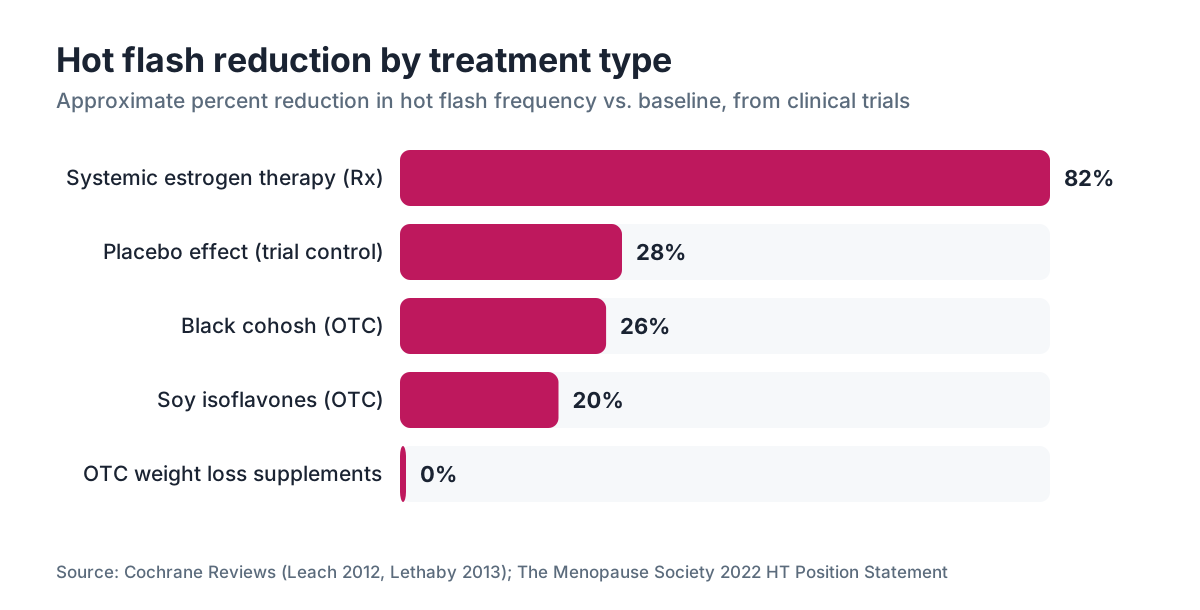
Here's the part nobody puts on the label: OTC products rarely erase symptoms. Most trials show a 20 to 50 percent cut in hot flash frequency at best, against a 75 to 90 percent cut from systemic estrogen therapy [2]. Know that gap before you spend a dime.
Which OTC products have the best evidence for hot flashes?
Black cohosh is the most studied herbal option for hot flashes and night sweats. A Cochrane review of 16 randomized trials found modest but real reductions in hot flash frequency, though the authors flagged uneven study quality and inconsistent effect sizes [3]. Germany's Commission E approved it for menopause complaints at 40 mg per day of standardized extract. Safety data out to six months looks reasonably clean. Long-term data is thin. Women with a history of estrogen-receptor-positive breast cancer are usually told to avoid it, though the evidence on that specific risk is mixed.
Soy isoflavones and red clover carry phytoestrogens that bind estrogen receptors weakly. Meta-analyses find roughly a 20 percent drop in hot flash frequency versus placebo. That sounds fine until you learn placebo itself cuts hot flashes by 25 to 30 percent in most trials [4]. Read that again. The placebo effect in hot flash studies is huge, and it swallows most of what soy appears to do. Most clinicians I trust stay skeptical of soy isoflavones as a primary treatment.
Pycnogenol (pine bark extract) and evening primrose oil sell well but the trial evidence is sparse. The Menopause Society's 2023 nonhormone therapy statement recommends neither for hot flashes [1].
Melatonin doesn't touch hot flashes directly, but it improves sleep quality in menopausal women. A dose of 0.5 to 3 mg taken 30 minutes before bed is cheap, well-tolerated, and reasonable to try.
Oxybutynin actually works for hot flashes, but it needs a prescription. If you're reading this to decide whether to book a doctor, oxybutynin is one good reason to make the call.
Is there a real OTC estrogen product for menopause now?
Not a systemic one. There is no fully over-the-counter estrogen pill or patch in the United States. Low-dose vaginal estrogen for dryness and discomfort is the closest category to OTC estrogen, and access to it varies by state and pharmacy. Everything sold openly on the shelf for dryness is hormone-free.
In May 2023 the FDA approved Veozah (fezolinetant), a nonhormonal prescription drug for hot flashes. That's prescription-only, but it matters for anyone weighing whether to see a clinician. Ultralow-dose vaginal estradiol softgels like Imvexxy 4 mcg and low-dose vaginal estrogen creams and tablets remain prescription products as of mid-2025. FDA advisory committees have discussed widening OTC access to low-dose vaginal estrogen, and applications have been under review, but nothing has crossed the finish line for true nationwide OTC status.
So the honest read: no OTC systemic estrogen exists right now, and vaginal estrogen sits behind a prescription in most of the country.
For dryness specifically, Replens (a polycarbophil-based vaginal moisturizer, no hormones) has trial data showing it matches low-dose vaginal estrogen for dryness and pH restoration, though not for hot flashes [5]. It runs about $15 to $25 for a month and sits on the shelf at any major pharmacy. That's the closest thing to a slam-dunk on this entire list.
How do OTC sleep aids fit into menopause treatment?
Sleep disruption hits more than 60 percent of perimenopausal and postmenopausal women [1]. Night sweats are one driver, but falling estrogen and progesterone both change sleep architecture on their own, independent of any flash. Fix the wrong thing and you stay awake anyway.
OTC sleep aids you can buy without a prescription:
- Diphenhydramine (Benadryl, ZzzQuil, Unisom SleepTabs): blocks histamine receptors, causes drowsiness. Tolerance builds within a few days of regular use. The American Geriatrics Society flags anticholinergic drugs like diphenhydramine as risky for women over 65 because of cognitive effects, so keep it to short-term use only [6].
- Doxylamine (Unisom SleepMelts): similar mechanism, slightly longer half-life. Same cautions apply.
- Melatonin: not a sedative. It nudges your circadian rhythm, which helps if you struggle to fall asleep, and does little once a night sweat wakes you at 2 a.m.
- Magnesium glycinate: some evidence for better sleep onset and quality, especially in older adults. A 2012 randomized trial found significant improvement in sleep quality scores among elderly adults taking 500 mg daily [7]. Low risk, low cost, probably worth a try.
When sleep loss is truly driven by hot flashes, treating the flashes (black cohosh, a prescription, or hormone therapy) fixes the sleep more reliably than any sleep aid ever will.
What about OTC options for menopause weight gain?
There is no OTC product with meaningful evidence for reversing menopause weight gain. That's the uncomfortable answer, and it's one of the most-searched questions in this whole category, so it deserves a straight one.
Menopause weight gain averages 2 to 5 pounds across the transition, but fat shifting from hips to belly can feel far bigger than the scale says [2]. The mechanism: falling estrogen changes where your body parks fat, and age-related muscle loss drops your resting metabolism.
OTC weight loss supplements (green tea extract, CLA, Garcinia cambogia, and the rest) show no meaningful body composition change in menopause-specific trials. The FTC has taken action against multiple supplement companies for unsupported weight loss claims [8].
The options with real evidence for weight loss in perimenopausal and postmenopausal women:
- Systemic hormone therapy: observational and some RCT data show estrogen therapy reduces central fat accumulation in menopausal women. Prescription only.
- GLP-1 receptor agonists (semaglutide, tirzepatide): the SURMOUNT-1 trial found tirzepatide produced up to 22.5 percent body weight reduction, and the STEP 1 trial found semaglutide produced 14.9 percent on average [9]. Prescription only, and the strongest weight loss tools available for women with obesity or overweight. See our guides on semaglutide for weight loss and semaglutide vs tirzepatide.
- Protein-forward eating and resistance training: not a product, but the one lifestyle approach with steady evidence for keeping muscle and limiting fat gain through menopause.
If weight gain is your main concern and the OTC shelf isn't moving the needle, telehealth platforms like WomenRx run GLP-1 evaluations alongside hormone care. Worth considering once you've tried the basics.
How do these OTC options compare on evidence and cost?
Here's how the main OTC categories stack up on the three things that decide whether they're worth buying: strength of evidence, typical monthly cost, and which symptom they actually touch.
| Product | Target symptom | Evidence quality | Approx. monthly cost | |---|---|---|---| | Black cohosh (40 mg/day) | Hot flashes | Moderate (multiple RCTs, mixed results) | $10-25 | | Soy isoflavones | Hot flashes | Low-moderate (high placebo effect) | $10-20 | | Vaginal moisturizer (Replens) | Vaginal dryness | Good (RCT data vs low-dose estrogen) | $15-25 | | Vaginal lubricant (silicone or water-based) | Dryness/pain with sex | Symptom relief, no trial required | $8-18 | | Melatonin (0.5-3 mg) | Sleep onset | Moderate (menopausal women studies) | $5-12 | | Magnesium glycinate (300-500 mg) | Sleep quality | Moderate (RCT in older adults) | $10-20 | | Diphenhydramine | Sleep onset | Works short-term, tolerance builds fast | $5-10 | | OTC weight loss supplements | Weight/metabolism | Poor, no menopause-specific evidence | $20-60 |
Vaginal moisturizers are the most underused, best-evidenced OTC product on this list. No prescription, no systemic hormone exposure, and clinical data behind them. If dryness is your main complaint, that's where to start.
What should you not waste money on?
The supplement industry built a whole aisle around menopause, and most of it is overpriced noise.
"Menopause support" blends that cram 8 to 12 herbs into doses too small to match any studied amount are the worst offenders. You're paying for the box, not the medicine. Same for homeopathic menopause products, which the FDA has repeatedly flagged as lacking any plausible mechanism of action [10].
Progesterone cream earns its own warning. Wild yam and progesterone creams sold OTC don't raise serum progesterone to any clinically meaningful level. A 1999 study in Obstetrics and Gynecology found topical progesterone cream did not protect the uterine lining adequately, which matters a lot if you're using any form of estrogen alongside it [11]. If you need progesterone, you need pharmaceutical-grade oral or transdermal progesterone by prescription. More on that in our progesterone guide.
Bioidentical hormone pellets sold through wellness spas aren't OTC (a clinician has to implant them), but they get marketed as the "natural" choice. They carry the same risks as conventional hormone therapy with less standardized dosing. Skip them.
The honest position: skip the blends and put that money toward one good clinician visit. That visit can get you therapies that actually match how bad your symptoms are.
When is menopause over, and does that change which options you need?
Menopause is 12 straight months without a period. The average U.S. age is 51, with a normal range of roughly 45 to 55 [2]. Once you cross that 12-month mark, you're postmenopausal. But "over" is a technical label, not a promise that symptoms stop.
Hot flashes run for a median of 7.4 years after the final period, according to the SWAN study, and some women get more than a decade of them [12]. Vaginal atrophy and dryness usually worsen over time after menopause instead of easing, because vaginal tissue depends on estrogen and keeps thinning without it.
So the question of what needs treating shifts shape rather than vanishing. In early postmenopause (the first one to three years), hot flashes and sleep loss tend to dominate. Five-plus years out, vaginal symptoms, bone loss, and cardiovascular risk move to the front. Bone density testing is worth raising with your clinician after menopause. Our bone density test guide covers what to expect.
A practical rule for the OTC shelf: if you're five or more years past your last period and dryness or discomfort with sex is the main problem, a vaginal moisturizer used three times a week is your best starting point. If hot flashes are still loud years in, that's a conversation with a clinician about low-dose hormone therapy or a nonhormonal prescription. Our hormone replacement therapy guide walks that path.
For the timeline, see when does menopause start and menopause age.
When OTC isn't enough: what's the next step?
OTC options fit when symptoms are mild, when you're in early perimenopause and still cycling irregularly, or when you have a specific reason to avoid hormone therapy. They're a starting point, not a ceiling.
The Menopause Society's 2022 hormone therapy statement says that "for women younger than 60 years or within 10 years of menopause onset, the benefits [of hormone therapy] outweigh the risks for treatment of bothersome [vasomotor symptoms]" [13]. That's a clear line from the leading menopause society. If you're 48 with severe hot flashes, black cohosh is not the same tool as estradiol, and it's fine to say so out loud.
Signs OTC probably isn't cutting it:
- Hot flashes or night sweats wreck your sleep most nights
- You gave a well-dosed herbal option 8 to 12 weeks and got no meaningful relief
- Vaginal symptoms cause pain with sex or strain your relationship
- Weight gain is significant and won't budge with diet and exercise
- Mood changes are eating into your quality of life
Telehealth has made a hormone evaluation genuinely easier to get than waiting months for a gynecology slot. Platforms like WomenRx connect women with clinicians who focus on menopause and can prescribe hormone replacement therapy, low-dose vaginal estrogen, or GLP-1 medications depending on your symptom picture. Worth knowing if the shelf hasn't solved it.
For the wider view, our menopause and perimenopause age guides cover the full timeline.
Frequently asked questions
What is the best over-the-counter medicine for menopause hot flashes?
Black cohosh at 40 mg per day has more clinical trial evidence than any other OTC option for hot flashes, with multiple randomized studies showing modest cuts in frequency. It won't match prescription estrogen, but for mild-to-moderate symptoms it's a reasonable first try. Give it 8 to 12 weeks before judging. Avoid it if you have liver disease or a history of estrogen-receptor-positive breast cancer.
Is there an OTC estrogen pill for menopause?
No. Systemic oral estrogen needs a prescription in the United States, and there is no FDA-approved OTC estrogen pill. Low-dose vaginal estrogen is the closest category, and most of those still require a prescription, though the FDA has reviewed applications to change that. Phytoestrogen supplements like soy and red clover are OTC, but they are not estrogen and their effects are much weaker.
What OTC product helps most with menopause vaginal dryness?
Replens long-acting vaginal moisturizer, used three times a week, has the best clinical evidence of any OTC dryness product. A randomized trial found it comparable to low-dose vaginal estrogen for dryness and pH restoration. Silicone-based lubricants like Überlube or Sliquid Silver work well for comfort during sex. These don't touch hot flashes but they're very effective for the vaginal side of menopause.
Does black cohosh actually work for menopause?
It works modestly for some women. A Cochrane review of 16 randomized trials found small but real cuts in hot flash frequency, well below what hormone therapy delivers. Study quality varied and nobody fully understands its mechanism. Germany's Commission E approved it at 40 mg per day for menopause complaints. It looks safe up to six months; long-term data is limited. Worth trying for mild symptoms before escalating to a prescription.
What OTC options help with menopause weight gain?
No OTC supplement has good evidence for menopause weight gain. The options with real data are systemic hormone therapy (prescription), GLP-1 medications like semaglutide or tirzepatide (prescription), and consistent resistance training. If weight gain is your main menopause concern, skipping OTC weight loss supplements and putting that money toward a medical evaluation is almost always the better financial call.
When is menopause over?
Menopause is defined as 12 consecutive months without a period. The average U.S. woman reaches it at 51, and after that you're postmenopausal. Symptoms don't stop there, though. The SWAN study found a median hot flash duration of 7.4 years after the final period. Vaginal symptoms often worsen over time postmenopause rather than improving, so your treatment needs shift rather than disappear.
Are menopause supplements from the drugstore worth buying?
A few single ingredients have modest evidence: black cohosh, magnesium, melatonin. Multi-ingredient "menopause support" blends usually aren't worth the money because they pack too many herbs at doses too small to match any studied amount. The marketing runs ahead of the science on nearly every blend. Stick to single-ingredient products with a known dose and a specific symptom target.
Can melatonin help with menopause sleep problems?
Melatonin helps with sleep onset and circadian rhythm, useful if you struggle to fall asleep. It's weaker for staying asleep, which is the real issue when night sweats wake you at 2 a.m. Doses of 0.5 to 3 mg taken 30 minutes before bed are typical. It's cheap, has a good safety profile, and is a reasonable first step before trying antihistamine sleep aids like diphenhydramine.
Is progesterone cream available over the counter for menopause?
Wild yam and progesterone creams are sold OTC, but they don't raise blood progesterone enough to protect the uterine lining or reliably treat symptoms. A 1999 study in Obstetrics and Gynecology found topical progesterone cream inadequate for uterine protection. If you need progesterone, pharmaceutical-grade oral or transdermal progesterone by prescription is what the evidence supports.
What is the safest OTC option for menopause in women who had breast cancer?
Women with a breast cancer history, especially estrogen-receptor-positive cancers, should avoid phytoestrogens and black cohosh until they talk with their oncologist. The safest OTC choices are vaginal moisturizers for dryness, melatonin for sleep, and magnesium for sleep quality, since none of these have estrogenic activity. Nonhormonal prescription options like fezolinetant (Veozah) or gabapentin are worth asking your oncologist about for hot flashes.
How long does it take for OTC menopause supplements to work?
Most herbal supplements for hot flashes, including black cohosh and soy isoflavones, need 8 to 12 weeks of consistent use before you can judge them. Vaginal moisturizers show results in 2 to 4 weeks of regular use. Melatonin and magnesium for sleep tend to work within 1 to 2 weeks. If a product hasn't made a noticeable difference after 12 weeks, it's fair to conclude it isn't working for you.
Should I see a doctor instead of using OTC products for menopause?
If symptoms are mild, OTC options are a reasonable first step. If hot flashes wreck your sleep most nights, vaginal symptoms affect intimacy, or mood changes are significant, a clinician visit is worth it. Prescription hormone therapy has substantially better evidence than any OTC product for moderate-to-severe symptoms, and current guidance from The Menopause Society supports its use in healthy women under 60 or within 10 years of menopause onset.
What OTC remedies help with menopause mood changes and anxiety?
No OTC supplement has strong trial evidence for menopause mood changes. Magnesium glycinate at 300 to 400 mg daily has some evidence for anxiety and sleep in women generally. Exercise has the best non-drug evidence for mood during menopause. For clinically significant mood changes or anxiety, a mental health evaluation or a conversation about hormone therapy (which lifts mood for many women in perimenopause) beats any supplement.
Can I use OTC options during perimenopause before menopause officially starts?
Yes, and perimenopause is often when symptoms hit hardest because hormone levels swing unpredictably instead of declining steadily. Black cohosh, vaginal moisturizers, melatonin, and magnesium are all appropriate then. Perimenopause can run 4 to 8 years, so this isn't a short-term test. If symptoms are hurting your quality of life, prescription options including low-dose oral contraceptives or hormone therapy are worth discussing with a clinician.
Sources
- The Menopause Society (formerly NAMS), 2023 Nonhormone Therapy Position Statement
- Office on Women's Health, U.S. Department of Health and Human Services, Menopause overview
- Leach MJ, Moore V. Black cohosh (Cimicifuga spp.) for menopausal symptoms. Cochrane Database of Systematic Reviews. 2012.
- Lethaby A, et al. Phytoestrogens for menopausal vasomotor symptoms. Cochrane Database of Systematic Reviews. 2013.
- Nachtigall LE. Comparative study: Replens versus local estrogen in menopausal women. Fertility and Sterility. 1994;61(1):178-80.
- American Geriatrics Society, 2023 Updated AGS Beers Criteria for Potentially Inappropriate Medication Use in Older Adults
- Abbasi B, et al. The effect of magnesium supplementation on primary insomnia in elderly: A double-blind placebo-controlled clinical trial. Journal of Research in Medical Sciences. 2012;17(12):1161-9.
- Federal Trade Commission, Health Claims enforcement actions
- Jastreboff AM, et al. Tirzepatide Once Weekly for the Treatment of Obesity (SURMOUNT-1). New England Journal of Medicine. 2022;387:205-216; Wilding JPH, et al. Semaglutide in Adults with Overweight or Obesity (STEP 1). New England Journal of Medicine. 2021;384:989-1002.
- U.S. Food and Drug Administration, Homeopathic Products
- Leonetti HB, et al. Transdermal progesterone cream for vasomotor symptoms and postmenopausal bone loss. Obstetrics and Gynecology. 1999;94(2):225-8.
- Avis NE, et al. Duration of Menopausal Vasomotor Symptoms Over the Menopause Transition. JAMA Internal Medicine. 2015;175(4):531-539.
- The Menopause Society, The 2022 Hormone Therapy Position Statement