What is progesterone used for in women's health?
TL;DR: Progesterone is a hormone produced mainly by the ovaries that prepares the uterus for pregnancy, regulates the menstrual cycle, and counters estrogen's effects on the uterine lining. In menopause care, it is prescribed to protect the uterus from endometrial cancer when estrogen is used. It also influences sleep, mood, and bone density. Both bioidentical and synthetic forms are FDA-approved.
What does progesterone actually do in the body?
Progesterone is a steroid hormone, one of the three major sex hormones alongside estrogen and testosterone. The ovaries make most of it, specifically the corpus luteum, the temporary structure that forms after ovulation each cycle. The adrenal glands and, during pregnancy, the placenta contribute smaller amounts.
Its primary job is to prepare the endometrium, the lining of the uterus, for a fertilized egg. If no egg implants, progesterone levels drop sharply, the lining sheds, and a period begins. If pregnancy occurs, progesterone stays high to maintain the uterine environment and prevent contractions. That is why progesterone is sometimes called the "pregnancy hormone," though that label undersells what it does outside of reproduction.
Beyond the uterus, progesterone receptors sit in the brain, the breast, the cardiovascular system, and bone. This matters clinically. Low progesterone is tied to poor sleep, heightened anxiety, and irregular cycles, more than fertility problems. The brain effects are real: one of progesterone's breakdown products, allopregnanolone, is a potent modulator of GABA-A receptors, which is why the hormone has sedating, anti-anxiety properties at physiologic levels [1].
Progesterone also opposes estrogen in the breast and uterus. Estrogen drives cell growth; progesterone puts the brakes on it. That counterbalance is the entire reason progesterone is required in hormone therapy for women who still have a uterus.
What is progesterone used for medically?
There are several distinct clinical uses, and it helps to separate them because the dose, formulation, and duration differ for each.
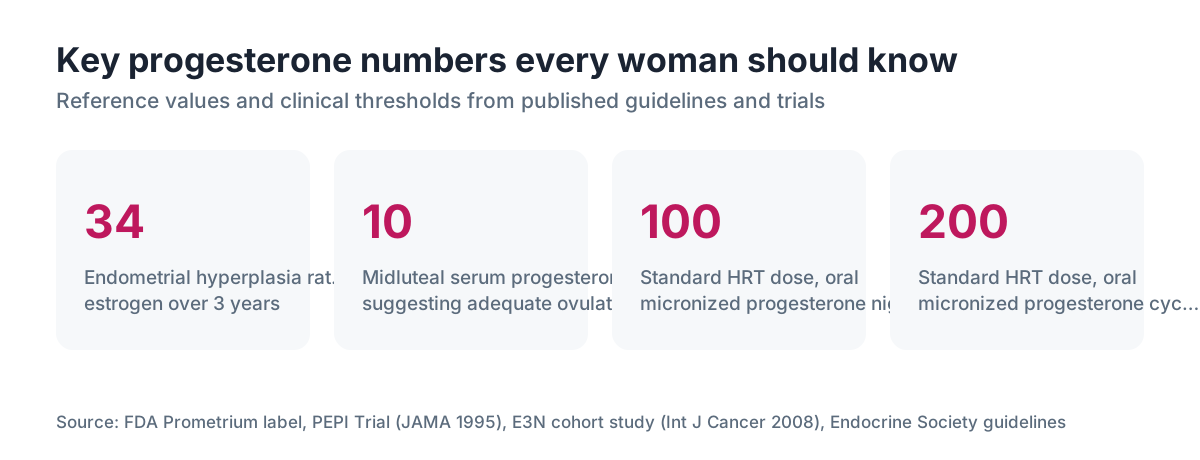
Hormone therapy (HRT) uterine protection. This is the most common reason menopausal and perimenopausal women are prescribed progesterone. When estrogen is given without a progestogen, it stimulates the uterine lining and can cause endometrial hyperplasia and, over time, endometrial cancer. Adding progesterone reverses and prevents that overgrowth. The PEPI trial, one of the defining studies of menopause hormone therapy, found that unopposed estrogen increased endometrial hyperplasia rates to 34 percent over three years, while combination therapy kept rates near baseline [2]. Women who have had a hysterectomy do not have a uterus to protect and generally do not need progesterone in their HRT regimen.
Abnormal uterine bleeding. Doctors use progesterone, often as a progestin (synthetic version), to stop heavy or irregular periods by stabilizing the endometrial lining. This is common in perimenopause, when cycles can become erratic as ovulation becomes inconsistent.
Luteal phase support in fertility treatment. During IVF and other assisted reproduction cycles, progesterone is given vaginally or by injection to support the uterine lining after embryo transfer, since the ovaries may not produce enough on their own after egg retrieval.
Secondary amenorrhea diagnosis (progesterone challenge test). A short course of progesterone is sometimes used to determine whether a woman who has stopped having periods has adequate estrogen levels. If bleeding occurs after the course ends, estrogen is present and the anovulation is likely the cause.
Threatened or recurrent miscarriage. Vaginal progesterone is used in some cases of early pregnancy bleeding or a history of miscarriage, though the evidence is mixed. The PROMISE trial showed no benefit in women with unexplained recurrent miscarriage, while the PRISM trial found a modest benefit in women who had prior miscarriages and were bleeding in the current pregnancy [3].
Postpartum depression prevention and treatment. Brexanolone (Zulresso), an IV form of allopregnanolone (progesterone's brain-active metabolite), is FDA-approved for postpartum depression. This is a specialized hospital setting, not something taken at home, but it confirms the mechanistic link between progesterone pathways and mood [4].
What is the difference between progesterone and progestin?
This distinction matters more than most people realize, and the terms get used interchangeably in ways that cause real confusion.
Progesterone refers specifically to the bioidentical molecule, chemically identical to what the body makes. The most common oral form is micronized progesterone, sold under the brand name Prometrium in the US. It is also available as a vaginal gel (Crinone) and vaginal insert (Endometrin), and in some compounded topical formulations.
Progestins are synthetic compounds designed to mimic progesterone's effects on the uterus. They include medroxyprogesterone acetate (MPA, sold as Provera), norethindrone, levonorgestrel, and others. Progestins bind to progesterone receptors, but they also bind, at varying degrees, to androgen, glucocorticoid, and estrogen receptors. That off-target activity is why different progestins have different side effect profiles.
This distinction has real clinical implications. The Women's Health Initiative (WHI), the large trial that spooked a generation of women and doctors off HRT, used conjugated equine estrogen combined with medroxyprogesterone acetate (MPA). The slight increase in breast cancer risk observed in the combination arm is generally attributed to the MPA, since the estrogen-only arm (for women without a uterus) showed no increased breast cancer risk and actually trended toward a decreased risk [5]. Observational data, including the E3N cohort study from France, found that micronized progesterone combined with estrogen did not carry the same breast cancer signal as synthetic progestins [6].
That said, observational data has limits. The Endocrine Society and The Menopause Society both note that the question of differential breast cancer risk between bioidentical progesterone and progestins is not fully settled by randomized trial evidence. Honest answer: the observational signal is consistent and worth taking seriously, but it is not the same as a definitive clinical trial proving equivalence.
For women in hormone replacement therapy, understanding which progestogen they are taking and why is a reasonable conversation to have with their prescriber.
How does progesterone affect sleep and mood?
The sleep connection is one of the most underappreciated benefits of progesterone, and it explains why many women taking oral micronized progesterone are told to take it at bedtime.
Allopregnanolone, the neurosteroid metabolite progesterone converts to in the brain and gut, enhances GABA-A receptor activity. GABA is the brain's primary inhibitory neurotransmitter. More GABA activity means less neural excitability, which translates to faster sleep onset and, in many women, deeper sleep [1]. The effect is sedating enough that driving after taking oral progesterone at night is genuinely not advisable.
In perimenopause, progesterone levels begin to fall before estrogen does. This is important: a woman in her early-to-mid 40s who is sleeping badly, feeling anxious, and having irregular periods may be experiencing the effects of declining progesterone, not low estrogen. Her estrogen might still be normal or even elevated. Prescribing estrogen in that scenario without considering progesterone status misses part of the picture.
Mood effects are harder to pin down with clean data. Women vary considerably in their sensitivity to progesterone and its metabolites. Some women find oral micronized progesterone calming and mood-stabilizing. Others, particularly those with a history of premenstrual dysphoric disorder (PMDD), find progestins worsen mood significantly, because synthetic progestins, and to a lesser degree progesterone itself, can shift neurosteroid pathways in ways that feel depressive for sensitive individuals [7]. This is one reason PMDD patients are often managed with strategies that minimize progestogen exposure, such as using the Mirena IUD (levonorgestrel acts locally in the uterus with minimal systemic absorption) for uterine protection while using estrogen for symptoms.
What does progesterone do for bone health?
Estrogen is the primary hormone protecting bone density in women, but progesterone has its own contribution. Progesterone receptors are present on osteoblasts, the cells that build new bone. Some research suggests progesterone stimulates osteoblast activity directly, complementing estrogen's role in slowing osteoclast-driven bone loss [8].
In practical terms, the bone protection from combination HRT (estrogen plus progesterone) is well established. The Women's Health Initiative showed that women using combination HRT had significantly lower rates of hip fracture compared to placebo over the trial period [5]. Whether progesterone adds to bone protection beyond what estrogen alone provides is less clear-cut. The estrogen-only arm of WHI also showed fracture reduction, suggesting estrogen is the dominant player.
That said, the population most at risk for accelerated bone loss is perimenopausal women with anovulatory cycles, who may be losing bone even while estrogen levels appear normal, precisely because they are not ovulating and therefore not making progesterone. This is the Jerilynn Prior hypothesis, which generated some supporting data but remains debated in endocrinology circles. If you are worried about bone density, the best next step is actual measurement. A bone density test (DEXA scan) gives you a baseline T-score and tracks change over time.
What is the FDA-approved form of bioidentical progesterone?
The FDA has approved micronized progesterone (Prometrium) for two specific indications: prevention of endometrial hyperplasia in postmenopausal women receiving estrogen therapy who have an intact uterus, and secondary amenorrhea [9]. The standard dose for uterine protection in HRT is 200 mg taken orally at bedtime for 12 days of each 28-day cycle when used cyclically, or 100 mg nightly when used continuously.
Vaginal progesterone products (Crinone 8% gel, Endometrin vaginal insert, Prochieve) are FDA-approved for luteal phase support in infertility treatment and for progesterone supplementation in early pregnancy in IVF patients.
Compounded progesterone creams are widely sold but are a different story. The FDA has not approved any topical progesterone product for systemic hormone therapy. The pharmacokinetics of transdermal progesterone are inconsistent: serum progesterone levels after topical application tend to be low and highly variable, even when salivary progesterone appears elevated. Salivary testing is not a reliable proxy for serum levels, a point the Endocrine Society has made explicitly. Women using compounded progesterone cream for uterine protection while on systemic estrogen may not be adequately protected.
WomenRx telehealth prescribes FDA-approved micronized progesterone (Prometrium) for eligible patients, not compounded creams, precisely because the evidence base is cleaner and the dosing is predictable.
Who needs progesterone and who does not?
The short answer: any woman using systemic estrogen therapy who still has her uterus needs progesterone or a progestin as part of her regimen.
Women who have had a hysterectomy do not need it for uterine protection, and adding it without a clear indication introduces unnecessary hormonal exposure.
Women in perimenopause who are not taking estrogen may still benefit from progesterone if they have symptoms linked to low progesterone specifically: insomnia, anxiety, irregular or heavy periods. This is more nuanced territory. Some clinicians prescribe low-dose micronized progesterone (100 mg at bedtime) for perimenopausal insomnia and anxiety, even when a full HRT regimen is not indicated. The data here is mostly observational, but the physiologic rationale is solid.
Premenopausal women with conditions like PCOS, irregular cycles, or luteal phase deficiency may be prescribed progesterone or progestins to regulate their cycles or support a pregnancy.
Women who have had estrogen-receptor-positive breast cancer are generally advised to avoid systemic estrogen and most progestogens, though the evidence on progesterone specifically in breast cancer survivors is evolving and not settled. The Menopause Society recommends that these women discuss risks with their oncologist before starting any hormone therapy [10].
The table below summarizes the main scenarios:
| Clinical situation | Progesterone typically needed? | Typical form | |---|---|---| | Menopause HRT, uterus intact | Yes | Oral micronized or progestin IUD | | Menopause HRT, no uterus | No | Not indicated | | Perimenopause insomnia/anxiety | Sometimes | Oral micronized, low dose | | IVF luteal support | Yes | Vaginal gel or insert | | Heavy/irregular periods | Often | Progestin or oral progesterone | | PMDD sufferer needing HRT | Sometimes, carefully | Levonorgestrel IUD preferred | | ER+ breast cancer survivor | Avoid without oncology input | Discuss with oncologist |
What are the side effects of progesterone?
Oral micronized progesterone's most common side effect is drowsiness, which is a feature when you take it at bedtime and a problem if you take it in the morning. Beyond sedation, women report breast tenderness, bloating, mild mood changes, and sometimes spotting when used cyclically.
Progestins have broader side effect profiles because of their off-target receptor activity. MPA in particular is associated with bloating, mood lowering, and, in the WHI context, the cardiovascular and breast cancer signals already mentioned [5]. Norethindrone has androgenic activity, which can worsen acne or hair thinning in sensitive women. Levonorgestrel in a hormonal IUD largely avoids systemic effects because roughly 90 percent of its action stays local in the uterus, making it a good option for women who want uterine protection without progestogen exposure in the rest of the body.
Depression is a legitimate concern with some progestins. Women who felt low in the premenstrual phase of their cycles before menopause are more likely to be sensitive to progestogens and should flag that history for their prescriber. Switching from a synthetic progestin to micronized progesterone often improves mood in these women, though again, randomized trial evidence specifically on this switch is limited.
Progesterone is generally not recommended in the first trimester for threatened miscarriage without a specific clinical indication, and high doses carry risks. Oral micronized progesterone at HRT doses (100 to 200 mg nightly) is well tolerated by most women over the long term.
How is progesterone tested and what do levels mean?
Serum progesterone is measured in ng/mL (nanograms per milliliter) by a blood test. The timing of the test matters enormously because levels change dramatically across the menstrual cycle.
In the follicular phase (first half of the cycle), progesterone is low, typically below 1 ng/mL. After ovulation, in the luteal phase, levels rise to roughly 5 to 20 ng/mL. A midluteal progesterone (drawn about 7 days before the expected period) below 10 ng/mL can suggest inadequate ovulation or luteal phase deficiency, though thresholds vary by lab [11].
In pregnancy, levels rise steadily through the first trimester, reaching 10 to 44 ng/mL by 14 weeks.
After menopause, progesterone falls to the near-undetectable range, below 1 ng/mL.
Women on oral micronized progesterone should know that serum testing after an oral dose gives unreliable results because of extensive first-pass metabolism. What shows up in blood is mostly metabolites, not the parent hormone. This does not mean the hormone is not working; it means serum levels do not track well with symptom response when taking it orally. Vaginal progesterone produces high local concentrations in the uterus with lower serum levels, a phenomenon called the "first uterine pass effect," which is actually desirable for luteal support.
Salivary progesterone testing, popular in some functional medicine contexts, does not reliably predict serum or tissue levels and should not guide clinical dosing decisions.
Can progesterone help with anxiety and sleep without other hormones?
Yes, and this is a genuinely useful clinical option that does not get enough attention.
For women in perimenopause who are not yet symptomatic enough to need full estrogen-plus-progesterone HRT, but who are struggling with insomnia and anxiety as their luteal-phase progesterone drops, a low dose of oral micronized progesterone at bedtime (typically 100 mg) can make a real difference. You are essentially replacing the progesterone the ovaries are no longer reliably making after each cycle.
The sedating effect runs through allopregnanolone's GABA-A mechanism, as described above [1]. Some clinicians compare it mechanistically to a low-dose benzodiazepine in terms of its calming effect on the central nervous system, without the dependence risk or next-day cognitive fog that some women experience with sleep medications.
For anxiety specifically, the data is thinner than for sleep. Most of what we have is mechanistic reasoning and observational reports, not randomized controlled trials. Nobody has run a clean RCT of 100 mg micronized progesterone versus placebo for perimenopausal anxiety as a primary endpoint. The closest evidence comes from studies on the GABAergic properties of allopregnanolone and from trials of brexanolone (intravenous allopregnanolone) for postpartum depression, which confirmed the mechanistic pathway even if the delivery method and context differ [4].
For women researching perimenopause symptoms, it is worth understanding that progesterone-only therapy is a legitimate, evidence-adjacent option in the early transition years, distinct from full HRT, and one a knowledgeable clinician can discuss based on your symptom pattern.
Is progesterone safe long-term?
The safety record for oral micronized progesterone at HRT doses over several years is reassuring, particularly compared to the synthetic progestins studied in the WHI.
The most relevant long-term data comes from the E3N cohort study, which followed over 80,000 French women and found that the combination of transdermal estrogen plus micronized progesterone was not associated with increased breast cancer risk over 8 years of follow-up, unlike estrogen combined with synthetic progestins [6]. This is observational data, not a randomized trial, so it can not prove causation. But it is large, well-conducted, and consistent with the mechanistic differences between progesterone and progestins.
The Menopause Society's 2022 position statement on hormone therapy concludes that for women under 60 or within 10 years of menopause onset, the benefits of HRT generally outweigh the risks for treatment of bothersome symptoms, and that choice of progestogen matters [10]. The organization specifically notes that micronized progesterone may have a more favorable profile than older synthetic progestins.
Long-term progesterone use has not been shown to increase risks of blood clots (thromboembolic events) at oral doses, though this is another area where progestins vary. Oral MPA appears to carry some clot risk; micronized progesterone appears neutral on this front based on available data.
The honest caveat: women with a personal history of hormone-sensitive cancers, severe liver disease, unexplained vaginal bleeding, or known progesterone allergy should not use it without specialist guidance. And no long-term data on any HRT formulation is perfect, because trials are expensive and women drop out. Any prescribing decision weighs real, documented benefits against real but sometimes uncertain risks, specific to your history.
How does progesterone fit into a broader menopause treatment plan?
Progesterone rarely stands alone in menopause care. It works alongside estrogen, and the form, dose, and schedule of each affect the whole benefit-risk calculation.
For a woman starting hormone replacement therapy for menopausal symptoms (hot flashes, night sweats, vaginal dryness, sleep disruption), the typical approach is an estrogen backbone, often delivered via patch, gel, or spray to avoid first-pass liver metabolism, combined with micronized progesterone or a progestogen for uterine protection. An estrogen patch plus oral progesterone at bedtime is currently one of the most prescribed regimens among menopause specialists in the US.
Women whose primary symptoms are sleep-related or who are in early perimenopause sometimes start with progesterone alone before adding estrogen. This is not a standard protocol everywhere, but it is a reasonable clinical approach for some symptom profiles.
The decision of which progestogen to use, how much, and for how long is something to work through with a menopause-literate provider. Telehealth platforms like WomenRx let women access that expertise without waiting months for a specialist appointment, which matters because perimenopause can start in the early 40s and symptoms are not going to wait around.
For context on where menopause fits in the timeline, when does menopause start has a full breakdown. And if you are early in the research process, the menopause overview is a solid grounding before you get into the nuances of specific hormones.
Frequently asked questions
Do I need progesterone if I still have my uterus and I am taking estrogen?
Yes. Estrogen taken without a progestogen stimulates the uterine lining and raises the risk of endometrial hyperplasia and endometrial cancer over time. The PEPI trial found a 34 percent hyperplasia rate with unopposed estrogen over three years. Adding progesterone or a progestin reverses and prevents that. This is one of the most consistent recommendations in menopause medicine and is not controversial.
What is the difference between Prometrium and Provera?
Prometrium is micronized progesterone, bioidentical to what your ovaries make. Provera is medroxyprogesterone acetate (MPA), a synthetic progestin. Both protect the uterine lining when combined with estrogen, but they have different side effect profiles. MPA was linked to the breast cancer signal in the Women's Health Initiative. Prometrium is sedating (helpful at bedtime) and observational data suggests a more favorable breast cancer profile, though it costs more and is not always covered the same way.
Can progesterone help me sleep without taking estrogen?
Yes. Oral micronized progesterone (typically 100 mg at bedtime) has real sedating and anxiolytic effects through its conversion to allopregnanolone, which enhances GABA-A receptor activity in the brain. Many perimenopausal women whose primary complaint is insomnia, not hot flashes, find low-dose progesterone meaningfully helpful. This is not an FDA-approved indication, but the physiologic mechanism is well-supported and many menopause specialists use it this way.
Does progesterone affect weight?
Progesterone can increase appetite and cause mild fluid retention in some women, which may contribute to temporary weight changes. Synthetic progestins like MPA tend to cause more bloating and water retention than micronized progesterone. Neither progesterone nor progestins cause substantial fat gain when used at HRT doses. The weight changes often attributed to HRT in general are more likely driven by the menopause transition itself, not the hormones added to treat it.
Is bioidentical progesterone the same as natural progesterone?
Mostly yes, with caveats. Bioidentical means the molecule is chemically identical to the progesterone your body produces. FDA-approved micronized progesterone (Prometrium) qualifies. The word "natural" is less precise: it is often used in marketing for compounded creams derived from plant sterols (usually soy or wild yam), but "derived from plants" does not make the final molecule different from synthetic; the chemistry is the same. What matters is absorption, dose, and whether the product is FDA-regulated.
Can I use progesterone cream instead of pills?
Compounded progesterone creams are popular, but they have a significant problem: absorption is inconsistent and serum levels tend to be low and unpredictable. The FDA has not approved any topical progesterone product for systemic hormone therapy or uterine protection. Women using estrogen who rely on a cream for uterine protection may not be adequately protected. The Endocrine Society does not recommend salivary testing or topical creams as a substitute for FDA-approved oral or vaginal formulations.
Does progesterone protect against breast cancer?
The evidence is nuanced. Progesterone is not a treatment for breast cancer. But observational data, including the large E3N cohort study, found that micronized progesterone combined with estrogen did not increase breast cancer risk over 8 years, unlike synthetic progestins. This is not the same as saying progesterone protects against breast cancer. It suggests it may be safer than older synthetic progestins, but this has not been confirmed in a large randomized trial. Women with a history of hormone-sensitive breast cancer should consult their oncologist.
What happens if my progesterone is low?
Low progesterone shows up differently depending on life stage. In reproductive years, it can cause luteal phase deficiency, short cycles, spotting before periods, anxiety, insomnia, and infertility. In perimenopause, it contributes to irregular and heavy periods, sleep problems, and mood changes. In menopause, progesterone is always low; it only matters if you are also taking estrogen and need uterine protection. A midluteal serum progesterone below roughly 10 ng/mL is generally considered suboptimal for luteal phase function, though lab reference ranges vary.
Can progesterone cause depression?
Some women, particularly those sensitive to hormonal fluctuations (think PMS or PMDD history), find that progestins worsen low mood. Synthetic progestins are more likely to cause mood-related side effects than micronized progesterone because of their activity at other receptors. Micronized progesterone tends to be calming rather than depressive for most women. If you have a history of PMDD or mood sensitivity to progestins, tell your prescriber. A levonorgestrel IUD for uterine protection, with its minimal systemic absorption, is often a better option in that case.
How long does it take for progesterone to work for sleep?
The sedating effect of oral micronized progesterone is noticeable within the first one to three nights for most women because allopregnanolone (the active metabolite) acts quickly on GABA-A receptors. Some women notice improved sleep onset right away. Mood effects and cycle regulation, if those are goals, take longer to see, usually one to two full cycles. If you feel groggy the next morning, the dose or timing may need adjustment.
Is progesterone used for perimenopause specifically?
Yes, and often separately from estrogen. Perimenopause commonly involves anovulatory cycles, meaning ovulation skips, progesterone does not rise in the second half of the cycle, and symptoms like insomnia, anxiety, and irregular heavy periods follow. Low-dose micronized progesterone (100 mg at bedtime) is used by many menopause-trained clinicians specifically for this window, before hot flashes and other estrogen-deficiency symptoms become the dominant concern. See our perimenopause age article for more on timing.
Does progesterone help with hot flashes?
Progesterone is not the primary treatment for hot flashes. Estrogen is far more effective for vasomotor symptoms. Progesterone on its own has a mild effect on hot flashes for some women, but it does not adequately control them at standard doses in most cases. If hot flashes are your main complaint, a full HRT regimen including estrogen is the evidence-based approach. Progesterone's role there is to protect your uterus, not to drive the symptom relief.
What foods or supplements increase progesterone naturally?
No food or supplement reliably raises serum progesterone levels in a clinically meaningful way. Some sources cite zinc, magnesium, vitamin B6, or vitex (chasteberry) as helpful. The evidence is weak. Vitex may modestly support luteal function in some women, but the effect size is small and inconsistent across trials. If you have documented low progesterone and symptoms, a prescribed, measured dose of micronized progesterone will do more than any dietary change.
Can men use progesterone?
Men produce small amounts of progesterone and it has some roles in male physiology, including as a precursor to testosterone and in sperm function. Progesterone is sometimes explored in men for prostate health, but this is not a standard FDA-approved use and the evidence is preliminary. This article focuses on women's health applications, where the evidence is considerably stronger.
Sources
- NIH National Institute of Child Health and Human Development, Progesterone and allopregnanolone neurobiology
- JAMA, Postmenopausal Estrogen/Progestin Interventions (PEPI) Trial, 1995
- NEJM, PRISM Trial: Progesterone in women with bleeding in early pregnancy, 2019
- FDA Drug Approvals and Databases: Brexanolone (Zulresso) Approval
- JAMA, Women's Health Initiative randomized controlled trial results, 2002 and 2004
- International Journal of Cancer, E3N cohort study on HRT and breast cancer risk in French women, 2008
- Gynecological Endocrinology, Progesterone and PMDD: neurosteroid sensitivity review
- Osteoporosis International, Progesterone and osteoblast activity review
- FDA Prometrium (micronized progesterone) prescribing information
- The Menopause Society (NAMS), 2022 Hormone Therapy Position Statement
- Endocrine Society Clinical Practice Guidelines: Evaluation and treatment of premenopausal amenorrhea