What is post menopause? Symptoms, health risks, and treatment
TL;DR: Post menopause starts exactly 12 months after your last period and lasts the rest of your life. Estrogen stays permanently low, which raises risk for bone loss, heart disease, and abdominal fat gain. Hot flashes can persist a median of 7.4 years after your final period. Hormone therapy, resistance training, and correcting real deficiencies do the most good.
What is post menopause, exactly?
Post menopause is the stage of life that begins the day after you have gone 12 full consecutive months without a menstrual period. That 12-month mark is, by clinical definition, when menopause itself is confirmed. Everything after it is post menopause.
The North American Menopause Society (NAMS) splits the timeline into three parts. Perimenopause is the years leading up to that final period. Menopause is the single point at the 12-month anniversary. Post menopause is the open-ended phase that follows. [1] Most women hit that marker between 45 and 55, with the US median around 51. [2]
This is not a brief transition. It is a permanent biological state. A woman who reaches menopause at 51 and lives to 85 spends about 34 years in post menopause. That is roughly a third of her life, which is why what happens to the body here deserves real attention.
Ovarian estrogen production drops by roughly 90 percent compared to reproductive-age levels. [3] Progesterone falls to near zero because ovulation has stopped. Those two shifts touch almost every organ system, from the brain to the bones to the heart, and they are the root cause of most post-menopausal symptoms and health risks.
If your periods stopped because of surgery (bilateral oophorectomy), chemotherapy, or radiation rather than natural aging, you are in what clinicians call surgical or iatrogenic menopause. The biology is essentially the same, but the drop in hormones is abrupt rather than gradual, and symptoms tend to hit harder.
How is post menopause different from perimenopause?
The difference is one of hormone behavior: perimenopause is chaotic, post menopause is stable. That distinction changes the treatment conversation completely.
Perimenopause can last anywhere from a few months to more than a decade, with an average around 4 to 8 years. [4] During that window, estrogen fluctuates erratically rather than declining in a smooth line. Those swings are why perimenopause symptoms (irregular periods, mood changes, sleep disruption, brain fog) feel unpredictable. Hormone levels from a single blood draw during perimenopause are almost useless, because they change week to week.
Post menopause is a different animal. Estrogen is now consistently low, not swinging. FSH (follicle-stimulating hormone) stays high, usually above 30 mIU/mL, because the ovaries no longer respond to it. [3] That stable hormonal floor means symptoms can actually become more predictable, even when they do not disappear.
Some women feel better in post menopause than they did during the turbulent years before it. Others find new symptoms surface, or old ones dig in, once estrogen is consistently low rather than occasionally present. There is no single experience.
For a fuller picture of where perimenopause ends and this phase begins, see our article on perimenopause age and when does menopause start.
What are the symptoms of post menopause?
Many women assume symptoms vanish once periods stop. They often do not.
The Study of Women's Health Across the Nation (SWAN) followed women for more than two decades and found that moderate-to-severe vasomotor symptoms (hot flashes and night sweats) persisted for a median of 7.4 years after the final menstrual period in women who had symptoms during perimenopause. For some, hot flashes ran 10 years or longer. [5]
The most common post-menopausal symptoms:
Vasomotor symptoms. Hot flashes and night sweats. They tend to be most frequent in the first few years of post menopause but can linger far longer than most people expect.
Genitourinary syndrome of menopause (GSM). This is the clinical term for vaginal dryness, itching, thinning of vaginal and urethral tissue, and recurrent urinary tract infections. GSM affects roughly 27 to 84 percent of post-menopausal women depending on the population studied, and unlike hot flashes, it does not improve on its own. It gets worse. [1]
Sleep disruption. Often driven by night sweats, but also by changes in sleep architecture that come with aging and low estrogen.
Mood and cognitive symptoms. Brain fog, trouble concentrating, mood shifts. Whether low estrogen directly causes cognitive decline is still unsettled, but the link to mood and sleep is well-established.
Joint pain and muscle loss. Estrogen has anti-inflammatory properties, and its absence can worsen joint discomfort. Muscle mass declines faster after menopause.
Skin and hair changes. Skin thins and loses collagen. Hair can thin or turn coarser.
What health risks rise in post menopause?
Symptoms are one thing. Long-term disease risk is another, and this is where post menopause demands serious attention.
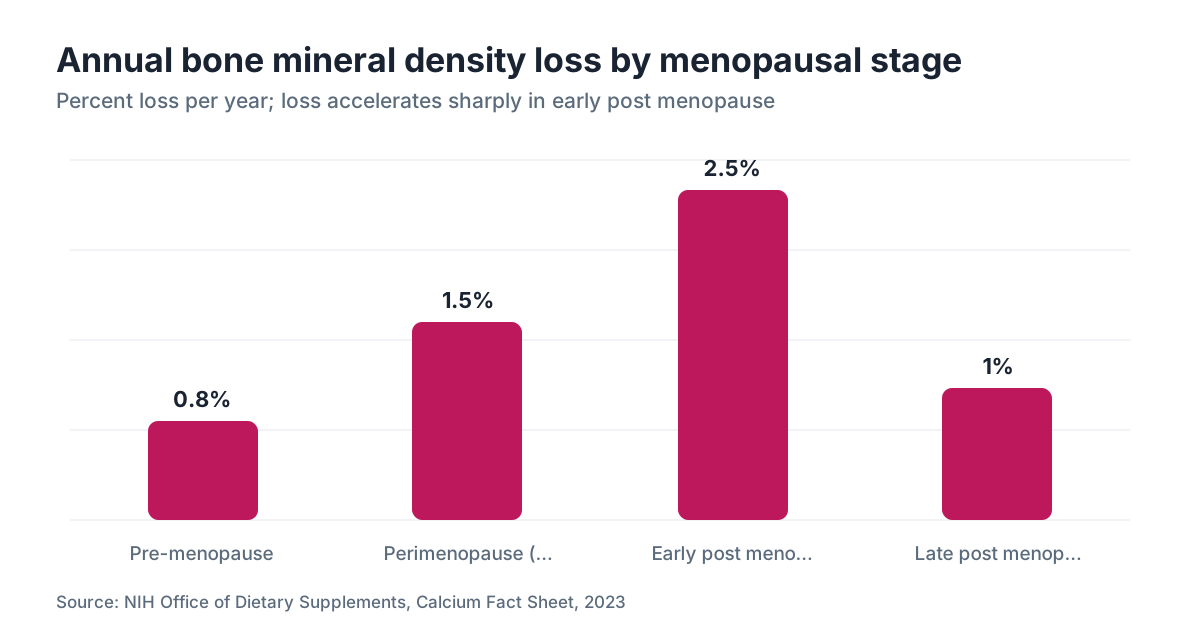
Bone loss. The first five years after the final period are when bone mineral density drops fastest, at roughly 2 to 3 percent per year against the pre-menopausal rate of about 0.5 to 1 percent per year. [6] Over a decade, that adds up fast. One in two women over 50 will have an osteoporosis-related fracture in her lifetime. A bone density test (DEXA scan) is recommended for all women by age 65, earlier if you have risk factors.
Cardiovascular disease. Before menopause, women have lower rates of heart disease than men the same age. After menopause, that gap closes. The American Heart Association identifies cardiovascular disease as the leading cause of death in post-menopausal women in the US. [7] Falling estrogen shifts LDL and HDL cholesterol, raises blood pressure, and pushes fat toward the abdomen.
Metabolic changes and weight. Here post menopause weight gain becomes a clinical concern, not an aesthetic one. Average weight gain in the menopausal transition runs 1 to 2 kg (about 2 to 4 lbs) per year, but the bigger shift is body composition: fat moves from the hips and thighs to the abdomen even when the scale holds steady. [8] Visceral fat is metabolically active and raises the risk of insulin resistance, type 2 diabetes, and cardiovascular events.
Urogenital health. GSM is progressive without treatment. Left alone, it worsens with time.
Depression. Post-menopausal women carry elevated rates of depression compared to pre-menopausal women, independent of any prior history.
Why does post menopause cause weight gain?
Post menopause weight gain has a specific physiological cause. It is not simply eating more or moving less, and treating it as a willpower problem misses the biology.
Estrogen normally sends fat to the hips, thighs, and buttocks (subcutaneous fat). When estrogen falls, the body starts parking fat in the abdomen instead (visceral fat). This happens even when total body weight stays flat. Waist circumference climbs in most women during and after the transition regardless of calorie intake. [8]
Muscle loss compounds it. Resting metabolic rate drops as muscle mass declines, and muscle burns more calories at rest than fat does. Less estrogen means faster muscle loss, which means fewer calories burned per day even if your activity never changes.
Sleep disruption makes everything worse. Poor sleep raises ghrelin (the hunger hormone) and lowers leptin (the satiety hormone), tilting appetite in the wrong direction.
UK cohort studies show the same pattern, more than American ones. British surveys suggest up to 70 percent of women report weight gain during the menopausal transition, and UK studies confirm the same visceral redistribution and the same 1 to 2 kg annual average seen in US populations. [8] The mechanism does not respect borders.
None of this is inevitable, and none of it is just aging. The driver is specific, and it is treatable.
What supplements help with post menopause weight gain?
The honest answer: supplement evidence is thinner than the marketing suggests, but a few options have real data behind them.
Start with the caveat. No supplement carries the clinical evidence that hormone therapy or GLP-1 medications do. If you want meaningful weight and metabolic change, supplements are supporting players, not the main act.
Phytoestrogens (soy isoflavones, red clover). These plant compounds weakly bind estrogen receptors. Some trials show modest reductions in hot flashes, which can indirectly help sleep and appetite. Direct weight loss evidence is weak. The claims made about phytoestrogens and weight are mostly overstated.
Magnesium. Deficiency is common in post-menopausal women and tracks with worse sleep and insulin resistance. Correcting a real deficiency makes physiological sense. Studied doses run 200 to 400 mg per day. It is not a weight loss pill, but it addresses a gap many women actually have.
Vitamin D3. Deficiency is nearly universal in post-menopausal women in the UK and common in the US. It supports bone health and links to better metabolic function. The NHS recommends 10 mcg (400 IU) daily for all adults, with higher doses sometimes indicated clinically. [9]
Calcium. Bone loss speeds up in post menopause. The NIH recommends 1,200 mg of calcium daily for women over 50, ideally from food first, supplements second. [6]
Protein (not a pill, but worth naming). Adequate dietary protein, at least 1.2 g per kg body weight daily, is probably the single most evidence-backed way to preserve muscle and support weight management in post menopause. It is nutrition, not a capsule, and it matters more than anything in a bottle.
For UK women, supplements sold as "best supplements for menopause weight gain" are largely unregulated in their labeling claims. Look for third-party testing. The MHRA (Medicines and Healthcare products Regulatory Agency) does not pre-approve most supplements.
The best supplement for menopause weight gain is probably not a single pill. It is correcting actual deficiencies (vitamin D, magnesium), eating enough protein, and lifting weights.
Does hormone replacement therapy help in post menopause?
Yes, for the right candidates. And the risks have been badly misunderstood since the 2002 Women's Health Initiative report, which pushed millions of women to stop or never start HRT based on findings that have since been reanalyzed and reframed. [7]
Current guidance from NAMS and the Endocrine Society says hormone therapy is the most effective treatment for hot flashes and GSM, and it is appropriate for healthy women under 60 or within 10 years of menopause who have bothersome symptoms. [1] That timing matters. Starting HRT early in post menopause appears to carry cardiovascular benefit rather than harm, while starting more than 10 years out carries a different risk profile. Clinicians call this the timing hypothesis.
What HRT can do in post menopause:
- Cut hot flashes and night sweats by roughly 75 to 80 percent in frequency and severity
- Treat GSM (local estrogen is first-line, has minimal systemic absorption, and is considered low-risk even for women who cannot take systemic HRT)
- Slow bone loss and reduce fracture risk
- Help with the body composition shift, including the abdominal fat pattern
- Improve sleep and mood in many women
For a full breakdown of options, see our guides on hormone replacement therapy, the estrogen patch, and progesterone, which covers body-identical progesterone versus older synthetic progestins.
HRT is not right for every woman. Women with a history of estrogen-receptor-positive breast cancer, unexplained vaginal bleeding, or active clotting disorders should discuss alternatives with their clinician.
What about GLP-1 medications for post menopause weight gain?
GLP-1 receptor agonists (semaglutide, tirzepatide) are now among the most studied and effective tools for weight management in women who have not gotten enough traction from diet and exercise alone.
The STEP 1 trial of semaglutide 2.4 mg weekly showed an average weight loss of 14.9 percent of body weight over 68 weeks in adults with obesity or overweight plus a weight-related condition. [10] The SURMOUNT-1 trial of tirzepatide went further, with participants losing up to 20.9 percent of body weight at the highest dose. [11] Neither trial was limited to post-menopausal women, but both enrolled large numbers of women in that age range.
Post menopause creates a metabolic setup where these drugs can be especially useful. They reduce appetite, slow gastric emptying, and appear to preferentially strip visceral fat, which is exactly the fat that piles up after menopause.
For women dealing with post menopause weight gain who have not found enough help from lifestyle changes, a conversation with a clinician about whether a GLP-1 medication fits is worth having. WomenRx runs that kind of evaluation for women who want a clinical read on their options, hormonal and metabolic both.
For more on how these medications work and compare, see semaglutide for weight loss and semaglutide vs tirzepatide.
How is post menopause diagnosed?
Usually by history alone, no blood test required. If you are over 45, have had no period for 12 consecutive months, and are not on a hormonal contraceptive that suppresses periods, you are in post menopause.
Blood tests become useful in specific situations. If you are under 45, your clinician may check FSH and estradiol to confirm premature ovarian insufficiency (POI), which has a different clinical picture and management approach. If you are on hormonal contraception that hides bleeding, an FSH test can help determine whether you have reached menopause underneath the suppression.
FSH above 30 mIU/mL on two measurements taken at least 4 to 6 weeks apart, combined with 12 months of no periods, generally confirms post menopause. [3] Estradiol levels below 30 pg/mL are typical in post menopause but vary by lab.
AMH (anti-Mullerian hormone) reflects ovarian reserve and falls to near zero in post menopause, but it is not used for diagnosis routinely. It is more useful during the perimenopause years for estimating how close the final period is.
For context on the broader timeline, the article on menopause covers diagnosis and staging in more detail.
What screening and preventive care should post-menopausal women prioritize?
Post menopause is a window to prevent the most serious long-term consequences of low estrogen, more than a phase to manage symptoms. A handful of screenings do the heavy lifting.
Bone density screening (DEXA scan). The US Preventive Services Task Force recommends osteoporosis screening for all women aged 65 and older, and for younger post-menopausal women with risk factors. [12] Do not wait until 65 if you had early menopause, took corticosteroids long-term, smoke, or have a family history of hip fracture. See bone density test for what to expect.
Cardiovascular screening. Blood pressure, fasting lipid panel, fasting glucose, and waist circumference, measured regularly. The risk profile changes after menopause, and plenty of women with clean cardiovascular numbers in their 40s watch them drift in their 50s.
Mammography. Guidelines vary by organization, but most recommend annual or biennial mammography starting between 40 and 50. Menopausal status does not change this, though women on HRT should make sure the radiologist knows.
Cervical screening. A Pap smear with or without HPV co-testing typically continues until 65 in women with prior normal results. Vaginal atrophy can make the exam uncomfortable. Local estrogen for a few weeks beforehand helps.
Colorectal cancer screening. Colonoscopy or stool-based testing starting at 45, per the American Cancer Society.
Thyroid function. Hypothyroidism becomes more common with age and shares symptoms with post menopause (fatigue, weight gain, brain fog). A TSH test is a reasonable add-on to routine bloodwork.
Can lifestyle changes make a real difference in post menopause?
Yes, though the honest message is that lifestyle alone does not fully offset the hormonal shift. A few interventions have strong evidence anyway.
Resistance training. Probably the highest-yield lifestyle move for post-menopausal women. Building and holding muscle counteracts the metabolic slowdown, supports bone density, improves insulin sensitivity, and cuts fall risk. Two to three sessions a week with progressive load is the standard recommendation.
Sleep. Treating sleep disruption (through HRT, CBT-I, or better habits) pays off downstream in weight, mood, and cardiovascular health. Sleep deprivation alone raises cortisol, promotes visceral fat, and worsens insulin resistance.
A Mediterranean or plant-rich diet. No single diet reverses post-menopausal metabolic changes, but patterns high in fiber, unsaturated fats, and plant protein track with better cardiovascular outcomes and slower weight gain in this group.
Alcohol reduction. Alcohol raises breast cancer risk and disrupts sleep, and post-menopausal women metabolize it differently than younger women. Cutting back has real benefits.
Stress management. Chronically high cortisol drives abdominal fat and worsens hot flashes. This is not a soft recommendation. The cortisol-to-visceral-fat pathway is well-characterized.
WomenRx clinicians who evaluate women for hormone therapy or GLP-1 prescriptions consistently see better results when women pair medical treatment with resistance training. That is not a pitch. It is physiology.
What is premature post menopause and why does it matter more?
Premature ovarian insufficiency (POI) is the loss of normal ovarian function before age 40. It affects roughly 1 percent of women. Menopause between 40 and 45 is called early menopause and affects about 5 percent of women. [4]
Women who enter post menopause early spend more cumulative years without estrogen. That extended deficiency carries meaningfully higher risk for osteoporosis, cardiovascular disease, cognitive changes, and all-cause mortality compared to women who reach menopause at the typical age.
The Endocrine Society and NAMS both state that women with POI or early menopause should be strongly considered for hormone therapy until at least the average age of natural menopause (around 51), unless there is a specific contraindication. [1][3] Withholding HRT from a 38-year-old with POI is not the safer choice. It leaves her bones and heart unprotected during years when her peers still have their own estrogen.
If you stopped having periods before 45 and have not discussed hormone therapy with a clinician, that conversation is overdue.
Frequently asked questions
What is post menopause in simple terms?
Post menopause is the phase of life that starts after you have gone 12 consecutive months without a period. It lasts the rest of your life. Estrogen and progesterone stay permanently low, which drives the symptoms and health changes most women associate with menopause: hot flashes that can persist for years, vaginal dryness, bone loss, and a shift in body fat toward the abdomen.
At what age does post menopause start?
It depends on when your periods stop. The US median age for the final menstrual period is about 51, so most women enter post menopause in their early 50s. Early menopause (40 to 45) affects roughly 5 percent of women, and premature ovarian insufficiency affects about 1 percent before age 40. Smoking, cancer treatment, and genetics can all shift the timing earlier.
How long do post menopause symptoms last?
Longer than most women expect. The SWAN study found hot flashes persisted for a median of 7.4 years after the final menstrual period, with some women experiencing them for a decade or more. Genitourinary symptoms like vaginal dryness typically do not improve on their own and can worsen without treatment. Bone loss continues throughout post menopause, more than as a temporary transition symptom.
Is weight gain inevitable in post menopause?
Not entirely inevitable, but very common. Average weight gain during the menopausal transition is 1 to 2 kg per year. Even without weight gain on the scale, body fat redistributes from hips and thighs to the abdomen because of falling estrogen. That visceral fat shift is the part that drives metabolic risk. Resistance training, adequate protein, and in many cases hormone therapy can slow or partly reverse the pattern.
What are the best supplements for menopause weight gain?
The honest answer is that no supplement has strong clinical evidence for meaningful weight loss. Correcting real deficiencies helps: vitamin D (extremely common in post-menopausal women, especially in the UK), magnesium, and calcium support bone and metabolic health. Adequate protein, at least 1.2 g per kg body weight, is more evidence-backed than any pill. Phytoestrogens have modest hot flash benefits but weak weight loss data.
What is the difference between menopause and post menopause?
Technically, menopause is a single point in time: the 12-month anniversary of your last period. Post menopause is everything after that point, lasting the rest of your life. Most people use the word 'menopause' loosely for the whole transition, but clinically you move from perimenopause to menopause to post menopause, with post menopause being the permanent low-estrogen state.
Does HRT help with post menopause weight gain?
It helps with the body composition shift more than with total weight. Hormone therapy reduces the buildup of visceral abdominal fat and helps preserve lean muscle in post-menopausal women. It does not cause dramatic weight loss, but it counteracts part of the hormonal mechanism driving fat redistribution. Women on HRT often report a more manageable weight trajectory than those without it, all else being equal.
Can you still get pregnant in post menopause?
No, not naturally. Once you have gone 12 months without a period and are confirmed post-menopausal, ovulation has permanently stopped and natural conception is not possible. During perimenopause, pregnancy is still possible because ovulation can happen sporadically. This is why contraception is typically recommended until 12 months after the last period in women over 50, or 24 months in women under 50 under some UK guidelines.
Do hot flashes stop after post menopause begins?
Not necessarily. Hot flashes often peak in the year or two around the final menstrual period, but for many women they continue well into post menopause. The SWAN study documented hot flashes lasting more than 7 years after the final period in women who had frequent symptoms. Effective treatments exist: hormone therapy is the most effective, and non-hormonal options like the FDA-approved drug fezolinetant help women who cannot take hormones.
What blood tests confirm post menopause?
In most women over 45, post menopause is diagnosed by 12 months of no periods, with no blood test needed. When blood tests are used, FSH above 30 mIU/mL on two measurements taken weeks apart, combined with estradiol below 30 pg/mL, supports the diagnosis. Testing is most useful in women under 45 (to detect premature ovarian insufficiency) or those on hormonal contraceptives that suppress periods.
What is genitourinary syndrome of menopause (GSM) and is it common?
GSM is the clinical term for vaginal dryness, thinning of vaginal and urethral tissue, recurrent UTIs, and uncomfortable sex caused by low estrogen. Studies estimate it affects 27 to 84 percent of post-menopausal women depending on the population. Unlike hot flashes, GSM does not improve with time; it typically worsens. Local vaginal estrogen (cream or ring) is highly effective, has minimal systemic absorption, and is generally safe even for women who cannot take systemic HRT.
How does post menopause affect bone health?
Bone mineral density drops at roughly 2 to 3 percent per year in the first 5 years of post menopause, far faster than the pre-menopausal rate of 0.5 to 1 percent per year. One in two women over 50 will have an osteoporosis-related fracture in her lifetime. DEXA bone density scanning is recommended for all women by age 65, and earlier with risk factors like early menopause, smoking, low body weight, or corticosteroid use.
Are GLP-1 medications like semaglutide appropriate for post menopause weight gain?
For post-menopausal women with obesity or significant overweight who have not responded to lifestyle changes, GLP-1 medications are a clinically legitimate option. The STEP 1 trial showed 14.9 percent average body weight loss with semaglutide 2.4 mg weekly. These drugs appear to preferentially reduce visceral fat, the type that accumulates most in post menopause. A clinician evaluation is needed to weigh benefits against risks for any individual.
Does post menopause increase the risk of heart disease?
Yes, meaningfully. Before menopause, women have lower cardiovascular disease rates than age-matched men. After menopause, that gap closes. Low estrogen shifts LDL and HDL patterns, raises blood pressure, and drives visceral fat accumulation, all of which raise cardiovascular risk. The American Heart Association identifies cardiovascular disease as the leading cause of death in post-menopausal women in the US. Regular lipid panels, blood pressure monitoring, and lifestyle measures are essential.
Sources
- North American Menopause Society (NAMS), Menopause Practice: A Clinician's Guide
- NIH National Institute on Aging, Menopause
- Endocrine Society, Menopause Clinical Practice Guideline
- NHS, Menopause Overview
- SWAN (Study of Women's Health Across the Nation), published in JAMA Internal Medicine 2015
- NIH Office of Dietary Supplements, Calcium Fact Sheet for Health Professionals
- American Heart Association, Menopause and Heart Disease
- Davis SR et al., Nature Reviews Endocrinology, 2012, 'Menopause and body weight'
- NHS, Vitamin D
- Wilding JPH et al., STEP 1 Trial, New England Journal of Medicine, 2021
- Jastreboff AM et al., SURMOUNT-1 Trial, New England Journal of Medicine, 2022
- US Preventive Services Task Force, Osteoporosis Screening Recommendation, 2018