What is HRT therapy? A plain-language guide for women
TL;DR: HRT (hormone replacement therapy) replaces the hormones, mainly estrogen and progesterone, that drop during perimenopause and menopause. It reduces hot flashes, night sweats, vaginal dryness, and bone loss better than anything else available. Modern low-dose formulations carry far lower risks than the 2002 WHI headlines suggested. Most healthy women under 60 who start within 10 years of their last period are good candidates.
What is HRT therapy, exactly?
HRT stands for hormone replacement therapy. Many clinicians now use the term MHT (menopausal hormone therapy) instead, because it's more precise. The idea is simple. During perimenopause and menopause, your ovaries make far less estrogen and progesterone. That drop drives most of what women call menopause symptoms: hot flashes, wrecked sleep, vaginal dryness, joint pain, brain fog, and bone loss that speeds up fast. HRT puts some of those hormones back to relieve symptoms and protect long-term health.
The word "therapy" trips people up because it sounds like treatment for a disease. Menopause is not a disease. But the hormone decline that comes with it is real and measurable, and for many women the effects are big enough to treat. Think of it less like chemotherapy and more like giving thyroid hormone to a woman with hypothyroidism. You're filling a gap the body can no longer fill on its own.
HRT can be estrogen alone (for women who have had a hysterectomy), estrogen plus a progestogen (for women with a uterus, where the progestogen protects the uterine lining), or in some cases a three-hormone regimen that adds testosterone. Delivery runs through patches, pills, gels, sprays, vaginal rings, pellets, or injections. The right form depends on your symptoms, your health history, your preference, and how your body absorbs each route.
The Menopause Society (formerly NAMS) calls hormone therapy "the most effective treatment for vasomotor symptoms and the genitourinary syndrome of menopause," and notes it also prevents bone loss and fracture in postmenopausal women [1].
When does HRT become relevant? Perimenopause through postmenopause
Most women start thinking about HRT in their 40s or early 50s, when periods turn irregular and symptoms show up. That phase is perimenopause, the transition that can run anywhere from two to ten years before a woman reaches menopause, defined as 12 straight months without a period [2].
The average age of menopause in the US is 51, though natural menopause can land anywhere from the mid-40s to mid-50s [2]. Surgical menopause, from removal of the ovaries (oophorectomy), causes an abrupt hormone drop at whatever age the surgery happens. Those women often need HRT more urgently, because the change is instant rather than gradual.
HRT is more than a short-term fix for hot flashes. Some women take it for years, even decades, for bone protection, cardiovascular benefit in younger postmenopausal women, and plain quality of life. When to stop is an individual call, and it belongs in a conversation with a clinician, not a cold-turkey quit.
Still figuring out when menopause might start for you? Tracking your cycle length variability, FSH levels, and symptoms tells you more than age alone.
What are the main types of hormone replacement therapy?
The types of HRT split along two lines: which hormones are in the mix, and how they get into your body.
By hormone composition
Estrogen-only HRT is for women who have had a hysterectomy. With no uterus, you don't need a progestogen, and dropping it simplifies the regimen and may lower certain risks.
Combined estrogen plus progestogen is for women who still have a uterus. Estrogen alone thickens the uterine lining (endometrium). Adding a progestogen, either a synthetic progestin or bioidentical progesterone, counteracts that and brings endometrial cancer risk back to baseline.
Testosterone add-on therapy is the third category, and it's getting more attention in women's hormone care. Women make testosterone in their ovaries and adrenal glands, and levels fall through perimenopause alongside estrogen. Low testosterone can drive low libido, fatigue, and lost muscle. The Endocrine Society says testosterone therapy in postmenopausal women has the strongest evidence for treating hypoactive sexual desire disorder [3]. No product is FDA-approved specifically for women in the US, so it's prescribed off-label or compounded.
By delivery method
| Delivery Form | Hormone Type | Notes | |---|---|---| | Oral pill | Estrogen, progestogen | Convenient; first-pass liver metabolism may raise clotting risk slightly vs. transdermal [4] | | Transdermal patch | Estrogen, combo patches available | Bypasses the liver; preferred for women with clot or migraine history [4] | | Gel / spray | Estrogen | Flexible dosing; absorbed through skin | | Vaginal ring | Estrogen (local or systemic) | Estring is local only; Femring releases systemic levels | | Vaginal cream / tablet | Estrogen | Mostly local; minimal systemic absorption | | Pellet implant | Estrogen, testosterone | Long-acting; dosing is hard to adjust once inserted | | Injection | Estrogen, testosterone | Less common for women; levels can swing |
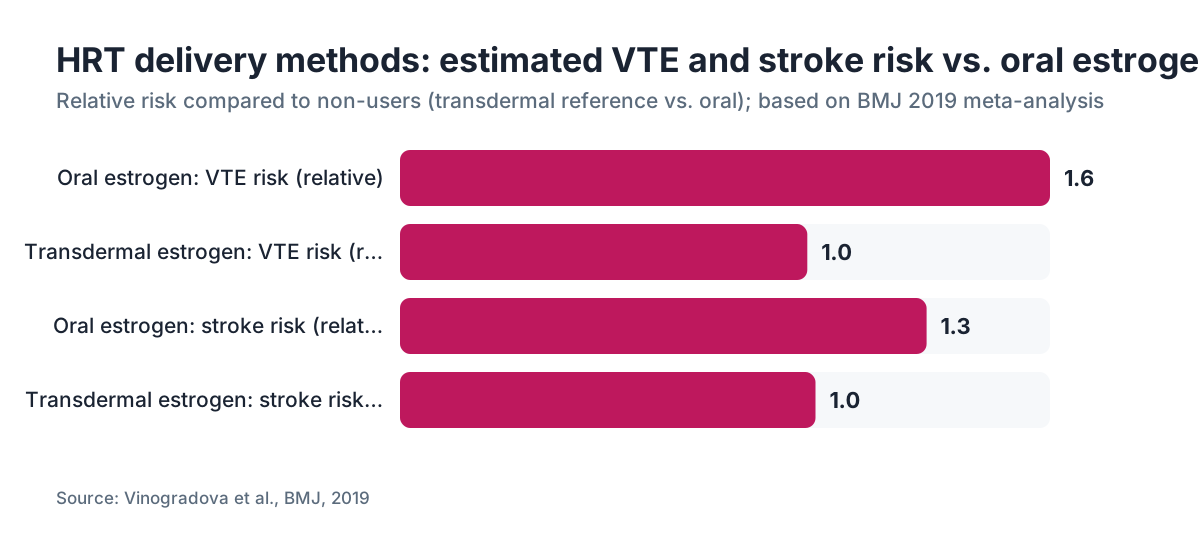
Guidelines widely recommend the transdermal estrogen patch for women with venous thromboembolism (VTE) risk factors, because it doesn't raise clotting factors the way oral estrogen can [4].
The "bioidentical" question comes up constantly. Bioidentical means the hormone molecule is chemically identical to what your ovary made. FDA-approved products like estradiol patches and oral micronized progesterone (Prometrium) are bioidentical. Compounded bioidentical hormone therapy (cBHT) from compounding pharmacies is bioidentical by structure too, but it lacks the standardized testing and dosing consistency of FDA-approved products [5]. That doesn't make compounded HRT dangerous by default. It means the quality control is looser and the evidence base is thinner.
What does HRT actually do in the body?
Estrogen receptors are everywhere. Your brain, bones, heart, skin, urinary tract, and vaginal tissue all carry them. When estrogen drops, every one of those tissues feels it, which is why menopause symptoms are so scattered and often surprising.
In the brain, estrogen shapes serotonin, dopamine, and acetylcholine pathways. That's why hot flashes are neurological events (a misfiring of the hypothalamic thermostat) and why mood and memory can shift during the transition [6]. HRT quiets those misfires. Clinical trials consistently show a reduction of 75 percent or more in hot flash frequency with standard-dose estrogen therapy [1].
In bone, estrogen suppresses osteoclasts, the cells that break bone down. Without it, resorption outpaces formation and density falls fast, especially in the first two to five years after menopause. The Women's Health Initiative (WHI) found that combined HRT cut hip fracture risk by 34 percent versus placebo [7]. If you're wondering where your bone density stands, a bone density test (DEXA scan) is the standard measure.
In the cardiovascular system, estrogen improves lipid profiles and arterial flexibility, but timing matters enormously. Starting HRT within ten years of menopause or before age 60 is tied to lower cardiovascular risk. Starting it more than ten years out, when atherosclerosis may already be set, may not carry the same benefit and could raise events in some women [1][7]. Researchers call this the "timing hypothesis" or "window of opportunity."
In the vagina and urinary tract, estrogen keeps tissue thick, keeps it lubricated, and supports the bacterial microbiome that fends off UTIs. Genitourinary syndrome of menopause (GSM), once called vaginal atrophy, responds well to either local vaginal estrogen or systemic HRT. Local vaginal estrogen is so low-dose and so locally absorbed that gynecologic guidelines consider it safe even for most breast cancer survivors [1].
What are the real risks of HRT, and how worried should you be?
The fear around HRT traces almost entirely to the 2002 Women's Health Initiative study, which stopped early after finding more breast cancer, stroke, and blood clots in women taking oral conjugated equine estrogen plus medroxyprogesterone acetate [7]. That headline pushed millions of women to quit overnight, and prescribing fell by roughly 80 percent in the years after.
Here's what the WHI actually showed on reanalysis, and what the original coverage missed.
The average WHI participant was 63, more than a decade past menopause for most of them. Many already had cardiovascular risk. The oral synthetic progestin used (medroxyprogesterone acetate) carries different risks than bioidentical micronized progesterone [8]. And the absolute numbers were small. The extra breast cancer risk in the combination arm came to about 8 additional cases per 10,000 women per year of use [7].
In the estrogen-only arm (women who'd had hysterectomies), the WHI found a lower breast cancer risk than placebo.
The Endocrine Society's 2022 guideline states that "for the majority of healthy symptomatic menopausal women who are younger than 60 years or within 10 years of menopause onset, the benefits of MHT outweigh the risks" [3].
The real risk picture, in plain terms:
Blood clots (VTE): Oral estrogen modestly raises VTE risk. Transdermal estrogen does not appear to, based on multiple observational studies [4]. Personal or family history of clots? Transdermal is strongly preferred.
Breast cancer: The signal is real but small with combination therapy, and it tracks more closely to synthetic progestins than to progesterone or estrogen alone. Duration matters. Risk generally isn't raised in the first five years for most formulations [8].
Stroke: Risk shows up mainly with oral estrogen. Transdermal formulations haven't shown the same association in most studies [4].
Endometrial cancer: Only relevant if you have a uterus and take estrogen without enough progestogen. Properly opposed HRT removes this risk [1].
For most healthy women in their late 40s and 50s with real symptoms, the math favors treatment. The risks are real enough to earn an individualized conversation with a clinician. They are not real enough to rule out HRT across the board.
Who is a good candidate for HRT, and who should be cautious?
A good candidate for systemic HRT has significant menopausal symptoms (hot flashes, night sweats, broken sleep, mood changes, cognitive fog), is under 60 or within 10 years of menopause onset, has no history of hormone-sensitive breast cancer, no active or recent venous thromboembolism, and no unexplained vaginal bleeding [1][3].
Women who should slow down and discuss alternatives include:
- History of estrogen receptor-positive breast cancer (though local vaginal estrogen is often approved even here)
- Active liver disease (oral estrogen is processed by the liver; transdermal may be an option)
- Active or recent cardiovascular disease, particularly late postmenopause
- Personal history of deep vein thrombosis or pulmonary embolism (transdermal estrogen is lower risk)
- Unexplained vaginal bleeding (needs a workup before starting HRT)
HRT isn't a flat yes or no for most of these. Vaginal-only estrogen, for one, has so little systemic absorption that most guidelines file it separately from systemic HRT and consider it safe for a wider group [1].
Want to check symptoms and hormones before you start? Blood hormone panels measuring estradiol, FSH, LH, and testosterone can give useful context. Just know that the Menopause Society says FSH and estradiol levels alone don't diagnose perimenopause or predict how bad symptoms will be [1].
What symptoms does HRT treat?
The list of symptoms HRT reliably handles is long, and for some women it changes everything.
Hot flashes and night sweats (vasomotor symptoms): This is the clearest evidence base. Estrogen therapy cuts hot flash frequency by 75 percent or more on average, and cuts severity by about 87 percent [1]. Nothing non-hormonal comes close.
Sleep disruption: Often downstream of night sweats, but estrogen also affects sleep architecture directly and may improve REM sleep [6].
Vaginal dryness, pain with sex, recurrent UTIs: Genitourinary syndrome of menopause responds well to both local and systemic estrogen. Local vaginal estrogen is first-line when dryness or painful sex is the only complaint [1].
Bone loss: Systemic HRT holds bone mineral density and reduces fractures. The WHI found a 34 percent drop in hip fracture risk [7].
Mood and depression: Estrogen influences serotonin and dopamine pathways. Perimenopause is a window of higher depression risk, and some (not all) studies show HRT lifts mood, especially early in the transition [6].
Brain fog and memory: Messier. Observational data hint that estrogen may protect the brain when started in the timing window around menopause, but randomized trial results are mixed [6].
Skin, hair, and joint symptoms: Women often report better skin moisture and less joint pain on HRT. The evidence here is softer, but the mechanism (estrogen receptors in skin and connective tissue) is real.
Libido: Add testosterone and low libido often improves. Estrogen alone helps indirectly by easing vaginal comfort and mood, but the direct libido effect leans on testosterone [3].
How is HRT different from birth control hormones?
This confuses a lot of women. Birth control pills carry synthetic estrogen (usually ethinyl estradiol) and synthetic progestins at doses set to suppress ovulation. HRT uses much lower doses of estrogen, usually bioidentical 17-beta estradiol, to replace what the ovary no longer makes.
The synthetic progestins in birth control are not the same molecules as the micronized progesterone in many HRT regimens. Progestins suppress the hypothalamic-pituitary axis harder and carry androgenic or other off-target effects that natural progesterone doesn't. That's one reason the WHI breast cancer data (built on medroxyprogesterone acetate, a progestin) may not apply evenly to regimens using micronized progesterone [8].
Some perimenopausal women get low-dose oral contraceptives for symptom control because they're still cycling irregularly and still need contraception. That's a legitimate approach. But it isn't HRT in the strict sense, and the risks from higher-dose synthetic hormones are different.
The short version: HRT doses are physiologic replacements. Birth control doses are pharmacologic suppressants. Don't conflate the two when you're talking risk.
What do the major medical societies say about HRT safety in 2024-2025?
Medical society guidance has moved a long way since the first WHI panic.
The Menopause Society, in its 2022 hormone therapy position statement, concluded that "for women aged younger than 60 years or who are within 10 years of menopause onset and have no contraindications, the benefit-risk ratio is favorable for treatment of bothersome VMS and for those at elevated risk for bone loss or fracture" [1].
The Endocrine Society's 2022 guideline likewise supports HRT for symptomatic menopausal women under 60, and specifically endorses testosterone therapy for hypoactive sexual desire disorder in postmenopausal women [3].
The British Menopause Society and the NICE guideline (the UK's National Institute for Health and Care Excellence) have both moved toward recommending HRT more readily for women with symptoms, noting the absolute risks are small and the quality of life gains are large [9].
The FDA still requires labeling on HRT products that flags the WHI findings, but it has not classified HRT as contraindicated for symptomatic menopausal women without specific risk factors [5].
The clearest expert read right now: for healthy, symptomatic women in the timing window (under 60 or within 10 years of menopause), the benefits of HRT beat the risks for most. Blanket avoidance is no longer the evidence-based position.
How do you actually start HRT? What to expect from the process
Starting HRT is a clinical evaluation, not a quick prescription. A careful clinician reviews your symptom pattern, menstrual history, family history (breast, ovarian, uterine, cardiovascular), current medications, and recent labs or imaging.
Baseline labs usually include estradiol, FSH, testosterone (total and free), a thyroid panel, lipids, and a metabolic panel. A recent mammogram is usually required before starting systemic estrogen, and your Pap should be current. Women without a recent bone density test may be offered one, especially past menopause or with other osteoporosis risk factors.
Starting doses run conservative, especially for women still in perimenopause or sensitive to hormonal changes. Most clinicians titrate up over weeks to months based on how you feel and how you tolerate it, rather than chasing a specific blood level, because symptoms drive the outcome, not serum numbers.
Expect a two-to-three-month adjustment window. Some women feel dramatically better within two weeks of starting an estrogen patch. Others need dose changes or a switch from one delivery method to another. Progesterone timing matters too. Cyclic progesterone (taken 12 to 14 days a month) can bring premenstrual-type symptoms, while continuous daily progesterone eventually stops the withdrawal bleed, which many women prefer.
Telehealth has made HRT far easier to reach for women who live far from menopause specialists or face long waits at in-person practices. WomenRx, for example, offers HRT prescribing by licensed clinicians with both asynchronous and synchronous visit options, which suits women who have done their research and want to start without months of waiting.
Follow-up at three to six months is standard to check symptom control, review side effects, and confirm the regimen still fits. Annual review is typical after that.
HRT and weight: does it cause weight gain?
This is one of the most stubborn fears, and the evidence doesn't back it up for most women.
Menopause itself shifts fat from the hips and thighs toward the abdomen, driven by estrogen loss. Total body weight may not move much, but that redistribution happens with or without HRT. Many women pin it on HRT because the timing overlaps, yet controlled studies haven't shown HRT increases body fat [1].
Some women notice initial water retention when starting oral estrogen or certain progestins, and that can feel like weight gain. Switching to transdermal estrogen or micronized progesterone often clears it up.
Interested in GLP-1 medications for weight management alongside HRT? Those are separate but compatible therapies. GLP-1 receptor agonists like semaglutide work through appetite and satiety pathways that don't touch sex hormones directly. Some clinicians see that treating menopausal symptoms with HRT improves sleep and mood enough that sticking to diet and exercise gets easier, which helps weight management indirectly. Semaglutide for weight loss and HRT aren't mutually exclusive, and many women run both.
Where to find good information: HRT resources and hormone health websites
Online information about HRT ranges from excellent to actively harmful. Here's how to filter it.
Start with primary sources. The Menopause Society (menopause.org) publishes patient-facing and clinician-facing evidence summaries and updates them regularly. The Endocrine Society (endocrine.org) publishes clinical practice guidelines that anyone can read. The FDA (fda.gov) carries full prescribing information for every approved HRT product [5].
For narrative depth alongside the clinical data, hormone therapy blogs and women's health sites vary widely. The better ones cite primary literature, admit uncertainty, and present balanced risk-benefit discussions rather than catastrophizing or minimizing. Sites tied to academic medical centers or professional societies tend to be more reliable than those run by supplement companies or built to push one product.
Testosterone-focused hormone blogs are a newer and fast-growing category, tracking the rising interest in androgen therapy for women. Be careful here. The evidence base for testosterone in women is genuinely thinner than for estrogen, and some of this content overpromises. The honest version: testosterone does help libido and possibly energy in postmenopausal women, but long-term cardiovascular and breast safety data are still coming in [3].
For a wider overview, the hormone replacement therapy guide on this site covers formulations, evidence, and clinical decision-making in more depth.
No article or blog replaces a conversation with a clinician who has read your full history. But walking into that conversation informed makes for a much better outcome.
Frequently asked questions
What is the difference between HRT and MHT?
They refer to the same treatment. MHT (menopausal hormone therapy) is the newer preferred term used by the Menopause Society and many clinical groups because it's more specific. HRT (hormone replacement therapy) is still widely understood and used by patients and some clinicians. You'll see both in legitimate medical literature; they're interchangeable in the menopause context.
At what age should women consider starting HRT?
Most guidelines support starting HRT for symptomatic women any time during perimenopause or within 10 years of the final period, generally before age 60. Women with surgical or premature menopause are often advised to start earlier. There's no single right age. The decision rests on symptoms, health history, and the individual risk-benefit balance.
Is bioidentical HRT safer than conventional HRT?
Bioidentical means the hormone's molecular structure matches what your body makes. FDA-approved bioidentical products like estradiol patches and micronized progesterone have solid safety data. Compounded bioidentical preparations use the same molecules but have looser quality control and fewer long-term studies. Neither is automatically safer or more dangerous. The molecule and the delivery method matter more than the "bioidentical" label alone.
Can HRT prevent dementia or Alzheimer's disease?
Observational studies suggest estrogen started in the perimenopausal window may protect the brain, but randomized trial data are mixed. The WHI Memory Study, which used oral conjugated estrogen in older women (average age 71), actually found higher dementia risk in that group. Current guidance does not recommend starting HRT solely to prevent dementia; the timing and formulation questions are unresolved.
How long can you stay on HRT?
There's no universal time limit. The Menopause Society and other groups have dropped the old "shortest time at the lowest dose" mantra, recognizing that many women benefit from longer use for bone protection, cardiovascular health in the timing window, and quality of life. Duration is an individual decision reviewed annually with a clinician based on ongoing benefit and any new risk factors.
Does HRT increase breast cancer risk?
For combined estrogen plus synthetic progestin (the WHI combination), risk was about 8 additional cases per 10,000 women per year of use, a small but real signal. Estrogen alone (in women without a uterus) did not increase and may slightly reduce breast cancer risk in the WHI. Regimens using micronized progesterone instead of synthetic progestins appear to carry lower risk, based on the French E3N cohort study and other observational data.
What happens if you stop HRT suddenly?
Vasomotor symptoms often return, sometimes hard, when estrogen drops abruptly. A gradual taper is generally recommended over sudden stopping to let the body adjust. Bone-protective and cardiovascular effects also fade after you stop. There's no medical emergency from quitting suddenly for most women, but a planned taper with clinician guidance is more comfortable.
Can you take HRT if you've never had a period or have early menopause?
Women with premature ovarian insufficiency (POI), meaning menopause before age 40, are typically encouraged to take HRT at least until the average age of natural menopause (around 51). The cardiovascular and bone risks of untreated early estrogen deficiency are substantial, and the evidence for HRT in these younger women is strong. That's a different situation from managing symptoms in a woman who reached menopause at a typical age.
Is there an HRT option for women who can't take estrogen?
Yes. Local vaginal estrogen has minimal systemic absorption and is considered safe for most women, including many breast cancer survivors, for genitourinary symptoms. For hot flashes without estrogen, options include fezolinetant (Veozah), a non-hormonal neurokinin B receptor antagonist the FDA approved in 2023, plus lower-evidence options like SSRIs, SNRIs, and gabapentin. None match estrogen's effect size for vasomotor symptoms.
How is testosterone used in women's HRT?
Testosterone in women has the most evidence for treating hypoactive sexual desire disorder in postmenopausal women, per the Endocrine Society's guidelines. It's usually added at low doses to an estrogen-based regimen. In the US it's prescribed off-label or compounded for women, since no product is FDA-approved for female use. Blood levels should be monitored to avoid supraphysiologic dosing and side effects like acne and hair changes.
Will HRT affect my weight?
Controlled studies have not shown HRT increases body fat. Menopause itself shifts fat toward the abdomen even without HRT. Some women notice short-term water retention when starting oral estrogen, which usually eases or resolves with a switch to transdermal. HRT may indirectly support weight management by improving sleep, mood, and energy, which makes healthy habits easier to keep.
Can I start HRT through a telehealth provider?
Many states allow telehealth prescribing of HRT after a clinical evaluation, a review of health history, and in most cases confirmation of recent labs and mammography. Telehealth has widened access for women in areas without menopause specialists. The evaluation should be as thorough as an in-person visit. A prescription issued without reviewing your history, labs, or contraindications is not appropriate care, on any platform.
What is the difference between systemic and local (vaginal) HRT?
Systemic HRT, given as a patch, pill, gel, or spray, raises estrogen throughout the body and treats whole-body symptoms like hot flashes and bone loss. Local vaginal estrogen, as a cream, tablet, or ring placed in the vagina, acts mainly on vaginal and urethral tissue with very little systemic absorption. Local estrogen is first-line when the only symptoms are vaginal dryness, painful sex, or recurrent UTIs.
Do I need progesterone if I take estrogen on HRT?
If you have a uterus, yes. Estrogen alone stimulates the uterine lining (endometrium) and raises endometrial cancer risk over time. Adding a progestogen, either a synthetic progestin or bioidentical micronized progesterone, prevents that buildup. Women who've had a hysterectomy have no uterus to protect and typically take estrogen-only HRT, which has a cleaner breast cancer risk profile than the combination.
Sources
- The Menopause Society (formerly NAMS), 2022 Hormone Therapy Position Statement
- NIH National Institute on Aging, Menopause overview
- Endocrine Society, Clinical Practice Guideline: Treatment of Menopause, 2022
- Vinogradova Y et al., BMJ 2019: Risks and benefits of HRT by route of administration
- FDA, Menopause and Hormone Therapy drug information
- Brinton RD et al., Nature Reviews Endocrinology: Perimenopause as a neurological transition state
- Rossouw JE et al., JAMA 2002 (WHI principal results)
- Fournier A et al., Breast Cancer Research and Treatment 2008 (French E3N cohort)
- NICE Guideline NG23: Menopause: diagnosis and management (UK)
- Rebar RW, Endotext (NCBI): Premature Ovarian Insufficiency
- FDA, Veozah (fezolinetant) approval, 2023