What is HRT for women: how it works, types, and safety
TL;DR: HRT gives back the estrogen and, when a woman still has a uterus, the progesterone her ovaries stop making at menopause. It reliably relieves hot flashes, night sweats, vaginal dryness, and bone loss. For most healthy women under 60 who start within 10 years of their last period, the evidence says benefits outweigh risks. Individual history changes the math.
What is HRT for women, exactly?
HRT stands for hormone replacement therapy. Here is the short version. At menopause, your ovaries cut estrogen and progesterone production sharply. That drop drives hot flashes, broken sleep, brain fog, vaginal dryness, faster bone loss, and a long list of other symptoms. HRT puts those hormones back at doses tuned to relieve symptoms without overshooting.
Most medical societies now prefer the term MHT (menopausal hormone therapy) because it is more precise. But HRT is what most women search for and what clinicians still say out loud. Same thing.
Estrogen is the workhorse. It handles the vasomotor symptoms (hot flashes, night sweats), protects bone, and keeps vaginal tissue healthy. Progesterone, or a synthetic progestogen, gets added for any woman who still has a uterus, because estrogen alone thickens the uterine lining in a way that raises endometrial cancer risk. Women who have had a hysterectomy can take estrogen alone.
HRT does more than mask symptoms. Estrogen loss after menopause has real downstream effects on bone density, cardiovascular risk, and metabolism, and when you start therapy changes how much protection you get. That is the part most women were never told.
What are the different types of HRT?
There are more delivery options now than most women realize, and the form you choose changes both safety and how you feel on it.
Estrogen
Oral estrogen (pills) was the original form and is still common. The catch is that it passes through the liver on the way in, which raises clotting proteins and slightly lifts the risk of blood clots and stroke, especially in women over 60 or those with cardiovascular risk factors.
Transdermal estrogen means estrogen patches, gels, sprays, and creams on the skin. It skips the liver almost entirely. A large UK cohort of more than 80,000 women found transdermal estrogen carried little to no extra clot risk compared with oral forms [1]. Most clinicians now reach for transdermal first.
Vaginal estrogen (cream, ring, tablet, or suppository) is local and low-dose. It targets genitourinary symptoms and absorbs so little into the bloodstream that the FDA considers it appropriate even for many women with a history of hormone-sensitive cancers. Talk that one through with your own clinician.
Progesterone and progestogens
Micronized progesterone (Prometrium or its generics) is body-identical, meaning it matches what your ovaries made. In most studies it has a gentler side-effect profile and a more favorable cardiovascular and breast-cancer signal than synthetic progestogens. Our progesterone guide goes deeper on how it works.
Synthetic progestogens (medroxyprogesterone acetate, norethisterone, levonorgestrel) work too, but they carry some of the breast-cancer signal the Women's Health Initiative amplified. The type of progestogen matters more than whether you use one at all.
Combined vs. sequential regimens
Continuous combined HRT means estrogen and a progestogen every day, and most women have no period on it. Sequential means you cycle the progestogen for roughly 10 to 14 days a month and usually get a withdrawal bleed. Sequential fits women still in perimenopause or very recently postmenopausal. Continuous combined is the norm once you are established postmenopause.
| Form | Systemic absorption | Liver first-pass | Clot risk vs. oral | |---|---|---|---| | Oral estrogen | Yes | Yes | Reference (higher) | | Transdermal patch/gel | Yes | No | Lower [1] | | Vaginal estrogen (low dose) | Minimal | Minimal | Negligible | | Oral progesterone (micronized) | Yes | Yes | Lower than synthetics | | Synthetic progestogen | Yes | Yes | Variable |
What symptoms does HRT actually treat?
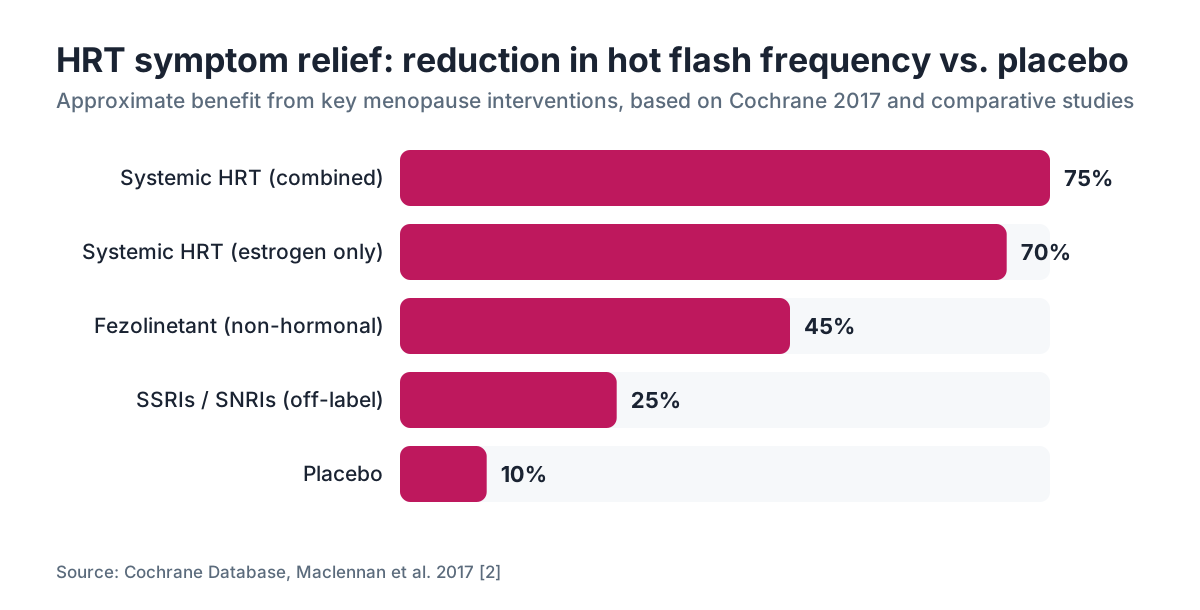
The evidence is strongest for hot flashes and night sweats. A 2017 Cochrane review of 23 trials covering more than 42,000 women found HRT cut hot flash frequency by roughly 75% and reduced their severity substantially versus placebo [2]. No non-hormonal treatment comes close, though newer options like fezolinetant give real but more modest relief.
Sleep usually improves once the night sweats stop. Many women also report better mood and less anxiety, which probably reflects both better sleep and estrogen's direct effects on serotonin and GABA pathways. The mood benefit is real but harder to pin to a number.
Genitourinary syndrome of menopause (GSM) is the clinical term for vaginal dryness, painful sex, urinary urgency, and repeat UTIs. Local or systemic estrogen reliably reverses these changes. Unlike hot flashes, GSM does not fade on its own. It gets worse without treatment.
Bone protection is well established. Women lose bone fast in the first few years after estrogen drops. HRT preserves bone mineral density and lowers fracture risk while you take it. Want a baseline first? A bone density test gives you a DXA score to track. The protection fades after you stop, so if osteoporosis prevention is your main goal, your clinician may raise other long-term options.
Brain fog and memory lapses are real and common. The evidence that HRT helps cognition is suggestive but mixed, mostly because these studies are hard to run and many enrolled older women who started hormones late. What is fairly clear: starting HRT early in perimenopause does not harm cognition and may support it. Starting for the first time in your 70s is a different, thornier question.
When does menopause start and when should you consider HRT?
Natural menopause is defined as 12 straight months without a period, and it lands at a median age of 51 in the United States [3]. The hormonal shift starts years earlier, during perimenopause, which can begin anywhere from the mid-30s to the late 40s. Our when does menopause start and menopause age articles walk through typical timing.
Most specialists now think the best window to start HRT runs from the first disruptive perimenopause symptoms through about age 60, or within 10 years of the final period. This is the "timing hypothesis" or "window of opportunity." It comes from re-analysis of the Women's Health Initiative data plus observational studies showing cardiovascular and cognitive benefits that shrink or reverse when estrogen starts late.
The North American Menopause Society states that for healthy women under 60 or within 10 years of menopause, "the benefits of [hormone therapy] outweigh the risks" for the majority of symptomatic women [4]. That is a plain statement from the leading professional society on menopause care.
Is HRT safe for women?
This is the question almost every woman walks in with, and it deserves a real answer instead of a brush-off in either direction.
Here is the honest short version. For most healthy women under 60 who start within 10 years of their last period, the evidence supports benefits outweighing risks. But the risk is not zero and it is not the same for everyone. Your personal history moves the numbers a lot.
The Women's Health Initiative: what it actually said
The 2002 Women's Health Initiative (WHI) is the reason a generation of women quit HRT overnight and a generation of doctors got skittish about prescribing it. The study reported higher risks of breast cancer, blood clots, stroke, and coronary heart disease in the hormone therapy arm. The press ran it in the most alarming framing available, and prescriptions dropped by roughly half within a few years.
The trouble is who was in the study. Most WHI participants were older, around 63 on average, many were overweight, and a large share had cardiovascular risk factors. They started hormones well past the window that matters. The synthetic progestogen used (medroxyprogesterone acetate) has since been tied to more adverse effects than micronized progesterone. And the WHI was never built to study symptomatic perimenopausal women starting early.
Later analyses of WHI data and independent trials revised the picture sharply for younger starters. The absolute excess breast cancer risk in the estrogen-plus-progestogen arm was about 8 extra cases per 10,000 women per year, real but small in context [5]. Estrogen alone, in women who had a hysterectomy, was actually linked to lower breast cancer risk in the WHI. That finding got almost no press.
Breast cancer risk: what the numbers actually show
A 2019 meta-analysis in The Lancet covering 108,647 women with breast cancer found all types of systemic HRT carried some increase in breast cancer risk, smaller for estrogen-only therapy and larger for combined estrogen-progestogen regimens, especially with synthetic progestogens [6]. Vaginal estrogen was not linked to increased risk. Micronized progesterone looked better than synthetic progestogens, though the authors flagged that its data were thinner.
In human terms: for most formulations used under 5 years in women under 60, the absolute risk increase is smaller than the breast cancer risk tied to being overweight or drinking one to two alcoholic drinks a day [6].
Cardiovascular risk
Oral estrogen slightly raises clot risk. Transdermal estrogen does not appear to, on current evidence. Women who start HRT before 60 or within 10 years of menopause and who have no established heart disease are not at higher coronary heart disease risk with modern formulations, and early starters may see reduced risk. Women with existing heart disease, prior stroke, or a clot history should not use systemic HRT without very careful individual assessment.
Who should not use systemic HRT
Systemic HRT (not vaginal estrogen) is generally off the table, or needs a careful individual risk talk, for women with a personal history of estrogen-receptor-positive breast cancer, a history of blood clots or a known clotting disorder (such as Factor V Leiden), active liver disease, unexplained vaginal bleeding, or a recent cardiovascular event. These are starting points, not iron rules, and a specialist may offer exceptions in specific cases.
Duration
The old "never more than 5 years" rule has no strong science behind it for most younger, healthy starters. Both the Endocrine Society and NAMS say duration should be individualized and that some women benefit from long-term use. Reassessing every 1 to 2 years is standard.
What is the difference between bioidentical and conventional HRT?
"Bioidentical" means the hormone molecule matches the one your body makes. It does not mean safer, more natural, or unregulated. FDA-approved bioidentical hormones already exist: estradiol patches, gels, and oral micronized progesterone. These get tested for dose accuracy and purity.
Custom-compounded bioidentical hormones, often sold as creams or troches in combinations you cannot buy off the shelf, come from compounding pharmacies. The FDA does not approve individual compounded preparations, and dose-consistency testing is looser. Some contain hormones like estriol or DHEA in mixes with little safety data. The Endocrine Society's position is that FDA-approved bioidentical preparations should be preferred over compounded ones when a commercial option exists [7].
Compounding does fill real gaps. Say a woman needs a dose of estradiol that is not sold commercially, or she reacts to an inactive ingredient in a branded product. If you use compounded hormones, work with an accredited pharmacy and a clinician who monitors your levels.
For the wider view of your options, our hormone replacement therapy overview covers the full landscape.
How is HRT prescribed and monitored?
A starting HRT visit usually covers a full medical and family history, blood pressure, and a review of your symptom pattern. Some clinicians order baseline hormone levels (FSH, estradiol) to confirm your menopause stage, though FSH swings wildly in perimenopause and a single value does not settle the diagnosis on its own.
Blood levels are not routinely used to adjust transdermal estrogen doses in most guidelines, because symptom control and safety monitoring matter more than hitting a target number. That surprises many women who expect frequent labs. The exception: if symptoms hang on at a standard dose, a level can help guide the next adjustment.
Follow-up at 3 months after starting is common, then yearly if things are steady. Breast exams and mammography stay on their normal screening schedule. Blood pressure and lipid checks track your baseline risk.
Telehealth platforms including WomenRx now make it possible to get an HRT evaluation and ongoing prescription management without hunting down a specialist, which matters given how few gynecologists are trained in menopause care. A 2023 Menopause Society survey found fewer than 20% of US ob-gyn residency programs require dedicated menopause training [8].
Does HRT help with weight gain at menopause?
Menopause does not cause weight gain directly, but the hormonal shift changes body composition, moving fat from the hips toward the belly, and it slows your metabolic rate. HRT does not produce real weight loss on its own. It does appear to blunt the menopause-driven shift toward visceral fat and may modestly lower total body fat compared with no treatment [9].
For women facing serious weight gain around menopause that HRT does not touch, GLP-1 receptor agonists are now a real option. Semaglutide and tirzepatide produce 15 to 22% body weight reductions in trials, a different category of effect than HRT. Our semaglutide for weight loss and semaglutide vs tirzepatide articles break down how they work and who they suit. Plenty of women near menopause use both, treating the hormonal and metabolic sides at once.
How long does it take for HRT to work?
Hot flashes and night sweats usually start easing within 2 to 4 weeks of reaching an effective dose. Full response typically takes 8 to 12 weeks. No improvement at all after 12 weeks means the dose is probably too low or the delivery method is not absorbing well.
Vaginal dryness and tissue changes take longer, usually 3 to 6 months for full improvement, because rebuilding tissue is slower than shutting off a hot flash.
Mood and sleep tend to improve alongside the vasomotor symptoms. Some women notice a shift in the first few weeks. Others need a cycle or two.
Bone density changes are slow. You would not see a meaningful DXA difference in under a year, and the fracture-prevention benefit only becomes measurable over longer stretches.
One honest note. Some women do not respond well to a given formulation and need to switch. That is normal, not failure. Dose, delivery method, and type of progestogen all interact, and finding your combination sometimes takes a few months and a clinician willing to adjust.
What are the side effects of HRT?
Most side effects in the first few weeks are adjustment effects, and they often settle on their own.
Common early ones: breast tenderness or fullness, bloating, nausea (more with oral forms), headache, and skin irritation at the patch or gel site. Spotting or irregular bleeding is common with sequential regimens and in the first few months of continuous combined therapy.
Progestogen side effects, low mood, bloating, and disturbed sleep, are the single most common reason women abandon HRT before it gets a fair shot. Switching from a synthetic progestogen to micronized progesterone often clears these. Micronized progesterone is mildly sedating and usually taken at night, which many women find helps their sleep.
Persistent or heavy breakthrough bleeding after the first 3 to 6 months on HRT needs investigation to rule out endometrial pathology, regardless of which progestogen you use. It does not mean something is wrong, but a clinician should look at it.
Serious risks (breast cancer, blood clots, stroke) are covered in the safety section above. They are real, not trivial, and not universal. The goal is a decision built on your actual risk profile, not blanket reassurance or catastrophizing.
Can you stop HRT, and what happens when you do?
You can stop HRT at any time. There is no medically required taper, though many clinicians suggest stepping down gradually rather than quitting cold to soften any symptom rebound.
When you stop, menopausal symptoms often return, sometimes fast, sometimes not at all. Women who stop after years of use tend to have a smoother landing than those who stop after a short course. Nobody fully understands why, but it likely relates to how the hypothalamic thermostat recalibrates over time.
Bone protection disappears after you stop. If your osteoporosis risk is high, your clinician will discuss whether a non-hormonal bone medication belongs in the plan at that point.
There is no evidence that stopping HRT is dangerous, and no clinical reason you must stop at a specific age, despite what many women have been told. The call should rest on your current symptoms, risks, and preferences, not an arbitrary number like 60 or 65.
For the bigger picture, our menopause guide walks through the transition stage by stage.
Frequently asked questions
What is HRT for women in simple terms?
HRT replaces the estrogen and progesterone your ovaries stop making at menopause. The goal is to relieve symptoms like hot flashes, night sweats, vaginal dryness, and broken sleep, and to protect against bone loss. It comes in pills, patches, gels, and vaginal preparations. Women who still have a uterus need both estrogen and a progestogen; women without a uterus usually take estrogen alone.
Is HRT safe for women?
For most healthy women under 60 who start within 10 years of their last period, current evidence supports benefits outweighing risks. Absolute increases in breast cancer and blood clot risk exist but stay small for most formulations, especially transdermal estrogen with micronized progesterone. Women with a history of blood clots, estrogen-receptor-positive breast cancer, or a recent cardiovascular event need individualized assessment before starting.
What are the benefits of HRT for women?
HRT cuts hot flash frequency by roughly 75% based on Cochrane review data. It protects bone mineral density, reverses vaginal dryness and genitourinary symptoms, often improves sleep and mood, and in women who start early may lower cardiovascular risk. It does not cause major weight loss, but it can shift body composition in a favorable direction compared with going through menopause untreated.
What is the difference between HRT and bioidentical hormones?
Bioidentical means the hormone molecule matches what your body produces. FDA-approved bioidentical options include estradiol patches, gels, and micronized progesterone pills. Compounded bioidentical hormones come from pharmacies and are not FDA-approved for safety or dose accuracy. The Endocrine Society recommends FDA-approved bioidentical preparations over custom compounds when a commercial option exists.
At what age do women typically start HRT?
Most women start HRT in their late 40s to early 50s, when perimenopause and menopause symptoms turn disruptive. The best window, sometimes called the timing hypothesis, is before age 60 or within 10 years of the final period. Starting later does not necessarily rule out HRT, but the cardiovascular benefit-risk calculation shifts, and a specialist should guide that decision.
What is the safest type of HRT for women?
Current evidence favors transdermal estradiol (patch or gel) combined with micronized progesterone for women who have a uterus. Transdermal estrogen avoids the liver first-pass effect that raises clot risk with oral forms. Micronized progesterone shows a better breast cancer and cardiovascular signal than synthetic progestogens in most studies. Low-dose vaginal estrogen is the safest choice for women who only need relief from genitourinary symptoms.
How long can a woman stay on HRT?
There is no evidence-based maximum duration for most healthy women who started HRT before 60. NAMS and the Endocrine Society have largely dropped the old five-year rule in favor of individualized assessment every one to two years. Some women stay on HRT into their 60s or 70s appropriately; others stop once symptoms resolve. Duration depends on your symptoms, risks, and preferences.
Does HRT cause weight gain?
HRT does not typically cause weight gain and may prevent the menopause-related shift of fat toward the abdomen. Studies show modest reductions in total and visceral fat in women using HRT compared with untreated controls. It is not a weight-loss treatment, and women with significant menopause-related weight gain often need extra support such as dietary changes or, in some cases, a GLP-1 medication.
Can HRT help with depression and anxiety during menopause?
Estrogen acts directly on serotonin and GABA pathways, and many women report better mood and less anxiety on HRT. The clinical evidence is stronger for perimenopausal depression than for long-established postmenopausal depression. If better sleep from fewer night sweats drives the mood lift, that is still a real benefit. HRT is not a substitute for antidepressant therapy in women with a clinical depressive disorder.
What is the Women's Health Initiative and why did it scare everyone off HRT?
The 2002 WHI study reported higher risks of breast cancer, blood clots, stroke, and heart disease in women taking combined HRT. The findings were alarming and heavily publicized. Later analysis showed the participants were older and sicker than typical HRT candidates and used a synthetic progestogen now known to carry more risk than micronized progesterone. The picture for younger, healthier women who start early is considerably better.
Can women with a history of breast cancer use any form of HRT?
Systemic HRT is generally contraindicated in women with a history of estrogen-receptor-positive breast cancer. Many oncologists consider low-dose vaginal estrogen for genitourinary symptoms case by case, since systemic absorption is minimal. Some women with ER-negative or triple-negative disease discuss HRT with their oncologists, but there is no universal recommendation. This decision requires close collaboration with an oncologist.
What is the difference between perimenopause and menopause for HRT?
Perimenopause is the transition phase, often starting in the mid-to-late 40s, with erratic estrogen, irregular cycles, and symptoms. Menopause is the point after 12 consecutive months without a period. HRT can start during perimenopause to manage symptoms and often continues through and after menopause. Sequential regimens are usually preferred in perimenopause; continuous combined regimens are more common once periods fully stop.
How do I know if my HRT dose is right?
Symptom control is the main guide. If hot flashes, sleep, and vaginal symptoms are well controlled and you have no significant side effects, the dose is working. Blood levels are not routinely used to fine-tune doses in most guidelines, though they can help if symptoms persist at a standard dose. Expect an initial follow-up around 3 months, then annual reviews. Your dose needs may change over time.
Is HRT covered by insurance?
Most FDA-approved HRT formulations are covered under standard health insurance when prescribed by a licensed clinician, though copays and formulary rules vary by plan. Generic estradiol patches and generic micronized progesterone are usually inexpensive even without insurance, often under $30 to $50 a month at major pharmacies. Compounded preparations are typically not covered and can cost significantly more.
Sources
- BMJ, Vinogradova et al. 2019, 'Use of hormone replacement therapy and risk of venous thromboembolism'
- Cochrane Database, Maclennan et al. 2017, 'Hormone therapy for vasomotor symptoms in midlife women'
- NIH National Institute on Aging, 'Menopause'
- North American Menopause Society (NAMS), 2022 Hormone Therapy Position Statement
- JAMA, WHI Writing Group 2002, 'Risks and benefits of estrogen plus progestin in healthy postmenopausal women'
- The Lancet, Collaborative Group on Hormonal Factors in Breast Cancer, 2019, 'Type and timing of menopausal hormone therapy and breast cancer risk'
- Endocrine Society, Clinical Practice Guideline: 'Treatment of Symptoms of the Menopause'
- Menopause (journal), 'Menopause training in US obstetrics and gynecology residency programs' 2023
- Obesity Reviews, Mauvais-Jarvis et al. 2017, 'Menopause, estrogens, and body composition'
- FDA, 'Menopause: Medicines to Help You'
- CDC, 'Women's Reproductive Health: Menopause'