What is HRT? How hormone replacement therapy works for women
TL;DR: Hormone replacement therapy (HRT) replaces estrogen and, when needed, progesterone that the ovaries stop making at menopause. It reliably reduces hot flashes, night sweats, vaginal dryness, and bone loss. Most healthy women under 60 who start within 10 years of menopause get more benefit than risk. Costs run $20 to $300 per month depending on form and coverage.
What is HRT?
HRT stands for hormone replacement therapy. The idea is plain: your ovaries made estrogen and progesterone for decades, those levels drop sharply at menopause, and HRT puts back what's missing.
The term gets used loosely. Sometimes people say HRT and mean estrogen alone. Sometimes they mean estrogen plus a progestogen (either natural progesterone or a synthetic progestin). Sometimes they mean testosterone, which some clinicians add for libido and energy. Academic literature now prefers "menopausal hormone therapy" (MHT), but HRT is still what most women type into a search bar and what most doctors say in the exam room, so the terms are interchangeable here.
HRT is not one drug. It's a category. There are dozens of FDA-approved products, several delivery routes, and two main hormonal combinations. What you end up taking depends on whether you still have a uterus, how far past menopause you are, your cardiovascular and breast history, and honestly, what your prescriber is comfortable writing. [1]
For a wider orientation to what's happening in your body during this transition, see our guide to menopause.
What does HRT do?
Short answer: it treats the symptoms and the long-term consequences that follow estrogen loss.
Estrogen receptors sit in almost every tissue you have. Brain, skin, bones, heart, bladder, vaginal wall, gut. When estrogen drops, all of those tissues feel it, which is why menopause throws off such a long and seemingly unrelated list of symptoms. HRT restores enough circulating estrogen to quiet most of them.
Symptom relief comes fast. Hot flashes and night sweats usually improve within two to four weeks, with maximum benefit around eight to twelve weeks. [2] Vaginal dryness and painful sex respond over a few months. Sleep often improves once night sweats stop. Mood is harder to study, but many women report real change, especially in the early postmenopausal years when estrogen swings are still knocking mood around.
Beyond symptoms, HRT has structural effects that are well documented. It slows bone loss and cuts fracture risk. The Women's Health Initiative found that estrogen-alone therapy reduced hip fracture risk by 35% in postmenopausal women. [3] It preserves vaginal and urethral tissue, which matters for long-term urinary health. Observational data links earlier HRT start to lower rates of cardiovascular disease and type 2 diabetes, though the randomized trial evidence is messier and turns heavily on when you begin.
Progesterone's job in HRT is mostly protective. If you have a uterus, unopposed estrogen thickens the uterine lining and raises endometrial cancer risk. A progestogen prevents that. Some women also find micronized progesterone (bioidentical, sold as Prometrium) calming and sleep-promoting. [4] Our progesterone guide goes deeper.
HRT does not cure menopause. Menopause is a natural transition, not a disease. HRT manages the physiological fallout of that transition, sometimes dramatically.
What is in HRT?
Three classes of hormones show up in menopausal HRT: estrogens, progestogens, and sometimes androgens (testosterone).
Estrogens
The most common estrogen in US prescriptions is 17-beta estradiol, chemically identical to what your ovaries made. You'll see it in patches (Vivelle-Dot, Climara), gels (Divigel, EstroGel), sprays (Evamist), rings (Estring, Femring), and oral tablets (Estrace). Conjugated equine estrogens (CEE), sold as Premarin, come from horse urine and contain a mix of estrogens, not all identical to human forms. CEE was the dominant form studied in the original Women's Health Initiative trials, so much of the older risk data reflects CEE specifically, not estradiol. That distinction matters when you read study headlines. [3]
Local estrogen products, like vaginal creams, rings, and tablets, deliver a tiny dose straight to vaginal tissue and reach the bloodstream at very low levels. They treat genitourinary symptoms (dryness, painful sex, recurrent UTIs) and are considered safe even for many women who can't take systemic HRT. [5]
Progestogens
Two camps here. Micronized progesterone (Prometrium, compounded versions) is bioidentical: the same molecule your body made. Synthetic progestins, like medroxyprogesterone acetate (MPA, the progestin used in WHI) and norethindrone, are modified molecules. The distinction matters because some data suggests micronized progesterone carries a more favorable safety profile, particularly for breast tissue and cardiovascular risk, than MPA. The evidence isn't definitive. [4]
Women who've had a hysterectomy don't need a progestogen at all. Estrogen alone is the prescription.
Androgens
Testosterone is not FDA-approved for women in the US. Some prescribers write off-label prescriptions using male formulations at lower doses, and compounded testosterone is available. The Endocrine Society finds evidence for testosterone's benefit on sexual function in postmenopausal women but says the long-term safety data in women is limited. [6]
Routes at a glance
| Delivery method | Examples | Systemic or local | Notes | |---|---|---|---| | Oral tablet | Estrace, Premarin, Prometrium | Systemic | First-pass liver metabolism; may raise clot risk vs. transdermal | | Patch | Vivelle-Dot, Climara | Systemic | Bypasses liver; evidence for lower clot risk | | Gel/spray | Divigel, EstroGel, Evamist | Systemic | Flexible dosing; skin transfer risk if not dried | | Vaginal ring | Estring (low-dose), Femring (systemic-dose) | Local or systemic | Changed every 90 days | | Vaginal cream/tablet | Premarin cream, Vagifem | Primarily local | Minimal systemic absorption at low doses | | Implant/pellet | Compounded pellets | Systemic | Not FDA-approved; dosing less controllable |
Transdermal routes (patch, gel, spray) skip the liver's first pass and appear to carry lower clot risk than oral estrogen. That's a real clinical distinction, not marketing. [7]
What is HRT for menopause specifically?
Menopause is defined as 12 consecutive months without a period, with average onset in the US around age 51 to 52. [8] The years leading up to it, called perimenopause, can start in the early to mid-40s and bring wildly swinging estrogen levels that cause their own symptom roller coaster. HRT gets used in both phases, though the approach shifts.
In perimenopause, the goal is often to smooth out hormonal swings, manage heavy or irregular bleeding, and relieve hot flashes that can turn severe before periods stop. Low-dose hormonal contraceptives get used here instead sometimes, since they also suppress erratic natural cycling. Hormonal IUDs, which deliver localized progestin, are another route some clinicians use to manage bleeding while adding systemic estrogen separately.
In menopause and postmenopause, the goal moves to replacing what's now consistently absent. Estrogen is low and stable (stably low), so therapy tends to be straightforward systemic replacement.
Timing of initiation has drawn a lot of attention since the WHI. Current guidance from the North American Menopause Society (NAMS) says that for women under 60 or within 10 years of menopause onset, the benefits of HRT generally outweigh the risks for treating bothersome symptoms. Women who start more than 10 years after menopause or after age 60 face a different risk-benefit picture, partly because arterial disease may already be present and estrogen may not protect in that setting. [1]
For women with premature ovarian insufficiency (POI) or surgical menopause before age 40, the case for HRT is stronger still. Going without estrogen from 38 to 51 carries real risks for bone health, cardiovascular disease, and cognition. NAMS and the Endocrine Society both recommend HRT for these women at least through the average age of natural menopause. [6]
Our guide to when does menopause start covers the timeline in detail, including how to spot perimenopause before periods stop.
What about HRT for endometriosis at menopause?
Endometriosis complicates the HRT picture in a specific way. Lesions are estrogen-sensitive, so there's a reasonable worry that HRT could reactivate disease in someone who had endometriosis before menopause.
The evidence is thin. Nobody has good long-term randomized data on HRT in postmenopausal endometriosis. The closest guidance from the clinical literature says that for most women whose endometriosis has been treated (especially surgically), postmenopausal HRT looks manageable, but the progestogen piece matters more than usual. Continuous combined therapy (estrogen plus progestogen every day, no breaks) is generally preferred over cyclic regimens because it keeps estrogen from stimulating any residual lesions unopposed. [9]
Women who had endometriosis and a hysterectomy face a specific wrinkle: even without a uterus, residual peritoneal implants can still respond to estrogen. Some guidelines suggest these women still take a progestogen, unlike other women post-hysterectomy who take estrogen alone.
If endometriosis is part of your history, this needs to be an explicit conversation with your prescriber, more than a checkbox on a form. Individualized prescribing matters here more than almost anywhere else in HRT.
How much does HRT cost?
Cost swings by product type, whether you have insurance, and whether you fill at a retail pharmacy or use a telehealth service with direct-to-patient pricing.
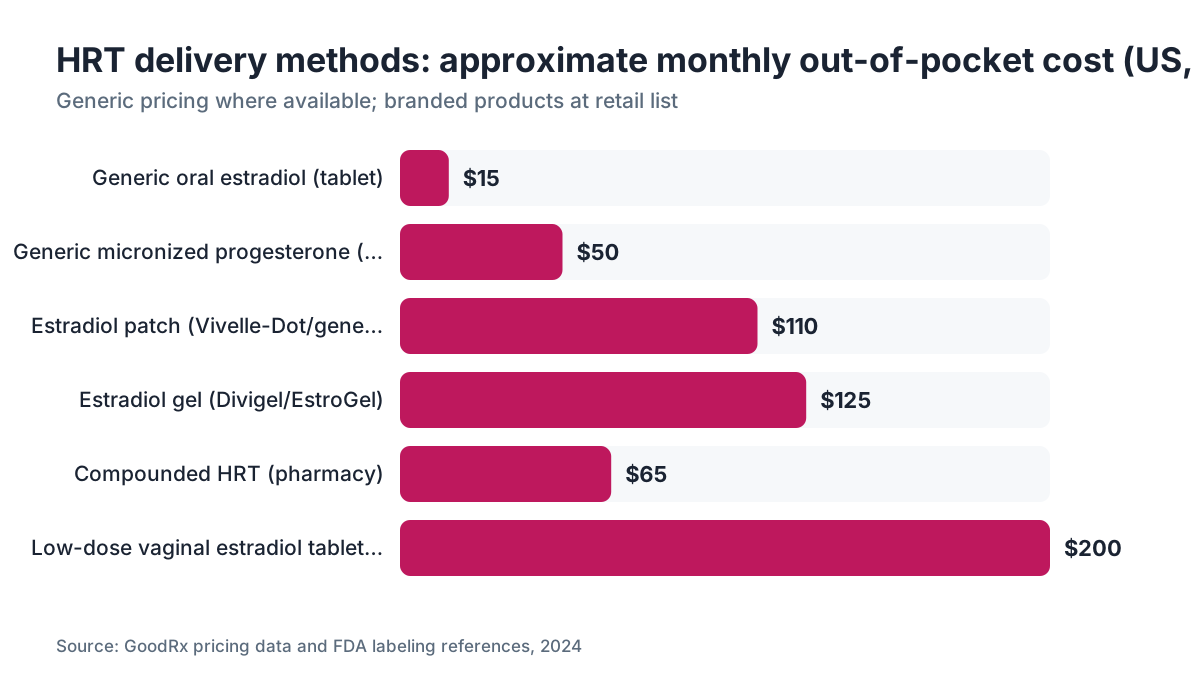
With insurance that covers hormonal therapy, retail copays typically run $10 to $50 per month for generic oral estradiol or generic Prometrium. Branded patches like Vivelle-Dot can cost $40 to $80 after insurance, or $80 to $200 without it. Gel products (Divigel, EstroGel) usually cost more: $80 to $150 out of pocket.
Without insurance, the range is wide. Generic oral estradiol tablets are among the cheapest drugs made, sometimes under $15 per month at GoodRx pricing. Generic micronized progesterone (Prometrium generic) runs $30 to $70 per month uninsured. Patches run higher: $50 to $150 depending on brand and dose. Vaginal products, especially branded ones like Vagifem, can hit $100 to $300 per month without coverage.
Compounded HRT, mixed by a compounding pharmacy from bulk active ingredients, often prices at $30 to $100 per month. The FDA has not approved compounded hormones and notes their potency, sterility, and consistency are not guaranteed the way manufactured drugs are. [10] That doesn't make compounded HRT always wrong, but know the trade-off before you pay for it.
Telehealth platforms focused on menopause care often price consult visits at $50 to $150 and may dispense medications directly at competitive rates. WomenRx, for one, bundles the provider visit with the prescription, which can simplify costs for women without menopause-friendly insurance.
Medicare Part D covers many HRT products, but formulary placement varies widely by plan. Check your specific plan's formulary before you assume coverage.
How do you get an HRT prescription?
In the US, HRT requires a prescription from a licensed prescriber: an MD, DO, NP, or PA with prescribing authority.
Your primary care doctor or ob-gyn is the usual starting point. Many general practitioners feel less comfortable with nuanced HRT prescribing than a menopause specialist would. If your doctor calls HRT too risky without discussing your specific risk profile, or offers one product without explaining alternatives, get a second opinion from a menopause-trained clinician. NAMS keeps a "Menopause Practitioner Locator" on its website where you can search by zip code for certified specialists. [1]
Telehealth is a mainstream option now and often easier to reach. Services built around women's hormonal health can complete an intake form, a video or async appointment, and a lab review, then send a prescription to your pharmacy or mail it directly, all within a few days. This matters because plenty of women in menopause live where menopause-specialized care is sparse.
What a good HRT consultation looks like:
- A review of your symptom history and how severe it is
- Questions about personal and family history of breast cancer, blood clots, cardiovascular disease, and stroke
- A discussion of your uterine status (hysterectomy or not)
- Lab work, typically estradiol, FSH, and possibly thyroid function, though labs aren't strictly required to diagnose menopause from symptoms
- A clear explanation of which product they recommend and why
- A follow-up plan, usually at 6 to 12 weeks initially
You do not need a mammogram to start HRT, though you should be current on age-appropriate screening. You do not need to be past your last period to discuss it. If your symptoms are hurting your quality of life, that's reason enough to start the conversation.
For a structured look at the full hormone replacement therapy landscape, including newer options, that guide covers it in detail.
What are the real risks of HRT?
The 2002 Women's Health Initiative results pushed a generation of doctors to stop prescribing HRT and a generation of women to stop taking it. Here's the nuance that got lost: those results came mostly from older women (average age 63) taking oral conjugated equine estrogens plus medroxyprogesterone acetate, started an average of 12 years after menopause. That is one specific scenario, not a universal verdict on all HRT. [3]
Here's where the science actually sits.
Breast cancer: WHI found a small increased risk with combination (estrogen plus progestin) therapy, roughly 8 additional cases per 10,000 woman-years after 5 years of use. The estrogen-alone arm (women who'd had hysterectomies) found no increased risk and possibly a decreased one. More recent data, including the Million Women Study analysis, suggests the risk varies by progestogen type, with micronized progesterone showing a smaller signal than synthetic progestins. The absolute increase with short-term use is small, but it's real. [4]
Blood clots (VTE): Oral estrogen carries a 2 to 3-fold increased risk of deep vein thrombosis and pulmonary embolism versus no therapy. Transdermal estrogen (patch, gel) does not appear to carry that elevated risk. This is one of the clearest pharmacokinetic splits in HRT: any personal or family history of clots and transdermal is strongly preferred. [7]
Stroke: Oral HRT ties to a modest increased stroke risk. Transdermal at standard doses appears to carry little to no excess. Route matters again.
Cardiovascular disease: For younger, healthy postmenopausal women (under 60, or within 10 years of menopause) with no pre-existing arterial disease, HRT does not appear to raise coronary heart disease risk and may lower it. The "timing hypothesis" has substantial supporting data.
For most healthy women in their late 40s and 50s starting HRT for real symptoms, the benefit-to-risk balance is favorable. For women with a BRCA mutation, active breast cancer, unexplained vaginal bleeding, or a recent blood clot or stroke, the math is different. That's why individualized prescribing exists.
How does HRT compare to not treating menopause symptoms?
Some women pass through menopause with barely any symptoms and need nothing. Others have hot flashes so severe they're changing sheets at 3am, walking out of work meetings drenched, and losing years of sleep. For that second group, the question isn't only comfort. It's health. Severe sleep disruption drives metabolic consequences. Untreated genitourinary syndrome of menopause (GSM) leads to recurrent UTIs and painful sex that many women silently endure for years.
Non-hormonal prescription options exist and work to varying degrees. Fezolinetant (Veozah), approved by the FDA in 2023, is a neurokinin B receptor antagonist made specifically for vasomotor symptoms and shows meaningful hot flash reduction in trials. [11] SSRIs and SNRIs like paroxetine (low-dose, sold as Brisdelle) and venlafaxine get used off-label and have reasonable efficacy for hot flashes. Gabapentin helps some women, particularly with night symptoms.
None of these non-hormonal options address bone loss, cardiovascular risk, or genitourinary tissue health the way estrogen does. They treat the symptom, not the underlying estrogen deficiency.
For women who can't take systemic HRT, local vaginal estrogen is almost always available and handles the genitourinary piece. Systemic absorption from low-dose vaginal products is so low that even many breast cancer guidelines permit its use in women on aromatase inhibitors when non-hormonal options fail.
If weight changes alongside menopause are part of your picture, our overview of semaglutide for weight loss and the broader GLP-1 context are worth reading. Many women manage hormonal and metabolic changes at the same time in the perimenopausal decade.
How long should you stay on HRT?
There's no universal answer, and the old rule limiting HRT to five years has been largely dropped by the major professional societies.
NAMS's current position is that there's no arbitrary time limit for HRT in appropriate candidates. For women with ongoing symptoms, persistent bone loss risk, or quality-of-life concerns, continuing beyond five years is reasonable with periodic reassessment. [1] The Endocrine Society echoes this for women with premature menopause, recommending continuation at least through the natural age of menopause, roughly 51 to 52. [6]
In practice, most clinicians want a check-in once a year to review symptoms, any new health changes, and whether the therapy still fits. Some women stop after two to three years once symptoms resolve. Others stay on low-dose therapy for a decade or more, mostly for bone protection. No rule forces you to stop.
Tapering slowly rather than quitting cold tends to cause fewer rebound symptoms, though the evidence on specific tapering protocols is limited.
Women who stop HRT usually see menopausal symptoms return, though often milder than before they started. Genitourinary symptoms in particular tend to come back and worsen without continued estrogen, since vaginal tissue doesn't repair itself once atrophy is advanced. For that reason, many clinicians continue local vaginal estrogen indefinitely even after systemic therapy stops.
If you're tracking bone health alongside HRT decisions, our piece on the bone density test explains what a DEXA scan shows and when to get one.
How is HRT different from birth control pills?
This confuses a lot of women, and the confusion makes sense because both involve estrogen and progestogens.
Birth control pills contain ethinyl estradiol, a synthetic estrogen more potent than the estradiol in HRT, paired with a synthetic progestin. The doses run higher overall because the goal is ovulation suppression. The formulation is built for reproductive-age women whose bodies still make significant hormones.
HRT uses lower doses of estrogen (often estradiol, not ethinyl estradiol) and is not reliably contraceptive. Perimenopausal women who are sexually active and can still ovulate need to grasp this: HRT does not prevent pregnancy. If you're perimenopausal and not yet 12 months past your last period, contraception is still on the table.
The side effect profiles differ too. The cardiovascular and clotting risks of birth control pills, which are substantial and well documented, don't transfer directly to HRT, because the estrogen type, the dose, and the age and physiology of the user are all different.
Some perimenopausal women do use low-dose combined oral contraceptives (COCs) to manage hormonal swings, cycle irregularity, and hot flashes. That's a legitimate clinical approach, but it's different from HRT, and it doesn't tell you what your postmenopausal estrogen needs will be.
Frequently asked questions
What is HRT in simple terms?
HRT replaces estrogen, and often progesterone, that your ovaries stop making as you reach menopause. It comes in patches, gels, pills, and vaginal products. The goal is to relieve symptoms like hot flashes, night sweats, and vaginal dryness, and to protect long-term health in areas like bone density. Think of it as restoring a hormone level your body kept for decades but abruptly lost.
What does HRT actually do for menopause symptoms?
It relieves hot flashes and night sweats, usually within two to eight weeks of starting. Vaginal dryness, painful sex, and some urinary symptoms improve over two to three months. Sleep often gets better once night sweats resolve. Longer term, HRT slows bone loss and may lower cardiovascular risk in women who start early in the transition. It doesn't erase every symptom but reliably cuts their frequency and severity.
Is HRT the same as bioidentical hormones?
Not exactly. "Bioidentical" means the hormone molecule is chemically identical to what your body produced. Many FDA-approved HRT products, including estradiol patches, gels, and micronized progesterone, are bioidentical. Compounded "bioidentical" hormones are a separate category: custom-mixed by a pharmacy, not FDA-approved, and without the same potency and consistency testing. Bioidentical doesn't automatically mean safer or more effective.
Who should not take HRT?
Women with active or recent breast cancer, unexplained vaginal bleeding, a current blood clot or recent stroke, or active liver disease are generally not candidates for systemic HRT. Women with a strong personal cardiovascular history or certain inherited clotting disorders need careful evaluation first. Local low-dose vaginal estrogen has fewer contraindications than systemic therapy. Your prescriber should review your full history before recommending any form.
How much does HRT cost per month?
Generic oral estradiol tablets can cost under $15 per month at GoodRx pricing. Generic micronized progesterone runs $30 to $70 without insurance. Patches typically cost $50 to $200 out of pocket depending on brand. Gel products run $80 to $150 without coverage. With insurance, copays are often $10 to $50 for generics. Compounded HRT is usually $30 to $100 monthly. Telehealth platforms often bundle the visit fee with competitive medication pricing.
How do you get HRT prescribed?
You need a prescription from an MD, DO, NP, or PA. Your primary care doctor or ob-gyn can prescribe it. NAMS keeps a provider locator at menopause.org for finding menopause-certified specialists. Telehealth services focused on women's hormonal health can complete intake, labs review, and prescribing within days, which matters where specialized care is hard to reach. No mammogram is required to start HRT, but you should be current on age-appropriate screening.
What is the difference between estrogen-only and combined HRT?
Estrogen-only HRT is used in women who have had a hysterectomy. Combined HRT, estrogen plus a progestogen, is used in women with an intact uterus because estrogen alone thickens the uterine lining and raises endometrial cancer risk. Adding progesterone or a synthetic progestin prevents that. The type of progestogen matters: micronized progesterone appears to have a more favorable safety profile than older synthetic progestins like medroxyprogesterone acetate.
Does HRT cause weight gain?
The evidence is nuanced. HRT itself doesn't cause weight gain in controlled studies. Menopause without HRT is tied to increased abdominal fat, partly because estrogen influences fat distribution. Some women notice temporary water retention when starting HRT. On balance, most data suggests HRT is neutral to slightly beneficial for body composition during the transition, though it's not a weight loss treatment. Metabolic changes at menopause come from several sources at once.
Can you start HRT years after menopause?
Yes, but the risk-benefit calculation changes. NAMS guidelines support HRT initiation for women under 60 or within 10 years of menopause with bothersome symptoms and no contraindications. Women who start more than 10 years after menopause or after age 60 carry higher baseline cardiovascular risk, and the data is less favorable. Starting very late isn't automatically unsafe, but it warrants more individualized discussion and probably transdermal rather than oral estrogen.
What is in HRT patches specifically?
Estradiol patches like Vivelle-Dot and Climara contain 17-beta estradiol, the same form of estrogen your ovaries produced. The patch delivers estrogen through the skin straight into the bloodstream, bypassing the liver. That's significant: it avoids the clotting risk tied to oral estrogen. Patches come in several doses (typically 0.025 mg to 0.1 mg per day) and are changed once or twice weekly depending on the product. You still need a separate progestogen if you have a uterus.
Is HRT safe if I have a family history of breast cancer?
A family history of breast cancer isn't an automatic disqualification, but it changes the conversation. The absolute risk increase from combination HRT is small but real. Whether your family history includes a BRCA1 or BRCA2 mutation shifts the picture further. Many oncologists and menopause specialists will discuss HRT with women who have family history but no personal diagnosis, favoring transdermal delivery and micronized progesterone. This is genuinely an individualized decision that needs an informed specialist.
Can HRT help with perimenopause, more than menopause?
Yes. Perimenopausal symptoms, including erratic hot flashes, mood instability, heavy periods, and poor sleep, often respond to hormonal therapy. Low-dose combined oral contraceptives, hormonal IUDs paired with transdermal estrogen, or standard HRT formulations all get used in perimenopause depending on your symptom profile and contraception needs. The approach is more nuanced than postmenopausal prescribing because your ovaries are still intermittently active.
What labs do you need before starting HRT?
Labs aren't required to diagnose menopause or start HRT in symptomatic women over 45. FSH and estradiol levels can help in ambiguous cases, particularly in women under 45 or those on hormonal contraception. Thyroid function is worth checking because thyroid disorders mimic many menopause symptoms. Some prescribers also check lipids and metabolic markers for baseline cardiovascular risk. A good clinician explains what they're ordering and why, more than hand you a lab slip.
How is HRT managed for women with endometriosis going through menopause?
Women with an endometriosis history usually need continuous combined HRT, meaning estrogen and progestogen every day with no cyclical break, rather than sequential regimens that let estrogen act unopposed even briefly. Even after hysterectomy, residual peritoneal endometriosis lesions can respond to estrogen, so many guidelines recommend including a progestogen. The evidence base is thin but the clinical logic is sound. This situation warrants a specialist familiar with both endometriosis and menopause management.
Sources
- North American Menopause Society (NAMS), Menopause Practice: A Clinician's Guide / Position Statements
- Casper RF, Yen SS. "Menopausal flushes: effect of pulsatile luteinizing hormone secretion." Journal of Clinical Endocrinology and Metabolism, 1985.
- Women's Health Initiative, NIH / National Heart, Lung, and Blood Institute
- Fournier A et al. "Unequal risks for breast cancer associated with different hormone replacement therapies." Breast Cancer Research and Treatment, 2008.
- FDA, Drug Information for Vaginal Estrogen Products
- Endocrine Society Clinical Practice Guideline: Hormone Therapy in Postmenopausal Women
- Canonico M et al. "Hormone therapy and venous thromboembolism among postmenopausal women." Circulation, 2007.
- Office on Women's Health, U.S. Department of Health and Human Services: Menopause
- Gemmell LC et al. "The management of menopause in women with a history of endometriosis." Human Reproduction Update, 2017.
- FDA, Compounding and the FDA: Questions and Answers
- FDA, Approval of Fezolinetant (Veozah) for Vasomotor Symptoms Due to Menopause, 2023
- NAMS, "The 2022 Hormone Therapy Position Statement of The North American Menopause Society"