What is bioidentical hormone therapy, and is it right for you?
TL;DR: Bioidentical hormone therapy uses hormones chemically identical to the ones your body makes: estradiol, progesterone, testosterone. Some are FDA-approved and well-studied. Others get mixed in compounding pharmacies with far less oversight and documented dose variability. That single distinction, approved versus compounded, decides most of what matters about safety, cost, and whether it's right for you.
What does 'bioidentical' actually mean?
The word sounds like marketing, and partly it is. But a real definition sits underneath it. A bioidentical hormone has a molecular structure chemically identical to the hormone your ovaries, adrenal glands, or other tissues make on their own. Compare that to synthetic hormones like medroxyprogesterone acetate (the progestin in old-school Provera) or conjugated equine estrogens from pregnant mare urine. Those work in the body, but their shapes differ from what you produce.
The three hormones most often called bioidentical are 17-beta estradiol, micronized progesterone, and testosterone. Your body makes all three. Bioidentical versions get synthesized in labs, usually starting from plant precursors like soy or wild yam, but that starting material stops mattering once synthesis finishes. You cannot get a useful dose by eating yams. The plant chemicals have to be converted in a laboratory before they match your own hormones [1].
So when a clinic or a wellness brand says 'bioidentical,' they might mean an FDA-approved estradiol patch or a custom compounded cream from a specialty pharmacy. Those two things differ enormously in evidence, regulation, and risk. The word itself tells you nothing about either one.
Are bioidentical hormones FDA-approved?
Yes. Several are. This surprises people who assume bioidentical means compounded or unregulated by default. It does not.
FDA-approved bioidentical estradiol products include oral estradiol tablets, transdermal patches like Climara and Vivelle-Dot, estradiol gels (EstroGel, Divigel), sprays (Evamist), and vaginal rings and inserts [2]. The FDA-approved bioidentical progesterone product is Prometrium, a micronized progesterone capsule taken orally or used vaginally. These went through full clinical trials, manufacturing oversight, and labeling review.
Testosterone is different. No FDA-approved testosterone product is indicated for women in the United States as of 2025, even though women make testosterone naturally and levels drop with age and after surgical menopause. Clinicians who prescribe it for women use either off-label male FDA-approved products at lower doses, or compounded testosterone preparations [3].
The FDA does not consider compounded hormone preparations equivalent to approved drugs. Agency guidance has stated that compounded bioidentical hormone therapies, or cBHT, are not proven safer than FDA-approved hormone therapies, and that claims of superior safety go unsupported by evidence [2].
See also: hormone replacement therapy
What is the difference between FDA-approved bioidentical hormones and compounded ones?
This is the question that decides everything, and most people never get a straight answer. The molecule can be identical in both. What differs is testing, dose consistency, and oversight.
| Feature | FDA-approved bioidentical HRT | Compounded bioidentical HRT (cBHT) | |---|---|---| | Molecule structure | Identical to your own hormones | Identical to your own hormones | | Tested in clinical trials | Yes, large trials | Rarely, if ever | | Consistent dose per unit | Yes, verified batch-to-batch | Variable; depends on pharmacy quality | | FDA manufacturing oversight | Yes | No (state pharmacy board only) | | Insurance coverage | Often yes | Usually no | | Customizable dose/delivery | Limited | Yes, highly flexible | | Safety claims proven | Extensive data available | No independent proof of safety advantage |
Compounded bioidentical hormones get mixed by a compounding pharmacy from a prescriber's order that specifies dose, base (cream, gel, troches, pellets), and hormone combination. The appeal is customization. Some women genuinely need a dose or delivery route that no commercial product offers. A woman using a transdermal testosterone cream has few FDA-approved alternatives.
The downside is real. A 2020 analysis in Menopause found that compounded hormone preparations showed significant dose variability between pharmacies, and sometimes within the same pharmacy across refills [8]. The North American Menopause Society (NAMS) says compounded HRT should be reserved for women who cannot use FDA-approved options because of allergy, intolerance, or an unavailable formulation, not chosen as a default first step [4].
Hormone pellets sit entirely in the compounded category. These are tiny implants placed under the skin every few months, and none are FDA-approved in any form. If you have a bad reaction, you cannot simply stop applying a cream and wait it out. The dose keeps releasing until the pellet dissolves. That is a practical concern worth weighing hard.
Why do women consider bioidentical hormone therapy in the first place?
Mostly because menopause symptoms genuinely disrupt life, and medicine has a long history of brushing women off on this.
The average age of menopause in the United States is 51, and perimenopause can start years earlier, sometimes in the late 30s or early 40s [5]. During that transition, estrogen and progesterone drop, often unevenly. Hot flashes, night sweats, wrecked sleep, vaginal dryness, mood swings, brain fog, and bone loss all trace back to that hormonal decline. Women going through surgical menopause after bilateral oophorectomy hit these changes suddenly, all at once.
Hormone therapy treats those symptoms by replacing what the body stopped making. The bioidentical framing took off partly in reaction to the Women's Health Initiative (WHI) trial, which in 2002 reported higher risks of breast cancer, heart disease, and stroke with one specific regimen: oral conjugated equine estrogen plus medroxyprogesterone acetate [6]. That combination used a synthetic progestin, not bioidentical progesterone. Women and clinicians wanted alternatives, understandably.
Since then, re-analyses of the WHI data and later research showed the risks tied largely to the specific hormones, the oral route, and the age women started. Women who begin HRT within 10 years of menopause or before age 60 have a much better risk-benefit profile than older women starting decades late [6]. Bioidentical estradiol and progesterone, especially delivered through the skin, look favorable on safety compared to the original WHI regimen, though large head-to-head randomized trials do not exist.
Read more about when menopause starts and menopause to see the full hormonal picture.
What symptoms does bioidentical hormone therapy treat?
Bioidentical hormones treat the same symptoms as any hormone therapy, because the active molecules are the same or close to it.
Estrogen, in any bioidentical form, relieves vasomotor symptoms. Hot flashes and night sweats typically drop by 75 percent or more with adequate estrogen therapy, per NAMS guidelines [4]. Vaginal dryness, painful sex, and recurrent urinary tract infections from genitourinary syndrome of menopause (GSM) respond well too, including very low-dose local vaginal estrogen that barely enters the bloodstream.
Progesterone protects the uterine lining in women who still have a uterus. Estrogen alone thickens the endometrium and raises cancer risk. Progesterone prevents that. Some women also sleep better on micronized progesterone (Prometrium) than on synthetic progestins, though the study data there are modest.
Testosterone gets less study in women but is used off-label for low libido (hypoactive sexual desire disorder), especially after surgical menopause. The International Society for the Study of Women's Sexual Health (ISSWSH) published a 2019 position statement supporting testosterone for HSDD in postmenopausal women at physiologic doses [3].
Bone protection is a genuine benefit of systemic estrogen. Estrogen helps hold bone density, and women who stop see bone loss speed up again. If bone health worries you, a baseline bone density test before and after starting or stopping is smart.
BHT does not cure aging. Symptoms often return when you stop. That is not the treatment failing. That is biology.
Is bioidentical hormone therapy safer than conventional HRT?
The honest answer: we do not have definitive proof that it is, and the FDA says claims of superior safety go unsupported by evidence [2]. The real picture is more nuanced than either the marketing or the fear allows.
FDA-approved bioidentical hormones, particularly transdermal estradiol and oral micronized progesterone, look favorable in the evidence we have. The E3N cohort, a large French observational study, found that women using estrogen combined with micronized progesterone did not carry the raised breast cancer risk seen with synthetic progestins [7]. Meaningful, though observational studies cannot prove cause and effect.
Compounded bioidentical hormones are a different animal. 'Safer because it's bioidentical and custom' is a sales pitch, not a finding. These preparations have not been tested in large trials. Dose variability is documented [8]. Some contain hormones like estriol, a weaker estrogen, at doses with unknown long-term effects.
Saliva testing, often sold as the basis for 'customizing' compounded prescriptions, is not considered reliable by NAMS or the Endocrine Society [4]. Saliva hormone levels swing too much with diet, time of day, and what you last put on your skin. Blood and urine tests track more accurately.
Risk turns heavily on your own history. Women with estrogen-receptor-positive breast cancer, uncontrolled cardiovascular disease, active blood clots, or unexplained vaginal bleeding are generally not candidates for systemic hormone therapy, bioidentical or otherwise. Your individual risk profile matters more than the hormone category.
How is bioidentical hormone therapy prescribed and dosed?
Prescribing starts with a full history and usually blood tests measuring FSH, estradiol, and sometimes testosterone and DHEA-S. Many clinicians check thyroid too, since thyroid symptoms overlap with perimenopause and the two often show up together.
For women who still have a uterus, systemic estrogen requires progesterone alongside it. That is not optional. Unopposed estrogen causes endometrial hyperplasia, which can turn into cancer.
Dosing is not one-size-fits-all. An estradiol patch might start at 0.025 mg/day or 0.05 mg/day, adjusted by how symptoms respond more than by lab numbers. NAMS recommends the lowest effective dose for the shortest time needed, though plenty of women do well long-term [4].
Telehealth has made access far easier for women in places with few in-person options. If you're searching for bioidentical hormone replacement therapy in Houston, Miami, Virginia, or Virginia Beach, telehealth providers can often prescribe FDA-approved options and ship them to most states, which erases the geography barrier that used to define access. WomenRx prescribes FDA-approved bioidentical hormones through a telehealth model built for women.
Pellet therapy runs on a different model. A clinician implants a compressed hormone pellet under the skin, usually the hip or buttock, and it dissolves over three to six months. Pellets are almost always compounded. The fixed, slow release cannot be dialed back if side effects hit. Pellets can also push hormone levels above what your body would ever make on its own, which some practitioners call a benefit but which lacks good long-term study.
See also: estrogen patch for a close look at one of the most common delivery formats.
What are the real risks of bioidentical hormone therapy?
Risk depends on which hormones you take, how you take them, how long you take them, and your baseline health. Route matters as much as the hormone.
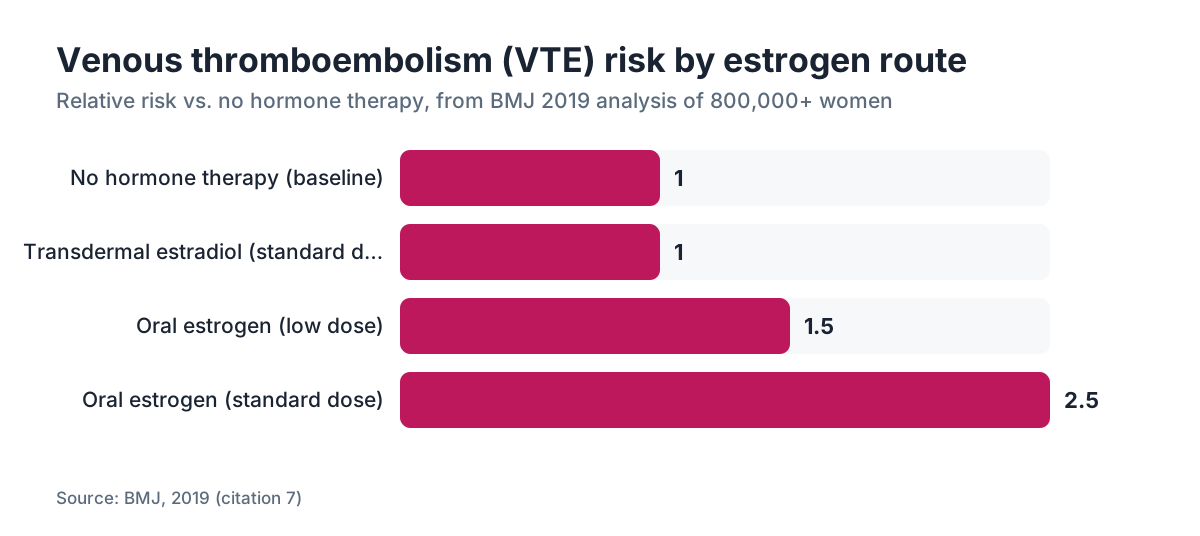
For systemic estrogen, the main risks are blood clots (venous thromboembolism) and stroke. But transdermal estrogen carries substantially lower clot risk than oral estrogen, likely because it skips first-pass liver metabolism [7]. A 2019 BMJ analysis of more than 800,000 women found transdermal estrogen was not linked to increased VTE risk at standard doses, while oral estrogen was [7].
Breast cancer risk is the question women ask most. Combined estrogen-progestin therapy, especially with synthetic progestins, modestly raises breast cancer risk with long-term use, roughly on par with one alcoholic drink a day in some analyses. Estrogen alone, in women who have had a hysterectomy, has not been shown to raise breast cancer risk and may slightly lower it over five to seven years [6]. The picture with micronized progesterone looks better than with synthetic progestins, but no large randomized trial has compared them head-to-head for breast cancer.
For testosterone at physiologic doses, risks are generally low: acne, hair thinning, voice changes, clitoral sensitivity changes. These tend to track with dose and reverse if caught early. Supraphysiologic doses, which pellets can produce, carry more risk.
The Endocrine Society's clinical practice guideline on menopause puts it plainly: "For women under 60 or within 10 years of menopause, the benefits of hormone therapy generally outweigh the risks for treatment of vasomotor symptoms" [1]. That is the evidence base in one sentence.
How does bioidentical hormone therapy compare to standard HRT by the numbers?
Here is what the evidence actually shows on key outcomes. Every figure below traces to a source cited at the bottom of this article.
| Outcome | Transdermal bioidentical estradiol | Oral conjugated equine estrogens | |---|---|---| | Vasomotor symptom relief | 75-80% reduction [4] | 75-80% reduction [6] | | VTE (blood clot) risk vs. no HRT | No significant increase [7] | 2-3x increase [7] | | Breast cancer risk (with micronized progesterone) | No significant increase (E3N cohort) [7] | Modestly elevated with synthetic progestin [6] | | Bone density preservation | Yes, well established [4] | Yes, well established [6] | | Cardiovascular risk (started within 10 yrs menopause) | Likely neutral or beneficial | Likely neutral in this window [6] |
The symptom relief is comparable. Delivery route and progestogen type are where the safety data actually diverge. That is why many menopause specialists now lean toward transdermal estradiol plus micronized progesterone as a first choice, even when the FDA-approved products skip the 'bioidentical' label on the box.
A note on cost. FDA-approved bioidentical products are often covered by insurance with a copay. Compounded hormone therapy usually is not, and can run $50 to $200 a month or more depending on formulation and pharmacy. Pellet insertion is out of pocket at nearly all practices, roughly $300 to $500 per insertion, with insertions typically needed two to four times a year (estimates based on reported clinic pricing; pharmacy and clinic fees vary widely).
How do I find a good bioidentical hormone therapy provider?
The provider matters as much as the product. A clinician who leans on salivary hormone testing, promises 'optimized' custom formulas, and waves off FDA-approved options without explanation is a red flag. So is anyone who guarantees bioidentical hormones are always safer without pointing to specific evidence.
Here is what a good provider does. Takes a full history, including cardiovascular risk factors, family cancer history, and whether you have a uterus. Orders appropriate labs before prescribing. Starts conservative and adjusts by symptoms and follow-up testing. Explains when FDA-approved versus compounded makes sense. Does not default to pellets because pellets earn more per visit.
If you live somewhere with few in-person options, including Virginia Beach, Miami, or Houston, telehealth has genuinely widened access to hormone-literate providers. WomenRx runs as a telehealth platform offering FDA-approved bioidentical HRT to women across most of the United States, no in-person visit required for ongoing prescriptions.
Menopause-focused specialists, gynecologists with extra menopause training, and internists who hold the NAMS Certified Menopause Practitioner (NCMP) credential are solid starting points. NAMS keeps a searchable directory at menopause.org [4].
Bring questions. Any provider worth your time will welcome them. And if one cannot explain the difference between bioidentical and compounded, or dismisses the WHI data without nuance, find someone else.
What questions should I ask before starting bioidentical hormone therapy?
Going in prepared saves you time and money. These are the questions that actually move the needle.
First: is this an FDA-approved product or a compounded preparation, and why this one? The answer should be specific, not a speech about bioidentical being natural.
Second: do I need progesterone, and if so, why this particular form? If you have a uterus and a prescriber offers estrogen without progesterone, that is a problem. If they push a synthetic progestin over micronized progesterone, ask why.
Third: how will we monitor whether this is working and whether it's safe? Follow-up labs, endometrial monitoring if you have a uterus, and bone density all matter depending on your situation.
Fourth: what's the plan if I want to stop? Hormones can be tapered. Pellets cannot be reversed until they dissolve. Know this before you commit to anything implanted.
Fifth: what does this cost, and what does insurance cover? FDA-approved products are often covered. Compounded preparations almost never are. Get real numbers upfront.
For the broader hormone therapy landscape and how progesterone fits in, that link breaks down the options in detail.
Is bioidentical hormone therapy covered by insurance?
Partly, and the split maps cleanly onto the FDA-approved versus compounded divide.
FDA-approved bioidentical products (estradiol patches, gels, sprays, oral estradiol, and Prometrium) sit on formulary at most major insurance plans. With a standard copay they can cost $10 to $60 a month depending on your plan and product. Generic estradiol patches have gotten affordable even without insurance.
Compounded bioidentical hormones, including custom creams, troches, and every form of pellet, are almost never covered. You pay out of pocket. Monthly costs for compounded creams or gels typically run $50 to $150. Pellet therapy adds the insertion fee on top of the pellet cost, and because insertions happen multiple times a year, annual costs can reach $1,500 to $2,000 or more.
HSA and FSA funds can generally cover both prescription hormone therapy and compounded preparations when a licensed clinician prescribes them, which gives you some tax efficiency.
If you're also weighing GLP-1 medications for weight during menopause, worth checking coverage separately. Menopause shifts body fat toward the abdomen and changes metabolism, so this comes up a lot. GLP-1s like semaglutide are covered inconsistently. semaglutide for weight loss and compounded semaglutide map out the cost picture there.
Frequently asked questions
What hormones are used in bioidentical hormone therapy?
The three most common are 17-beta estradiol, micronized progesterone, and testosterone. Each has the same molecular structure as the hormone your body makes. Estradiol handles hot flashes, sleep, and bone loss. Progesterone protects the uterine lining in women who still have a uterus. Testosterone is used off-label for low libido and energy, particularly after surgical menopause.
Is bioidentical hormone therapy the same as HRT?
Bioidentical hormone therapy is a subset of hormone replacement therapy. HRT is the broad category; bioidentical describes hormones whose molecular structure matches what your body makes. Some FDA-approved HRT products (estradiol patches, Prometrium) are bioidentical. Others, like older synthetic progestins or conjugated equine estrogens, are not. The word describes the molecule, not the regulatory status or the safety profile.
Are compounded bioidentical hormones safer than FDA-approved HRT?
No clinical trial evidence proves they are. The FDA states that claims of superior safety for compounded bioidentical hormones are not supported by evidence. Compounded preparations skip the large-scale testing required of approved drugs and show documented dose variability. FDA-approved bioidentical hormones like transdermal estradiol and micronized progesterone have a growing evidence base for both effect and safety.
Can bioidentical hormone therapy help with weight gain during menopause?
It can help with some of the metabolic shifts menopause triggers. Estrogen therapy has been shown to reduce abdominal fat accumulation and improve insulin sensitivity compared to no treatment. It does not cause dramatic weight loss, though. For significant weight gain, some clinicians combine hormone therapy with GLP-1 medications. The two are not mutually exclusive and address different parts of menopausal metabolic change.
How long does it take for bioidentical hormone therapy to work?
Hot flashes often improve within two to four weeks of adequate estrogen therapy. Vaginal symptoms may take six to twelve weeks to fully resolve. Sleep and mood improvements often show up in the first month. Full benefit, including bone protection, builds over months to years. If vasomotor symptoms have not improved after eight weeks at a given dose, that is a signal to revisit the dose with your provider.
Do I need progesterone with bioidentical estrogen therapy?
Yes, if you have a uterus. Estrogen alone thickens the uterine lining, which raises endometrial cancer risk. Adding progesterone (or a progestin) prevents this. Women who have had a hysterectomy do not need progesterone with their estrogen. This is one of the firmest safety rules in hormone prescribing and should be non-negotiable with any provider.
What is the difference between bioidentical hormone pellets and other forms?
Pellets are compressed, rice-sized hormone implants placed under the skin, usually in the hip, every three to six months. They are entirely compounded and not FDA-approved in any form. They deliver a slow, sustained release but cannot be adjusted or removed once side effects appear. Other forms (patches, creams, gels, pills) can be stopped or titrated quickly. Pellets also risk supraphysiologic hormone levels.
Can bioidentical hormone therapy help with anxiety and mood changes in perimenopause?
Estrogen acts directly on serotonin and dopamine pathways, and many women notice real mood improvement on hormone therapy during perimenopause. The evidence is strongest for women whose mood symptoms track closely with hormonal swings. For clinical depression that exists independent of hormone changes, HRT alone may not be enough. Some clinicians combine HRT with antidepressants or SSRIs when needed.
Is bioidentical hormone therapy safe for women with a family history of breast cancer?
This needs an individual conversation with your provider, not a blanket yes or no. Family history is a risk factor but not an automatic contraindication. The type of mutation (BRCA1 vs. BRCA2 vs. none), the relative's cancer type, and your own breast density all factor in. Some women with family history do proceed, particularly on transdermal estradiol and micronized progesterone under close monitoring. A breast cancer history in yourself is more complex.
What blood tests do I need before starting bioidentical hormone therapy?
At minimum: FSH (to confirm menopausal status), estradiol, and a complete metabolic panel. Total and free testosterone, SHBG, DHEA-S, and a thyroid panel are commonly added. A lipid panel matters because estrogen affects cholesterol metabolism. If you have a uterus and any irregular bleeding, a pelvic ultrasound or endometrial biopsy may be needed first. Follow-up labs typically happen three to six months after any dose change.
How do I find bioidentical hormone therapy near me if I live somewhere with limited options?
Telehealth has removed most geographic barriers. Whether you're looking for bioidentical hormone replacement therapy in Virginia Beach, Miami, Houston, or a rural area, licensed telehealth providers can prescribe FDA-approved bioidentical hormones and send them to retail or mail-order pharmacies in most states. NAMS also keeps a provider directory at menopause.org for in-person options. The NCMP credential is one reliable quality signal.
Can younger women in perimenopause use bioidentical hormone therapy?
Yes. Perimenopause can start in the late 30s or early 40s, and symptoms during that transition can be severe enough to treat. Younger women actually have the most favorable risk-benefit profile, since starting closer to menopause onset links to better cardiovascular and bone outcomes. Cycle irregularity and fertility considerations matter too, so the conversation with a provider looks somewhat different than it does for postmenopausal women.
Does bioidentical hormone therapy affect thyroid medication or other drugs?
Oral estrogen can raise thyroid-binding globulin, which may require a higher levothyroxine dose for women on thyroid medication. Transdermal estrogen has a much smaller effect. If you take thyroid medication, recheck your TSH about six to eight weeks after starting or changing oral estrogen. Other notable interactions include anticoagulants, antiepileptics, and some antifungals. Always give your prescriber a full medication list.
What happens when you stop bioidentical hormone therapy?
Symptoms often return. Hot flashes, sleep disruption, and vaginal dryness can come back within weeks to months of stopping. Bone loss speeds up again. Most clinicians recommend tapering rather than stopping cold to reduce rebound symptoms. There is no universal rule about when to stop; current NAMS guidance says age alone is not a reason to discontinue if a woman is benefiting and her individual risk assessment stays favorable.
Sources
- Endocrine Society, Clinical Practice Guideline: Treatment of Symptoms of the Menopause
- U.S. Food and Drug Administration, Bioidentical Hormones
- International Society for the Study of Women's Sexual Health (ISSWSH), Position Statement on Testosterone for Women
- North American Menopause Society (NAMS), The 2022 Hormone Therapy Position Statement
- National Institute on Aging (NIA), What Is Menopause?
- National Heart, Lung, and Blood Institute, Women's Health Initiative Study Results
- BMJ, 2019: Use of hormone replacement therapy and risk of venous thromboembolism
- Menopause (journal), 2020: Variability in compounded hormone preparations
- Office on Women's Health, U.S. Department of Health and Human Services, Menopause and Hormone Therapy
- MedlinePlus, National Library of Medicine, Hormone Replacement Therapy