What is a normal testosterone level for a woman?
TL;DR: Normal total testosterone for women usually falls between 15 and 70 ng/dL, though some labs use 8 to 60 ng/dL or narrower ranges. No single number is universal because values shift with age, cycle phase, and the lab's assay. The Endocrine Society says immunoassay tests are poorly validated for women, so your symptoms and clinical picture matter as much as the raw number.
What is the normal testosterone level for a woman?
Total testosterone between 15 and 70 ng/dL covers most reproductive-age women, and free testosterone usually runs 0.3 to 1.9 ng/dL. That's the short answer. The longer answer is messier than any single lab report suggests.
Different commercial labs publish different reference intervals. Quest Diagnostics lists 2 to 45 ng/dL for adult women. LabCorp uses roughly 8 to 60 ng/dL. The Endocrine Society's 2014 clinical practice guideline on androgen therapy in women put the premenopausal range at about 15 to 70 ng/dL for total testosterone measured by mass spectrometry, the most accurate method available [1]. Many community labs still run immunoassay, which was built and validated for the high concentrations found in men and is notoriously unreliable at the low levels normal for women [1].
Here's the practical trap: a result of 28 ng/dL from an immunoassay and a result of 28 ng/dL from a liquid chromatography-tandem mass spectrometry (LC-MS/MS) assay are not the same measurement. If you want to track testosterone over time or decide whether treatment makes sense, the assay method changes what the number means.
Free testosterone is the fraction not bound to sex hormone-binding globulin (SHBG), and it's the biologically active part. It typically runs 0.3 to 1.9 ng/dL in premenopausal women and is even harder to measure well. Most clinicians use a calculated free testosterone, derived from total testosterone and SHBG, rather than a direct free testosterone assay [1].
What does testosterone do for a woman?
Testosterone is not a male hormone that women happen to carry a little of. Women's ovaries and adrenal glands make testosterone across the whole lifespan, and it acts on receptors in the brain, bone, muscle, skin, and genitourinary tissue.
Day to day, testosterone supports libido and sexual arousal, contributes to mood and a sense of drive, helps hold bone mineral density, preserves lean muscle, and keeps vaginal and vulvar tissue healthy [2][8]. Low free testosterone tracks with reduced sexual desire in multiple studies, and that link is strong enough that testosterone is approved specifically for hypoactive sexual desire disorder (HSDD) in Australia, and used off-label with society backing across much of Europe [2].
In the US, the FDA has not approved any testosterone product specifically for women [7]. Off-label prescribing of low-dose testosterone is common and supported by the 2019 Global Consensus Position Statement, which was endorsed by major endocrine and menopause societies [2].
Testosterone also feeds estrogen production. Much of a woman's circulating estradiol is converted from testosterone by an enzyme called aromatase. So when testosterone falls, estrogen can drop downstream too, which shows up most clearly after menopause.
Bone is a real concern. Women with low androgen levels have lower bone mineral density in several observational studies, one reason clinicians are looking harder at testosterone as part of a broader hormone replacement therapy plan in menopause [8].
What are normal testosterone levels for a woman by age?
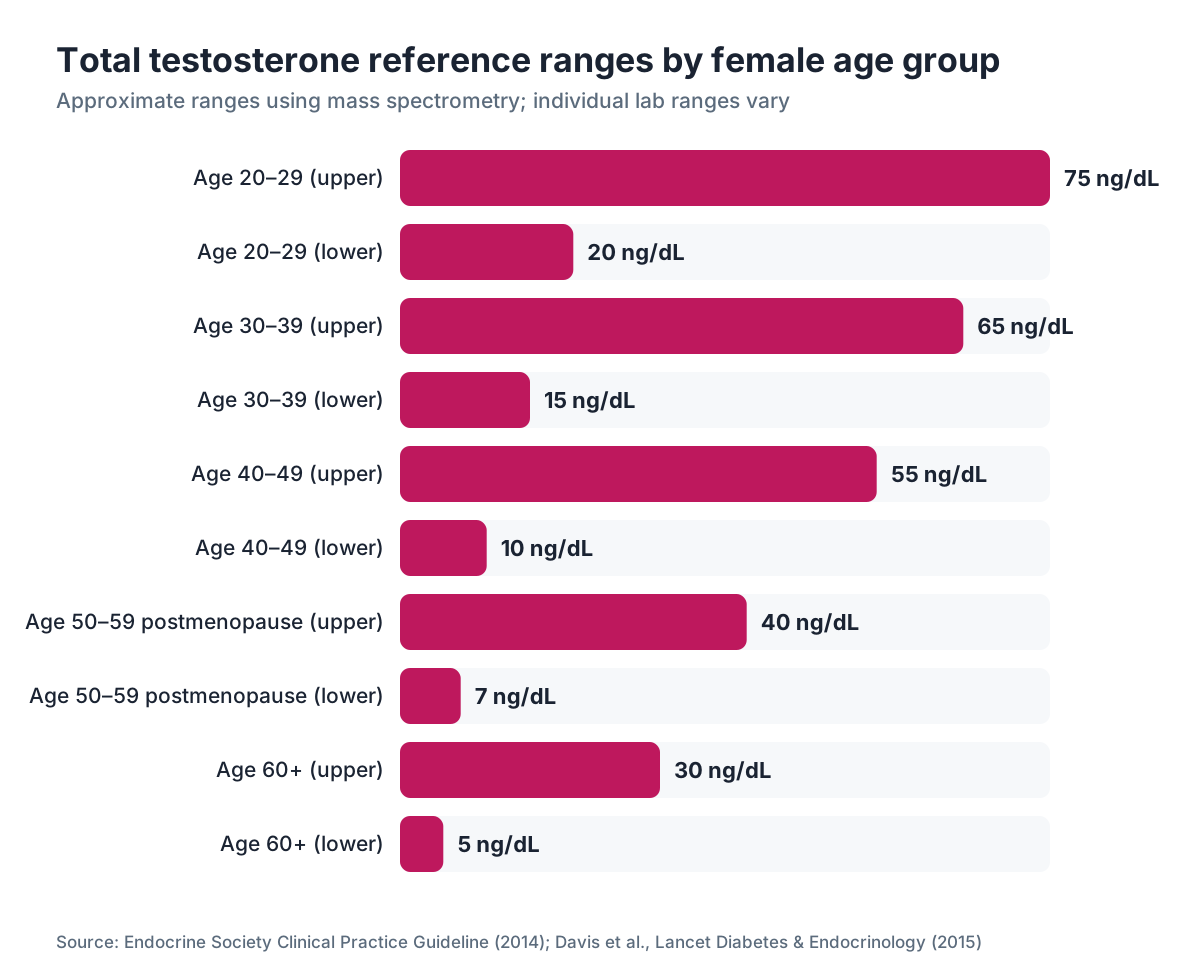
Testosterone in women is not static. It peaks in the mid-20s and slides from there, losing roughly 50% between ages 20 and 45 [3]. The steepest drop happens before menopause, often through the 30s and 40s during perimenopause.
Here is a general age-based picture drawn from large reference populations measured by mass spectrometry:
| Age range | Approximate total testosterone (ng/dL) | |---|---| | 20 to 29 | 20 to 75 | | 30 to 39 | 15 to 65 | | 40 to 49 | 10 to 55 | | 50 to 59 (postmenopausal) | 7 to 40 | | 60+ | 5 to 30 |
These ranges come from the Endocrine Society guideline and published normative data [1][3]. Individual labs vary. Women who have both ovaries removed (bilateral oophorectomy) can see testosterone fall by 50% or more almost overnight, because the ovaries make roughly 25 to 50% of circulating testosterone [3].
The adrenal glands matter too. Adrenal androgens, mainly DHEA and DHEA-S, are precursors that convert to testosterone in peripheral tissue. Adrenal output also declines with age, a process sometimes called adrenopause. So by the late postmenopausal years, a woman may sit well below 10 ng/dL, which most clinicians read as frankly low even by female standards.
If you're in your late 30s and your drive, energy, and muscle tone have all quietly left the building, that's probably not your imagination. The decline is real and measurable.
What should testosterone level be for a woman who wants to feel her best?
There is no established "optimal" testosterone level for women the way there is for men. The 2019 Global Consensus Position Statement, co-authored by the International Society for Sexual Medicine and the Endocrine Society among others, says plainly that the goal of testosterone therapy in women is to reach physiological premenopausal female levels, not levels above that range [2].
In practice, most clinicians prescribing testosterone aim to bring total testosterone into the upper half of the normal premenopausal range, roughly 35 to 70 ng/dL. Pushing above 150 ng/dL for any length of time raises the risk of androgenic side effects: acne, oily skin, hair thinning at the temples, and clitoral changes that may not reverse when you stop [2].
Symptoms matter more than the number alone. A woman at 18 ng/dL who feels fine and has a normal libido probably needs no treatment. A woman at 22 ng/dL with zero sexual desire, flattening fatigue, and no muscle response despite consistent training may be worth evaluating.
SHBG belongs in the picture, because high SHBG binds testosterone tightly and leaves little free. Women on oral estrogen, including some combined oral contraceptives, often carry very high SHBG, which suppresses free testosterone even when total looks fine [1]. That's one reason many clinicians prefer transdermal estrogen, which doesn't raise SHBG the way the oral route does. The estrogen patch is often the delivery method of choice here.
Nobody has good long-term data on "optimal" testosterone for heart, brain, or longevity outcomes in women. The honest answer is the research hasn't caught up to the question.
What is considered low testosterone in women and what are the symptoms?
There is no agreed cutoff for low testosterone in women, sometimes called female androgen insufficiency, because the diagnostic category itself is contested in endocrinology. The Endocrine Society's 2014 guideline states that the society does "not recommend making a diagnosis of androgen deficiency in women" because normative data is inadequate [9]. That guideline is now over a decade old and practice has moved on, but the uncertainty hasn't gone away.
In real clinical terms, most hormone specialists treat women for low testosterone when total testosterone sits below 15 to 20 ng/dL with symptoms, or when free testosterone falls below 0.3 ng/dL. Surgical or premature menopause, some cancer treatments, long-term oral contraceptive use, and adrenal insufficiency can all push testosterone to these levels [3].
Symptoms often attributed to low testosterone in women include:
- Decreased sexual desire or trouble with arousal, even with adequate estrogen
- Low energy and motivation that doesn't lift with better sleep
- Trouble holding muscle despite adequate protein and strength training
- More body fat, especially around the middle
- Flat or low mood not explained by other causes
- Thinning pubic and underarm hair
These overlap heavily with low estrogen, thyroid problems, iron-deficiency anemia, depression, and plain sleep debt. A full panel before you blame testosterone for everything is worth the extra blood draw. The workup usually includes total and free testosterone, SHBG, DHEA-S, thyroid-stimulating hormone, a complete blood count, and often estradiol [1].
What is considered high testosterone in women and when is it a problem?
High testosterone in women, called hyperandrogenism, is defined differently by different groups, but it's generally flagged when total testosterone tops 70 to 80 ng/dL without intentional supplementation, or when free testosterone runs above 2.0 to 2.5 ng/dL [4].
Polycystic ovary syndrome (PCOS) is the most common cause of elevated testosterone in reproductive-age women. The World Health Organization estimates PCOS affects 6 to 13% of women worldwide [4]. PCOS-related elevation is usually mild to moderate, running 70 to 150 ng/dL. Testosterone above 150 to 200 ng/dL, especially with fast-onset masculinizing symptoms, should prompt imaging to rule out an androgen-secreting tumor of the ovary or adrenal gland [4][12].
Symptoms of high testosterone include acne, oily skin, hirsutism (excess hair on the face, chest, or abdomen), scalp hair thinning at the front and crown, irregular or absent periods, and voice deepening in severe cases.
Other causes include late-onset congenital adrenal hyperplasia, Cushing's syndrome, thyroid disease, and use of anabolic steroids or certain medications, including some older progestins. The progestin type in hormonal contraceptives matters here. Levonorgestrel and norethindrone have androgenic activity and can drive symptoms in sensitive women, while progesterone itself is androgen-neutral [5]. Our article on progesterone walks through how synthetic progestins differ from the natural hormone.
How is testosterone measured in women and which test is most accurate?
Two methods dominate: immunoassay, the standard test in most commercial labs, and liquid chromatography-tandem mass spectrometry (LC-MS/MS). For women, the difference is not academic.
Immunoassay works fine at the testosterone levels typical in men (300 to 1000 ng/dL) but loses sensitivity and specificity at the low levels found in women (8 to 70 ng/dL). The Endocrine Society's 2014 guideline states that "immunoassay-based tests are inadequate for measurement of testosterone in women" and recommends mass spectrometry whenever possible [1].
LC-MS/MS is available through specialty labs and some academic centers. It costs more, often isn't covered by insurance for women, and can take longer to result. If you're going to make a treatment decision off a number, it's worth paying for the right test.
Timing matters too. Testosterone peaks in the morning and shifts across the menstrual cycle, rising around ovulation (roughly day 14). For premenopausal women, morning testing during the follicular phase (days 3 to 10) gives the cleanest baseline. Postmenopausal women don't cycle, so timing is less critical, but morning is still standard.
Ask your lab to report both total testosterone and SHBG so a calculated free testosterone can be derived. The standalone "free testosterone" immunoassay run in most labs is actually less accurate than the calculated value, and the Endocrine Society does not recommend it [1].
How does menopause affect testosterone levels in women?
The menopause transition affects testosterone in ways most people don't expect. Estrogen falls off a cliff at menopause. Testosterone's decline is slower and starts years earlier.
The ovaries keep making testosterone after natural menopause, and postmenopausal ovaries may produce relatively more testosterone than estrogen than they did before. So natural menopause doesn't slam testosterone to zero. Surgical menopause is a different story. Removing both ovaries takes out the source of roughly half of circulating testosterone and can cause a sharp drop [3].
For women in the transition, the mix of lower estrogen and lower testosterone produces overlapping symptoms that are hard to untangle. Hot flashes, night sweats, and vaginal dryness are mostly estrogen-driven. Lost libido, energy, and muscle tone often carry a testosterone component.
If you're weighing hormone therapy, knowing your testosterone level gives the prescribing clinician a fuller picture. The menopause age at which symptoms start shapes how aggressively most clinicians treat, and when menopause starts varies enough that some women in their early 40s are already dealing with meaningful testosterone decline.
Platforms like WomenRx test and evaluate testosterone alongside estrogen and progesterone. That's the right approach, because treating one hormone in isolation rarely gets you to the full clinical answer [11].
Does testosterone therapy actually work for women, and is it safe?
For sexual function, specifically low libido and HSDD, the evidence is reasonably good. A 2019 systematic review and meta-analysis in The Lancet Diabetes and Endocrinology pooled 36 randomized controlled trials covering 8,480 women and found that testosterone therapy improved sexual function versus placebo, including desire, arousal, and satisfaction [2]. That meta-analysis is the primary evidence base for the 2019 Global Consensus Position Statement.
The same review found that short-term use (up to 24 months in most trials) at physiological doses did not significantly raise serious adverse events, including cardiovascular events or breast cancer [2]. The authors were blunt that long-term safety data beyond two years is thin, and they called for more research.
The FDA has not approved a testosterone product for women in the US as of 2025 [7]. The common approaches are off-label: compounded testosterone creams or gels dosed at roughly 0.5 to 2 mg per day (about one-tenth to one-twentieth of a typical male dose), or a small measured portion of a male preparation [10]. Pellet implants exist but give less dosing control, and you can't remove them if side effects show up.
For bone, the evidence is earlier-stage. Several studies show testosterone preserves or improves bone mineral density in postmenopausal women, particularly alongside estrogen [8]. A bone density test at baseline is reasonable if you're considering long-term testosterone after menopause.
My honest take: the sexual function data is solid enough to support a careful trial in the right patient. The long-term gaps are real. This is not a hormone to mega-dose off social media advice.
What affects testosterone levels in women besides age and menopause?
Plenty of things move the number, which is part of why a single testosterone result in isolation is hard to read.
Oral contraceptives raise SHBG, sometimes sharply, which lowers free testosterone even when total is unchanged. Some women notice libido drops on the pill and returns after stopping [1]. Oral estrogen in hormone therapy does the same thing to SHBG, which is why transdermal delivery is often preferred.
Stress and cortisol count. Sustained high cortisol, from life stress, under-eating, or overtraining, suppresses the hypothalamic-pituitary-gonadal axis and can lower testosterone production. Women in a caloric deficit, including during aggressive GLP-1-assisted weight loss, may see hormonal shifts. If you're exploring semaglutide for weight loss or comparing options like semaglutide vs tirzepatide, it's worth tracking your hormone panel through the process, especially if low-testosterone symptoms appear as body composition changes.
Adrenal health is a big lever. DHEA-S is the adrenal precursor that converts to testosterone in peripheral tissue. Adrenal insufficiency, high-dose corticosteroids, and age-related adrenal decline can all lower testosterone through this route.
Body composition interacts too. Excess fat tissue raises aromatase activity, converting more testosterone to estrogen. So women carrying more body fat may run lower testosterone and higher estrogen, a pattern often seen in PCOS and insulin resistance.
SHBG itself moves with thyroid status. Hyperthyroidism lifts SHBG and lowers free testosterone. Hypothyroidism, obesity, and insulin resistance push SHBG down. Always check thyroid function alongside androgens when the symptoms are ambiguous.
What does a normal testosterone level look like on a lab report, and how do I read it?
A standard report for a woman might read:
- Total testosterone: 32 ng/dL (Reference range: 8 to 60 ng/dL)
- SHBG: 48 nmol/L (Reference range: 17 to 124 nmol/L)
- Free testosterone (calculated): 0.5 ng/dL
Start with the method. Look for whether the lab used immunoassay or LC-MS/MS, usually in a footnote or the methodology section. If it doesn't say, call the lab. Immunoassay results for women are less reliable, and you want to know before you act on the number.
Check the reference range your lab used. A range of 8 to 60 ng/dL is a different yardstick than 15 to 70 ng/dL or 2 to 45 ng/dL. Each reflects the population the lab calibrated to. None is exactly wrong, but your result only means something inside your lab's stated range and assay.
SHBG is the decoder ring. A total testosterone of 28 ng/dL with an SHBG of 120 nmol/L (very high) leaves almost no free testosterone. That same 28 ng/dL with an SHBG of 20 nmol/L leaves considerably more. This is why symptoms don't always line up neatly with total testosterone.
If your result comes back below the detection limit (reported as something like "<7 ng/dL" or "<0.1 ng/dL"), that signals frankly low testosterone, though it doesn't tell you why. Repeat testing and a clinical evaluation are the next step.
Can testosterone levels affect weight, energy, and muscle in women?
Yes, though the relationship runs both directions and is more complicated than headlines let on.
Lean muscle depends partly on testosterone, even in women. Strength training plus adequate testosterone helps hold muscle tissue, and women with very low testosterone often struggle to build or keep it. This is more than cosmetic. Muscle is metabolic tissue, and losing it raises insulin resistance and metabolic risk.
Energy and motivation are harder to pin on testosterone alone, because sleep, thyroid, iron, estrogen, and mental health all overlap. Still, several small trials found improvements in energy and general wellbeing with testosterone treatment, though effect sizes are modest outside of sexual function.
Weight and body composition run in both directions. Low testosterone is linked to more central fat and less lean mass in observational data, but whether testosterone therapy causes meaningful fat loss in women is not established. It's not a weight loss treatment. For women exploring options like semaglutide for metabolic health, testosterone can complement but not replace GLP-1 therapy for weight goals.
Bone earns another mention. Testosterone receptor signaling in bone cells directly stimulates bone formation. Postmenopausal women with lower androgen levels show lower bone mineral density across several studies, one reason testosterone is being studied as an add-on to estrogen for osteoporosis prevention [8]. A bone density test gives you a useful baseline if you're postmenopausal and considering testosterone.
Frequently asked questions
What is the average testosterone level for a woman in her 40s?
In the 40 to 49 range, total testosterone measured by mass spectrometry usually runs between 10 and 55 ng/dL, though lab ranges vary. By the mid-40s, most women have lost 30 to 50% of the testosterone they had at 20. If you're in perimenopause and noticing fatigue, low libido, or trouble building muscle, testosterone is worth checking alongside estradiol and progesterone.
What is a dangerously low testosterone level for a woman?
There's no formal clinical threshold called "dangerously low" for testosterone in women, but most specialists get concerned when total testosterone drops below 10 to 15 ng/dL with symptoms. Women who have had both ovaries removed often land there fast. Levels below the lab's detectable limit (sometimes reported as less than 7 ng/dL) warrant evaluation and a real clinical conversation, even if treatment isn't always the immediate next step.
Can low testosterone cause weight gain in women?
Low testosterone is linked to less lean muscle and more central fat in observational studies, which can affect metabolism indirectly. But testosterone is not a primary driver of weight in women, and treating low testosterone is not a proven weight loss strategy. If weight gain is the main concern, metabolic evaluation, thyroid testing, and a discussion of options like GLP-1 therapy are the better-supported starting points.
Does testosterone affect libido in women?
Yes, and this is the strongest, best-supported relationship in the field. The 2019 Lancet meta-analysis of 36 randomized controlled trials found testosterone therapy improved sexual desire, arousal, and satisfaction in women with hypoactive sexual desire disorder. Testosterone appears to act on brain receptors tied to motivation and arousal. This is the primary indication for testosterone therapy in women in countries where it's approved for female use.
What is the normal free testosterone level for a woman?
Free testosterone, the active fraction not bound to SHBG, normally runs about 0.3 to 1.9 ng/dL in premenopausal women. It's usually calculated from total testosterone and SHBG rather than measured directly, because the direct free testosterone immunoassay is inaccurate at these low concentrations. Postmenopausal free testosterone is usually below 0.5 ng/dL.
Should I test testosterone before starting hormone replacement therapy?
Testing testosterone before hormone therapy gives you a useful baseline, especially if you have symptoms like low libido, fatigue, or muscle loss that may not resolve on estrogen and progesterone alone. It also helps the prescribing clinician decide whether to add testosterone to your regimen. Ask for total testosterone, SHBG, DHEA-S, and request mass spectrometry if the lab offers it.
Can birth control pills lower testosterone in women?
Yes. Oral contraceptives containing ethinyl estradiol raise sex hormone-binding globulin, which binds testosterone and cuts the free fraction. Some women notice lower libido, mood changes, or energy shifts on the pill that improve after stopping. Transdermal contraceptive options have a smaller effect on SHBG. If you suspect the pill is affecting your androgens, testing total testosterone and SHBG both on and off the pill can be informative.
Is testosterone therapy safe for women with a history of breast cancer?
This is an area of genuine uncertainty. Most guidelines do not recommend testosterone therapy for women with hormone receptor-positive breast cancer, and oncologists usually stay cautious given the missing long-term safety data. Some clinicians have used local testosterone for genitourinary symptoms in carefully selected survivors, but that's a case-by-case decision made with oncology involvement. The 2019 Global Consensus Position Statement flagged breast cancer as a contraindication pending more data.
What are symptoms of high testosterone in women?
High testosterone in women typically causes acne, oily skin, more facial and body hair (hirsutism), thinning scalp hair at the front and crown, irregular or missed periods, and in severe cases voice deepening or clitoral enlargement. PCOS is the most common cause. Total testosterone above 150 to 200 ng/dL, especially with fast-onset symptoms, should be evaluated to rule out a tumor of the ovary or adrenal gland.
How often should women test their testosterone levels?
If you're symptom-free and not on hormone therapy, routine testosterone testing isn't recommended as a screen. If you're being evaluated for symptoms or starting therapy, baseline testing and a recheck 3 to 6 weeks after starting is standard. Once you're stable on treatment, most clinicians recheck every 6 to 12 months. Test more often if symptoms change or there's concern about levels rising above the normal female range.
Does testosterone help with menopause symptoms beyond low libido?
The evidence for testosterone improving bone density, mood, energy, and cognition in menopause is promising but less definitive than the libido data. The 2019 meta-analysis found clear improvements in sexual function, but other outcomes were less consistent. Many women report broader benefit in practice. Testosterone is generally added to estrogen-based hormone therapy rather than used alone for menopause management.
What is the difference between testosterone and DHEA for women?
DHEA (dehydroepiandrosterone) is an adrenal hormone that converts to testosterone and estrogen in peripheral tissues. DHEA supplements are sold over the counter and sometimes used as a gentler way to support androgen levels, but the conversion to testosterone is unpredictable and varies by person. Prescription testosterone gives more precise, measurable dosing. Low-dose intravaginal DHEA (prasterone) is FDA-approved for painful sex in menopause and has good evidence for genitourinary symptoms.
Can I get a testosterone test without a doctor's order?
In most US states, direct-to-consumer lab services like Quest Direct or Labcorp OnDemand let you order a testosterone test without a doctor's order and pay out of pocket. Costs typically run about $30 to $80 for total testosterone. For the more accurate LC-MS/MS assay plus a calculated free testosterone with SHBG, you may need to request it specifically or go through a clinician who orders from a specialty reference lab.
Sources
- Endocrine Society, Androgen Therapy in Women Clinical Practice Guideline (2014)
- Islam RM et al., Lancet Diabetes & Endocrinology (2019), Global Consensus Position Statement on testosterone for women
- Davis SR, Wahlin-Jacobsen S, Lancet Diabetes & Endocrinology (2015), Testosterone in women, the clinical significance
- World Health Organization, Polycystic Ovary Syndrome Fact Sheet
- Stanczyk FZ, Hapgood JP, Winer S, Mishell DR, Endocrine Reviews (2013), Progestogens used in postmenopausal hormone therapy: differences in their pharmacological properties, intracellular actions, and clinical effects
- CDC, National Center for Health Statistics (NHANES)
- FDA, Drug Approvals and Databases
- Traish AM, Vignozzi L, Simon JA et al., Journal of Sexual Medicine (2018), Role of Androgens in Female Genitourinary Tissue Structure and Function
- Wierman ME et al., Journal of Clinical Endocrinology & Metabolism (2014), Androgen Therapy in Women: A Reappraisal
- Snabes MC, Simes SM, Current Women's Health Reviews (2009), Approved hormonal treatments for HSDD
- North American Menopause Society (NAMS), Menopause Hormone Therapy Position Statement 2022
- NIH National Library of Medicine, MedlinePlus, Testosterone Levels Test