What happens during menopause: symptoms, hormones, and timeline
TL;DR: Menopause is the day you hit 12 months with no period, most often between 45 and 55, with an average age of 51. Estrogen and progesterone fall hard, driving hot flashes, broken sleep, vaginal dryness, mood swings, and faster bone loss. Perimenopause, the run-up, lasts 4 to 10 years. Hormone therapy is the most effective treatment for most symptoms.
What exactly is menopause, and how is it defined?
Menopause is a single day, not a phase. It is the point that marks 12 consecutive months without a menstrual period, with no other medical cause for that absence. You only recognize it looking backward. Everything before that day is perimenopause. Everything after is postmenopause.
The North American Menopause Society defines menopause as "the permanent cessation of menstruation that results from loss of ovarian follicular activity." [1] That wording matters. It draws a clean line: this is about the ovaries running out of viable eggs and winding down hormone production, more than a story about irregular periods.
There are three ways it happens. Natural menopause is the common one. Surgical menopause happens when both ovaries come out, causing an abrupt hormone drop that tends to produce harsher symptoms than a gradual transition. Medical menopause can be triggered by chemotherapy or pelvic radiation. This article focuses on natural menopause, but the hormone changes and symptoms overlap across all three.
One more term worth knowing: premature menopause, also called premature ovarian insufficiency (POI), means menopause before age 40. It affects roughly 1% of women and carries different long-term risks for bone and heart health than menopause at the usual age. [2]
When does menopause happen, and what age is normal?
The average age of natural menopause in the United States is 51, per the Endocrine Society. [3] Most women land somewhere between 45 and 55. Before 45 is early menopause. Before 40 is premature.
Genetics predicts your timing better than anything else. If your mother finished early, you probably will too. Smoking pulls the transition forward by roughly 1 to 2 years. [4] Race and ethnicity matter as well: Black and Hispanic women tend to enter perimenopause earlier and report more bothersome hot flashes than white women, a pattern documented in the SWAN (Study of Women's Health Across the Nation) cohort. [5]
For a fuller breakdown of how age at menopause varies, see our guide to menopause age.
Perimenopause, the years of hormonal flux before that final period, usually starts in the mid-to-late 40s. It averages about 4 years but can stretch to 10. During this stretch periods turn irregular, hormone levels swing without warning, and symptoms can hit just as hard as they do after menopause itself. Reading perimenopause age helps set realistic expectations for when your own transition might begin.
What happens to your hormones during menopause?
The main event is the collapse of ovarian estrogen. The ovaries make three hormones that matter here: estradiol (the dominant estrogen during reproductive years), progesterone, and a smaller amount of testosterone. As the ovary runs low on viable follicles, two things happen.
First, estradiol falls off a cliff. In premenopausal women it ranges from about 30 to 400 pg/mL depending on the cycle phase. In postmenopause it drops below 30 pg/mL and often below 10. [3] That drop drives most of what you feel.
Second, the pituitary gland notices the estrogen feedback has gone silent and cranks up FSH (follicle-stimulating hormone) and LH (luteinizing hormone), trying to push the ovaries to do more. FSH above 25 to 30 IU/L on two tests taken at least 4 to 6 weeks apart, with no period for 12 months, is consistent with menopause. Blood tests alone are shaky for diagnosing perimenopause, though, because those levels swing day to day. [3]
Progesterone drops too, and for a specific reason. It comes mostly from the corpus luteum, which only forms after ovulation. As ovulation gets erratic in perimenopause and then stops, progesterone falls. Low progesterone relative to estrogen feeds mood symptoms and broken sleep even before estradiol fully bottoms out.
Testosterone declines slowly across the transition rather than crashing. Some research ties that to libido and energy, though the evidence for testosterone therapy in postmenopausal women is thinner than the evidence for estrogen.
What are the most common symptoms of menopause?
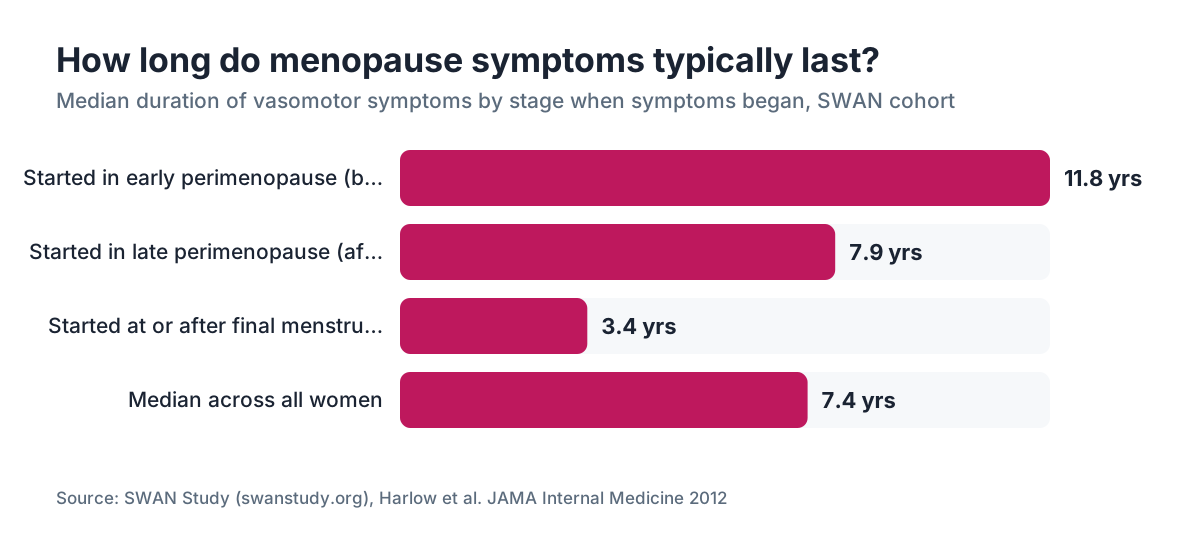
Hot flashes and night sweats get the headlines, and they earn them. About 75 to 80% of women in the United States get vasomotor symptoms, and for roughly 25 to 30% they are bad enough to disrupt daily life. [1] The SWAN study found these symptoms last a median of 7.4 years, and in some women they run past a decade. [5]
Beyond hot flashes, the list is long and often ignored:
Sleep disruption. Night sweats are one obvious cause, but women without much sweating still report worsening insomnia through the transition. Falling estrogen changes sleep architecture, cutting deep and REM sleep.
Genitourinary syndrome of menopause (GSM). Low estrogen thins and dries the vaginal and urethral tissue. That means vaginal dryness, pain with sex, repeat urinary tract infections, and urinary urgency. GSM does not fade on its own the way hot flashes eventually do. It usually gets worse. It affects up to 50% of postmenopausal women and stays badly undertreated because many women never bring it up. [6]
Mood and cognitive changes. Anxiety, irritability, and low mood show up often, especially in perimenopause. Brain fog, word-finding trouble, and memory slips are common too. These tend to settle once the transition stabilizes, though the long-term cognitive research is still developing.
Joint pain. Musculoskeletal pain affects roughly half of perimenopausal and postmenopausal women and appears tied directly to estrogen loss, more than to aging alone. [7]
Weight redistribution. Fat shifts from the hips and thighs toward the belly after menopause, even with no weight gain, driven partly by lower estrogen and partly by age-related muscle loss. Total body fat percentage often climbs.
Skin and hair changes. Less estrogen means less collagen. Skin thins and loses stretch. Hair may thin or dry out.
How does menopause affect bone density and cardiovascular health?
These are the long-term consequences that matter most, and they are why menopause is more than a comfort issue. Estrogen protects bone and blood vessels, and losing it changes both.
Estrogen keeps bone remodeling in check. It slows osteoclasts, the cells that break bone down. When estrogen drops, resorption speeds up. Women can lose 1 to 2% of bone density per year in the first few years after menopause, and some lose up to 20% of total bone mass across the first 5 to 7 years. [8] That is why bone density test guidelines call for a baseline DEXA scan by age 65, earlier for women with risk factors or early menopause.
Heart disease risk climbs after menopause. Before menopause, women have far lower rates of heart disease than men their age. After menopause that gap narrows. Estrogen loss raises LDL cholesterol, lowers HDL, increases inflammation, and stiffens arteries. The American Heart Association reports that cardiovascular disease is the leading cause of death in postmenopausal women. [9]
There is a metabolic shift too. Insulin sensitivity drops after menopause, raising type 2 diabetes risk, and visceral fat makes it worse. For women managing weight through this window, GLP-1 receptor agonists have drawn interest. The SURMOUNT-1 trial of tirzepatide showed large weight reduction in adults with obesity, and while it was not menopause-specific, the population was mostly women. [10] Some clinicians now use GLP-1 medications in the perimenopausal and postmenopausal window alongside hormone therapy. To understand how these drugs work and where they fit, semaglutide for weight loss covers the evidence in detail.
What is the difference between perimenopause and menopause?
Perimenopause is the transition. Menopause is the destination. In perimenopause, ovarian hormone production turns erratic rather than absent. You still get periods, but they may come closer together or further apart, run heavier or lighter, and symptoms can start months or years before your last one.
The hormonal chaos of perimenopause is sometimes rougher day to day than postmenopause, precisely because the swings are unpredictable. Estrogen can spike high before it crashes, which is part of why anxiety and mood instability run so high in this phase.
Diagnosing perimenopause is clinical, not a lab result. A single FSH level is unreliable because hormones change day to day. A doctor who says "your labs are normal, so you're not in perimenopause" is missing the picture. The real conversation is about your symptoms, your cycle pattern, and your age. For a full guide to the timeline, see when does menopause start and the companion piece on menopause.
What are the treatment options for menopause symptoms?
Hormone replacement therapy (HRT), also called menopausal hormone therapy (MHT), is the most effective treatment for hot flashes and GSM, and it is the only one that treats the hormonal cause rather than the downstream effects. [1] For women who start before age 60 or within 10 years of menopause, the evidence for cardiovascular and bone protection is reasonably strong. The Women's Health Initiative findings from 2002 scared a generation away from HRT, but later analysis reframed those risks substantially, especially for younger postmenopausal women using transdermal estradiol with micronized progesterone. [11]
Women with a uterus need estrogen paired with a progestogen to protect the uterine lining. Women who have had a hysterectomy can use estrogen alone. The estrogen patch is one common delivery method; gels, sprays, and pills are others. Vaginal estrogen treats GSM locally with minimal systemic absorption and is considered safe even for many women who cannot take systemic HRT.
Non-hormonal options exist. The FDA approved fezolinetant (Veozah) in 2023 for moderate-to-severe vasomotor symptoms, the first non-hormonal neurokinin receptor antagonist cleared for this use. [12] Paroxetine 7.5 mg (Brisdelle) has FDA approval for hot flashes. Other SSRIs and SNRIs get used off-label. None of these touch GSM or bone loss.
For bone protection, bisphosphonates, RANK ligand inhibitors, and other drugs are available for women with osteoporosis or high fracture risk. A bone density test tells you whether you need them.
WomenRx offers telehealth access to hormone therapy prescriptions and ongoing management for women in perimenopause and postmenopause, with real follow-up rather than one-off consults.
Lifestyle changes genuinely help. Resistance training holds onto bone and muscle. Cutting alcohol and quitting smoking reduce hot flash severity. Cognitive behavioral therapy (CBT) has reasonably good evidence for both hot flashes and menopause-related insomnia, which surprises a lot of women.
Does menopause affect mental health?
Yes, and this is where women get undertreated or misread most often. The perimenopausal window raises the risk of depression, even in women with no psychiatric history at all.
A 2018 study in JAMA Psychiatry found that women with no history of depression were twice as likely to have clinically significant depressive symptoms during perimenopause than during premenopause. [13] This is more than stress or a hard year. It is a neurobiological effect of estrogen swings on serotonin and norepinephrine systems.
Anxiety runs alongside it. Many women describe a new racing heart, a sense of dread, or irritability that does not match anything happening in their life. Hot flashes and anxiety can feed each other in a loop that makes both worse.
Here is the useful part. HRT can meaningfully lift mood in perimenopausal women, especially when the mood symptoms track the hormonal transition rather than a primary depression. An antidepressant is not always the right first move for a woman whose low mood started when her cycles went irregular.
Brain fog and word-finding trouble are real and measurable. SWAN and other cohorts show that verbal memory and processing speed dip during perimenopause and recover somewhat in postmenopause. [5] Distressing, yes. A precursor to dementia, generally no.
What happens to your sex drive and sexual health during menopause?
Sexual changes in menopause are common, come from several sources at once, and respond well to treatment, yet they stay among the least-discussed topics in clinical care. Most women never get asked about them.
GSM is the physical piece: vaginal dryness, thinning tissue, less natural lubrication, and often real pain with penetrative sex. Unlike hot flashes, GSM does not improve with time or lifestyle changes. Vaginal estrogen (cream, ring, or suppository) treats it well and has an excellent safety record. Non-hormonal moisturizers and lubricants help with comfort but do not reverse the tissue changes.
Libido is messier. Low desire in postmenopausal women involves the vaginal symptoms, yes, but also sleep loss, mood, relationship factors, and possibly lower testosterone. Some clinicians prescribe low-dose testosterone off-label for postmenopausal hypoactive sexual desire disorder, and there is reasonable evidence it helps. There is no FDA-approved testosterone product for women in the United States as of 2025.
The link between sexual health and overall quality of life in menopause is strong. Women treated for GSM report improvements in relationship satisfaction and mood. Bring it up with your clinician, even if they don't.
How long do menopause symptoms last?
Hot flashes are the best-studied symptom for duration. The SWAN study, which followed more than 1,500 women over years, found the median total duration of vasomotor symptoms was 7.4 years. [5] Women whose symptoms started in early perimenopause, before their periods turned irregular, ran the longest. Women who started later had shorter courses.
About 10 to 15% of women still get hot flashes in their 70s. That is not rare.
GSM tends to worsen over time without treatment. Bone loss keeps going. These are chronic consequences, not passing annoyances.
Here is the better news. For most women, the acute and most disruptive phase (the classic hot flashes, broken sleep, and mood swings) eases within 5 to 7 years of the final period. Postmenopause is not a permanent state of misery. Many women describe feeling steadier and more like themselves once the transition finishes, especially those who got real treatment along the way.
Is HRT safe, and who should not use it?
Safety depends on the woman, the formulation, and the timing. This is genuinely nuanced ground, and the blanket fear that followed the 2002 WHI publication did real harm by leaving millions of women undertreated.
The current consensus from NAMS, the Endocrine Society, and the British Menopause Society is that for healthy women under 60 who are within 10 years of menopause onset, the benefits of HRT for quality of life, bone protection, and possibly heart health outweigh the risks for most women. [1] [3]
The risks are real and worth naming:
Breast cancer. Combined estrogen-progestogen therapy carries a small increase in breast cancer risk, roughly 1 to 2 added cases per 1,000 women over 5 years of use, comparable to the risk from a daily glass of wine or from carrying extra weight. Estrogen-only therapy in women without a uterus does not appear to raise breast cancer risk and may slightly lower it. [11]
Blood clots. Oral estrogen raises DVT and pulmonary embolism risk. Transdermal estrogen (patch, gel, spray) does not appear to carry the same risk, which is why it is preferred for women with clot risk factors. [11]
Absolute contraindications include active breast cancer, unexplained vaginal bleeding, active liver disease, and a history of estrogen-receptor-positive cancer. Women with these histories should work with a specialist who can weigh individual risk.
To explore hormone therapy options, see hormone replacement therapy for a full treatment guide. If you are unsure which delivery method fits, the comparison in estrogen patch is a practical place to start.
Frequently asked questions
What happens during menopause in simple terms?
Your ovaries stop making meaningful amounts of estrogen and progesterone. That shift touches nearly every system: temperature regulation (hot flashes), sleep, mood, vaginal tissue, bones, and heart health. Menopause itself is just the 12-month mark after your last period. The symptoms can start years earlier and last a decade or more.
When does menopause happen for most women?
The average age is 51 in the United States, and most women reach menopause between 45 and 55. Genetics predicts your timing better than anything else. Smoking tends to bring it on 1 to 2 years earlier. Menopause before 40 is called premature ovarian insufficiency, affects about 1% of women, and carries added health risks that deserve dedicated care.
How do you know menopause has started?
You technically cannot know until it's behind you. Menopause is confirmed after 12 straight months with no period. What you can spot earlier is perimenopause: irregular cycles, new or worsening hot flashes, night sweats, broken sleep, or mood changes in your 40s. Blood tests (FSH, estradiol) can support the picture but are not definitive alone, because levels bounce day to day in perimenopause.
What are the first signs that menopause is approaching?
Most women notice irregular periods first: cycles longer, shorter, heavier, or lighter than usual. Hot flashes and night sweats often follow. Broken sleep, new anxiety, and mood changes are common early signs that get blamed on stress. Some women also notice breast tenderness, bloating, or worse PMS in early perimenopause before periods look visibly irregular.
What does a hot flash actually feel like?
A sudden wave of heat, usually starting in the chest and rising to the face and neck, often with flushing, sweating, and sometimes a racing heart. It typically lasts 1 to 5 minutes. At night, the same process causes night sweats. Afterward some women feel a chill. Severity runs from mildly annoying to fully disruptive, and it can vary in the same woman day to day.
Can menopause cause anxiety or depression?
Yes, and it's under-recognized. The perimenopausal transition raises the risk of depressive symptoms, even in women with no prior history. Estrogen swings act directly on serotonin and mood-regulating systems in the brain. New anxiety or irritability that showed up alongside cycle changes deserves a hormonal workup, more than an automatic antidepressant, though antidepressants do have a role for some women.
Does menopause cause weight gain?
Menopause shifts body fat toward the abdomen even without a change in total weight. Some women also gain weight because muscle mass declines with age and metabolic rate slows. Lower estrogen reduces insulin sensitivity and pushes the body to store visceral fat. Diet and exercise that worked in your 30s often stop working in your 50s, and that shift is hormonal, more than a willpower problem.
What happens to bones during menopause?
Bone loss speeds up sharply in the first 5 to 7 years after menopause because estrogen normally slows bone breakdown. Women can lose 1 to 2% of bone density per year in this window, with some losing up to 20% of total bone mass. That raises long-term osteoporosis and fracture risk. A DEXA bone density scan is recommended by age 65, earlier if you have risk factors or went through early menopause.
How long do hot flashes last?
The SWAN study found the median total duration of vasomotor symptoms was 7.4 years. Women who start having hot flashes early in perimenopause tend to have them the longest. About 10 to 15% of women still get hot flashes in their 70s. Hormone therapy is the most effective treatment and typically cuts hot flash frequency by 75 to 80% or more within a few weeks of starting.
Is hormone replacement therapy safe for menopause?
For most healthy women under 60 within 10 years of menopause, current evidence from NAMS and the Endocrine Society supports HRT as safe and beneficial. Risks vary by formulation: transdermal estrogen has a lower clot risk than oral. Combined estrogen-progestogen therapy carries a small breast cancer signal; estrogen-alone does not appear to. Absolute contraindications include active hormone-sensitive cancer and unexplained vaginal bleeding.
What is genitourinary syndrome of menopause (GSM)?
GSM is the umbrella term for vaginal and urinary symptoms from low estrogen: vaginal dryness, thinning tissue, pain with sex, repeat UTIs, and urinary urgency. It affects up to 50% of postmenopausal women. Unlike hot flashes, it does not improve on its own and worsens over time without treatment. Vaginal estrogen treats it well and is considered safe even for many women who cannot use systemic HRT.
Can you get pregnant during perimenopause?
Yes. Until you have gone 12 full months without a period, you can still ovulate and conceive. Fertility is reduced but not zero. Women in perimenopause who don't want to get pregnant should keep using contraception. Irregular cycles do not mean ovulation has stopped entirely. You can stop contraception after confirmed menopause, ideally with guidance from your clinician.
What is the difference between perimenopause and menopause?
Perimenopause is the transition, marked by irregular cycles and swinging hormones, that can begin in the mid-to-late 40s and last 4 to 10 years. Menopause is a single point in time: 12 consecutive months without a period. Postmenopause is everything after. Most symptoms people call menopause actually begin in perimenopause, which is why many women feel like they've been in it for years before their last period.
Are there non-hormonal treatments for menopause symptoms?
Yes. The FDA approved fezolinetant (Veozah) in 2023, a neurokinin receptor antagonist made specifically for moderate-to-severe vasomotor symptoms, the first non-hormonal prescription drug designed for it. Paroxetine 7.5 mg (Brisdelle) also has FDA approval for hot flashes. Other SSRIs and SNRIs get used off-label. Cognitive behavioral therapy has good evidence for both hot flashes and insomnia. None of these address bone loss or GSM.
Sources
- North American Menopause Society (NAMS), Menopause Practice: A Clinician's Guide
- NIH National Institute of Child Health and Human Development, Premature Ovarian Insufficiency
- Endocrine Society, Menopause Clinical Practice Guideline 2015
- NIH National Institute on Aging, What Is Menopause?
- SWAN (Study of Women's Health Across the Nation), Harlow et al., JAMA Internal Medicine 2012 and subsequent publications
- American College of Obstetricians and Gynecologists (ACOG), Practice Bulletin: Genitourinary Syndrome of Menopause
- Watt FE, 'Musculoskeletal pain and menopause,' Post Reproductive Health / Arthritis literature 2018
- Bone Health and Osteoporosis Foundation
- American Heart Association, Cardiovascular Disease and Women
- Jastreboff AM et al., SURMOUNT-1, New England Journal of Medicine 2022
- Manson JE et al., Women's Health Initiative re-analysis, JAMA 2013 and subsequent publications
- FDA Drug Approval: Veozah (fezolinetant), 2023
- Bromberger JT & Epperson CN, JAMA Psychiatry 2018, Depression During and After the Perimenopause