What does progesterone do for women: a complete guide
TL;DR: Progesterone maintains a uterine lining ready for pregnancy, but its job list runs well past reproduction. It shapes sleep, mood, bone density, and breast tissue. Levels start dropping years before your last period. In hormone therapy, micronized progesterone (Prometrium) carries a meaningfully better safety profile than synthetic progestins.
What is progesterone and where does it come from?
Progesterone is a steroid hormone produced mainly by the corpus luteum, the temporary structure that forms in your ovary after ovulation each month. The adrenal glands make a smaller amount. During pregnancy, the placenta takes over as the primary source and produces levels that dwarf anything seen in a normal cycle.
The name is a clue: "pro-gestational," meaning it prepares the body for pregnancy and sustains it. But researchers now know progesterone receptors sit in the brain, bone, breast, blood vessels, and immune tissue. Its effects are body-wide, well past reproduction [1].
Progesterone also sits near the top of a hormone-manufacturing chain. Cholesterol converts to pregnenolone, which converts to progesterone, which then branches into cortisol, testosterone, and estrogen. Think of it as a raw material your body draws down constantly, not a single-purpose end product.
Micronized progesterone (the pharmaceutical form sold as Prometrium in the US) is chemically identical to what your ovaries make. Synthetic progestins like medroxyprogesterone acetate (MPA) are structurally different and behave differently at the receptor level. That distinction matters a great deal in hormone therapy, as you'll see in the therapy section below.
What does progesterone actually do in the body?
The corpus luteum secretes progesterone in the second half of your cycle (the luteal phase) to change the uterine lining from a proliferating state into a secretory one ready to receive a fertilized egg. If implantation doesn't happen, progesterone drops, the lining sheds, and your period arrives. That monthly rise and fall is progesterone's most visible job [1].
Beyond the uterus:
Sleep. Progesterone metabolizes in the brain into allopregnanolone, a neurosteroid that binds GABA-A receptors the same way benzodiazepines do. It calms the nervous system and promotes sleep. Women with lower progesterone, including those in early perimenopause, often report worse sleep quality even before estrogen drops much [2].
Mood. The same GABA pathway that promotes sleep also reduces anxiety. Some women feel noticeably calmer in the luteal phase when progesterone is high, and distinctly more anxious just before their period when it crashes. Women with premenstrual dysphoric disorder (PMDD) appear to have abnormal sensitivity to that crash rather than abnormally low progesterone itself [3].
Breast tissue. Progesterone and estrogen oppose each other in breast tissue in complex ways. Micronized progesterone appears to have a neutral or favorable effect on breast cell proliferation compared with synthetic progestins, though this remains an active research area [4].
Bone density. Progesterone receptors sit on osteoblasts, the cells that build bone. Some evidence suggests progesterone supports bone formation, though estrogen's role in preventing bone resorption is larger and better established. If bone density concerns you, the bone density test article covers when and how to screen.
Cardiovascular. The blood vessel wall has progesterone receptors. Micronized progesterone does not appear to blunt the favorable lipid effects of estrogen the way MPA does, based on the PEPI trial data [5].
Thyroid. High progesterone can compete with thyroid hormone at the cellular level and may slightly blunt thyroid function, which is one reason hypothyroid symptoms sometimes worsen in the luteal phase or during pregnancy.
How do progesterone levels change across a woman's life?
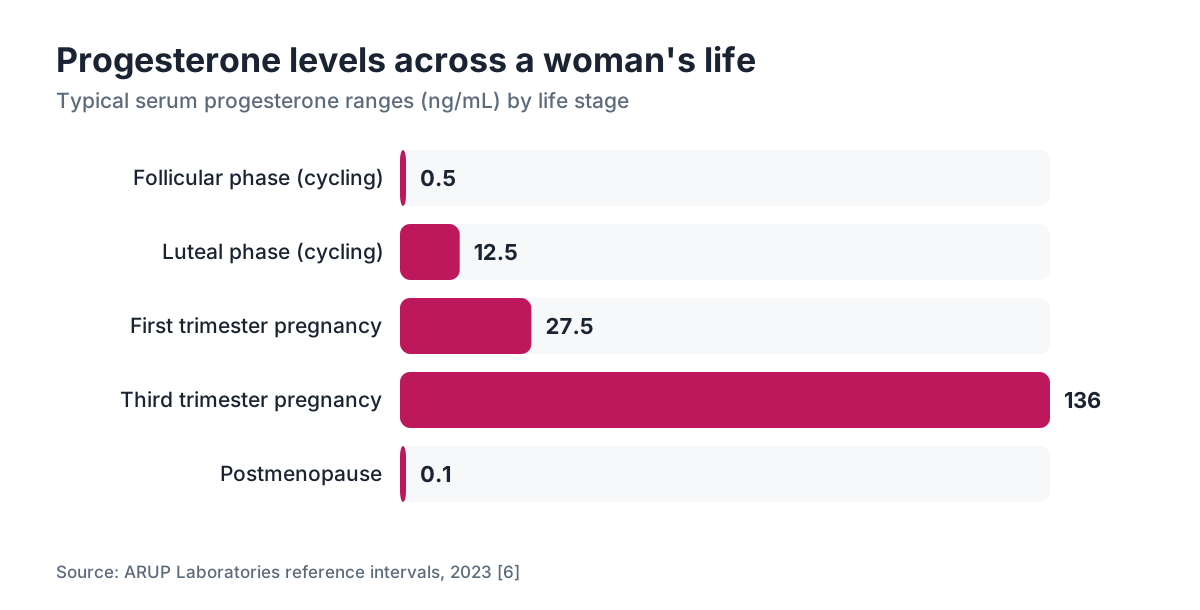
Progesterone follows a predictable arc. Before puberty: essentially zero. Reproductive years: low in the follicular phase (roughly 0.1 to 0.9 ng/mL), rising sharply after ovulation to a luteal peak of 5 to 20 ng/mL, then falling before menstruation [6]. Pregnancy: levels climb into the hundreds of ng/mL by the third trimester.
The decline begins earlier than most women expect. In the mid-to-late 30s, ovulation starts to become irregular. An anovulatory cycle produces no corpus luteum and therefore no progesterone surge. You still bleed, often heavier than before, because estrogen-driven proliferation of the uterine lining goes unopposed. That is one of the hallmark patterns of early perimenopause [7].
By the late 40s, most cycles may be anovulatory. Progesterone runs low or absent for much of the month. After menopause (defined as 12 consecutive months without a period), progesterone from ovarian sources is essentially zero [8]. The adrenals keep making trace amounts.
This timeline explains why perimenopause symptoms, including poor sleep, mood swings, and irregular bleeding, can show up years before hot flashes arrive. Estrogen doesn't fall dramatically until the final year or two before the last period. Progesterone drops first.
| Life stage | Typical progesterone range | |---|---| | Follicular phase (cycling) | 0.1 to 0.9 ng/mL | | Luteal phase (cycling) | 5 to 20 ng/mL | | First trimester | 11 to 44 ng/mL | | Third trimester | 58 to 214 ng/mL | | Postmenopause | <0.2 ng/mL |
Source: ARUP Laboratories reference intervals, reflecting standard clinical lab ranges [6].
What are signs of low progesterone in women?
Low progesterone rarely announces itself with a single dramatic symptom. It shows up as a cluster that clinicians sometimes chalk up to stress, anxiety disorders, or "just getting older."
The most common signs: irregular or unusually heavy periods (caused by unopposed estrogen on the uterine lining), mid-cycle spotting, and a shortened luteal phase that can make early pregnancy hard to sustain. Anxiety and poor sleep in the second half of the cycle are also characteristic, because the calming neurosteroid effect of progesterone's metabolites is missing [2].
Other frequently reported symptoms: breast tenderness in the luteal phase, migraines that cluster premenstrually, bloating, and a general sense of being "wired and tired" in the evenings. None of these is specific to low progesterone on its own, which is why a timed blood test (drawn 7 days after confirmed ovulation, or roughly day 21 of a 28-day cycle) is the practical confirmation step.
Some clinicians add a urine or saliva test, but serum progesterone on the right cycle day is the most standardized approach. A luteal-phase serum progesterone below 5 ng/mL on day 21 suggests the cycle was anovulatory or the luteal phase is inadequate [6].
If you're in your 40s with irregular cycles and recognize this pattern, the menopause and when does menopause start articles have more on the trajectory.
How does progesterone affect sleep and anxiety?
This mechanism surprises most women, and it's one of the more clinically important things to understand about the hormone.
When progesterone metabolizes in the brain, one byproduct is allopregnanolone (also called 3α,5α-tetrahydroprogesterone). Allopregnanolone is a positive allosteric modulator of the GABA-A receptor, the same receptor targeted by benzodiazepines, barbiturates, and alcohol. It doesn't sedate the way those drugs do, but it shifts the nervous system toward calm and toward sleep architecture with more slow-wave (deep) sleep [2].
When progesterone drops sharply, which happens just before a period and again during the perimenopause transition, women often lose this background calm. Sleep latency climbs, nighttime waking climbs, and baseline anxiety rises. This is separate from the effect of dropping estrogen on hot flashes and night sweats, though the two often overlap in timing and get hard to tease apart.
A 2020 study in the journal Menopause found that perimenopausal women with sleep complaints had significantly lower progesterone metabolite levels than age-matched premenopausal women, independent of estrogen levels [2]. The Endocrine Society's clinical practice guideline on menopausal symptoms acknowledges this mechanism and notes that oral micronized progesterone has sleep-promoting properties beyond its uterine-protective function [9].
Practical implication: some women who need progesterone for uterine protection in hormone therapy find that taking it orally at bedtime gives them a real sleep benefit. Vaginal progesterone, which largely bypasses first-pass liver metabolism, produces less allopregnanolone in the brain and therefore less of the sleep effect.
What is the relationship between progesterone and testosterone in women?
Progesterone and testosterone are metabolically linked. Both are precursors along the steroidogenesis pathway: progesterone can convert to androstenedione, which converts to testosterone. So when progesterone production falls in perimenopause, the upstream supply for testosterone also starts to shift.
The clinical picture is messier than a simple cascade, though. Testosterone in women is produced both in the ovaries and in peripheral tissue, and its decline has its own timeline that doesn't track progesterone's fall exactly. Many women hit low testosterone symptoms (reduced libido, fatigue, less muscle mass, lower motivation) during perimenopause at the same time as low progesterone symptoms, which muddies the diagnosis [10].
Progesterone and testosterone can also interact at the receptor level. Progesterone has mild anti-androgenic activity at high concentrations, meaning it can compete at androgen receptors. This is one reason high-dose synthetic progestins in older birth control formulations sometimes blunted libido. Micronized progesterone at physiologic doses does not appear to do this clinically.
For women weighing hormone therapy, progesterone and testosterone often come up together because both are commonly undertreated. A prescriber evaluating a perimenopausal woman usually looks at all three sex hormones: estrogen, progesterone, and testosterone. The Endocrine Society published a position statement on testosterone therapy for women in 2019 recognizing hypoactive sexual desire disorder as a valid indication [10].
If you're exploring the combined picture, a telehealth practice like WomenRx can evaluate all three in context rather than treating each hormone in isolation.
Does progesterone help with weight and metabolism?
The evidence here is genuinely mixed, and anyone promising dramatic weight loss from progesterone alone is overstating it.
Progesterone does have metabolic effects. It raises basal body temperature slightly (you can track this on a standard basal body temperature chart and see the rise after ovulation). It mildly promotes water and sodium excretion in the kidneys by competing with aldosterone receptors, which can reduce fluid retention. And it affects appetite: progesterone is tied to more hunger in the luteal phase, which is why many women notice carbohydrate cravings in the week before their period.
In perimenopause, when progesterone drops relative to estrogen, some women get more fluid retention and puffiness. Restoring progesterone balance can reduce that, which reads subjectively as weight loss but is more accurately a fluid change.
The bigger metabolic story in perimenopause involves estrogen, not progesterone. The shift in fat distribution toward central (abdominal) fat in the late 40s and 50s correlates more closely with estrogen decline and rising FSH than with progesterone directly.
For women dealing with real weight gain in the menopause transition, GLP-1 medications have become a separate, evidence-based tool. If that's relevant to you, the semaglutide for weight loss article covers what the data actually shows for midlife women.
How is progesterone used in hormone replacement therapy?
Any woman with a uterus who takes systemic estrogen for menopause symptoms needs progesterone (or a progestin) alongside it. Estrogen alone drives continuous growth of the uterine lining, and after a year or more this leads to endometrial hyperplasia and, eventually, uterine cancer. Adding progesterone or progestin prevents this [9].
The choice between micronized progesterone and synthetic progestins is not trivial. The Women's Health Initiative (WHI) trial, which raised alarms about breast cancer risk from hormone therapy in 2002, used conjugated equine estrogen combined with medroxyprogesterone acetate (MPA). Later analyses and separate trials using estrogen with micronized progesterone showed a more favorable safety profile, particularly for breast cancer risk [4].
The French E3N cohort study, following over 80,000 women for more than a decade, found that women using estrogen combined with micronized progesterone had breast cancer risk closer to baseline than users of synthetic progestins [4]. The Endocrine Society's 2022 update acknowledges these differences and notes that micronized progesterone is the preferred form when available [9].
For women without a uterus (after hysterectomy), progesterone is not required for uterine protection. It may still be prescribed for its sleep or mood effects, but that is a clinical judgment call.
Dosing approaches vary. Cyclic progesterone (taken 12 to 14 days per month) produces a withdrawal bleed in most women and is often used in perimenopause. Continuous daily dosing at a lower dose (typically 100 mg oral micronized progesterone nightly) is more common in postmenopausal women who don't want bleeding. The hormone replacement therapy article covers the full regimen picture.
The North American Menopause Society (NAMS) states in its 2022 position statement: "Micronized progesterone is preferred over synthetic progestins because of its more favorable side-effect profile and cardiovascular and breast safety data" [8].
What is the difference between progesterone and progestin?
This is one of the most practically important distinctions in women's hormone health, and popular coverage blurs it constantly.
Progesterone is the naturally occurring hormone. Micronized progesterone (Prometrium, or compounded bioidentical progesterone) is chemically identical to what the ovary makes. It binds progesterone receptors with high specificity.
Progestins are synthetic molecules designed to mimic progesterone's uterine effects, but with structural changes, often to make them orally active or longer-acting. Examples include medroxyprogesterone acetate (Provera, used in the WHI), norethindrone acetate, levonorgestrel, and drospirenone. Different progestins have different binding profiles: some have androgenic activity (which can affect libido and acne), some have anti-androgenic activity, some bind glucocorticoid receptors (potentially affecting mood and fluid retention), and some bind mineralocorticoid receptors.
None of these structural differences matter if the only goal is preventing endometrial hyperplasia. For that purpose, they all work. The differences matter for sleep, mood, cardiovascular risk, breast tissue, libido, and skin.
Many women tolerate micronized progesterone better than synthetic progestins. Common complaints with progestins: bloating, mood changes, acne, and fatigue. These are real and reflect the off-target receptor binding. If you've been told "you're sensitive to progesterone" after a bad experience with a progestin, it may be worth revisiting the conversation with a prescriber who distinguishes between the two.
Is progesterone cream effective, and how does it compare to oral or vaginal forms?
Over-the-counter progesterone cream is sold everywhere, and the claims range from reasonable to wildly inflated. Here's what the data actually shows.
Some OTC creams contain wild yam extract (diosgenin), marketed as a "progesterone precursor." The human body cannot convert diosgenin to progesterone. It is not bioavailable as progesterone in humans. Products relying on wild yam alone are not progesterone therapy [11].
Creams containing actual USP progesterone can raise serum progesterone, but absorption is highly variable depending on the carrier base, the application site, and individual skin factors. Multiple studies have found that while salivary progesterone rises significantly with cream use (reflecting skin storage and gradual release), serum levels stay low and endometrial protection has not been reliably demonstrated [11].
The FDA has not approved any OTC topical progesterone product for hormone therapy or uterine protection. The FDA's position is that adequate progesterone levels for endometrial protection require prescription-strength dosing with verified bioavailability [12].
Oral micronized progesterone (100 or 200 mg capsules) is FDA-approved and has well-characterized absorption. Vaginal progesterone (Crinone gel, Endometrin inserts, or compounded suppositories) reaches very high uterine concentrations with lower systemic exposure, which is why it's used in fertility treatment. For systemic effects including sleep and mood, oral delivery produces more allopregnanolone in the brain than vaginal delivery.
Bottom line: if you need progesterone for uterine protection in hormone therapy, OTC cream is not an adequate substitute. If you're using it for mild luteal-phase support and understand the limits, the evidence is thin but not zero.
When should you get your progesterone levels tested?
Timing matters enormously for progesterone testing, more than for almost any other hormone.
A serum progesterone drawn in the follicular phase (days 1 to 12 of a 28-day cycle) will be low in any healthy cycling woman. That's normal. A result of 0.5 ng/mL on day 5 tells you nothing useful about whether you ovulated.
The standard test is a mid-luteal progesterone, drawn about 7 days after ovulation. For a textbook 28-day cycle, that's around day 21. For irregular cycles, you either track ovulation with LH strips and add 7 days, or use a day 21 draw as an approximation. A result above 10 ng/mL generally confirms ovulation occurred and the corpus luteum is working adequately. Below 5 ng/mL on day 21 suggests anovulation or luteal phase defect [6].
For women who are postmenopausal or who have had a hysterectomy and are on hormone therapy, progesterone testing is less often needed because the goal is simply making sure the uterus is protected at an adequate dose. Endometrial biopsy, not blood levels, is the definitive check for adequate protection in that context.
FSH and estradiol are often checked alongside progesterone to get the full cycle picture. FSH above 10 mIU/mL in the early follicular phase, even with regular cycles, can signal declining ovarian reserve. FSH consistently above 40 mIU/mL with amenorrhea meets the lab criteria for menopause [8].
If you're working up symptoms that might be perimenopause-related, the perimenopause age article explains what lab patterns to expect at different life stages.
Are there risks to taking progesterone?
No hormone therapy is zero-risk, and honest prescribing means naming the actual risks rather than minimizing them.
For oral micronized progesterone specifically, the most common side effects are sedation, dizziness, and bloating. The sedation is dose-dependent and is the reason it's usually taken at bedtime. Women with a history of adverse reactions to alcohol or benzodiazepines (both of which work on the same GABA pathway) sometimes feel more pronounced sedation.
Peanut allergy is a contraindication for brand-name Prometrium, which uses peanut oil as a carrier. Compounded micronized progesterone in alternative carriers is available for these patients.
Breast cancer: the WHI data for the estrogen-only arm (women without a uterus who took no progestin) showed a slight reduction in breast cancer risk. The combined arm using MPA showed increased risk. For micronized progesterone, the E3N cohort data over 8.1 years of follow-up found no significant increase in breast cancer risk versus non-users [4]. That's observational data, not a randomized trial, but it's the best available evidence. The Endocrine Society's 2022 guidance classifies the risk level for micronized progesterone as more favorable than for synthetic progestins [9].
Blood clots: oral progesterone appears neutral for VTE risk based on current data. The VTE risk in hormone therapy is driven largely by oral estrogen, not progesterone.
For women exploring hormone therapy options, including the best way to combine estrogen and progesterone, WomenRx evaluates current symptoms, labs, and personal and family history together before recommending a regimen.
Women with a history of hormone-sensitive breast cancer should discuss progesterone use carefully with an oncologist before starting any hormone therapy.
Frequently asked questions
What does progesterone do for women who are not trying to get pregnant?
Even outside reproduction, progesterone supports sleep by producing calming brain metabolites, helps regulate cycle regularity, opposes estrogen's proliferative effects on the uterine lining, supports bone formation, and steadies mood in the luteal phase. Its effects on the nervous system make it relevant to any woman with anxiety or poor sleep tied to cycle timing, well past those focused on fertility.
What are normal progesterone levels for women by age?
Luteal-phase serum progesterone in cycling women typically runs 5 to 20 ng/mL. Below 5 ng/mL on day 21 suggests the cycle was anovulatory. After menopause, levels fall below 0.2 ng/mL. In the late 30s and 40s, luteal-phase peaks often start declining even before cycles become irregular, which is why perimenopausal symptoms can begin while periods still seem normal.
Can progesterone help with perimenopause symptoms?
Yes, especially for sleep disruption, irregular bleeding, and anxiety that track with the cycle. Progesterone is commonly prescribed in perimenopause before full hormone replacement is needed, often as low-dose oral micronized progesterone at bedtime or cyclic dosing 12 to 14 days per month. It won't address hot flashes well on its own; those respond better to estrogen. The two are often combined in perimenopause management.
Does progesterone cause weight gain?
Progesterone itself may slightly increase appetite and promote fluid retention at high doses, which some women notice as bloating before a period. In clinical hormone therapy doses, most studies do not show meaningful weight gain from micronized progesterone. Synthetic progestins have a more variable record, with some formulations tied to water retention and appetite changes. Central weight gain in menopause is driven more by estrogen decline than by progesterone.
What is the difference between bioidentical progesterone and synthetic progestins?
Bioidentical progesterone (micronized progesterone, Prometrium) is chemically identical to what the ovary produces. Synthetic progestins are structurally modified to change their activity or delivery. The modifications cause off-target binding at androgen, glucocorticoid, and mineralocorticoid receptors, producing different side effects. Micronized progesterone generally has a better side-effect and cardiovascular safety profile. Both provide endometrial protection, but they are not interchangeable in how they feel.
How does progesterone affect mood and anxiety?
Progesterone metabolizes in the brain into allopregnanolone, which activates GABA-A receptors and has an anxiolytic, calming effect. When progesterone drops sharply before a period or during perimenopause, this calming influence disappears. Women with PMDD appear especially sensitive to this hormonal fluctuation. Restoring stable progesterone levels often improves anxiety and irritability, particularly the second-half-of-cycle pattern.
Can you take progesterone if you don't have a uterus?
You don't need progesterone for uterine protection after a hysterectomy since there's no endometrial lining to protect. Some clinicians still prescribe it for sleep support, mood, or anxiety if a woman reports those symptoms and low progesterone is confirmed. It is not standard practice and the evidence base is thinner in this context, so it becomes a shared decision between patient and prescriber based on symptoms and risk profile.
What foods or lifestyle factors support natural progesterone production?
Progesterone is produced after ovulation, so anything supporting regular ovulation supports progesterone levels. This includes keeping a healthy body weight (very low body fat disrupts ovulation), managing chronic stress (high cortisol competes with the same precursor pathways), getting enough zinc and vitamin B6, and avoiding extreme caloric restriction. None of these will compensate for the ovarian decline of perimenopause, but they matter more in the reproductive years.
Is progesterone cream sold over the counter actually effective?
OTC creams containing wild yam extract but no actual USP progesterone are ineffective; the human body cannot convert diosgenin to progesterone. Creams with real USP progesterone do raise salivary levels but produce inconsistent serum absorption and have not shown reliable endometrial protection in studies. The FDA has not approved any OTC topical progesterone for hormone therapy. For uterine protection, FDA-approved oral or vaginal prescription forms are the standard.
How is progesterone related to testosterone in women?
Progesterone sits upstream of testosterone in the steroidogenesis pathway: the body uses progesterone as a building block to make androgens including testosterone. When progesterone production falls with age, the upstream supply shifts. Progesterone also has mild anti-androgenic properties at high doses. Both hormones are often evaluated together in perimenopausal women because deficiencies in both can overlap, producing similar symptoms like low libido, poor sleep, and fatigue.
What does low progesterone feel like in your 40s?
Common experiences include irregular or heavier periods, mid-cycle spotting, worse sleep in the second half of the cycle, premenstrual anxiety or irritability that feels more intense than it used to, breast tenderness, and bloating. Many women in their early 40s report these symptoms while still having regular-looking cycles, because ovulation is becoming less consistent even before cycles shorten or skip. A day-21 serum progesterone test can confirm whether ovulation is occurring.
Does progesterone protect against breast cancer?
This remains genuinely contested. Micronized progesterone appears more favorable than synthetic progestins in observational data: the French E3N cohort study found no significant increase in breast cancer risk with estrogen plus micronized progesterone over 8 years. Some laboratory research suggests progesterone may slow breast cell proliferation. But no randomized trial has definitively tested this. Women with personal or family history of hormone-sensitive breast cancer should discuss individualized risk with an oncologist before using any hormone therapy.
What is the best time of day to take progesterone?
For oral micronized progesterone, bedtime is the standard recommendation. The sedating effect of allopregnanolone production is a known side effect that becomes therapeutic when taken at night. Taking it in the morning or afternoon often causes daytime drowsiness. Women who are sensitive to the sedating effect can start at a lower dose (50 mg) and titrate up. Vaginal progesterone lacks this sedating effect since it has less systemic conversion to allopregnanolone.
Sources
- Endocrine Society, Progesterone overview
- Menopause journal (Wolters Kluwer), 2020 study on progesterone metabolites and sleep in perimenopause
- National Institute of Mental Health (NIMH), Premenstrual Dysphoric Disorder
- E3N cohort study, International Journal of Cancer, Fournier et al., breast cancer risk and hormone therapy
- PEPI Trial, JAMA, 1995, Postmenopausal Estrogen/Progestin Interventions
- ARUP Laboratories, Progesterone serum reference intervals
- ACOG Practice Bulletin, Perimenopause: Evaluation and Management
- North American Menopause Society (NAMS), 2022 Hormone Therapy Position Statement
- Endocrine Society, Clinical Practice Guideline: Treatment of Menopause-Associated Vasomotor Symptoms
- Endocrine Society, Position Statement on Testosterone Therapy in Women, 2019
- Journal of the American Pharmacists Association, Progesterone cream absorption and salivary vs. serum levels
- FDA, Prometrium (micronized progesterone) prescribing information