What does perimenopause mean? A plain-language guide
TL;DR: Perimenopause is the hormonal transition leading up to menopause. Estrogen and progesterone swing erratically, driving irregular periods, hot flashes, broken sleep, and mood shifts. It usually starts in the mid-to-late 40s and runs 4 to 10 years. It ends the day you hit 12 straight months without a period. That day is menopause itself.
What does perimenopause actually mean?
The word splits cleanly. Peri is Greek for "around" or "near." Menopause means the end of menstrual cycles. So perimenopause is the time around menopause, the stretch when your ovaries start winding down estrogen and progesterone before you reach the finish line.
The North American Menopause Society (now The Menopause Society) defines perimenopause as beginning with the first signs of hormonal variability and ending 12 months after your final period [1]. That 12-month mark is menopause. Everything before it, all the irregular cycles and symptoms, is perimenopause.
This is not a disease. It is a normal biological transition, the same way puberty is normal. Normal does not mean easy. For a lot of women the symptoms are disruptive enough to wreck sleep, strain relationships, and derail work. Knowing what your hormones are doing makes every treatment decision clearer.
One thing to clear up right away: perimenopause is not menopause. Plenty of women use the words as if they mean the same thing. They mark different points on the timeline. Perimenopause is the long runway. Menopause is the landing. See our full guide to menopause for what happens after that 12-month mark.
When does perimenopause start and how long does it last?
Most women enter perimenopause between ages 45 and 55, with average onset around age 47 [2]. Some notice the first signs in their early 40s. About 1 in 100 women hit what's called premature ovarian insufficiency before age 40, a separate but related condition [3].
Duration is all over the map. The average runs 4 to 8 years. Some women move through in 2 years, others stay in it for close to a decade. The Study of Women's Health Across the Nation (SWAN), one of the largest long-running studies of midlife women ever done, found the median symptomatic transition lasted 7.4 years [4]. That number floors women who assumed this was a quick phase.
The median perimenopause lasts 7.4 years, per the SWAN study. Nobody warns you about that.
For a closer look at what drives the timing, see perimenopause age and when does menopause start.
What shifts when yours begins:
- Genetics. The strongest predictor is your mother's timeline. If she went early, your odds go up.
- Smoking. Women who smoke reach menopause roughly 1 to 2 years earlier than nonsmokers [5].
- Surgery. A hysterectomy without removal of the ovaries can nudge perimenopause earlier. Removing both ovaries causes immediate surgical menopause.
- Chemotherapy or radiation. These can damage ovarian reserve and trigger an early transition.
- Body weight. Fat tissue makes some estrogen, so very lean women may have an earlier or rougher transition.
Nobody can tell you exactly when yours ends. The only way to confirm menopause is to count 12 straight period-free months.
What are the most common perimenopause symptoms?
Symptoms range from barely there to flat-out disruptive, and the spread between women is huge. The erratic estrogen swings of perimenopause drive most of what you feel.
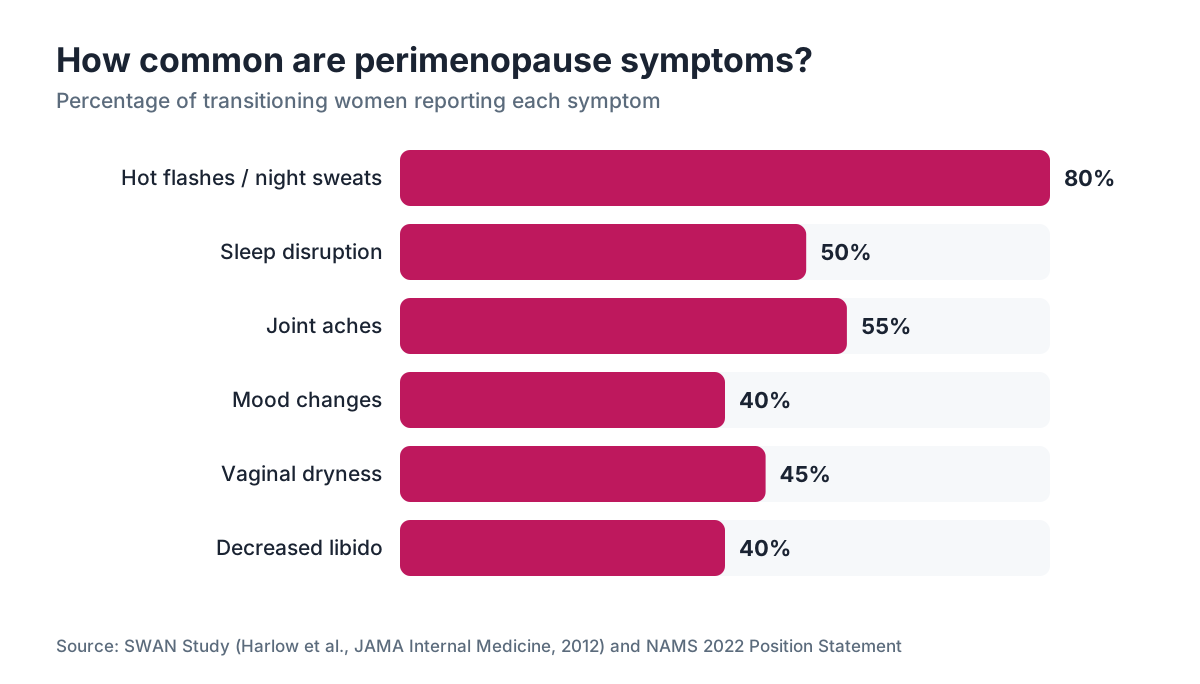
SWAN found that roughly 80% of women get vasomotor symptoms (hot flashes and night sweats) at some point during the transition [4]. Those are the headline act. They are far from the whole show.
The symptoms women report most:
| Symptom | Approximate prevalence | |---|---| | Hot flashes / night sweats | Up to 80% of transitioning women | | Irregular periods | Nearly universal in late perimenopause | | Sleep disruption | 40-60% of perimenopausal women | | Mood changes (irritability, anxiety, low mood) | 30-50% | | Brain fog / trouble concentrating | Common, less precisely measured | | Vaginal dryness / genitourinary symptoms | 27-84% (range varies by study and population) | | Decreased libido | Widely reported, though multifactorial | | Joint aches | Reported by roughly 50-60% in SWAN | | Weight changes | Common, tied to both hormones and aging |
Periods can go shorter or longer, lighter or heavier, closer together or weeks apart. Some cycles are anovulatory, meaning no egg is released, which throws off bleeding without real ovulation. Here's the part people miss: you can still get pregnant. Ovulation is unpredictable, not gone.
Brain fog catches many women off guard. Forgetting words, losing your train of thought mid-sentence, feeling duller than you used to be. It's real and it has a biological basis. Estrogen has receptors across the brain, including regions that run memory and executive function [6]. This is not permanent decline. For most women it eases after the transition.
What is happening hormonally during perimenopause?
The whole story starts in the ovaries. Every month during your reproductive years, the brain sends follicle-stimulating hormone (FSH) to recruit eggs. The ovaries answer with estrogen, which eventually cues the brain to release luteinizing hormone (LH), which triggers ovulation. Progesterone then rises in the second half of the cycle.
As you age, ovarian reserve (the number and quality of eggs left) drops. The ovaries stop answering FSH as readily. The brain compensates by pumping out more FSH, which is why an elevated FSH is one of the first measurable signs of perimenopause. The relationship is not tidy. Estrogen can swing wildly cycle to cycle. Some months it surges above your old baseline. Other months it crashes. That chaos, not a smooth downhill slide, is what makes early perimenopause feel so unpredictable [1].
Progesterone tends to fall more steadily, especially early on, because it depends on ovulation. When a cycle is anovulatory, there is no corpus luteum to make progesterone, so it stays low even while estrogen is still bouncing around. That relative progesterone gap in early perimenopause feeds heavy periods, poor sleep, and anxiety.
By late perimenopause, estrogen production settles into consistently low rather than chaotic. FSH and LH stay high. Hot flashes usually peak in this late phase and in the first couple of years after menopause. After menopause the ovaries don't go silent. They keep making small amounts of estrogen and testosterone, just far less than before.
How is perimenopause diagnosed?
There is no single definitive test. Perimenopause is a clinical diagnosis, which means a clinician reads your age, symptoms, and menstrual pattern and makes the call.
Blood tests can add color but they have real limits. FSH, LH, and estradiol swing week to week during perimenopause, so one draw can mislead you badly. The Endocrine Society and NAMS both say FSH should not be used alone to confirm or rule out perimenopause in women over 45 with classic symptoms [1][7]. An FSH above 25 IU/L on more than one measurement, taken off hormonal contraceptives, points toward perimenopause. A normal FSH does not rule it out.
Thyroid testing (TSH) earns its place in this workup because hypothyroidism, more common in women over 40, throws the same shadows: fatigue, weight gain, mood changes, irregular periods. A clinician who skips your thyroid is leaving a stone unturned.
AMH (anti-Mullerian hormone) reflects ovarian reserve and tracks more steadily than estradiol, but it is not a standard diagnostic tool for perimenopause. Some reproductive endocrinologists use it to estimate where you sit in the transition.
For most women over 45 with irregular cycles and classic symptoms, the honest answer is simple. You are almost certainly in perimenopause, and you don't need expensive testing before starting symptom management.
What is the difference between perimenopause and menopause?
This is the most common mix-up, and it changes treatment decisions.
Menopause is a single point in time: the day you've gone exactly 12 straight months without a period. It gets diagnosed looking backward. Only after you cross that mark can you say you reached menopause. The average age at natural menopause in the United States is 51.4 years [2].
Perimenopause is the entire transition leading up to that day. It can run years. During it you still have periods (even irregular ones), and your hormones fluctuate rather than sitting consistently low.
Postmenopause is everything after the 12-month mark. Many symptoms people file under "menopause" in casual talk, hot flashes, vaginal dryness, broken sleep, actually start in perimenopause and often run well into postmenopause.
So when a 46-year-old with irregular periods says "I'm going through menopause," she almost certainly means perimenopause. The distinction matters for timing. The hormone replacement therapy "timing hypothesis" suggests the benefits are largest when you start close to the transition rather than years later. See also our piece on menopause age.
Can perimenopause affect weight, and what actually helps?
Yes, and it's one of the most maddening parts of this. The hormonal shift changes where your body parks fat, moving it from hips and thighs toward the belly. That visceral fat is metabolically different from the fat under your skin, and it carries higher cardiometabolic risk [8].
The picture is messier than "blame hormones." Midlife also brings muscle loss (sarcopenia), a slower metabolic rate, and shifts in sleep and stress that drive weight gain on their own. Pulling apart perimenopause from plain aging is hard even in careful studies.
Eating fewer calories and moving more still forms the base. Resistance training matters most here because it holds onto muscle during the transition, which is the single best thing you can do for long-term metabolic health. Higher protein intake helps many women hold muscle and stay full.
For women with real weight to lose who aren't responding to lifestyle changes, GLP-1 receptor agonists like semaglutide are a legitimate option. The STEP 1 trial found weekly semaglutide 2.4 mg produced average weight loss of 14.9% of body weight over 68 weeks in adults with obesity [9]. Some clinicians now reach for GLP-1s in perimenopausal women whose metabolic changes have outrun what lifestyle can fix. WomenRx offers GLP-1 treatment evaluation for women sitting at exactly this intersection of hormonal change and weight.
Read more on semaglutide for weight loss and how it stacks up in semaglutide vs tirzepatide.
What treatments actually work for perimenopause symptoms?
Treatment hangs on which symptoms bother you most, your health history, and what you're willing to do. There is no one protocol.
Hormone therapy (HT) is the most effective treatment for hot flashes and night sweats, with most trials showing a 75-90% drop in frequency [1]. It also helps sleep, vaginal dryness, mood swings, and bone. The Women's Health Initiative scared off a generation of women and doctors, but later analysis showed those risks clustered in older women who started HT more than 10 years after menopause. For perimenopausal and recently menopausal women under 60 without contraindications, the benefit-risk balance is generally favorable [7]. See hormone replacement therapy for the full breakdown.
An estrogen patch is one common delivery route that skips first-pass liver metabolism, which may lower clotting risk compared to oral estrogen. Most women with a uterus also need a progestogen (like progesterone) to protect the uterine lining.
Non-hormonal prescriptions include:
- Fezolinetant (Veozah), the first FDA-approved non-hormonal drug specifically for vasomotor symptoms, approved in 2023
- Low-dose paroxetine (Brisdelle), the only FDA-approved SSRI for hot flashes
- Venlafaxine, gabapentin, and clonidine (used off-label, evidence varies)
Vaginal estrogen is local, low-dose, and fine even for women who skip systemic hormones. NAMS considers it safe for most breast cancer survivors [1]. Genitourinary symptoms (dryness, discomfort, recurrent UTIs) respond very well to local estrogen or the SERM ospemifene.
Lifestyle carries real weight here. Regular aerobic and resistance exercise cuts hot flash severity in several trials. Easing off alcohol and spicy food reduces triggers. Cognitive behavioral therapy (CBT) for menopause-related insomnia has solid evidence.
Bone deserves a line. Estrogen loss during perimenopause speeds up bone breakdown. This is the time for a baseline bone density test if you have risk factors, plus enough calcium and vitamin D.
Does perimenopause affect mental health?
It does, and clinical practice underrates it. Women with no prior history of depression carry meaningfully higher risk during the transition. The Harvard Study of Moods and Cycles found perimenopausal women were roughly twice as likely to develop significant depressive symptoms as premenopausal women [10].
The biology is well established. Estrogen tunes serotonin and dopamine signaling. When estrogen swings erratically, those systems swing with it. Night sweats shred sleep, which compounds everything. Women who had mood sensitivity to hormone shifts before (severe PMS or PMDD, postpartum depression) tend to run higher risk in perimenopause.
This is more than feeling glum about aging. It's physiological, and it responds to treatment. Estrogen therapy has evidence for lifting mood during the perimenopausal transition specifically (though not in postmenopause). SSRIs and SNRIs work too. Often, fixing the underlying sleep disruption, through HT or behavioral treatment, lifts mood on its own.
If you're hit with new or worsening anxiety, depression, or mood swings in your 40s or 50s, perimenopause belongs on the list. A clinician who waves it off as stress or "just hormones" (as if that settles anything) is not giving you full care.
What should you actually do if you think you're in perimenopause?
Start tracking your cycles and symptoms for at least two to three months. Log the first day of each period, any notable symptoms, their severity, and where they land in your cycle. That data is genuinely useful to any clinician and gives you a baseline to measure change against.
See your primary care clinician or gynecologist. If you're over 45 with irregular cycles and symptoms, they can make a clinical diagnosis without pricey testing. Ask for a thyroid panel if you haven't had one lately, since hypothyroidism mimics perimenopause closely. A lipid panel and blood pressure check are worth it too, because cardiovascular risk climbs after the transition.
If your clinician brushes off your symptoms or tells you to wait it out, find one who does menopause care. The Menopause Society (formerly NAMS) keeps a searchable directory of certified menopause practitioners at menopause.org.
For women who want telehealth access to clinicians focused on women's hormonal health, WomenRx evaluates perimenopause and menopause symptoms and can connect you with treatment including hormone therapy and GLP-1s where appropriate.
Don't spend years feeling terrible waiting for "real" menopause. Perimenopause can last most of a decade. Treatment during the transition, more than after menopause is confirmed, is both appropriate and backed by evidence.
What is the long-term health impact of perimenopause?
Perimenopause is about more than symptoms. The hormonal shift has real downstream effects on heart, bone, brain, and metabolism that reach well past the transition years.
Bone: Estrogen is the main brake on bone breakdown. As it falls during perimenopause, bone turnover speeds up. Women can lose 2-3% of bone density a year during late transition and early postmenopause [5]. This is the window where prevention (enough calcium and vitamin D, resistance training, hormone therapy where appropriate) pays off most. Waiting for a fracture is waiting too long.
Cardiovascular: Before menopause, women have much lower cardiovascular disease rates than same-age men. After menopause that gap narrows. Estrogen relaxes blood vessels and dampens inflammation in vessel walls. Its decline tracks with rising LDL cholesterol, stiffer arteries, and higher blood pressure. The American College of Cardiology now counts menopause-related factors among the women-specific cardiovascular risks that should be assessed [8].
Brain: Estrogen is neuroprotective. The perimenopausal brain shows measurable changes in glucose metabolism (documented on PET imaging in research settings). This is an active research area, and some scientists argue the transition window may matter for long-term cognitive trajectory, though the data is early and shouldn't be oversold.
Metabolism: Insulin sensitivity drops after menopause. Visceral fat rises. Type 2 diabetes risk climbs. None of it is inevitable, but the tendencies are real, which makes midlife a smart time to tighten diet, exercise, and metabolic monitoring.
Frequently asked questions
What is the exact definition of perimenopause?
Perimenopause is the transitional phase before menopause when the ovaries begin declining in function, causing fluctuating hormone levels and irregular periods. It starts when you notice the first signs of hormonal variability and ends after 12 consecutive months without a period, which is the official definition of menopause. The North American Menopause Society uses this definition in its clinical guidance.
What age does perimenopause start?
Most women notice the first signs between ages 45 and 55, with average onset around age 47. Some enter perimenopause in their early 40s. Genetics are the strongest predictor: if your mother had an early menopause, you likely will too. Smoking speeds the timeline by roughly 1 to 2 years. About 1 in 100 women experience transition before age 40.
Can you get pregnant during perimenopause?
Yes. Ovulation during perimenopause is unpredictable, not absent. As long as you have not gone 12 consecutive months without a period, pregnancy is possible. Fertility drops sharply, but it does not reach zero until menopause is confirmed. If you don't want to conceive, use contraception consistently throughout perimenopause until you've been period-free for a full year.
What is the difference between perimenopause and premenopause?
Premenopause covers your entire reproductive lifespan before any transition begins: your normal cycling years. Perimenopause is the transition itself, marked by hormonal fluctuation and irregular periods. The two terms get used loosely in casual conversation, but clinically they mean different things. If your periods are regular and you have no symptoms, you are premenopausal, not perimenopausal.
What does a perimenopausal period look like?
Periods in perimenopause can go irregular in every direction. They may come closer together (every 21 days) or farther apart (every 60 days or more). They can be heavier, lighter, shorter, or longer than your norm. Some cycles are anovulatory, meaning no egg is released, which produces spotting or irregular bleeding. Sudden very heavy bleeding or bleeding after sex always warrants evaluation to rule out other causes.
Is perimenopause making me gain weight?
Perimenopause changes where fat is stored, moving it from hips and thighs to the belly, and that visceral fat is metabolically more harmful. Falling estrogen also lowers insulin sensitivity and muscle maintenance. That said, not all midlife weight gain is hormonal. Natural muscle loss with aging and lifestyle factors contribute just as much. Resistance training, adequate protein, and in some cases GLP-1 medications are the most evidence-backed strategies.
How do I know if I'm in perimenopause or just stressed?
The clearest signs are menstrual irregularity in a woman over 40, paired with hot flashes or night sweats. Stress can disrupt periods and sleep, but it doesn't usually cause hot flashes. A thyroid check is worthwhile since hypothyroidism mimics both. An FSH above 25 IU/L on more than one measurement supports perimenopause, but a normal FSH does not rule it out given how much levels vary.
Can perimenopause cause anxiety?
Yes. Anxiety is a well-documented symptom of the transition, more than a psychological reaction to life stress. Estrogen tunes the serotonin and GABA systems involved in anxiety regulation. Erratic estrogen swings, poor sleep from night sweats, and disrupted circadian rhythms all feed each other. Women with prior sensitivity to hormonal shifts (PMDD, postpartum anxiety) run higher risk. Hormone therapy and SSRIs both have evidence for perimenopausal anxiety.
How long does perimenopause last?
The SWAN study, one of the largest long-running studies of midlife women, found a median duration of 7.4 years. Roughly, expect 4 to 10 years. Duration varies widely based on genetics, smoking status, and when symptoms first show up. Women who start the transition earlier relative to their eventual menopause date tend to have longer perimenopauses. There's no reliable way to predict your individual timeline in advance.
What blood tests confirm perimenopause?
No single test confirms it. FSH above 25 IU/L on two separate measurements can support the diagnosis, but FSH fluctuates enormously during the transition and a normal value does not rule it out. Estradiol levels are just as inconsistent. NAMS and the Endocrine Society both state that in women over 45 with typical symptoms, clinical diagnosis is appropriate without relying on labs. A TSH to rule out thyroid disease is genuinely useful.
Is hormone therapy safe to start during perimenopause?
For most healthy women under 60 without contraindications (active breast cancer, unexplained vaginal bleeding, recent stroke or blood clot), the evidence supports hormone therapy starting during perimenopause. NAMS's 2022 position statement states that for women under 60 or within 10 years of menopause onset, the benefits of HT outweigh risks for treating hot flashes and preventing bone loss. Always discuss your personal history with a clinician.
Does perimenopause affect sleep?
Substantially. Night sweats fragment sleep directly. Beyond that, estrogen and progesterone both shape sleep architecture: progesterone has a sleep-promoting effect, and falling levels of both shift sleep toward lighter stages with more awakenings. The disruption then drives daytime fatigue, cognitive fog, and mood instability, making everything worse. Treating the hormonal cause, through HT or vaginal estrogen plus progesterone, often resolves sleep issues better than sleep aids alone.
Can perimenopause start in your 30s?
Occasionally. Premature ovarian insufficiency (POI) affects roughly 1% of women and can begin before age 40, even in the 30s. This differs from typical perimenopause in that it may tie to autoimmune conditions, chromosomal factors, or prior chemotherapy rather than normal aging. If you're under 40 with irregular periods, hot flashes, and elevated FSH, a full evaluation with an endocrinologist is appropriate.
What is late perimenopause?
Late perimenopause is the final stage of the transition, typically when periods have gone infrequent (60 days or more apart) but the 12-month threshold for menopause hasn't been reached. This phase tends to bring the most intense hot flashes and night sweats as estrogen settles consistently low rather than swinging erratically. It's also when bone loss speeds up most sharply. Late perimenopause can last 1 to 3 years before menopause is confirmed.
Sources
- North American Menopause Society (NAMS), 2022 Hormone Therapy Position Statement
- Office on Women's Health, U.S. Department of Health & Human Services, Menopause overview
- National Institutes of Health, National Institute of Child Health and Human Development, Primary Ovarian Insufficiency
- Study of Women's Health Across the Nation (SWAN), Harlow et al., JAMA Internal Medicine, 2012
- Bone Health and Osteoporosis Foundation, clinical resources
- Maki PM, Jaff NG. Brain fog in menopause: a health-care professional's guide. Climacteric, 2022
- Endocrine Society Clinical Practice Guideline, Menopause Hormone Therapy, 2015
- American College of Cardiology, Cardiovascular Disease in Women
- Wilding JPH et al. (STEP 1 trial). New England Journal of Medicine, 2021
- Cohen LS et al. Harvard Study of Moods and Cycles. Archives of General Psychiatry, 2006