What does perimenopause fatigue feel like, really?
TL;DR: Perimenopause fatigue is not ordinary tiredness. Women describe a bone-deep exhaustion that sleep doesn't fix, layered with brain fog, heavy limbs, and the crash after a night sweat. It usually starts in the mid-to-late 40s, can last years, and has real drivers: falling estrogen, wrecked sleep architecture, and thyroid changes that often appear at the same age.
What makes perimenopause fatigue different from just being tired?
Normal tiredness lifts after a good night of sleep. Perimenopause fatigue often doesn't. Women describe waking up already exhausted, as if sleep happened to their body but never reached them. The phrases clinicians hear most are "bone-deep" and "like dragging through concrete."
There's a strange unpredictability to it too. A woman feels fine Monday and barely functional Tuesday, with no change in her schedule or hours in bed. That variability is part of what makes this kind of fatigue so disorienting. It doesn't track the way a cold does, or even the way plain sleep deprivation does.
The North American Menopause Society (NAMS) lists fatigue among the most commonly reported symptoms of perimenopause, alongside hot flashes, mood changes, and sleep disruption [1]. What sets perimenopausal fatigue apart is that it almost never shows up alone. Map it over a few weeks and you'll find it clustering with poor sleep, night sweats, low mood, and mental fog, each one feeding the others.
Here's the quick test: if rest fixes it, it's probably not perimenopause fatigue.
What does perimenopause fatigue actually feel like? The 7 sensations women describe
These descriptions come up again and again in clinical literature and patient accounts. Not every woman gets all of them. Most recognize at least four.
1. Waking exhaustion. You slept seven or eight hours and feel like you never closed your eyes. This is often the first signal something hormonal is happening, because it's so unlike the fatigue of a busy week.
2. Heavy limbs. Arms and legs feel weighted. Carrying groceries or climbing stairs takes more than it should. Some women describe it as wearing lead.
3. The afternoon crash. A hard energy drop, usually between 2 and 4 p.m., sharper than a normal post-lunch dip. Caffeine barely touches it.
4. Cognitive fog layered on top. Technically its own symptom, but it almost always rides along with the fatigue. Words vanish mid-sentence. Concentration fragments. Women describe feeling like their brain is wrapped in wet wool.
5. Post-exertional exhaustion. Exercise that used to energize now flattens you for a day or two. This one alarms people, because it contradicts every "just move more" pep talk.
6. Emotional flatness. Not quite sadness. More like a dimming. Some women say they don't have the energy to care about things they normally care about. This overlaps with perimenopausal depression and deserves its own attention.
7. The night-sweat hangover. After one or more night sweats, the next day's fatigue is intense and specific. Your body spent part of the night in a stress response. You feel it in the morning.
Research published in Menopause, the journal of NAMS, found that sleep disturbance is the link connecting hot flashes to next-day fatigue and impaired thinking [2]. The night sweat comes first, breaks the sleep, and the fatigue is what's left over.
What causes fatigue during perimenopause?
Several things at once, which is exactly why one fix rarely works.
Estrogen decline. Estradiol, the dominant estrogen of the reproductive years, shapes sleep architecture, especially REM and slow-wave sleep. As it fluctuates and trends down, sleep quality falls apart even on nights without an obvious hot flash [3]. Poor sleep quality isn't about fewer hours. It's about fewer restorative cycles.
Progesterone drop. Progesterone has a mild sedative effect, partly through its conversion to allopregnanolone, which acts on GABA receptors in the brain. As progesterone falls, some women lose that built-in sleep aid. This is often why fatigue starts before periods get irregular, since progesterone begins dropping earlier than estrogen.
Night sweats and broken sleep architecture. A 2023 study in Sleep Medicine found that objectively measured vasomotor symptoms cut slow-wave and REM sleep, independent of total sleep time [4]. You can log eight hours in bed and still be sleep-deprived in the ways that matter most for energy, mood, and memory.
HPA axis dysregulation. The hypothalamic-pituitary-adrenal axis, which runs cortisol and the stress response, gets less regulated as ovarian hormones shift. Cortisol rhythms can flatten or invert, feeding that upside-down pattern of wired at night and wrecked in the morning.
Thyroid changes. Autoimmune thyroid disease gets more common in the perimenopause years, and hypothyroidism produces fatigue nearly identical to the hormonal kind. NAMS guidance recommends ruling out thyroid dysfunction before pinning all fatigue on ovarian hormones [1]. Our article on thyroid hormone replacement therapy covers what to test and when.
Anemia. Heavy, irregular periods are common in perimenopause. Iron-deficiency anemia from heavier bleeding causes fatigue directly, and it gets missed all the time because everything gets blamed on "hormones" without anyone checking a CBC.
Depression and anxiety. The risk of a first depressive episode goes up during perimenopause, separate from the mood hit of sleep loss. Fatigue is a core symptom of depression. These two run in both directions, and both need assessing.
When does perimenopause fatigue start and how long does it last?
Perimenopause usually begins in the mid-to-late 40s, though about 10 percent of women hit it before age 45 [1]. Fatigue can arrive before periods get irregular, which is one reason women are brushed off early. They don't fit the standard checklist yet, but their hormones are already moving.
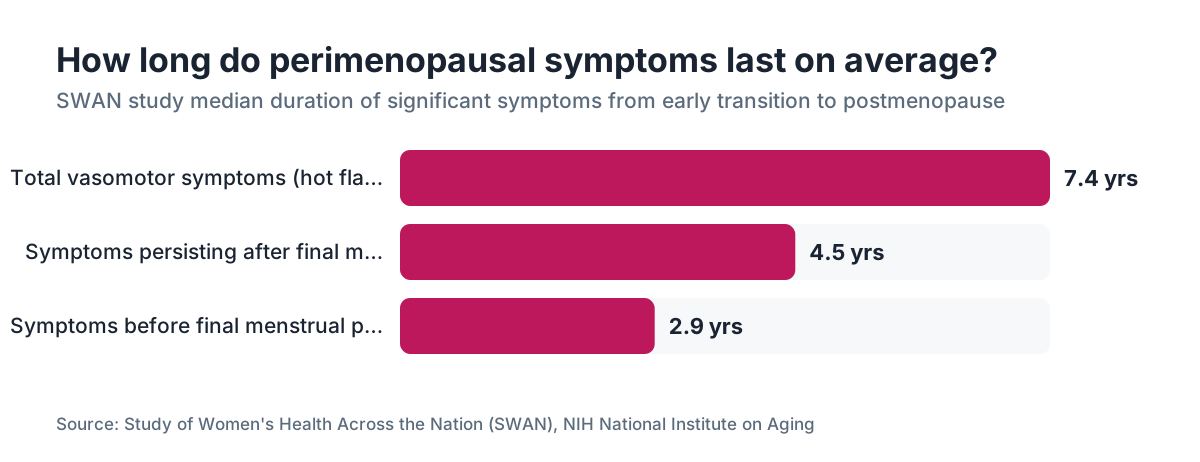
The Study of Women's Health Across the Nation (SWAN), one of the largest longitudinal studies of the menopause transition, tracked more than 3,000 women across multiple racial and ethnic groups and found that sleep problems and fatigue often begin in the early transition, years before the final period [5]. Median duration of significant vasomotor symptoms, the main driver of night-sweat fatigue, was 7.4 years in that data, not the "2 to 3 years" still quoted in some older patient handouts.
Some women find fatigue eases in the first year or two after their final period, as hormone levels settle at a new, lower baseline. Others carry it into postmenopause, especially if sleep disruption became a chronic habit or if depression or thyroid problems were never sorted out.
The honest answer: the timeline is personal, and anyone who promises "it'll be over in two years" is working from data that's out of date.
How do you tell perimenopause fatigue apart from thyroid problems, anemia, or depression?
You usually can't tell from symptoms alone. That's not a failure of self-awareness. It's a diagnostic fact.
Hypothyroidism, iron-deficiency anemia, and hormonal fatigue can all produce waking exhaustion, mental fog, weight changes, low mood, and worse exercise tolerance. They also love to travel together in women in their 40s and 50s.
The minimum workup any clinician should run before writing "perimenopausal fatigue" in your chart:
- TSH (and free T4 if TSH is borderline)
- CBC with differential, to catch anemia
- Ferritin, which reads iron stores better than hemoglobin
- Fasting glucose or HbA1c, since fatigue is an early sign of insulin resistance, which climbs in perimenopause
- Vitamin D and B12, if not recently checked
- FSH and estradiol, though these swing widely and one normal value doesn't rule out perimenopause
Depression deserves a direct conversation, more than a screening form. The Endocrine Society's clinical guideline notes that perimenopausal women carry a two-fold increased risk of depressive symptoms compared to premenopausal women, and that this risk holds even without a prior history [6].
If your bloodwork comes back clean, that's useful, not disappointing. It makes hormonal disruption more likely and strengthens the case for a treatment conversation. Our piece on what it means to be peri menopausal fills in the rest of the diagnostic picture.
For the wider shift in how doctors think about this stage, the new menopause covers how updated guidance changed what counts as standard care.
Does hormone therapy actually help perimenopause fatigue?
For fatigue driven by night sweats wrecking your sleep, the evidence is fairly strong. Estrogen therapy (with progesterone if you have a uterus) is the most effective treatment for hot flashes and night sweats. When those settle, sleep improves, and fatigue follows [7].
A 2022 meta-analysis in Climacteric reviewed 18 trials and found that combined estrogen-progestogen therapy improved both subjective and objective sleep quality in perimenopausal and postmenopausal women [7]. The direct effect on fatigue was harder to pin down, because most trials didn't measure it as a primary outcome. But the sleep data holds up.
Progesterone alone (oral micronized progesterone, not synthetic progestins) has shown its own sleep-promoting effect in some smaller trials, likely through that GABA mechanism. Women in early perimenopause, when estrogen is still decent but progesterone has already dropped, sometimes do well on progesterone by itself.
What hormone therapy won't fix: fatigue from untreated depression, thyroid disease, anemia, or sleep apnea, which also gets more common around menopause, particularly after weight gain. Treating only the hormonal piece while a co-occurring condition sits ignored is one of the top reasons treatment underdelivers.
If you're weighing hormone therapy and want to know what a structured evaluation looks like, telehealth providers like WomenRx can order the relevant labs and walk through your symptom pattern before prescribing. NAMS also runs a provider locator for in-person care. See our menopause society article on finding NAMS-certified clinicians.
The FDA labeling for menopausal hormone therapy states that treatment should use "the lowest dose consistent with treatment goals" and that "risks and benefits must be weighed for each patient" [8]. Keep that framing. This is a clinical decision, not a one-size answer.
What non-hormonal approaches genuinely reduce perimenopause fatigue?
Honest answer: the evidence for non-hormonal treatments aimed at perimenopausal fatigue specifically is thinner than most lifestyle content admits. A few things have real support.
Cognitive behavioral therapy for insomnia (CBT-I). The strongest non-drug option for perimenopausal sleep disruption. A 2019 randomized trial found CBT-I improved sleep efficiency, insomnia severity, and fatigue in midlife women, with gains holding at 6-month follow-up [9]. It works by dismantling the behavioral and mental patterns that keep insomnia going, even after the original hormonal trigger fades.
Aerobic exercise, at the right dose. Regular moderate exercise improves sleep and cuts fatigue in perimenopausal women, but the dose matters. High-intensity sessions during a run of bad nights can deepen post-exertional fatigue. The evidence supports about 150 minutes a week of moderate activity, not a punishing program.
Alcohol reduction. Alcohol fragments sleep and worsens night sweats. Even one or two evening drinks measurably raises the frequency and intensity of nocturnal vasomotor events in susceptible women. This is likely the highest-yield behavioral change available, and it costs nothing.
Sleep setup for night sweats. A cool bedroom (65 to 68 degrees Fahrenheit), moisture-wicking bedding, and a fan moving air lowers the arousal threshold for night sweats. It won't stop the sweat, but it can keep a mild one from turning into a full wake-up.
Fixing iron deficiency. If ferritin is below 30 ng/mL (some clinicians use 50 as the functional cutoff), iron supplementation can produce real fatigue relief within 4 to 8 weeks. This gets under-treated in perimenopause because periods are still present and clinicians assume anemia will "normalize once menopause is complete," which is backwards.
What doesn't have strong evidence. Most herbal supplements marketed for perimenopausal fatigue, including ashwagandha, ginseng, and black cohosh, have weak or inconsistent data for fatigue specifically. The NAMS position statement on non-hormonal therapies notes limited data for most of these agents on fatigue as an outcome [10]. They may be worth a try for someone who can't or won't take hormones. Go in with calibrated expectations.
Can perimenopause fatigue cause weight gain or is it the other way around?
Both directions are real, and they feed each other.
Fatigue cuts physical activity, often a lot. Women who used to exercise regularly frequently pull back during bad stretches, and that drop in movement adds to the 1 to 2 kg of average annual weight gain during the menopause transition [5]. Sleep loss also raises ghrelin (the hunger hormone) and lowers leptin (the satiety hormone), making it harder to hold your usual eating pattern no matter how much willpower you bring.
Meanwhile, the fat redistribution that comes with falling estrogen (more visceral fat, less subcutaneous) worsens insulin resistance, which is its own source of fatigue. So the loop turns: hormones shift, sleep worsens, fatigue rises, activity drops, metabolism stumbles, fatigue deepens.
GLP-1 receptor agonists have entered this conversation for some perimenopausal women, because they help insulin resistance, calm hunger dysregulation, and produce weight loss that can ease sleep apnea. The literature here is still developing, but it's a reasonable topic to raise with your clinician if weight gain and fatigue show up together. Our semaglutide news article tracks the latest evidence.
The point that matters: don't treat the weight as separate from the fatigue. They usually share the same roots.
Should you see a doctor for perimenopause fatigue, and what should you actually ask for?
Yes, and sooner than most women go. The average woman waits over a year before bringing perimenopausal symptoms to a clinician [1], and fatigue is one of the most under-reported, because women write it off as just life.
When you go, ask for specific things instead of a general "I'm tired." Vague complaints get vague responses. Try this instead.
"I'd like to rule out thyroid disease, anemia, iron deficiency, and B12 deficiency before we decide this is hormonal." That usually gets you the labs without a fight.
Then: "Can we talk about whether my sleep disruption from night sweats or hormonal shifts makes me a candidate for hormone therapy?" That opens the treatment door directly.
If your doctor waves off fatigue as stress or aging with no workup, find another provider. This isn't an obscure complaint. It's one of the most studied symptoms of the menopause transition, and it has real treatment paths.
Telehealth options like WomenRx have widened access to menopause-informed clinicians, which matters because NAMS estimates that only about 20 percent of ob-gyn residency programs include dedicated menopause training [1].
You can also check our resources on health & her perimenopause support for community-driven notes on what other women have found useful with their providers.
What questions should you track before your appointment?
Clinicians make better calls from patterns, not snapshots. Two weeks of basic tracking before your appointment makes the conversation far more useful.
Track: the time you got into bed, roughly when you fell asleep, any wake events and whether a sweat came first, when you woke up, how you felt on a 1-to-10 fatigue scale at 9 a.m. and 3 p.m., any alcohol the evening before, and your cycle day if you're still cycling.
Also note the days fatigue was worst and what else was going on. For many women, fatigue tracks with the luteal phase, the two weeks before a period, which points straight at progesterone deficiency rather than estrogen as the main driver. That distinction changes the treatment plan.
If joint pain or a frozen shoulder showed up around the same time as the fatigue, that's relevant too. See our article on frozen shoulder menopause for more on the connective tissue changes that often ride alongside hormonal fatigue.
Two weeks of data isn't a burden. It's the difference between getting a diagnosis and getting a pamphlet.
Frequently asked questions
Is it normal to feel exhausted all the time during perimenopause?
Yes. Fatigue is one of the most commonly reported perimenopausal symptoms according to NAMS. Studies following women through the transition, including SWAN, found that sleep disturbance and fatigue often begin years before the final period. It's physiologically real, not psychological weakness. If it's affecting daily function, it deserves a clinical workup, more than reassurance.
Why do I wake up exhausted even after sleeping 8 hours during perimenopause?
Estrogen and progesterone both shape sleep architecture, especially REM and slow-wave sleep. A 2023 study in Sleep Medicine found that vasomotor events, including night sweats, cut slow-wave sleep even in women who never consciously woke up. You can sleep eight hours and still be sleep-deprived in the ways that matter for feeling rested, because the restorative stages are getting fragmented.
Can perimenopause cause fatigue and brain fog at the same time?
Frequently. They share the same upstream cause: disrupted sleep architecture from hormonal shifts. Sleep loss specifically impairs working memory, word retrieval, and executive function. Estrogen also acts directly on the hippocampus and prefrontal cortex, independent of sleep. Most women who report perimenopausal fatigue also report some cognitive change. The two usually improve together once the sleep disruption is treated.
How do I know if my fatigue is perimenopause or thyroid disease?
You can't distinguish them by symptoms alone; they overlap almost completely. Both cause waking exhaustion, mental fog, weight changes, low mood, and cold sensitivity. The Endocrine Society and NAMS both recommend checking TSH and free T4 before blaming the hormonal transition. Autoimmune thyroid disease gets more common in the same years perimenopause hits, so both can be present at once. Test first, then assign cause.
What is the best treatment for perimenopause fatigue?
It depends on the cause. If night sweats are wrecking your sleep, menopausal hormone therapy has the strongest evidence. If insomnia has taken on a life of its own, with behavioral patterns keeping it going past the hormonal trigger, CBT-I is the best-evidenced non-hormonal option. If iron deficiency is present, supplementation helps within weeks. Most women do best addressing two or three causes at once rather than one at a time.
Does fatigue get worse before your period during perimenopause?
Often yes. Fatigue that intensifies in the two weeks before a period, the luteal phase, points to falling progesterone as a main driver. Progesterone converts to allopregnanolone, which supports GABA activity and promotes sleep. When progesterone drops sharply in the late luteal phase, sleep quality falls and fatigue rises. Tracking your cycle and fatigue together for two weeks can reveal this pattern before your appointment.
Can perimenopause fatigue last for years?
Yes. SWAN found that significant vasomotor symptoms, the main driver of sleep-related fatigue, last a median of 7.4 years, not the 2 to 3 years often quoted in older materials. Some women feel it most in the early transition, others in the years right around the final period. A meaningful share carry fatigue into postmenopause if underlying depression, thyroid issues, or sleep apnea were never addressed.
Will hormone therapy help me sleep better and feel less fatigued in perimenopause?
If your fatigue comes from night sweats and disrupted sleep architecture, yes. A 2022 meta-analysis in Climacteric found that estrogen-progestogen therapy improved both subjective and objective sleep quality. The fatigue relief follows the sleep relief. Hormone therapy is less effective for fatigue caused by depression, thyroid disease, anemia, or behavioral insomnia, which is why ruling those out first matters.
Can anxiety and fatigue both be symptoms of perimenopause?
Yes. The Endocrine Society notes that perimenopausal women carry a two-fold increased risk of depressive symptoms compared to premenopausal women, and anxiety often comes with it. The HPA axis gets less regulated as ovarian hormones shift, which can raise stress reactivity and disturb cortisol rhythms. Anxiety also disrupts sleep directly, feeding the fatigue loop. Both symptoms warrant clinical attention, more than a shrug about hormones.
What blood tests should I ask for if I'm experiencing perimenopause fatigue?
Ask for TSH and free T4, CBC with differential, ferritin (more telling than hemoglobin), fasting glucose or HbA1c, vitamin D, B12, and FSH with estradiol. This panel rules out thyroid disease, anemia, iron deficiency, prediabetes, and nutritional gaps before blaming ovarian hormones. One normal FSH or estradiol does not rule out perimenopause, since levels swing widely during the transition.
Does alcohol make perimenopause fatigue worse?
Yes, meaningfully. Alcohol fragments sleep architecture and is documented to raise the frequency and severity of nocturnal vasomotor events in susceptible women. Even one to two evening drinks can worsen the night-sweat cycle that drives next-day fatigue. Alcohol reduction is probably the highest-yield, zero-cost behavioral change available to perimenopausal women dealing with fatigue, yet it's rarely discussed as specifically as it should be.
Is extreme fatigue an early sign of perimenopause?
It can be. Some women get significant fatigue as one of the earliest perimenopausal symptoms, before periods become irregular, because progesterone starts dropping before estrogen. If you're in your early-to-mid 40s with unexplained fatigue and it clusters with sleep changes, mood shifts, or premenstrual symptoms that feel new, it's worth a conversation about early perimenopause even if your cycles still look regular.
Can perimenopause cause fatigue that makes it hard to exercise?
Yes, and it creates a hard bind. Exercise improves sleep and cuts fatigue, but perimenopausal fatigue can slow post-exertional recovery well past what you'd expect. Some women get something that looks like post-exertional malaise: exercise that used to invigorate now flattens them for a day. Starting with lower intensity and shorter duration, building gradually, and timing workouts for the morning beats pushing through with hard sessions.
Sources
- NAMS (North American Menopause Society), Menopause Practice: A Clinician's Guide
- Menopause journal (NAMS), 'Hot flashes and sleep disturbance'
- Endocrine Reviews, 'Estradiol and sleep architecture in midlife women'
- Sleep Medicine, 'Objectively measured vasomotor symptoms and sleep architecture' (2023)
- SWAN (Study of Women's Health Across the Nation), NIH National Institute on Aging
- Endocrine Society Clinical Practice Guideline, 'Treatment of Symptoms of the Menopause'
- Climacteric, 'Meta-analysis of hormone therapy and sleep quality in peri/postmenopausal women' (2022)
- FDA, Approved labeling for menopausal hormone therapy products
- Sleep (journal of the Sleep Research Society), randomized trial of CBT-I in midlife women (2019)
- NAMS Position Statement, 'Nonhormonal management of menopause-associated vasomotor symptoms'