What does menopause mean? A plain-language guide
TL;DR: Menopause is a single day, not a season. It is the point when a woman has gone 12 consecutive months without a menstrual period, marking the permanent end of ovarian reproductive function. The average age in the US is 51. Doctors diagnose it looking backward, once that full year has passed. The years leading up to it are perimenopause; the years after are postmenopause.
What does menopause actually mean, medically speaking?
Menopause is a single moment in time, not a phase. It is the point at which a woman has had no menstrual period for 12 consecutive months, with no other medical cause explaining the absence. That definition comes straight from the North American Menopause Society (NAMS), the leading professional body on the subject. [1]
The word comes from the Greek "men" (month) and "pausis" (cessation). Month-stopping. That is exactly what it is.
You can only name the moment after it passes. If your last period was in January 2024 and you never bleed again, then January 2025 is when you officially hit menopause. During those 12 months of waiting, you are still technically in perimenopause.
Behind the clinical definition is a real biological event. The ovaries stop producing enough estrogen and progesterone to trigger a menstrual cycle. Follicle-stimulating hormone (FSH) rises sharply because the pituitary gland keeps trying to coax the ovaries into action. Estradiol, the most potent form of estrogen, drops to levels comparable to those in men of the same age. That hormonal shift drives every symptom people associate with menopause, from hot flashes to broken sleep to vaginal dryness. [2]
One thing worth knowing: menopause is not a disease. It is a normal biological transition, the same way puberty is. The symptoms that come with it can significantly affect quality of life, and for some women the long-term consequences of low estrogen, particularly bone loss and cardiovascular changes, deserve active medical attention.
What is the difference between menopause, perimenopause, and postmenopause?
These three words describe three stages of the same transition, and doctors, patients, and the internet use them interchangeably in ways that create real confusion. Here is the clean version.
Perimenopause is the transition before menopause. It starts when the ovaries begin their gradual decline in hormone production, which can happen anywhere from 2 to 10 years before the final period. Cycles turn irregular. You may skip months, bleed more heavily, or notice the first hot flashes. FSH levels start to climb. You can still get pregnant during perimenopause. Onset usually lands in the mid-to-late 40s, though some women notice changes as early as their late 30s. [3] See our articles on perimenopause age and when does menopause start for more on timing.
Menopause is the 12-month anniversary of the last period. A single date, not a stretch of time.
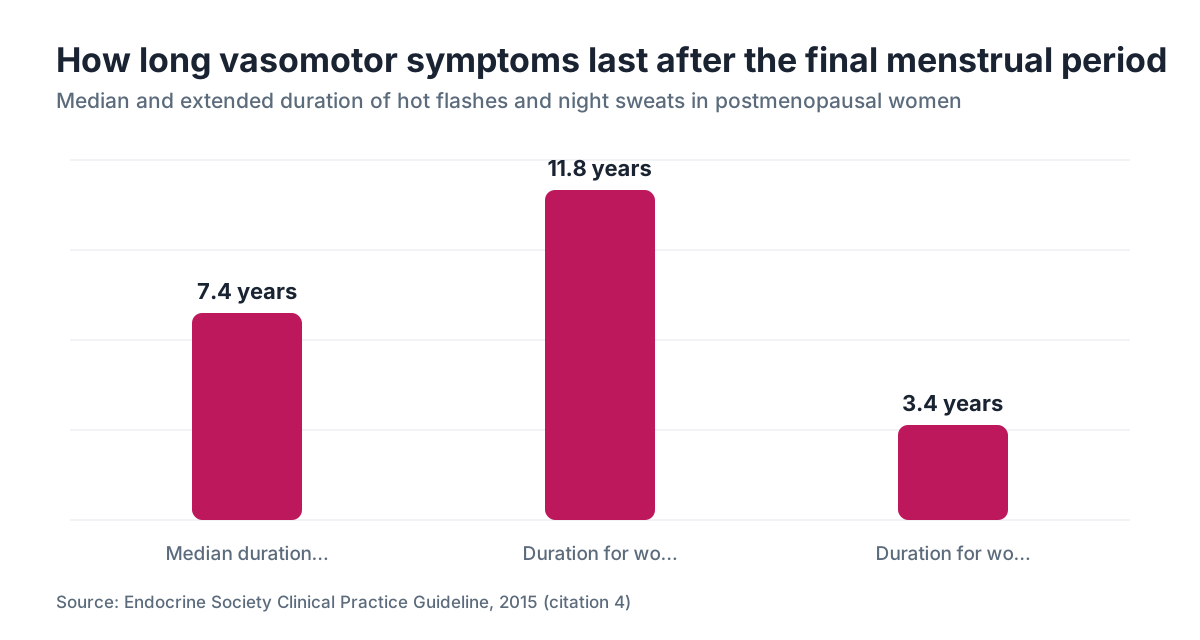
Postmenopause covers every year after that date. Most of what people call "menopause symptoms" (hot flashes, sleep problems, mood changes, vaginal dryness) actually continue well into postmenopause. The Endocrine Society reports that vasomotor symptoms like hot flashes persist for a median of 7.4 years after the final menstrual period. [4]
Here is a quick comparison:
| Stage | Timing | Hormone pattern | Can you get pregnant? | |---|---|---|---| | Perimenopause | 2-10 years before last period | Estrogen fluctuates, FSH rising | Yes, until 12 months after last period | | Menopause | 12-month mark after last period | Estrogen low and stable, FSH high | No | | Postmenopause | Every year after | Estrogen stays low | No |
In everyday conversation, "menopause" almost always means the whole transition, perimenopause and postmenopause included. Clinically, it means only that one moment. That gap is where most of the confusion comes from.
What age does menopause happen?
The average age of natural menopause in the US is 51, based on multiple large cohort studies including the Study of Women's Health Across the Nation (SWAN). [5] The normal range is wide. Most women reach menopause between ages 45 and 55. Reaching it before 45 is called early menopause. Reaching it before 40 is called primary ovarian insufficiency (POI), which affects roughly 1% of women and carries different health implications than natural menopause. [2]
Several things pull the timing earlier. Smoking is the most consistently documented one, tied to menopause arriving 1 to 2 years sooner. Certain genetic conditions, autoimmune diseases, and chemotherapy or pelvic radiation also bring it on earlier. Removing both ovaries (bilateral oophorectomy) causes immediate menopause at any age, called surgical menopause. [1]
Women with higher body weight tend to reach natural menopause slightly later, possibly because fat tissue produces small amounts of estrogen. Women who have never been pregnant tend to reach it a bit earlier. Ethnicity matters too. Black and Hispanic women in the SWAN study reported reaching menopause slightly earlier than white women on average, and Black women tended to have more severe and longer-lasting hot flashes. [5]
For a closer look at how age interacts with menopause onset, read our piece on menopause age.
What are the symptoms of menopause?
Symptoms run from barely noticeable to genuinely disabling. Not every woman gets every symptom, and severity varies enormously.
The best known are vasomotor symptoms: hot flashes and night sweats. A hot flash is a sudden wave of heat, usually in the face, neck, and chest, often followed by sweating and then a chill. They come from changes in the hypothalamus's temperature-regulation center responding to low estrogen. About 75% of women in Western populations get them. [4]
Sleep disruption is extremely common, often driven by night sweats but also by direct neurological effects of declining estrogen and progesterone. Mood changes (irritability, anxiety, low mood) are reported by many women in perimenopause and early postmenopause, though separating hormonal effects from life stressors at this age is genuinely hard.
Genitourinary syndrome of menopause (GSM) is the umbrella term for vaginal dryness, itching, burning, painful sex, and recurrent urinary tract infections. It affects roughly 40 to 60% of postmenopausal women. Unlike hot flashes, it tends to worsen over time without treatment rather than fade. [10]
Other symptoms include brain fog, joint pain, changes in skin and hair, and lower libido. Heart palpitations during perimenopause are real and often benign, but always worth mentioning to a doctor.
Longer term, the sustained low-estrogen environment of postmenopause speeds up bone loss (raising osteoporosis risk) and shifts cardiovascular risk. Getting a bone density test within a few years of menopause is recommended for exactly this reason.
What causes menopause to happen?
The short answer: you run out of eggs. Women are born with every ovarian follicle they will ever have, somewhere between 1 and 2 million at birth. By puberty that number has fallen to around 300,000 to 400,000. Across the reproductive years, follicles are lost continuously, both through ovulation and through a background process called atresia that happens regardless of fertility. By the mid-40s, the follicles left are fewer and less responsive to FSH. Estrogen and inhibin B production fall. The pituitary responds by pumping out more FSH, but eventually there are not enough working follicles left to sustain a cycle. [2]
That is the normal pathway for natural menopause. The trigger is depletion of the ovarian follicle pool, not something going wrong with the pituitary or hypothalamus. Those structures work fine. The ovary just has nothing left to answer with.
Surgical menopause works differently. Removing both ovaries causes estrogen to crash within 24 to 48 hours, an abrupt menopause that tends to produce more severe symptoms than the gradual natural version.
For primary ovarian insufficiency (menopause before 40), the causes vary: autoimmune destruction of ovarian tissue, genetic factors like Turner syndrome or Fragile X premutation, and treatment-related causes like chemotherapy or radiation. In many POI cases, no cause is ever found.
How is menopause diagnosed?
For most women in their late 40s or early 50s with typical symptoms and irregular periods, menopause is diagnosed clinically. The doctor goes by your symptom picture and menstrual history, not a lab test.
Blood tests for FSH and estradiol can support the diagnosis but are not reliable on their own during perimenopause, because hormone levels swing wildly day to day and cycle to cycle. The FDA-cleared over-the-counter menopause test (which measures urinary FSH) can suggest you are in menopause, but NAMS specifically cautions that a single elevated FSH does not confirm it. [1]
An FSH level above 30 mIU/mL measured on two occasions, combined with 12 months of no periods, is the threshold most often used in clinical practice. Anti-Mullerian hormone (AMH) is sometimes measured to assess ovarian reserve, particularly in younger women being evaluated for POI.
For women on hormonal contraception, the picture is murkier, because birth control suppresses the natural cycle. A doctor may ask you to stop and observe, or lean more on age, symptoms, and FSH measured during the pill-free interval.
If you have had a hysterectomy but kept your ovaries, you have no periods to track. Symptoms plus FSH testing become the main tools, and the timing can be hard to pin down. Many women in this situation have menopause confirmed only by persistent, classic symptoms alongside elevated FSH.
What happens to hormones during menopause?
Three hormones drive most of what happens. Estrogen (primarily estradiol) drops sharply. Progesterone essentially disappears, because it is made mainly during the luteal phase of an ovulatory cycle, and cycles stop. Testosterone also declines, though more gradually and earlier in the process. [2]
The FSH spike is dramatic. Postmenopausal FSH levels typically run 10 to 20 times higher than premenopausal levels. LH (luteinizing hormone) rises too, though less dramatically. These high levels confirm the pituitary is still working; the ovary simply is not answering the call.
Estrogen does not fall to zero after menopause. Postmenopausal women still have circulating estrogen, primarily estrone, converted from androgens in fat tissue, the adrenal glands, and other peripheral tissues. Estrone is weaker than estradiol, and how much you make depends partly on body composition. Women with more fat tissue produce more estrone, which partly explains why higher body weight is tied to a modestly lower risk of hot flashes and a higher risk of estrogen-sensitive cancers after menopause.
Progesterone gets overlooked in menopause conversations, which fixate on estrogen. Its decline matters for sleep quality, mood, and uterine protection when estrogen therapy is used. Any woman with a uterus taking systemic estrogen needs a progestogen (bioidentical progesterone or a synthetic progestin) to prevent endometrial hyperplasia.
What treatments are available for menopause symptoms?
The most studied and effective treatment for hot flashes and night sweats is menopausal hormone therapy (MHT), also called hormone replacement therapy (HRT). For women under 60 or within 10 years of menopause onset, without contraindications, evidence from NAMS and the Endocrine Society supports that the benefits of MHT outweigh the risks for symptom management. [4]
MHT comes in many forms. Systemic options (pills, patches, sprays, gels) raise circulating estrogen and address hot flashes, sleep, mood, and bone loss. Local options (vaginal creams, rings, tablets) treat GSM with minimal systemic absorption. Many women do well on a combination. See our guides on hormone replacement therapy and the estrogen patch for specifics on formulations.
Non-hormonal prescription options are real and meaningful for women who cannot or prefer not to take hormones. The FDA approved fezolinetant (Veozah) in May 2023, a neurokinin 3 receptor antagonist that targets the hypothalamic pathway driving hot flashes, for moderate to severe vasomotor symptoms. Certain antidepressants (particularly paroxetine, the only FDA-approved non-hormonal option before fezolinetant), gabapentin, and clonidine have clinical evidence for hot flash reduction. [6]
Menopause weight gain is a real and documented phenomenon, tied to both aging and the hormonal shift. For that, GLP-1 receptor agonists like semaglutide are increasingly used. Declining estrogen affects insulin sensitivity and fat distribution, which may make GLP-1 therapy especially relevant for postmenopausal women. Read more on semaglutide for weight loss and semaglutide vs tirzepatide if that is on your radar.
WomenRx offers telehealth access to hormone therapy evaluations and, for eligible patients, GLP-1 prescriptions, one option if you want a clinician who focuses on women's hormonal health.
Lifestyle strategies matter too, though their effect size is smaller than hormones for severe symptoms. Regular aerobic exercise cuts hot flash frequency modestly in some trials. Cognitive behavioral therapy (CBT) has the strongest non-drug evidence for improving hot flash bother and sleep. Bone health through weight-bearing exercise, adequate calcium (1,200 mg/day total for postmenopausal women per NIH), and vitamin D matters regardless of what else you do. [7]
Does menopause affect long-term health beyond the symptoms?
Yes, and this is where many menopause conversations fall short. The symptom talk dominates, and the long-term consequences of sustained low estrogen get short shrift.
Bone density. Estrogen holds bone resorption in check. In the first 5 to 7 years after menopause, women lose bone density at roughly 2% per year, far faster than the age-related loss before and after that window. [8] Osteoporosis affects about 20% of postmenopausal women in the US. Getting a DEXA scan (bone density test) within a few years of menopause, or by age 65 at the latest per USPSTF guidelines, is standard care. [9]
Cardiovascular health. Premenopausal women have lower cardiovascular disease rates than men their age. After menopause, that protection erodes. Low estrogen is tied to less favorable LDL and HDL patterns, higher blood pressure, and changes in vascular function. Cardiovascular disease becomes the leading cause of death in postmenopausal women. This is a major reason timing of hormone therapy matters: starting MHT early in menopause may be cardioprotective, while starting it more than 10 years out may not carry that benefit. [4]
Brain health. Estrogen has neuroprotective effects. Some research suggests the perimenopause-to-early-postmenopause window is tied to changes in memory and processing speed, and there is ongoing investigation into whether early hormone therapy affects dementia risk. The evidence here is genuinely unsettled, and honest clinicians will tell you that.
Genitourinary health. GSM worsens progressively without treatment. It affects sexual function and quality of life plus urinary health, including recurrent UTI risk. It responds very well to local estrogen, even in women who cannot use systemic hormones.
These downstream risks are the reason to treat menopause as a health inflection point, more than a set of symptoms to tolerate.
What is premature or early menopause, and why does it matter more?
Early menopause (before age 45) and premature menopause or primary ovarian insufficiency (before age 40) carry different health implications than menopause at the usual age. That is not a judgment, just physiology: a woman who loses ovarian estrogen at 38 spends far more years without it than one who loses it at 51.
The risks scale accordingly. Women with POI or early menopause have significantly higher lifetime risks of osteoporosis, cardiovascular disease, and some neurological outcomes. The Endocrine Society's clinical practice guideline recommends these women use hormone therapy at least until the average age of natural menopause (51), unless there is a specific contraindication, to offset those added years of estrogen deficiency. [4]
POI does not mean complete infertility in every case. Intermittent ovarian function occurs in roughly 5 to 10% of women with POI, and spontaneous pregnancies do happen, though they are uncommon.
If you reach menopause before 45, the conversation with your doctor is different from the one a 51-year-old has. The risk-benefit math for hormone therapy shifts sharply in your favor.
What should you actually do when you think you are in menopause?
First: find a clinician who takes this seriously. That sounds obvious, but women have historically had menopause dismissed or undertreated. If your doctor tells you to just live with it and hands you nothing, get a second opinion or a specialist, whether a gynecologist, an endocrinologist, or a menopause-focused practice.
Get your baseline numbers. A visit that includes FSH, estradiol, TSH (thyroid problems mimic several menopause symptoms), a fasting lipid panel, blood pressure, and fasting glucose gives you a real picture of where you stand. If you are approaching 65 or have risk factors for bone loss, schedule a bone density test.
Be honest about your symptom burden. Not every woman needs hormone therapy. Some move through menopause with minimal disruption. Others have their quality of life derailed by sleep loss, hot flashes, and mood changes. The treatment should match the burden.
If you are considering hormone therapy, read up on the options. Formulation, dose, route, and progestogen type all matter, and shared decision-making with your clinician is the right frame. Our article on hormone replacement therapy walks through the evidence and options.
If weight gain is part of your picture, know it is not purely about willpower or diet. The hormonal shift at menopause genuinely changes metabolism, fat distribution, and insulin sensitivity. That context matters for how you approach it. WomenRx works with postmenopausal women on exactly this intersection of hormones and metabolic health.
Menopause is not an ending. It is a metabolic and hormonal transition that, managed well, leaves most women feeling better than they did in the turbulent years of perimenopause. That is genuinely true, and the data support it.
Frequently asked questions
What does menopause mean in simple terms?
Menopause means your periods have permanently stopped. Medically, it is the point after 12 consecutive months without a period, caused by the ovaries winding down their production of estrogen and progesterone. The average age it happens in the US is 51. Everything before that final period is perimenopause; everything after is postmenopause.
Is menopause the same as perimenopause?
No. Perimenopause is the transition leading up to menopause, often lasting 4 to 8 years, during which cycles turn irregular and symptoms like hot flashes may start. Menopause itself is a single point in time: the 12-month anniversary of your last period. Most of what people call "going through menopause" is actually perimenopause.
What are the first signs of menopause?
Irregular periods are usually the first signal. Cycles may run shorter, longer, lighter, or heavier before stopping. Hot flashes, night sweats, sleep disruption, and mood changes often follow. Some women notice vaginal dryness or brain fog early. Symptoms typically begin in perimenopause, which can start in the mid-40s, sometimes earlier.
Can you get pregnant during menopause?
Not after the 12-month mark. During perimenopause, though, pregnancy is still possible because ovulation can still happen, just unpredictably. Contraception is recommended until a full year has passed without a period. After that, pregnancy from natural conception is not physiologically possible.
What does menopause do to your body long-term?
Sustained low estrogen speeds up bone loss, raising osteoporosis risk. Cardiovascular risk climbs as estrogen's protective effects on lipids and blood vessels fade. Vaginal and urinary tissues thin progressively without treatment. Cognitive changes are reported by many women, though the long-term dementia link is still under active study. These risks are manageable with the right medical care.
How long does menopause last?
Menopause itself is a single moment, not a phase. The transition (perimenopause through early postmenopause) typically spans 7 to 14 years. Hot flashes, the most common symptom, last a median of 7.4 years after the final period according to Endocrine Society data, though some women have them for over a decade. Genitourinary symptoms tend to be permanent without treatment.
What is the difference between natural menopause and surgical menopause?
Natural menopause happens gradually as the ovarian follicle pool depletes, usually in the early 50s. Surgical menopause happens immediately when both ovaries are removed at any age. It produces an abrupt, severe hormone drop with no gradual transition, and typically causes more intense symptoms. Women who experience it before the natural age are usually advised to use hormone therapy until around age 51.
Do you need a blood test to confirm menopause?
Usually not, if you are in the typical age range with classic symptoms and 12 months of no periods. Blood FSH above 30 mIU/mL supports the diagnosis, but levels fluctuate in perimenopause and are not reliable as a standalone test. NAMS guidance advises clinical diagnosis for most women, reserving labs for younger women or ambiguous presentations.
What is premature menopause?
Premature menopause, more precisely called primary ovarian insufficiency (POI), means the ovaries stop functioning before age 40. It affects about 1% of women. Causes include autoimmune conditions, genetic factors, and chemotherapy or radiation, though many cases have no identified cause. It carries higher long-term risks for bone loss and cardiovascular disease than menopause at the typical age.
What is the best treatment for menopause symptoms?
For moderate to severe hot flashes and night sweats, menopausal hormone therapy (MHT) is the most effective option, supported by NAMS and the Endocrine Society for women under 60 or within 10 years of menopause without contraindications. Non-hormonal options include FDA-approved fezolinetant (2023), paroxetine, and gabapentin. Vaginal estrogen is highly effective for genitourinary symptoms with minimal systemic absorption.
Does menopause cause weight gain?
Yes, and the mechanism is real. The hormonal shift at menopause changes fat distribution (more visceral abdominal fat), reduces insulin sensitivity, and slows metabolic rate, independent of aging alone. Research from the SWAN study shows average weight gain of roughly 5 pounds in the 3 years around the final menstrual period. Diet, exercise, and in some cases hormone therapy or GLP-1 medications can help.
What does FSH level indicate about menopause?
FSH (follicle-stimulating hormone) rises as the ovaries become less responsive. An FSH above 30 mIU/mL measured on two occasions, combined with absent periods, supports a menopause diagnosis. But FSH alone is not definitive during perimenopause because levels swing widely. A single high midcycle reading means little; the full clinical picture matters more than any one number.
Is menopause the same for everyone?
No. Timing, symptoms, and severity vary substantially. The SWAN study found that Black women tend to experience earlier onset and longer, more severe hot flashes than white women. Smokers reach menopause 1 to 2 years earlier on average. Women with surgical menopause have more abrupt, intense transitions. Genetics, body composition, culture, and life circumstances all shape the experience.
Does menopause affect mental health?
It can. Perimenopause and early postmenopause are tied to higher rates of depression and anxiety in some research, and estrogen has direct effects on serotonin and dopamine pathways. Women with a prior history of mood disorders are more vulnerable. Hormone therapy may help mood symptoms for some women. Cognitive behavioral therapy has good evidence for sleep and hot flash bother specifically.
Sources
- North American Menopause Society (NAMS), Menopause Practice: A Clinician's Guide
- National Institute on Aging, NIH, What Is Menopause?
- Office on Women's Health, U.S. Department of Health and Human Services, Menopause
- Endocrine Society Clinical Practice Guideline, Treatment of Symptoms of the Menopause, Journal of Clinical Endocrinology and Metabolism 2015
- Study of Women's Health Across the Nation (SWAN), NIH-funded cohort study
- FDA Drug Approval, Veozah (fezolinetant), 2023
- National Institutes of Health, Office of Dietary Supplements, Calcium Fact Sheet for Health Professionals
- Bone Health and Osteoporosis Foundation, About Osteoporosis
- U.S. Preventive Services Task Force, Osteoporosis Screening Recommendation Statement
- MedlinePlus, National Library of Medicine, Menopause