What causes menopause, and why does it happen when it does?
TL;DR: Menopause happens when the ovaries run out of egg follicles and can no longer make enough estrogen and progesterone to trigger a period. The median age in the United States is 51. Menopause before 45 is early, and can trace back to genetics, autoimmune disease, chemotherapy, radiation, or having both ovaries removed.
What actually causes menopause?
The short answer: your ovaries run out of follicles.
Every woman is born with roughly one to two million immature egg follicles. That number falls continuously from birth, faster than most people expect. By puberty you have around 300,000 to 500,000 [10]. Throughout your cycling years, each month a group of follicles begins developing, and even though only one typically ovulates, hundreds of others die off in the process. Once follicle counts drop below a threshold of roughly 1,000, the ovaries can no longer produce the estrogen and progesterone needed to sustain a menstrual cycle [1].
The pituitary gland senses falling estrogen and responds by pumping out more follicle-stimulating hormone (FSH) and luteinizing hormone (LH), trying to coax the ovaries into action. It's a losing battle. As follicle supply dwindles, FSH climbs, which is why an elevated FSH on a blood test (typically above 30-40 mIU/mL on two measurements taken at least a month apart) is used as one marker of menopause [2].
Estrogen doesn't drop to zero. After menopause, the adrenal glands keep producing androgens, and fat tissue converts those androgens into a weaker estrogen called estrone. But estrone is far less potent than estradiol, the main estrogen produced by active ovarian follicles, which is why symptoms can hit hard.
Menopause is officially confirmed after 12 consecutive months without a menstrual period, in the absence of other medical causes [1].
At what age does menopause typically happen?
The median age of natural menopause in the United States is 51.4 years [3]. Most women reach it between 45 and 55. Perimenopause, the transition phase when cycles turn irregular and symptoms start, usually kicks off in the mid-to-late 40s and runs four to eight years on average, though it can be shorter or much longer [4].
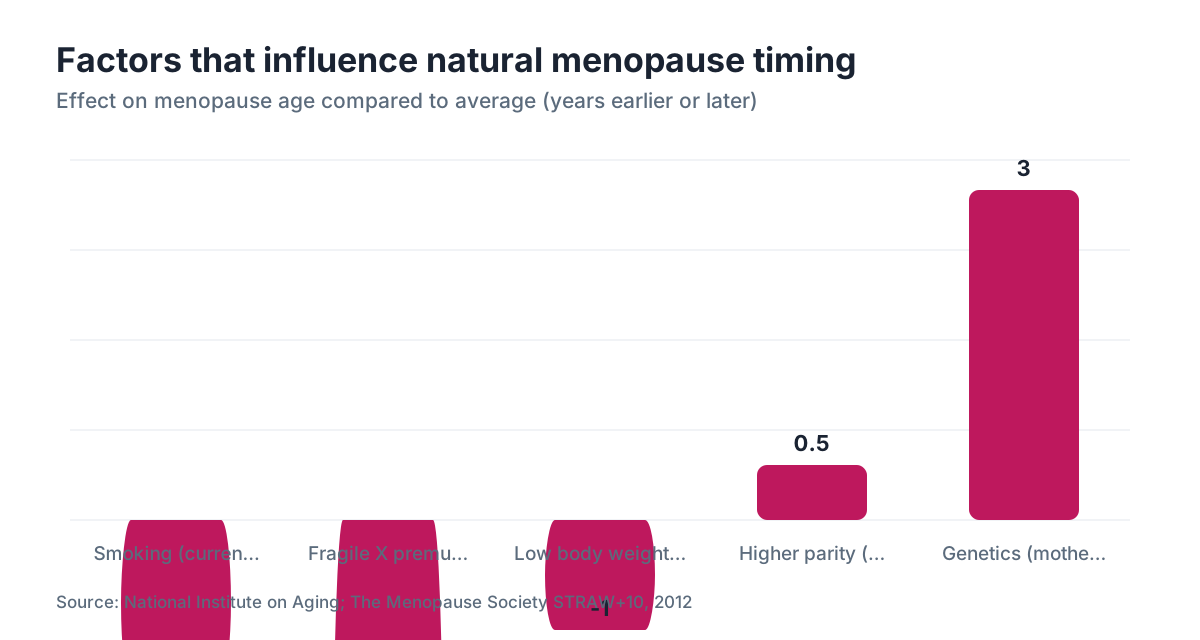
Age at menopause is shaped by genetics more than almost anything else. If your mother went through menopause at 48, you're statistically more likely to as well. Smoking is the best-established modifiable factor. Smokers tend to reach menopause one to two years earlier than nonsmokers, likely because cigarette chemicals are toxic to ovarian follicles [3].
For a closer look at the typical age ranges and what drives them, see our articles on perimenopause age and when does menopause start.
What causes early menopause (before age 45)?
Early menopause means menopause before age 45. Premature ovarian insufficiency (POI), sometimes called premature menopause, is loss of normal ovarian function before age 40, and it affects roughly 1% of women [2].
The causes fall into several buckets:
Genetics and chromosomal conditions. Turner syndrome (a missing or incomplete X chromosome) and Fragile X premutation carriers have much higher rates of POI. Mutations in genes like FMR1, FOXL2, and BMP15 turn up in a subset of cases [5].
Autoimmune disease. The immune system can mistakenly attack ovarian tissue. This shows up more often in women with autoimmune thyroid disease (Hashimoto's, Graves'), Addison's disease, and type 1 diabetes. Autoimmune causes account for an estimated 4-30% of POI cases, and the range is wide because testing isn't standardized [5].
Cancer treatment. Chemotherapy, especially alkylating agents like cyclophosphamide, is directly toxic to follicles. The damage is dose-dependent: higher cumulative doses destroy more follicular reserve. Pelvic radiation depletes follicles too. The ovarian radiation dose needed to destroy half the follicle pool is estimated at just 2 Gy in adult women [6].
Surgery. Bilateral oophorectomy (removal of both ovaries) causes immediate surgical menopause, with estrogen dropping within hours. Even a hysterectomy that keeps the ovaries can speed up ovarian decline, possibly because blood supply to the ovaries gets partially disrupted, though the research here is mixed [7].
Infection. Historically, mumps oophoritis caused POI in some women. Tuberculosis and HIV have also been linked to ovarian damage, though these are uncommon causes in developed countries today.
Idiopathic. In a large share of POI cases, no cause is ever found. That's frustrating for patients and clinicians alike, and the research keeps going.
How is surgical menopause different from natural menopause?
Surgical menopause happens when both ovaries are removed (bilateral oophorectomy), often as part of a hysterectomy or as a standalone procedure for conditions like endometriosis or ovarian cancer risk reduction.
The difference from natural menopause is the abruptness. In natural menopause, estrogen declines gradually across years of perimenopause. After bilateral oophorectomy, estradiol falls off a cliff within 24-48 hours. Many women describe the hot flashes, sleep disruption, and mood changes as far worse than what friends who went through natural menopause experienced, and the research backs up that impression [7].
Women who reach surgical menopause before their natural menopause age also lose estrogen's protective effects for a longer stretch, which matters for cardiovascular health and bone density. This isn't a hypothetical concern. A large cohort study published in Obstetrics and Gynecology found that oophorectomy before age 46 was associated with increased all-cause mortality compared to women who kept their ovaries [7].
If you've had a bilateral oophorectomy before your natural menopause age and you don't have a contraindication to estrogen, hormone replacement therapy is worth a serious conversation with your clinician. See our overview of hormone replacement therapy for what the options look like.
What role do hormones play, and which ones change?
Three hormones drive most of what happens in menopause: estradiol, progesterone, and FSH.
Estradiol is the primary estrogen your ovaries make during reproductive years. It governs the menstrual cycle, maintains vaginal tissue, protects bone density, influences mood and cognition, and keeps LDL cholesterol in check. As follicle supply falls, estradiol production falls with it.
Progesterone drops too, often earlier in perimenopause than estradiol does. Progesterone is produced after ovulation, so when ovulation gets sporadic, so does progesterone. This is one reason perimenopausal periods can turn heavier and more erratic before they stop: you may still make enough estrogen to thicken the uterine lining, but not ovulate consistently enough to produce the progesterone that would stabilize and regulate the shedding of that lining.
FSH, as noted above, rises because the pituitary is compensating for low estrogen feedback. An FSH above 40 mIU/mL on two measurements is a common diagnostic threshold, though FSH can bounce around a lot in perimenopause, which is why a single test can mislead you [2].
Testosterone also declines with age, though the drop is more gradual and less tied to the menopause transition specifically. Many women notice changes in libido and energy that may partly reflect falling testosterone alongside estrogen.
Does genetics determine when you'll go through menopause?
Genetics is the single biggest predictor of menopause timing for women who don't have surgery or cancer treatment. Twin studies estimate that somewhere between 44% and 65% of the variation in menopause age is heritable [3].
Genome-wide association studies have pinned down dozens of genetic loci tied to menopause timing, including variants near genes involved in DNA repair, follicle development, and immune function. One large study published in Nature in 2021 identified more than 290 genomic loci associated with age at natural menopause [8].
Here's the practical part. Your best single-question predictor of your own menopause age is: at what age did your mother and maternal grandmother go through menopause? It's not a guarantee, but it's the most accessible signal you have. Smoking, BMI, and prior cancer treatment can pull that timing earlier. Higher parity (having had more pregnancies) is weakly linked to later menopause in some studies, though the effect is small.
Can lifestyle or health conditions cause or speed up menopause?
Lifestyle factors can shift menopause timing by months to a couple of years, but they're unlikely to be the sole cause. The ovaries run out of follicles regardless. Lifestyle mostly affects the pace.
Smoking. The strongest modifiable predictor. Smokers reach menopause an average of one to two years earlier than nonsmokers. The mechanism is thought to involve aromatic hydrocarbons in cigarette smoke acting as toxins to follicles and interfering with estrogen metabolism [3].
Body weight. Being significantly underweight is linked to earlier menopause, likely because fat tissue adds to estrogen production (via androgen aromatization) and very low body fat leaves less reserve. Obesity is linked to slightly later menopause in some studies, but not all.
Prior oral contraceptive use. Doesn't meaningfully change menopause timing. Oral contraceptives suppress ovulation but don't stop the background follicle loss that runs independent of ovulation.
Autoimmune thyroid conditions. Linked to POI and possibly to earlier natural menopause in women without POI.
Endometriosis and uterine fibroids. Surgeries to treat these, particularly those that remove ovarian tissue, can deplete follicular reserve and speed up menopause onset.
Alcohol, vigorous exercise, and diet have all been studied, but the data is inconsistent. Nobody has good causal data here. Most studies are observational with self-reported exposures.
What are the first signs that menopause is starting?
Most women don't go from cycling normally to full menopause overnight. The transition, called perimenopause, announces itself with changes that are easy to miss at first.
Cycle irregularity is usually the first sign. Periods may come closer together or further apart. A cycle that ran a reliable 28 days might swing to 22 days one month and 45 the next. The Menopause Society describes the transition as beginning when cycle length varies by 7 or more days compared to baseline [4].
Hot flashes. Roughly 75-80% of women experience vasomotor symptoms, the technical term for hot flashes and night sweats, at some point during the transition [4].
Sleep disruption. Often tied to night sweats, but it also happens on its own, possibly because progesterone helps regulate sleep.
Mood changes. Anxiety, irritability, and depressive symptoms are more common during perimenopause than in the years before or after. Women with a prior history of depression or premenstrual dysphoric disorder look more vulnerable.
Vaginal and urinary changes. These tend to show up later in the transition and can persist and worsen after menopause without treatment, because they're driven by estrogen loss in urogenital tissue.
For a fuller picture of what this phase looks like over time, our article on menopause covers the whole spectrum.
How does a doctor confirm menopause?
For most women over 45 with 12 consecutive months of no periods and typical symptoms, the diagnosis is clinical. No blood test required. The Menopause Society and the Endocrine Society both note that lab tests add limited value in straightforward cases [1][2].
When testing does help:
- In women under 45, to tell POI apart from other causes of irregular cycles (pregnancy, thyroid disease, hyperprolactinemia, polycystic ovary syndrome)
- In women who've had a hysterectomy and can't use the absence of periods as a guide
- When symptoms are atypical or the picture is unclear
FSH is the most commonly ordered test. A value above 30-40 mIU/mL on two measurements taken 4-6 weeks apart (when not using hormonal contraception, which suppresses FSH) is consistent with menopause [2]. Estradiol is often checked alongside FSH. Anti-Müllerian hormone (AMH) reflects ovarian reserve and sometimes gets used to estimate how close you are to menopause, though it's not a standard diagnostic tool for menopause itself.
Thyroid function (TSH) and prolactin should be checked if periods have stopped in a younger woman, because thyroid disease and hyperprolactinemia can both cause amenorrhea that looks like menopause.
What are the long-term health consequences of menopause?
Menopause itself is a normal biological process, not a disease. But the estrogen loss that comes with it has real downstream effects on several organ systems.
Bone density. The years right before and after menopause are the fastest bone loss of a woman's life. Estrogen suppresses osteoclast activity (bone breakdown); without it, bone resorption outpaces bone formation. Women can lose 2-3% of bone density per year in the first few years after menopause [9]. Getting a baseline bone density test is worth discussing with your clinician if you're postmenopausal, especially with other risk factors.
Cardiovascular risk. Before menopause, women have lower rates of cardiovascular disease than age-matched men. That gap narrows sharply afterward. Estrogen has favorable effects on lipids (raises HDL, lowers LDL) and blood vessel function, and losing those effects matters.
Genitourinary syndrome of menopause (GSM). Low estrogen thins and dries vaginal and urethral tissue. Unlike hot flashes, which often ease over time, GSM tends to worsen without treatment.
Cognitive changes. Many women report brain fog and memory slips during perimenopause. Whether menopause accelerates long-term cognitive decline is still an open research question.
If you're working through these downstream effects and want to understand your treatment options, an estrogen patch or other forms of hormone replacement therapy are the main tools clinicians reach for. Telehealth practices like WomenRx prescribe and manage menopausal hormone therapy for women who aren't getting adequate care through their primary providers.
What causes menopause in people who have never had periods?
This is a niche but real question. People with conditions like Turner syndrome (45,X) or complete androgen insensitivity syndrome (CAIS) may never have had spontaneous periods, yet their ovaries (if present, or the streak gonads in Turner syndrome) still go through the same process of follicle depletion.
In Turner syndrome, the ovaries typically fail before puberty because the chromosomal abnormality speeds up follicle atresia. Most people with Turner syndrome need hormone therapy to induce puberty and then to maintain hormonal status through adulthood.
In CAIS (genetic males who are insensitive to androgens and often raised as girls), the gonads are usually removed because of cancer risk, which produces the equivalent of immediate surgical menopause.
These cases make the core mechanism clear: follicle depletion and its hormonal fallout are what menopause is, regardless of prior menstrual history. The root cause is always the ovarian follicle count, not the menstrual cycle itself.
Can menopause be delayed or prevented?
No treatment available today can meaningfully delay natural menopause in healthy women. Oral contraceptives suppress ovulation but don't slow the background follicle loss that sets menopause timing. The follicle pool depletes whether or not you ovulate.
Research into ovarian tissue cryopreservation (freezing ovarian tissue before cancer treatment) is moving forward, and there's limited evidence that reimplanted frozen ovarian tissue can restore some ovarian function temporarily. But that's a medical intervention for specific situations like cancer treatment, not a general menopause-delay strategy.
Some research groups have explored whether rapamycin or other mTOR inhibitors could slow follicle atresia in animal models. There's no human clinical data supporting this approach as safe or effective.
Hormone therapy doesn't delay menopause. It treats the symptoms and consequences of it. The underlying follicle depletion keeps going whether or not you're taking estrogen.
For women at high genetic risk of early menopause, the most useful thing is awareness. Fertility planning conversations earlier, bone density monitoring, and cardiovascular risk management all become relevant at younger ages.
Frequently asked questions
What causes menopause?
Menopause is caused by the depletion of ovarian follicles. Women are born with all the follicles they will ever have, and this supply declines continuously from birth. When follicle counts fall too low to sustain normal estrogen and progesterone production, menstrual periods stop. The average age this happens in the US is 51.
What causes early menopause before age 45?
Early menopause can be caused by genetics and chromosomal conditions (like Turner syndrome or Fragile X premutation), autoimmune disease attacking ovarian tissue, chemotherapy or pelvic radiation, or surgical removal of both ovaries. In many women with premature ovarian insufficiency (before age 40), no specific cause is ever identified.
What is the most common age for menopause?
The median age of natural menopause in the United States is 51.4 years. Most women reach it between ages 45 and 55. Menopause before 45 is considered early; before 40 is premature ovarian insufficiency. Genetics is the strongest predictor of timing, with smoking being the main modifiable factor that moves it earlier.
Does smoking cause earlier menopause?
Yes. Smokers reach menopause an average of one to two years earlier than nonsmokers. Chemicals in cigarette smoke are directly toxic to ovarian follicles and also interfere with estrogen metabolism. This is the most consistently documented lifestyle factor affecting menopause timing across multiple large observational studies.
What is premature ovarian insufficiency?
Premature ovarian insufficiency (POI) is loss of normal ovarian function before age 40. It affects about 1% of women. Causes include genetic mutations, autoimmune disease, and cancer treatment, but in many cases no cause is found. POI is not the same as early menopause and doesn't always mean permanent infertility, as ovarian function can fluctuate.
What hormones change during menopause?
Estradiol and progesterone both fall as ovarian follicle supply declines. FSH and LH rise as the pituitary tries to stimulate the failing ovaries. Estradiol typically shows the most dramatic decline and drives most menopause symptoms. Testosterone also declines gradually with age, though this is not tightly linked to the menopause transition itself.
Can a hysterectomy cause menopause?
A hysterectomy alone (removing only the uterus, preserving the ovaries) doesn't cause immediate menopause because the ovaries continue producing hormones. Periods stop because the uterus is gone, but hormonal menopause may occur somewhat earlier than it would have naturally. Removing both ovaries (bilateral oophorectomy) causes immediate surgical menopause within 24-48 hours.
What blood tests confirm menopause?
FSH above 30-40 mIU/mL on two measurements taken 4-6 weeks apart is the most commonly used lab marker. Estradiol is usually checked alongside it. For women over 45 with 12 months of no periods and typical symptoms, blood tests aren't required to make the diagnosis. Testing is most useful in younger women where other causes of missed periods need to be ruled out.
Does chemotherapy cause menopause?
It can. Alkylating chemotherapy agents are particularly toxic to ovarian follicles. Whether periods return after chemotherapy depends on the drugs used, cumulative dose, and the woman's age and ovarian reserve before treatment. Women in their 20s and 30s are more likely to recover ovarian function than women in their 40s who are closer to natural menopause.
Can stress or diet cause menopause?
Neither stress nor specific diets can cause menopause or meaningfully alter its timing the way genetics does. Extreme caloric restriction or very low body weight is associated with earlier menopause in some studies. Stress can disrupt the hypothalamic-pituitary-ovarian axis and cause missed periods, but this is functional amenorrhea, not menopause, and reverses when the stressor is removed.
What causes hot flashes during menopause?
Hot flashes are caused by estrogen withdrawal's effect on the hypothalamus, the brain region that regulates body temperature. Low estrogen narrows the thermoneutral zone, the range of temperatures the body tolerates without sweating or shivering. Even small temperature shifts can trigger a hot flash. About 75-80% of women experience them during the menopause transition.
Is menopause genetic?
Genetics accounts for roughly 44-65% of the variation in natural menopause timing, based on twin studies. More than 290 genomic loci have been associated with menopause age in large genome-wide studies. Your mother's menopause age is the most practical predictor of your own. Specific genetic mutations (FMR1 premutation, Turner syndrome) can cause premature ovarian insufficiency.
What is the difference between perimenopause and menopause?
Perimenopause is the transition phase leading up to menopause, typically starting in the mid-to-late 40s and lasting four to eight years on average. During perimenopause, cycles become irregular and symptoms like hot flashes may begin, but periods haven't stopped entirely. Menopause is the point confirmed after 12 consecutive months with no period. Everything after that is postmenopause.
Does menopause affect bone density?
Yes, significantly. Estrogen suppresses osteoclasts, the cells that break down bone. After menopause, without that suppression, bone loss accelerates to roughly 2-3% per year in the first few years. This is why postmenopausal women have higher rates of osteoporosis and fracture. A bone density test (DEXA scan) is recommended for postmenopausal women, especially with additional risk factors.
Sources
- The Menopause Society (NAMS), Menopause Practice: A Clinician's Guide
- Endocrine Society, Clinical Practice Guideline: Premature Ovarian Insufficiency
- National Institute on Aging (NIA), Menopause: Overview
- The Menopause Society (NAMS), Stages of Reproductive Aging Workshop (STRAW+10)
- National Institutes of Health (NIH), Eunice Kennedy Shriver NICHD, Premature Ovarian Insufficiency
- American Society of Clinical Oncology (ASCO), Fertility Preservation Guideline
- Parker WH et al., Ovarian conservation at the time of hysterectomy and long-term health outcomes, Obstetrics and Gynecology 2009
- Ruth KS et al., Genetic insights into biological mechanisms governing human ovarian ageing, Nature 2021
- Bone Health and Osteoporosis Foundation, Bone Health Basics
- Office on Women's Health, U.S. Department of Health and Human Services, Menopause