What causes low progesterone in women
TL;DR: Low progesterone in women usually traces back to anovulation (no ovulation), perimenopause, chronic stress driving up cortisol, thyroid disease, high prolactin, low body weight, luteal phase defect, or PCOS. A mid-luteal progesterone below 10 ng/mL points to inadequate ovulation. Most causes are treatable once a properly timed hormone panel identifies the real driver.
What is low progesterone, and what lab value counts as low?
Progesterone is a steroid hormone made almost entirely in the corpus luteum, the temporary gland that forms in your ovary after an egg is released. No ovulation, or a corpus luteum that doesn't work well, means progesterone stays low for the whole cycle.
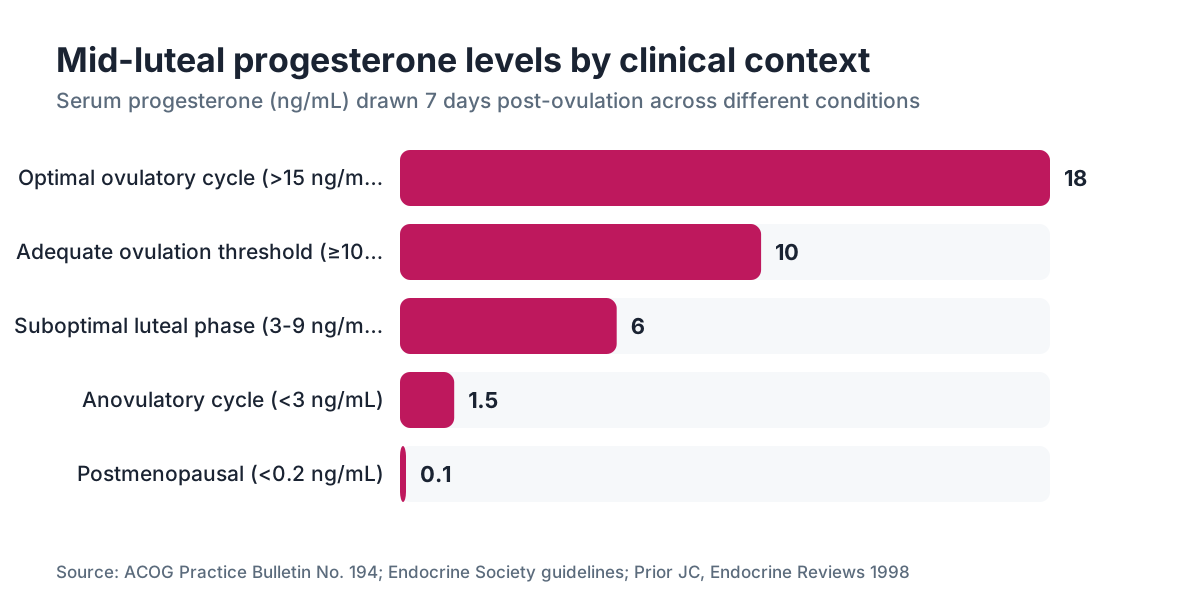
The numbers depend entirely on where you are in your cycle. In the follicular phase (days 1-13 of a typical 28-day cycle), progesterone is normally under 1 ng/mL, so a low result then means nothing. The number that matters is the mid-luteal draw, taken 7 days after ovulation or 7 days before your next expected period. Most labs flag anything below 10 ng/mL at that point as suboptimal, and levels below 3 ng/mL strongly suggest anovulation [1].
In pregnancy, the threshold shifts upward fast. By 6-8 weeks gestation, progesterone below 5 ng/mL is linked to pregnancy failure, while levels above 25 ng/mL are reassuring [2]. In postmenopausal women, progesterone is expected to be below 0.2 ng/mL, because ovulation no longer happens. The problem shows up when premenopausal women have mid-luteal levels that look postmenopausal.
A single number rarely tells the whole story. Your clinician should read progesterone alongside LH (luteinizing hormone), FSH, estradiol, and sometimes prolactin and TSH. One low draw could be a timing error. Two or three consistently low mid-luteal draws, especially with symptoms, point to a real deficit.
What are the most common symptoms of low progesterone?
Symptoms cluster around two patterns: an imbalance with estrogen (sometimes called estrogen dominance, though that phrase oversimplifies it), and the direct loss of progesterone's calming, pro-sleep, anti-anxiety effects.
The classic list includes irregular or missed periods, spotting in the week before your period, heavy or prolonged bleeding, trouble conceiving, repeated early miscarriage, worsened PMS with anxiety or mood swings, poor sleep, and breast tenderness. Many women also report bloating that gets worse in the second half of the cycle.
Several of those symptoms overlap with perimenopause, because perimenopause is itself one of the most common causes of low progesterone. The two feed each other: skipped ovulations reduce progesterone, progesterone-depleted cycles feel worse, and many women don't connect the dots until the pattern has been running for years.
One symptom deserves its own line: anxiety that worsens in the 7-10 days before your period and lifts once bleeding starts. Progesterone metabolizes to allopregnanolone, a neurosteroid that binds GABA-A receptors and produces a calming effect. When progesterone is low, allopregnanolone drops with it, and the GABAergic dampening disappears [3]. That is not general anxiety. It is a biological withdrawal pattern.
None of these symptoms alone diagnoses low progesterone. A lab draw, timed correctly to your cycle, is the only way to confirm it.
What causes low progesterone: the 8 main reasons
1. Anovulation (not ovulating) This is the single biggest cause. No ovulation means no corpus luteum, which means near-zero progesterone in the luteal phase. Anovulation is common in PCOS, eating disorders, extreme exercise, perimenopause, and high prolactin states. You can still bleed on an anovulatory cycle, so a regular-looking period is not proof that you ovulated [4].
2. Perimenopause The transition years before menopause usually start in the mid-to-late 40s, though they can begin earlier. As the ovarian reserve shrinks, cycles turn increasingly anovulatory. Progesterone drops years before estrogen does, which is why progesterone-related symptoms (mood instability, poor sleep, cycle irregularity) often show up first [5]. See also our guide on when does menopause start.
3. Chronic stress and elevated cortisol Cortisol and progesterone share a biochemical upstream: both come from pregnenolone. Under sustained stress, the body prioritizes cortisol. Pregnenolone gets shunted toward the adrenal cortex instead of the corpus luteum, leaving less substrate for progesterone synthesis. This is sometimes called "pregnenolone steal," though the evidence is more mechanistic than directly measured in women in most studies.
4. Thyroid dysfunction Both hypothyroidism and hyperthyroidism disrupt the HPO (hypothalamic-pituitary-ovarian) axis. Hypothyroidism raises prolactin and can impair corpus luteum function directly. Thyroid autoimmunity shows up in up to 47% of women with recurrent pregnancy loss, a condition almost always tied to low luteal-phase progesterone [6].
5. Hyperprolactinemia Elevated prolactin (from a pituitary adenoma, medications like antipsychotics or metoclopramide, or chronic nipple stimulation) suppresses GnRH pulsatility. Without adequate GnRH, the LH surge that triggers ovulation doesn't fire reliably, and progesterone stays low.
6. Luteal phase defect (LPD) The corpus luteum forms but doesn't secrete enough progesterone, or the luteal phase is shorter than 11 days. LPD is a diagnosis of exclusion and its definition is still argued in the literature, but a mid-luteal progesterone below 10 ng/mL on two or more cycles supports it [1].
7. Low body fat or disordered eating Fat tissue (adipose) is a secondary site of estrogen production and helps create the hormonal setting needed to support ovulation. Women with body fat below roughly 17-22% often stop ovulating (athletic amenorrhea), and progesterone falls to near-menopausal levels. Female athletes and women recovering from restrictive eating carry particular risk.
8. Age-related ovarian decline before perimenopause Even in the late 30s, ovarian reserve begins declining. Some cycles turn anovulatory years before any other perimenopausal marker appears. FSH may still look normal while progesterone quietly drops. That is one reason cycle irregularity in your late 30s deserves a full hormone panel, not a "wait and see."
How does PCOS cause low progesterone?
Polycystic ovary syndrome is, at its root, an ovulatory dysfunction disorder. Most women with PCOS don't ovulate regularly, and irregular or absent ovulation is the direct mechanism of low progesterone [4]. Follicles recruit but don't mature to the point of releasing an egg. No egg release, no corpus luteum, no progesterone surge.
The hormonal picture in PCOS adds complexity. Elevated LH can cause premature luteinization, where the follicle starts to look like a corpus luteum before ovulation. In that scenario, progesterone may rise slightly mid-cycle, confusing the timing of any single blood draw. Serial testing is more reliable.
Insulin resistance, which affects 50-80% of women with PCOS, worsens the picture by amplifying androgen production in the ovary and further disrupting follicle maturation. Treating insulin resistance, through diet, exercise, or metformin, often improves ovulatory frequency and partly restores mid-luteal progesterone. It's not a guaranteed fix, but it moves the numbers.
Women with PCOS who want to conceive are often prescribed clomiphene or letrozole to induce ovulation, then progesterone supplementation in the luteal phase. Outside pregnancy attempts, hormonal birth control suppresses the cycle entirely, so progesterone status becomes academic unless you're trying to understand your baseline before stopping contraception.
Does perimenopause always cause low progesterone?
Nearly always, yes. The first hormonal change in perimenopause is a drop in progesterone, not estrogen. Estrogen can spike erratically high in early perimenopause while progesterone is already declining. That combination drives the heavy, clotty periods and mood swings many women hit in their 40s.
A 1998 review by Prior in Endocrine Reviews documented that progesterone deficiency begins in the perimenopause even when cycles still look regular, because those cycles become increasingly anovulatory [5]. The ovaries are still cycling, estrogen is still being made, but ovulation is hit-or-miss. Mid-luteal progesterone can sit at 3-5 ng/mL when it should be 10 or above.
Not every woman tracks this. Many just notice their periods changed, their sleep got worse, or their anxiety climbed. By the time FSH is elevated and estrogen is dropping, progesterone has been low for years.
For the broader arc of this transition, the perimenopause age guide covers when symptoms typically begin and how long they last.
Can stress actually lower progesterone, or is that just wellness-industry talk?
The mechanism is real, though the direct human evidence is messier than the biochemistry suggests. Cortisol and progesterone are both made from pregnenolone, a cholesterol-derived precursor. Under sustained high cortisol demand, the enzyme pathways that would otherwise produce progesterone get redirected toward cortisol and its precursors. Animal studies show this effect consistently, and human studies show that women with high perceived stress carry lower mid-luteal progesterone than controls [3].
A 2015 cohort study in the American Journal of Human Biology measured progesterone across cycles in 178 women and found that self-reported stress independently predicted lower mid-luteal progesterone after controlling for age, BMI, and cycle length [11]. The effect was modest but real.
The clinical takeaway: chronic stress, inadequate sleep (a cortisol driver), relentless work schedules, and under-eating are more than lifestyle issues. They create a physiological path to suppressed ovarian function. That doesn't make meditation a treatment for severely low progesterone. It means that if your progesterone is borderline low and everything else looks normal, cortisol dysregulation is worth evaluating.
A salivary cortisol test (four points across the day) or a urinary DUTCH test can reveal the cortisol pattern. Neither is standard primary care, but functional medicine practitioners and some reproductive endocrinologists use them.
What medications or medical conditions lower progesterone?
Several medication classes suppress ovulation or impair corpus luteum function, and that drops progesterone.
Hormonal contraceptives are the obvious category. Combined oral contraceptives suppress the entire HPO axis. Progesterone during active pill use is effectively unmeasurable, which is expected and not pathological. The more interesting question is what happens after stopping: some women go through a post-pill anovulatory stretch of 1-3 months, keeping progesterone suppressed.
Antipsychotics and some antiemetics (metoclopramide, domperidone) raise prolactin through dopamine blockade. High prolactin suppresses GnRH, which suppresses the LH surge, which suppresses ovulation and therefore progesterone [2].
Opioids chronically suppress GnRH pulsatility. Women on long-term opioid therapy for pain frequently develop hypogonadotropic hypogonadism, with low LH, anovulation, and low progesterone.
Glucocorticoids (prednisone, dexamethasone) at pharmacologic doses suppress the HPO axis and directly impair corpus luteum function.
Beyond medications, other conditions that depress progesterone include:
- Hypothyroidism (impairs corpus luteum function, raises prolactin)
- Hyperthyroidism (disrupts LH pulsatility)
- Pituitary tumors (prolactinomas most commonly)
- Adrenal insufficiency or Cushing's syndrome (disrupts the cortisol-pregnenolone balance)
- Liver disease (impairs steroid hormone metabolism and clearance, which complicates interpretation rather than simply lowering levels)
If your progesterone is low and the obvious causes aren't present, a pituitary MRI to rule out a microadenoma and a full thyroid panel (TSH, free T4, TPO antibodies) are reasonable next steps.
How do doctors diagnose low progesterone and what tests do you need?
Timing is everything. A progesterone draw on day 5 of your cycle will almost always read low, because it's supposed to. The standard protocol is a single mid-luteal draw, usually day 21 of a 28-day cycle, or 7 days before your next expected period if your cycle is irregular.
For irregular cycles, the draw is harder to time. One approach uses LH ovulation predictor kits: confirm your LH surge, then draw progesterone 7 days later. Another is serial weekly draws starting at day 14, stopping when the level peaks, though that gets expensive and stays uncertain.
| Test | What it shows | Optimal timing | |------|--------------|----------------| | Progesterone | Luteal phase adequacy | 7 days post-ovulation (mid-luteal) | | FSH / LH | Ovarian reserve, pituitary signaling | Day 2-4 of cycle | | Estradiol | Follicular development | Day 2-4, or mid-cycle | | TSH / Free T4 | Thyroid function | Any day | | Prolactin | Pituitary, medication effect | Morning, fasting preferred | | AMH | Ovarian reserve (indirect) | Any day |
If two or three mid-luteal draws come back below 10 ng/mL and you're symptomatic, most reproductive endocrinologists call that diagnostic of a luteal phase problem, whether the cause is anovulation or LPD. Endocrine Society guidance recommends further evaluation for any woman with recurrent pregnancy loss or infertility who shows consistently low luteal progesterone [2].
For women not trying to conceive but dealing with heavy periods, mood changes, and sleep disruption in the second half of the cycle, a mid-luteal progesterone draw plus TSH and prolactin is a good starting panel. Your primary care doctor can order it. You don't need a specialist referral for a first look at the numbers.
How is low progesterone treated?
Treatment depends entirely on why progesterone is low and what outcome you're after.
For anovulation or PCOS: Inducing ovulation with clomiphene citrate or letrozole is standard when pregnancy is the goal [4]. Outside of fertility treatment, addressing the root cause (insulin resistance, thyroid disease, hyperprolactinemia) often restores ovulatory cycles. For women not trying to conceive, many doctors simply treat symptoms.
For luteal phase defect in fertility patients: Progesterone supplementation starting after ovulation and continuing through the first 10-12 weeks of pregnancy is standard in IVF protocols. Outside IVF, the evidence for supplementation preventing miscarriage in natural cycles is thinner. The PROMISE trial (2015) showed no benefit in unselected women with unexplained recurrent miscarriage [7]. Later data suggested that women with a short luteal phase or documented low levels may respond differently.
For perimenopause: Progesterone therapy, specifically micronized progesterone (brand name Prometrium), is part of hormone replacement therapy for women who have a uterus and are taking estrogen. The FDA label for Prometrium 200 mg indicates it to prevent endometrial hyperplasia in postmenopausal women on estrogen therapy [8]. Beyond protecting the uterus, many women report dramatically better sleep on oral micronized progesterone, partly from its conversion to allopregnanolone.
Oral micronized progesterone and synthetic progestins (like medroxyprogesterone acetate) are not the same thing. The Women's Health Initiative used medroxyprogesterone acetate, not micronized progesterone, and the breast cancer signal in that trial may not apply to bioidentical progesterone. NAMS notes this distinction [10], though long-term breast safety data for micronized progesterone remains limited compared to what we have for synthetic progestins.
If you're weighing hormonal therapy, reviewing the full options on the progesterone guide is a reasonable first step. Practices like WomenRx can also help you work through a hormone panel and treatment options without waiting months for a specialist appointment.
For stress-related suppression: No pill fixes the cortisol-pregnenolone shunt. Sleep, caloric adequacy, and actual stress reduction are the interventions. Adaptogens like ashwagandha show modest cortisol-lowering effects in some trials, but nobody has good data on whether they reliably raise progesterone in women with stress-related anovulation. The closest study used 300 mg ashwagandha twice daily and found significant drops in cortisol and self-reported stress versus placebo, but progesterone wasn't a measured endpoint.
For thyroid-related low progesterone: Treating the thyroid condition often restores ovulatory function without directly supplementing progesterone. Try that first before adding progesterone, assuming thyroid disease is the identified cause.
Can low progesterone affect bone health?
Yes, and this connection gets overlooked. Most osteoporosis talk centers on estrogen, but progesterone has direct bone-forming effects through progesterone receptors on osteoblasts. Animal data are strong; human data are more limited but supportive.
Prior showed in observational data that perimenopausal women with more anovulatory cycles (and therefore lower cumulative progesterone exposure) lost more spinal bone density than women with regularly ovulatory cycles, even when estrogen levels were similar [5]. The effect looked independent of estrogen.
That doesn't mean low progesterone alone causes osteoporosis. Estrogen is still the dominant driver. But years of progesterone deficiency in perimenopause, starting before estrogen falls much, may add to bone loss that begins earlier than clinicians typically look for.
If you're in your 40s with documented low progesterone and any risk factors for low bone density, ask your doctor about a bone density test earlier than the standard age of 65 (or 60 for higher-risk women).
Does low progesterone affect fertility and early pregnancy?
Directly and significantly. Progesterone does two things early pregnancy can't do without: it prepares the uterine lining for implantation, and it quiets uterine contractions that could expel an early embryo. Without enough progesterone, even a fertilized egg that reaches the uterus may not implant.
In IVF cycles, progesterone support is standard and has strong evidence behind it. In natural conception cycles, the supplementation data are more mixed. The PRISM trial (2019) in the New England Journal of Medicine found that vaginal progesterone in women with early pregnancy bleeding did not significantly raise live birth rates across the whole group, but a subgroup analysis showed benefit in women with prior miscarriages: the live birth rate was 72% in the progesterone group versus 57% in the placebo group in that subgroup [9].
Here is where I'd say the evidence supports at least trying progesterone supplementation in women with recurrent pregnancy loss and documented low mid-luteal levels, even if the benefit in unselected populations is unproven. The risk of micronized progesterone in early pregnancy is low, the potential benefit in the right population is meaningful, and a reproductive endocrinologist is the right person to make that call with you.
For women not actively trying to conceive, low progesterone still degrades cycle quality and can drive irregular or heavy periods, which affect quality of life even when pregnancy isn't the immediate goal.
What lifestyle changes actually raise progesterone?
The honest answer: lifestyle changes that restore ovulation raise progesterone. No food or supplement directly stimulates the corpus luteum in a meaningful clinical way. What you can do is remove the conditions suppressing ovulation.
Eat enough. Caloric restriction suppresses GnRH. Women who undereat, even subtly, have higher rates of anovulatory cycles. That includes women who aren't underweight but are eating less than they burn, which happens with aggressive dieting or heavy training. The hypothalamus reads energy availability, and it will shut down reproductive cycling before it lets you starve.
Cut exercise volume if you're an athlete with cycle changes. Relative Energy Deficiency in Sport (RED-S), formerly the Female Athlete Triad, is a well-documented cause of low progesterone and anovulation [12]. Reducing training load or increasing calories often restores cycles within 2-3 months.
Treat thyroid disease. If hypothyroidism is raising prolactin and blocking ovulation, levothyroxine often restores ovulatory cycles with no additional intervention.
Prioritize sleep. Cortisol rhythm is anchored to the sleep-wake cycle. Poor sleep raises cortisol in the afternoon and evening, a pattern that disrupts LH pulsatility and ovarian function. Seven to nine hours isn't a luxury recommendation here. It has measurable hormonal effects.
Manage weight if PCOS is the cause. Even a 5-10% body weight reduction in women with PCOS and obesity meaningfully improves ovulation frequency and mid-luteal progesterone in published trials. This is one of the most evidence-backed lifestyle interventions in reproductive medicine [4].
Vitex (chasteberry) sells widely as a progesterone support supplement. The evidence is mostly small European trials and is not strong. The proposed mechanism is dopamine agonism, which would lower prolactin and indirectly improve ovulation in women with mildly elevated prolactin. If your prolactin is normal, the logic falls apart. I wouldn't spend money on it unless prolactin is the documented driver and you're not a candidate for medication.
Frequently asked questions
What is the normal progesterone level in the luteal phase?
Mid-luteal progesterone (drawn 7 days after ovulation or 7 days before your next period) should ideally sit above 10 ng/mL. Many labs use 3 ng/mL as the cutoff to confirm ovulation happened at all, but 10 ng/mL is the more meaningful threshold for adequate corpus luteum function. Levels above 15-20 ng/mL are linked to better fertility outcomes.
Can you have low progesterone and still have regular periods?
Yes. Anovulatory cycles can produce withdrawal bleeding that looks like a normal period. The uterine lining still builds and sheds under estrogen, but without ovulation there's no corpus luteum and therefore little to no progesterone. Regular bleeding does not confirm you ovulated. A timed mid-luteal progesterone draw is the only way to know.
Is low progesterone the same as estrogen dominance?
They overlap but aren't identical. Estrogen dominance describes a state where estrogen's effects go relatively unopposed by progesterone, which can happen because progesterone is low (the common scenario) or because estrogen is high. The term isn't an official diagnostic category. It's shorthand for the symptoms that arise when the estrogen-progesterone ratio is skewed: bloating, heavy periods, breast tenderness, and mood changes.
How does low progesterone feel, and how do I know it's more than anxiety or PMS?
Low-progesterone anxiety has a specific pattern: it clusters in the 7-10 days before your period and lifts once bleeding starts. It often comes with poor sleep and a "wired but tired" feeling. Standard PMS has similar timing but usually includes more physical symptoms. The differentiator is a blood test. Anxiety from other causes doesn't follow this tight premenstrual pattern.
Can low progesterone cause weight gain?
Directly, probably not by much. Progesterone is mildly thermogenic and can offset some of estrogen's water-retaining effects. When progesterone is low, some women notice more bloating and fluid retention in the luteal phase. Chronic low progesterone in perimenopause often coincides with metabolic shifts that drive fat redistribution, but that's mostly the broader hormonal transition, not progesterone alone.
What supplements raise progesterone naturally?
No supplement directly raises progesterone in a clinically proven way. Vitex (chasteberry) may help in women with mildly elevated prolactin by lowering prolactin and indirectly improving ovulation frequency. Magnesium, vitamin B6, and zinc get recommended because deficiencies impair ovarian function, but evidence in women with normal nutrient status is weak. Fixing an identified root cause, like hypothyroidism or stress, beats any supplement.
Does birth control cause low progesterone after stopping?
It can, temporarily. After stopping combined hormonal contraceptives, the HPO axis can take 1-3 months to restart normal ovulatory signaling. During that window, cycles may be anovulatory and progesterone stays low. For most women the axis recovers fully within 3 months. If cycles stay irregular or anovulatory past 6 months, investigate for an underlying cause like PCOS or thyroid disease.
Is bioidentical progesterone safer than synthetic progestins?
Micronized progesterone (bioidentical) has a different metabolic profile than synthetic progestins like medroxyprogesterone acetate. It converts to allopregnanolone (calming effect), has less androgenic activity, and may have a more favorable cardiovascular and breast safety profile based on observational data. NAMS notes the distinction is clinically relevant, though long-term randomized data specific to micronized progesterone and breast cancer risk are still limited.
Can low progesterone cause miscarriage?
Low progesterone in early pregnancy is strongly associated with miscarriage and ectopic pregnancy risk, though whether it causes miscarriage or reflects a non-viable pregnancy is debated. The PRISM trial (2019, NEJM) found that vaginal progesterone improved live birth rates in women with prior miscarriage and early pregnancy bleeding, suggesting supplementation helps in that specific group.
At what age does progesterone start declining?
Progesterone can start declining subtly in the mid-to-late 30s as anovulatory cycles become more frequent, before other perimenopausal signs appear. The decline accelerates through the 40s. In the final years before menopause, progesterone is typically very low throughout the cycle. Some women in their late 30s with cycle changes or fertility struggles show mid-luteal progesterone in the range seen in early perimenopause.
Can thyroid problems cause low progesterone?
Yes. Hypothyroidism impairs corpus luteum function and raises prolactin, both of which reduce progesterone. Thyroid autoimmunity shows up in up to 47% of women with recurrent pregnancy loss, which is almost always tied to luteal-phase progesterone deficiency. Treating hypothyroidism often restores ovulatory cycles and progesterone without extra hormonal therapy. A TSH and TPO antibody test is standard in any workup for low progesterone or recurrent miscarriage.
Is low progesterone in perimenopause treated differently than in a younger woman?
Yes. In a premenopausal woman trying to conceive, the focus is inducing ovulation or supporting the luteal phase directly. In perimenopause, estrogen usually gets addressed alongside progesterone, and the goal shifts toward symptom management and protecting the uterine lining. Oral micronized progesterone at 100-200 mg nightly is standard for perimenopausal women on estrogen therapy, and many women find it significantly improves sleep.
Does low progesterone affect mood and mental health?
Yes, through a direct neurological pathway. Progesterone metabolizes to allopregnanolone, which binds GABA-A receptors in the brain and produces anxiolytic, sedative effects. Low progesterone means low allopregnanolone, meaning reduced GABAergic calming. That is why premenstrual anxiety and sleep disruption are so common when progesterone drops late in the cycle. Women with PMDD may be especially sensitive to this withdrawal pattern.
What specialist should I see for low progesterone?
Start with your primary care provider or OB-GYN, who can order a timed mid-luteal progesterone, TSH, prolactin, and FSH. If results suggest a pituitary problem, a referral to endocrinology is appropriate. If the concern is fertility or recurrent miscarriage, a reproductive endocrinologist (REI) is the right specialist. For perimenopausal symptoms, a menopause-trained clinician or a telehealth hormone practice can manage ongoing care efficiently.
Sources
- ACOG Practice Bulletin No. 194: Polycystic Ovary Syndrome
- Endocrine Society Clinical Practice Guideline: Diagnosis and Treatment of Hyperprolactinemia
- Bäckström T et al., Allopregnanolone and GABA-A receptor function in premenstrual dysphoric disorder, PMC/NIH
- Teede HJ et al., International PCOS Network, International evidence-based guideline for the assessment and management of polycystic ovary syndrome 2023
- Prior JC, Perimenopause: the complex endocrinology of the menopausal transition, Endocrine Reviews 1998
- Thangaratinam S et al., Thyroid autoimmunity and adverse pregnancy outcomes, Thyroid 2011
- Coomarasamy A et al., PROMISE trial: A randomized trial of progesterone in women with recurrent miscarriages, NEJM 2015
- FDA prescribing information: Prometrium (progesterone, USP) 100 mg and 200 mg Capsules
- Coomarasamy A et al., PRISM trial: Progesterone in women with bleeding in early pregnancy, NEJM 2019
- NAMS (North American Menopause Society), Hormone Therapy Position Statement 2022
- Schliep KC et al., Perceived stress, reproductive hormones, and anovulation in healthy, eumenorrheic women, American Journal of Human Biology 2015
- De Souza MJ et al., Luteal phase deficiency in recreational runners, Journal of Clinical Endocrinology and Metabolism 1998