Signs you need hormone replacement therapy: a practical guide
TL;DR: The clearest signs you need hormone replacement therapy: hot flashes, night sweats that wreck your sleep, vaginal dryness, mood swings, brain fog, and fast bone loss. These come from falling estrogen (and sometimes progesterone and testosterone) in perimenopause and menopause. NAMS and the Endocrine Society both call HRT the most effective treatment for these symptoms in healthy women under 60 or within 10 years of their final period.
What does hormone replacement therapy actually do?
HRT replaces the estrogen (and often progesterone, sometimes testosterone) that your ovaries stop making reliably during perimenopause and menopause. Simple idea, wide reach. The effects touch your brain, bones, heart, skin, bladder, and mood, because estrogen is more than a reproductive hormone. It shapes serotonin and dopamine signaling, keeps the vaginal lining thick and lubricated, slows bone turnover, and helps hold your body temperature steady. When levels fall, all of those systems feel it at once.
The goal is not to make you feel 25 again. It is to raise hormone levels enough that symptoms settle and certain long-term risks, particularly osteoporosis and the cardiovascular changes that speed up after menopause, drop. The North American Menopause Society (NAMS) states in its 2022 hormone therapy position statement that "for women who are younger than 60 years or within 10 years of menopause onset and have no contraindications, the benefit-risk ratio is favorable for treatment of bothersome vasomotor symptoms." [1]
Knowing what HRT does makes it easier to spot when you need it. Mild symptoms you can live with? Fine, leave them alone. But symptoms that break your sleep, sink your work, or make you feel like a stranger to yourself are a different matter. There is no prize for toughing it out.
What are the most common signs that you need HRT?
The clearest signals cluster into a few groups. Most women get several at once, and that pile-up is itself a tell that hormones, not stress or ordinary aging, are driving it.
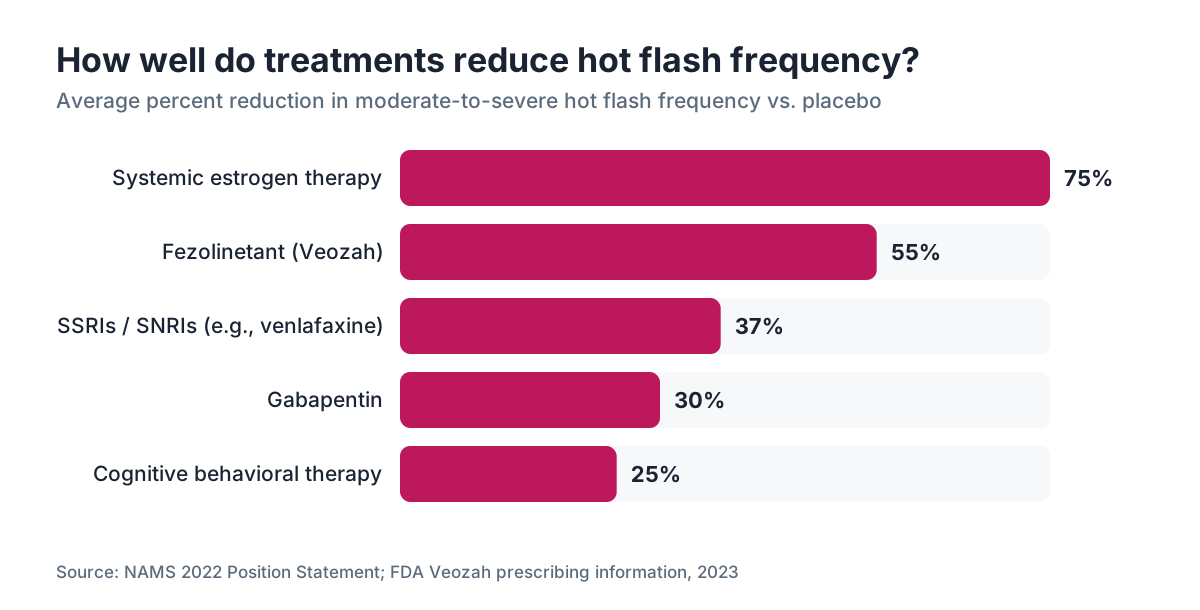
Vasomotor symptoms (hot flashes and night sweats) Hot flashes are the signature of estrogen decline. They hit roughly 75% of women going through menopause [2], from a mild wave of warmth to a drenching sweat that soaks the sheets and forces a wardrobe change at 2 a.m. More than seven moderate-to-severe hot flashes a day, or night sweats that shred your sleep several nights a week, is a textbook reason to consider HRT. Estrogen therapy cuts hot flash frequency by about 75% on average, far past any non-hormonal option. [1]
Sleep disruption Night sweats break sleep in the obvious way, but estrogen decline also reshapes sleep architecture even when you are not sweating. Women in perimenopause and menopause spend less time in slow-wave and REM sleep and wake more often. Lost sleep then feeds every other symptom: worse mood, worse memory, harder weight regulation, higher cardiovascular risk. If you have gone from a solid sleeper to waking two or three times a night for no reason you can name, hormones deserve a look.
Brain fog and memory problems Forgetting words mid-sentence. Losing your train of thought. Thinking through wet concrete. These are common in perimenopause. Estrogen has real effects on hippocampal function and on the cholinergic neurons tied to memory. The fog usually lifts once hormone levels steady out, naturally or with HRT. If it is hurting your work or scaring you (many women fear early dementia when the cause is hormonal), raise it with a clinician.
Mood changes: anxiety, irritability, low mood Early perimenopause is a higher-risk window for depression, separate from sleep loss. Swinging estrogen destabilizes serotonin signaling. Women with a history of PMS or postpartum depression are especially sensitive to these shifts. A new pattern of anxiety, tearfulness, or low-grade irritability that lines up with other perimenopausal symptoms is worth flagging, because HRT may help where antidepressants alone fall short.
Genitourinary syndrome of menopause (GSM) This is the clinical name for vaginal dryness, thinning vaginal walls, painful sex, recurrent urinary tract infections, and urinary urgency that come with low estrogen. GSM does not resolve on its own. It gets worse over time without treatment. Local estrogen (cream, ring, or insert) treats GSM with minimal systemic absorption and is considered safe even for women who cannot use systemic HRT. [3] Painful sex is not a permanent feature of your 50s you have to accept.
Joint pain and muscle changes Estrogen calms inflammation in joints. Many women notice new or worsening aches, especially in the hands and knees, during perimenopause. Muscle mass also drops faster once estrogen falls. These symptoms get less airtime than hot flashes, but they cut into daily life and often respond to HRT.
How do you know if you need HRT versus just having a hard few years?
Here is the honest part: no single lab test tells you whether HRT is right for you. FSH (follicle-stimulating hormone) rises and estradiol falls as menopause nears, and labs can confirm your ovaries are winding down. But a high FSH does not automatically mean you need HRT, and a "normal" FSH does not rule out perimenopause, because levels swing hard through the transition years. [4]
The decision rests mostly on your symptoms and how much they cost you, layered over your health history and risk factors. A clinician who waves you off because your labs look "normal" is working from outdated thinking. NAMS specifically advises against relying on lab values alone in perimenopausal women, exactly because of that variability. [1]
A rough self-check: if you are 40 to 65, your periods have changed in timing or flow, and you have two or more of the symptoms above at a severity that dents your daily function, that is enough reason for a real hormone evaluation with a clinician who knows menopause. You do not need to be fully through menopause (12 straight months without a period) to benefit from HRT. Perimenopause can run 7 to 10 years, and symptoms are often worst during that stretch. [5]
If you are asking "do I need hormone replacement therapy," the asking itself usually means your symptoms are loud enough to investigate. Mild, occasional hot flashes that barely register are not a mandate for treatment. Waking four times a night or crying at your desk is.
How does perimenopause differ from menopause and does it change who needs HRT?
Perimenopause is the transition before your final period. Menopause is a single moment, named in hindsight as 12 straight months with no period. In the United States, menopause lands around age 51 on average, while the perimenopause age window usually opens in the mid-to-late 40s, sometimes earlier. [5]
In perimenopause, estrogen does more than drift down. It swings. Some months it surges above normal, bringing breast tenderness and heavy periods. Other months it crashes, bringing hot flashes and mood drops. That erratic pattern is why symptoms can be intense and confusing before periods stop for good. Many women never get offered HRT during perimenopause because their labs look "okay," and yet this is exactly when symptoms peak.
For women in perimenopause who still have a uterus, combined estrogen-progesterone therapy is the standard, to protect the uterine lining. Same rule for women past menopause with a uterus. Women who have had a hysterectomy can use estrogen alone. Sorting out your progesterone needs is part of any HRT evaluation.
Timing matters for the long game too. Women with early menopause (before 45) or premature ovarian insufficiency (before 40) face a longer stretch of estrogen deprivation ahead, which raises risk for osteoporosis and cardiovascular disease. HRT is generally strongly recommended for these groups regardless of symptom severity, and kept up at least until the average age of natural menopause, around 51. [6]
What do hot flashes and night sweats really tell you about your hormone levels?
Hot flashes come from a narrowing of the thermoregulatory zone in the hypothalamus, driven by low estrogen and its effect on kisspeptin-neurokinin B-dynorphin (KNDy) signaling. That is the biology. The lived version is a sudden surge of heat that starts in the chest or face, spreads everywhere, then leaves you sweating and chilled. Each one usually lasts two to four minutes.
Frequent hot flashes (more than 7 a day meets the FDA's "moderate to severe" clinical-trial threshold) are a strong signal that estrogen is low and the hypothalamus cannot hold temperature steady without it. [7] Night sweats are the nighttime version, and often the more punishing one because they break sleep.
About 25 to 30% of women have hot flashes bad enough to warrant treatment. For them, no non-hormonal therapy matches estrogen. The newest non-hormonal option, fezolinetant (Veozah), a neurokinin 3 receptor antagonist the FDA approved in 2023, cuts hot flash frequency by roughly 50 to 60%. Real help, still short of estrogen's 75%-plus. [7] For severe vasomotor symptoms, estrogen is the strongest tool available.
The duration surprises most women. The old story was two to five years. The SWAN study, which tracked women through the transition, found the median duration of frequent hot flashes is about 7 years, and women whose symptoms start before their final period tend to carry them longest, sometimes past 10 years. [8] That reshapes the risk-benefit math.
Can bone loss and osteoporosis be a sign you need HRT?
Yes, and this one flies under the radar. Bone loss speeds up sharply in the two to three years around your final period. Without estrogen replacement, women can lose 10 to 20% of their bone density in the first five years after menopause. [6] That is not abstract. It turns into hip fracture risk, lost independence, and death. Hip fractures in older women carry a one-year mortality rate of about 20 to 30%. [9]
A bone density test (DXA scan) showing osteopenia or osteoporosis in a woman aged 45 to 60 with no other obvious cause is a fair reason to evaluate HRT. Estrogen is not the only osteoporosis treatment, but it is the only one that handles bone loss and menopausal symptoms in the same move. Bisphosphonates protect bone and do nothing for hot flashes or brain fog.
HRT for bone protection is mainstream, not fringe. The 2022 NAMS position statement lists skeletal health among the established benefits of systemic estrogen. [1] A woman in her late 40s or 50s with osteopenia and significant menopausal symptoms may address both at once with HRT. That deserves an explicit conversation, not a reflex prescription for calcium and vitamin D.
Accelerated bone loss can be the first measurable sign that estrogen has dropped hard, even when hot flashes stay mild. A routine DXA at menopause gives you a baseline. A T-score already below -1.0 in your early 50s is information worth acting on.
What symptoms are often overlooked as signs of low estrogen?
The classic menopause symptoms get the spotlight. Several others go unrecognized for years.
Recurrent UTIs. Low estrogen thins the urethral lining and shifts vaginal flora, so bacteria get in more easily. Repeated UTIs after 45, with no change in your anatomy or hygiene, point to low estrogen as a plausible cause. Local vaginal estrogen can sharply reduce recurrent UTIs in postmenopausal women, a tool most primary care doctors underuse. [3]
Heart palpitations. Estrogen affects cardiac electrophysiology and autonomic tone. Palpitations are a common and genuinely frightening perimenopausal symptom. They almost always need a cardiac workup first, but once arrhythmia is ruled out, they often ease with HRT.
Skin changes. Estrogen supports collagen. After menopause, skin thins, dries, and loses elasticity faster. That is cosmetic, and it still changes how women feel about themselves. HRT slows some of it.
Weight changes. Estrogen shapes fat distribution. After menopause, fat parks around the abdomen (visceral fat), which carries higher metabolic risk than fat on the hips and thighs. Some women find HRT helps body composition, though it is no weight loss drug. Women who need more than HRT offers sometimes look at semaglutide for weight loss or other GLP-1 options alongside hormonal care.
Low libido. Desire can drop from low estrogen (which causes painful sex, which kills motivation) and from low testosterone (which drives libido more directly). Low libido alone does not necessarily call for systemic HRT, but it belongs in the hormonal picture.
Dry eyes. Estrogen receptors sit in the lacrimal glands. Many women first notice much worse dry eye in perimenopause. It is another mucosal sign of estrogen decline that rarely makes the headline list.
Who should not use HRT, and are there alternatives?
HRT is not for everyone, and saying so plainly matters. Absolute contraindications include current or recent estrogen-receptor-positive breast cancer, active blood clots or a history of unprovoked clots (DVT or pulmonary embolism), active liver disease, and unexplained vaginal bleeding. Women with a personal history of stroke or certain cardiovascular conditions need an individual assessment, not a blanket yes or no. [1]
Breast cancer is the fear most women carry in, usually from outdated coverage of the 2002 Women's Health Initiative (WHI). That trial used oral conjugated equine estrogen with medroxyprogesterone acetate, and its absolute risk increase for breast cancer was 8 extra cases per 10,000 women per year, in a group averaging age 63. [10] That number, the older age of participants, and the specific formulations all matter enormously when you translate it to a 48-year-old weighing transdermal estradiol and micronized progesterone. Today's formulations and the timing of starting change the risk picture substantially. This is a conversation, not a categorical rule.
For women who cannot or would rather not use HRT, real alternatives exist. Fezolinetant (Veozah) for hot flashes. Low-dose antidepressants (SSRIs/SNRIs) for vasomotor symptoms and mood. Local vaginal estrogen for GSM, with minimal systemic absorption and generally considered safe even for many breast cancer survivors under most oncology guidelines. Cognitive behavioral therapy has the strongest evidence of any behavioral approach for hot flash severity and sleep. None matches systemic estrogen for vasomotor symptoms, but none of them is nothing.
For complex situations, a clinician trained in menopause medicine beats a generalist making a rushed call. Telehealth platforms built around women's hormonal health, like WomenRx, have made that kind of specialist access easier for women without a menopause-trained provider nearby.
How do you talk to a doctor about whether you need HRT?
Many women get brushed off when they raise menopausal symptoms. Research from NAMS and others documents a persistent gap between how much these symptoms cost women and how often clinicians address them. A 2020 Mayo Clinic Proceedings study found that 13% of women said menopausal symptoms had pushed them to cut work hours or leave the workforce. [11] That is a real economic and personal price from undertreated symptoms.
Bring specifics to the appointment. Not "I feel off" but "I am having eight to ten hot flashes a day, waking three times a night, and my periods have been irregular for 18 months." Specifics make dismissal harder. Ask directly whether your symptoms fit perimenopause or menopause. Ask which labs, if any, would help (FSH, estradiol, a thyroid panel to rule thyroid out as a confounder). Ask what HRT options fit your history.
If a clinician waves you off without a real conversation, get a second opinion. The Menopause Society (formerly NAMS) keeps a clinician directory at menopause.org. Ob-gyns, some internal medicine physicians, and dedicated women's health telehealth providers can all manage HRT well. What you want is someone who takes the 2022 evidence seriously instead of practicing from the 2002 WHI panic.
If you are ready to work through hormone replacement therapy options in detail, including the difference between the estrogen patch and oral estrogen, that homework pays off before your appointment. Walking in informed shortens the path to a decision that fits your situation.
What labs and tests actually help diagnose whether you need HRT?
Labs can confirm hormonal changes, but they are supporting evidence, not the decision-maker. Here is what genuinely helps:
FSH (follicle-stimulating hormone): Rises as the ovaries make less estrogen. An FSH over 25 mIU/mL on two separate occasions, with no period for 12 months, confirms menopause. In perimenopause, FSH swings hard and a single reading means little.
Estradiol (E2): Low follicular-phase estradiol (below 30 pg/mL) fits ovarian decline. Like FSH, it fluctuates in perimenopause, so one low value does not tell the whole story.
Thyroid panel (TSH, free T4): Thyroid trouble mimics many menopause symptoms (fatigue, mood changes, hair loss, weight changes). Always worth ruling out before you pin everything on estrogen.
Testosterone: Total and free testosterone are worth checking when low libido, fatigue, and mood symptoms run prominent. Women make testosterone in the ovaries and adrenals; levels fall with age and can drop sharply after menopause or oophorectomy.
DXA scan: Not a hormone test, but a functional read on one of the biggest downstream effects of low estrogen. The Endocrine Society recommends DXA screening at menopause when other risk factors are present, and universally by age 65. [6]
AMH (anti-Mullerian hormone): Reflects ovarian reserve and can hint at where you are in the transition, but it is not routinely used for HRT decisions.
Bloodwork helps your clinician build context. Still, a woman with classic symptoms, irregular periods, and the right age does not need a "perfect" low estradiol reading to start a clinical conversation about HRT. Symptoms are data.
How do you know if HRT is working once you start?
Symptom response is the main measure. Hot flashes should drop in frequency and severity within four to eight weeks on an effective estrogen dose. Sleep often improves fast once night sweats fade. Vaginal dryness takes longer, sometimes two to three months of steady local or systemic estrogen before the tissue fully recovers.
Mood and cognition tend to lift over two to three months, though that is harder to track cleanly. Some women keep a symptom diary in the weeks before and after starting, logging hot flash counts, sleep hours, mood ratings, and sexual comfort. That record also helps at follow-up visits.
If symptoms stay meaningful after eight to twelve weeks on HRT, the dose may need adjusting or the delivery route may not be absorbing well. Oral estrogen goes through first-pass liver metabolism and produces different serum levels than the same dose delivered through the skin. Transdermal delivery (patch, gel, spray) skips the liver, is generally preferred for women with higher cardiovascular risk or triglycerides, and carries lower clot risk than oral estrogen. [1]
Follow-up labs six to twelve weeks in can confirm estradiol sits in a reasonable therapeutic range (generally 40 to 100 pg/mL for symptom control, though individual responses vary). Do not chase a number if symptoms have resolved. Resolution is the goal. WomenRx clinicians, as one example of a specialized telehealth approach, adjust dosing on symptoms plus labs rather than treating a lab value in isolation. Ongoing monitoring usually means an annual review of symptoms, cardiovascular risk, and breast health.
Frequently asked questions
At what age should I consider HRT?
Most women start weighing HRT in their mid-40s to early 50s as perimenopause begins, but there is no fixed threshold. NAMS recommends that healthy women under 60 or within 10 years of menopause onset discuss HRT if they have bothersome symptoms. Women with premature ovarian insufficiency (before age 40) are often advised to start HRT right away and continue at least until the average menopause age of 51.
Can I tell if I need HRT without seeing a doctor?
You can spot the signs yourself: frequent hot flashes, night sweats breaking your sleep, vaginal dryness, mood changes, and brain fog are the clearest ones. But confirming the cause and ruling out thyroid disease and other conditions takes a clinical evaluation. Labs and a proper history matter before you start any hormonal treatment. Self-diagnosis without that step misses real alternatives and contraindications.
Is it possible to need HRT in your 40s before menopause?
Yes, and it is underrecognized. Perimenopause can start in the early 40s and brings large hormonal swings that cause real symptoms. You do not need to have stopped your periods to have low-estrogen symptoms. Women in their 40s with irregular cycles, hot flashes, and mood shifts can be candidates for HRT evaluation while still menstruating, and many benefit from low-dose hormonal support through the transition.
How do I know if my symptoms are menopause or something else?
Hot flashes, night sweats, irregular periods, and vaginal dryness in a woman over 40 strongly suggest the menopause transition. But fatigue, mood changes, brain fog, and weight changes overlap with thyroid disease, depression, sleep apnea, and more. A thyroid panel (TSH, free T4), iron studies, and basic metabolic labs help rule out other causes before you attribute everything to estrogen. Find a clinician who will look at the whole picture.
What is the difference between perimenopause and menopause symptoms?
In perimenopause, estrogen swings erratically: some cycles surge (breast tenderness, heavy bleeding), others crash (hot flashes and mood drops). Symptoms are often more unpredictable and intense than after menopause, when estrogen settles at a consistently low level. After menopause, vasomotor symptoms tend to stabilize, but genitourinary symptoms like vaginal dryness get worse over time without treatment.
Does HRT cause breast cancer?
The risk depends on type, duration, and formulation. The 2002 WHI trial found 8 extra breast cancer cases per 10,000 women per year with oral conjugated estrogen plus medroxyprogesterone acetate, in women averaging age 63. Modern formulations (transdermal estradiol plus micronized progesterone) appear to carry lower risk. Estrogen-only HRT (for women without a uterus) showed no increased breast cancer risk in WHI. Have this nuanced discussion with a knowledgeable clinician.
Can HRT help with weight gain during menopause?
HRT can help prevent the shift toward abdominal fat that comes with estrogen loss, and it preserves muscle mass better than no treatment. It is not a weight loss drug and will not move the scale much on its own. For women fighting menopause-related weight gain beyond what HRT addresses, some clinicians also evaluate GLP-1 receptor agonists like semaglutide as a companion tool.
How long do you need to take HRT?
There is no universal duration. NAMS recommends using HRT for as long as benefits outweigh risks, with annual reassessment rather than automatic discontinuation at an arbitrary age or time limit. Many women use it five to ten years for symptom control. Women with genitourinary symptoms often benefit from local estrogen indefinitely. Women with early menopause may need systemic HRT until at least age 51. The old five-year rule is no longer standard guidance.
What types of HRT are available and does the form matter?
Yes, the form matters. Oral estrogen goes through liver metabolism and raises clotting risk slightly more than transdermal forms. Transdermal estradiol (patch, gel, spray) skips the liver, is preferred for women with cardiovascular risk or migraines, and has a more favorable clot profile. For progesterone, micronized progesterone (Prometrium) is preferred over synthetic progestins like medroxyprogesterone acetate, which carried the higher breast cancer signal in older studies.
Can HRT help with anxiety and depression during menopause?
Yes, for many women. Estrogen modulates serotonin and dopamine systems, and perimenopausal mood disruption often responds to HRT better than antidepressants alone. A 2018 randomized trial in JAMA Psychiatry found estradiol significantly reduced depressive symptoms in perimenopausal women. Women with a history of PMS or postpartum depression appear especially responsive. If antidepressants are not working well during the transition, hormonal treatment deserves consideration.
Is vaginal dryness a reason to start HRT?
Vaginal dryness (and related genitourinary symptoms: painful sex, recurrent UTIs, urinary urgency) is a valid, complete reason to seek treatment. For this symptom alone, local vaginal estrogen (cream, ring, or insert) is often better than systemic HRT because it acts locally with very little systemic absorption. Local estrogen is considered safe for most women, including many breast cancer survivors, and it is underused. You do not need systemic estrogen to treat genitourinary symptoms effectively.
Do I need HRT if I had a hysterectomy?
If your ovaries came out with your uterus (bilateral oophorectomy), you enter surgical menopause immediately, with an abrupt estrogen drop that is often more severe than natural menopause. HRT is strongly recommended for this group, especially before age 51. If your ovaries were kept, you may still reach natural menopause later, and symptoms are still an indication for HRT evaluation. Women without a uterus can use estrogen alone, without progesterone.
How do I know if low testosterone is part of my hormone problem?
Low testosterone in women causes reduced libido, fatigue, flat mood, and loss of muscle mass. It is often missed because standard panels do not always include free testosterone or use accurate assays at the low ranges relevant to women. If your main complaints are low sex drive and fatigue despite adequate estrogen, ask specifically about testosterone testing. Female testosterone therapy is not FDA-approved for this use but is commonly prescribed off-label with reasonable evidence for libido.
Sources
- North American Menopause Society (NAMS), 2022 Hormone Therapy Position Statement
- Office on Women's Health, U.S. Department of Health & Human Services, Menopause page
- American College of Obstetricians and Gynecologists (ACOG), Genitourinary Syndrome of Menopause
- Endocrine Society, Clinical Practice Guideline: Menopause
- National Institute on Aging, NIH, Menopause overview
- Endocrine Society, Clinical Practice Guideline: Osteoporosis in Postmenopausal Women
- FDA, Prescribing Information for Veozah (fezolinetant)
- Study of Women's Health Across the Nation (SWAN), published in JAMA Internal Medicine, 2015
- National Osteoporosis Foundation / Bone Health and Osteoporosis Foundation
- Writing Group for the Women's Health Initiative Investigators, JAMA, 2002
- Mayo Clinic Proceedings, Faubion et al., 2020, Menopause symptoms and workforce impact
- JAMA Psychiatry, Gordon et al., 2018, Estradiol for perimenopausal depression