The 3 worst bone density drugs: risks most women aren't told about
TL;DR: The three bone density drugs with the most concerning risk profiles are bisphosphonates (like alendronate and zoledronic acid), denosumab (Prolia), and raloxifene (Evista). Each works, but each carries risks that get underplayed in typical office visits: atypical femur fractures, rebound vertebral fractures on stopping, and increased stroke risk, respectively. Understanding those tradeoffs before you start matters enormously.
Why does it matter which bone density drug you take?
Osteoporosis affects roughly 10 million Americans, and another 44 million have low bone mass that puts them on the path there [1]. Most women hear about this at their first bone density test sometime in their late 40s or 50s and get handed a prescription without a full picture of what they're agreeing to.
The drugs approved for osteoporosis genuinely do reduce fracture risk. That is real. But the side effect conversations in busy primary care offices tend to run about 90 seconds, and the risks that get skipped over are not trivial ones. They include fractures caused by the drug meant to prevent fractures, a rebound effect so dangerous that stopping one medication requires a transition plan, and a cardiovascular risk that directly conflicts with the reason most women are on hormone therapy in the first place.
This article is not an argument against treating osteoporosis. It is an argument for knowing exactly what you are taking and why, so you can ask better questions. The three drugs covered here are not the only options, and for some women they are genuinely the right choice. But they are the ones most frequently prescribed with the least complete informed-consent conversation.
What are the 3 worst bone density drugs and why?
The three drugs that carry the most serious or least-discussed risk profiles are bisphosphonates (the class that includes alendronate, risedronate, ibandronate, and zoledronic acid), denosumab (brand name Prolia), and raloxifene (brand name Evista). Each has a different mechanism and a different set of problems.
Bisphosphonates are by far the most prescribed. They bind to bone mineral and inhibit the osteoclasts (the cells that break bone down), which sounds straightforwardly helpful until you realize that osteoclast activity is also how your skeleton repairs microscopic damage. Suppress remodeling for long enough and the bone becomes dense but brittle, setting up a specific type of fracture in the shaft of the femur that radiologists now have a name for.
Denosumab works differently. It is a monoclonal antibody that blocks a protein called RANK ligand, also suppressing osteoclasts. It works well, sometimes better than bisphosphonates. The problem is that its effect is completely reversible when you stop, and reversible in a very rapid and dangerous way. Women who discontinue denosumab without transitioning to another drug have experienced multiple spontaneous vertebral fractures within months of their last dose.
Raloxifene is a selective estrogen receptor modulator, which means it acts like estrogen in some tissues and blocks it in others. It was positioned as a safer alternative to hormone therapy, particularly for women who feared breast cancer. The tradeoff is a significantly increased risk of deep vein thrombosis and, more concerning, fatal stroke, which puts it in a difficult position for women who are already managing cardiovascular risk in menopause.
| Drug | Mechanism | Key risk | FDA black box? | |---|---|---|---| | Bisphosphonates (e.g., alendronate) | Inhibit osteoclasts via bone binding | Atypical femur fracture, osteonecrosis of jaw | No (ONJ/AFF in labeling) | | Denosumab (Prolia) | RANK ligand antibody | Rebound vertebral fractures on discontinuation | No (discontinuation risk in labeling) | | Raloxifene (Evista) | SERM (estrogen agonist/antagonist) | Fatal stroke, DVT | Yes (fatal stroke) |
What is wrong with bisphosphonates specifically?
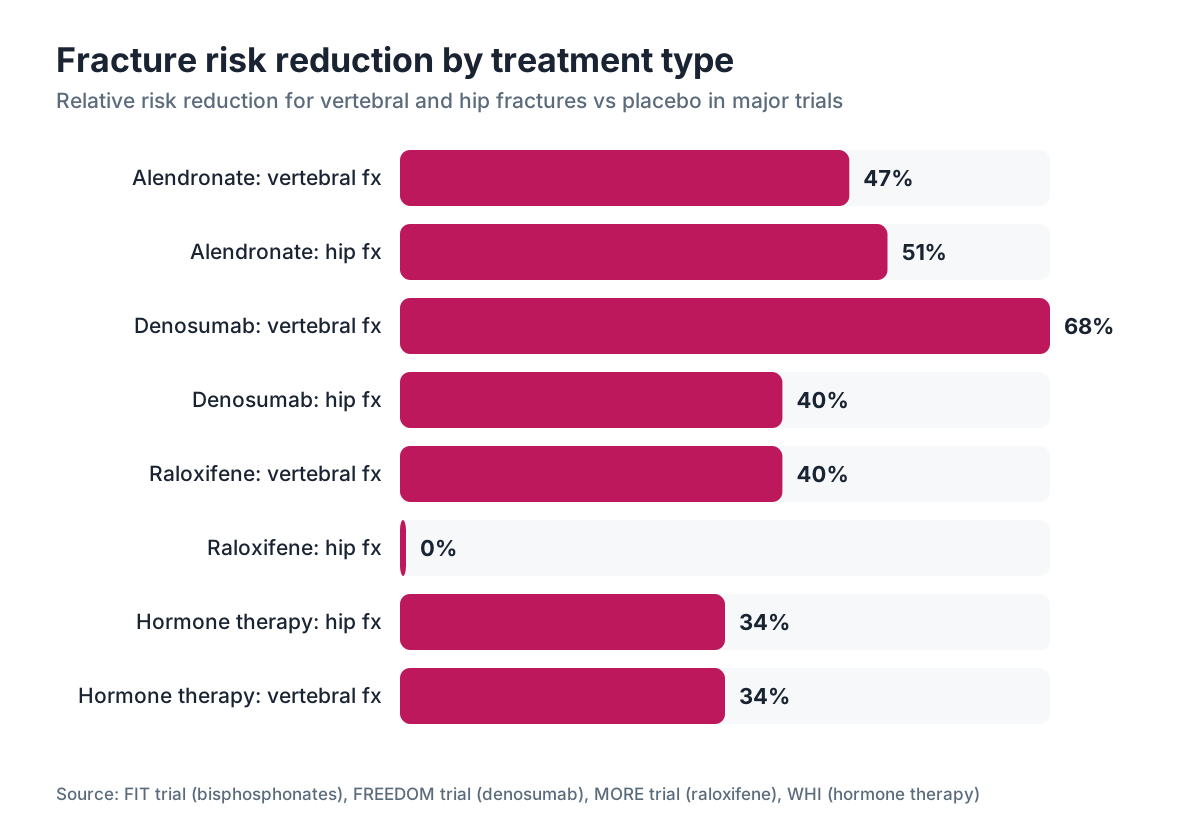
Bisphosphonates have been used since the 1990s and have a mountain of fracture-reduction data behind them. Alendronate (Fosamax), the most prescribed, reduces vertebral fracture risk by about 47% and hip fracture risk by about 51% in women with osteoporosis over three years in the original FIT trial [2]. Those are real numbers and they matter.
The problems emerge with longer use. The FDA issued a safety communication in 2010 noting an increased risk of atypical subtrochanteric and diaphyseal femur fractures with bisphosphonate use, particularly after five or more years [3]. These fractures are called "atypical" because they happen without trauma, often with just a normal step, and they occur in the shaft of the femur rather than the hip joint, which is not where osteoporotic fractures usually happen. Bisphosphonate-suppressed bone has less micro-crack repair capacity, which is likely the mechanism. The irony is hard to miss.
The absolute risk is low. The FDA's 2010 review estimated the risk of atypical femur fracture at roughly 2 per 10,000 patient-years for women on bisphosphonates five or more years, compared to a background rate of about 1 per 10,000 [3]. That small absolute risk has to be weighed against the fractures prevented. For women with very high fracture risk, the math usually still favors treatment. For women with borderline bone density who were prescribed a bisphosphonate almost reflexively, the math is worth reconsidering.
Osteonecrosis of the jaw (ONJ) is another documented but rare risk, most commonly seen in cancer patients getting intravenous bisphosphonates at much higher doses than osteoporosis dosing. With oral bisphosphonates at standard doses, the risk is estimated at somewhere between 1 in 10,000 and 1 in 100,000 [4]. Dental procedures, particularly extractions, are the typical trigger. Dentists should always know if a patient is on bisphosphonates.
Oral bisphosphonates also demand a specific ritual: taken on an empty stomach, with a full glass of water, staying upright for at least 30 minutes. The esophageal irritation when this is not followed correctly is not minor. The FDA has received reports of esophageal ulcers and esophageal cancer, though the causal relationship is debated [3]. The inconvenience is real, and it affects adherence in ways that matter clinically.
Why is denosumab considered high risk if you stop taking it?
Denosumab (Prolia) is a twice-yearly injection that many women prefer over weekly pills, and it does produce good bone density numbers. The FREEDOM trial showed it reduced vertebral fracture risk by 68% and hip fracture risk by 40% over three years [5]. But the discontinuation story is one the prescribing conversation often glosses over.
When you stop denosumab, osteoclast activity rebounds fast. The bone density gains made during treatment reverse within 12 to 24 months, and that reversal can be explosive. Multiple case series and a formal analysis published in the Journal of Bone and Mineral Research documented that some women experience multiple spontaneous vertebral fractures after stopping, even after just one or two doses [6]. The European Medicines Agency updated its guidance in 2018 to warn that treatment discontinuation should always be followed by a transition to an antiresorptive drug, typically a bisphosphonate, to prevent this rebound [6].
The practical implication is significant. Denosumab is a drug you cannot simply stop when you decide you've been on it long enough. Once you start, you are committed to a transition plan. For women who travel frequently, who struggle with medical appointments, or who have limited access to specialty care, that is a real constraint worth thinking through before the first injection.
Women exploring their options through a telehealth platform like WomenRx sometimes ask about denosumab as part of broader hormone and bone health discussions. The right answer is always the same: understand the exit strategy before you enter.
Denosumab also suppresses immunity to some degree (it affects RANK ligand signaling in immune cells as well as bone), and serious infections including skin infections, endocarditis, and urinary tract infections were reported at higher rates in the FREEDOM trial compared to placebo [5]. The absolute numbers were still small, but women with recurrent infections or compromised immune function should discuss this explicitly.
What are the dangers of raloxifene (Evista) for women?
Raloxifene carries an FDA black box warning for increased risk of fatal stroke [7]. That is the highest level of warning the FDA issues, and it is on the label in plain language. In the MORE trial (Multiple Outcomes of Raloxifene Evaluation), women taking raloxifene had a relative risk of fatal stroke 49% higher than placebo, though the absolute risk increase was about 0.7 per 1,000 woman-years [7]. Low absolute risk, but a real signal, and fatal means fatal.
The deep vein thrombosis and pulmonary embolism risk is about 3-fold higher than with placebo, which is similar to what you see with oral estrogen [7]. Women with a personal or family history of clotting disorders should not take raloxifene.
Raloxifene was positioned partly as a breast-cancer-sparing alternative to estrogen-based therapies. It does reduce the risk of estrogen receptor-positive invasive breast cancer, and the FDA approved it for that indication as well as osteoporosis. For a woman whose primary concern is breast cancer risk and who has low but not catastrophic fracture risk, there is a real logic to it. But it is not the free lunch it sometimes gets sold as. It makes hot flashes worse, not better, which makes it a poor choice during the acute years of perimenopause when those symptoms are most intense.
Raloxifene also does not protect the hip as reliably as bisphosphonates. The MORE trial showed clear vertebral fracture reduction but did not show statistically significant reduction in hip fractures [7]. Hip fractures are the fractures most associated with mortality in older women, so that gap matters.
For women already on hormone replacement therapy, raloxifene is generally not added on top. The competing tissue actions get complicated and the clinical evidence for combination use is limited.
How do these drugs compare to hormone therapy for bone health?
This question comes up constantly and the answer is cleaner than people expect. Estrogen is the most physiologically appropriate tool for preventing bone loss in menopausal women because bone loss in menopause is caused by estrogen withdrawal in the first place. The Women's Health Initiative showed hormone therapy reduced hip fracture risk by 34% and vertebral fracture risk by about 34% as well [8]. The effect starts quickly and works across the whole skeleton.
Estrogen also treats hot flashes, supports cardiovascular health in the right timing window, maintains vaginal tissue, and improves sleep, none of which bisphosphonates or raloxifene do. For women who are already good candidates for hormone replacement therapy, the bone benefit is essentially built in and does not require a separate drug with a separate risk profile.
The Menopause Society (NAMS) states in its 2023 position statement that hormone therapy is appropriate for bone protection in women under 60 or within 10 years of menopause, and that the benefit-risk ratio for these women is generally favorable [9]. The estrogen patch delivers estrogen transdermally, which avoids first-pass liver metabolism and appears to carry a lower clot risk than oral estrogen, making it relevant for women who want bone protection without the VTE risk that overlaps with raloxifene's profile.
Progesterone added to estrogen therapy has some evidence for additional bone-building effects beyond what estrogen alone provides, though the magnitude is modest and this is not the primary reason progesterone is prescribed.
The tradeoffs are real. Hormone therapy is not appropriate for women with certain hormone-sensitive cancers, recent cardiovascular events, or unexplained vaginal bleeding. For women past 60 who are not already on HRT and who have documented osteoporosis with high fracture risk, bisphosphonates remain standard of care despite the risks outlined above. The point is simply that the conversation should include all options.
Are there bone density drugs that are safer or better tolerated?
Yes, and the comparison is worth having. Teriparatide (Forteo) and abaloparatide (Tymlos) are anabolic agents, meaning they actually build new bone rather than just slowing its breakdown. They are generally reserved for severe osteoporosis or treatment failure because they are expensive (teriparatide costs roughly $2,500 to $3,500 per month without insurance coverage) and self-injected daily [10]. They cannot be used for more than 2 years. But the mechanism is fundamentally different and the brittle-bone concern from long-term osteoclast suppression does not apply.
Romosozumab (Evenity) is a newer injectable that inhibits sclerostin, a protein that normally slows bone formation. It has both anabolic and antiresorptive effects. The catch: it carries a black box warning for increased risk of heart attack and stroke, and should not be used in women who have had a heart attack or stroke in the previous year [10]. So it trades one risk profile for another.
For women with early, mild bone loss rather than established osteoporosis, the evidence for lifestyle interventions is stronger than is usually communicated. Weight-bearing exercise, adequate dietary calcium (around 1,200 mg per day for women over 50, from food and supplements combined), vitamin D in the 1,500 to 2,000 IU per day range for most deficient women, and smoking cessation all have documented effects on fracture risk [1]. These are not substitutes for medication in severe cases, but they are also not nothing.
What does the FDA actually say about these bone drugs' risks?
The FDA safety communications on bisphosphonates are detailed and worth reading directly. The 2010 safety communication on atypical femur fractures recommended that patients on long-term bisphosphonate therapy have a risk-benefit assessment periodically, and acknowledged that a "drug holiday" of 2 to 3 years after 5 years of use is reasonable for lower-risk women [3]. That communication was followed by label updates across the bisphosphonate class.
On denosumab, the Prolia prescribing information includes explicit language: "After discontinuation of Prolia, bone mineral density returns toward pre-treatment levels and fracture risk may increase." [5] That is a direct quote from the labeling. Women who are considering stopping denosumab should read that language and ask their prescriber specifically what the transition plan is.
On raloxifene, the Evista prescribing information states: "Evista increased the risk of fatal stroke. In a clinical trial of postmenopausal women with documented coronary heart disease or at increased risk for major coronary events, 59 raloxifene-treated women had a fatal stroke compared to 39 placebo-treated women." [7] That is the FDA's own black box warning language. The absolute numbers are small, but the relative risk is real and the word "fatal" is in the label.
The FDA's MedWatch database and the agency's published safety communications are public records. Any woman starting one of these drugs can look up the label and the history of safety actions. That is not alarmist. That is using the system the way it was designed to be used.
Who should avoid each of these three drugs?
Bisphosphonates should be used with significant caution (or avoided) in women with chronic kidney disease, specifically an estimated GFR below 35 mL/min [4]. The drugs accumulate in bone and kidneys when renal clearance is impaired. Women with active esophageal disease, Barrett's esophagus, or inability to remain upright for 30 minutes should not take oral bisphosphonates; IV zoledronic acid once yearly is often used as an alternative in those cases. Women who are pregnant or who might become pregnant should not take them at all, as the drugs incorporate into bone and have a very long half-life.
Denosumab should be avoided in women with hypocalcemia (low blood calcium), which must be corrected before starting. Women with serious active infections are at higher risk for worsening. Anyone without a clear plan for follow-up care and transition management after stopping should think very carefully before starting.
Raloxifene is contraindicated in women with active or past deep vein thrombosis or pulmonary embolism, and in women who are or might become pregnant. The fatal stroke signal means it should be used with extreme caution in women with known cardiovascular disease, a history of atrial fibrillation, or other stroke risk factors. It is not appropriate for women who are currently experiencing hot flashes or vasomotor symptoms, as it reliably makes those worse.
Women in early menopause who are still symptomatic are almost always better served by addressing the root hormonal cause of bone loss through estrogen therapy rather than layering on a drug that treats the symptom (low bone density) while making their quality of life worse (worsening hot flashes from raloxifene) or adding a new risk (denosumab's discontinuation trap). This is where the when does menopause start timeline matters: the closer a woman is to the onset of menopause, the stronger the case for estrogen-based approaches.
What questions should you ask your doctor before starting a bone density drug?
The single most useful question is: what is my 10-year fracture probability? The FRAX tool, maintained by the University of Sheffield and used by most osteoporosis guidelines, calculates fracture risk from bone density plus clinical risk factors [1]. The Bone Health and Osteoporosis Foundation historically used a 10-year hip fracture risk above 3% or major osteoporotic fracture risk above 20% as thresholds for considering treatment. Your T-score alone does not tell you whether you should be on medication.
After that, ask: which drug are you recommending and what are the specific risks for someone with my history? Ask about alternatives, including whether you are a candidate for hormone therapy if you have not already had that conversation. If your physician recommends a bisphosphonate, ask about the drug holiday plan after five years. If they recommend denosumab, ask what happens when you want to stop, and what the transition will be.
Ask about monitoring. Repeat bone density tests (DEXA scans) are typically done every one to two years while on treatment [1]. If your bone density is not improving after two years of a bisphosphonate, the drug is either not being absorbed correctly (usually a compliance or administration issue) or you may need a different class.
For women using a service like WomenRx to manage their hormonal health through menopause age and beyond, bone health should be part of the conversation alongside hormones, not a separate track managed only by a separate specialist. The decisions interact directly. Estrogen therapy and bisphosphonates can be used together in some cases, but that is a decision requiring a clinician who understands both.
Can GLP-1 medications like semaglutide affect bone density?
This is a legitimate concern that is getting real research attention now. Semaglutide and other GLP-1 receptor agonists cause significant weight loss, and body weight is one of the major determinants of bone density. Heavier bodies put more mechanical load on bone, which stimulates bone formation. When weight drops by 15 to 20%, bone density can decline as a secondary effect.
The STEP trials of semaglutide, which are the major efficacy and safety trials for semaglutide for weight loss, did not show significant bone density changes at one to two years in adults without diabetes, but the trials were not powered for fracture outcomes and did not specifically study postmenopausal women with pre-existing low bone mass [11]. Longer-term data and data in higher-risk women are still accumulating.
Tirzepatide (Mounjaro, Zepbound), covered in semaglutide vs tirzepatide comparisons, has a similar theoretical concern. The SURMOUNT trials did not report bone density as a primary endpoint [12].
For postmenopausal women on GLP-1 medications who already have osteopenia or osteoporosis, this means bone density monitoring should be explicitly part of the plan. Adequate calcium and vitamin D intake, continued weight-bearing exercise (which the GLP-1-mediated fat loss should make easier, not harder), and regular DEXA monitoring are all reasonable precautions. This is not a reason to avoid GLP-1 medications, but it is a reason to be proactive about bone health while on them.
Frequently asked questions
What is the most dangerous bone density drug currently prescribed?
Raloxifene (Evista) carries the most serious FDA warning: a black box for fatal stroke. Denosumab (Prolia) has arguably the most consequential stopping risk, with documented rebound vertebral fractures after discontinuation. "Most dangerous" depends on the individual's risk profile, but these two have the most serious warnings on their FDA labels.
Can you stop taking a bisphosphonate suddenly?
Generally yes, stopping bisphosphonates does not cause immediate rebound fractures, unlike denosumab. The drugs stay in bone tissue for years after stopping, which is why a planned "drug holiday" after five years is a recognized strategy for lower-risk women. Your bone density will gradually decline after stopping, but not in the rapid or explosive way seen with denosumab discontinuation.
What happens to your bones if you stop denosumab without transitioning to another drug?
Multiple vertebral fractures can occur within 6 to 12 months. Bone density rebounds rapidly when denosumab's RANK ligand blockade wears off, and the osteoclast activity that was suppressed comes back at above-normal levels. The European Medicines Agency and FDA labeling both address this, recommending transition to a bisphosphonate or other antiresorptive after stopping denosumab.
Is alendronate (Fosamax) bad for you long term?
Alendronate is well-tolerated by most women for up to five years and has strong fracture-reduction data. The concerns emerge with use beyond five years: atypical femur fracture risk increases, and the benefit of continued suppression of bone remodeling becomes less clear for lower-risk women. The FDA recommends periodic reassessment after five years, and a drug holiday is reasonable for women who started treatment early with moderate bone loss.
Does hormone therapy protect bones as well as bisphosphonates?
Estrogen reduces hip and vertebral fracture risk by about 34% based on the Women's Health Initiative data, comparable to bisphosphonate efficacy. For women under 60 or within 10 years of menopause onset, NAMS considers hormone therapy appropriate for bone protection. The advantage is that estrogen also treats vasomotor symptoms, supports cardiovascular health in the early menopause window, and addresses the actual hormonal cause of the bone loss.
What is an atypical femur fracture and how common is it?
Atypical femur fractures are stress fractures in the shaft (diaphysis) of the femur, not the hip joint, that occur with minimal or no trauma. They are associated with long-term bisphosphonate use, likely because suppressed bone remodeling reduces the skeleton's ability to repair microscopic damage. The FDA estimated the rate at roughly 2 per 10,000 patient-years in women on bisphosphonates for five or more years, compared to about 1 per 10,000 in the general population.
Should I take calcium supplements with bone density drugs?
Adequate calcium matters regardless of which drug you take, but the source matters too. Most experts recommend getting around 1,200 mg per day total from diet plus supplements for women over 50, rather than high-dose calcium supplements alone. High-dose calcium supplements (over 1,000 mg at once) have been associated with cardiovascular risk in some analyses, though the evidence is contested. Food-first calcium is generally preferred.
Can semaglutide cause bone loss?
Weight loss from any cause, including GLP-1 medications like semaglutide, can reduce mechanical loading on bone and lead to modest bone density decreases. The STEP trials did not show significant bone density changes at one to two years, but were not designed to detect bone outcomes. Postmenopausal women with pre-existing bone loss who start GLP-1 medications should ensure adequate calcium and vitamin D intake, maintain weight-bearing exercise, and discuss DEXA monitoring with their provider.
Is raloxifene safer than tamoxifen for bone health?
For osteoporosis, raloxifene is approved and has fracture data; tamoxifen is not approved for osteoporosis though it does have some bone-sparing effects. For breast cancer risk reduction, both are SERMs with broadly similar breast cancer risk reduction. Raloxifene has a better uterine safety profile than tamoxifen (no increased endometrial cancer risk) but carries its own fatal stroke black box warning that tamoxifen does not.
What is a drug holiday from bisphosphonates and should I take one?
A bisphosphonate drug holiday is a planned break, typically 2 to 3 years, after 5 years of treatment for lower-risk women. Because bisphosphonates stay embedded in bone for years, some fracture protection continues during the holiday. The FDA recommends periodic reassessment after 5 years. Women with severe osteoporosis or a prior hip fracture are generally not good candidates for a holiday; those with moderate osteopenia-level bone loss often are.
Are IV bisphosphonates like zoledronic acid safer than oral ones?
They carry the same long-term risks (atypical femur fracture, osteonecrosis of the jaw) and have their own acute risks: about 30% of women experience a flu-like reaction after the first infusion called acute phase response, with fever, joint pain, and myalgia lasting 1 to 3 days. IV administration avoids the esophageal irritation of oral bisphosphonates and works for women who cannot tolerate or comply with weekly pill protocols. Once-yearly zoledronic acid has strong fracture reduction data.
What bone density drugs are safe for women with kidney disease?
Bisphosphonates are generally avoided in women with an estimated GFR below 35 mL/min due to accumulation concerns. Denosumab does not require renal dose adjustment and is often used in women with chronic kidney disease, though hypocalcemia risk is higher in this population and must be carefully managed. Raloxifene also does not require renal adjustment at moderate kidney impairment. The prescribing physician should always review current renal function before any osteoporosis medication.
How long does it take for bone density drugs to show results on a DEXA scan?
Meaningful changes on a DEXA scan typically take 1 to 2 years. Repeat DEXA testing is usually done after 1 to 2 years of treatment to assess response. Bone density numbers on DEXA may not fully capture fracture risk reduction, since some drugs (particularly teriparatide) improve bone quality more than density numbers suggest. A flat or declining DEXA on treatment warrants a conversation about adherence, absorption, or switching drug class.
Sources
- Black DM et al., Fracture Intervention Trial (FIT), JAMA 1996
- FDA Drug Safety Communication: Safety update for osteoporosis drugs, bisphosphonates, and atypical fractures (2010)
- American Association of Oral and Maxillofacial Surgeons: medication-related osteonecrosis of the jaw position paper
- Cummings SR et al., FREEDOM trial, NEJM 2009; and Prolia (denosumab) FDA prescribing information
- Anastasilakis AD et al., Journal of Bone and Mineral Research 2017; European Medicines Agency Prolia guidance update 2018
- Evista (raloxifene) FDA prescribing information, black box warning and MORE trial data
- Women's Health Initiative Investigators, JAMA 2002 and follow-up reports
- The Menopause Society (NAMS) 2023 Hormone Therapy Position Statement
- FDA prescribing information for Forteo (teriparatide), Tymlos (abaloparatide), and Evenity (romosozumab)
- Wilding JPH et al., STEP 1 trial, NEJM 2021
- Jastreboff AM et al., SURMOUNT-1 trial (tirzepatide), NEJM 2022
- National Institutes of Health Osteoporosis and Related Bone Diseases National Resource Center