What are the first signs of menopause? A symptom guide
TL;DR: The first signs of menopause almost always show up during perimenopause, which starts on average 4 years before your final period. Irregular cycles are usually sign number one. Hot flashes, night sweats, broken sleep, mood shifts, and vaginal dryness follow. Most women notice the first changes in their mid-40s, though some start earlier.
What is actually the very first sign of menopause most women notice?
For most women, the first sign is a change in the menstrual cycle, not a hot flash. Periods turn irregular: shorter, longer, heavier, lighter, sometimes skipped altogether. This phase is called perimenopause, and it is the body's transition toward menopause rather than menopause itself.
Menopause is defined as 12 consecutive months without a period. Everything before that 12-month mark is perimenopause [1]. So when women ask about the "first signs of menopause," they are almost always describing the first signs of perimenopause, the stage that produces nearly every symptom people associate with the transition.
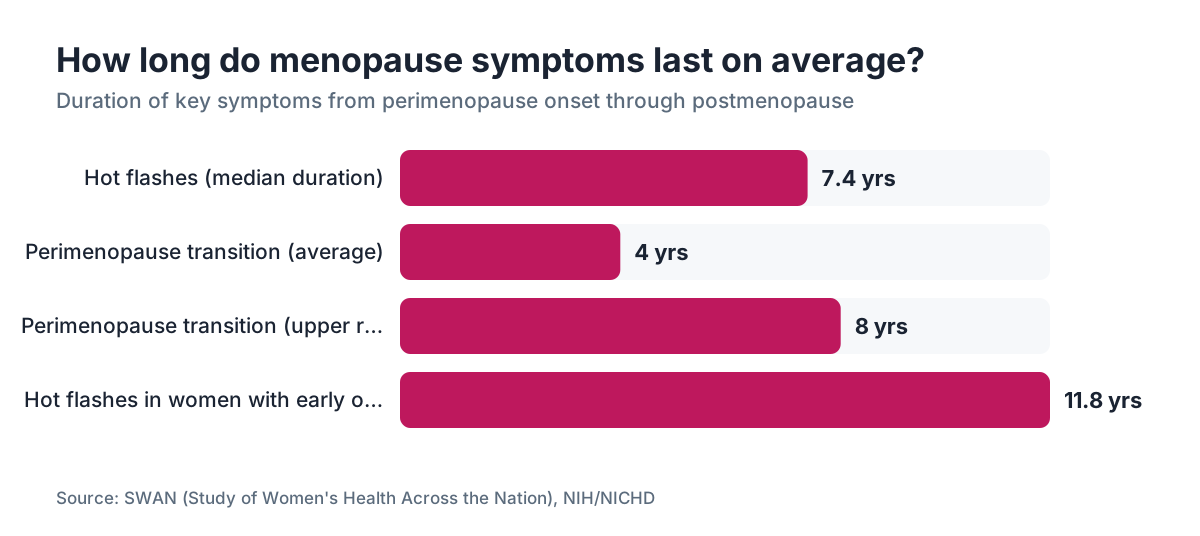
The North American Menopause Society (NAMS) says perimenopause usually begins in a woman's mid-to-late 40s and lasts an average of 4 to 8 years, though the range is wide [2]. Some women enter it in their late 30s. A small number sail through with barely a symptom. Most do not.
Cycle irregularity happens because estrogen and progesterone start fluctuating instead of following the steady rhythm of the reproductive years. Ovulation gets inconsistent. When you do not ovulate, progesterone does not rise, and that imbalance shifts your period's timing, flow, and feel. If your cycles ran like clockwork and suddenly turned unpredictable, that is the signal worth watching. There is more on what drives this timing in our guide to perimenopause age.
How early do the first symptoms of perimenopause and menopause typically appear?
The average age at natural menopause in the United States is 51 [3]. Count back 4 to 8 years and most women land somewhere between the early and mid-40s for the start of symptoms. But "average" hides a lot.
About 1% of women reach menopause before age 40, called primary ovarian insufficiency. Another 5% reach it before 45, classified as early menopause [4]. Smoking speeds the timeline by roughly 1 to 2 years. Surgical removal of both ovaries causes immediate menopause at any age. Chemotherapy and some autoimmune conditions can pull the transition earlier too.
Genetics matters more than most people realize. If your mother entered perimenopause in her early 40s, there is a decent chance you will too, though the research on how strong that heritability runs is still incomplete.
Race and ethnicity shape the experience as well. The Study of Women's Health Across the Nation (SWAN) followed over 3,000 women for more than two decades and found that Black women reported more frequent and more bothersome hot flashes than white women, and that Hispanic and Black women reached menopause slightly earlier on average than white or Asian women [5]. These are group-level differences, not predictions for any one person. Our full breakdowns of menopause age and when does menopause start go deeper on the timeline.
What are the most common early symptoms women experience?
Here are the symptoms that show up earliest and most often, roughly in the order they tend to arrive:
Cycle changes come first for the majority of women. Gaps between periods may shorten before they eventually stretch out. Heavy flooding periods can happen. Spotting between cycles is common.
Hot flashes affect up to 75% of women in perimenopause and menopause [2]. A hot flash is a sudden rush of heat, often spreading from the chest up to the face and neck, sometimes with flushing and sweating, then a chill. They last 1 to 5 minutes on average. The SWAN study found hot flashes can begin years before the final period and last a median of 7.4 years in women who get them [5].
Night sweats are hot flashes during sleep. They are often more disruptive than daytime flashes because they fragment your sleep without always waking you fully, leaving you wrecked the next day with no clear reason why.
Sleep disruption often arrives with night sweats but can show up on its own. Falling asleep takes longer. Waking at 3 or 4 a.m. and being unable to drift back is a specific, common complaint. Estrogen influences several sleep-regulating pathways, so its decline hits sleep directly, beyond just temperature.
Mood changes including irritability, low mood, anxiety, and a shorter fuse get reported often in perimenopause. The 2023 NAMS position statement on menopause and mental health says the perimenopause window carries a 2- to 4-fold higher risk for a new depressive episode compared with the premenopausal years [6].
Brain fog and memory lapses rank among the most alarming symptoms for many women because they seem to come from nowhere. Word-finding trouble and forgetting why you walked into a room are the classic descriptions. Current evidence suggests these changes are mostly temporary and improve once the full transition is complete [7].
Vaginal and vulvar changes tend to build more slowly. Tissues thin, lubrication drops, and sex can turn uncomfortable. This is now called genitourinary syndrome of menopause (GSM), and it affects an estimated 27% to 84% of postmenopausal women, though many never mention it to a doctor [8].
How do you know if an irregular period is menopause or something else?
Sort this out carefully, because irregular bleeding has other causes that need ruling out. Thyroid dysfunction, polycystic ovary syndrome (PCOS), uterine fibroids, polyps, and sometimes uterine cancer all produce irregular or heavy bleeding. Age alone is not enough to pin symptoms on perimenopause.
Your clinician can order an FSH (follicle-stimulating hormone) level. As ovarian function declines, the pituitary pumps out more FSH trying to wake the ovaries up. An FSH above 25 to 30 IU/L on two measurements at least a month apart, alongside irregular cycles, is consistent with perimenopause [1]. But FSH swings wildly during this stage, so a single normal reading does not rule it out.
Any bleeding after 12 straight months without a period needs evaluation. That is postmenopausal bleeding, and the American College of Obstetricians and Gynecologists recommends a prompt workup to rule out endometrial cancer [9]. Do not write it off as "the menopause coming back."
A pelvic ultrasound to check endometrial thickness, and sometimes an endometrial biopsy, are standard next steps for unusual bleeding, especially heavy patterns. Getting this checked is not overreacting. It is exactly the right move.
What do early hot flashes feel like and how are they different from anxiety?
Hot flashes and anxiety can feel nearly identical from the inside: heart racing, sudden warmth, a sense that something is off. They share real physiology too, particularly around the autonomic nervous system and the amygdala's response to estrogen withdrawal.
A classic hot flash has telltale features. It starts in the chest or abdomen and moves up. It runs brief, usually under 5 minutes. It brings visible flushing others might notice, then a chill afterward. Anxiety tends toward diffuse tension and a racing, worrying mind, and it does not reliably follow that heat-up, flush, chill sequence.
Plenty of women have both. The perimenopausal brain is genuinely more reactive to stress, and anxiety that used to feel manageable can turn destabilizing in this window. If you are not sure which you are dealing with, a symptom diary tracking time of day, triggers, duration, and what you felt gives any clinician a clearer read.
Some medications, hyperthyroidism, carcinoid syndrome, and certain cancers also cause flushing and sweating. If hot flashes appear abruptly with no other perimenopausal symptoms, or in a much younger woman, those alternatives deserve a look.
Can your period get heavier before it stops?
Yes, and it catches many women off guard because they expect periods to fade quietly. In the early perimenopause years, cycles can turn heavier and more erratic before they finally taper off.
The mechanism is simple. When ovulation is erratic, progesterone stays low. Estrogen keeps building the uterine lining without the progesterone that normally keeps that growth in check. You get a thicker lining that sheds in a heavier, sometimes clottier flow [10].
Heavy bleeding here is common. It is also not automatically dangerous. But one threshold is worth memorizing: soaking through a pad or tampon every hour for two or more hours in a row, or passing clots bigger than a quarter, is the clinical marker for menorrhagia and deserves a medical look [9]. Iron deficiency anemia is a real result of heavy perimenopausal bleeding, and it slips by undetected all the time. If you are tired, pale, short of breath, or your heart pounds when you climb stairs, ask for a complete blood count.
Progesterone, body-identical or synthetic, is one of the first tools clinicians reach for to manage this heavy-bleeding phase, because it opposes estrogen's effect on the uterine lining.
What early menopause symptoms affect sleep and mood?
Sleep and mood are so tightly wound together during perimenopause that pulling cause from effect is often impossible. Night sweats break your sleep, poor sleep drags your mood down, and falling estrogen independently hits both sleep architecture and the brain's serotonin signaling.
Estrogen modulates the serotonergic and noradrenergic systems. As it drops and fluctuates, many women describe a shorter fuse, crying more easily, or a low-grade sadness that feels out of character. The NAMS 2023 position statement is blunt on this: "The perimenopause transition is associated with an increased risk for first onset of major depressive disorder and clinically significant depressive symptoms" [6]. That is a real biological vulnerability, not a character flaw.
Sleep architecture shifts on its own, apart from mood. Estrogen helps hold slow-wave sleep and tamps down REM disturbance. Its decline means lighter sleep across the board. Many perimenopausal women describe waking between 3 and 5 a.m. and lying there with a racing mind. Some say their anxiety shows up before they are even fully awake.
If sleep and mood are your loudest symptoms, they deserve their own treatment conversation, separate from or alongside any hot flash discussion. Cognitive behavioral therapy for insomnia (CBT-I) has strong evidence for sleep. Hormone therapy addresses the hormonal root. Both have a place.
WomenRx providers often see women whose sleep and mood symptoms are the first thing they mention, before hot flashes ever start, which is why we treat this transition as a hormonal brain event as much as a reproductive one.
What is the difference between perimenopause symptoms and menopause symptoms?
Perimenopause is the transition. Menopause is the endpoint. The symptoms overlap heavily, but their character can differ.
During perimenopause, estrogen and progesterone fluctuate, sometimes hard. Symptoms turn unpredictable. A good week, then a brutal one. Hot flashes that vanish for a month and come back worse. Mood swings that loosely track a still-present cycle. That volatility is itself a signature of perimenopause.
After the 12-month mark (confirmed menopause), estrogen settles at a lower, steadier baseline. For some women, hot flashes and night sweats actually get worse in the first year or two after menopause before easing. For others, the shift to a lower-but-stable estrogen level finally quiets the chaos.
Genitourinary symptoms (vaginal dryness, urinary frequency, recurrent UTIs) often grow more prominent after menopause, because they are driven by sustained low estrogen rather than the up-and-down of perimenopause. They also do not resolve without treatment, unlike hot flashes, which fade over time for most women.
The practical takeaway: if you are still cycling, even irregularly, you are perimenopausal. Treatment decisions, especially around hormone therapy, look a little different in perimenopause than in established postmenopause. Our detailed guide on menopause covers that full picture.
How do you know if hot flashes and other symptoms are severe enough to treat?
The bar for treatment is not severity by some outside standard. It is your quality of life. If symptoms are wrecking your sleep, your work, your relationships, or your sense of yourself, that is enough.
The Menopause Rating Scale and the Greene Climacteric Scale are validated tools clinicians use to score symptom burden. But the most useful question is simpler: are these symptoms getting in the way of your daily life? If yes, treatment is worth discussing.
Menopause hormone therapy (MHT, also called HRT) is the most effective treatment for vasomotor symptoms (hot flashes and night sweats) and genitourinary symptoms [2]. The Endocrine Society's 2015 clinical practice guideline confirms that for healthy women under 60, or within 10 years of menopause onset, the benefits of MHT for symptom management generally outweigh the risks [1]. The 2022 NAMS hormone therapy position statement says the same, and adds that the old fears from the Women's Health Initiative were largely misapplied to younger, symptomatic women [2].
Non-hormonal options with real evidence include paroxetine 7.5 mg (the only FDA-approved non-hormonal drug for hot flashes), fezolinetant (FDA-approved in 2023 as Veozah), venlafaxine, gabapentin, and oxybutynin for urinary symptoms [11]. CBT-I for sleep. SSRIs and SNRIs for mood.
Local vaginal estrogen (cream, ring, tablet) treats GSM with minimal systemic absorption and suits most women, including many with a history of breast cancer [8].
For women dealing with real weight changes alongside their symptoms, the conversation sometimes extends to hormone replacement therapy and whether semaglutide for weight loss fits. Menopause-related weight gain and metabolic shifts are real, and they tangle with every other symptom.
What symptoms are not actually caused by menopause but often get blamed on it?
Not everything that shows up in your late 40s belongs to menopause. Joint pain is a good example. Perimenopausal women do report more aches, and estrogen has anti-inflammatory properties, so there is a connection. But osteoarthritis, autoimmune arthritis, and hypothyroidism all pick up in this age group and get mistaken for menopausal changes.
Hair thinning gets pinned on menopause constantly. Androgenetic alopecia (female-pattern hair loss) is androgen-driven and can worsen as the estrogen-to-androgen ratio shifts. But thyroid disease, iron deficiency, and telogen effluvium (stress-related shedding) all cause hair loss too, and each needs testing before you blame menopause.
Weight gain around the midsection is one of the most reported changes, and menopause genuinely shifts fat storage toward visceral fat. But how much of that change is hormonal versus lifestyle and aging is hard to tease apart. Sleep loss alone drives appetite hormones the wrong way (ghrelin up, leptin down) in ways that add weight independent of estrogen.
Urinary urgency and frequency are real genitourinary symptoms of menopause, but a UTI needs ruling out first, every single time.
The honest version: perimenopause causes real symptoms through real mechanisms, and it also lands in an age window when several other conditions become more common. A real workup matters.
What tests can confirm that your symptoms are from menopause?
No single test definitively diagnoses perimenopause, which frustrates a lot of women. The diagnosis is mostly clinical, built from your age, your symptom pattern, and your menstrual history.
Blood tests that can support the picture:
| Test | What it measures | Perimenopause signal | |---|---|---| | FSH | Pituitary hormone; rises as ovaries decline | Consistently above 25-30 IU/L suggests perimenopause/menopause [1] | | Estradiol | Main estrogen form | Low and/or fluctuating; not diagnostic alone | | AMH | Anti-Mullerian hormone; ovarian reserve | Declining AMH predicts proximity to menopause [12] | | TSH | Thyroid function | Rules out thyroid as a cause of symptoms | | CBC | Complete blood count | Checks for anemia from heavy bleeding |
AMH testing is used more and more to estimate how far a woman is from menopause, especially for women in their late 30s or early 40s who want a clearer read. Insurance rarely covers it for this purpose, and interpretation needs someone who knows the reference ranges.
A bone density test (bone density test) is recommended for all postmenopausal women and for perimenopausal women with risk factors. Estrogen protects bone, and its decline speeds bone loss sharply in the years around menopause. The Bone Health and Osteoporosis Foundation recommends a DXA scan for all women at age 65, and earlier for postmenopausal women with risk factors [13].
If you are lining up testing through a telehealth provider like WomenRx, most of the above can be ordered remotely and done at a local lab.
What should you do when you notice the first signs?
The single most useful move is to start tracking. A symptom diary does not need to be fancy. Note your period dates, any hot flashes (time of day, duration, severity), sleep quality, and mood. After 2 to 3 months you will have a picture far more useful to a clinician than "I've been having symptoms."
Bring that record to a provider who takes the conversation seriously. General practitioners often have limited menopause training. A menopause specialist, a gynecologist comfortable with hormone management, or a telehealth platform focused on women's hormones can give you a fuller evaluation.
Do not wait until symptoms are debilitating. The window of maximum benefit from hormone therapy, for cardiovascular and bone protection more than symptoms, is widely believed to be the 10 years after menopause or before age 60 [1]. Starting the conversation early keeps your options open.
On lifestyle: resistance training is the most evidence-backed thing you can do to hold onto muscle mass, bone density, and metabolic function through menopause. Sleep hygiene matters more than most people actually practice it. Alcohol worsens hot flashes and wrecks sleep. None of this is complicated. Most of it takes steady effort that gets harder when you are exhausted and symptomatic, which is exactly the moment to ask for help.
The first signs of menopause are not a warning to dread. They are information. The women who do best in this transition are usually the ones who caught the signals early, got a real workup, and made decisions from knowledge instead of waiting years to figure out what was happening.
Frequently asked questions
What are the first signs of menopause at 40?
At 40, the most common early signs are cycle irregularity, new hot flashes, and broken sleep. Menopause before 45 counts as early and warrants a full workup including FSH, thyroid, and ovarian reserve testing. About 5% of women reach menopause before 45. If you are 40 with these symptoms, do not assume it is too early to investigate.
Can you have menopause symptoms but still have regular periods?
Yes. Hot flashes, mood changes, and sleep disruption can come before any cycle irregularity, especially in early perimenopause. Estrogen starts fluctuating before periods look visibly irregular. Some women report classic vasomotor symptoms for a year or more before their cycles shift. A normal-looking cycle does not rule out perimenopause.
What is the earliest age menopause symptoms can start?
Perimenopause symptoms can technically begin in the late 30s, though that is less common. Primary ovarian insufficiency (premature menopause) can happen at any age, even in the 20s and 30s. Most women start noticing symptoms in their early to mid-40s. The SWAN study documented measurable hormonal changes in some women as early as age 40 to 42.
Is brain fog a first sign of menopause?
Brain fog, word-finding trouble, and memory lapses are real and common in perimenopause, though they usually follow cycle changes and hot flashes rather than lead. SWAN research showed cognitive changes track with the hormonal swings of perimenopause and tend to improve after the full transition. They should still be checked to rule out depression, thyroid disease, or sleep apnea.
How long do the first signs of menopause last before your period stops?
Perimenopause, the phase that produces most symptoms, lasts an average of 4 years but ranges from 1 year to more than 10. The SWAN study found women who entered perimenopause earlier tended to have longer transitions. Vasomotor symptoms (hot flashes and night sweats) can persist a median of 7.4 years, continuing well past the final period.
Do the first signs of menopause include weight gain?
Weight gain, especially around the abdomen, is common in perimenopause. Estrogen influences fat distribution, and its decline tends to push fat storage toward visceral fat. Sleep loss and stress make it worse. But age-related muscle loss and lifestyle factors contribute a lot too. For most women, menopause is tied to the change in distribution more than a large jump in total weight.
Can stress cause symptoms that look like perimenopause?
Yes, and it creates real diagnostic confusion. Chronic stress raises cortisol, which can suppress reproductive hormones and disrupt cycles. Anxiety produces physical symptoms that overlap with hot flashes. Stress-triggered thyroid dysfunction can mimic many perimenopausal symptoms. A blood panel with FSH, TSH, and estradiol helps separate stress-driven changes from actual ovarian decline.
What does a first hot flash feel like?
Most women describe a sudden wave of heat starting in the chest or upper abdomen, rising to the neck and face, sometimes with visible flushing and sweating, lasting 1 to 5 minutes, and ending in a chill. First hot flashes are often milder and shorter than later ones. Some women mistake them for anxiety attacks at first because of the racing heart that can come with them.
Are night sweats always a sign of menopause?
Night sweats are a common early sign of perimenopause, but they have other causes: infections, certain medications (SSRIs, opioids, tamoxifen), lymphoma and other cancers, hyperthyroidism, and sleep apnea. If night sweats are your only symptom, especially with fever, weight loss, or swollen lymph nodes, get a broader workup before blaming hormones.
Should I see a doctor at the first signs of menopause?
You do not need a doctor the moment you notice one irregular period. But if symptoms are hitting your sleep, mood, or daily function, or if you are under 45, that warrants a visit sooner rather than later. Any unusual or very heavy bleeding, bleeding after 12 straight period-free months, or symptoms that feel unlike typical perimenopause should be evaluated promptly.
What is the difference between the first signs of perimenopause and menopause?
The symptoms overlap because perimenopause is the transition that produces them. Perimenopause begins years before the final period; menopause is the point defined as 12 months without a period. In perimenopause, symptoms feel more volatile and up-and-down. After confirmed menopause, vasomotor symptoms may persist but tend to stabilize, while genitourinary symptoms often grow more prominent without treatment.
Can a blood test confirm perimenopause?
No single blood test confirms it, but FSH above 25 to 30 IU/L on two tests a month apart, alongside irregular cycles and symptoms, is consistent with the transition. FSH alone is unreliable in perimenopause because levels swing. AMH testing can estimate ovarian reserve. TSH should be checked to rule out thyroid disease as a contributing cause.
Does everyone get hot flashes as a first sign of menopause?
No. Roughly 20 to 25% of women go through menopause with minimal or no hot flashes. Cycle irregularity is a more universal first sign. Race and ethnicity influence hot flash frequency and severity, with Black women reporting them more often and more intensely on average, per SWAN data. Genetics, body mass index, and smoking status also affect who gets them and how badly.
What lifestyle changes help with the first signs of menopause?
Resistance training two to three times a week helps hold onto muscle mass and bone density. Cutting alcohol, which triggers hot flashes and wrecks sleep, pays off fast. Consistent sleep and wake times and a cool bedroom help with night sweats. A protein-forward diet supports body composition through metabolic shifts. None of these replace hormone therapy for severe symptoms, but they matter alongside any treatment.
Sources
- Endocrine Society, Clinical Practice Guideline: Menopause and Perimenopause (2015)
- North American Menopause Society (NAMS), Menopause Practice: A Clinician's Guide and 2022 Hormone Therapy Position Statement
- National Institute on Aging, Menopause
- Office on Women's Health, U.S. Department of Health and Human Services, Menopause
- Study of Women's Health Across the Nation (SWAN), published findings via NIH/NICHD
- North American Menopause Society, 2023 Position Statement on Menopause and Mental Health
- Maki PM et al., SWAN cognitive substudy findings, published in Menopause journal
- Portman DJ, Gass ML; Vulvovaginal Atrophy Terminology Consensus Conference Panel. Genitourinary syndrome of menopause. Menopause. 2014
- American College of Obstetricians and Gynecologists (ACOG), Practice Bulletin on Abnormal Uterine Bleeding
- Prior JC, Perimenopause: The Complex Endocrinology of the Menopausal Transition, Endocrine Reviews
- U.S. Food and Drug Administration, Veozah (fezolinetant) Approval and Brisdelle (paroxetine) Label
- Dewailly D et al., Anti-Mullerian hormone as a predictor of menopause timing, Human Reproduction Update
- Bone Health and Osteoporosis Foundation, Clinician's Guide to Prevention and Treatment of Osteoporosis