What age does menopause begin, and what's the normal range?
TL;DR: Menopause is a single point in time, confirmed after 12 months with no period. The average age in the US is 51. The normal range runs 45 to 55. Perimenopause, the years of hormonal chaos leading up to it, usually starts in the mid-to-late 40s. Menopause before 40 is premature ovarian insufficiency and affects about 1% of women.
What age does menopause actually begin?
The average age of natural menopause in the United States is 51. The typical range runs from 45 to 55 [1]. Your last period could land a few years on either side of that and still be perfectly normal.
Here is the part that trips up almost everyone. Menopause is not a phase you move through. It is a single point in time, confirmed only in hindsight, after you have gone 12 full months without a period [2]. Everything you actually feel, the hot flashes, the wrecked sleep, the periods that show up whenever they please, that is perimenopause.
Perimenopause is the transition, and it is where the hormonal mess happens. It usually starts in the mid-to-late 40s, though some women notice changes at 38 or 39. It runs anywhere from two to ten years, with about four years being a reasonable middle estimate [3].
So if you are 47 with wildly irregular periods, you are almost certainly in perimenopause, not menopause. The distinction is not pedantic. It changes how a doctor tests you and what treatment makes sense.
What is the normal age range for menopause?
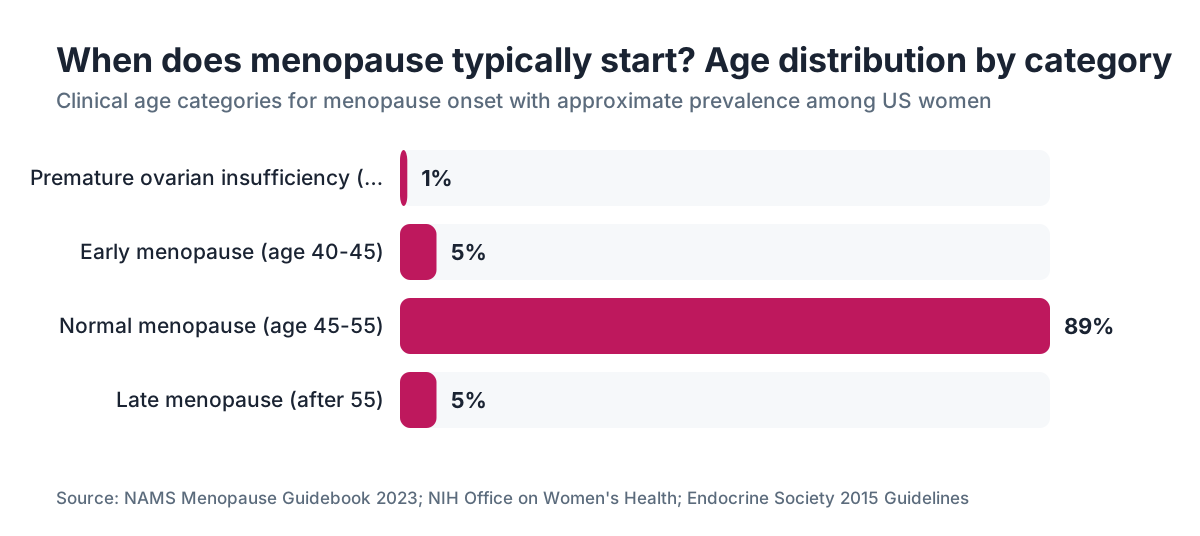
Most clinical guidelines put the normal range at 45 to 55 [1][2]. Roughly 95% of women reach menopause inside that window. The other 5% land earlier or later.
Menopause between 40 and 45 is early menopause. Uncommon, but not rare, affecting around 5% of women. The cause can be genetic, autoimmune, or simply unknown [4].
Menopause before 40 has its own name: premature ovarian insufficiency, or POI. It affects about 1% of women [4]. POI is more than early menopause with an earlier date. The ovaries can still fire intermittently, and spontaneous pregnancy, though unlikely, still happens. POI needs its own workup and gets managed differently from natural menopause.
At the other end, menopause after 55 counts as late. Some research links late menopause to slightly higher lifetime estrogen exposure, which shifts the conversation around breast and uterine cancer screening. For most women, though, a later last period just means a longer reproductive window.
The table below shows the clinical categories by age:
| Category | Age Range | Approximate Prevalence | |---|---|---| | Premature ovarian insufficiency | Before 40 | ~1% of women | | Early menopause | 40 to 45 | ~5% of women | | Normal menopause | 45 to 55 | ~90% of women | | Late menopause | After 55 | ~5% of women |
At what age does perimenopause start?
Perimenopause usually starts in the mid-to-late 40s. There is no starting gun, though. It is a slow decline in ovarian function rather than one event [3]. The first sign is almost always a change in your cycle: periods that arrive closer together, farther apart, or heavier than before. FSH and estradiol start swinging erratically instead of following their old monthly pattern.
Some women notice symptoms in their late 30s. Research from the Study of Women's Health Across the Nation (SWAN) found that Black and Latina women tend to enter perimenopause slightly earlier than white and Asian women, on average [5]. That is a real difference, and worth knowing if your doctor is setting expectations with you.
The North American Menopause Society splits the transition into early and late stages, with the late stage marked by cycles that are 60 or more days apart [2]. If you are in your mid-40s and your cycles are that stretched out, you are likely in late perimenopause, and menopause itself is probably within a few years.
The perimenopause age guide breaks the staging down year by year if you want a closer look at timing.
What factors make menopause start earlier or later?
Genetics is the strongest predictor by far. If your mother and older sisters hit menopause at 48, you are more likely to be in that range than at the population average [6]. Ask the women in your family when their periods stopped. That number is real clinical information, and most doctors will want it.
Smoking is the most consistently documented factor you can actually change. Current smokers reach menopause one to two years earlier than nonsmokers, and the effect looks dose-dependent [6]. The mechanism is toxic damage to ovarian follicles.
Chemotherapy and pelvic radiation can damage ovarian tissue and trigger early or premature menopause. How much depends on the drug, the dose, and how old you are during treatment [4]. This is medically induced, or iatrogenic, menopause.
Removing both ovaries, a bilateral oophorectomy, causes surgical menopause immediately, at any age. If a woman has her ovaries out at 38, she is in menopause that afternoon. Surgical menopause tends to hit harder and faster than the natural kind because there is no slow ramp-down.
Body weight is messier than most people assume. Some evidence ties lower body weight to slightly earlier menopause, and higher body weight to a modest delay, partly because fat tissue makes some estrogen. But the effect is small next to genetics and smoking [6].
Autoimmune conditions, including thyroid disorders and rheumatoid arthritis, are linked to POI and early menopause. Chromosomal variations like Turner syndrome cause early ovarian failure too. Women with any of these often need earlier and more frequent hormonal checks.
How do you know if you have reached menopause?
Menopause is a diagnosis you can only make looking backward. You do not know you are in menopause until 12 months have passed with no period [2]. No blood test confirms it in real time, though elevated FSH (follicle-stimulating hormone) and low estradiol point in that direction.
The Endocrine Society treats FSH as supportive evidence, not proof. A single high FSH reading is not diagnostic because levels bounce around during perimenopause [7]. A value above 30 to 40 mIU/mL, combined with symptoms and age, gives a reasonable picture. Your doctor should read that number against your full cycle history, not in isolation.
If you are under 45 and your periods have stopped or gone very irregular, testing matters more. Your doctor should check FSH, estradiol, thyroid function, and prolactin to rule out other causes before pinning it on early menopause or POI [4].
Hormonal birth control, especially the pill, can hide your periods entirely. That breaks the 12-month clock. In that case, a doctor often recommends switching to non-hormonal contraception in the mid-40s to watch your natural pattern, or draws FSH at the end of a pill-free week as a rough guide.
What does menopause feel like in the years leading up to it?
Perimenopause symptoms swing wildly from one woman to the next. Some sail through with minor annoyances. Others find the whole thing genuinely disrupts sleep, mood, thinking, and daily life.
Hot flashes and night sweats, the vasomotor symptoms, are the most common complaint. The SWAN study found 80% or more of women get them at some point in the transition [5]. They tend to peak in the year before and the two years after the final period, though about 15% of women still have them a decade out.
Genitourinary symptoms, vaginal dryness, urinary urgency, pain with sex, go underreported all the time because women are embarrassed or assume nothing helps. Something helps. Low-dose vaginal estrogen works well, and its risk profile is nothing like systemic hormone therapy [7].
Anxiety and depression climb during perimenopause, more than at any other reproductive stage except the months after giving birth. Fractured sleep is often the engine behind it, since night sweats chop your sleep to pieces and sleep loss drags down mood and memory on its own.
A lot of women also notice their body changing shape: more fat settling around the middle, less muscle, a slower engine. Declining estrogen shifts where fat gets stored and nudges metabolic rate down. This is not simply aging. Estrogen actively controls fat distribution. The full menopause guide walks through what is happening hormonally.
Does race or ethnicity affect when menopause starts?
Yes, and the gaps are big enough to matter in the exam room. SWAN, the largest and longest US study of the menopause transition, followed over 3,000 women across several ethnic groups for more than 20 years [5].
The headline findings: Black women reached menopause about 8.5 months earlier than white women, on average. Hispanic women also tended toward earlier menopause. Japanese and Chinese women reached natural menopause at similar or slightly later ages than white women [5]. SWAN's stated conclusion was that "the menopausal transition is influenced by race/ethnicity, body mass index, smoking, and other factors."
Those differences change when women should start talking to their doctors, and how symptoms get read. Hot flash frequency and severity split by ethnicity too, with Black women reporting more frequent and more bothersome symptoms on average.
Income, access to care, and chronic stress also seem to shift menopause timing. Pulling those apart from genetic and biological differences is hard to do cleanly. The honest answer: nobody has a clean picture yet of how much of the racial gap is biology versus environment.
What is premature ovarian insufficiency and how is it different from early menopause?
Premature ovarian insufficiency (POI) affects about 1 in 100 women under 40 [4]. People call it early menopause all the time. They are not the same thing.
In POI, the ovaries have not fully shut down. They can still make follicles and estrogen off and on, which means ovulation and even pregnancy still happen occasionally, though the odds are much lower. In true natural menopause, ovarian function has essentially ended.
The Endocrine Society recommends that women diagnosed with POI stay on hormone therapy at least until the average age of natural menopause, around 51. The long-term costs of estrogen deficiency starting young, including bone loss, cardiovascular effects, and cognitive concerns, are heavier when estrogen drops decades ahead of schedule [7].
POI travels with several conditions: Turner syndrome, Fragile X premutation, autoimmune disease. In many women, no cause ever turns up. If you are under 40 with irregular or absent periods for several months, FSH testing is warranted. An FSH above 25 mIU/mL on two tests drawn at least a month apart fits POI under most clinical guidelines.
Women with POI also face osteoporosis earlier, which is why a bone density test usually happens at or soon after diagnosis.
What are the long-term health effects of menopause timing?
When menopause happens matters more than the simple fact that it does.
Women who reach menopause earlier than average spend more years in estrogen deficiency. That maps onto faster bone loss, higher cardiovascular risk, and some evidence of higher dementia risk [7]. This is exactly why the Endocrine Society treats hormone therapy for POI as non-optional. It is closer to replacing a hormone the body still needs than to an elective add-on.
On the other side, women who reach menopause after 55 carry a slightly higher risk of hormone-sensitive cancers, mainly breast and endometrial, from longer cumulative estrogen exposure. Late menopause also comes with lower fracture risk, probably because estrogen guards bone density for longer [6].
Heart disease risk climbs after menopause at any age, but the climb is steeper and starts sooner for women who go through it early. Estrogen protects blood vessels, lipid profiles, and insulin sensitivity. Losing it is one reason women's heart disease risk speeds up in midlife and eventually catches up to men's.
These long-term stakes are why decisions about hormone replacement therapy are so individual. A 42-year-old with POI faces a very different risk-benefit math than a 53-year-old with natural menopause. The timing of your menopause is a real clinical variable, more than a life milestone.
Can you delay menopause or change when it starts?
The honest answer, for most women: not in any meaningful way.
Genetics and baseline ovarian reserve are not things you can rewrite after the fact. There are levers at the margins, though. Not smoking is the clearest one backed by evidence. Smoking speeds up follicle loss and can move menopause one to two years earlier [6]. Quitting, even in your 40s, may soften that.
Some early research has looked at whether ovarian tissue freezing could preserve hormonal function, but it is experimental and not a real option for most women outside cancer treatment planning.
Ovarian rejuvenation and platelet-rich plasma (PRP) injections into the ovaries get attention, but the evidence for delaying natural menopause is not strong enough to recommend them outside a study. Nobody has good long-term data on this yet.
What you can do is get ready. If menopause is on the horizon, a baseline bone density test in your late 40s or early 50s is a smart move. Knowing your options ahead of time, vaginal estrogen, systemic hormone therapy, and the newer non-hormonal drugs, puts you in a far better spot to decide when symptoms actually arrive.
If you are working through perimenopause and want to understand your hormone levels and treatment options, WomenRx offers telehealth consultations with providers who focus on this transition.
When should you talk to a doctor about menopause symptoms?
If your periods go irregular after 40 and you have symptoms hitting your sleep, mood, or daily function, that is reason enough to raise it at your next visit. You do not have to wait out a full 12 months without a period to start the conversation or to treat anything.
If you are under 40 and your periods have stopped or gone very irregular, do not wait at all. That needs a prompt workup to rule out POI, thyroid problems, hyperprolactinemia, and other causes [4]. Untreated estrogen deficiency this young has real consequences.
If you have had a hysterectomy but kept your ovaries, figuring out your menopausal status is harder because you have no periods to track. Hormone testing and symptom assessment carry more weight in that case.
For surgical menopause, symptoms can hit fast and hard. If you can, talk to a doctor before the surgery about a plan for the hormonal transition afterward. It gets overlooked constantly, and it helps.
Here is the practical point: menopause care has genuinely improved over the past decade. More treatment options, better guidelines, more providers who actually specialize in this. You do not have to white-knuckle it. WomenRx connects women with providers who understand this transition and can help you weigh hormonal and non-hormonal options, including hormone replacement therapy and progesterone management.
Frequently asked questions
What is the average age for menopause in the United States?
The average age of natural menopause in the US is 51, with most women reaching it between 45 and 55. These figures come from large population studies including the SWAN cohort. Menopause before 40 is premature and affects about 1% of women. Menopause after 55 is considered late and affects roughly 5%.
Can menopause start at 40?
Yes. Menopause between 40 and 45 is early menopause and affects about 5% of women. Menopause before 40 is premature ovarian insufficiency and affects about 1% of women. Both warrant a medical evaluation to find causes, assess long-term risks like bone loss, and discuss whether hormone therapy makes sense for you.
What is the difference between perimenopause and menopause?
Perimenopause is the transition, sometimes lasting two to ten years, when hormone levels fluctuate and symptoms like irregular periods, hot flashes, and sleep changes show up. Menopause is a single point in time, confirmed after 12 consecutive months without a period. Most of what women actually experience and struggle with happens during perimenopause, before the official menopause mark.
Can menopause start at 35?
Menopause at 35 would be classified as premature ovarian insufficiency, which is uncommon but possible. At 35, absent or very irregular periods more often come from other causes like thyroid dysfunction, hyperprolactinemia, or stress-related hypothalamic suppression. A doctor should run hormone panels, thyroid tests, and a prolactin level before blaming irregular cycles at this age on ovarian decline.
How do I know if I'm in perimenopause or just have irregular periods?
If you are in your mid-to-late 40s and your cycle length or flow has changed noticeably, perimenopause is the likely explanation. An FSH level, drawn on day 2 or 3 of a cycle or anytime if cycles are very irregular, can add supporting evidence. Elevated FSH alongside symptoms and age gives a reasonable picture, though a single test is not definitive because levels fluctuate.
Does menopause age run in families?
Yes. Genetics is one of the strongest predictors of when you will reach menopause. If your mother or older sisters went through it in their late 40s, you are more likely to follow a similar timeline. It is not an absolute rule, but asking female relatives when their periods stopped gives you real information to share with your doctor.
Does smoking affect what age menopause starts?
Yes. Current smokers reach menopause on average one to two years earlier than nonsmokers. The effect looks dose-dependent, so heavier smokers see a bigger shift. The mechanism is direct toxic damage to ovarian follicles. This is one of the few modifiable factors with consistent evidence for influencing menopause timing.
What happens to your body right when menopause begins?
In the years around your final period, estrogen drops sharply and FSH rises as the pituitary tries to stimulate ovaries that no longer respond. That shift drives most menopause symptoms: hot flashes, night sweats, vaginal dryness, mood changes, and fat moving toward the abdomen. Bone density also starts declining faster once estrogen falls.
Is weight gain a sign that menopause is starting?
Abdominal weight gain and changes in body shape are common during perimenopause and menopause, but weight gain alone is not a reliable sign that menopause has started. The shift in fat from hips and thighs toward the belly is driven by declining estrogen. It can begin in perimenopause, often before the final period, and continues after if estrogen stays low.
Can a blood test tell you if you are in menopause?
Blood tests give supporting evidence but cannot confirm menopause on their own. Elevated FSH (above 30 to 40 mIU/mL) and low estradiol are consistent with it, but FSH fluctuates during perimenopause. The clinical definition still requires 12 consecutive months without a period. For women under 45, testing matters more to rule out other causes of cycle changes.
What is surgical menopause and when does it start?
Surgical menopause happens immediately after both ovaries are removed, at any age. Unlike natural menopause, there is no gradual transition. Symptoms can appear within days and often hit harder because estrogen drops abruptly rather than over years. Women who undergo bilateral oophorectomy before the natural age of menopause generally benefit from hormone therapy to reduce long-term health risks.
Do Black women go through menopause earlier than white women?
On average, yes. The SWAN study found Black women reached menopause about 8.5 months earlier than white women. Black women in the study also reported more frequent and more bothersome hot flashes. Hispanic women tended toward earlier timing too. These differences are real, though researchers are still working out how much is genetic versus environmental.
What is premature ovarian insufficiency and is it the same as early menopause?
No. Premature ovarian insufficiency (POI) occurs before age 40 and is not the same as early menopause. In POI, the ovaries can still function intermittently, and spontaneous pregnancy remains possible though unlikely. Early menopause (ages 40 to 45) involves more complete ovarian cessation. Both warrant medical evaluation and, in most cases, hormone therapy to protect bone and cardiovascular health.
How long does the menopause transition last?
Perimenopause, the stretch before your final period, typically lasts four to eight years, though it can run as short as two or as long as ten. The most symptomatic window tends to be the year or two right before and after the final period. Some symptoms, particularly genitourinary changes and hot flashes, can persist for years after menopause is confirmed.
Sources
- North American Menopause Society (NAMS), Menopause 101
- NAMS, The Menopause Guidebook (2023 edition)
- National Institute on Aging, What Is Menopause?
- National Institutes of Health, Office on Women's Health, Premature Ovarian Insufficiency
- SWAN (Study of Women's Health Across the Nation), NEJM 2010 and ongoing publications
- Harlow SD et al., Menopause 2012 (STRAW+10 staging criteria)
- Endocrine Society Clinical Practice Guideline, Menopause in Women, 2015
- CDC, National Center for Health Statistics, Women's Health Data
- MedlinePlus (National Library of Medicine), Menopause
- Office on Women's Health (HHS), Menopause basics