Weird perimenopause symptoms most doctors don't warn you about
TL;DR: Perimenopause can start in your late 30s and last up to 10 years. Beyond hot flashes, it produces over 34 recognized symptoms including electric shock sensations, sudden rage, itchy skin, tinnitus, heart palpitations, and memory gaps. Most are driven by erratic estrogen and progesterone swings, and most respond to hormonal or targeted treatment.
Why does perimenopause cause so many strange symptoms?
Most women expect hot flashes. Nobody warns them about the sudden urge to scream at a slow driver, or the feeling that ants are crawling under their skin at 2 a.m.
The reason perimenopause gets so weird is that estrogen receptors sit almost everywhere. Your brain, your gut lining, your skin, your inner ear, your heart's electrical conduction system, your joints. When estrogen starts swinging wildly (and in perimenopause, "wildly" is the right word, not "declining steadily"), every one of those receptor sites reacts.[1] Progesterone is falling at the same time, which strips away its calming, GABA-modulating effect on the brain.[2]
Think of a car engine whose fuel supply keeps sputtering. Some days are fine. Other days produce symptoms so strange that women end up in cardiology, neurology, or dermatology offices getting workups that come back normal, because the actual cause is hormonal.
Perimenopause can begin as early as the mid-30s, though the average onset lands in the mid-40s. It ends one year after the final menstrual period.[3] That means this phase can last anywhere from two to ten years, plenty of time to meet the full catalog of odd symptoms. See perimenopause age for a detailed breakdown of typical timing.
What is the electric shock sensation in perimenopause?
This one catches women completely off guard. It feels like a quick zap, sometimes described as a rubber band snapping under the skin, most often in the limbs or scalp. It tends to arrive right before a hot flash or just as you're falling asleep.
The medical term is paresthesia, though the perimenopausal version is sometimes called "electric shock sensation" (ESS). The mechanism involves estrogen's role in maintaining the myelin sheath around nerve fibers and in setting the central nervous system's threshold for firing.[4] When estrogen drops or swings sharply, nerve firing becomes less stable. You feel it.
This symptom is genuinely underreported because women assume it's a neurological emergency. In the vast majority of cases, it isn't. Still, any new electrical or tingling sensation warrants a conversation with a clinician, particularly if it's one-sided, involves the face, or comes with weakness, because those patterns do need a neuro workup.
For most perimenopausal women, ESS fades or drops off once hormonal fluctuations settle, either naturally or through hormone replacement therapy.
Can perimenopause cause heart palpitations and racing heart?
Yes. And they can be terrifying the first time they happen.
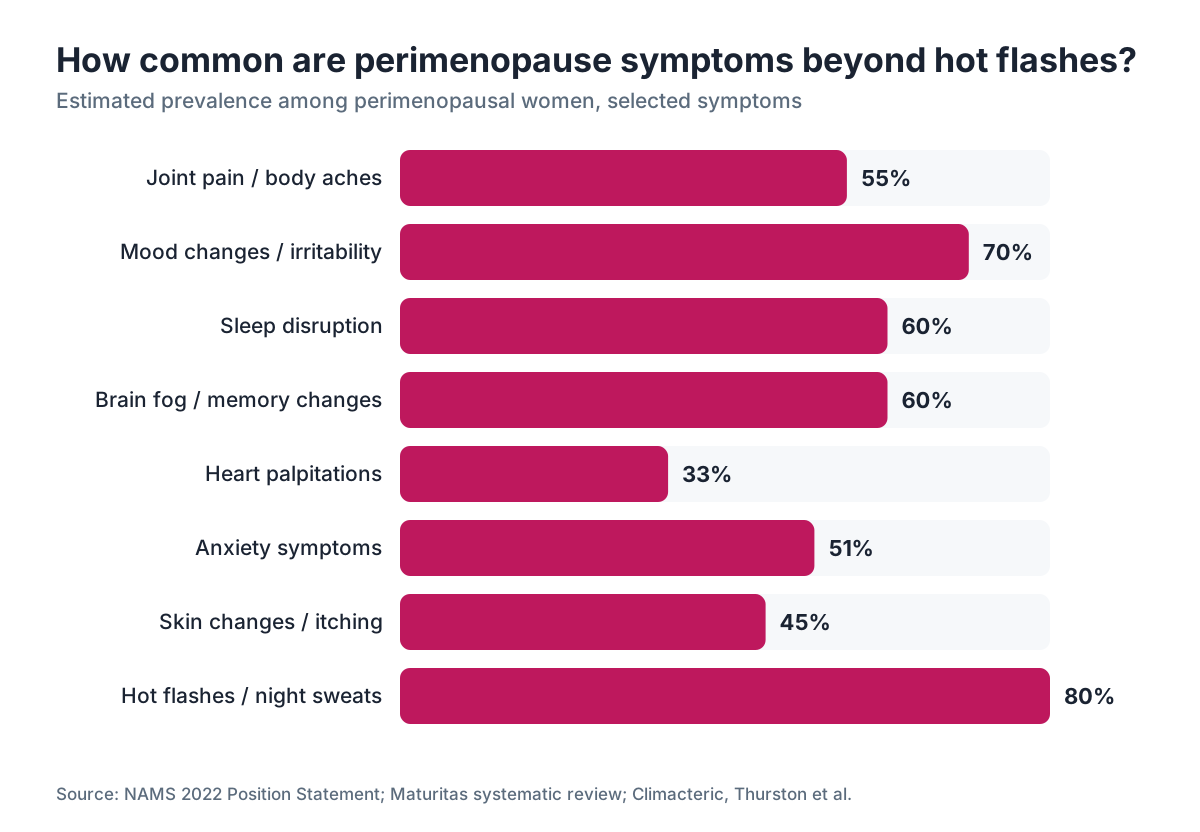
Palpitations are one of the most common cardiovascular symptoms of perimenopause, reported by roughly 25 to 40 percent of perimenopausal women in observational data.[5] Estrogen acts directly on cardiac ion channels and influences the autonomic nervous system's control of heart rate. When estrogen levels fluctuate, that control becomes unstable. The result is a heart that flutters, skips, pounds, or races for no apparent reason, often at night or alongside a hot flash.
Most perimenopausal palpitations are benign. They're often paroxysmal supraventricular tachycardia or simple ectopic beats. But "benign" doesn't mean "ignore it." Women's cardiovascular risk rises after menopause, and a clinician should evaluate palpitations, especially if they come with chest pain, dizziness, or shortness of breath.[6] An EKG, a Holter monitor, and basic thyroid labs are reasonable first steps.
Here's the clinical nuance. Palpitations that worsen during the week before a period, when progesterone is high but estrogen is dipping, point strongly toward a hormonal cause. That timing pattern is one of the best clues you can hand your doctor.
What causes the sudden rage and mood swings of perimenopause?
This is probably the most socially disruptive symptom on this list, and the one women are least likely to connect to hormones.
Progesterone is a neurosteroid. It converts to allopregnanolone in the brain, which acts on GABA-A receptors, the same receptors that benzodiazepines hit. So naturally occurring progesterone has a calming, anti-anxiety effect.[2] As progesterone falls in perimenopause, that GABAergic cushion disappears. At the same time, erratic estrogen swings disturb serotonin, dopamine, and norepinephrine regulation. The prefrontal cortex, which modulates emotional response, runs less efficiently.
The clinical picture is rage that feels disproportionate. Road rage. Fury at a colleague. A reaction to a messy kitchen that surprises even the woman having it. Followed, often, by guilt and confusion.
This is not a personality change. It's a neurochemical one. The NAMS 2022 Hormone Therapy Position Statement notes that mood symptoms in perimenopause are distinct from major depressive disorder and often respond better to hormonal intervention than to antidepressants alone.[1] That distinction matters, because women in this phase get prescribed SSRIs all the time without anyone examining their hormone levels or cycle patterns.
For a closer look at how progesterone specifically affects mood and sleep, that article covers the mechanism and the evidence for different formulations.
Why does skin get itchy, crawly, or extra sensitive in perimenopause?
Formication is the clinical word for the sensation of insects crawling on or under your skin. It's one of the stranger perimenopause experiences and one of the least discussed.
Estrogen stimulates collagen production, keeps skin hydrated, and influences the density of sensory nerve endings in the skin.[4] When estrogen drops, skin gets thinner, drier, and more reactive. Histamine intolerance also climbs in perimenopause because estrogen normally helps regulate histamine breakdown. Lower estrogen means histamine builds up more easily, causing flushing, itching, hives, and heightened sensitivity to foods that never bothered you before, like wine, aged cheese, and leftovers.
Many women notice their skin gets itchy at night specifically, which tracks with the circadian drop in estrogen during the early morning hours. Others develop new allergies or watch old ones get worse.
Topical options help with symptoms: fragrance-free emollients, antihistamines, topical estrogen for vulvovaginal tissue. Systemic estrogen therapy goes after the root cause more directly. An estrogen patch delivers steady-state estrogen that avoids the peaks and troughs of oral dosing, which some women find eases histamine-type symptoms better than pills.
Can perimenopause cause ringing in the ears (tinnitus)?
It can. And this surprises almost everyone, including some clinicians.
Estrogen receptors exist in the cochlea and the auditory processing centers of the brain.[7] Estrogen appears to protect inner ear function. As estrogen fluctuates and ultimately declines, some women develop new tinnitus, notice existing tinnitus get worse, or experience sudden hearing changes. This often goes undiagnosed as hormonal in origin because women see audiologists or ENTs who don't routinely ask about menstrual cycle status.
The evidence base here is smaller than for other symptoms. A 2023 study in Menopause found an association between lower estrogen states and tinnitus frequency, but the data isn't strong enough to say hormone therapy definitively treats tinnitus.[7] Nobody has great data yet. What the evidence does support is ruling out hormonal fluctuation as a contributing factor before defaulting to white noise machines and "learn to live with it."
If you have new tinnitus in your 40s with an otherwise normal audiological exam, mention your cycle patterns to your clinician. It's worth doing.
What is perimenopause brain fog and memory loss really like?
Women describe it as reaching for a word and finding a blank wall. Forgetting a meeting they just scheduled. Walking into a room with no idea why. Reading the same paragraph four times.
This is real. It's not anxiety about aging. The SWAN (Study of Women's Health Across the Nation) longitudinal study found that verbal memory and processing speed measurably decline during the menopausal transition and then stabilize post-menopause.[8] The decline is real but, for most women, temporary. Estrogen is neuroprotective. It supports acetylcholine synthesis, synaptic plasticity, and cerebral blood flow. Fluctuating estrogen disrupts all three.
Sleep disruption makes everything worse. If you're waking up two or three times a night from hot flashes, your hippocampus, the brain's memory consolidation center, is not getting what it needs.
The good news is that treating the underlying sleep disruption and hormonal fluctuation often restores cognitive function substantially. The NAMS position statement notes that starting hormone therapy earlier in the menopausal transition, rather than years after menopause, may have a more favorable effect on cognition and brain health.[1]
For how the full hormonal picture fits together, menopause covers what happens in the post-menopausal phase and how treatment strategies shift.
Does perimenopause cause joint pain, frozen shoulder, or body aches?
Musculoskeletal symptoms are among the most underrecognized perimenopause presentations. One systematic review estimated that joint pain affects 50 to 60 percent of perimenopausal women.[9] Many of them end up in rheumatology getting negative ANA panels, because nobody checked their hormones.
Estrogen receptors sit in cartilage, tendons, synovial tissue, and bone. Estrogen also tamps down systemic inflammation. When it drops, inflammatory markers like IL-6 and TNF-alpha rise, and joints feel it. Frozen shoulder (adhesive capsulitis) has a striking prevalence peak in women aged 45 to 55, precisely the perimenopause window, and some researchers now consider it part of the musculoskeletal perimenopause syndrome.[9]
Hand and wrist pain is particularly common. Women who had no joint issues in their 30s suddenly develop trigger finger, de Quervain's tenosynovitis, or carpal tunnel symptoms in their mid-40s. Connective tissue loses elasticity as estrogen declines, and the tendons and ligaments of the hand are early victims.
Strength training helps, both for symptoms and for the downstream bone density protection. On that note, if you haven't had a baseline bone density test, the perimenopausal years are a good time to get one, particularly if you have joint pain and early estrogen loss.
What are the weird digestive symptoms of perimenopause?
Bloating that appears out of nowhere. IBS flares that started in your 40s. A sudden sensitivity to foods you've eaten your whole life. Constipation that alternates with urgency.
Estrogen and progesterone both affect gut motility and the gut microbiome. The GI tract has estrogen receptors throughout it. Fluctuating hormones slow gastric emptying, alter intestinal permeability, and disturb the gut-brain axis. The result is a digestive system that behaves differently than it did in your 30s, and the change tracks with your cycle in perimenopause (worse in the luteal phase, better mid-cycle) before cycles turn irregular and the pattern gets harder to read.[10]
Histamine intolerance, mentioned under skin symptoms, piles on here. Foods high in histamine (alcohol, fermented foods, leftovers) can trigger bloating, flushing, and cramping that look like food intolerance but are actually a hormone-mediated response.
A low-histamine diet trial for four to six weeks is a reasonable diagnostic experiment. Magnesium glycinate (200 to 400 mg at night) helps constipation and sleep at once in many women. Probiotics with Lactobacillus reuteri and rhamnosus strains have some evidence for improving estrogen metabolism via the estrobolome, the gut bacteria that recirculate estrogen.[10] That's not a cure, but it's a tool.
Can perimenopause symptoms look like anxiety or panic disorder?
Yes. And this creates one of the most common diagnostic detours in women's healthcare.
Perimenopausal anxiety doesn't always feel like "worrying." It often shows up as a sense of impending doom, physical restlessness, waking at 3 a.m. with a racing heart and dread, or sudden panic in situations that were never stressful before. For women with no prior anxiety history, this is completely disorienting.
The mechanism overlaps with the palpitations and rage described above: low progesterone reduces GABA activity, erratic estrogen destabilizes norepinephrine. The nervous system ends up running at a higher baseline activation level. Hot flashes themselves trigger adrenaline release, which can set off a panic-like response.[6]
A 2018 meta-analysis in Menopause found that women in the menopausal transition had significantly higher rates of anxiety symptoms than pre-menopausal women, even after controlling for prior anxiety history.[6] That last phrase is the key one. It means perimenopause is independently generating these symptoms.
SSRIs and SNRIs help some women, and there's nothing wrong with using them. But if a woman's anxiety is primarily hormonal in origin, adding estrogen and progesterone often produces more complete relief than an antidepressant alone. Discuss it explicitly with a clinician who treats perimenopause, rather than one who sees only the anxiety.
If you're exploring hormonal treatment options, a telehealth practice like WomenRx can order hormone panels and prescribe based on your full symptom picture, including the psychiatric presentations.
What else can perimenopause cause? A full symptom map
The list of officially recognized perimenopause symptoms, per the British Menopause Society and NAMS, now stands at 34.[1] Here's a comparison of the commonly known versus the often-missed:
| Common (usually recognized) | Less obvious (often missed) | |---|---| | Hot flashes | Electric shock sensations | | Night sweats | Tinnitus / hearing changes | | Irregular periods | Frozen shoulder / joint pain | | Sleep problems | Itchy or crawling skin (formication) | | Vaginal dryness | Rage / emotional dysregulation | | Low libido | Heart palpitations | | Brain fog | New food / histamine sensitivities | | Mood changes | IBS or bloating | | Weight gain | Dry eyes / eye floaters | | Fatigue | Gum and tooth changes |
Weight gain in perimenopause deserves its own mention. The mechanism isn't purely caloric: estrogen loss shifts fat storage toward visceral (abdominal) fat, and insulin resistance climbs. Some women find that standard diet and exercise approaches stop working around this time. GLP-1 receptor agonists have shown evidence of effectiveness in women with perimenopausal weight gain.[11] For a direct comparison of the main options, semaglutide vs tirzepatide covers the clinical differences. For those focused on weight management, semaglutide for weight loss is a useful next read.
Gum problems (increased sensitivity, bleeding, recession) trace to estrogen receptors in the periodontium. Dry eyes happen because the meibomian glands in the eyelids respond to sex hormones. Even the voice can change: some women notice a lower register or vocal fatigue. These are all documented, all hormonal, and all real.
When should you see a doctor for weird perimenopause symptoms?
The short answer: sooner than most women do.
The average gap between a woman first experiencing perimenopausal symptoms and receiving a hormonal diagnosis is two to four years, based on data from the SWAN study.[8] In that window, she may see multiple specialists for individual symptoms (cardiology, neurology, dermatology, rheumatology, gastroenterology) without anyone connecting the dots.
Don't wait to seek evaluation if you have: chest pain or shortness of breath with palpitations, one-sided neurological symptoms (the electric zaps should be bilateral or diffuse to be reassuring), joint pain severe enough to limit function, or depression or anxiety severe enough to affect daily life.
For symptoms that are clearly hormonal in pattern (they track with your cycle, cluster together, came on in your 40s), a clinician who specializes in menopause care is the most efficient entry point. The Menopause Society (formerly NAMS) maintains a provider locator at menopause.org.[1]
Hormone testing during perimenopause is nuanced. FSH and estradiol levels swing so widely day to day that a single blood draw can mislead you. A good clinician uses symptom pattern and menstrual history as much as labs. Testing thyroid (TSH, free T4), iron stores (ferritin), and vitamin D alongside hormones is worthwhile because several thyroid and nutrient deficiencies mimic and amplify perimenopausal symptoms.
For how when does menopause start is clinically defined, and how that differs from perimenopause, that article clarifies the distinction.
Do hormone therapy or other treatments actually fix these symptoms?
For most of the symptoms described here, the answer is yes, meaningfully, more than marginally.
The NAMS 2022 Hormone Therapy Position Statement concludes that "for women younger than 60 years or within 10 years of menopause onset, the benefits of hormone therapy outweigh the risks for treatment of bothersome vasomotor symptoms, mood disturbances, sleep disruption, genitourinary symptoms, and joint and musculoskeletal complaints."[1] That language directly covers most of the weird symptoms on this list.
Estrogen therapy goes after the root cause of nerve, skin, joint, cardiac, cognitive, and GI symptoms. Adding body-identical (micronized) progesterone at night has an independent benefit for sleep and anxiety via the GABA pathway.[2] Many women find that symptoms they had written off as "just getting older" ease substantially once hormones are optimized.
Non-hormonal options exist for women who can't use estrogen. Fezolinetant (Veozah), FDA-approved in 2023, targets the neurokinin B pathway and reduces vasomotor symptoms without hormones.[12] SSRIs and SNRIs help anxiety and some hot flash symptoms. Gabapentin has evidence for the electric shock sensations and nerve-related symptoms, though it's a sedating drug and not everyone tolerates it.
For the joint and musculoskeletal symptoms specifically, resistance training three times per week is one of the most evidence-supported interventions. It preserves bone density, lowers inflammatory markers, and maintains the connective tissue health that estrogen previously supported.
WomenRx offers telehealth-based hormone evaluation and treatment for women in this transition, including hormone replacement therapy and, where appropriate, GLP-1 support for perimenopausal metabolic changes.
Frequently asked questions
Is it normal to feel electric shocks under my skin during perimenopause?
Yes, this is a real and documented symptom called paresthesia or electric shock sensation. It's caused by estrogen's role in nerve stability and myelin maintenance. It often appears just before a hot flash or at sleep onset. While unsettling, it's usually benign. If the sensation is one-sided, involves the face, or comes with weakness or speech changes, see a doctor promptly for a neurological evaluation.
Can perimenopause cause heart palpitations even if my heart is healthy?
Yes. Estrogen regulates cardiac ion channels and the autonomic nervous system. When estrogen fluctuates, heart rhythm can become less stable, producing palpitations, skipped beats, or racing heart, especially at night or with hot flashes. Roughly 25 to 40 percent of perimenopausal women report palpitations. A clinician should evaluate new palpitations with an EKG, but most perimenopausal palpitations are benign and improve with hormonal stabilization.
Why am I so angry all the time in perimenopause? Is this my personality now?
No, this is not your personality. Falling progesterone removes its calming GABA effect on the brain, and erratic estrogen destabilizes serotonin and norepinephrine. The result is dysregulated emotional response that feels like disproportionate rage. The NAMS 2022 position statement notes these mood symptoms often respond better to hormone therapy than to antidepressants alone. This is a neurochemical problem with identifiable causes and real treatment options.
What are the weird skin symptoms of perimenopause?
The strangest is formication: the sensation of insects crawling on or under the skin. Beyond that, perimenopause causes drier, thinner, more reactive skin, new or worsening allergies, hives, and itching that worsens at night. The mechanism involves both falling estrogen (which supports collagen and moisture) and rising histamine levels, since estrogen normally helps the body clear histamine. A low-histamine diet and topical or systemic estrogen both help.
Can perimenopause cause ringing in the ears?
Yes. Estrogen receptors exist in the cochlea and auditory brain centers, and estrogen appears to protect inner ear function. As estrogen fluctuates and falls, some women develop new tinnitus or worsening of existing tinnitus. The evidence base is smaller than for other symptoms. If you develop new tinnitus in your 40s with a normal audiological exam, hormonal fluctuation is worth mentioning to your clinician as a potential contributing factor.
How long does perimenopause last and when will the weird symptoms stop?
Perimenopause lasts an average of four to eight years, though it can range from two to ten years. Most erratic symptoms, including electric sensations, palpitations, and rage episodes, are driven by hormonal fluctuation rather than deficiency. They often worsen in the years right before the final period when cycles become very irregular, then stabilize post-menopause. Treating the hormonal fluctuation, rather than waiting it out, can shorten the symptomatic window substantially.
Can perimenopause cause joint pain and frozen shoulder?
Yes. Estrogen receptors are present in cartilage, tendons, and synovial tissue. Falling estrogen raises inflammatory markers and reduces connective tissue elasticity. Joint pain affects an estimated 50 to 60 percent of perimenopausal women. Frozen shoulder (adhesive capsulitis) peaks in women aged 45 to 55, precisely the perimenopause window. Many women are evaluated in rheumatology for negative workups before someone checks their hormones. Resistance training and hormone therapy both help.
Why do I have bloating and digestive problems in perimenopause?
The GI tract has estrogen and progesterone receptors throughout it. Fluctuating hormones slow gastric emptying, alter intestinal permeability, and shift the gut microbiome. Histamine intolerance increases as estrogen falls, making fermented foods, alcohol, and leftovers suddenly problematic. Many women develop IBS-like symptoms in their 40s with no prior GI history. A low-histamine diet trial, magnesium glycinate at night, and hormonal treatment all have evidence for improving these symptoms.
Is perimenopause anxiety different from regular anxiety disorder?
Clinically, yes. Perimenopausal anxiety often presents as sudden panic, 3 a.m. dread, or a sense of impending doom in women with no prior anxiety history. A 2018 meta-analysis in Menopause found significantly higher anxiety rates in women during the transition, even after controlling for prior anxiety history. The mechanism is hormonal: low progesterone reduces GABA activity and hot flashes trigger adrenaline. Hormone therapy often produces better relief than antidepressants alone for this pattern.
How many symptoms does perimenopause actually have?
The British Menopause Society and NAMS now recognize 34 symptoms of perimenopause and menopause. These range from the well-known hot flashes and irregular periods to lesser-known symptoms like electric shock sensations, tinnitus, dry eyes, gum changes, altered body odor, voice changes, and new food intolerances. Most are driven by estrogen receptors throughout the body responding to fluctuating hormone levels, well beyond the reproductive system.
Should I get my hormones tested if I have these weird symptoms?
Hormone testing during perimenopause is useful but must be interpreted carefully. FSH and estradiol swing so widely day to day that a single blood draw can be misleading. A clinician should use your symptom pattern and menstrual history as the primary diagnostic tools. That said, getting thyroid function (TSH, free T4), ferritin, and vitamin D tested alongside hormones is worthwhile because several deficiencies directly mimic and amplify perimenopausal symptoms. Timing the draw to days 2 to 5 of a cycle adds value.
Does hormone therapy actually help with the strange non-hot-flash perimenopause symptoms?
Yes. The NAMS 2022 Hormone Therapy Position Statement explicitly states that for women under 60 or within 10 years of menopause onset, hormone therapy benefits outweigh risks for vasomotor symptoms, mood disturbances, sleep disruption, and musculoskeletal complaints. Electric sensations, palpitations, anxiety, joint pain, cognitive fog, and skin symptoms all have mechanistic reasons to improve with estrogen stabilization. Adding micronized progesterone at night provides independent sleep and anxiety benefits via the GABA system.
What is the difference between perimenopause and menopause symptoms?
Perimenopause is the transition phase when hormones fluctuate erratically, often producing the most disruptive symptoms because the swings are unpredictable. Menopause is defined as one year after the final menstrual period, after which hormone levels settle at a lower (but more stable) level. Many of the weird symptoms like electric sensations and rage are most intense during perimenopause due to the volatility. Post-menopause, some symptoms improve while others (like vaginal dryness and bone loss) require continued attention.
Sources
- The Menopause Society (NAMS), 2022 Hormone Therapy Position Statement
- Endocrine Society, Journal of Clinical Endocrinology & Metabolism, Bäckström et al., progesterone and GABA-A receptors
- NIH National Institute on Aging, Menopause overview
- Journal of the European Academy of Dermatology and Venereology, estrogen and skin/nerve function review
- Climacteric, Palpitations and the menopausal transition, Thurston et al.
- Menopause (journal), meta-analysis of anxiety and the menopausal transition, 2018
- Menopause (journal), estrogen and tinnitus/auditory function, 2023
- SWAN (Study of Women's Health Across the Nation), University of Michigan, longitudinal cognitive data
- Maturitas, musculoskeletal symptoms and menopause systematic review
- Nutrients journal, estrobolome and gut microbiome in menopause review
- New England Journal of Medicine, SURMOUNT-1 trial, Jastreboff et al. 2022
- FDA, Veozah (fezolinetant) approval press release, 2023