Weight gain during menopause: why it happens and what actually works
TL;DR: Most women gain somewhere between 4 and 8 pounds during the menopause transition, though some gain more. Falling estrogen shifts fat storage toward the abdomen, slows metabolism, and disrupts hunger hormones. Not every woman gains weight, but most see body composition change. Hormone therapy, resistance training, and GLP-1 medications each have real evidence behind them.
Do women actually gain weight during menopause, or is it just aging?
Both. That's the honest answer, and the distinction matters because the fix changes depending on which driver is in charge.
Aging alone causes gradual muscle loss (sarcopenia) starting in the mid-30s, and less muscle means a lower resting metabolic rate. That's happening to everyone, men included. But women get an extra hit: the estrogen decline of perimenopause and menopause accelerates fat redistribution and adds abdominal fat independent of total calorie intake. Studies that have tracked women through the menopause transition find weight gain rates that outpace what aging alone predicts [1].
So yes, do women gain weight during menopause? Most do. The Study of Women's Health Across the Nation (SWAN), which followed over 3,000 women across multiple ethnic groups for years, found that women gained an average of about 1.5 kg (roughly 3.3 lb) during the menopause transition itself, with total gains over the full midlife period often reaching 5 to 8 lb or more [1]. But the number that shook researchers wasn't total weight. It was waist circumference. Women in SWAN gained an average of 6 centimeters of waist girth over the study period, even when body weight changed relatively little [1].
That's the menopause-specific piece. Fat moves. It comes off the hips and thighs and parks in the abdomen, and visceral (deep belly) fat is metabolically active in ways that raise cardiovascular and metabolic disease risk.
What is the average weight gain during menopause?
The short answer is 4 to 8 pounds across the full transition, with a wide range on both ends.
The SWAN study puts average weight gain at roughly 1.5 kg during the menopausal transition itself, but women who were followed longer, through the full perimenopausal and postmenopausal period, gained more [1]. A 2020 analysis in the journal Menopause found that body weight increased by an average of 0.5 kg per year during the perimenopause years, which adds up fast if perimenopause lasts 4 to 8 years [2]. Some women gain 20 pounds or more. Others gain nothing. The variance is real.
What predicts where you land? Baseline BMI matters. Women who enter perimenopause at a higher weight tend to gain more during the transition. Ethnicity matters too: SWAN found that Black women gained more total weight than white women across the study period, while Asian women gained less, though waist circumference changes were substantial across all groups [1]. Sleep quality, stress, activity level, and genetics all layer on top.
The average weight gain during menopause figures that circulate online ("women gain 5 pounds during menopause") understate the problem for a lot of women and ignore the body composition shift entirely. Even a woman whose scale weight is unchanged may have lost significant muscle and gained visceral fat.
Why do women gain weight during menopause? The hormone science
Estrogen does far more than run your menstrual cycle. It regulates where fat is stored, how sensitive your cells are to insulin, how efficiently your muscles burn energy, and how your brain reads hunger and fullness.
When estrogen falls, several things happen at once. First, fat storage shifts from the gluteal-femoral region (hips, thighs) to the visceral compartment around the organs. Estrogen normally suppresses the enzyme lipoprotein lipase in abdominal fat cells; without it, those cells pull in more circulating fat [3]. Second, insulin sensitivity decreases. Postmenopausal women have measurably higher fasting insulin and worse glucose tolerance than premenopausal women at the same weight, independent of aging [3]. Third, leptin signaling (the hormone that tells your brain you're full) becomes less effective. Fourth, resting metabolic rate drops, partly because of muscle loss that estrogen had been protecting against.
Progesterone adds another layer. In the perimenopause years, cycles become irregular and progesterone levels swing widely before falling. Low progesterone can contribute to water retention and sleep disruption, which in turn worsens cortisol patterns. Poor sleep and high cortisol both drive appetite, particularly for calorie-dense foods [4]. You can read more about progesterone's broader role in progesterone.
The thyroid can also shift during perimenopause. Autoimmune thyroid disease becomes more common in midlife women, and subclinical hypothyroidism slows metabolism. This isn't a universal mechanism of menopause weight gain, but it's worth checking if weight gain is unexpectedly large or comes with fatigue and cold intolerance.
Then there's cortisol. The HPA (hypothalamic-pituitary-adrenal) axis becomes less well-regulated after menopause, which means cortisol tends to run higher and stay elevated longer after stress. Chronically elevated cortisol deposits fat in the abdomen and breaks down muscle.
Does everyone gain weight during menopause, or can you avoid it?
Not every woman gains weight. Some come through the transition with barely any change on the scale. But do all women gain weight during menopause? No. The data suggests roughly 20% of women in the SWAN cohort did not gain significant weight during the transition [1].
What protects against it? Regular resistance training is the most consistently protective factor in the literature. Women who hold onto or build muscle through strength training preserve resting metabolic rate and insulin sensitivity even as estrogen falls. High protein intake (research generally points to 1.2 to 1.6 g per kg body weight per day for midlife women) helps protect muscle during the transition [5]. Not smoking, adequate sleep (7 to 9 hours), and stress management also show up in the data, though they're harder to isolate causally.
Here's what I'd actually tell a friend: you can't fully outsmart the hormonal shift with lifestyle alone. Some women do everything right and still watch their waist expand. That's not a character flaw. It's physiology. The question is how much you can blunt it, not whether you can make it completely irrelevant.
How does body fat change during menopause, even when weight stays the same?
This is the part most standard advice misses entirely.
The bathroom scale tells you total mass. It doesn't tell you how much of that mass is muscle versus fat, or where the fat lives. Studies using DEXA (dual-energy X-ray absorptiometry) scans show that women going through menopause lose lean mass and gain fat mass even with stable scale weight [6]. That shift in body composition, at the same weight, carries real health consequences: higher insulin resistance, higher triglycerides, higher cardiovascular risk.
Visceral fat in particular (the fat that surrounds your liver, pancreas, and intestines, not the fat you can pinch) is metabolically active. It releases inflammatory cytokines, interferes with insulin signaling, and is independently associated with type 2 diabetes and cardiovascular disease. Waist circumference greater than 35 inches in women is an established clinical marker for elevated metabolic risk [7].
This is why scale weight is a pretty bad metric for menopause health. A better set of metrics: waist circumference, waist-to-hip ratio, and if you can get one, a DEXA body composition scan. More on DEXA at bone density test.
How to combat menopause weight gain: what the evidence actually says
There's no single answer. The interventions with the best evidence are resistance training, dietary protein, sleep optimization, hormone therapy, and GLP-1 medications. Each addresses a different part of the problem.
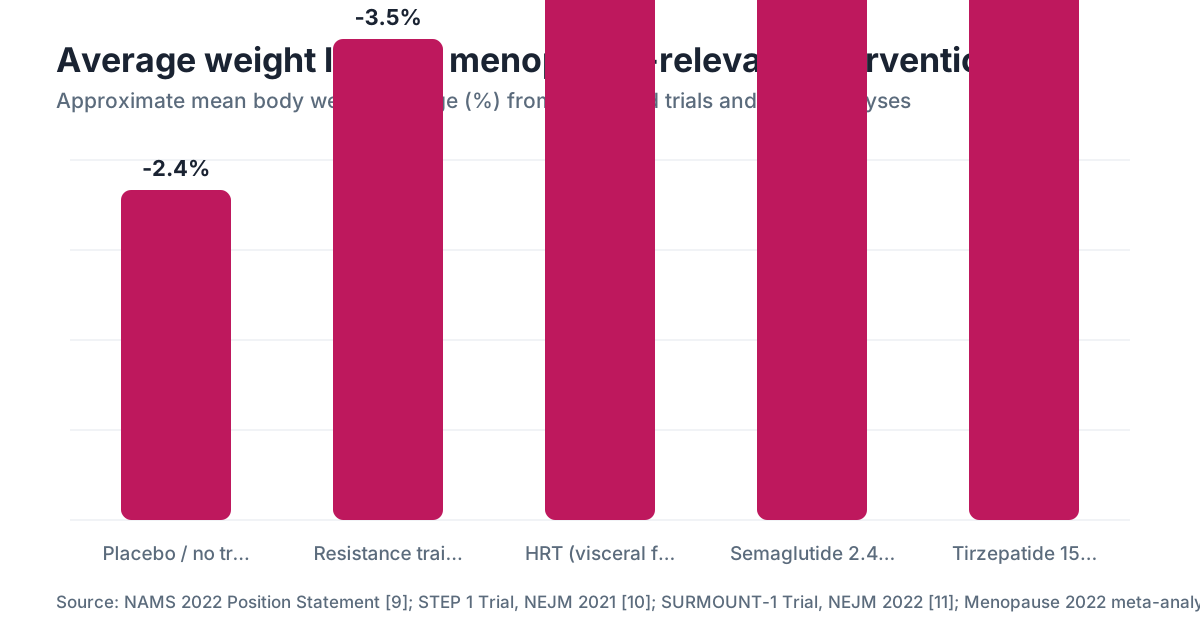
Resistance training. This is the single most evidence-backed lifestyle intervention for menopausal body composition. A 2022 meta-analysis in Menopause covering 23 randomized trials found that resistance training significantly reduced fat mass and improved lean mass in postmenopausal women [8]. Aim for 2 to 3 sessions per week targeting major muscle groups, progressive enough to be genuinely hard.
Dietary protein. Higher protein intake preserves muscle during the energy deficit required for fat loss and increases satiety. The research on protein timing (spreading intake across meals, roughly 30g per meal) is reasonably consistent. This doesn't mean carnivore dieting. It means being deliberate about hitting 90 to 120g of protein daily if you're at typical midlife body weights.
Sleep. Chronically sleeping fewer than 6 hours per night raises ghrelin (hunger hormone) and lowers leptin, independent of everything else. Poor sleep is not a lifestyle nicety. It directly drives the caloric surplus that builds belly fat. Menopausal hot flashes shred sleep, which is one of the underappreciated reasons the hormonal shift causes weight gain indirectly.
Hormone replacement therapy (HRT). The evidence here is genuinely encouraging and consistently underappreciated. Multiple trials and meta-analyses show that menopausal hormone therapy (MHT/HRT) reduces visceral fat accumulation, improves insulin sensitivity, and slows waist circumference gain compared with no treatment [9]. The NAMS 2022 Position Statement notes that systemic hormone therapy is effective for vasomotor symptoms and has favorable effects on body composition when started in early menopause [9]. HRT doesn't cause weight gain in most women; that's a persistent myth. Learn more at hormone replacement therapy and about delivery options at estrogen patch.
GLP-1 receptor agonists. Semaglutide and tirzepatide have large randomized trial data behind them. The STEP 1 trial of semaglutide 2.4 mg weekly showed an average 14.9% body weight reduction versus 2.4% with placebo at 68 weeks [10]. The SURMOUNT-1 trial of tirzepatide showed average weight reductions of 15 to 20.9% depending on dose [11]. Both drugs slow gastric emptying, reduce appetite, and improve insulin sensitivity, which hits several of the specific mechanisms driving menopausal weight gain. GLP-1s are not a menopause-specific therapy, but postmenopausal women were well-represented in both trials. See semaglutide for weight loss and semaglutide vs tirzepatide for deeper comparisons.
If you want a provider who specializes in combining hormone therapy with GLP-1 evaluation for midlife women, WomenRx offers telehealth consultations that cover both. That's genuinely useful because the mechanisms complement each other.
Calorie restriction alone, without the protein and resistance training, tends to strip muscle along with fat. That's a bad trade during menopause when you're already losing muscle to hormonal changes. Go low-calorie without going high-protein and high-intensity, and you make body composition worse even as the scale moves.
Does hormone therapy cause or prevent weight gain during menopause?
This is one of the most common fears women bring to their doctors, and the evidence doesn't support the fear.
The idea that HRT causes weight gain comes partly from older, poorly designed studies and partly from the well-documented fluid retention some women feel in the first few weeks of starting hormones. That early fluid shift is real, but it's not fat. It resolves.
Longer-term data consistently shows the opposite pattern. A 2021 meta-analysis in Obesity Reviews covering 22 trials found that hormone therapy reduced total fat mass and visceral fat compared with no treatment in postmenopausal women [9]. The NAMS 2022 Position Statement on menopause hormone therapy states that "there is no evidence that hormone therapy causes weight gain" and points to favorable body composition effects [9].
The route of delivery may matter. Oral estrogen raises SHBG and can push triglycerides up; transdermal estrogen (patches, gels) skips first-pass liver metabolism and may have a more favorable metabolic profile. The data on this distinction isn't fully settled, but many prescribers prefer transdermal for women with higher metabolic risk.
The bottom line: if you're avoiding HRT because you're afraid of weight gain, the evidence doesn't back that concern. The bigger risk for your waistline is going without treatment and letting the estrogen deficiency run unchecked.
Can GLP-1 medications like semaglutide help with menopause weight gain specifically?
GLP-1 receptor agonists address several of the exact mechanisms that make menopause weight gain hard to fight: blunted satiety signaling, insulin resistance, and the elevated appetite that comes from disrupted sleep and cortisol.
The STEP 1 trial showed semaglutide 2.4 mg weekly produced 14.9% mean weight loss at 68 weeks in adults with obesity or overweight [10]. The SURMOUNT-1 trial of tirzepatide (a dual GIP/GLP-1 agonist) showed 15 to 20.9% weight loss depending on dose, making it the most effective approved weight-loss medication currently available [11]. Both trials included substantial numbers of women in the 40 to 65 age range, though dedicated menopausal subgroup analyses haven't been published as standalone papers.
Semaglutide is FDA-approved as Wegovy for chronic weight management and as Ozempic for type 2 diabetes. Tirzepatide is approved as Zepbound for weight management. Compounded versions of semaglutide exist and cost less, though they carry their own regulatory considerations (see compounded semaglutide). The branded versions cost roughly $900 to 1,300 per month without insurance; compounded versions are typically $200 to 400 per month, though pricing varies by pharmacy and dose.
One practical point: GLP-1 medications work partly by cutting appetite-driven eating, but they don't preferentially preserve muscle. Women using GLP-1s for weight loss should be deliberate about protein intake and resistance training to protect lean mass during weight loss. Losing 15% of body weight but shedding significant muscle in the process is not an ideal outcome for a 55-year-old woman already dealing with menopausal muscle loss.
For more on semaglutide specifically, including dosing and side effects, see that article.
When does menopause-related weight gain start, and how long does it last?
Weight and body composition changes begin during perimenopause, not at the official menopause date (which is just the 12-month mark after your last period). For most women, that means changes start somewhere between age 40 and 50, though perimenopause can begin earlier. You can look at perimenopause age and when does menopause start for more context on timing.
The rate of change is fastest in the years immediately surrounding the final menstrual period. The SWAN data found the steepest changes in waist circumference and body fat during late perimenopause and early postmenopause [1]. After that, the rate of fat gain tends to slow, though it doesn't stop entirely because aging continues.
This means the window for intervention matters. Starting hormone therapy early in the transition (ideally within 10 years of menopause onset and before age 60) is when the evidence for cardiovascular and metabolic protection is strongest. The "timing hypothesis" in menopause medicine has good support: hormones started early preserve more; started very late, they may not have the same effects and carry different risk profiles [9].
If you're in your mid-40s and your waist is expanding despite no change in diet or exercise, that's almost certainly early perimenopause changing your fat distribution. Waiting until symptoms are severe or the scale number is alarming is waiting longer than you need to.
What does menopause belly fat look like and why is it different from regular weight gain?
Women who've gained weight before menopause often describe a very different quality to menopause-related fat. It tends to be firm and central rather than soft and distributed. It doesn't respond to the same diet that worked before. It feels, in their words, stuck.
This tracks with the biology. Subcutaneous fat (the kind you can pinch) responds reasonably well to calorie restriction. Visceral fat (the kind deep in the abdomen, around the organs) responds better to exercise and hormone interventions than to calorie restriction alone. That's part of why eating less doesn't produce the same results it did at 35.
The distribution shift is also genuinely different from aging-related weight gain in men. Men accumulate abdominal fat gradually over decades. Menopausal women can see a big shift in 2 to 3 years, and it happens even in women who aren't gaining scale weight. A woman who wore size 8 pants for years may find she needs size 12 in the waist while her hips haven't changed.
Measuring waist circumference once a year (at the level of the navel, relaxed, not sucked in) is a more useful clinical signal than scale weight alone. A waist above 35 inches puts a woman in the elevated metabolic risk category [7].
Which diet approach works best for menopause weight loss?
There's no single diet proven superior for menopausal weight loss in head-to-head trials, but several patterns have consistent evidence.
Higher protein diets reliably beat standard macronutrient ratios for preserving lean mass during weight loss, and that matters more during menopause than at any earlier life stage [5]. Mediterranean-pattern eating (vegetables, legumes, fish, olive oil, moderate whole grains) is tied to lower waist circumference and better metabolic markers in postmenopausal women in observational studies, though the effect size in trials is moderate [8].
Low-carbohydrate and ketogenic approaches can produce fast initial weight loss, mostly through glycogen depletion and water loss, and do improve insulin resistance markers. Whether they beat high-protein moderate-carb diets for postmenopausal women over 12 months isn't clearly established. Women with significant insulin resistance or prediabetes may respond especially well to carbohydrate reduction.
Time-restricted eating (eating within an 8 to 10 hour window) has growing mechanistic plausibility and some trial data in menopausal women, though most trials are small. It's unlikely to be harmful and may help with insulin cycling.
The diets that reliably don't work well for this population: very low calorie approaches without a protein focus, and any diet that's unsustainable past 3 months. Yo-yo dieting actively worsens body composition over time by repeatedly catabolizing muscle during restriction phases.
| Diet Approach | Evidence for Menopausal Women | Main Strength | Main Limitation | |---|---|---|---| | High-protein (>1.2g/kg/day) | Strong for lean mass preservation | Protects muscle | Requires planning | | Mediterranean | Moderate observational, some trials | Sustainable, heart-healthy | Modest weight loss alone | | Low-carb / ketogenic | Good for insulin resistance | Fast initial response | Adherence varies | | Time-restricted eating | Small trials, growing interest | May improve insulin cycling | Limited large RCTs | | Very low calorie (<800 kcal) | Causes muscle loss at menopause | Fast scale loss | Counterproductive long term |
How is menopause weight gain treated medically, and when should you see a doctor?
See a doctor if: your waist circumference has increased significantly over 1 to 2 years, your fasting blood glucose or triglycerides are creeping up, you're gaining weight despite genuine effort at diet and exercise, or you're having other menopause symptoms that are disrupting your life.
The medical evaluation should include: thyroid function (TSH, free T4), fasting glucose and HbA1c, a lipid panel, and a hormone assessment including FSH and estradiol to confirm where you are in the transition. Many primary care doctors don't routinely connect these dots for women in their 40s.
Medical treatments with real evidence include hormone therapy and GLP-1 receptor agonists, as detailed above. Metformin is sometimes used off-label in insulin-resistant perimenopausal women and has a reasonable evidence base for reducing progression to diabetes, though it's not a weight loss drug per se [4].
WomenRx provides telehealth access to clinicians who focus on midlife women's hormone and metabolic health, including GLP-1 prescribing. That's genuinely relevant if your primary care provider doesn't have bandwidth for this kind of evaluation.
What I'd push back on: the idea that weight gain during menopause is just something to accept, or that you should "eat less and move more" and it'll sort itself out. For some women it does. For many, the hormonal drivers are strong enough that lifestyle alone doesn't fully address the problem, and there are real medical interventions worth discussing.
Frequently asked questions
How much weight do women gain during menopause on average?
Most studies, including the long-running SWAN cohort, find women gain roughly 3 to 8 pounds across the full menopause transition. The average is often cited around 1.5 kg (3.3 lb) during the transition itself, but total midlife weight gain is typically higher. More striking is the average 6 cm increase in waist circumference, which reflects visceral fat gain independent of scale weight.
Why does my belly get bigger during menopause even when I'm not eating more?
Estrogen normally suppresses fat storage in the abdomen. As estrogen falls, the enzyme lipoprotein lipase in abdominal fat cells becomes more active, pulling in circulating fat. At the same time, insulin sensitivity decreases and cortisol tends to run higher, both of which deposit fat centrally. This redistribution happens even with stable calorie intake and stable body weight, which is why the scale can mislead you.
Can you stop menopause weight gain entirely?
You can significantly blunt it. Resistance training, high protein intake, adequate sleep, and hormone therapy each reduce the rate of fat gain and help preserve muscle. GLP-1 medications can produce substantial weight loss in women who've already gained. But no intervention fully erases the metabolic changes of estrogen loss. About 20% of women go through the transition without significant weight gain, and lifestyle factors are part of what separates them.
Does hormone replacement therapy make you gain weight?
No. Multiple meta-analyses and the NAMS 2022 Position Statement conclude there is no evidence that hormone therapy causes weight gain. Some women notice fluid retention in the first few weeks, but this is temporary. Longer-term data shows hormone therapy reduces visceral fat and slows waist circumference gain compared to no treatment. The persistent belief that HRT causes weight gain is not supported by the evidence.
What is the best exercise for menopause belly fat?
Resistance training has the strongest evidence for reducing fat mass and preserving lean mass in postmenopausal women. A 2022 meta-analysis found it significantly improved body composition in that group. Aerobic exercise adds cardiovascular benefit and helps insulin sensitivity. Combining both beats either alone. Walking alone, though useful for other reasons, is generally not enough to address menopause-specific body composition changes.
Do GLP-1 drugs like semaglutide or tirzepatide work for menopause weight gain?
Yes, they work, and the effect sizes are large. The STEP 1 trial showed semaglutide 2.4 mg produced 14.9% average weight loss at 68 weeks. The SURMOUNT-1 trial of tirzepatide showed 15 to 20.9% weight loss. Both drugs address appetite dysregulation and insulin resistance, two core drivers of menopausal weight gain. Combining GLP-1 therapy with protein-focused eating and resistance training matters to protect muscle during weight loss.
When does menopause weight gain start?
Body composition changes begin during perimenopause, often in the early-to-mid 40s, well before the final menstrual period. The rate of change is fastest in the years immediately surrounding menopause. The SWAN study found waist circumference increases were steepest in late perimenopause and early postmenopause. If you're noticing belly fat changes in your 40s despite no lifestyle changes, perimenopause is a likely contributor.
Is menopause weight gain permanent?
No. It responds to the same interventions as other weight gain, though it often needs more targeted approaches. Hormone therapy can reverse some visceral fat accumulation. GLP-1 medications produce substantial fat loss. Resistance training and diet changes make real differences. That said, the hormonal environment of postmenopause is less forgiving than premenopause, so sustained effort matters more, and regain after stopping treatment is common.
Does perimenopause weight gain feel different from regular weight gain?
Most women describe it as qualitatively different. It tends to concentrate in the abdomen rather than distributing more evenly. It often feels firmer than earlier weight gain. It resists diets that previously worked. And it can happen even when total calorie intake hasn't changed. These are all consistent with the shift from subcutaneous fat distribution to visceral fat accumulation driven by falling estrogen.
What blood tests should I ask for if I think menopause is causing my weight gain?
Ask for TSH and free T4 (to rule out thyroid dysfunction), fasting glucose and HbA1c (to assess insulin resistance), a fasting lipid panel, FSH and estradiol (to confirm menopausal status), and fasting insulin if your doctor is willing. Together these give a clear picture of whether thyroid, metabolic, or hormonal factors are driving your symptoms. Many standard physicals skip several of these in midlife women.
Does losing weight during menopause require a different approach than at other life stages?
Yes, meaningfully so. The same calorie deficit that produced fat loss at 35 is more likely to produce muscle loss at 52 without deliberate protein intake and resistance training. Hormonal drivers (insulin resistance, cortisol elevation, leptin resistance) are more pronounced and may need medical treatment to address fully. The approach that works: high protein, resistance training, adequate sleep, and consideration of hormone therapy or GLP-1s rather than calorie restriction alone.
Can stress cause menopause weight gain?
Stress worsens it significantly. Elevated cortisol from chronic stress deposits fat in the abdomen, breaks down muscle, increases hunger for calorie-dense foods, and disrupts sleep. The HPA axis becomes less well-regulated after menopause, so the same stressor produces a larger and longer cortisol spike than it did premenopausally. Stress management is not optional wellness advice here; it's a direct metabolic intervention.
Do all women gain weight during menopause?
No. Roughly 20% of women in the SWAN cohort did not gain significant weight during the menopausal transition. Women who lift regularly, keep protein intake high, sleep enough, and manage stress are more likely to avoid significant gain. Genetics matters too. But even women who dodge scale weight gain often see body composition shift, with muscle loss and visceral fat gain happening at the same time.
Is menopause weight gain linked to heart disease risk?
Yes. Visceral fat is independently associated with elevated triglycerides, lower HDL, higher fasting insulin, and cardiovascular disease. The waist circumference threshold of 35 inches for women marks elevated metabolic and cardiovascular risk. Postmenopausal women's cardiovascular risk rises substantially relative to premenopausal women, and visceral fat accumulation is a key mechanism. This is one reason treating menopausal weight gain is a health intervention, more than a cosmetic one.
Sources
- SWAN (Study of Women's Health Across the Nation), University of Michigan / multiple institutions, published in multiple journals including Menopause and JAMA
- Davis SR et al., 'Understanding weight gain at menopause', Climacteric, 2012; and related analyses in Menopause journal
- Carr MC, 'The emergence of the metabolic syndrome with menopause', Journal of Clinical Endocrinology and Metabolism, 2003
- Endocrine Society Clinical Practice Guidelines on Menopause
- Stokes T et al., 'Recent Perspectives Regarding the Role of Dietary Protein for the Promotion of Muscle Hypertrophy', Nutrients, 2018
- Poehlman ET et al., 'Changes in energy balance and body composition at menopause', Annals of Internal Medicine, 1995
- National Heart, Lung, and Blood Institute (NHLBI), 'Assessing Your Weight and Health Risk'
- Bea JW et al. and related meta-analyses in Menopause, 2022; Mediterranean diet observational studies in postmenopausal women
- Wilding JPH et al., STEP 1 Trial, 'Once-Weekly Semaglutide in Adults with Overweight or Obesity', New England Journal of Medicine, 2021
- Jastreboff AM et al., SURMOUNT-1 Trial, 'Tirzepatide Once Weekly for the Treatment of Obesity', New England Journal of Medicine, 2022
- Lovejoy JC et al., 'Increased visceral fat and decreased energy expenditure during the menopausal transition', International Journal of Obesity, 2008
- FDA, Wegovy (semaglutide) prescribing information