Vaginal progesterone: what it is, who needs it, and how it works
TL;DR: Vaginal progesterone delivers the hormone straight to uterine tissue and skips most of the liver. Doctors prescribe it to protect the uterus during estrogen-based HRT, support IVF and early pregnancy, and sometimes treat local symptoms. FDA-approved products include Crinone gel and Endometrin inserts, plus Prometrium capsules used vaginally off-label. Doses run from 45 mg gel every other day to 200 mg nightly.
What is vaginal progesterone and how is it different from oral progesterone?
Vaginal progesterone is the same bioidentical hormone your ovaries make. The only difference is the door it walks through. Instead of getting swallowed or injected, it absorbs through the vaginal wall. And that route matters more than most people expect.
Swallow oral progesterone (think Prometrium 200 mg) and your liver processes roughly 80 to 90% of it before it ever reaches your bloodstream. That first-pass metabolism converts a big fraction into metabolites, including allopregnanolone, the compound behind the drowsiness so many women notice. It also means serum levels spike and crash in ways that are hard to predict. [1]
Vaginal delivery sidesteps the liver almost entirely. The vaginal mucosa moves progesterone directly into uterine tissue through what researchers call the "uterine first-pass effect," where pelvic blood and lymphatic vessels concentrate the hormone in the uterus before it circulates through the rest of the body. [2] The payoff: uterine tissue levels are far higher per milligram than what you get orally, while blood levels stay lower. If you need endometrial protection but the drowsiness from oral progesterone knocks you flat, that gap is the whole clinical argument for switching routes.
Systemic side effects like bloating, mood shifts, and breast tenderness also tend to be milder vaginally, because peak serum levels stay lower. But lower systemic exposure is not zero systemic exposure. Some hormone still reaches circulation, especially at higher doses. [3]
Oral progesterone is still a legitimate, widely used option. Vaginal progesterone just gives you and your prescriber a real alternative when tolerability or uterine-specific dosing is the goal.
What is vaginal progesterone used for, clinically?
The FDA has approved vaginal progesterone for three separate uses, and physicians prescribe it off-label for a fourth. These are not interchangeable. Each carries a different dose target and a different weight of evidence.
1. Endometrial protection during HRT. Any woman with an intact uterus who takes systemic estrogen needs a progestogen to counter estrogen's effect on the endometrial lining. Left unopposed, estrogen raises the risk of endometrial hyperplasia and, over time, endometrial cancer. [4] Crinone 4% gel (45 mg) every other day, or 100 to 200 mg suppositories nightly, protects the uterus while keeping systemic progesterone exposure low. The North American Menopause Society (NAMS) 2022 Hormone Therapy Position Statement confirms that vaginally delivered progesterone protects the endometrium as well as oral formulations at appropriate doses. [4]
2. Infertility and ART (assisted reproductive technology). This is the biggest use by prescription volume. During IVF, the drugs used to stimulate egg development also suppress a woman's own ovarian progesterone. Vaginal progesterone (usually Endometrin 100 mg two or three times daily, or Crinone 8% gel once daily) fills in for corpus luteum function after egg retrieval. Trials consistently show vaginal progesterone matches the pregnancy rates of intramuscular injections, with far less injection-site pain. [5]
3. Prevention of preterm birth in high-risk women. The FDA approved vaginal progesterone gel for women with a short cervix (cervical length under 25 mm on midtrimester ultrasound) carrying a single baby. The PREGNANT trial found that 90 mg progesterone gel nightly cut preterm birth before 33 weeks by 45% in this group. [6] It stays one of obstetrics' more convincing single-intervention results. ACOG recommends vaginal progesterone for singleton pregnancies with a cervical length under 20 to 25 mm. [10]
4. Off-label for genitourinary syndrome of menopause (GSM). Some gynecologists prescribe low-dose vaginal progesterone for local symptom relief. The evidence here is much thinner than for topical estrogen, and it does not replace vaginal estrogen when estrogen is the right therapy. If you are weighing routes and options, the estrogen patch article covers the systemic side of that tradeoff.
What FDA-approved vaginal progesterone products are available?
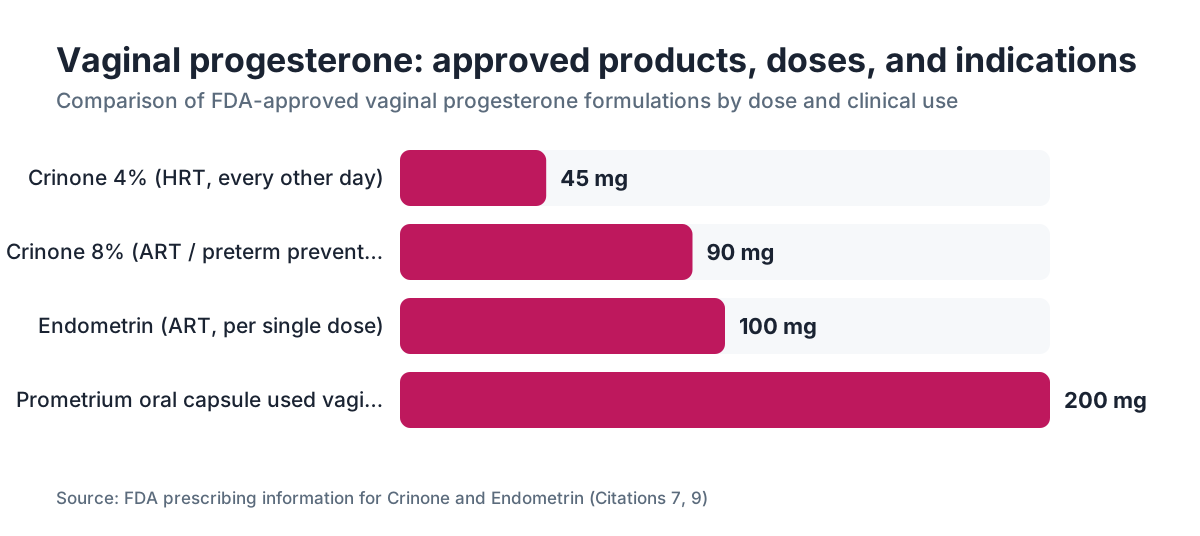
Three products carry FDA approval for vaginal use. A fourth, Prometrium, is approved orally but used vaginally by many prescribers. Here is how they stack up.
| Product | Form | Approved dose | Approved indication | |---|---|---|---| | Crinone 4% gel | Bioadhesive gel, prefilled applicator | 45 mg every other day | Endometrial protection in HRT | | Crinone 8% gel | Bioadhesive gel, prefilled applicator | 90 mg once daily | Infertility / ART support; preterm birth prevention | | Endometrin | Vaginal insert (tablet) | 100 mg 2-3x daily | Infertility / ART support | | Prometrium 200 mg capsule | Oral capsule, used vaginally off-label | 200 mg nightly | Endometrial protection (oral approval; vaginal is off-label) |
Crinone gel uses a bioadhesive polymer that clings to the vaginal walls and releases progesterone slowly, which is why once-daily or every-other-day dosing works. The tradeoff: the gel builds up, and some women notice a white clumping discharge. It's harmless. It also surprises people nobody warned. [7]
Endometrin dissolves like a tablet and absorbs faster. Its shorter half-life in vaginal tissue is why ART cycles call for it two or three times a day. [9]
Compounded vaginal progesterone suppositories are common too, especially among reproductive endocrinologists and some menopause specialists. They're not FDA-approved as finished products, but they're made by compounding pharmacies. The hormone itself (USP progesterone) is the same molecule. Quality rides entirely on the pharmacy's practices. Prices swing widely, often $40 to $150 a month for HRT doses versus $200 to $800 for ART doses using branded products. [1]
How does vaginal progesterone protect the uterine lining?
Estrogen tells the cells lining the uterus (the endometrium) to grow and multiply. That's useful in the first half of a normal cycle, when the lining thickens to prepare for a possible pregnancy. But sustained, unopposed estrogen, whether from HRT or from estrogen your fat tissue produces after menopause, lets the lining keep growing without the maturing changes progesterone normally triggers. [4]
Progesterone binds receptors in endometrial cells and essentially tells them to stop dividing and mature into a stable, secretory state. It also ramps up enzymes that break down estrogen locally, adding a second layer of defense. Pull progesterone away at the end of a cycle and the lining sheds. Without that reset, the lining thickens progressively into endometrial hyperplasia, a precursor to endometrial cancer. [4]
Vaginal delivery is unusually good at this protective job because of the uterine first-pass effect. Pharmacokinetic work has found uterine tissue progesterone concentrations run 5 to 10 times higher after vaginal dosing than the matching serum levels, while an oral dose leaves a much lower tissue-to-serum ratio. [2] Vaginally delivered progesterone does more work at the uterus per milligram than oral progesterone, even when blood levels read similar or lower.
That's why some clinicians are comfortable prescribing lower total progesterone doses vaginally than orally without giving up endometrial protection.
Who should use vaginal progesterone vs. oral progesterone?
The right answer turns on your clinical situation, how you tolerate side effects, what you can afford, and, honestly, your prescriber's habits.
Vaginal progesterone tends to fit better when:
You have an intact uterus, take systemic estrogen for menopause, and find oral progesterone's sedation intolerable. The drowsiness from oral Prometrium is real and documented. It comes mostly from allopregnanolone metabolites, which run far lower with vaginal dosing. [1] Some women take oral Prometrium at bedtime on purpose for the sleep it brings, which is fine. For women who don't want that effect, vaginal is cleaner.
You're in an IVF or embryo transfer cycle. This is the main indication for branded vaginal products and the one with the strongest head-to-head trial data.
You have liver disease or take medications that tie up hepatic metabolism. A lighter first-pass burden matters here.
You need preterm birth prevention and have a documented short cervix. Vaginal progesterone gel is the supported intervention.
Oral progesterone may win out when vaginal dryness or anatomy makes insertion uncomfortable, when a daily pill is easier to stick with than a nightly suppository, or when your prescriber wants more predictable serum levels.
For the wider progesterone picture, including how bioidentical progesterone compares to synthetic progestins, that article covers the full landscape. And if you're still working out whether you need hormones at all, perimenopause age can help you place where you are in the transition.
What dose of vaginal progesterone do you actually need?
Dose depends entirely on why you're taking it. There's no single number, and missing in either direction has consequences.
For endometrial protection during HRT, the minimum effective vaginal dose has been studied in several trials. Crinone 4% (45 mg) every other day carries FDA approval for this. Some European guidelines also back Utrogestan 200 mg (the European micronized progesterone) used vaginally at 100 mg nightly as enough for endometrial protection, though that specific product isn't marketed in the U.S. [4]
The governing principle: "enough to protect the endometrium" is defined by the lining's response, not by a blood level. The NAMS 2022 statement notes that endometrial biopsy or ultrasound can confirm adequacy in individual cases, especially with off-label or compounded preparations. [4]
For ART support, doses run higher and more often: Endometrin 100 mg two or three times daily, or Crinone 8% once daily. These doses replace corpus luteum function, a bigger job than protecting an existing lining.
For preterm birth prevention, the PREGNANT protocol is 90 mg Crinone 8% nightly, started at 16 to 24 weeks and continued to 36 or 37 weeks. [6]
For off-label genitourinary use, there's no consensus dose. Compounded preparations at 25 to 50 mg nightly show up in practice, but the evidence is mostly observational.
If you're working with a telehealth prescriber, practices like WomenRx can prescribe vaginal progesterone as part of a personalized HRT plan and match the dose to your hormonal picture, in perimenopause or past your last period. Confirm your prescriber is customizing to your indication rather than defaulting to whatever the pharmacy stocks.
What are the side effects of vaginal progesterone?
Vaginal progesterone is generally well tolerated. It is not side-effect-free. The useful skill is knowing common from concerning.
The local side effects women report most are vaginal irritation, discharge (especially with Crinone gel, which builds up as a white residue), and occasional spotting or breakthrough bleeding. That gel buildup bothers some women enough to switch to suppositories. It's cosmetically annoying, not medically worrisome. [7]
Systemic side effects show up less often than with oral progesterone, but they do happen. Breast tenderness, bloating, and mood changes are possible, mostly at higher doses. Sedation is less common than with oral progesterone, though not zero.
Serious adverse events are rare. Progesterone is not a carcinogen in women with an intact uterus using it for the protective role it evolved to serve. The Endocrine Society's clinical practice guideline on menopause treatment notes that the cardiovascular and clotting risks seen with synthetic progestins (like medroxyprogesterone acetate, the progestin in the original Prempro) do not appear to extend to micronized progesterone, oral or vaginal. [3] That distinction matters, because a lot of women heard the WHI results and decided all progestogens are dangerous. The worry was about the synthetic compound studied, not bioidentical progesterone.
One allergy note: Prometrium capsules contain peanut oil, which matters if you're using the oral capsule vaginally off-label. Crinone and Endometrin do not.
Can you use vaginal progesterone without estrogen?
Yes, in a few situations. The most common is preterm birth prevention, where vaginal progesterone stands alone and isn't paired with estrogen. [6]
Another is women who've had a hysterectomy (no uterus) using low-dose vaginal estrogen for genitourinary symptoms. They don't need progesterone at all, because there's no endometrial lining to protect. Adding progesterone here isn't wrong, but it isn't required for cancer protection.
Then it gets more nuanced. Some practitioners prescribe vaginal progesterone alone for perimenopausal women with irregular periods and estrogen-dominance symptoms (heavy bleeding, breast tenderness, luteal-phase sleep disruption). The idea is that topping up the progesterone the ovaries are intermittently failing to make smooths out cycle chaos. The evidence for that specific use is mostly observational and expert opinion. Nobody has good large-scale randomized data here; the closest comes from studies of oral luteal-phase progesterone supplementation.
Vaginal progesterone without estrogen does no harm to the uterine lining. Progesterone by itself isn't proliferative. But it also does nothing for estrogen-deficiency symptoms like hot flashes, brain fog, or bone loss. If those are your main complaints, progesterone alone isn't the answer. Read the full hormone replacement therapy picture to see how estrogen and progesterone work together.
How do you use vaginal progesterone correctly?
Technique matters more than people expect. Missed doses, shallow placement, and timing errors are common reasons the therapy underperforms.
For suppositories and inserts: lie on your back with knees bent, or stand with one foot up on a chair. Use the applicator if one comes in the box. Insert deep into the vaginal canal, aiming toward the cervix. The hormone absorbs through the vaginal walls, so deep placement maximizes contact and cuts leakage. Dosing at bedtime, when you'll be horizontal for hours, cuts leakage a lot more. [7]
For Crinone gel: it arrives in a prefilled single-use applicator. Pull back the thick end, hold the thin end, and insert the thin end deep. Squeeze the thick end to release the gel. The bioadhesive polymer sticks to tissue, so unlike a suppository it doesn't tend to run out. Residue from earlier doses can build up. A periodic warm bath helps clear it, and your provider can tell you what's normal.
Timing for HRT: most protocols prescribe progesterone in the second half of a simulated cycle (days 14 to 28 on a cyclical regimen) or nightly and continuously on a combined continuous regimen. Ask your prescriber which approach fits your estrogen and whether you'd rather have a scheduled withdrawal bleed or no bleeding.
For IVF cycles: follow your reproductive endocrinologist's protocol to the letter. Dose timing relative to egg retrieval or embryo transfer is exact, and missed doses carry real consequences.
Storage: most vaginal progesterone products keep at room temperature, but some suppositories need refrigeration. Check the label. A melted suppository can be reinserted once it re-solidifies, but ask your pharmacist first.
Does vaginal progesterone affect mood or sleep differently than oral progesterone?
This is one of the most practical questions women ask, and the honest answer is yes, meaningfully.
Oral micronized progesterone produces real concentrations of neurosteroid metabolites, especially allopregnanolone, a positive allosteric modulator of GABA-A receptors. In plain terms: it acts like a mild sedative. That's why oral Prometrium at bedtime often improves sleep. Some women love it. Others get next-day grogginess or a flatness they describe as feeling "blunted." [1]
Vaginal progesterone largely bypasses the liver, so it produces far less circulating allopregnanolone. The sleep effect is weaker or gone. Women who lean on their evening Prometrium as a sleep aid sometimes find switching to vaginal a letdown on that one front. Flip side: women who felt emotionally muted or anxious on oral progesterone often report those symptoms clearing after they switch routes.
Depression and irritability come up less with vaginal progesterone than with synthetic progestins like medroxyprogesterone acetate, and less than with oral micronized progesterone in sensitive women. The Endocrine Society guideline notes that micronized progesterone has a more favorable neurological profile than synthetic progestins, and vaginal delivery pushes that further by lowering neuroactive metabolite levels. [3]
So: if sleep is the goal, oral progesterone at bedtime might be your friend. If mood stability and minimal sedation matter most, vaginal is worth raising with your prescriber.
Is vaginal progesterone safe long-term?
For endometrial protection during HRT, the safety record is reassuring, though most long-term data come from oral micronized progesterone rather than vaginal specifically.
The Women's Health Initiative, which set off the initial HRT alarms, used medroxyprogesterone acetate, a synthetic progestin, not bioidentical progesterone. The E3N French cohort (about 83,000 postmenopausal women, followed roughly 8 years) found that women using estrogen with micronized progesterone had no significant rise in breast cancer risk compared to estrogen alone, a result echoed in several European observational datasets. [8] Synthetic progestins, MPA in particular, showed a different risk profile in the same data.
Cardiovascular risk: the Endocrine Society guideline concludes that micronized progesterone doesn't appear to worsen lipid profiles or vascular function the way some synthetic progestins do. [3]
The local vaginal tissue tolerates long exposure well. There's no evidence of vaginal mucosal atrophy or malignancy from prolonged vaginal progesterone use.
The honest caveat: long-term randomized data on vaginally delivered progesterone for HRT beyond 2 years are thin. Most of the reassuring safety picture extrapolates from oral bioidentical progesterone studies, with the pharmacokinetic logic that lower systemic exposure should mean equal or better safety. [11] That inference is reasonable. It isn't perfectly proven.
If bone health is also on your mind during the transition, a bone density test at the right time sets your baseline, since both estrogen and progesterone touch bone maintenance.
How much does vaginal progesterone cost and is it covered by insurance?
Cost swings a lot depending on the product, your insurance, and whether you use a brand or a compounding pharmacy.
Branded products: Crinone gel retails around $300 to $500 a month for the HRT indication without insurance. For ART cycles, Endometrin 100 mg three times daily can run $400 to $800 per IVF cycle. These are national retail averages and vary a lot by pharmacy. [1]
Compounded progesterone suppositories typically cost $40 to $120 a month for HRT doses. Concentration accuracy, excipients, and quality vary by pharmacy, and the FDA does not independently test compounded products.
Insurance coverage: commercial plans frequently cover Endometrin and Crinone for an FDA-approved indication with prior authorization. Coverage for off-label vaginal use (like oral Prometrium used vaginally) is inconsistent. Medicare Part D covers FDA-approved vaginal progesterone when medically indicated, though coverage-gap rules still apply depending on your plan.
GoodRx and manufacturer coupons can cut out-of-pocket costs meaningfully. Crinone's manufacturer has historically run patient assistance programs, so checking the product website takes a few minutes and can save real money.
Compounded progesterone stays the most affordable route for many women, especially for long-term HRT. Just confirm the compounding pharmacy holds proper accreditation. PCAB accreditation is one marker of quality standards. [12]
Frequently asked questions
Can I use vaginal progesterone during pregnancy?
Yes. Vaginal progesterone is used in pregnancy for two separate purposes: supporting IVF cycles through the first trimester (until the placenta takes over progesterone production around weeks 10 to 12), and preventing preterm birth in women with a short cervix (cervical length under 25 mm). The PREGNANT trial confirmed the preterm birth indication is evidence-based. Your OB or maternal-fetal medicine specialist should prescribe and monitor this use.
Will vaginal progesterone cause a period?
It depends on how it's dosed. Cyclical use (taking progesterone for 12 to 14 days, then stopping) usually causes a withdrawal bleed, like a period, a few days after stopping. Continuous nightly use tends to produce no regular bleeding, though spotting in the first few months is common while the uterine lining settles. Women who want no bleeding usually choose a continuous combined HRT regimen.
How long does it take for vaginal progesterone to work?
Absorption starts within hours, and uterine tissue levels peak within a few hours of insertion. For endometrial protection, the protective effect builds over the first month of consistent use. For IVF, the timing relative to egg retrieval or embryo transfer is precise and set by your fertility specialist. There's no general waiting period before it's 'working,' but clinical benefit is judged over weeks of use.
Can vaginal progesterone cause spotting or breakthrough bleeding?
Yes. Spotting and breakthrough bleeding are among the most common side effects, especially in the first three months. This often reflects the endometrium adjusting to the new hormonal balance. Persistent heavy bleeding, or bleeding after a stretch of no periods, warrants evaluation, including ultrasound, to rule out polyps or hyperplasia. Spotting alone in the first 90 days is generally expected.
Is vaginal progesterone the same as vaginal estrogen?
No. These are two different hormones with different mechanisms and different indications. Vaginal estrogen directly treats genitourinary symptoms like dryness, pain with sex, and recurrent UTIs by restoring vaginal tissue health. Vaginal progesterone mainly protects the uterine lining and supports pregnancy. They're sometimes used together as part of HRT, but they are not interchangeable.
Does vaginal progesterone help with hot flashes?
Not much. Progesterone, oral or vaginal, is not a primary treatment for hot flashes and night sweats. Those symptoms are driven by estrogen deficiency, and estrogen (or in some cases certain non-hormonal agents) addresses the root cause. Some women report modest improvement in hot flashes when they add progesterone to estrogen therapy, but that's likely the combined HRT effect, not progesterone alone.
What is the difference between Crinone and Endometrin?
Both are FDA-approved vaginal progesterone products, but they differ in formulation and dosing frequency. Crinone is a bioadhesive gel in a prefilled applicator; its slow-release polymer allows every-other-day dosing for HRT or once-daily dosing for ART. Endometrin is a vaginal insert (tablet) that dissolves faster and needs two or three doses a day for ART. Crinone causes more noticeable discharge buildup. Neither is clearly better for IVF pregnancy rates.
Can you use vaginal progesterone if you have had a hysterectomy?
You can, but you typically don't need it for uterine protection, since you have no uterus. Women who've had a hysterectomy and take systemic estrogen for menopause generally don't need a progestogen at all. Some practitioners prescribe progesterone after hysterectomy for perceived mood or sleep benefits, but the evidence for that is weaker than for endometrial protection. Ask your prescriber for the specific rationale.
Is compounded vaginal progesterone safe?
Compounded progesterone uses the same USP-grade bioidentical hormone as branded products, so the molecule is identical. The variable is the pharmacy's quality control: concentration accuracy, sterility, and excipient safety. Pharmacies accredited by the Pharmacy Compounding Accreditation Board (PCAB) meet a higher standard. Ask your pharmacy for their PCAB status. Cost is usually much lower than branded products, which makes compounded progesterone reasonable once you verify pharmacy quality.
Will vaginal progesterone make me gain weight?
Weight gain shows up less with vaginal progesterone than with synthetic progestins, partly because bioidentical progesterone has a milder effect on metabolism and insulin sensitivity. Progesterone can cause mild fluid retention in some women, which reads as a temporary scale change rather than fat gain. Long-term weight neutrality is the general expectation with bioidentical progesterone. If weight is a concern alongside hormonal changes, our menopause resources cover that connection.
How do I know if my vaginal progesterone dose is high enough to protect my uterus?
Serum progesterone levels don't reliably confirm endometrial protection with vaginal delivery, because uterine tissue levels run disproportionately high relative to blood. The better check is endometrial ultrasound or biopsy. NAMS recommends that women on continuous combined HRT who have unexpected bleeding get an endometrial assessment regardless of progesterone route. Discuss monitoring frequency with your prescriber, especially in the first year.
Can I use vaginal progesterone with an IUD?
It depends on the type. A levonorgestrel IUD (Mirena, Liletta) releases a synthetic progestin locally and is sometimes used as the progestogen part of HRT in women with a uterus taking systemic estrogen. Adding vaginal progesterone on top is generally not indicated and not evidence-based. A copper IUD has no hormonal component, so vaginal progesterone can be added independently. Coordinate with whoever manages your contraception and HRT.
Does vaginal progesterone help with sleep?
Less than oral progesterone. The sleep benefit from oral Prometrium comes from its conversion to allopregnanolone, a neuroactive metabolite that acts on GABA receptors like a mild sedative. Vaginal administration produces far less allopregnanolone because it bypasses the liver, so the sedating effect is much weaker. Women using vaginal progesterone mainly for endometrial protection generally don't report major sleep changes in either direction.
What happens if I miss a dose of vaginal progesterone?
For HRT, one missed dose is unlikely to meaningfully reduce endometrial protection. Take the next dose on schedule and don't double up. For IVF or early pregnancy support, the stakes are higher, especially around embryo transfer timing. Follow your fertility clinic's specific missed-dose instructions, which usually come with your protocol. For preterm birth prevention, call your OB for guidance during the treatment window.
Sources
- FDA, Prometrium prescribing information
- Miles RA et al., American Journal of Obstetrics and Gynecology, 1994; uterine first-pass effect study
- Endocrine Society Clinical Practice Guideline: Treatment of Symptoms of the Menopause
- NAMS 2022 Hormone Therapy Position Statement, Menopause journal
- Penzias A, Fertility and Sterility review on vaginal vs intramuscular progesterone in ART
- Fonseca EB et al., PREGNANT Trial, New England Journal of Medicine, 2007
- FDA, Crinone prescribing information and patient labeling
- Fournier A et al., E3N cohort study, Breast Cancer Research and Treatment, 2008
- FDA, Endometrin prescribing information
- ACOG Practice Bulletin No. 130: Prediction and Prevention of Preterm Birth
- Stanczyk FZ et al., Menopause journal: pharmacokinetics of vaginal vs oral progesterone
- PCAB (Pharmacy Compounding Accreditation Board), URAC