Vaginal bleeding after menopause: causes, risks, and what to do
TL;DR: Any vaginal bleeding after menopause, even a single spot, needs same-week medical evaluation. About 90% of cases trace to benign causes like tissue thinning or polyps, but roughly 5 to 10% are endometrial cancer. An endometrial biopsy and pelvic ultrasound are the standard first tests. Do not wait to see if it stops on its own.
Is vaginal bleeding after menopause ever normal?
No. Full stop.
Menopause is defined as 12 consecutive months without a menstrual period. Once you've crossed that line, your endometrium is not supposed to bleed. Any bleeding from the vagina after menopause, whether it looks like a full period, light spotting, or brownish discharge, is called postmenopausal bleeding (PMB) and always warrants a prompt call to your clinician. [1]
"Not normal" does not automatically mean cancer, though. The North American Menopause Society notes that most postmenopausal bleeding cases turn out benign, with tissue thinning, polyps, and hormonal causes accounting for the majority of diagnoses. [1] The catch is that you cannot tell which category you're in without testing. Waiting weeks to see if it resolves is the single most common mistake women make, and in the cases that turn out to be endometrial cancer, that delay can cost you.
Treat any episode of bleeding after menopause as a signal that needs a diagnosis, not a symptom you manage at home.
What are the most common causes of postmenopausal bleeding?
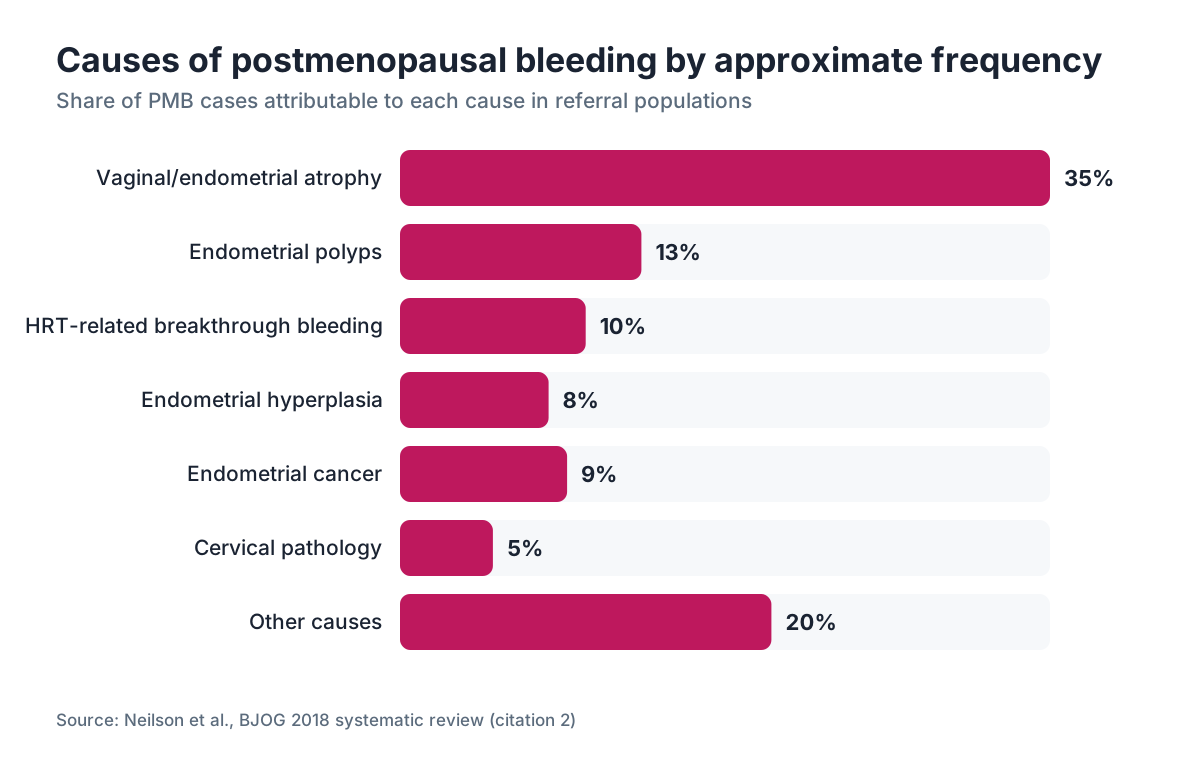
The list is longer than most women expect. Here are the main culprits, roughly in order of how often they show up in large case series. [2]
| Cause | Approximate share of PMB cases | |---|---| | Vaginal/endometrial atrophy | 30-40% | | Endometrial polyps | 12-15% | | Endometrial hyperplasia | 5-10% | | Endometrial cancer | 5-10% | | Cervical pathology (polyps, cancer) | 2-7% | | Hormone therapy (HRT) effects | 5-15% | | Other (fibroids, infection, medications) | remainder |
Vaginal and endometrial atrophy is the leading single cause. After estrogen drops at menopause, the tissues lining the vagina and the lower uterus thin out and turn fragile. Minor friction, a pelvic exam, even a bowel strain can trigger a small bleed. This is the scenario most likely to be benign, but you still need a tissue sample or imaging to confirm nothing else is going on alongside it.
Endometrial polyps are small, finger-like growths on the uterine lining. Most are benign. A small share harbor atypical cells, which is why they get removed rather than watched.
Hormone therapy is a meaningful contributor. Women who have a uterus and take estrogen-only therapy (appropriate only for those without a uterus) face higher endometrial cancer risk. Women on combined estrogen-plus-progestogen therapy sometimes experience breakthrough bleeding, especially in the first few months. If you're on HRT and bleeding unexpectedly, tell your prescriber right away. [3] Our guides on hormone replacement therapy and how progesterone protects the uterine lining go deeper.
Endometrial cancer accounts for roughly 1 in 10 PMB cases across large studies, which is why the reflex to investigate every case is well-founded. [2]
How serious is postmenopausal bleeding, and what are the cancer statistics?
This is the question most women want answered first.
A systematic review published in BJOG in 2018, covering more than 6,000 women with PMB, found a pooled endometrial cancer prevalence of 9.0% among those referred for investigation. [2] Read that the other way: about 91% of women who get evaluated will not have cancer. But 9% is high enough that nobody skips the workup.
Endometrial cancer is the most common gynecologic cancer in the United States. The American Cancer Society estimated approximately 67,880 new cases in 2024. [4] It is also one of the more survivable gynecologic cancers when caught early. The five-year survival rate for stage I endometrial cancer runs around 95%, which is exactly why early investigation of PMB matters so much. Stage IV drops to roughly 20%. [4]
Several risk factors shift your personal probability toward a more serious cause: obesity (fat tissue converts androgens to estrogen, which stimulates the endometrium), diabetes, tamoxifen use for breast cancer, a history of Lynch syndrome, late menopause after age 55, and never having been pregnant. [5] If you carry several of these, your clinician may move to biopsy before or alongside ultrasound.
Most PMB is not cancer. You just cannot know that without a diagnosis.
What tests should your doctor order for bleeding after menopause?
Two first-line tests show up in almost every PMB evaluation: transvaginal ultrasound (TVUS) and endometrial biopsy. [6]
Transvaginal ultrasound measures the thickness of the endometrial stripe. In a postmenopausal woman not on hormones, an endometrial thickness at or below 4 mm carries a very low cancer risk, with a negative predictive value above 99% in most studies. [6] If the stripe is thicker than 4 mm, or the image is unclear, tissue sampling is the next step.
Endometrial biopsy is an office procedure. A thin catheter passes through the cervix to collect a small amount of uterine lining. It takes a few minutes, feels like a sharp menstrual cramp, and hands your pathologist actual tissue to examine. This is the most direct way to rule hyperplasia and cancer in or out. False negatives happen (around 6 to 11%) because the catheter samples only part of the cavity, which is why some women with high suspicion go on to hysteroscopy even after a benign biopsy. [7]
Hysteroscopy lets a clinician look directly inside the uterine cavity with a small camera. It is the definitive diagnostic tool, and it earns its place with polyps and submucous fibroids a biopsy catheter might miss.
A Pap smear and pelvic exam round out the evaluation, checking the cervix, vagina, and external structures for lesions that could explain the bleeding.
If your clinician waves off postmenopausal bleeding without ordering at least a TVUS or biopsy, push back. Current guidance from ACOG states plainly that PMB requires evaluation to exclude endometrial cancer. [5]
Can hormone therapy cause bleeding after menopause, and what should you do?
Yes, and this is one of the most confusing scenarios for women on HRT.
Breakthrough bleeding in the first three to six months of a new continuous combined regimen (estrogen plus progesterone daily) is common and usually reflects the endometrium adjusting to a new hormonal environment. It generally settles down. [3]
Bleeding that starts after you've been stable on a regimen for more than six months, or any bleeding on sequential HRT outside the expected withdrawal window, needs the same evaluation as PMB in a woman not on hormones. Your HRT does not buy you a pass on the workup.
Estrogen-only therapy without a progestogen is appropriate only for women who have had a hysterectomy. If you have a uterus and take estrogen alone, you substantially raise your risk of endometrial hyperplasia and cancer, because estrogen stimulates the uterine lining and progestogen (or progesterone) is what counteracts that effect. [3] This is not a gray area.
The progestogen formulation matters too. Micronized progesterone (Prometrium) has a different endometrial effect profile than synthetic progestins like medroxyprogesterone acetate. If you're getting persistent breakthrough bleeding on your current regimen, the fix might be adjusting the progestogen type or dose rather than stopping HRT altogether. Talk to a clinician who specializes in menopause. Our progesterone guide has more on these distinctions.
What is genitourinary syndrome of menopause (GSM) and how does it cause bleeding?
Genitourinary syndrome of menopause (GSM) is the umbrella term for the cluster of vaginal, vulvar, and urinary changes driven by estrogen loss. [8] It replaced the older term "vaginal atrophy" because that phrase undersold how wide-ranging the symptoms are.
In GSM, the vaginal walls thin, lose elasticity, and produce less natural lubrication. The tissue turns fragile and inflamed. Contact that caused no trouble before menopause, including intercourse, a speculum exam, a tampon, or hard physical exertion, can produce small surface tears that bleed.
GSM affects an estimated 50 to 60% of postmenopausal women, yet fewer than 25% seek treatment, often because they write it off as aging. [8] Low-dose vaginal estrogen (cream, ring, or tablet) works well for GSM, delivers very little systemic absorption, and is generally considered safe for many women with a history of breast cancer once they've discussed it with their oncologist. [8]
If your PMB workup comes back showing only atrophic changes with no hyperplasia or cancer, local vaginal estrogen is often the treatment. It does more than stop the bleeding. It rebuilds the tissue over several weeks to months.
What if you're on tamoxifen? Does that change the picture?
It changes it a lot. Tamoxifen, used to treat and prevent hormone-receptor-positive breast cancer, blocks estrogen in breast tissue but acts like estrogen in the uterus. Long-term tamoxifen use raises the risk of endometrial polyps, hyperplasia, and endometrial cancer by roughly two to three times compared with non-users. [5]
Any postmenopausal bleeding in a woman on tamoxifen deserves the same urgency as in other women, plus a lower threshold for going straight to hysteroscopy instead of relying on ultrasound alone. ACOG specifically flags tamoxifen users as a higher-risk group needing prompt investigation of any PMB. [5]
Routine screening ultrasound in symptom-free tamoxifen users is not recommended by most major guidelines, because tamoxifen causes a characteristic subendometrial change that makes the endometrial stripe look thicker on ultrasound without actually being hyperplastic. That produces false positives and needless anxiety. The trigger for investigation is symptoms, chiefly bleeding, not a screening scan. [5]
Can fibroids cause bleeding after menopause?
Uterine fibroids are an interesting case. Before menopause, fibroids feed on estrogen and often drive heavy periods. After menopause, when estrogen drops, most fibroids shrink and quiet down. Plenty of women who had symptomatic fibroids in their 40s find the problem resolves on its own once the transition is complete.
Fibroids don't always vanish, though, and if you start or increase HRT after menopause, circulating estrogen can wake them back up. A fibroid that distorts the uterine cavity, called a submucous or intracavitary fibroid, can cause bleeding at any age.
Fibroids spotted on pelvic ultrasound in a woman with PMB are not automatically the answer. The workup still has to assess the endometrial lining separately, because fibroid-related bleeding and endometrial pathology can happen together. [7]
Here's the good news: once fibroids are confirmed as the cause of PMB and cancer and hyperplasia are ruled out, options range from watchful waiting to hysteroscopic resection, depending on symptoms and fibroid location.
When should you go to the emergency room versus scheduling an urgent appointment?
Most postmenopausal bleeding does not need an emergency room visit. The ER is the right call if:
- Bleeding is heavy enough to soak a pad in under an hour, continuously
- You feel lightheaded, faint, or have significant pelvic pain alongside the bleeding
- You're running a fever with the bleeding (a sign of possible infection)
For anything less dramatic, an urgent gynecology appointment within a week is the right response. "Urgent" means within days, not "whenever there's an opening in six weeks." Be direct with the scheduling staff: tell them you have postmenopausal bleeding. That phrase usually moves you up the queue.
If your primary care doctor or OB/GYN cannot see you fast, a telehealth consult can at least start the clinical conversation and generate the imaging and lab orders you need. Platforms like WomenRx that focus on women's hormonal health can review your history and connect you with clinicians who know this territory.
Don't let anyone, including well-meaning family, talk you into waiting a month to see if it happens again. One episode is enough to justify evaluation. [1]
How is postmenopausal bleeding treated after a diagnosis?
Treatment depends entirely on the cause. There's no single answer.
Atrophy and GSM: Low-dose vaginal estrogen as a cream, a small ring placed inside the vagina, or a vaginal tablet or suppository. Ospemifene (Osphena) is an oral option for women who prefer to skip vaginal application. [8] Both approaches target the underlying tissue fragility.
Endometrial polyps: Hysteroscopic polypectomy, an outpatient surgery under light sedation. The polyp is removed and sent to pathology. Recovery usually takes a day or two.
Endometrial hyperplasia without atypia: Progestogen therapy, often oral progesterone or a progestogen-releasing IUD like the Mirena, to reverse the overgrowth. A follow-up biopsy at 6 months confirms regression.
Endometrial hyperplasia with atypia: Higher risk of progressing to cancer, so many clinicians recommend hysterectomy, especially in women done with childbearing. For women who cannot have surgery, high-dose progestogen therapy with close surveillance is an option.
Endometrial cancer: Stage and grade drive the plan. Stage I is usually treated with hysterectomy, bilateral salpingo-oophorectomy, and sometimes pelvic lymph node assessment. More advanced stages add radiation, chemotherapy, or both. [9]
Breakthrough bleeding on HRT: Adjust the regimen, often by changing the progestogen type, dose, or timing. Stopping HRT with no plan is rarely the answer.
Our menopause hub has broader context on how the hormonal shifts of this stage affect body systems well beyond the uterus.
Can weight or metabolic health affect the risk of postmenopausal bleeding?
Yes, and the link is more direct than most women realize.
Fat tissue contains an enzyme called aromatase that converts androgens (still produced by the adrenal glands and ovaries after menopause) into estrogen. The more fat tissue you carry, the more peripheral estrogen you make. That estrogen stimulates the endometrium even with no ovarian function. Women with a BMI above 30 have roughly two to four times the endometrial cancer risk of normal-weight women, and the risk climbs with rising BMI. [5]
This is one metabolic reason weight management is a real clinical tool in postmenopausal women, not a lifestyle preference. GLP-1 receptor agonists like semaglutide have delivered meaningful weight reduction in large trials. The STEP 1 trial found a mean body weight reduction of 14.9% over 68 weeks with semaglutide 2.4 mg, versus 2.4% with placebo. [10] Whether that weight loss cuts endometrial cancer incidence over time is still under study, but the mechanistic case is strong.
If you're working on your weight as part of postmenopausal health, our guides on semaglutide for weight loss and the semaglutide vs tirzepatide comparison lay out what the trial data actually show.
Weight loss also lowers surgical risk in women who do need a hysterectomy, which matters if a PMB investigation leads there.
What questions should you ask your doctor at your evaluation appointment?
Walking in prepared saves time and gets you better care. Here's a working list:
- What is the endometrial thickness on my ultrasound, and what does that number mean for my risk?
- Do I need a biopsy today, or does my ultrasound result let us monitor instead?
- If you're recommending monitoring, what would prompt a biopsy at the next step?
- I'm on hormone therapy. Does that change how you read my ultrasound thickness?
- If my biopsy shows hyperplasia, what are my treatment options and how long do I have to decide?
- I have [obesity/diabetes/Lynch syndrome history/tamoxifen use]. Does that change the threshold for further testing?
- What signs should prompt me to call before my follow-up?
- If this turns out to be atrophy, what are the treatment options and how fast do they work?
You're entitled to a clinician who takes this symptom seriously and explains the reasoning behind every decision. If you leave an appointment with no clear diagnostic plan and no follow-up timeline, that's a gap worth pushing on.
For context on where you sit in the menopause timeline, our guides on when does menopause start and perimenopause age help you understand the hormonal backdrop against which PMB is happening.
Frequently asked questions
Is it normal to bleed vaginally 2 years after menopause?
No. Two years after your last period, any vaginal bleeding is postmenopausal bleeding and needs evaluation regardless of how light it is. The time elapsed since menopause does not make bleeding more acceptable. The workup is the same: transvaginal ultrasound and likely endometrial biopsy. About 9% of women investigated for PMB turn out to have endometrial cancer, which is why no episode gets dismissed.
Can stress cause vaginal bleeding after menopause?
Stress does not directly cause postmenopausal uterine bleeding. Before menopause, stress can disrupt cycles, but after menopause the hormonal machinery that drives periods has stopped. If you're bleeding, there's a structural or hormonal reason in the uterus, vagina, or cervix that needs investigation. Blaming PMB on stress and skipping evaluation is a common and risky mistake.
What does postmenopausal spotting look like compared to a period?
PMB can look like anything from a full flow you can't tell from a period to a few drops of pink or brown discharge on toilet paper. Brown discharge means older blood; it's still postmenopausal bleeding and still needs evaluation. The color, volume, and duration do not predict the underlying cause. A single spot and a heavy flow both call for the same initial workup.
Can a UTI or bladder infection cause bleeding that looks vaginal?
Yes. Urinary tract infections and urethral caruncles (small benign growths at the urethral opening) can produce blood that shows up on toilet paper or underwear and looks vaginal. A clinician can pin down the source during a pelvic exam. Even if the blood is confirmed to come from the urethra, it still needs a cause identified. Assuming it's urinary and skipping a pelvic exam is not a safe shortcut.
Does bleeding after sex after menopause mean something different?
Postcoital bleeding in a postmenopausal woman is a specific type of PMB and gets evaluated the same way. The most common cause is vaginal atrophy, where thinned tissue bleeds on contact. But cervical polyps, cervicitis, and, less often, cervical cancer can also present as postcoital bleeding. Your clinician will examine the cervix closely alongside the standard PMB workup.
How long does it take to get results from an endometrial biopsy?
Most pathology labs return endometrial biopsy results within 7 to 14 days, though some centers turn them around faster. If you haven't heard back in two weeks, call the office. Benign results are not always phoned in promptly, which means a patient who doesn't follow up may assume no news is good news when the result simply wasn't communicated.
Can low-dose vaginal estrogen cause postmenopausal bleeding?
Low-dose vaginal estrogen products (ring, cream at standard doses, tablet) are not expected to cause endometrial bleeding, because systemic absorption is minimal and does not significantly stimulate the lining. Vaginal estrogen cream used at high doses or too often can have more systemic effect, though. If you develop any bleeding while using vaginal estrogen, report it and get evaluated. Don't assume the estrogen is the innocent cause without ruling out other pathology.
What is an endometrial stripe and what thickness is concerning after menopause?
The endometrial stripe is the measurement of the uterine lining seen on transvaginal ultrasound. In postmenopausal women not on hormones, a stripe of 4 mm or less is considered low risk, with a cancer probability below 1% in most studies. A stripe above 4 mm calls for tissue sampling. Women on hormone therapy may have slightly thicker stripes at baseline, so different thresholds can apply. Your clinician reads the number in your full clinical context.
Can fibroids be the cause of bleeding after menopause if I had them before?
Possibly, but fibroids generally shrink after menopause once estrogen falls. If you start HRT, estrogen can re-stimulate fibroid activity. A submucous fibroid distorting the uterine cavity is the fibroid type most likely to bleed. Even if fibroids show up on your ultrasound, the endometrial lining must still be evaluated separately, since fibroid-related bleeding and endometrial cancer or hyperplasia can coexist.
How soon after menopause should I see a doctor if I notice any vaginal bleeding?
Within a week, ideally sooner. Call your gynecologist the same day you notice the bleeding and use the words 'postmenopausal bleeding' explicitly. Most practices triage this as an urgent visit. If you can't get an appointment within a week, a telehealth evaluation can start the diagnostic process while you wait for in-person imaging and biopsy. The one situation requiring same-day emergency care is bleeding heavy enough to soak a pad per hour.
Is endometrial cancer curable if caught through postmenopausal bleeding evaluation?
Caught at stage I, the five-year survival rate for endometrial cancer runs around 95%. Most women evaluated promptly for PMB and found to have cancer are at an early stage precisely because bleeding shows up early. This is why the urgency around PMB evaluation isn't fearmongering. The symptom is a signal that often catches a treatable problem, and delay chips away at that advantage.
Do I need to see a specialist, or can my primary care doctor evaluate postmenopausal bleeding?
Most PMB workups start with a gynecologist who can do a pelvic exam, order transvaginal ultrasound, and perform an in-office endometrial biopsy. A primary care physician can order imaging but may not be set up for the biopsy, which is the key diagnostic step. If you're referred to a gynecologic oncologist, that doesn't automatically mean cancer is suspected. It may reflect your risk profile or a biopsy result that needs specialist interpretation.
Can PCOS or other hormonal conditions cause bleeding after menopause?
Women with a history of polycystic ovary syndrome (PCOS) tend to have had irregular periods and often higher androgen levels before menopause. After menopause, peripheral conversion of androgens to estrogen may run higher than average, which sustains endometrial stimulation without a progestogen counterbalance. That can contribute to endometrial hyperplasia and PMB. A history of PCOS raises your baseline endometrial cancer risk slightly and is worth disclosing during the PMB evaluation.
What is Lynch syndrome and why does it matter for postmenopausal bleeding?
Lynch syndrome (hereditary nonpolyposis colorectal cancer, or HNPCC) is an inherited DNA mismatch repair defect that raises the lifetime risk of endometrial cancer to roughly 40 to 60%, depending on the gene affected. Women with Lynch syndrome may develop endometrial cancer younger and should be under surveillance. Any PMB in a known Lynch carrier warrants immediate, aggressive evaluation, and clinicians should ask about family history of colon, endometrial, and ovarian cancers.
Sources
- North American Menopause Society (NAMS), Menopause Practice: A Clinician's Guide
- Neilson et al., BJOG 2018 systematic review, 'The prevalence of endometrial cancer in women presenting with postmenopausal bleeding'
- FDA, Approved Drug Label: Climara (estradiol transdermal system) prescribing information
- American Cancer Society, Cancer Facts & Figures 2024 (endometrial/uterine cancer statistics)
- ACOG Practice Bulletin No. 149, Endometrial Cancer
- ACOG Committee Opinion 734, Role of Transvaginal Ultrasonography in Evaluating Postmenopausal Bleeding
- Clark et al., Journal of the American Medical Association (JAMA), 2002, 'Accuracy of outpatient endometrial biopsy in the diagnosis of endometrial cancer'
- North American Menopause Society (NAMS) Position Statement, Genitourinary Syndrome of Menopause
- National Cancer Institute (NCI), Endometrial Cancer Treatment (PDQ) Health Professional Version
- Wilding et al. / Novo Nordisk, STEP 1 Trial, New England Journal of Medicine 2021
- Endocrine Society Clinical Practice Guideline, Treatment of Menopause-Associated Vasomotor Symptoms