Vaginal dryness during menopause: causes, treatments, and what actually works
TL;DR: Vaginal dryness affects roughly 50-84% of postmenopausal women and is caused by falling estrogen shrinking and thinning vaginal tissue. Unlike hot flashes, it rarely improves on its own. Effective treatments range from daily moisturizers and lubricants to low-dose vaginal estrogen, ospemifene, and DHEA (prasterone). Most women get real relief within 6-12 weeks of starting treatment.
What causes vaginal dryness during menopause?
Estrogen keeps vaginal tissue thick, elastic, and well-lubricated. When estrogen drops in perimenopause and after menopause, the vaginal walls thin, the cells that produce natural moisture decrease, and the pH of the vagina rises from roughly 3.8-4.5 to above 5.0. That combination creates dryness, irritation, and a greater risk of infection. [1]
The official medical name for this is genitourinary syndrome of menopause (GSM). GSM replaced older terms like vaginal atrophy because the condition affects more than the vaginal lining. It reaches the vulva, urethra, and bladder too. Many women have urinary urgency, recurrent UTIs, or pain with intercourse alongside the dryness itself.
Unlike hot flashes, which often ease over time, GSM tends to get worse the longer estrogen stays low. That is one reason clinicians at menopause specialty practices recommend treating it earlier rather than waiting it out. Without treatment, the tissue can become fragile enough to tear from normal friction.
Smoking, cancer treatment (especially aromatase inhibitors or chemotherapy), surgical menopause, and some antihistamines or antidepressants speed up the dryness by lowering estrogen further or reducing mucosal secretion. Breastfeeding does the same thing temporarily.
How common is vaginal dryness in menopause?
The prevalence range in the literature is wide, partly because studies use different definitions and partly because many women never report the symptom to a doctor. The NAMS 2023 position statement cites figures between 27% and 84% of postmenopausal women depending on the population and how the question is asked. [2] A large survey-based study in Menopause journal found that about 50% of women in early postmenopause reported bothersome dryness. [3]
What is striking is how few women get treatment. The same survey data found that fewer than 25% of affected women had discussed the symptom with a clinician. There is still a cultural habit of filing this under "just getting older" rather than under "treatable medical condition," which is a shame, because the treatment options are genuinely good.
Underreporting also skews the numbers downward. Women who are not sexually active often dismiss the dryness as irrelevant, but GSM can cause discomfort during everyday activities, exercise, or even sitting, regardless of sexual activity.
What are the symptoms of vaginal dryness beyond just feeling dry?
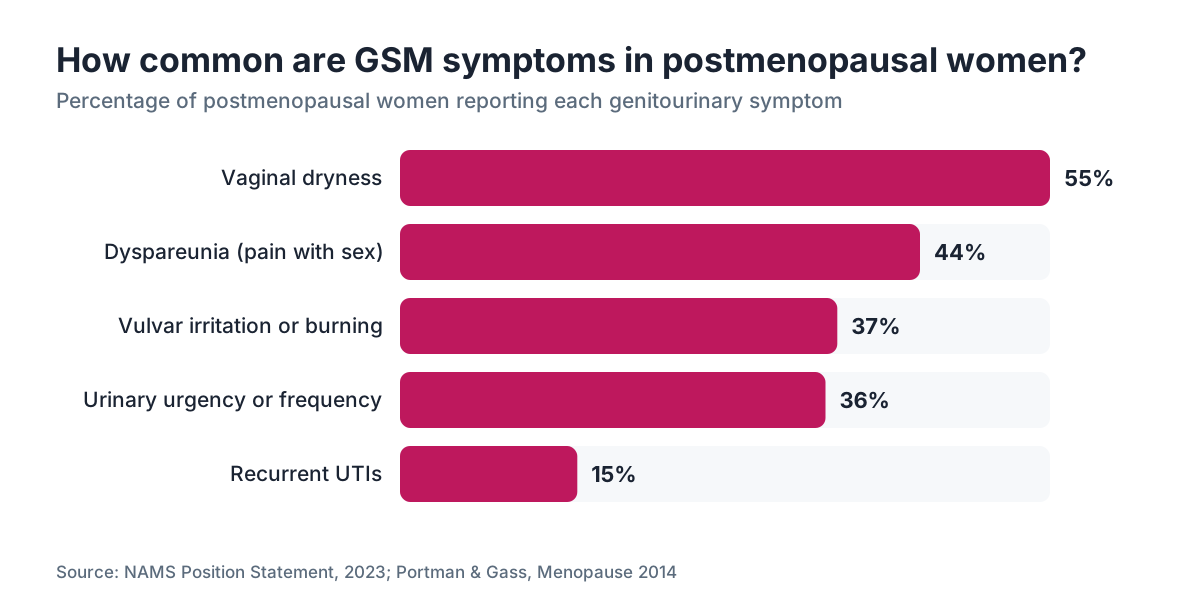
Dryness is the headline, but it is rarely the only thing women notice. The thinning and pH change that come with low estrogen create a cluster of symptoms that often show up together. [2]
Vulvar burning or irritation is common, sometimes described as a constant low-grade itch or a feeling that clothing is abrasive. Painful intercourse (dyspareunia) is one of the most distressing symptoms and a big driver of sexual avoidance and relationship strain. Light bleeding after intercourse, from fragile capillaries in the thinned tissue, can be alarming enough that women worry about cancer (see your doctor to rule that out, but GSM is usually the cause).
Urinary symptoms are part of GSM too. Urgency, frequency, and recurrent UTIs all become more common as the urethral tissue thins alongside vaginal tissue. Some women are treated for UTIs over and over without anyone addressing the underlying estrogen deficiency driving the vulnerability.
A useful way to track severity is the Vaginal Maturation Index (VMI), which measures the ratio of superficial to parabasal cells on a vaginal smear. You do not need to memorize it. But knowing it exists means you can ask your clinician to check objectively whether treatment is working.
What is the difference between vaginal moisturizers and lubricants?
These two products do different jobs, and both belong in your toolkit. Lubricants are used at the moment of sexual activity (or any time friction is the immediate problem) to reduce discomfort in real time. They do not change the underlying tissue. Moisturizers are used regularly, typically every 2-3 days, to restore and maintain hydration in the vaginal cells over time. Think of moisturizers as maintenance and lubricants as rescue.
For lubricants, water-based or silicone-based formulas are the usual recommendation. Oil-based lubricants degrade latex condoms and some silicone toys, so consider context. Avoid products with glycerin (can feed yeast), fragrances, or warming agents if your tissue is already irritated, because those ingredients frequently make symptoms worse.
For moisturizers, the best-studied over-the-counter option is polycarbophil-based gel (sold as Replens and generics). A randomized trial published in Fertility and Sterility compared polycarbophil gel to low-dose vaginal estrogen and found similar improvement in vaginal pH and dryness scores after 12 weeks for women with mild-to-moderate symptoms. [4] Hyaluronic acid vaginal gels are another reasonable option with small-study support.
These products are genuinely useful for mild symptoms and for women who cannot or prefer not to use hormones. Their limit is that they do not rebuild vaginal thickness or tissue integrity the way estrogen does, so for moderate to severe GSM they are often not enough on their own.
Does vaginal estrogen actually work, and is it safe?
Yes on both counts, with nuance on the safety question. Low-dose vaginal estrogen (creams, rings, tablets, or suppositories applied locally) is the most effective treatment for GSM and has the longest evidence record. The NAMS position statement calls it the gold standard for moderate-to-severe GSM that does not respond to moisturizers alone. [2]
How it works: applied locally, estrogen is absorbed into the vaginal tissue, restoring cell thickness, lowering pH back toward the normal range, and increasing lubrication. Systemic absorption is low with the low-dose formulations (the 10-microgram vaginal tablet, the 4-microgram tablet sold as Vagifem and generics, the Estring ring). The FDA-approved label for these products notes that systemic estrogen levels remain in the postmenopausal range for most users. [5]
Safety for women without a uterus: low-dose vaginal estrogen does not require progestogen to protect the uterine lining because systemic levels are so low. For women with an intact uterus, the data are generally reassuring, but the FDA labeling still carries the class warning for systemic estrogens (blood clots, stroke, endometrial cancer) because the products share a drug class, not because the low-dose vaginal forms carry the same risk profile. Many menopause specialists consider low-dose vaginal estrogen safe for most women, including most breast cancer survivors, but that is a conversation to have with your own oncologist or clinician.
For women on aromatase inhibitors (a common breast cancer treatment that drives estrogen to nearly undetectable levels), vaginal estrogen is a nuanced decision. NAMS published guidance in 2021 recommending that non-hormonal options be tried first in that population, and that low-dose vaginal estrogen is reasonable if non-hormonal options fail, in shared decision-making with the oncologist. [8]
If you want to explore a full hormone replacement therapy approach for both GSM and other menopause symptoms, systemic estrogen (pill, patch, or gel) also treats vaginal dryness effectively. An estrogen patch delivering 0.025-0.05 mg/day, for example, raises systemic estrogen enough to address both hot flashes and GSM at once.
What are the non-estrogen prescription options for vaginal dryness?
Two FDA-approved options exist for women who cannot or do not want to use estrogen.
Ospemifene (Osphena) is a selective estrogen receptor modulator (SERM) taken as a daily oral pill. It acts like estrogen in vaginal tissue but not in the breast. The FDA approved it in 2013 for dyspareunia due to vulvar and vaginal atrophy. [6] Clinical trials showed meaningful improvement in vaginal pH, maturation index, and pain with intercourse. It does carry a boxed warning for endometrial changes in women with an intact uterus and for thromboembolic risk, similar to systemic estrogen, so it is not automatically the low-risk alternative some assume.
Prasterone (Intrarosa), approved in 2016, is a vaginal suppository containing DHEA (dehydroepiandrosterone). Vaginal cells convert DHEA locally into estrogen and testosterone, improving tissue health. [7] Because the conversion happens inside the tissue, systemic hormone levels rise only minimally. The main Phase 3 trial found statistically significant improvement in the most bothersome symptom (usually dryness or dyspareunia) compared to placebo after 12 weeks. [7] This is a reasonable option for women who are uncomfortable with estrogen itself but whose tissue needs real hormonal support.
Lasofoxifene is another SERM with GSM data, currently approved in the European Union and under FDA review as of early 2025 for breast cancer indications, which may expand its availability in the US.
None of these is better for every person. The right choice depends on your other symptoms, your cancer history if relevant, what systemic effects you can accept, and honestly, what your insurance will cover.
How does vaginal dryness interact with the rest of menopause?
GSM does not exist in isolation. It sits alongside a longer list of changes that estrogen decline drives, including hot flashes, sleep disruption, mood changes, joint pain, and bone loss. [2] Your perimenopause age matters here: women in early perimenopause often have hot flashes as their first prominent symptom, with GSM becoming more troublesome a few years later as estrogen stays persistently low.
Bone loss is another estrogen-driven concern with the same root cause. If you are reading this because you are dealing with dryness, ask your clinician whether a bone density test is appropriate for your age and risk profile. The USPSTF recommends screening for all women 65 and older and for younger postmenopausal women with risk factors. [9]
For women using GLP-1 medications like semaglutide for weight loss, there is an indirect connection worth knowing about. Rapid weight loss lowers estrogen (fat tissue converts androgens to estrogen, and less of it means less conversion), which can worsen GSM symptoms. If your dryness got worse after starting a GLP-1, that is a plausible physiological reason. WomenRx clinicians see this pattern often and address it by checking estrogen levels alongside weight loss treatment.
Then there is the psychological side. GSM affects sexual function, which affects relationships and self-image. The SWAN (Study of Women's Health Across the Nation) longitudinal data showed that women with untreated GSM reported significantly lower sexual satisfaction and higher rates of relationship distress. [11] This is a medical problem with real quality-of-life consequences, not a vanity issue.
What lifestyle and over-the-counter approaches genuinely help?
Regular sexual activity (including solo) helps maintain vaginal blood flow and tissue elasticity. This is not a gimmick. The clinical literature consistently shows that sexually active postmenopausal women have better vaginal tissue health than those who are not, though causality runs both ways (healthier tissue makes activity more possible). [2]
Pelvic floor physical therapy is underused and genuinely effective. A trained pelvic floor PT can address muscle tension that makes dryness-related pain worse, teach dilator therapy for women with significant narrowing, and provide exercises that improve pelvic blood flow. Many insurers cover it. A referral from your gynecologist is usually enough.
Dietary changes have limited direct evidence on vaginal dryness specifically, but phytoestrogens (isoflavones from soy, lignans from flaxseed) get asked about a lot. The data are mixed and the effect sizes are modest at best. They are not a replacement for estrogen therapy in moderate-to-severe GSM.
Clothing and hygiene habits matter more than most people expect. Tight synthetic underwear, scented soaps, and feminine deodorant sprays all irritate already-sensitive tissue. Switching to cotton underwear and fragrance-free, pH-balanced cleansers is free and sometimes produces noticeable relief within a week.
Avoiding douching is one of the most evidence-backed recommendations in this space. Douching disrupts the vaginal microbiome and raises pH further, exactly the opposite of what you want.
When should you see a doctor about vaginal dryness?
Anytime the dryness is affecting your quality of life. That is honestly the threshold. Women often wait years before bringing this up, partly from embarrassment, partly from the belief that nothing can be done. Both are obstacles to getting a symptom treated that responds very well to treatment.
See a clinician promptly if you have postmenopausal bleeding (any bleeding after 12 months without a period), significant pelvic pain, discharge with an unusual color or odor, or symptoms that do not improve after 8-12 weeks of consistent moisturizer use. Postmenopausal bleeding in particular needs evaluation to rule out endometrial cancer, more than GSM.
If you have already been diagnosed with GSM and your current treatment stopped working, that is also worth a follow-up. Doses sometimes need adjusting, or you may have developed a secondary condition (like lichen sclerosus, which can mimic or coexist with GSM) that needs separate treatment.
Telehealth is a practical option for this type of evaluation. Discussing vaginal dryness over video with a clinician who specializes in women's hormones is often more comfortable than raising it at an in-person primary care visit where it may feel awkward. Platforms like WomenRx exist to give women fast access to hormone-literate clinicians who are not going to wave this off as normal aging.
How do different vaginal dryness treatments compare?
The table below summarizes the main treatment options by mechanism, evidence level, and key considerations. [2][4][5][6][7]
| Treatment | How it works | Evidence level | Key considerations | |---|---|---|---| | Vaginal moisturizers (polycarbophil, hyaluronic acid) | Hydrates tissue directly | Good for mild-moderate symptoms | Non-hormonal, no prescription needed, use 2-3x/week | | Lubricants (water or silicone-based) | Reduces friction at point of use | Symptom relief only | No tissue repair, use as needed | | Low-dose vaginal estrogen (cream, tablet, ring) | Restores tissue locally | Strongest evidence, gold standard per NAMS [2] | Low systemic absorption; most women do not need progestogen | | Prasterone/DHEA (Intrarosa) | Local conversion to estrogen + testosterone | FDA-approved, Phase 3 data [7] | Minimal systemic effect, good for estrogen-averse patients | | Ospemifene (Osphena) | Oral SERM, acts like estrogen in vaginal tissue | FDA-approved [6] | Boxed warning for clots/endometrium; convenient oral dosing | | Systemic HRT (pill, patch, gel) | Raises estrogen throughout body | Strong evidence for all menopause symptoms | Requires progestogen if uterus intact; treats hot flashes too | | Pelvic floor PT | Improves muscle function and blood flow | Moderate evidence, often additive | Underused, often covered by insurance |
For most women with moderate-to-severe GSM, low-dose vaginal estrogen is the most effective and best-tolerated option. For women with mild symptoms, a good moisturizer used consistently is a reasonable first step. The two can be combined.
What questions should you ask your clinician about vaginal dryness treatment?
Walking into an appointment prepared makes a real difference. Here are the questions worth asking, based on what the evidence and clinical guidelines actually address.
First: "Is what I have GSM, or could something else explain my symptoms?" Lichen sclerosus, contact dermatitis, and vulvodynia can all cause similar complaints and need different treatment.
Second: "Given my health history, which estrogen option has the lowest systemic absorption?" This matters especially if you have a history of hormone-sensitive cancer, cardiovascular disease, or blood clots.
Third: "Do I need a progestogen alongside vaginal estrogen?" The answer is usually no for low-dose local formulations, but it depends on whether you have a uterus and what your full hormone picture looks like.
Fourth: "How will we know if treatment is working?" Symptom improvement is the main measure, but a vaginal pH check (simple, done in office with a strip) or a repeat maturation index can confirm tissue response objectively.
Fifth: "What happens if I stop?" GSM symptoms return when treatment stops, which is why this is generally a long-term management decision rather than a short course.
For context on broader menopause management, including when does menopause start and what to expect across the transition, those questions are worth discussing at the same visit.
Frequently asked questions
Can vaginal dryness start before menopause is complete?
Yes. Vaginal dryness can begin during perimenopause when estrogen levels fluctuate and start trending lower. Some women notice dryness or irritation years before their last period. The tissue changes are driven by cumulative estrogen decline, not by the specific 12-month marker that defines menopause. Early symptoms are worth treating rather than waiting for the transition to finish.
Is vaginal dryness a normal part of aging or a medical condition?
It is extremely common but not something you have to accept as untreatable. Genitourinary syndrome of menopause (GSM) is a recognized medical condition with several effective treatments. NAMS explicitly states it does not improve without intervention, unlike some other menopause symptoms. Calling it just aging discourages women from seeking treatment that clearly improves their quality of life.
Can I use coconut oil or other natural oils as a vaginal lubricant?
Coconut oil is sometimes used as a lubricant and is generally safe for the tissue itself, though it degrades latex condoms. The concern with oil-based products is that they can trap bacteria against the vaginal wall and are harder to clear from the tissue. For women already dealing with pH imbalance from GSM, sticking to water-based or silicone-based lubricants is the more cautious choice.
Does vaginal estrogen raise my cancer risk?
For most women, low-dose vaginal estrogen does not meaningfully raise breast or endometrial cancer risk. Systemic absorption is very low with the 4-10 microgram tablet or the Estring ring. The FDA drug label carries a class warning because it shares a category with systemic estrogen, but the clinical data for local low-dose forms do not show the same risk profile. Women with active hormone-receptor-positive breast cancer should discuss this with their oncologist specifically.
How long does it take for vaginal estrogen to work?
Most women notice improvement in dryness and irritation within 2-4 weeks of starting low-dose vaginal estrogen. Pain with intercourse typically takes 6-12 weeks to improve significantly as tissue thickness rebuilds. pH usually normalizes within 3 months. Consistent use matters; skipping doses slows the response. The NAMS guidance suggests giving any treatment at least 12 weeks before deciding it is not working.
What if I have breast cancer and need treatment for vaginal dryness?
Non-hormonal options (moisturizers, lubricants, pelvic floor PT) are the first-line recommendation for breast cancer survivors, particularly those on aromatase inhibitors. If those fail and symptoms clearly affect quality of life, NAMS recommends low-dose vaginal estrogen in shared decision-making with your oncologist. Prasterone (DHEA) and ospemifene are also under discussion in this population, though data specific to breast cancer survivors are still limited.
Does vaginal dryness affect urinary symptoms too?
Yes. Genitourinary syndrome of menopause includes urinary urgency, frequency, and increased susceptibility to UTIs. The urethral tissue shares the same estrogen sensitivity as vaginal tissue and thins similarly after menopause. Low-dose vaginal estrogen placed in the vagina reaches the urethra and periurethral tissue, and studies show it cuts recurrent UTI frequency in postmenopausal women by about 50-75% compared to placebo.
Are there any vaginal dryness treatments approved specifically for pain during sex?
Yes. Ospemifene (Osphena) received FDA approval in 2013 specifically for dyspareunia (pain with intercourse) due to vulvar and vaginal atrophy in postmenopausal women. Prasterone (Intrarosa) was approved in 2016 for the same indication. Low-dose vaginal estrogen, while not approved exclusively for dyspareunia, is widely used and recommended for it by NAMS because it restores tissue integrity so well.
Can weight loss from GLP-1 medications make vaginal dryness worse?
Possibly. Fat tissue converts androgens to estrogen, so significant weight loss can lower circulating estrogen. Women who lose substantial weight quickly on GLP-1 medications like semaglutide sometimes report worsening GSM symptoms. Checking estrogen levels and addressing any drop with appropriate treatment is a reasonable step if this happens. It does not mean stopping the GLP-1, but it does mean managing hormones alongside the weight loss.
Does drinking more water help vaginal dryness?
Good hydration matters for overall mucosal health, and dehydration makes dryness worse. But vaginal dryness in menopause is mostly driven by estrogen deficiency, not systemic dehydration. Drinking more water is a sensible baseline habit but will not meaningfully rebuild vaginal tissue that has thinned from estrogen loss. Treat the root cause with appropriate estrogen therapy or the non-hormonal alternatives described above.
What is the difference between GSM and lichen sclerosus?
Both cause vulvar dryness, itching, and discomfort, but they have different causes and treatments. GSM is estrogen-driven; lichen sclerosus is an autoimmune inflammatory condition that can occur at any age. Lichen sclerosus presents with white, parchment-like patches and architectural changes to the vulva and responds to high-potency topical corticosteroids, not estrogen. The two can coexist. A vulvar exam by a trained clinician is the right way to tell them apart.
Is it safe to use vaginal estrogen long-term?
Based on available data, yes for most women. NAMS states that for women with only GSM symptoms (not needing systemic relief), low-dose vaginal estrogen can be continued as long as it helps, without a defined stopping point. Long-term safety data beyond 2 years are thinner than for short-term use, which is a real limitation, but no pattern of serious harm has emerged from the post-marketing experience of these products.
Does menopause hormone therapy (systemic) also treat vaginal dryness?
Yes. Systemic estrogen therapy through a pill, patch, gel, or spray raises estrogen levels body-wide, which includes the vaginal tissue. Women using systemic HRT for hot flashes usually see GSM improvement as well. Some still need supplemental vaginal estrogen if GSM symptoms persist despite adequate systemic levels. The two approaches are not mutually exclusive and are sometimes combined at lower doses of each.
Sources
- ACOG, Genitourinary Syndrome of Menopause Clinical Guidance
- NAMS, The 2023 Nonhormonal Management of Menopause-Associated Vasomotor Symptoms and Genitourinary Syndrome of Menopause Position Statement
- Portman DJ, Gass ML. Menopause 2014; Genitourinary syndrome of menopause: new terminology for vulvovaginal atrophy from the International Society for the Study of Women's Sexual Health and The Menopause Society
- Nachtigall LE. Comparative study: Replens versus local estrogen in menopausal women. Fertility and Sterility 1994
- FDA, Vagifem (estradiol vaginal tablets) prescribing information
- FDA, Osphena (ospemifene) approval and prescribing information, 2013
- FDA, Intrarosa (prasterone) approval and prescribing information, 2016
- NAMS, Management of Genitourinary Syndrome of Menopause in Women with or at High Risk for Breast Cancer: 2021 Position Statement
- USPSTF, Osteoporosis Screening Recommendation, 2018
- Santen RJ et al. Endocrine Society Clinical Practice Guideline: Compounded Bioidentical Hormones in Endocrinology Practice. Journal of Clinical Endocrinology and Metabolism 2017
- Santoro N et al. SWAN Study: Longitudinal changes in menopausal symptoms and sexual satisfaction. Menopause 2016
- Perdomo MC, Donahoe LS. Vaginal estrogen therapy and recurrent UTI: systematic review and meta-analysis. Menopause 2022