Treatment for low progesterone: what actually works
TL;DR: Low progesterone is treated mainly with bioidentical micronized progesterone (Prometrium or compounded), taken cyclically or continuously depending on where you are in the menopause transition. Stress reduction and weight loss can nudge levels up. Synthetic progestins work but carry different risks. Most women feel better within one to three cycles once the dose is right.
What does low progesterone actually mean?
Your body makes progesterone after ovulation. The corpus luteum produces it for roughly 12 to 14 days each cycle. Skip ovulation, or ovulate poorly, and progesterone never rises. In pregnancy, the placenta takes over around week 10. In perimenopause, ovulation turns erratic and eventually stops, and progesterone falls off a cliff alongside estrogen.
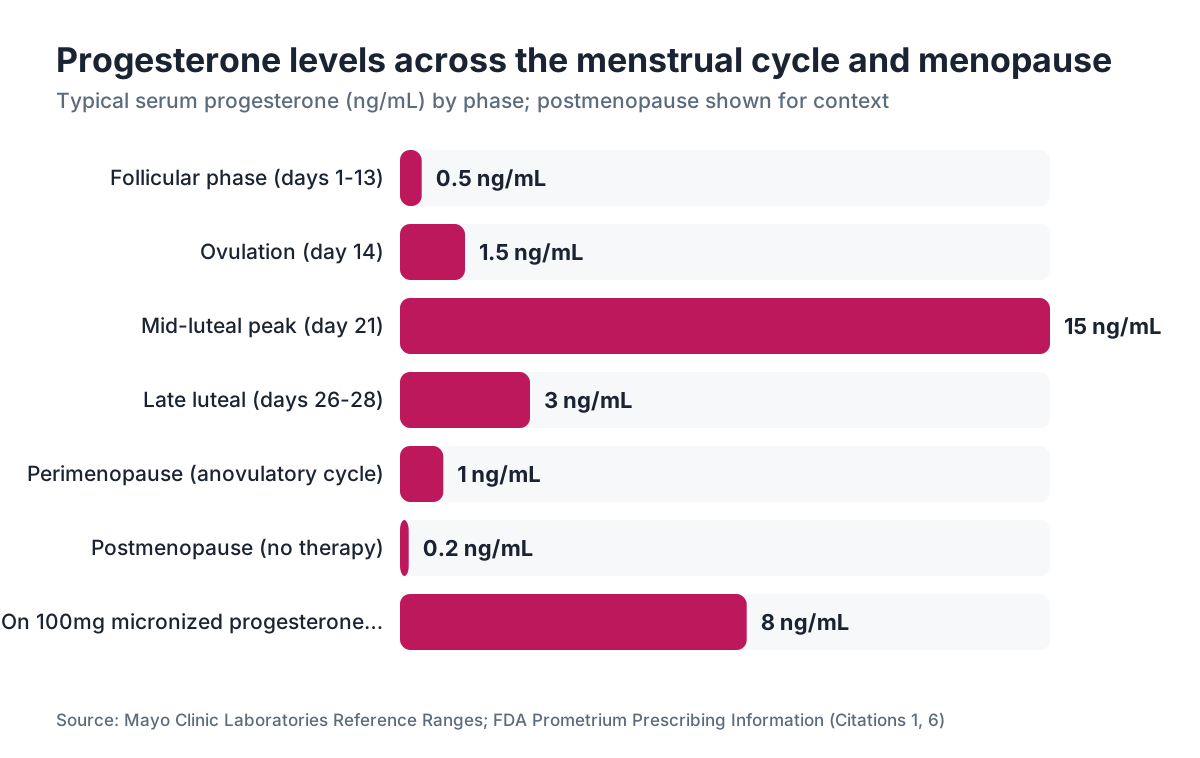
A luteal-phase serum progesterone below 10 ng/mL is generally considered inadequate for supporting pregnancy, and many clinicians read a mid-luteal level below 5 ng/mL (day 21 of a 28-day cycle) as a sign of anovulation or a weak ovulation [1]. Outside fertility work, one number tells you little. Symptoms, the timing of the blood draw, and whether you're still cycling all matter more.
The symptoms cluster in a recognizable way: irregular or heavy periods, spotting in the second half of your cycle, trouble falling asleep, more anxiety than usual, premenstrual mood swings, and in perimenopause, the 2 a.m. wake-up that so many women describe. Estrogen dominance, meaning high estrogen relative to progesterone rather than an absolute excess, amplifies all of it even when your estrogen looks technically normal. Our progesterone overview covers the broader hormone picture.
Testing is simple. Draw blood on day 21 of a regular cycle (or 7 days before your period is due) to catch the mid-luteal peak. Saliva and urine tests exist, but they're less standardized and harder for a clinician to use for dosing decisions [2].
What are the main treatment options for low progesterone?
Three categories: prescription hormones, lifestyle and nutrition, and herbal supplements. They are nowhere near equally effective, and the right pick depends on why your progesterone is low and what you're trying to fix.
Prescription therapy has the most evidence behind it. Micronized progesterone (brand name Prometrium in the US) is bioidentical, meaning its molecular structure matches what your ovaries make. It carries FDA approval to protect the uterine lining in women taking estrogen and to treat secondary amenorrhea. Both the Endocrine Society and the North American Menopause Society (NAMS) call it the first-line progestogen for menopausal hormone therapy in women with a uterus [3].
Synthetic progestins get used widely too: medroxyprogesterone acetate (MPA), norethindrone, levonorgestrel. They protect the uterine lining but bring a different side-effect profile. The Women's Health Initiative linked estrogen plus MPA (Prempro) to a small but real rise in breast cancer risk, while the estrogen-only arm (used in women without a uterus) showed no such signal [4]. Whether micronized progesterone carries that same signal is still argued. ESHRE 2019 guidance suggests it looks more favorable, though the evidence isn't airtight.
If you're still cycling and just want to fix a luteal-phase deficiency, low-dose vaginal progesterone or oral micronized progesterone taken cyclically (usually days 14 to 28) are common. For fertility support, vaginal progesterone gel (Crinone) or suppositories are standard.
Lifestyle works, but modestly. Cortisol matters because progesterone is a precursor to cortisol, and chronic stress can shunt progesterone toward making it. Reaching a healthy weight helps because fat tissue converts androgens into estrogen, which suppresses ovulation and drags progesterone output down [5].
Vitex (chasteberry) has a long track record for PMS and luteal-phase support. A handful of randomized trials show benefit, but the effect sizes are small and the study quality is uneven. Vitex does not replace prescription therapy in a real progesterone deficiency.
What is micronized progesterone and why do doctors prefer it?
Micronized progesterone is progesterone ground into tiny particles and suspended in oil (peanut oil, in Prometrium's case), which sharply improves oral absorption over plain progesterone. It's the exact molecule your body makes. Synthetic progestins are chemically altered to survive digestion, and that alteration changes how they behave at receptors throughout the body.
The preference for it in menopausal hormone therapy comes from a few directions. NAMS, in its 2022 Hormone Therapy Position Statement, says "micronized progesterone is associated with better tolerability and possibly a more favorable benefit-risk profile than synthetic progestins" [3]. ESHRE and the British Menopause Society say much the same. For women who hated how the pill made them feel (the pill uses synthetic progestins), micronized progesterone often sits better because it converts to allopregnanolone, a GABA-A receptor modulator with a mild calming, sleep-promoting effect.
Standard dosing for uterine protection alongside estrogen is 200 mg orally at bedtime for 12 days per calendar month (sequential) or 100 mg nightly without a break (continuous) [6]. Nighttime dosing is smart on purpose: the drowsiness turns into a feature.
Compounding pharmacies make it too, as capsules, troches, and creams. Oral and vaginal compounded capsules using the same micronized form match Prometrium's bioavailability fairly closely. Cream is another story. Absorption through skin runs low and unpredictable, and the serum levels it produces are often too low to protect the uterus. If you take estrogen and lean on progesterone cream for that protection, that's a genuine risk worth raising with your provider.
If you're weighing hormone replacement therapy, you need to understand how progesterone sits next to estrogen. Our estrogen patch guide covers the estrogen half of that equation.
What progesterone doses are used for different situations?
Dose follows the diagnosis. Here's a practical summary.
| Situation | Form | Typical Dose | Duration | |---|---|---|---| | Menopausal HRT (sequential) | Oral micronized progesterone | 200 mg nightly | 12 days/month | | Menopausal HRT (continuous) | Oral micronized progesterone | 100 mg nightly | Daily | | Luteal phase support (non-fertility) | Oral micronized progesterone | 100 to 200 mg nightly | Days 14 to 28 of cycle | | ART / IVF luteal support | Vaginal progesterone gel or suppository | 90 mg (gel) or 200 to 400 mg (suppository) daily | Per protocol | | Secondary amenorrhea (diagnostic/treatment) | Oral micronized progesterone | 400 mg nightly | 10 days |
These are standard clinical ranges, not a personalized prescription. Your real dose tracks your estrogen level (more estrogen demands more progesterone to keep the uterus safe), your symptom pattern, and whether you still have a uterus. Women who've had a hysterectomy usually don't need progesterone at all unless they want it for sleep, mood, or anxiety.
Vaginal delivery is different. Bioavailability to the uterus is higher and more direct (the first-uterine-pass effect), so vaginal doses often run lower than oral ones for the same uterine protection [6]. Some women choose the vaginal route precisely to skip the drowsiness that oral progesterone brings.
Can lifestyle changes raise progesterone naturally?
Yes, with realistic expectations. When low progesterone comes from anovulation driven by stress, undereating, or overtraining, fixing the root cause can restore ovulation and progesterone production. Hypothalamic amenorrhea, where the brain shuts off ovulation in response to an energy deficit or stress, is a real and common cause in women in their 20s and 30s. Eat enough, train less, and it usually turns back on [5].
Perimenopause is a different animal. Anovulatory cycles are just part of hormonal aging. No amount of lifestyle work stops that process, though it can support your overall hormone health. Sleep matters more than people expect: bad sleep raises cortisol, which disrupts the hypothalamic-pituitary-ovarian axis that runs progesterone production. Chronic stress does the same thing.
Weight matters because excess fat raises circulating estrogen through aromatization of androgens in fat tissue. That estrogen, unopposed by enough progesterone, drives the whole estrogen-dominance symptom picture. Losing even 5 to 10 percent of body weight can meaningfully shift the estrogen-to-progesterone ratio in women carrying extra weight [5].
Zinc (needed for follicle development and corpus luteum function), vitamin B6 (used in progesterone synthesis), and magnesium (which lowers cortisol) all support the machinery. The evidence for supplementing them specifically to raise progesterone is mostly mechanistic and observational, not big randomized trials. Correcting a real deficiency probably helps. Loading up past sufficiency probably doesn't.
What herbal and OTC supplements are used for low progesterone?
Vitex agnus-castus (chasteberry) is the most studied herb here, and it works indirectly. It binds dopamine receptors in the pituitary and cuts prolactin secretion. High prolactin suppresses ovulation, so by lowering prolactin, Vitex can restore ovulation and lift progesterone in women with mild hyperprolactinemia or a luteal-phase deficiency. A 2017 meta-analysis in the Journal of Alternative and Complementary Medicine found real improvements in PMS symptoms with Vitex, and smaller studies showed modest rises in mid-luteal progesterone [7].
Most trials used 20 to 40 mg of a standardized Vitex extract daily, taken in the morning. Effects take 3 to 6 months to show up. It's wrong for women with significantly low progesterone who need uterine protection, for women trying to conceive with confirmed anovulation, and for women already in menopause (where the ovaries won't restart ovulation no matter what prolactin does).
Maca root gets marketed for hormone balance, but it doesn't directly raise progesterone. It seems to act on the hypothalamic-pituitary axis and may ease menopausal symptoms, but the mechanism has nothing to do with progesterone.
OTC progesterone cream in the US contains no more than 3 percent progesterone by federal guideline. At that strength, the evidence for a meaningful serum bump is weak. Some women report relief, which may be local effects or placebo. If you take estrogen therapy, OTC cream is not an adequate substitute for a prescription progestogen to protect the uterus.
Wild yam cream gets sold as a natural progesterone source, and that's a flat-out misconception. Wild yam contains diosgenin, a precursor that can become progesterone in a lab, but your body can't run that conversion. Wild yam cream does nothing to your progesterone levels.
How is low progesterone treated differently in perimenopause versus menopause?
The distinction matters because the underlying physiology is not the same.
In perimenopause, you're still cycling, but ovulation is increasingly hit-or-miss. Some months you ovulate normally. Other months you don't, and you get no progesterone rise while estrogen keeps coming from follicles that never fully mature. The result is stretches of high estrogen with almost no progesterone, which shows up as heavy periods, breast tenderness, fluid retention, and mood swings. Treatment often means cyclic progesterone (12 to 14 days each month) to trigger a withdrawal bleed and thin the uterine lining. Many providers use 200 mg of micronized progesterone nightly for 12 days per cycle.
In postmenopause, the goal shifts. If you use estrogen therapy, you need progesterone (continuously or sequentially) to protect the uterus from estrogen-driven endometrial hyperplasia. The continuous low-dose regimen (100 mg nightly) tends to stop periods altogether, which most postmenopausal women prefer. Sequential regimens can bring back a monthly bleed.
No estrogen therapy and no uterus? You may not need progesterone at all. No estrogen but real sleep disruption or anxiety in postmenopause? Some clinicians prescribe low-dose progesterone (50 to 100 mg at bedtime) for its neurosteroid effects on GABA receptors, though this is off-label and the evidence is thinner than for the uterine-protective role.
For the wider perimenopause timeline, see perimenopause age and when does menopause start.
What are the risks of progesterone treatment?
Oral micronized progesterone is generally well tolerated. The most common side effects are drowsiness (again, handy at bedtime), dizziness, and breast tenderness in some women. Skip it if you have a known peanut allergy, since Prometrium contains peanut oil. Vaginal or compounded formulations solve that.
The breast cancer question is the one women want answered straight. The Women's Health Initiative showed a statistically significant rise in breast cancer with combined estrogen plus synthetic progestins (MPA), but not with estrogen alone [4]. The E3N French cohort found that estrogen combined with micronized progesterone did not significantly raise breast cancer risk versus non-users, while estrogen with synthetic progestins did, which points to the type of progestogen mattering [8]. E3N is observational, so it has limits. NAMS currently calls the evidence for a better breast cancer profile with micronized progesterone "reassuring but not definitive" [3].
For women with a history of breast cancer, hormone therapy including progesterone is generally off the table, and the call belongs to a frank conversation with an oncologist.
Venous thromboembolism risk, a worry with estrogen, does not appear meaningfully raised by oral micronized progesterone, and transdermal estrogen carries a lower VTE risk than oral estrogen regardless of the progestogen [9]. Anyone with a personal or strong family history of clotting disorders needs a careful evaluation before starting any hormone therapy.
Progesterone is contraindicated in known or suspected pregnancy (after the first trimester, once the placenta takes over), in active liver disease, and in undiagnosed abnormal uterine bleeding.
How do I know if my progesterone treatment is working?
Symptoms are the main signal. Sleep usually shifts first, sometimes within two to four weeks of starting micronized progesterone at bedtime. Cycle regularity, calmer premenstrual moods, and lighter periods follow over one to three cycles. Some women notice their anxiety drop fairly fast, which fits the neurosteroid mechanism.
Blood testing can confirm you're in a therapeutic range, though the target depends on context. For fertility support, a mid-luteal serum progesterone above 10 ng/mL is a common threshold, and many reproductive endocrinologists want to see 15 to 20 ng/mL in assisted reproduction cycles. For menopausal hormone therapy, the target is adequate uterine protection, not a specific blood level. Monitoring there means checking the endometrium if breakthrough bleeding shows up, not routine serum tests.
If symptoms hang on after 2 to 3 months on a steady dose, a few things could be true: the dose is too low, absorption is inconsistent (a real issue with oral delivery), the form is wrong (cream instead of a capsule), or something else is driving the symptoms. Cortisol, thyroid, and low estrogen all deserve a look when progesterone alone doesn't deliver.
Want to handle this through telehealth? Services like WomenRx can prescribe and manage micronized progesterone as part of a full hormone evaluation, no in-person visit required.
If you have a uterus and take estrogen, an annual review of your regimen and prompt workup of any unexpected bleeding are standard. Unexplained bleeding on continuous combined therapy after the first 3 to 6 months of adjustment calls for an endometrial biopsy or ultrasound.
What about progesterone treatment during fertility and early pregnancy?
This is its own clinical world. IVF stimulates the ovaries pharmacologically, and the retrieval process often suppresses corpus luteum function. Progesterone supplementation is essentially universal in IVF cycles, because without it implantation rates drop. The Cochrane reviews are consistent: luteal phase support with progesterone significantly raises live birth rates in ART cycles [10].
For women with recurrent miscarriage and a luteal phase deficiency, low-dose vaginal progesterone started around confirmed ovulation has been studied hard. The PRISM trial (2019) in the New England Journal of Medicine found that vaginal progesterone (400 mg twice daily) raised live birth rates in women with early pregnancy bleeding and a history of miscarriage, with the biggest benefit in those with three or more prior losses [11].
For natural conception with a documented luteal phase defect, vaginal or oral progesterone started after confirmed ovulation and continued through 10 to 12 weeks is common practice, though the evidence outside IVF is thinner than many people assume.
First-trimester supplementation is considered safe. No consistent signal of fetal harm has turned up with micronized progesterone, and reproductive medicine uses it constantly. Synthetic progestins with androgenic activity (like MPA) are generally avoided in early pregnancy on older concerns, though the low-dose progestins in oral contraceptives are not considered teratogenic at contraceptive doses.
Is progesterone treatment covered by insurance, and what does it cost?
Generic micronized progesterone capsules (generic Prometrium) are widely available in the US and cheap with most insurance or discount programs. GoodRx prices a 30-day supply of 100 mg generic micronized progesterone at roughly $15 to $40 without insurance, depending on the pharmacy. Brand-name Prometrium runs a lot higher, often $200 or more for 30 days without coverage.
Most commercial plans and Medicare Part D cover generic micronized progesterone with a standard copay when it's prescribed for an FDA-approved indication (endometrial protection with estrogen, secondary amenorrhea). Coverage for off-label uses (sleep, mood, perimenopausal deficiency without estrogen) varies and sometimes needs a prior authorization.
Compounded progesterone, whether capsules or suppositories, is generally not covered. Out-of-pocket runs about $30 to $80 per month depending on the pharmacy and dose.
Vaginal progesterone gels (Crinone) and fertility suppositories cost a lot more: Crinone 8% gel can run $300 to $600 per cycle without insurance. These are sometimes covered when the diagnosis is infertility or ART support.
If you're weighing hormone therapy more broadly, our hormone replacement therapy guide covers the cost of combined regimens.
When should you see a doctor rather than trying supplements first?
See a clinician if any of these fit. You've been trying to conceive for six months or more without success (12 months if under 35). You've had two or more miscarriages. Your periods have gone irregular in a way that's clearly different from your baseline. You've had any bleeding after menopause. You use estrogen therapy of any kind and don't have confirmed, adequate progestogen coverage for your uterus.
Supplements are a reasonable first move when your symptoms are mild (PMS, minor sleep trouble, small cycle irregularity), you're not trying to conceive, you're not in menopause, and basic labs show no major hormonal disruption.
The real danger in self-treating while dodging a clinical evaluation is missing something that matters: undiagnosed hypothyroidism (which often shows up as cycle irregularity and fatigue that mimic low progesterone), high prolactin from a pituitary adenoma, or, in perimenopause, a hormone picture that actually needs estrogen alongside progesterone. Low progesterone is rarely the whole story.
If you're in perimenopause or early menopause with real symptoms, do the full menopause workup rather than patching one symptom at a time. Telehealth has made this easier: a board-certified provider can review labs, talk through your full symptom picture, and prescribe appropriate therapy without the long wait for a specialist.
WomenRx offers hormone consultations built for women in this transition, and can prescribe micronized progesterone as part of a complete hormone evaluation.
Frequently asked questions
What is the fastest way to raise progesterone levels?
Prescription micronized progesterone (oral or vaginal) raises serum and tissue progesterone within hours of a dose. It's the fastest, most reliable method. Lifestyle changes like cutting chronic stress and restoring ovulation (in women with hypothalamic amenorrhea) can work too, but take weeks to months. No supplement raises progesterone as quickly or predictably as prescription therapy.
Can low progesterone cause anxiety and sleep problems?
Yes. Progesterone converts to allopregnanolone, a strong modulator of GABA-A receptors, and GABA is the brain's main calming signal. When progesterone falls, especially in the late luteal phase and perimenopause, less allopregnanolone means less GABAergic tone, which raises anxiety and disrupts sleep. That's why oral micronized progesterone at bedtime often improves both within weeks.
Is progesterone cream effective for low progesterone?
OTC progesterone cream (up to 3% concentration) absorbs through skin poorly and unpredictably. The serum levels it produces are generally too low for uterine protection in women taking estrogen, and the evidence for symptom relief is weak. Prescription-strength topical progesterone from a compounding pharmacy has better data but still lower systemic exposure than oral or vaginal routes. For genuine low progesterone, cream is rarely the best choice.
What is the difference between progesterone and progestin?
Progesterone is the natural hormone your body makes, with a specific molecular structure. Progestins are synthetic compounds built to mimic progesterone's uterine effects but differ structurally. Bioidentical micronized progesterone has better tolerability and likely a more favorable breast cancer risk profile than synthetic progestins like medroxyprogesterone acetate, based on current evidence. They are not interchangeable.
How long does it take for progesterone treatment to work?
Sleep improvements with oral micronized progesterone can show up within one to two weeks. Cycle regularization and mood improvements usually take one to three months of consistent use. For uterine lining protection in menopausal hormone therapy, the protective effect is present from the first month of adequate dosing. Fertility outcomes depend on treatment timing relative to ovulation or embryo transfer.
What blood level of progesterone is considered low?
In a cycling woman, a mid-luteal serum progesterone below 5 ng/mL (day 21 of a 28-day cycle) suggests anovulation or poor corpus luteum function. For fertility support, most reproductive endocrinologists want levels above 10 to 15 ng/mL. In postmenopause, progesterone without therapy is essentially zero, and the relevant question is whether prescribed progesterone is protecting the endometrium, not a serum number.
Can low progesterone cause miscarriage?
Low progesterone is associated with miscarriage, but whether it's cause or consequence is debated. A failing pregnancy often produces less progesterone because the fetus or placenta isn't developing normally. Still, in women with recurrent pregnancy loss and documented luteal phase deficiency, progesterone supplementation does improve live birth rates. The PRISM trial found vaginal progesterone significantly raised live births in women with early pregnancy bleeding and prior miscarriages.
Do I need progesterone if I take estrogen therapy?
Yes, if you have a uterus. Estrogen therapy without a progestogen causes endometrial hyperplasia, which can progress to endometrial cancer. Progesterone (or a progestin) counters that effect. If you've had a hysterectomy, you don't need progesterone for uterine protection, though some providers prescribe it off-label for sleep and mood. Women using low-dose vaginal estrogen for genitourinary symptoms may not need systemic progestogen per NAMS guidance.
Is Vitex (chasteberry) effective for low progesterone?
Vitex works by reducing prolactin, which can restore ovulation and indirectly raise progesterone in women with hyperprolactinemia or mild luteal phase deficiency. A 2017 meta-analysis found significant PMS symptom reduction. Effects are modest and take 3 to 6 months. Vitex is not adequate for women who need prescription-level uterine protection, women with significant anovulation, or women in menopause.
Can you take progesterone without estrogen?
Yes. Progesterone can be prescribed alone for several reasons: luteal phase support in cycling women, secondary amenorrhea, and off-label use for sleep and anxiety in perimenopausal or postmenopausal women. It doesn't require estrogen. Women who've had a hysterectomy and don't need estrogen can still take progesterone solely for its neurosteroid benefits if a clinician decides it's appropriate.
What foods or nutrients support progesterone production?
No food directly raises progesterone, but deficiencies in zinc, vitamin B6, and magnesium can impair progesterone synthesis and corpus luteum function. Adequate calories are essential: undereating suppresses the HPO axis and stops ovulation. Cutting alcohol helps too, since alcohol raises estrogen and can suppress progesterone. These are supportive measures, not substitutes for prescription therapy in significant deficiency.
How is low progesterone treated in perimenopause specifically?
Cyclic micronized progesterone, typically 200 mg nightly for 12 days per month, is the standard approach. It creates a withdrawal bleed, reduces heavy perimenopausal bleeding, protects the uterus, and often improves sleep and mood during the days it's taken. Some providers use a continuous low dose when breakthrough bleeding is manageable. The plan gets adjusted as ovarian function changes and full menopause nears.
Is compounded progesterone as effective as Prometrium?
Oral compounded micronized progesterone capsules, using the same micronized particle technology, have comparable bioavailability to Prometrium in most pharmacokinetic studies. Quality depends entirely on the compounding pharmacy's standards. USP-verified or PCAB-accredited pharmacies are more reliable. Compounding is especially useful when a patient has a peanut allergy (Prometrium contains peanut oil) or needs a dose not sold commercially.
What happens if low progesterone goes untreated?
In cycling women, untreated low progesterone can cause heavy or irregular periods, progressive endometrial buildup, infertility, and worsening PMS or PMDD. In women taking estrogen therapy without adequate progestogen, there's a real risk of endometrial hyperplasia and endometrial cancer over time. In perimenopause, leaving it untreated means continued sleep disruption, mood instability, and heavier bleeding that may eventually need intervention.
Sources
- Mayo Clinic Laboratories, Progesterone Reference Ranges
- Endocrine Society, Clinical Practice Guideline on Hormone Testing
- North American Menopause Society (NAMS), 2022 Hormone Therapy Position Statement
- NIH/NHLBI, Women's Health Initiative: Risks and Benefits of Estrogen Plus Progestin in Healthy Postmenopausal Women
- NIH Eunice Kennedy Shriver National Institute of Child Health and Human Development (NICHD): amenorrhea and menstrual health
- FDA, Prometrium (micronized progesterone) Prescribing Information
- Journal of Alternative and Complementary Medicine, Verhoeven et al. 2017, Vitex agnus-castus meta-analysis
- Fournier A et al., E3N Cohort, Breast Cancer Risk and Hormone Therapy, International Journal of Cancer 2008
- Canonico M et al., ESTHER Study, Circulation 2007, Postmenopausal Hormone Therapy and VTE
- Cochrane Database of Systematic Reviews, Luteal Phase Support in ART Cycles
- Coomarasamy A et al., PRISM Trial, New England Journal of Medicine 2019
- Endocrine Society, Clinical Practice Guideline: Menopause and Hormone Therapy