Hot flash treatment for older women: what actually works
TL;DR: Hot flashes affect roughly 80% of women through menopause and can persist for more than a decade. For older women, low-dose estrogen is still the most effective treatment, but non-hormonal prescriptions (fezolinetant, SNRIs) and a few OTC options give real alternatives. The right choice depends on age, cardiovascular history, and how disruptive the flashes actually are.
Why do hot flashes keep happening years after menopause?
Most women expect hot flashes to peak in the first year or two after the final period, then fade. For many, they do. But a 2015 study in JAMA Internal Medicine, the Study of Women's Health Across the Nation (SWAN), followed more than 1,400 women and found that the median total duration of moderate-to-severe vasomotor symptoms was 7.4 years. Women who already had symptoms before their final menstrual period had symptoms lasting more than 11 years on average [1]. That is not a short window.
The mechanism is understood now in a way it was not a decade ago. The thermoregulatory center in the hypothalamus narrows its "comfort zone" when estrogen drops, and neurons in the arcuate nucleus that release neurokinin B become hyperactive. Those neurons talk directly to the cells that fire off a flush. This is why fezolinetant, the first non-hormonal prescription drug approved specifically for hot flashes, targets the neurokinin 3 receptor rather than estrogen at all [2].
For women in their late 60s or 70s, the picture shifts a little. Estrogen has been low for years, and the hypothalamus has had time to partially adapt, so truly severe hot flashes get less common with age. Less common is not gone. Many women in their 70s still have three to five flushes a day, and the night sweats wreck sleep, which piles onto fatigue, mood changes, and cardiovascular risk in ways that matter at that age. Deciding whether to treat is a genuine clinical question, more than a comfort preference.
Is hormone therapy still an option for women over 65?
This is the question most older women get the wrong answer to. For years the teaching was that hormone therapy (HT) was off the table after 65, largely because of how the Women's Health Initiative (WHI) results were read when they came out in 2002. The WHI enrolled women with a mean age of 63, many of them more than 10 years past menopause, and the study found a small rise in cardiovascular events and breast cancer in the combined conjugated equine estrogen plus medroxyprogesterone acetate arm [3].
What got lost in translation: the absolute risk increases were small, they concentrated in older, heavier women starting HT decades after menopause, and they did not apply evenly to all formulations or all ages. The "timing hypothesis," or "window of opportunity," comes from reanalyses showing that women who started HT within 10 years of menopause had lower cardiovascular event rates than those who started later [3].
The Menopause Society (formerly NAMS) 2022 position statement is direct: "For women aged older than 60 years or those who are more than 10 years from menopause onset, the benefit-risk ratio appears less favorable" but is not automatically unfavorable [4]. The society recommends individual shared decision-making, not a blanket age cutoff. The Endocrine Society's clinical practice guideline takes a similar line, noting that for symptomatic older women without contraindications, low-dose estrogen is still an evidence-based option [5].
Contraindications that genuinely matter: prior estrogen-receptor-positive breast cancer, active blood clots, unexplained vaginal bleeding, active liver disease, or a personal history of stroke. Those are real barriers for some older women. But "I am over 65" is not itself a contraindication.
If a woman is a candidate, the current preference is hormone replacement therapy at the lowest effective dose, transdermal delivery (patch or gel) rather than oral to skip first-pass liver metabolism, and for women with a uterus, a progestogen to protect the endometrium. See our article on the estrogen patch for more on transdermal options.
What are the non-hormonal prescription options for hot flashes?
Fezolinetant (brand name Veozah) is the one genuinely new mechanism in this space. The FDA approved it in May 2023 for moderate-to-severe vasomotor symptoms. It is a selective neurokinin 3 receptor antagonist, so it works on the hypothalamic pathway rather than estrogen receptors [2]. In the SKYLIGHT 1 and SKYLIGHT 2 trials, fezolinetant 45 mg daily cut the frequency of moderate-to-severe hot flashes by roughly 60% at week 12, against about 45% for placebo [2]. It does not touch hormones, does not interact with hormone-sensitive cancers, and can therefore be used in breast cancer survivors. That is a real practical advantage.
The catch: it costs around $550 to $600 a month without insurance, and it carries an FDA warning about liver injury. Liver function tests are required before starting and at 3 and 6 months. It also cannot be used with CYP1A2 inhibitors like fluvoxamine or ciprofloxacin.
SSRI and SNRI antidepressants have been used off-label for hot flashes for two decades. Venlafaxine 37.5 to 75 mg and desvenlafaxine 100 to 150 mg have the best evidence in this class. Paroxetine salt (Brisdelle) at 7.5 mg is the only FDA-approved SSRI for hot flashes, though the dose used in practice is often higher [4]. In breast cancer survivors on tamoxifen, paroxetine should be avoided because it inhibits CYP2D6 and can reduce tamoxifen's effectiveness. Venlafaxine does not have that interaction.
Gabapentin is another off-label option. It works moderately well, especially for nighttime symptoms, but sedation limits it in older women who already have fall risk. A 2003 randomized trial found gabapentin 900 mg/day cut hot flash frequency by 45% versus 29% for placebo [6]. At lower doses (300 mg at bedtime) it is sometimes used mainly for the sleep benefit.
Clonidine, an alpha-adrenergic agonist, reduces hot flashes modestly. The evidence is weaker than for the options above, and blood pressure effects are a real concern in older women who may already be on antihypertensives.
What OTC treatments for hot flashes have real evidence?
The market for over-the-counter hot flash products is enormous and mostly disappointing. Here is an honest rundown of what has evidence and what does not.
Black cohosh is the most studied botanical. A 2012 Cochrane review of 16 trials found some evidence of benefit over placebo, but the effect was modest and results were inconsistent across trials [7]. Germany's Commission E has approved it for menopausal symptoms. The standard preparation is Remifemin (20 mg extract twice daily). The safety worry that comes up is liver injury: case reports exist, but causation is not established. The Menopause Society considers it reasonably safe for up to 6 months [4]. For older women, the practical limit is that it does not work well for severe flashes and should not be combined with tamoxifen.
Soy isoflavones act as weak phytoestrogens. Meta-analyses show a modest drop in flush frequency, on the order of 20 to 25% above placebo [4]. That is real but small. Women with hormone-sensitive cancers should talk to their oncologist before using high-dose isoflavones, though the clinical risk is not clearly defined.
Pycnogenol (French maritime pine bark extract) has a handful of trials suggesting benefit, but the evidence base is thin.
Magnesium glycinate gets recommended for hot flashes and sleep. There is no large randomized trial for hot flashes specifically, but a small pilot study of 56 patients found magnesium oxide reduced hot flash frequency by 41% [8]. Cost is low, the safety profile at normal doses is excellent, and many older women run low on magnesium anyway. This is one OTC option I would actually try before something more aggressive.
Melatonin does not reduce hot flash frequency, but it can help the sleep disruption that hot flashes cause. Low doses (0.5 to 1 mg) are enough and sit better with older adults than higher doses.
If you need something aimed at frequency, black cohosh is the best OTC bet. If sleep is the main problem, magnesium is. Neither replicates what low-dose estrogen does. For someone without contraindications, hormone therapy is still the most effective hot flash treatment there is.
For an honest comparison of every approach, see the table in the next section.
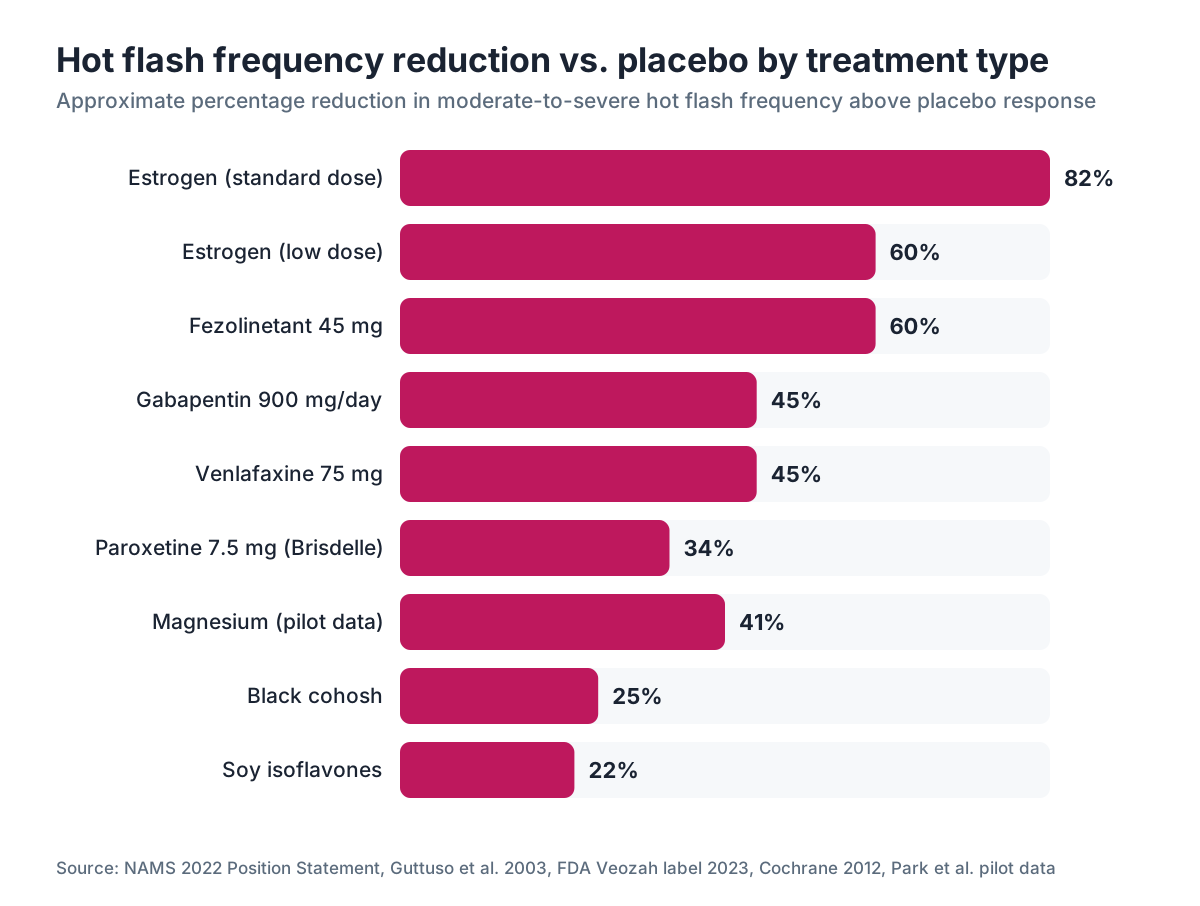
How do the main treatments compare in effectiveness?
The most useful lens is absolute reduction in daily hot flash frequency, because that is what the trials actually measured.
| Treatment | Daily hot flash reduction vs placebo | Hormonal? | Prescription needed? | |---|---|---|---| | Estrogen (standard dose) | ~75-90% | Yes | Yes | | Estrogen (low dose) | ~50-70% | Yes | Yes | | Fezolinetant 45 mg | ~60% at 12 weeks [2] | No | Yes | | Venlafaxine 75 mg | ~40-50% [4] | No | Yes | | Paroxetine 7.5 mg (Brisdelle) | ~33-35% [4] | No | Yes | | Gabapentin 900 mg/day | ~45% [6] | No | Yes | | Black cohosh | ~20-30% [7] | No (phytoestrogen-like) | No | | Soy isoflavones | ~20-25% [4] | Weakly hormonal | No | | Magnesium | ~40% in one pilot study [8] | No | No |
A few caveats on the table. These are approximate figures from different trials with different populations, so direct comparison is imperfect. Placebo response rates in hot flash trials run high, often 25 to 35%, which inflates the absolute efficacy numbers. Estrogen is the benchmark, and nothing non-hormonal currently matches it for severe symptoms.
For women with moderate symptoms who cannot or will not use estrogen, fezolinetant is the strongest non-hormonal prescription. For women with mild-to-moderate symptoms who want to skip prescriptions, black cohosh plus magnesium is a reasonable start before escalating.
What are the specific risks of hormone therapy for older women?
Age changes the risk math, and being honest about that matters.
Breast cancer is the risk most women worry about. The combined estrogen-progestogen arm of the WHI showed a hazard ratio of about 1.26 for invasive breast cancer after 5.6 years of use, which works out to roughly 8 additional cases per 10,000 women per year [3]. That is a real increase. It looks lower with estrogen-only therapy (used only in women who have had a hysterectomy), and lower with micronized progesterone compared to synthetic progestogens, though that head-to-head has not been tested in a large US randomized trial.
Cardiovascular risk turns on timing. Starting HT within 10 years of menopause in a healthy woman looks cardioprotective, or at least neutral. Starting more than 10 years out, especially in women with existing subclinical atherosclerosis, looks like it raises cardiovascular events [3]. Transdermal estrogen skips the hepatic first-pass effect and does not raise triglycerides or clotting factors the way oral estrogen does, which makes it the preferred route for older women and anyone with cardiovascular risk factors.
Blood clot (VTE) risk goes up with oral estrogen. It is substantially lower with transdermal formulations. A large UK case-control study using the THIN database found no significant VTE increase with transdermal estrogen, while oral estrogen carried roughly double the risk [5].
Stroke risk rises modestly with oral estrogen. Transdermal estrogen does not appear to carry the same risk at standard doses.
For a woman in her late 60s or 70s who still has disruptive hot flashes, no breast cancer history, no clot history, and no significant cardiovascular disease, low-dose transdermal estrogen plus micronized progesterone (if she has a uterus) is a defensible and often helpful choice. The conversation has to happen with her doctor, and it should include her full cardiovascular and cancer history.
Do lifestyle changes actually reduce hot flashes in older women?
Lifestyle changes show up in every menopause guideline, and the evidence for them is real but modest.
Weight loss is the best-studied behavioral intervention. The MsFLASH trial and related analyses found that overweight women who lost weight had fewer hot flashes than those who did not. A 2010 randomized trial found women who lost at least 10 pounds over 6 months were nearly twice as likely to report improvement in hot flashes compared to controls [9]. For overweight older women, weight loss genuinely moves the needle.
For women who want structured weight management, GLP-1 receptor agonists have become a serious option. No large trial has examined GLP-1s and hot flash frequency directly, but the weight-loss mechanism is real, and some women report fewer vasomotor symptoms after losing significant weight on medications like semaglutide. More on that at semaglutide for weight loss.
Cognitive behavioral therapy (CBT) for hot flashes has genuinely good evidence. The MsFLASH trial found CBT cut the "bothersome" rating of hot flashes even when it did not cut frequency [4]. For older women who can access it, CBT is worth considering, especially when anxiety about hot flashes or sleep disruption is part of the picture.
Clinical hypnosis reduced hot flash frequency by about 74% in one well-designed trial cited by the Menopause Society [4]. The mechanism is unclear, but the data are there. Finding a certified practitioner is the practical barrier.
Cooling strategies (wicking sleepwear, fans, layering) reduce symptom impact even when they do not change frequency. Avoiding known triggers (spicy food, alcohol, hot beverages, warm rooms) is standard advice most women have already tried by the time they go looking for treatment, so I will not oversell it.
Smoking is tied to more frequent and more severe hot flashes. Quitting helps, and there are plenty of other reasons to quit in older women.
Are there special considerations for hot flash treatment after breast cancer?
This is where the clinical ground gets genuinely complicated, and getting it right matters.
Systemic hormone therapy is generally contraindicated in women with a history of estrogen-receptor-positive (ER+) breast cancer, which covers most survivors. Oncologists differ on whether low-dose vaginal estrogen (for genitourinary symptoms specifically) is acceptable here, but systemic estrogen is not the standard recommendation.
For survivors, the non-hormonal options become the whole menu. Venlafaxine and desvenlafaxine have the strongest evidence in this population. Fezolinetant has not been formally tested in women with active or recent breast cancer, but because it is not hormonal, some oncologists are open to it. The prescribing information does not list prior breast cancer as a contraindication, though clinical data in this group are limited [2].
Paroxetine should be avoided in women on tamoxifen, as noted above. Venlafaxine is the SNRI of choice in that situation.
On the OTC side, high-dose soy isoflavones and red clover (another phytoestrogen source) are usually avoided in ER+ survivors, though the absolute risk from food-level soy intake is not clearly elevated. Black cohosh does not appear to stimulate estrogen receptors mechanistically, but some oncologists stay cautious. The honest answer is that the data are not strong enough to fully reassure in the ER+ setting, and these calls belong in a conversation with the oncologist.
Trials are enrolling for several non-hormonal agents in cancer survivors. This is a group the research agenda has left behind.
What does a reasonable treatment plan look like step by step?
A sensible approach depends on symptom severity, age, health history, and what a woman is willing to tolerate. Here is how I would work through the tiers.
Mild symptoms (1-3 flashes per day, not disrupting sleep or function): Start with behavior: weight loss if relevant, CBT if accessible, cooling strategies, trigger reduction. Add magnesium glycinate 200 to 400 mg at night. Try black cohosh for 8 to 12 weeks and reassess.
Moderate symptoms (4-7 flashes per day, some sleep disruption): The above, plus a prescription non-hormonal agent if lifestyle alone falls short. Venlafaxine 37.5 to 75 mg is a reasonable first choice because the evidence is solid and cost is low (generic runs under $30 a month at most pharmacies). Fezolinetant is an option for women who cannot tolerate SNRIs or want something mechanism-specific.
Severe symptoms (more than 7 per day, badly disrupted sleep, hitting quality of life): A real conversation about low-dose hormone replacement therapy is warranted unless there is a clear contraindication. The benefits are largest in this severity range, and the risk math tilts more favorably when symptoms are severe. Transdermal estrogen plus micronized progesterone (if the uterus is intact) at the lowest effective dose is the evidence-based approach.
For women who want to talk this through with a clinician who focuses on menopause, telehealth platforms like WomenRx offer consultations built around hormonal health, which can be easier to reach than a local HRT-literate provider.
For women over 65 starting hormone therapy after a long gap, timing matters. The Menopause Society recommends starting at the lowest available dose, reassessing annually, and having an explicit conversation about why they are starting late and what their individual risk factors look like [4].
One thing that gets overlooked: hot flash treatment at any age should include bone health. Estrogen protects bone, and its loss speeds up bone density decline. Women who are not on HT should make sure they are getting enough calcium and vitamin D and have had a DEXA scan if they are over 65.
What should older women know about genitourinary syndrome and its overlap with hot flashes?
Genitourinary syndrome of menopause (GSM) is the umbrella term for vaginal dryness, urinary urgency, recurrent UTIs, and painful intercourse that come from low estrogen. GSM is common in postmenopausal women, affecting roughly 50 to 60% of older women, but it is underreported because patients often do not bring it up [4].
GSM matters here because it often travels with ongoing vasomotor symptoms, and the treatments overlap. Low-dose vaginal estrogen (cream, ring, or tablet) treats GSM effectively and is absorbed locally with minimal systemic effect. The FDA-approved vaginal DHEA product (prasterone/Intrarosa) and the selective estrogen receptor modulator ospemifene (Osphena, taken orally) are non-estrogen alternatives for GSM.
For older women with both hot flashes and GSM, systemic hormone therapy handles both. For those with GSM only (flashes resolved but vaginal and urinary issues persist), local vaginal treatment is preferred because systemic exposure is not necessary.
GSM does not improve on its own with time, unlike hot flashes. It typically gets worse without treatment. This is where many older women have been undertreated for years, told it is "normal aging" rather than a treatable estrogen-deficiency effect.
How do you talk to a doctor about hot flash treatment at an older age?
Many older women say their physicians brush off hot flash complaints as normal aging or balk at prescribing hormones after 65. Both reactions are understandable given how the WHI was taught to a generation of doctors, but neither lines up with current evidence-based guidelines.
Walking into the visit prepared helps. The Menopause Society maintains a Certified Menopause Practitioner directory and a patient education library at menopause.org. It updated its hormone therapy position statement in 2022, and bringing a summary or even a printout to an appointment is completely appropriate.
Questions worth asking: Is there a specific reason I cannot use low-dose transdermal estrogen? What is my personal risk based on my history? If not hormones, which non-hormonal prescription would you recommend? What is the plan to reassess?
If a primary care provider is not comfortable managing menopause symptoms, asking for a referral to a gynecologist or a menopause specialist is entirely reasonable. Telehealth has made access to specialists meaningfully easier, especially for women in areas with few local options. Providers experienced in menopause care can often evaluate and prescribe within days rather than weeks.
The core message: persistent hot flashes at any age are not something you have to accept as untreatable. The menu of options is real, and the conversation is worth having.
Frequently asked questions
What is the safest hot flash treatment for a woman over 70?
For a woman over 70 without contraindications, low-dose transdermal estrogen is still an option and remains the most effective treatment available. Non-hormonal alternatives including venlafaxine, fezolinetant, or gabapentin (used carefully because of fall risk) are safer when cardiovascular disease or breast cancer history makes estrogen inappropriate. The decision needs a review of individual health history, not a blanket age cutoff.
What is the best OTC treatment for hot flashes?
Black cohosh has the strongest evidence of any non-prescription option, cutting flash frequency modestly (roughly 20 to 30% above placebo). Magnesium glycinate 200 to 400 mg nightly is low-cost and may help both flash frequency and sleep disruption. Soy isoflavones show modest benefit but are avoided by women with hormone-sensitive cancer histories. No OTC option matches prescription therapy for severe symptoms.
How long do hot flashes last after menopause?
The SWAN study found the median duration of moderate-to-severe hot flashes is 7.4 years. Women who began having symptoms before their final period averaged more than 11 years. A significant minority experience flashes into their 70s. Persistence past 65 is common enough that assuming symptoms will resolve on their own is not a reliable plan.
Is hormone therapy safe after 65?
The Menopause Society says the benefit-risk ratio is less favorable after 65 or more than 10 years past menopause, but it is not automatically negative. Individual health history matters far more than age alone. Women without breast cancer history, blood clots, or significant cardiovascular disease may still be good candidates for low-dose transdermal HT. Make the decision with a physician experienced in menopause medicine, not by default.
What are hot flash treatment options for breast cancer survivors?
Systemic estrogen is generally avoided in ER-positive breast cancer survivors. Venlafaxine is the top non-hormonal prescription in this group and is safe with tamoxifen. Fezolinetant is not hormonal and may be an option, though data in cancer survivors are limited. Paroxetine should not be used with tamoxifen because it reduces tamoxifen's effectiveness. CBT and clinical hypnosis also have evidence in this population.
Does fezolinetant (Veozah) work for older women?
Fezolinetant 45 mg daily reduced moderate-to-severe hot flash frequency by about 60% at 12 weeks in the SKYLIGHT trials. It works by blocking neurokinin 3 receptors in the hypothalamus, not through estrogen. It is FDA-approved, requires liver function monitoring, and costs roughly $550 to $600 a month without insurance. It is a strong non-hormonal option for older women who cannot or prefer not to use estrogen.
Are there natural remedies that really work for hot flashes?
Black cohosh and soy isoflavones have controlled-trial evidence showing modest reductions in hot flash frequency. CBT and clinical hypnosis have surprisingly good data for reducing how bothersome flashes feel. Weight loss helps if a woman is overweight. Magnesium may help with sleep disruption. None of these match estrogen for severe symptoms, but they are worth trying for mild-to-moderate cases before escalating to prescription therapy.
Can losing weight reduce hot flashes in older women?
Yes. A randomized trial published in 2010 found women who lost at least 10 pounds were nearly twice as likely to report improved hot flashes compared to controls. Adipose tissue produces estrone, a weaker estrogen, so the link between weight and hot flashes is real. For overweight older women, structured weight management with dietary changes or, where appropriate, GLP-1 medications is a reasonable adjunct to hot flash treatment.
What is genitourinary syndrome of menopause and how is it different from hot flashes?
Genitourinary syndrome of menopause (GSM) covers vaginal dryness, painful intercourse, urinary urgency, and recurrent UTIs that come from estrogen loss. Unlike hot flashes, GSM does not improve with time and typically worsens without treatment. Low-dose vaginal estrogen treats it effectively with minimal systemic absorption. Women can have GSM without active hot flashes. It affects roughly 50 to 60% of postmenopausal women and is undertreated.
How often should hot flash treatment be reassessed?
Most guidelines, including the Menopause Society's, recommend annual reassessment. At each visit the goal is to check whether symptoms have changed in severity, whether treatment is still necessary, and whether any new health factors have shifted the risk-benefit balance. Women on hormone therapy should have the indication reviewed yearly but do not need to stop arbitrarily at a set age if benefits keep outweighing risks.
Is gabapentin a good option for hot flashes in elderly women?
Gabapentin reduces hot flash frequency by roughly 45% at 900 mg/day, but sedation is a meaningful concern in older women because it raises fall risk. Lower doses (300 mg at bedtime) are sometimes used specifically to help nighttime symptoms and sleep without as much daytime sedation. It should not be a first-line choice for older women with balance issues or those already on other sedating medications.
What is the difference between soy isoflavones and estrogen for hot flashes?
Soy isoflavones are phytoestrogens, plant compounds that bind weakly to estrogen receptors. Their effect on hot flashes is modest (about 20 to 25% above placebo) compared to pharmaceutical estrogen, which reduces frequency by 50 to 90%. Isoflavones do not reliably protect bone or cardiovascular tissue the way estrogen does. They are a reasonable low-risk option for mild symptoms, but not a substitute for estrogen when symptoms are severe.
Can antidepressants treat hot flashes in older women?
Yes. Venlafaxine (an SNRI) and paroxetine (an SSRI, with Brisdelle FDA-approved at 7.5 mg for hot flashes specifically) are the most commonly used. They cut frequency by 33 to 50% compared to placebo. They are appropriate first-line non-hormonal prescriptions for older women, particularly those already on antidepressants for mood. Paroxetine must be avoided in women taking tamoxifen. Side effects include dry mouth, nausea, and possible blood pressure effects.
What lifestyle changes help with hot flashes most?
The interventions with the clearest evidence are weight loss (for overweight women), cognitive behavioral therapy, and clinical hypnosis. Cooling strategies, trigger avoidance (alcohol, spicy food, hot beverages), and quitting smoking also help. These work best for mild-to-moderate symptoms or as complements to medication. For severe daily hot flashes, lifestyle changes alone are unlikely to give sufficient relief.
Sources
- JAMA Internal Medicine, Avis et al. 2015, SWAN study on hot flash duration
- FDA Drug Approval Package, Veozah (fezolinetant) label, May 2023
- JAMA, Writing Group for WHI Investigators, 2002 and 2013 reanalysis
- The Menopause Society (NAMS), 2022 Hormone Therapy Position Statement
- Endocrine Society, Clinical Practice Guidelines on Menopause
- Obstetrics and Gynecology, Guttuso et al. 2003, gabapentin RCT for hot flashes
- Cochrane Database of Systematic Reviews, Leach et al. 2012, black cohosh for menopausal symptoms
- Gynecological Endocrinology, Park et al., magnesium oxide pilot trial for hot flashes
- Archives of Internal Medicine, Huang et al. 2010, weight loss and vasomotor symptoms RCT
- NIH National Institute on Aging, Menopause information page
- FDA, Brisdelle (paroxetine 7.5 mg) label, FDA-approved SSRI for hot flashes
- BMJ, Renoux et al. 2010, THIN database analysis on transdermal vs oral estrogen and VTE risk