Thyroid testing during perimenopause: when to check and what to ask for
TL;DR: Thyroid dysfunction affects roughly 10-15% of perimenopausal women and mimics nearly every perimenopause symptom: hot flashes, weight gain, mood swings, fatigue, and irregular periods. Every woman entering perimenopause should have TSH checked at baseline. If TSH is normal but symptoms persist, ask for Free T4, Free T3, and thyroid antibodies (TPO and TgAb) too.
Why do thyroid problems and perimenopause get so easily confused?
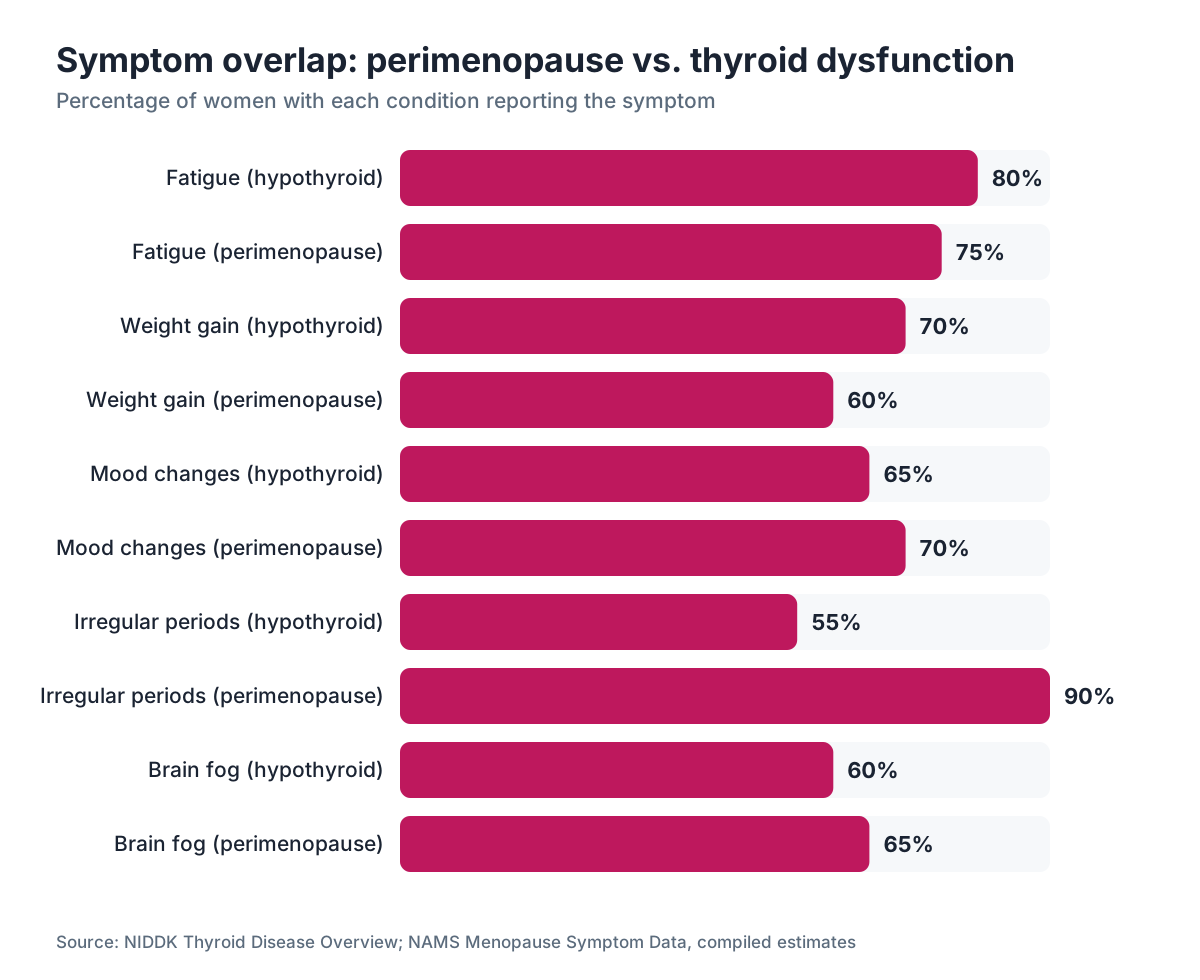
The overlap is genuinely maddening. Both conditions can cause fatigue that won't budge with sleep, weight changes that don't respond to diet, brain fog, mood instability, irregular periods, and heart palpitations. Hypothyroidism specifically adds constipation, cold intolerance, and dry skin. Hyperthyroidism adds heat intolerance, anxiety, and a racing heart. Sound familiar? The estrogen fluctuations of perimenopause hit the same targets: metabolism, temperature regulation, mood.
The timing makes it worse. Autoimmune thyroid disease, particularly Hashimoto's thyroiditis, peaks in women between ages 30 and 50, putting the highest-risk window squarely inside the average perimenopause onset [1]. The American Thyroid Association estimates that one in eight women will develop a thyroid disorder during her lifetime, and women are five to eight times more likely than men to have thyroid disease [2].
Because perimenopause is expected and thyroid disease isn't always on a clinician's radar during a routine midlife visit, thyroid problems get missed or written off as "just hormones." The result: women spend months or years feeling terrible while both conditions go untreated, or one is treated and the other isn't. A proper thyroid panel at the start of perimenopause is one of the simplest ways to avoid that trap.
The menopause society and the Endocrine Society both treat thyroid dysfunction as a significant confounder when evaluating perimenopausal symptoms, which is why the clinical standard is to rule it out early rather than assume every symptom traces back to estrogen.
Which thyroid tests should you actually ask for?
TSH alone is the standard first-line screen, and for good reason: it's the pituitary's report card on how well the thyroid is performing. When thyroid hormone is low, the pituitary pumps out more TSH. When it's high, TSH drops. A single TSH can catch both overt hypothyroidism and overt hyperthyroidism.
But TSH has real limits in perimenopause. Estrogen fluctuations affect thyroid-binding globulin (TBG), the protein that carries thyroid hormones in the blood. When estrogen rises, TBG rises, which can make total thyroid hormone levels look normal on paper even when free (bioavailable) levels are off. This is why many practitioners who specialize in midlife women's health order a fuller panel at baseline [3].
The tests worth knowing about:
TSH (thyroid-stimulating hormone): First-line screen. Normal range in most labs is roughly 0.45 to 4.5 mIU/L, though some clinicians prefer a tighter target of 0.5 to 2.5 mIU/L for symptomatic women [4].
Free T4 (free thyroxine): The main hormone the thyroid produces. Checking free rather than total sidesteps the TBG problem. Normal range is approximately 0.8 to 1.8 ng/dL.
Free T3 (free triiodothyronine): The active form your cells actually use. Some women convert T4 to T3 poorly, and that won't show up on TSH or Free T4 alone. Normal range is roughly 2.3 to 4.2 pg/mL, though lab ranges vary.
TPO antibodies (anti-thyroid peroxidase): The marker for Hashimoto's. A woman can have elevated TPO antibodies with a currently normal TSH, which predicts future hypothyroidism and warrants annual monitoring [5].
TgAb (anti-thyroglobulin antibodies): A secondary autoimmune marker. Some Hashimoto's patients have elevated TgAb but normal TPO.
If all you want is a screen, start with TSH. If you have persistent symptoms despite a normal TSH, push for Free T4, Free T3, TPO antibodies, and TgAb. That full picture is worth having in perimenopause.
What TSH level is considered normal during perimenopause?
This is where you'll get conflicting answers depending on who you ask, and the disagreement is real, more than noise.
The conventional laboratory reference range for TSH in adults is 0.45 to 4.5 mIU/L [4]. The American Thyroid Association and Endocrine Society use this range for diagnosing overt hypothyroidism (TSH above 4.5 with low Free T4) and subclinical hypothyroidism (TSH between 4.5 and 10 with normal Free T4).
Some functional medicine and integrative practitioners argue for a narrower optimal range of 0.5 to 2.5 mIU/L for symptomatic women, based on the observation that many patients feel better in the lower portion of the conventional range. The evidence base for this narrower target is thinner than its proponents suggest, but it's not without support in the literature [6].
Age matters too. TSH naturally trends upward as you get older. A TSH of 3.5 in a 48-year-old is different from the same value in a 25-year-old, and some guidelines acknowledge that slightly higher TSH values in older adults may not need treatment.
Here's the honest answer. If your TSH is above 4.5 and your Free T4 is low, that's overt hypothyroidism and most clinicians will treat it. If TSH sits between 2.5 and 4.5 and you feel terrible, the decision to treat depends on symptoms, antibody status, the trend over time, and your clinician's philosophy. Have that conversation out loud instead of accepting "your levels are normal" without context.
How does estrogen affect thyroid function specifically?
Estrogen and thyroid hormone have a complicated relationship that routine blood work doesn't capture well.
Estrogen stimulates the liver to make more thyroid-binding globulin. Higher TBG means more thyroid hormone is bound and unavailable to cells, which can effectively lower free thyroid hormone even when the total amount in your blood looks fine [3]. That's why women on oral estrogen therapy sometimes need a higher dose of levothyroxine to hold the same effect.
Conversely, in early perimenopause when estrogen levels can surge unpredictably before dropping, thyroid hormone dynamics shift in ways that can temporarily mimic either hyper- or hypothyroidism. A TSH measured during a high-estrogen week versus a low-estrogen week can read differently.
The implication for testing: if you're already on oral hormone therapy (HRT) and starting thyroid medication, or the reverse, retest TSH four to six weeks after any change because the two therapies interact [7]. Transdermal estrogen has less effect on TBG than oral estrogen, which is one of several reasons some practitioners prefer the patch or gel for perimenopausal women who already have thyroid conditions.
There's also evidence that autoimmune thyroid disease (Hashimoto's) may be influenced by immune shifts around the perimenopause transition, though the mechanism isn't fully mapped. What's clear is that perimenopausal immune remodeling can unmask previously subclinical Hashimoto's, which makes antibody testing especially relevant at this stage.
When exactly should you get thyroid tests during perimenopause?
There's no single agreed-upon schedule, but the clinical consensus points toward these moments:
At the first perimenopause visit: Any woman with perimenopausal symptoms should have TSH checked as a baseline, especially if she hasn't had one in the last two to three years. The American College of Obstetricians and Gynecologists (ACOG) does not recommend universal thyroid screening in asymptomatic women, but supports testing when symptoms are present [8].
Before starting hormone therapy: If you're considering estrogen, progesterone, or combined HRT, a thyroid panel before you start gives you a clean baseline. Estrogen affects thyroid hormone binding (see above), so you want to know where you stood before the change.
When symptoms change or worsen: If hot flashes, fatigue, weight gain, or mood symptoms suddenly intensify or shift character, recheck TSH. Thyroid status can drift over months to years, particularly in women with Hashimoto's.
Annually if you have elevated TPO antibodies: A woman with elevated antibodies but currently normal TSH carries roughly a 4% annual risk of progressing to overt hypothyroidism [5]. Annual monitoring makes practical sense.
4 to 6 weeks after any thyroid or hormone medication change: Both levothyroxine dose changes and starting or switching hormone therapy can move TSH. Don't wait longer than six weeks to retest; you're just extending the time spent out of range.
After unexplained weight changes or bone loss: Undiagnosed hyperthyroidism speeds bone loss and is a treatable cause of low bone density. Since osteoporosis risk rises in perimenopause anyway, catching subclinical hyperthyroidism early matters [9].
If you're working with a telehealth provider for perimenopause care, platforms like WomenRx can order thyroid panels alongside hormone labs so you see the full picture rather than one piece at a time.
Perimenopause symptom vs. thyroid symptom: how can you tell the difference?
The honest answer: you often can't tell without labs. But some patterns raise suspicion one way or the other.
| Symptom | Suggests Perimenopause | Suggests Hypothyroidism | Suggests Hyperthyroidism | |---|---|---|---| | Hot flashes | Yes, classic | No | Yes (heat intolerance, not classic flashes) | | Night sweats | Yes | Less typical | Possible | | Irregular periods | Yes | Yes | Yes | | Weight gain | Yes | Yes, prominent | No (often weight loss) | | Fatigue | Yes | Yes, often severe | Yes (from poor sleep, anxiety) | | Brain fog | Yes | Yes | Less typical | | Depression | Yes | Yes | Less typical (more anxiety) | | Anxiety/palpitations | Yes | Less typical | Yes, prominent | | Cold intolerance | No | Yes, prominent | No | | Constipation | Possible | Yes, prominent | No (often diarrhea) | | Hair loss/coarsening | Some | Yes, prominent | Possible | | Dry skin | Less typical | Yes | No |
The symptoms where thyroid disease should be strongly suspected over perimenopause alone: significant unexplained weight change in either direction, new constipation or diarrhea, marked cold or heat intolerance, hair texture changes, and heart palpitations with a measurable fast resting heart rate. These don't sit on the standard perimenopause checklist and warrant a thyroid panel promptly.
Here's a clinical rule worth keeping. If you're treating perimenopause symptoms with hormone therapy and getting partial but incomplete relief, order thyroid labs. An incomplete response to appropriate HRT is a flag that something else is contributing.
Does Hashimoto's thyroiditis get worse in perimenopause?
It can, and the mechanism is partly immune-related.
Hashimoto's is an autoimmune disease where the body attacks its own thyroid tissue. Estrogen has immunomodulatory effects, generally suppressing certain inflammatory pathways. When estrogen fluctuates and eventually declines in perimenopause, that immune suppression shifts, potentially unmasking or worsening autoimmune activity [1].
Women with established Hashimoto's often report symptom flares during perimenopause. Some develop overt hypothyroidism for the first time despite years of stable subclinical disease. Others find their previously adequate levothyroxine dose stops working.
If you have Hashimoto's and you're entering perimenopause, tell your endocrinologist or thyroid-prescribing provider explicitly. Don't assume your annual TSH check is enough during this transition; consider adding TPO antibody retesting and Free T4 to see whether antibody load is climbing.
The postmenopausal period brings its own shift. Some women with Hashimoto's actually stabilize after menopause as the immune system settles into its lower-estrogen state. But getting through perimenopause with well-managed thyroid levels matters for bone health, cardiovascular risk, and how you feel day to day. Reading up on thyroid hormone replacement therapy options can help you have a better-informed conversation with your prescriber during this time.
Can thyroid disease cause or worsen bone loss during perimenopause?
Yes, and it's underappreciated.
Overt hyperthyroidism is a well-established cause of secondary osteoporosis. Excess thyroid hormone speeds bone turnover, breaking down bone faster than it rebuilds. A study in the Journal of Clinical Endocrinology and Metabolism found that women with subclinical hyperthyroidism (suppressed TSH with normal free T4) had significantly lower bone mineral density than euthyroid controls, particularly at the hip [9].
This matters in perimenopause because estrogen decline is already the main driver of accelerated bone loss in this window. Adding undiagnosed hyperthyroidism, or even overtreatment with levothyroxine (which suppresses TSH and acts like mild hyperthyroidism), compounds the risk substantially.
The reverse is also true: severe long-standing hypothyroidism impairs bone mineralization.
If you've been diagnosed with low bone density or osteopenia and haven't had a thyroid panel recently, get one. If you're on levothyroxine and your TSH runs chronically below 0.5, talk to your prescriber about whether your dose is slightly too high, particularly if bone loss is a concern. For most non-cancer patients on thyroid hormone, the goal is a TSH in the lower half of normal, not a suppressed TSH.
What if your TSH is normal but you still feel terrible?
This is one of the most common frustrations perimenopausal women with thyroid issues report. There are several legitimate explanations.
First, check the full panel. A normal TSH doesn't rule out poor T4-to-T3 conversion. Some women have plenty of T4 but convert it to the active T3 form poorly, often because of low selenium, high cortisol, or inflammation. Their TSH can look perfectly normal while cellular thyroid activity runs low. Free T3 is the only way to catch this [6].
Second, elevated TPO antibodies matter even with a normal TSH. Hashimoto's causes thyroid hormone to fluctuate as damaged tissue releases stored hormone, producing alternating hypo and hyper symptoms that a single-day TSH can miss.
Third, consider the combination effect. Perimenopause and subclinical hypothyroidism together can produce symptoms far worse than either alone. A TSH of 3.8 in a woman with crashing progesterone and erratic estrogen may be clinically meaningful even though it reads as "in range."
Fourth, symptom journals earn their keep here. Track symptom timing relative to your cycle (if you still have one), energy, sleep, and mood. That gives your clinician better data than a single appointment snapshot. Some integrative practitioners weigh symptoms, antibody status, and the trend of TSH over time together rather than leaning on one number.
If you feel unwell and your labs keep coming back "normal," read the new menopause for a broader framework on why midlife women's symptoms often need more than a standard checklist.
How do you talk to your doctor about getting a full thyroid panel?
Be direct. You don't need to justify why you want the test.
A simple script: "I'm in perimenopause and I'd like a full thyroid panel, including TSH, Free T4, Free T3, TPO antibodies, and TgAb. I know TSH is standard, but given my symptoms I'd like the complete picture."
Most physicians will order TSH without pushback. Some will resist Free T3 or antibody testing, arguing it isn't indicated unless TSH is abnormal. If that happens, try: "I have a family history of autoimmune thyroid disease" (if true), or "I've had these symptoms despite a normal TSH before, and I want a baseline before starting any treatment."
If you're using a telehealth platform, ordering is often easier because providers who work with perimenopausal women routinely run full hormone panels that include thyroid markers alongside estradiol, FSH, and progesterone.
Know that you may pay out of pocket for Free T3 if your insurer decides it isn't medically necessary with a normal TSH. Cash-pay cost for a full thyroid panel at a major lab like Quest or LabCorp runs $60 to $150 depending on which tests are ordered. That's a small price against months of feeling unwell without an answer.
Also ask for your actual numbers, more than "normal" or "abnormal." A TSH of 4.2 and a TSH of 0.9 are both "normal," and clinically they're worlds apart for a symptomatic perimenopausal woman.
What happens if thyroid disease is found during perimenopause?
Treatment depends on the type and severity.
Overt hypothyroidism (high TSH, low Free T4) is treated with levothyroxine (synthetic T4), the standard for decades. Most women feel significantly better within four to eight weeks of starting an appropriate dose. The Endocrine Society recommends a starting dose of 1.6 mcg/kg/day in otherwise healthy adults, with adjustment based on TSH retesting at six to eight weeks [7].
Subclinical hypothyroidism (TSH 4.5 to 10, normal Free T4) is managed case by case. Treatment is generally recommended when TSH is above 10, when the patient has significant symptoms, when she has elevated TPO antibodies, or when she's planning pregnancy. For TSH between 4.5 and 10 without symptoms and without antibodies, watchful waiting with annual retesting is acceptable [7].
Hyperthyroidism treatment depends on the cause. Graves' disease (autoimmune hyperthyroidism) is typically treated with antithyroid drugs, radioactive iodine, or surgery. Subclinical hyperthyroidism with suppressed TSH but normal free hormones may be monitored rather than treated, depending on symptoms and bone density.
For Hashimoto's with normal TSH, treatment is usually monitoring, plus fixing any nutrient deficiencies (selenium, vitamin D, iron) that can worsen thyroid function. Some clinicians also suggest a gluten-free trial for women with high antibody loads, though the evidence is mixed and individual response varies.
Here's the point that gets lost. Finding thyroid disease in perimenopause is not a disaster. It's a treatable diagnosis, and treatment can produce a substantial improvement in quality of life, often within weeks.
Frequently asked questions
Should every woman get a thyroid test when perimenopause starts?
ACOG does not recommend universal thyroid screening in asymptomatic women, but almost all perimenopausal women have symptoms. TSH at your first perimenopause appointment is a low-cost, high-value test that rules out a common and treatable cause of fatigue, weight gain, and mood changes. Most women who ask for it will get it ordered without difficulty.
Can perimenopause cause thyroid problems, or does it just reveal existing ones?
Both happen. Perimenopausal immune shifts can trigger or speed up autoimmune thyroid disease in women who were previously subclinical. Estrogen fluctuations also change thyroid hormone binding, which can make previously compensated hypothyroidism symptomatic. It's less accurate to say perimenopause causes thyroid disease and more accurate to say it's a common unmasking event.
What is a normal TSH level for a perimenopausal woman?
The standard laboratory reference range is 0.45 to 4.5 mIU/L. Some clinicians target a narrower range of 0.5 to 2.5 mIU/L for symptomatic women, particularly those with Hashimoto's, though evidence for that tighter target is less definitive. If you're symptomatic and your TSH sits in the upper half of normal, that conversation is worth having with your prescriber.
Does taking estrogen for menopause affect thyroid test results?
Yes. Oral estrogen raises thyroid-binding globulin, which can increase total thyroid hormone levels while free levels stay the same or drop. Women already on levothyroxine who start oral estrogen often need a dose increase. Transdermal estrogen has a smaller effect on TBG. Always retest TSH four to six weeks after starting or changing either therapy.
What are the signs that thyroid disease is causing my symptoms, more than perimenopause?
Cold intolerance, constipation, coarsening hair, and significant unexplained weight gain point more strongly toward hypothyroidism. Heart palpitations with a fast resting pulse, heat intolerance, diarrhea, and unexplained weight loss suggest hyperthyroidism. Symptoms that don't improve on appropriate hormone therapy are another flag. None of these are definitive without labs.
How often should thyroid levels be rechecked during perimenopause?
If TSH is normal and you have no antibodies, every two to three years is reasonable unless symptoms change. If you have elevated TPO antibodies with normal TSH, annual monitoring is standard. After any dose change of thyroid medication or any change in hormone therapy, retest at four to six weeks. If symptoms worsen between scheduled checks, test sooner.
Can low iron levels during perimenopause affect thyroid function?
Yes. Iron deficiency impairs the activity of thyroid peroxidase, the enzyme needed to make thyroid hormone. Women with heavy perimenopausal periods often develop iron deficiency, which can worsen hypothyroid symptoms or make thyroid hormone replacement less effective. A full evaluation should include ferritin alongside thyroid markers, especially with heavy bleeding.
Is Hashimoto's thyroiditis more common in perimenopausal women?
Hashimoto's is most common in women between 30 and 50, making perimenopause a high-incidence window. Autoimmune thyroid disease is five to eight times more common in women than men overall. Family history is the strongest individual risk factor. If a first-degree female relative has Hashimoto's, TPO antibody testing at perimenopause onset is particularly worthwhile.
What nutrients support thyroid function during perimenopause?
Iodine is the primary building block of thyroid hormone and is adequate in most Western diets. Selenium is needed for T4-to-T3 conversion and may reduce TPO antibody levels; the evidence is reasonably good for 200 mcg daily in Hashimoto's. Vitamin D deficiency is associated with higher antibody levels. Iron, zinc, and magnesium also matter. Food first, supplement cautiously.
Can thyroid disease cause irregular periods in perimenopause?
Yes, independently of estrogen changes. Hypothyroidism can cause heavy, more frequent periods. Hyperthyroidism tends to cause lighter, less frequent, or absent periods. Both effects run through thyroid hormone's influence on the hypothalamic-pituitary-ovarian axis. If periods are changing dramatically, thyroid labs belong in the workup alongside reproductive hormones.
Can I have a thyroid problem if my TSH is normal?
Yes, in limited but real circumstances. Poor T4-to-T3 conversion produces low active thyroid hormone at the cellular level with a normal TSH. Early Hashimoto's can cause fluctuating symptoms before TSH moves out of range. Central hypothyroidism (rare pituitary dysfunction) can cause low thyroid function with a normal or low-normal TSH. These are less common but genuinely exist.
Does subclinical hypothyroidism need to be treated in perimenopause?
The Endocrine Society recommends treatment when TSH is above 10 mIU/L, regardless of symptoms. For TSH between 4.5 and 10, treatment is individualized based on symptom severity, antibody status, cardiovascular risk, bone density, and patient preference. Age, trending TSH over time, and whether you're planning pregnancy also factor in. This is not a one-size decision.
What is the best time of day to have thyroid blood drawn?
TSH follows a circadian rhythm, peaking in the early morning and dropping through the day. For consistent, reproducible results, most labs and guidelines recommend drawing thyroid labs in the morning, ideally before 9 a.m. and fasting. If you're on levothyroxine, take it after the draw to avoid a transient spike in Free T4 that doesn't reflect your true steady-state level.
Is there a link between perimenopause thyroid issues and heart palpitations?
Yes, and it's one of the more urgent reasons to rule out thyroid disease. Both hyperthyroidism and perimenopause cause palpitations, but thyroid-driven palpitations can signal real arrhythmia risk. If you have a resting heart rate consistently above 90 or irregular heartbeat episodes, thyroid labs plus an EKG are warranted before blaming palpitations on hormonal fluctuation alone.
Sources
- Endocrine Society, Thyroid Disease Fact Sheet
- American Thyroid Association, General Information
- National Institutes of Health, NCBI: Thyroid-binding globulin and estrogen interactions
- American Thyroid Association, Hypothyroidism Booklet
- American Thyroid Association, Hypothyroidism Guidelines
- NCBI PubMed, Journal of Clinical Endocrinology and Metabolism: T3 conversion and clinical hypothyroidism
- Endocrine Society Clinical Practice Guideline: Hypothyroidism in Adults
- ACOG (American College of Obstetricians and Gynecologists), Thyroid Disease in Women Practice Bulletin
- Journal of Clinical Endocrinology and Metabolism, Subclinical Hyperthyroidism and Bone Mineral Density
- National Institute of Diabetes and Digestive and Kidney Diseases (NIDDK), Thyroid Tests
- Menopause Society (NAMS), Official Position on Managing Menopause
- CDC / NCHS, National Health and Nutrition Examination Survey (NHANES) Thyroid Data