Therapy for perimenopause: what actually works
TL;DR: Perimenopause therapy spans hormone therapy (estrogen plus progesterone for women with a uterus), non-hormonal prescriptions like SSRIs and the FDA-approved fezolinetant, and lifestyle changes with real trial data. Hormone therapy remains the most effective treatment for hot flashes and sleep disruption according to NAMS. The best approach depends on your symptom severity, health history, and how far along you are in the transition.
What is perimenopause and why does it need treatment?
Perimenopause is the transition leading up to menopause, the point when you've gone 12 straight months without a period. Most women enter it in their mid-40s, though it can start in the late 30s. It lasts an average of 4 to 8 years, and for some women up to 10 [1].
During this time, ovarian hormone production goes erratic. Estrogen doesn't fall in a tidy line. It swings high and low, sometimes higher than it ever ran in your reproductive years, before it finally declines for good. Progesterone drops more steadily because ovulation gets irregular and then stops. Those swings are what drive the symptoms.
Not everyone suffers. But about 80% of women in perimenopause get vasomotor symptoms (hot flashes and night sweats), and for roughly 25 to 30% of them, those symptoms hit hard enough to wreck work, sleep, and relationships [2]. Add mood changes, irregular bleeding, brain fog, joint pain, and a fading libido, and it's obvious why so many women want treatment.
Leaving symptoms alone isn't automatically the safer bet, either. Estrogen protects bone, cardiovascular tissue, and brain metabolism. The early perimenopausal window, before the final period, may be a particularly good time to start therapy for women who are candidates. More on that below.
See also: perimenopause age and when does menopause start.
Is hormone therapy the right first treatment for perimenopause?
For most healthy women under 60 who are within 10 years of their final period, every major medical society says yes. Hormone therapy is the most effective treatment for hot flashes and night sweats, and it handles several other perimenopausal symptoms at the same time [2].
The Menopause Society (NAMS) puts it plainly in its 2022 position statement: "For women aged younger than 60 years or who are within 10 years of menopause onset and have no contraindications, the benefit-risk ratio is favorable for treatment of bothersome vasomotor symptoms" [2]. That's about as clear an endorsement as clinical medicine gives.
The confusion traces back to the Women's Health Initiative (WHI), a large trial that started reporting in 2002 and scared a generation of doctors and patients off hormones. Most of that fear was a misreading. The WHI studied older postmenopausal women (average age 63) on specific oral formulations. The risks it flagged, especially breast cancer with combined estrogen-progestogen therapy, were small in absolute terms and don't transfer cleanly to younger perimenopausal women on lower-dose or transdermal options [3].
Hormone therapy still isn't for everyone. Women with a personal history of estrogen-receptor-positive breast cancer, unexplained vaginal bleeding, active liver disease, or prior blood clots (particularly from hormone-related causes) are generally not candidates without specialist guidance.
For a full breakdown of options, routes, and risks, read our hormone replacement therapy guide.
What types of hormone therapy are used in perimenopause?
Hormone therapy in perimenopause works differently than in postmenopause because you're still cycling, however irregularly. The goal is to smooth the hormonal swings, not replace flat-line estrogen.
Estrogen therapy is the backbone. It comes as patches, gels, sprays, creams, vaginal rings, and oral pills. Transdermal routes (patch, gel, spray) deliver estrogen straight to the bloodstream and skip the first-pass liver metabolism that oral pills go through. That matters because the liver step is linked to higher blood clot risk and elevated triglycerides. Most current guidelines lean transdermal for that reason [3].
See: estrogen patch for a closer look at the patch.
Progesterone has to be added for any woman who still has a uterus. Estrogen alone thickens the uterine lining (endometrial hyperplasia), which can turn cancerous over time. Progestogens protect against that. There are two categories: synthetic progestins (like medroxyprogesterone acetate, used in the original WHI) and micronized progesterone (body-identical, sold as Prometrium in the US). Data from the E3N cohort and other observational studies suggests micronized progesterone carries a lower breast cancer signal than synthetic progestins, though randomized trial data on this specific question is thin [4].
See: progesterone for the full picture on forms and doses.
Combination low-dose oral contraceptives get used in perimenopause partly because they also rein in the irregular, sometimes heavy bleeding that comes with erratic ovulation. They provide contraception too, which matters since perimenopausal women can still conceive. A woman in her mid-40s with no cardiovascular risk factors who also wants contraception is often a reasonable candidate for a low-dose combined pill.
Local (vaginal) estrogen is separate from systemic therapy and treats genitourinary symptoms: dryness, painful sex, recurrent UTIs. It comes in creams, tablets, and a ring. Systemic absorption is very low. It's generally considered safe even for women who can't take systemic estrogen, though oncologists vary on this for hormone-sensitive cancer survivors.
| Route | Example products | Avoids liver first-pass? | Good for perimenopausal bleeding? | |---|---|---|---| | Oral estrogen | Estrace, Premarin | No | No | | Transdermal patch | Vivelle-Dot, Climara | Yes | No | | Transdermal gel/spray | EstroGel, Evamist | Yes | No | | Vaginal ring (systemic) | Femring | Yes | No | | Combined oral contraceptive | Lo Loestrin, others | No | Yes | | Vaginal estrogen (local) | Vagifem, Estring | Yes (minimal) | No |
What non-hormonal prescription treatments work for perimenopause symptoms?
Non-hormonal options have grown a lot in recent years. They don't cover the full symptom cluster as broadly as hormone therapy, but they're real choices for women who can't or won't take hormones.
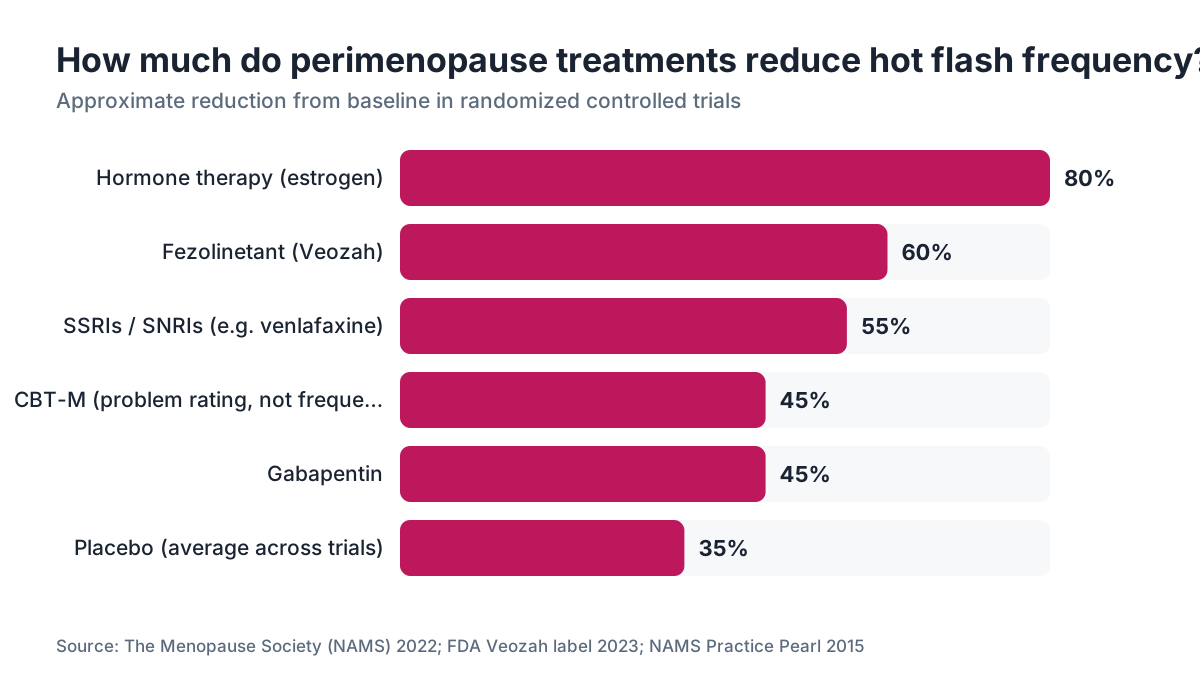
Fezolinetant (Veozah) is the newest and most targeted option. The FDA approved it in May 2023 specifically for vasomotor symptoms in menopause and perimenopause [5]. It's a neurokinin 3 receptor antagonist, so it works on a completely different mechanism than hormones, hitting the brain pathway (the KNDy neuron circuit in the hypothalamus) that fires off hot flashes. In the SKYLIGHT 1 and SKYLIGHT 2 trials, fezolinetant cut hot flash frequency by roughly 60% from baseline at 12 weeks, versus about 45% for placebo [5]. It isn't as potent as hormone therapy for most women, but it's a meaningful tool. The main concern is liver enzyme elevation in a small number of patients, so liver function testing is required before and during use.
SSRIs and SNRIs have been used off-label for hot flashes for years. The best evidence is for paroxetine (low dose, 7.5 mg, sold as Brisdelle, the only FDA-approved SSRI for vasomotor symptoms), venlafaxine, and escitalopram. They cut hot flash frequency by roughly 40 to 65% in trials [6]. They also help the mood symptoms that ride along with perimenopause, which is a real bonus. The downside: sexual side effects, possible weight gain, and the fact that paroxetine interferes with tamoxifen metabolism, which makes it a bad fit for breast cancer patients on that drug.
Gabapentin reduces hot flashes, especially nighttime ones. It's most useful for women whose flashes mainly disrupt sleep. Sedation and dizziness are the main side effects.
Oxybutynin, an overactive bladder medication, shows some evidence for reducing hot flashes, though the data is more limited.
Clonidine, a blood pressure drug, has modest evidence for hot flash reduction but isn't widely used given its side effects.
For cognitive and mood symptoms specifically, therapy (the psychological kind, covered below) and sleep treatment often matter more than any pill.
Does talk therapy or CBT help with perimenopause symptoms?
Yes, and the evidence is stronger than most people expect.
Cognitive behavioral therapy adapted for menopause (CBT-M) has been tested in several randomized controlled trials. The largest UK trial, MENOS1, published in Menopause in 2012, found that a self-help CBT program significantly reduced the problem rating of hot flashes and night sweats compared to usual care, without changing how often they happened [7]. What CBT changes is how much the symptoms bother you, how your sleep responds, and your sense of control. For women whose symptoms are disruptive but not severe enough to warrant hormone therapy, or who have contraindications, CBT-M is a legitimate first-line option in some European guidelines.
CBT also helps with the anxiety, depression, and irritability that track closely with the hormonal swings of perimenopause. These aren't character flaws or plain stress. They reflect real changes in serotonin and GABA signaling driven by estrogen variability. That doesn't make them immune to psychological treatment. CBT, mindfulness-based interventions, and short-term interpersonal therapy can each make a real difference.
Sleep therapy matters here too. CBT for insomnia (CBT-I) is the first-line treatment for chronic insomnia according to the American College of Physicians, ahead of sleep medications [8]. Since night sweats and hormonal shifts wreck sleep architecture in perimenopause, CBT-I is worth considering alongside or before sleep drugs.
One practical point: access is the main barrier. A qualified CBT-M therapist is hard to find in most US cities. Digital CBT programs (some validated in trials) are a real alternative when in-person therapy is out of reach.
What lifestyle changes have real evidence behind them for perimenopause?
Lifestyle advice gets dismissed as vague, and often it is. But a few specific interventions have genuine trial data.
Weight loss reduces hot flash frequency and severity. The SWAN study found obese women report more severe hot flashes than lean women, partly because fat tissue insulates the body and partly because metabolic health affects hypothalamic thermoregulation [9]. Losing even 10% of body weight in a clinical trial cut moderate-to-severe hot flashes significantly compared to a control group. This is one reason GLP-1 receptor agonists keep coming up in perimenopause conversations. A woman dealing with perimenopausal weight gain plus disruptive hot flashes may get a two-for-one benefit from addressing weight. For more, see semaglutide for weight loss.
Exercise has weaker-than-expected evidence for hot flash reduction specifically, but strong evidence for mood, sleep, bone density, and cardiovascular protection across the transition. The type matters. Resistance training does the most to preserve muscle and bone. Aerobic exercise supports the heart and mood. Aiming for 150 minutes of moderate aerobic activity plus 2 days of resistance training a week matches current physical activity guidelines and makes a measurable difference to quality of life.
Cooling strategies (layered clothing, cooler bedrooms, fans, wicking fabrics) don't change biology, but they cut the functional impact of hot flashes in daily life. Small randomized trials show they help women feel more in control, which counts.
Alcohol reduction is worth doing. Alcohol disrupts sleep architecture, raises core body temperature, and in some women triggers hot flashes directly. It's also an independent breast cancer risk factor.
Mindfulness and yoga have some trial support for mood and sleep, less for vasomotor symptoms. If you already enjoy these practices, keep going. If you don't, the evidence isn't strong enough to drag you to a studio.
How does perimenopause therapy differ from postmenopause therapy?
The underlying biology shifts when you cross the menopause line (12 straight months without a period). In postmenopause, estrogen sits persistently low. In perimenopause, it swings wildly. That distinction changes what you're treating and sometimes how.
In perimenopause, the irregular cycles and sometimes heavier bleeding are a bigger clinical issue than in postmenopause. Combined oral contraceptives get used more often in perimenopause precisely because they regulate cycles and provide contraception while treating symptoms. Standard menopausal hormone therapy doses often aren't high enough to reliably suppress a perimenopausal cycle or prevent pregnancy.
Dose calibration is different too. Some women in early perimenopause are still making significant amounts of estrogen. Stacking a standard hormone therapy dose on top of already-high fluctuating estrogen can cause estrogen-excess symptoms: breast tenderness, bloating, headaches. Starting low and adjusting matters a lot in this phase.
In postmenopause, by contrast, you're replacing what the ovaries no longer make at all. The target is relief of low-estrogen symptoms: hot flashes, vaginal atrophy, sleep disruption, and the acceleration of bone loss.
See: menopause for what changes after the transition is complete.
Are there risks to hormone therapy in perimenopause I should know about?
Yes, and being honest about them matters. Hormone therapy is not zero-risk.
For women with a uterus on combined estrogen-progestogen therapy, the WHI found a small increase in breast cancer risk with continuous combined therapy: about 8 additional cases per 10,000 women per year compared to placebo after 5+ years of use [3]. The absolute risk is small. It's roughly on par with the risk from one drink of alcohol a day or from being sedentary. But it's real, and it's something to weigh against the benefits.
For women using estrogen alone (after hysterectomy), the WHI actually found a reduced breast cancer risk during the study period. Estrogen-alone therapy carries a different, generally more favorable risk profile.
Blood clot risk (deep vein thrombosis, pulmonary embolism) runs higher with oral estrogen than with transdermal estrogen, which is why most current guidelines prefer transdermal routes for women with any clot risk factors [3].
Stroke risk is a concern with oral estrogen at higher doses, especially in women with migraine with aura or cardiovascular risk factors.
Hormone therapy shows no evidence of raising cardiovascular risk when started in healthy women under 60 within 10 years of menopause. This "timing hypothesis" or "window of opportunity" has solid supporting evidence from the Kronos Early Estrogen Prevention Study (KEEPS) and the Danish Osteoporosis Prevention Study [3].
The bottom line: risks are real, they're dose- and route-dependent, and they should be discussed with a clinician who reviews your full history, not waved away. Telehealth prescribers like WomenRx can do this review, but the conversation has to happen.
What about bone health during perimenopause?
This gets under-discussed. Bone loss speeds up sharply in the two to three years before the final period and the first years after it. Women can lose 10 to 20% of bone density in the first five to seven years after menopause if untreated [10]. The groundwork for fracture risk in your 70s and 80s is partly laid during the perimenopause transition.
Estrogen therapy protects bone. It's an approved treatment for osteoporosis prevention in postmenopausal women, and the protective effect starts during the transition for women who start early.
Even if you skip systemic hormone therapy, bone health needs active attention during perimenopause. Calcium intake (1,000 mg a day for women under 51, 1,200 mg a day from age 51, from food and supplements combined) and vitamin D3 (at least 600 to 800 IU daily, more if you're deficient) are the non-negotiable foundations.
A DEXA scan (bone density test) is recommended for all women at age 65, but earlier if you have risk factors like early menopause, smoking, low body weight, or a family history of hip fracture. If you're in your late 40s with multiple risk factors, talking to your doctor about an early scan makes sense. Learn more at bone density test.
What about weight gain and GLP-1 medications in perimenopause?
Weight gain during perimenopause is one of the most common complaints and one of the most biologically driven. Declining estrogen shifts fat from hips and thighs to the abdomen. Metabolism slows. Muscle mass drops. Insulin sensitivity changes. Women often gain 5 to 10 pounds during the transition no matter what happens with diet or exercise.
GLP-1 receptor agonists, the class that includes semaglutide (Ozempic, Wegovy) and tirzepatide (Mounjaro, Zepbound), have become the most effective tools for significant weight loss since they went widely available. In the SURMOUNT-1 trial, tirzepatide produced an average weight loss of 20.9% at the highest dose over 72 weeks [11]. In the STEP 1 trial, semaglutide 2.4 mg produced 14.9% average weight loss over 68 weeks [12].
For perimenopausal women, the weight loss itself may lower hot flash burden (see the lifestyle section above). GLP-1 medications may also improve insulin sensitivity and cardiovascular risk factors that worsen across the transition. There isn't yet strong trial data specifically in perimenopausal women for these drugs, and that's worth saying out loud.
One caution: GLP-1 medications can cut appetite to the point where protein intake falls, which can worsen the muscle loss that already happens in perimenopause. Women on these medications should be deliberate about hitting protein targets (0.7 to 1.2 grams per pound of lean body mass is the common clinical range) and keeping up resistance training.
See semaglutide and semaglutide vs tirzepatide for full comparisons. If you're weighing GLP-1 therapy alongside hormonal treatment, a platform like WomenRx that manages both in one place can simplify the coordination.
How do I know which treatment is right for me?
There's no universal answer, which is exactly what makes perimenopause medicine both hard and individual.
A reasonable framework: start with symptom severity. If your hot flashes are mild, you're sleeping fine, and your mood is okay, lifestyle work (weight, exercise, cooling strategies, alcohol) and maybe CBT-M or a low-dose SSRI may be plenty. If your symptoms are moderate to severe, wrecking sleep, work, or relationships, hormone therapy is almost certainly worth a real conversation.
Layer in your risk profile. Do you have a personal or strong family history of hormone-sensitive breast cancer? A blood clot history? Uncontrolled high blood pressure? None of these automatically rules out hormone therapy, but they change the math, the route, and the formulation.
Think about what bothers you most. Vasomotor symptoms respond best to hormone therapy and fezolinetant. Mood and anxiety may respond to SSRIs, CBT, or hormones. Vaginal dryness and painful sex respond specifically to local vaginal estrogen (safe for most women) or systemic estrogen. Sleep disruption often needs several angles at once: hormones plus CBT-I plus sleep hygiene.
One last thing. You don't have to pick one treatment and marry it. Perimenopause is a transition. Your treatment can change as you move through it. Start something, reassess at three months, adjust. The goal isn't a perfect protocol on day one. It's finding what gets you functioning well while you manage risk thoughtfully over time.
Frequently asked questions
At what age should I start treatment for perimenopause symptoms?
There's no single right age. Perimenopause can start in the late 30s or early 40s, and symptoms severe enough to treat can show up at any point in the transition. NAMS guidelines support considering hormone therapy for healthy women under 60 who are within 10 years of their final period. If symptoms are disrupting your sleep, mood, or daily function, that's a reason to talk to a clinician, whatever your exact age.
Can I take antidepressants just for perimenopause hot flashes?
Yes. Low-dose paroxetine (7.5 mg, sold as Brisdelle) is FDA-approved specifically for vasomotor symptoms and isn't prescribed at antidepressant doses. Venlafaxine and escitalopram are used off-label. These medications reduce hot flash frequency by roughly 40 to 65% in clinical trials. They're a real option for women who prefer to avoid hormones or who have contraindications. Discuss sexual side effects with your prescriber, since those can be a reason to switch.
Is it safe to take hormone therapy if I still have a period?
Yes, with the right formulation. Women who still have a uterus and are still cycling need both estrogen and progesterone to protect the uterine lining. Combined low-dose oral contraceptives are commonly used in perimenopause because they regulate erratic cycles while treating symptoms. Standard postmenopausal hormone therapy doses may not fit if you're still ovulating. Your clinician will match the formulation to your cycle status.
What is fezolinetant and how does it compare to hormone therapy for hot flashes?
Fezolinetant (Veozah) is the first non-hormonal neurokinin 3 receptor antagonist approved by the FDA (May 2023) for vasomotor symptoms. It targets the brain pathway that triggers hot flashes without touching estrogen levels. In trials it reduced hot flash frequency by about 60% from baseline. Hormone therapy usually produces bigger reductions (often 70 to 90%), but fezolinetant is a meaningful choice for women who can't take hormones. Liver monitoring is required.
Will hormone therapy help with perimenopause brain fog?
It may. Estrogen affects brain metabolism, serotonin signaling, and blood flow, all of which relate to cognition. Observational data and some smaller trials suggest estrogen therapy started in the early transition supports verbal memory and processing speed. Large randomized trial evidence is mixed, though, and this isn't an FDA-approved indication for hormone therapy. Better sleep (often restored by HRT) independently improves cognitive function, which may account for some of the reported benefit.
Does perimenopause therapy help with anxiety and mood swings?
Often yes. Estrogen variability directly affects serotonin and GABA signaling, which is why mood swings in perimenopause can feel out of proportion to what's going on in your life. Hormone therapy can steady the swings that drive mood instability. SSRIs and SNRIs work directly on mood neurotransmitter systems and have good evidence for both hot flashes and mood in perimenopausal women. CBT addresses mood and anxiety and has randomized trial support. In practice, combinations get used a lot.
Can I use natural or herbal remedies instead of prescription therapy for perimenopause?
The evidence for most herbal remedies is weak. Black cohosh has the most studied track record, and some small trials suggest modest benefit for hot flashes, but a 2012 Cochrane review found no consistent benefit beyond placebo. Phytoestrogens (soy isoflavones) show mixed results. None of these have the regulatory review or safety monitoring that prescription therapies do. If symptoms are mild, they're unlikely to cause harm. For moderate to severe symptoms, the evidence gap against prescription options is large.
Is local vaginal estrogen safe if I've had breast cancer?
This is actively debated among oncologists. Low-dose vaginal estrogen has very minimal systemic absorption, and many breast cancer survivors use it successfully for genitourinary symptoms. The 2022 NAMS position statement notes it can be considered in survivors with genitourinary symptoms who haven't responded to non-hormonal options, in consultation with their oncologist. Women on aromatase inhibitors need particularly careful discussion. There's no definitive randomized trial data on safety in hormone-receptor-positive cancer survivors.
How long does perimenopause last and how long do I need to stay on therapy?
Perimenopause averages 4 to 8 years but can run up to 10. Therapy duration is individual. NAMS doesn't recommend a fixed cutoff for stopping hormone therapy in women who stay symptomatic. Many women continue into postmenopause if benefits outweigh risks on ongoing review. The old advice to stop at five years or age 65 has no strong evidence behind it for women who started early and stay healthy. Annual reassessment of symptoms and risk factors is the standard approach.
Does losing weight help perimenopause hot flashes?
Yes, with meaningful effect. A clinical trial found women who lost at least 10% of their body weight significantly reduced moderate-to-severe hot flash frequency compared to a control group. The SWAN cohort study also linked higher body weight to more severe vasomotor symptoms. This doesn't mean weight loss replaces hormone therapy for severe symptoms, but it's a real lever. GLP-1 medications now produce weight losses in trials large enough to make this benefit clinically relevant.
What is the 'timing hypothesis' for hormone therapy and why does it matter?
The timing hypothesis holds that hormone therapy started early in the transition (within 10 years of the final period, or before age 60) has cardiovascular and neuroprotective benefits, while starting it much later does not and may raise risk. It's supported by the Kronos Early Estrogen Prevention Study (KEEPS) and the Danish Osteoporosis Prevention Study, which found cardioprotective effects in early starters. It means the decade around your final period is likely the most favorable window to start therapy.
Do I need a progesterone prescription if I've had a hysterectomy?
No. Progesterone is added to estrogen therapy specifically to protect the uterine lining from hyperplasia and cancer. If you've had a hysterectomy, you have no uterus to protect and can take estrogen alone. Estrogen-only therapy has a different and generally more favorable risk profile than combined therapy. It actually showed a reduced breast cancer risk in the WHI among hysterectomized women, though that finding is still being analyzed.
Can CBT really help with physical perimenopause symptoms, or just the emotional ones?
Mostly the emotional and functional response to physical symptoms, but that still counts clinically. The MENOS1 trial found CBT significantly reduced how much hot flashes and night sweats bothered women, improving their sleep and quality of life, without changing how often the flashes happened. CBT changes your reactivity to symptoms rather than the symptoms themselves. For moderate symptoms where full suppression isn't the goal, that's often enough to restore function.
What blood tests should I get to evaluate my perimenopause status?
FSH (follicle-stimulating hormone) and estradiol can help, but they aren't diagnostic for perimenopause on their own because they fluctuate so much in this phase. A single high FSH doesn't confirm perimenopause if you had a normal period last month. NAMS guidance is that diagnosis is primarily clinical, based on age, symptom pattern, and menstrual history. Thyroid function (TSH) is worth checking because thyroid dysfunction mimics and worsens perimenopausal symptoms and is common in women over 40.
Sources
- NIH National Institute on Aging, Menopause overview
- The Menopause Society (NAMS), 2022 Hormone Therapy Position Statement
- NIH National Heart, Lung, and Blood Institute, Women's Health Initiative
- Fournier A et al., Breast Cancer Risk in Relation to Different Types of Hormone Replacement Therapy, E3N Cohort. Breast Cancer Research and Treatment, 2008
- FDA Drug Approval Package, Veozah (fezolinetant), May 2023
- NIH National Center for Complementary and Integrative Health, Menopausal Symptoms
- Ayers B et al., MENOS1 trial, Cognitive Behavioural Therapy for Menopausal Hot Flushes, Menopause 2012
- American College of Physicians, Clinical Practice Guideline on Insomnia, Annals of Internal Medicine 2016
- SWAN (Study of Women's Health Across the Nation), NIH/NHLBI
- NIH Osteoporosis and Related Bone Diseases National Resource Center
- Jastreboff AM et al., SURMOUNT-1 Trial, Tirzepatide Once Weekly for the Treatment of Obesity, NEJM 2022
- Wilding JPH et al., STEP 1 Trial, Once-Weekly Semaglutide in Adults with Overweight or Obesity, NEJM 2021