Testosterone supplements for women: what actually works
TL;DR: Women's testosterone falls steadily from their 20s, dropping roughly 50% by menopause. Over-the-counter testosterone supplements have weak or no clinical evidence for women, and none of them contain actual testosterone. No FDA-approved testosterone product exists for women in the US, but off-label low-dose testosterone from a clinician has solid evidence for low libido and softer evidence for energy and mood.
Why do women need testosterone in the first place?
Testosterone is not a male hormone. Women produce it in the ovaries and adrenal glands throughout their lives, and it does real work: it supports libido, bone density, muscle mass, mood, and mental sharpness. [1] The ovaries account for roughly 25% of a woman's testosterone output; the adrenal glands contribute another 25%; and the remaining 50% comes from peripheral conversion of precursor hormones like DHEA in fat and muscle tissue. [1]
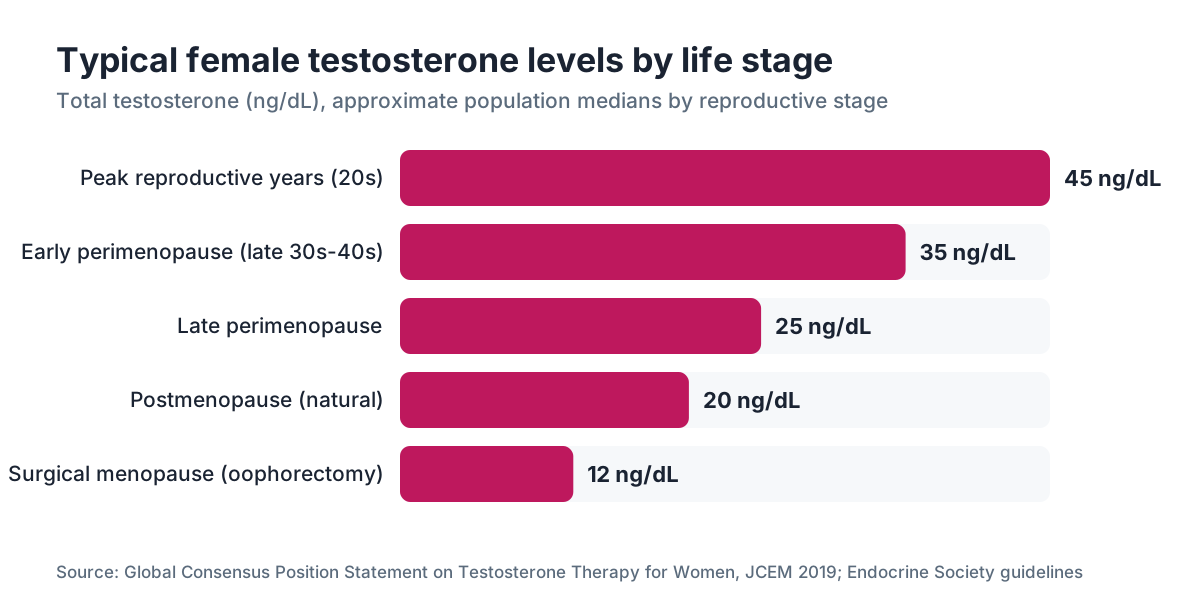
Levels peak in a woman's 20s, around 15 to 70 ng/dL depending on the assay and the woman, and fall gradually from there. By the time a woman reaches natural menopause, her testosterone is about half of what it was at peak. [2] That decline starts well before the final period, which is part of why many women in perimenopause notice a drop in desire, stamina, or that hard-to-name flatness of mood years before any hot flash arrives.
Low testosterone in women is not dramatic the way low estrogen is. There is no testosterone equivalent of the hot flash. Instead, women describe reduced interest in sex that feels different from stress or relationship fatigue, trouble building or keeping muscle despite consistent effort, brain fog, and a general loss of drive. None of those symptoms is specific to testosterone, which is why the diagnosis is genuinely tricky and why off-the-shelf "testosterone supplements" sold to women so often trade on the vagueness.
What do over-the-counter testosterone supplements for women actually contain?
No over-the-counter product sold in the US contains actual testosterone. Testosterone is a Schedule III controlled substance. [3] You cannot legally sell it without a prescription, and no supplement company can put it on a store shelf.
What OTC products labeled "testosterone supplements for women" or "best testosterone supplement for women" actually contain is a mix of:
- DHEA (dehydroepiandrosterone): A precursor hormone the body can theoretically convert to testosterone or estrogen. More on this below.
- Zinc: Linked to testosterone metabolism in men who are deficient; the evidence in women is thin.
- Ashwagandha (Withania somnifera): A few small trials show modest reductions in cortisol and, in one 8-week trial of 50 women, a statistically significant improvement in sexual function scores versus placebo. [4] The effect size is small and the trial was short.
- Fenugreek extract: Marketed heavily; the few women-specific trials are small and sponsored by supplement makers.
- Boron, vitamin D, magnesium: Nutritional support for hormone metabolism broadly, not testosterone-specific.
- Tribulus terrestris: Popular in men's products; human evidence in women is very limited.
The honest summary: none of these raises your measurable testosterone level in any way that matters clinically. If you are genuinely low, a supplement will not get you there. If you are not deficient, it will not do much either. That does not mean every ingredient is useless for every symptom. It means the testosterone label is mostly marketing.
What is DHEA and does it raise testosterone in women?
DHEA is the one ingredient in this category with a real hormonal mechanism. It is a steroid made by the adrenal glands, the most abundant circulating steroid in the body at peak production (around age 25), and it declines by 10 to 20% per decade after that. [5] DHEA converts directly into both androgens (including testosterone) and estrogens.
The FDA has approved a vaginal insert called Intrarosa (prasterone, which is DHEA) specifically for moderate-to-severe dyspareunia (painful sex) caused by menopause-related vaginal atrophy. [6] That is a localized prescription product. Oral OTC DHEA is a different animal.
Does oral DHEA raise testosterone? In postmenopausal women, 25 to 50 mg daily of oral DHEA does produce modest, measurable increases in DHEA-S, androstenedione, and free testosterone. [5] The increases are real but small, and whether they translate to symptom relief is another question. Reviews of oral DHEA in postmenopausal women find inconsistent effects on sexual function and quality of life, with some benefit in libido but not uniformly. [5]
Side effects from oral DHEA include acne, hair thinning, and oily skin, and because DHEA can convert to estrogen, there are theoretical concerns about estrogen-sensitive tissues. Nobody has good long-term safety data on daily oral DHEA in women, and OTC doses (often 50 to 100 mg) run higher than what most clinical studies use.
If you are considering DHEA, lower doses (10 to 25 mg) make more sense than the 50 or 100 mg capsules stocked at most supplement stores. Check your DHEA-S level first, then recheck it a few weeks in.
Does the FDA approve testosterone therapy for women?
No. There is no FDA-approved testosterone product for women in the United States. [3] This is a real gap in women's health. The only testosterone products the FDA has approved are labeled for men, and their doses run roughly 10 times higher than what women need or tolerate.
That does not mean women cannot be prescribed testosterone. It means clinicians who do so are prescribing off-label, which is entirely legal and common in medicine. They use male-labeled products at much lower doses, or they work with compounding pharmacies to make low-dose formulations for women (gels, creams, troches, subcutaneous pellets).
The Global Consensus Position Statement on the Use of Testosterone Therapy for Women, published in 2019 and endorsed by the Endocrine Society, the International Menopause Society, and 10 other major medical organizations, concludes there is "a substantial body of evidence supporting the effectiveness and safety of testosterone in improving sexual wellbeing in postmenopausal women." [8] That statement supports use for hypoactive sexual desire disorder (HSDD) and says transdermal delivery is preferred because it avoids the liver first-pass metabolism that oral testosterone causes.
The same statement cautions that testosterone should be dosed to achieve physiologic female-range levels, not supraphysiologic ones, and that regular blood monitoring is necessary. [2]
What are the proven benefits of testosterone therapy in women?
The evidence is strongest in one area and mixed in others. Here is the honest breakdown:
Libido and sexual function: This is where the evidence is clearest. A 2019 systematic review and meta-analysis of 36 randomized controlled trials covering more than 8,000 women found testosterone therapy significantly improved sexual desire, arousal, orgasm frequency, and satisfaction compared with placebo or estrogen alone. [2] The effect is clinically meaningful, more than a statistical blip.
Bone density: Lower testosterone in women tracks with lower bone mineral density. Some research supports a benefit on bone, but it is hard to separate from the concurrent estrogen therapy in most studies. If bone health is your concern, a bone density test beats empiric testosterone as a starting point.
Mood and energy: Women often report better mood, less fatigue, and sharper thinking on testosterone. The trial data here is softer. The meta-analysis above found statistically significant improvements in wellbeing and mood, but the effect sizes were smaller than for sexual function. [2] That does not mean the experience is imaginary. It may mean the trials were not built to detect those effects well.
Muscle mass and body composition: Testosterone is anabolic. In men, therapy clearly increases lean mass. In women on physiologic female doses, the effects are real but modest. Research in women with surgical menopause suggests some preservation of lean mass, but this is not a primary indication in the guidelines. [11]
What testosterone does NOT clearly do in women: It does not reliably treat depression on its own, does not fix hot flashes (estrogen does that), and is not a weight loss tool at physiologic doses.
What are the risks and side effects of testosterone for women?
Risks depend heavily on dose and delivery. At physiologic female doses, transdermal testosterone is generally well tolerated. The side effects reported in trials at appropriate doses are mostly androgenic: acne, extra facial or body hair (hirsutism), and scalp hair thinning. These are dose-dependent and usually reversible if you stop or cut the dose. [2]
The bigger concern is supraphysiologic dosing. It happens with pellets, with compounded products that are not carefully measured, and with women who tolerate the hormone well and creep their dose up over time. Sustained high testosterone in women carries theoretical risks of altered lipids (specifically lower HDL), liver stress with oral forms, and clitoral enlargement (usually irreversible). [2]
What about breast cancer risk? This is the question that makes many clinicians hesitant. The honest answer: the data is reassuring but limited. The major position statement found no evidence of increased breast cancer risk at physiologic doses, but flagged that long-term safety data beyond 24 months is sparse. [2] Women with a personal history of hormone receptor-positive breast cancer should have a careful conversation with their oncologist before any hormone therapy.
Cardiovascular risk: At physiologic female doses, the trial data does not show increased cardiovascular risk. The concern climbs at male-range doses. This is one reason the consensus statement keeps hammering on female physiologic range and regular monitoring.
If you have thought through hormone replacement therapy concerns before, the testosterone risk conversation is related but not identical, because testosterone's cardiovascular and cancer biology differs from estrogen's.
How is testosterone measured in women, and what levels are considered low?
Testing testosterone in women is one of the more frustrating corners of clinical medicine. Standard total testosterone assays are built and validated for male ranges (300 to 1,000 ng/dL). Women run 15 to 70 ng/dL, and at those concentrations many commercial assays cannot reliably tell 20 ng/dL from 35 ng/dL. [9]
The preferred method for women is liquid chromatography with tandem mass spectrometry (LC-MS/MS), which is far more accurate at low concentrations. [9] Many large commercial labs offer it, but your in-network lab draw may not default to it. Ask for "mass spectrometry-based testosterone" by name.
Free testosterone (the active fraction not bound to sex hormone-binding globulin, or SHBG) is also commonly measured, but calculated free testosterone values derived from total testosterone and SHBG carry their own methodological problems.
The 2019 Global Consensus Statement does not set a numerical threshold for "low" testosterone in women, and it is explicit that the diagnosis cannot be made on a number alone. [2] Symptoms matter as much as the lab. A woman with a testosterone of 18 ng/dL and no symptoms needs no treatment. A woman at 25 ng/dL with real loss of desire and energy might.
That said, a total testosterone below 15 ng/dL on a reliable assay in a symptomatic woman is a reasonable place where most experienced clinicians would consider a therapeutic trial. The table below shows typical female ranges by life stage.
How is testosterone prescribed for women in practice?
Because there is no FDA-approved women's product in the US, clinicians work with a few practical options:
Compounded transdermal creams or gels: The most common approach. A compounding pharmacy makes a 1% to 2% testosterone cream or gel, and the woman applies a small amount (often 0.5 to 1 gram, delivering 5 to 10 mg daily) to a thin-skinned area like the inner arm or thigh. Absorption varies person to person. Check levels 4 to 6 weeks after starting.
Male-labeled products at lower doses: AndroGel 1% or similar products can be prescribed in fractions of the male dose. This takes careful titration and patient education about transfer risk (testosterone can absorb through skin contact with partners or children).
Pellets: Subcutaneous pellets implanted in the hip or buttock release testosterone over 3 to 6 months. They are popular in some telehealth and wellness clinics. The problem is they are not titratable once inserted. If a woman ends up with supraphysiologic levels, you cannot adjust the dose mid-course. Many endocrinologists and the major position statements advise caution with pellets for this reason. [2]
Troches (sublingual or buccal lozenges): Testosterone dissolves under the tongue or in the cheek. Some of it gets swallowed and passes through the liver, which is the route most guidelines recommend avoiding. [12]
A telehealth practice like WomenRx can evaluate symptoms, order the right testing, and prescribe compounded transdermal testosterone where it fits clinically, which gives women clinician oversight without a specialist referral that can take months.
Testosterone is almost always weighed alongside the whole hormone picture. Women with estrogen-related menopause symptoms usually address those first with an estrogen patch or other estrogen therapy, and progesterone if they have a uterus, before layering in testosterone.
Can testosterone help with menopause symptoms beyond low libido?
The symptom women ask about most after libido is energy. The evidence here is genuinely mixed. Many women on physiologic testosterone report feeling more energetic, sharper, and more driven. Controlled trials show modest improvements in wellbeing scores, but the effect is not as clean or as large as the sexual function benefit. [2]
Hot flashes? Testosterone does not reliably reduce them. If hot flashes are your main complaint, estrogen is the therapy with the clearest evidence, and you can read more in our guide to menopause.
Joint pain is another symptom some women tie to perimenopause and testosterone decline. There is a mechanistic rationale (testosterone has anti-inflammatory properties and supports connective tissue), but clinical evidence for testosterone reducing joint pain in perimenopausal women specifically is thin.
Depression and anxiety in perimenopause are driven mostly by estrogen fluctuation, not testosterone. Testosterone is not a treatment for clinical depression. If mood symptoms are prominent, addressing estrogen and screening for primary mood disorders is the right order of operations.
If you are still figuring out where you are in the transition, the articles on when does menopause start and menopause age lay out the timeline.
What should you actually do if you think your testosterone is low?
Step one is a good baseline blood panel. Ask for total testosterone by LC-MS/MS, SHBG, calculated free testosterone, DHEA-S, and a complete metabolic panel. Add estradiol, FSH, and thyroid function, because those produce overlapping symptoms. Draw it early in the morning (testosterone peaks around 8 to 10 AM) and ideally at the same phase of your cycle if you are still cycling, since levels shift across the month.
Step two is separating symptoms from confounders. Low desire that clearly tracks the end of a long marriage or a stretch of high stress is not automatically a hormone deficiency. Fatigue from poor sleep or anemia looks a lot like low testosterone. Work through the obvious causes first.
Step three is finding a clinician who knows how to read female testosterone levels and has actually prescribed for women. That is harder than it sounds. Many primary care doctors are undertrained here. OB-GYNs vary widely. Endocrinologists often know the biology but may not be comfortable prescribing off-label for women. NAMS-certified menopause specialists or experienced telehealth clinicians who focus on women's hormones are often the best door in.
Step four: be skeptical of anyone who jumps straight to pellets without trying a titratable method first, anyone who skips follow-up labs, and any supplement company promising to "boost testosterone naturally." That last one is, as covered above, largely fiction at the doses and ingredients in OTC products.
Spending money on OTC testosterone supplements before you get tested and evaluated is, in my view, a waste. A targeted blood panel plus a telehealth consult often costs less than six months of supplements, and you walk away with actual information.
How does testosterone fit into the broader hormone picture for women?
Hormones do not work in isolation. Estrogen, progesterone, testosterone, cortisol, thyroid hormone, and insulin all move together. Treating one while ignoring the others is like tuning a single instrument in an orchestra and wondering why the piece still sounds off.
In the peri-to-postmenopausal window, the usual sequence is: progesterone falls first (in perimenopause), then estrogen turns erratic and eventually drops, and testosterone follows a slower decline that began years earlier. Most women with symptomatic hormone deficiency in midlife need estrogen addressed first. Adding testosterone before estrogen is like framing a new room on a crumbling foundation.
For women already on estrogen therapy who still have low libido or flat affect, testosterone is a logical next step and has the most evidence in exactly that context. The 2019 Global Consensus Statement supports this approach. [2]
If you have been prescribed testosterone and also have concerns about weight, metabolic health, or GLP-1 therapy, these areas intersect. Fat tissue is a site of androgen conversion, and body composition changes from weight loss can shift hormone levels. Our article on hormone replacement therapy covers how to think about the whole picture.
One more thing nobody talks about enough: SHBG. Sex hormone-binding globulin binds testosterone (and other hormones) and renders them inactive. High SHBG means less free testosterone. Oral estrogen raises SHBG substantially, which is why some women on oral estrogen have low free testosterone even when total looks fine. Switching to transdermal estrogen (which does not meaningfully raise SHBG) or adding transdermal testosterone often solves it.
Frequently asked questions
Do testosterone supplements really work for women?
Over-the-counter supplements labeled as testosterone boosters for women do not contain testosterone and have no strong clinical evidence for raising hormone levels meaningfully. Ingredients like DHEA, ashwagandha, and zinc have modest data for specific outcomes (DHEA for sexual function, ashwagandha for stress and libido), but calling them testosterone supplements overstates what they do. Actual testosterone therapy prescribed by a clinician has solid evidence for improving libido in women.
What are the signs of low testosterone in women?
The most common signs are reduced sexual desire that does not feel linked to stress or relationship issues, difficulty building muscle, unexplained fatigue, and a general loss of motivation or drive. Some women describe a blunted emotional range or loss of the vigor they used to have. None of these symptoms is specific to testosterone alone, so labs and a clinical evaluation are necessary before attributing them to low testosterone.
Is DHEA the same as testosterone?
No. DHEA is a precursor hormone the body can convert into testosterone or estrogen, depending on enzyme activity in different tissues. Oral DHEA at 25 to 50 mg produces modest measurable increases in testosterone in postmenopausal women, but the conversion is variable and the clinical effects on libido are inconsistent across trials. DHEA is not a direct substitute for prescribed testosterone therapy.
Is testosterone therapy safe for women long-term?
At physiologic female doses via transdermal delivery, existing trial data does not show increased cardiovascular disease or breast cancer risk compared to placebo. The main concerns are androgenic side effects like acne and excess hair growth, which are dose-dependent and mostly reversible. Long-term safety data beyond two years is limited, which is an honest gap. Regular blood monitoring is standard practice to keep doses in the female physiologic range.
Can I get a prescription for testosterone as a woman in the US?
Yes, as an off-label prescription. No testosterone product is FDA-approved specifically for women, but clinicians can legally prescribe male-labeled products at lower doses or work with compounding pharmacies to create women-specific formulations. A clinician specializing in women's hormones, a NAMS-certified menopause practitioner, or a telehealth practice focused on women's health are the most practical access points.
What is the best testosterone supplement for women who cannot get a prescription?
If prescription therapy is not accessible, the OTC option with the most clinical rationale is low-dose oral DHEA (10 to 25 mg daily, not the 50 to 100 mg doses common in stores) paired with a DHEA-S lab test before starting. Ashwagandha has small trial evidence for sexual function improvement. Neither is a substitute for actual testosterone therapy, and both should be discussed with a clinician, particularly if you take other medications or have hormone-sensitive conditions.
How long does testosterone therapy take to work in women?
Most women notice improvements in libido and sexual responsiveness within 4 to 12 weeks of reaching a therapeutic level. Energy and mood changes, where they happen, often take longer, sometimes 3 to 6 months. Check levels 4 to 6 weeks after starting to confirm the dose is hitting female-range concentrations and to adjust if needed. Effects that do not appear within 6 months suggest the symptom may have a different cause.
Will testosterone make a woman gain muscle or lose weight?
At physiologic female doses, the effect on muscle mass is modest, not dramatic. Testosterone is anabolic, and some women on therapy report it is easier to maintain or build lean mass with resistance training. It is not a meaningful weight loss tool at appropriate doses. Supraphysiologic doses used illicitly would have larger effects but carry significant health risks and virilizing side effects.
Does testosterone affect mood in women?
Many women on testosterone therapy report improved mood, energy, and sense of wellbeing. Clinical trials show statistically significant improvements in wellbeing scores, though the effect size is smaller and less consistent than the libido benefit. Testosterone is not a treatment for clinical depression or anxiety. Women with significant mood symptoms should be evaluated for mood disorders and estrogen deficiency, both of which have stronger evidence-based treatments.
Can testosterone help with vaginal dryness or painful sex?
Local vaginal testosterone (applied directly to the vaginal tissue) has some evidence for improving vaginal atrophy symptoms, and the FDA-approved vaginal DHEA product (Intrarosa/prasterone) works through a similar local androgen mechanism. Systemic transdermal testosterone at low doses does not reliably reverse vaginal atrophy on its own. For vaginal symptoms, local estrogen or local DHEA is more targeted and better supported than systemic testosterone.
What blood tests do I need before starting testosterone therapy?
At minimum: total testosterone by LC-MS/MS assay (more accurate at female ranges), SHBG, calculated free testosterone, DHEA-S, estradiol, FSH, and a complete metabolic panel including lipids and liver function. Thyroid function and a CBC to rule out anemia are also useful since they cause overlapping symptoms. Testing in the morning when levels peak, and ideally at a consistent phase of your cycle, gives the most meaningful baseline.
Is testosterone therapy different from hormone replacement therapy?
Testosterone therapy is one component of what can broadly be called hormone therapy. Standard HRT for menopause refers mainly to estrogen and progesterone replacement. Testosterone is a separate consideration, typically added when low libido or other androgen-deficiency symptoms persist after estrogen and progesterone are optimized. They can be used together. The evidence bases, risks, and regulatory status of each are distinct.
Can younger women in perimenopause use testosterone?
Testosterone declines start in the late 20s and continue through perimenopause, so younger symptomatic women can have low levels. The Global Consensus Statement does not restrict recommendations to postmenopausal women. Premenopausal women considering testosterone therapy need careful evaluation to rule out other causes of low libido and should use contraception if at risk of pregnancy, since testosterone is teratogenic.
Are testosterone pellets safe for women?
Pellets are not inherently unsafe, but they carry a specific risk: once implanted, the dose cannot be reduced. Women sometimes end up with supraphysiologic testosterone levels that cause acne, hair thinning, or altered cholesterol for months until the pellet wears off. The major international consensus statement advises caution with pellets for this reason. Starting with a titratable method like a transdermal cream is a more controllable approach.
Sources
- Endocrine Society, Testosterone in Women (clinical overview)
- Global Consensus Position Statement on the Use of Testosterone Therapy for Women (2019), published in Journal of Clinical Endocrinology and Metabolism
- US Drug Enforcement Administration, Drug Scheduling (Schedule III controlled substances)
- Banaszkiewicz et al. 2023, Nutrients journal (ashwagandha and female sexual function RCT)
- Labrie F et al., DHEA and intracrinology, Journal of Steroid Biochemistry and Molecular Biology (review)
- FDA Drug Database, Intrarosa (prasterone) prescribing information
- North American Menopause Society (NAMS), Menopause Practice: A Clinician's Guide (androgen section)
- Davis SR et al., Global consensus position statement on testosterone for women, Climacteric 2019
- Wierman ME et al., Androgen therapy in women, Journal of Clinical Endocrinology and Metabolism, Endocrine Society Clinical Practice Guideline
- Shifren JL et al., Transdermal testosterone treatment in women with impaired sexual function after oophorectomy, NEJM 2000
- Baber RJ et al., 2016 IMS Recommendations on women's midlife health and menopause hormone therapy, Climacteric