Testosterone replacement therapy for women: what it does and who needs it
TL;DR: Testosterone is the most abundant active sex hormone in women before menopause, and levels fall by roughly 50% between age 20 and natural menopause. No testosterone product is FDA-approved for women yet, but it is widely prescribed off-label at low doses. The strongest evidence supports its use for hypoactive sexual desire disorder (HSDD). It also helps some women with energy, mood, and muscle preservation.
What is testosterone therapy for women, exactly?
Testosterone therapy for women means adding an external source of testosterone, usually a cream, gel, or pellet, to bring blood levels back into the range that was normal for that woman when she was younger. The goal is not a male range. It is restoring what was lost.
Women make testosterone in the ovaries and adrenal glands. A healthy premenopausal woman has a total testosterone level somewhere between 15 and 70 ng/dL depending on the lab and the assay, compared with 300 to 1,000 ng/dL in men [1]. After natural menopause, testosterone drops but does not vanish. After surgical menopause (both ovaries removed), it falls sharply, because the ovaries make roughly half of a premenopausal woman's testosterone [2].
So what are clinicians actually trying to fix? Usually one or more of these: low libido (formally hypoactive sexual desire disorder, or HSDD), fatigue that persists despite adequate estrogen and thyroid management, low mood that estrogen or antidepressants alone did not touch, poor muscle recovery or shifting body composition, and sometimes bone density concerns that estrogen alone has not fully answered.
This is a different animal from transgender hormone therapy, which intentionally pushes levels into the male range. Female-appropriate testosterone therapy aims at the top of the normal premenopausal range, generally below 150 ng/dL total [3]. Staying inside that range is the whole safety story. Monitoring is not optional.
Why do women's testosterone levels fall in the first place?
The decline starts earlier than most women expect. Total testosterone peaks in the early 20s, then falls gradually. By age 40, average levels are roughly half what they were at 20 [2]. That slide is quiet. The loud drops happen in two situations: the transition into perimenopause and surgical menopause.
During perimenopause, the hormone conversation centers on estrogen and progesterone. But testosterone is falling at the same time, and its loss drives symptoms estrogen will not fix. Libido changes. Motivation dips. Gym sessions stop paying off, and recovery drags. Most women chalk this up to stress or age rather than a treatable hormone deficiency.
The single biggest event drop comes from bilateral oophorectomy, surgical removal of both ovaries. A woman who has this before natural menopause loses her largest testosterone-producing organs overnight. Studies suggest she can lose 50% or more of circulating testosterone within days of surgery [2]. If her prescriber replaces estrogen but not testosterone, she often keeps feeling poorly in ways estrogen alone cannot explain.
Oral contraceptives are another common cause that slips past everyone. Estrogen in the pill raises sex hormone-binding globulin (SHBG), a protein that binds testosterone and makes it unavailable. A woman can have a technically normal total testosterone number while her free (bioavailable) testosterone sits near zero. If you were on the pill for years and your libido never fully came back after stopping, SHBG is worth testing.
To see how testosterone fits the wider hormone picture, the hormone replacement therapy overview covers estrogen and progesterone alongside it.
What does the research actually say testosterone therapy does for women?
The evidence base is stronger than many people think and narrower than its loudest advocates claim. Here is where the data is solid, where it is suggestive, and where it is genuinely thin.
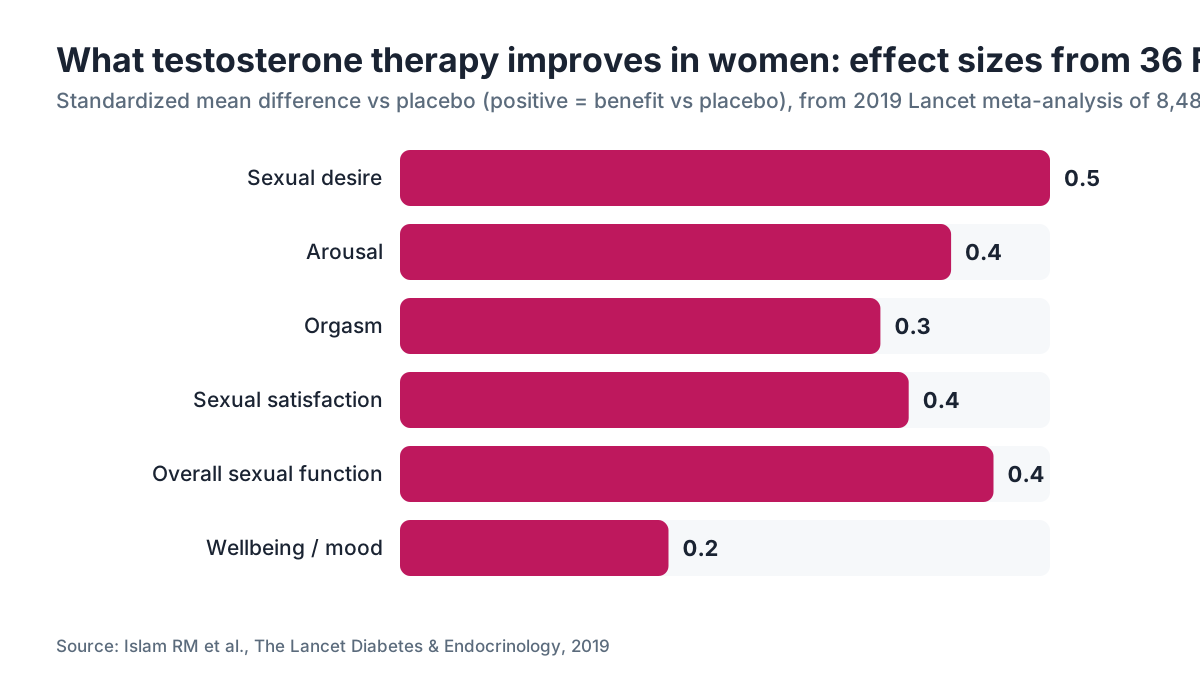
Sexual function and HSDD. This is the clear win. A 2019 systematic review and meta-analysis in The Lancet Diabetes & Endocrinology pooled 36 randomized controlled trials covering 8,480 women and found testosterone therapy improved sexual function significantly, including desire, arousal, orgasm frequency, and satisfaction, versus placebo or comparator [3]. The effects were clinically meaningful, more than a statistical blip. Every major society recommendation rests on this.
Mood and wellbeing. The same 2019 meta-analysis found modest gains in wellbeing scores and some mood improvement, but smaller and less consistent than the sexual function data [3]. Several individual trials show benefit in women after surgical menopause. Honest summary: it clearly helps some women's mood, does nothing for others, and we cannot yet predict who responds.
Muscle mass and body composition. Testosterone is anabolic. It helps build and hold lean mass. Trials in postmenopausal women show that testosterone plus resistance exercise preserves muscle better than placebo. At normal female doses the effect is real but modest. It is not a shortcut. It removes a disadvantage.
Bone density. Estrogen is the main driver of bone protection in women, but testosterone converts to estrogen in bone tissue and also acts directly through androgen receptors. The evidence that testosterone alone improves bone density in women is messier than the estrogen data [1]. If bone is your main worry, read our bone density test guide for what to measure and when, and get your estrogen dialed in first.
Cognitive function. Animal and observational data are interesting. Randomized data in women is sparse and mixed. Nobody should start testosterone expecting to reverse cognitive changes. The evidence isn't there.
What it does not do. At female-appropriate doses testosterone does not reliably drive meaningful weight loss, though it may help some women hold muscle during a calorie deficit. For weight management, GLP-1 medications have a far stronger record. The semaglutide for weight loss page covers what that looks like in women specifically.
How is testosterone replacement for women prescribed and dosed?
The FDA status shapes everything here. As of 2025 there is no FDA-approved testosterone product made specifically for women in the United States [4]. Every prescription is off-label. That does not make it unsafe or wrong. Physicians prescribe off-label all the time when evidence supports it. It does mean the products are either compounded or male-labeled formulations used at a fraction of the standard male dose.
Topical gels and creams. The most common approach. Compounding pharmacies prepare testosterone cream or gel at concentrations meant for women, usually 0.5% to 2%. A typical dose is 1 to 10 mg per day applied to the inner wrist, upper arm, or inner thigh. That is dramatically lower than any male dose. Transdermal delivery skips first-pass liver metabolism, which matters for safety.
Male-labeled gels (AndroGel, Testim) at micro-dose. Some clinicians prescribe the 1% male gel at a tenth of the male dose. It works pharmacologically but needs careful instruction. The standard male pump dispenses 12.5 mg per actuation. Women need roughly 1 to 2.5 mg per day, which means a sliver of a pump. It is messy and imprecise, which is why many prescribers reach for compounded preparations instead.
Subcutaneous pellets. A tiny pellet of crystalline testosterone goes under the skin of the hip or buttock every 3 to 6 months. It holds steady levels with no daily application. The catch: if levels run high, you cannot pull the dose back out. Pellets demand an experienced prescriber and close monitoring, because overdose risk is real and the pharmacokinetics vary a lot from woman to woman.
Injections. Intramuscular or subcutaneous testosterone (cypionate or enanthate) can be used at very low doses, but levels swing more and need frequent monitoring. Used less often than topical in women.
Vaginal testosterone. Some studies look at low-dose vaginal testosterone for genitourinary syndrome of menopause (GSM), the thinning and dryness that hits vaginal and urinary tissue. Small trials show benefit. This is separate from systemic therapy and targets a local problem.
The 2019 Global Consensus Statement on female testosterone therapy, endorsed by major endocrine and menopause societies, recommends aiming for total testosterone in the upper quartile of the normal premenopausal range, which most labs place around 50 to 150 ng/dL, and monitoring every 3 to 6 months [9].
How do you know if you're a good candidate for testosterone therapy for women?
The clearest indication is HSDD with low testosterone confirmed on labs. Symptoms matter more than any single number, because testosterone assays in the female range are notoriously imprecise. The Endocrine Society is blunt about this: currently available immunoassays often cannot accurately measure testosterone at the low concentrations typical in women, and mass spectrometry (LC-MS/MS) is the preferred method [1].
Good candidates usually share some mix of these: reduced sexual desire that distresses them and represents a change from baseline, fatigue that persists despite good sleep and optimized thyroid function, loss of the drive that used to come naturally, trouble holding muscle despite consistent training, and confirmed low-normal or low testosterone on a quality assay.
Who is usually not a good candidate: women with a personal history of hormone-sensitive breast cancer (safety data is insufficient and most oncologists advise against it), women with untreated polycystic ovary syndrome (PCOS) who may already run high on androgens, women with high baseline testosterone, and women on oral contraceptives who haven't tried a non-oral method first to see whether SHBG normalizes.
Before starting, most experienced clinicians check: total testosterone (LC-MS/MS if possible), free testosterone, SHBG, DHEA-S, estradiol, FSH, LH, a thyroid panel, and a CBC. Knowing where you sit in the transition matters too. The menopause guide covers how estrogen, progesterone, and testosterone interact across those years, and progesterone context matters for women who still have a uterus.
Telehealth has made this easier. Platforms like WomenRx connect you with prescribers who do this work full time, so you don't have to hunt for one of the still-limited number of gynecologists or endocrinologists comfortable prescribing testosterone to women.
What are the real risks and side effects of testosterone replacement therapy for women?
At appropriate female doses, testosterone therapy has a good safety record in the available evidence. But "appropriate dose" is the whole ballgame. Risks turn real when levels climb above the normal female range.
Androgenic side effects. These are the ones women fear most. Acne, oily skin, facial hair growth (hirsutism), and clitoral enlargement are all androgen-related. At properly titrated doses aiming below 150 ng/dL total, they happen but are uncommon. The 2019 Lancet meta-analysis found no significant increase in acne or hair growth versus placebo at doses targeting normal premenopausal levels [3]. The risk climbs when levels run high, especially with pellets, where dosing can overshoot.
Voice deepening. The most irreversible potential effect. It does not typically happen at female-range levels, but stop treatment and call your prescriber right away if you notice any voice change. Once the vocal cords thicken, it does not fully reverse.
Cardiovascular effects. The data is reassuring at female doses. High testosterone in women, as seen in PCOS, ties to cardiovascular risk, but therapy to normal female levels does not appear to carry that risk. The 2019 consensus statement found no significant adverse effects on lipids or cardiovascular markers at appropriate doses [9]. Still, long-term cardiovascular data in large populations of women on testosterone simply does not exist yet.
Breast cancer. The most anxiously asked question and the least satisfying to answer. Testosterone can aromatize (convert) to estrogen in breast tissue, and estrogen has known links to certain breast cancers. No large randomized trial with long enough follow-up gives a clean answer on breast cancer risk with testosterone in women. The 2019 consensus statement concluded the available data does not show increased risk at female-dose levels, while stating plainly that the evidence is insufficient for a definitive answer [9]. Women with a personal or strong family history of breast cancer should work this through with an oncologist, not only a hormone prescriber.
Polycythemia. Testosterone drives red blood cell production. At male doses that is a real concern. At female doses it is less common, but a hematocrit check at follow-up labs is standard.
Monitoring schedule. Most guidelines recommend checking levels 3 to 6 weeks after starting or changing dose, then every 6 months once stable [1, 9]. No monitoring is a red flag.
What does the FDA say about testosterone therapy for women?
The FDA has never approved a testosterone product specifically for women in the United States [4]. That is a regulatory gap, not a verdict that the therapy is useless or dangerous. The history explains a lot.
Intrinsa, a testosterone patch for women developed by Procter & Gamble, went before the FDA in 2004 for HSDD in surgically menopausal women. The advisory committee voted 14 to 2 that the efficacy data was sufficient, but voted 13 to 4 against approval at that time over long-term safety concerns, specifically cardiovascular risk and breast cancer with extended use [4]. Europe later approved it, and it was marketed there until 2012, when it was withdrawn for commercial reasons, not safety reasons [5].
Since then, no drug company has pushed a female testosterone product through a full FDA approval in the US, mostly because the commercial path has looked unfavorable against the regulatory cost. That is a market failure, not a scientific conclusion about safety or efficacy.
The practical result: women who benefit from testosterone get it off-label, using either compounded products or micro-doses of male-approved ones. Off-label prescribing is legal and common. But the lack of FDA labeling means no standardized product, no mandated monitoring requirement, and wide variation in prescriber experience.
The Endocrine Society's 2014 clinical practice guideline on androgen therapy in women stated that "there is insufficient evidence to recommend testosterone therapy for women" for purposes other than HSDD, while also giving guidance for off-label use when clinically indicated [8]. That guideline is older, and the evidence has grown a lot since, especially with the 2019 Lancet meta-analysis.
How does testosterone therapy differ from other types of hormone replacement therapy for women?
Most talk about hormone replacement therapy for women centers on estrogen, sometimes with progesterone added for women who still have a uterus. Testosterone is the third hormone in the room, and it gets left out most.
Estrogen therapy handles hot flashes, night sweats, vaginal dryness, bone loss, and some cognitive symptoms. It is the most studied hormone intervention in menopausal women, with decades of trial data including the Women's Health Initiative [6]. A progestogen (progesterone or a synthetic progestin) is required for women with a uterus to protect against endometrial cancer from unopposed estrogen. The progesterone article covers the micronized progesterone versus synthetic progestin distinction in detail.
Testosterone hits a different cluster: libido, drive, energy, muscle. The overlap with estrogen is partial. Both influence mood and brain function. Both matter for bone. But you can have fully optimized estrogen and still carry profound low libido and fatigue from low testosterone. They do not substitute for each other.
Which hormones to use and in what combination depends on symptoms, lab values, personal history, and where a woman sits in the menopause transition. Plenty of women already on estrogen plus progesterone find that adding low-dose testosterone clears the symptoms the others left behind.
One more comparison. For women using an estrogen patch as their main HRT, adding testosterone usually means a separate topical preparation, since combination patches delivering all three hormones are not sold in the US.
And testosterone is not a weight loss treatment. It should not be sold as one. Women focused on body composition often get more from GLP-1 medications. The semaglutide vs tirzepatide comparison lays out what those options actually deliver for women in fat loss and metabolic benefit.
How much does testosterone therapy for women cost?
Cost swings widely by formulation and insurance coverage. The short version: expect $30 to $80 a month for compounded topical, more for pellets and male-labeled gels, plus lab costs on top.
Compounded testosterone cream or gel, the most common approach, is not covered by most insurance plans because there is no FDA-approved female product. Out-of-pocket cost at a compounding pharmacy typically runs $30 to $80 per month depending on concentration and quantity (this range reflects typical compounding pharmacy pricing as of 2024; specific pricing varies by state and pharmacy).
Male-labeled gels used at micro-dose (like AndroGel 1.62%) may get partial insurance coverage if the prescriber writes it appropriately, but coverage is inconsistent and often denied for women. When covered, copays can be low. Without coverage, a male-labeled gel at micro-dose may cost $100 to $300 per month at retail.
Testosterone pellets cost roughly $300 to $500 per insertion procedure, done every 3 to 6 months, usually out of pocket (again, ranges vary by practice and geography). The appeal is not thinking about daily application. The risk, as above, is that overdosing cannot be reversed quickly.
Lab monitoring adds to the bill. A testosterone panel using a quality assay (LC-MS/MS) runs roughly $50 to $150 out of pocket if insurance doesn't cover it.
The table below sums up the main options with typical cost ranges.
What should I expect in the first 3 to 6 months of testosterone therapy?
Managing your own timeline matters, because many women start expecting fast results and quit too soon when they don't come. Plan on 12 weeks before you judge whether it's working.
The first 4 to 6 weeks are about titration, not results. Your prescriber typically starts low and checks levels at the 3 to 6 week mark. Many women feel little to nothing in the first month. Some notice a subtle energy shift or mild skin oiliness, which just signals absorption.
Most women who respond to testosterone for sexual desire notice something by 6 to 8 weeks. The Lancet 2019 trials generally ran 12 to 24 weeks, and meaningful improvements in sexual function scores usually emerged inside that window [3]. If you've seen no change in libido after 12 weeks at an adequate dose with confirmed blood levels in range, either the dose is wrong or testosterone isn't the main driver of your symptoms.
Energy and mood changes, when they happen, tend to build more slowly than sexual function. Women who report better drive and mental clarity usually describe noticing it around 8 to 12 weeks. It can feel subtle at first, more like returning to baseline than feeling medicated.
Muscle benefits need resistance training to show up. Testosterone is a permissive signal. It won't build muscle while you sit still. It helps your muscles respond to the work you're already doing.
Side effects to watch for in the first 3 months: increased acne (often along the jawline), unwanted hair growth, any voice change, and mood irritability in the first week or two as levels settle. Report these promptly. Minor acne is usually manageable with a dose adjustment. Voice changes mean stopping the medication.
At the 3-month mark, get labs. Confirm your testosterone is in target range. Too low, and the dose needs raising. Above 150 ng/dL with androgenic side effects, and it needs to come down.
Is testosterone therapy safe long-term for women?
Honest answer: we have good short-to-medium term data and thin long-term data. The longest randomized trials run 24 weeks. Most of the reassurance for longer durations comes from observational studies, case series, and mechanistic reasoning, not decade-long RCTs.
The 2019 Global Consensus Statement summed up the evidence this way: "Testosterone therapy for women does not cause any serious adverse events or long-term harm" based on the evidence available at the time, while also noting that "long-term safety data are needed" [9].
The reassuring part: women on testosterone therapy for years do not appear to have higher rates of cardiovascular disease, clotting events, or endometrial cancer than comparable women who never used it. There is no biological mechanism for endometrial stimulation from testosterone at female doses, since it does not bind the estrogen or progesterone receptor the way estrogen does. Polycythemia risk at female doses is low.
The genuine uncertainty stays parked on breast cancer (as above) and very long-term cardiovascular effects. Both need larger, longer studies than anyone has run.
Practically: a woman who stays within the normal premenopausal female range, monitors her labs, has no hormone-sensitive cancer history, and works with a knowledgeable prescriber is doing something with a reasonable risk-benefit ratio. That's not a guarantee. It's the most honest read of the 2025 evidence.
How do you find a prescriber who knows how to do this well?
This is where many women stall. Most conventional gynecologists and internists got little or no training in female testosterone therapy. Primary care physicians are often uneasy with off-label hormone prescribing. Even many endocrinologists focus on male hypogonadism and have limited experience with the female range.
The best-informed prescribers tend to come from a few backgrounds: menopause specialists certified through the Menopause Society (formerly NAMS), hormone-focused gynecologists, and physicians trained in functional or integrative medicine who have put real time into this area. The Menopause Society maintains a provider search tool on its website [7].
Telehealth has genuinely opened access. Platforms built around women's hormones can connect you with physicians who spend their whole practice in this space and have walked hundreds of women through testosterone dosing and monitoring. WomenRx offers that kind of specialist access, with prescribers who order the right baseline labs, read them against your full symptom picture, and titrate carefully.
What to ask a prospective prescriber. What assay do you use to measure testosterone in women? (Answer should be LC-MS/MS, or at minimum a reference lab with validated female-range testing.) What's your target range? (Upper normal premenopausal, below 150 ng/dL total.) How often do you monitor labs? (3 to 6 weeks after starting, then every 6 months.) What's your protocol if I develop androgenic side effects? (Dose reduction, not dismissal.)
A prescriber who can't answer those confidently is probably not your person for this.
Frequently asked questions
Can testosterone therapy help with menopause weight gain?
Testosterone helps preserve lean muscle during menopause, which supports metabolic rate. It does not directly cause fat loss. Studies in postmenopausal women show modest body composition improvements, mostly lean mass preservation rather than fat reduction. If weight loss is your main goal, GLP-1 medications like semaglutide have a much stronger evidence base. Testosterone and GLP-1s address different problems and can be used together under medical supervision.
What are normal testosterone levels for women by age?
Ranges vary by lab and assay. Broadly, total testosterone in women runs 15 to 70 ng/dL in the premenopausal years, with levels in the 20s typically higher than in the 40s. After natural menopause, levels generally fall to 10 to 40 ng/dL. After surgical menopause, levels can drop below 10 ng/dL. Free testosterone, the biologically active fraction, is usually 0.3% to 5% of total depending on SHBG. Request an LC-MS/MS assay for reliable female-range measurement.
Does testosterone therapy affect fertility?
Testosterone therapy can suppress ovulation and is not contraception, but at high doses it can disrupt the menstrual cycle and potentially impair fertility. Women trying to conceive should not use it. If you are perimenopausal and unsure whether you are still ovulating, sort out contraception and fertility questions before starting. After surgical or natural menopause, fertility is no longer a concern.
Can testosterone therapy for women cause hair loss?
Yes, in women with a genetic predisposition to androgenetic alopecia (female pattern hair loss). Testosterone converts to dihydrotestosterone (DHT) via 5-alpha reductase, and DHT is the androgen that drives follicle miniaturization. Women with a family history of hair thinning should raise this with their prescriber before starting. Keeping levels in the lower part of the normal female range and watching for early signs reduces the risk.
How is testosterone therapy different from DHEA supplements?
DHEA (dehydroepiandrosterone) is a precursor the body converts into testosterone and estrogen. Over-the-counter DHEA is not the same as prescription testosterone therapy. That conversion is unpredictable and varies widely between people. Prescription testosterone delivers a known dose directly. Intrarosa (prasterone, a vaginal DHEA insert) is FDA-approved for painful sex due to menopause and works locally, but systemic OTC DHEA is not a reliable substitute for testosterone therapy.
Does testosterone therapy for women require a uterus check or endometrial biopsy?
Testosterone at female doses is not considered to stimulate the endometrium the way estrogen does, so a routine endometrial biopsy before starting testosterone is not standard practice. If you are also on estrogen without a progestogen, endometrial monitoring depends on your estrogen protocol, not your testosterone. Any unexplained uterine bleeding should always be investigated regardless of hormone status.
Can younger women (under 40) use testosterone therapy?
Yes. Women under 40 with confirmed low testosterone and symptoms, particularly after an oophorectomy, on androgen-suppressing oral contraceptives, or with hypopituitarism, are reasonable candidates. The same rules apply: confirm low levels with a quality assay, target the normal premenopausal range, monitor regularly. Age alone is not a contraindication. Fertility implications matter more for women under 40 who have not completed their families.
What happens when you stop testosterone therapy?
If you stop, your levels return to wherever they were before treatment, usually within a few weeks for topical preparations. The symptoms that prompted treatment may return. There is no known rebound or withdrawal syndrome. Pellets are the exception: if levels are high, you cannot speed clearance, so you wait out the pellet's duration, which can be several months. This is one reason many experienced clinicians start with topical preparations rather than pellets.
Is testosterone therapy the same as anabolic steroid use?
No. Anabolic steroids used in bodybuilding are typically synthetic testosterone derivatives at doses 10 to 100 times what female therapy uses, designed to push anabolic effects well above the physiological range. Female testosterone therapy targets the normal premenopausal range, roughly 50 to 150 ng/dL total. The intent, dose, and effect profile are entirely different. Treating them as the same thing misunderstands what female-dose therapy actually involves.
Will testosterone therapy give me more energy?
For some women, yes. Women with genuinely low testosterone often report fatigue as one of their most disabling symptoms, and many describe a real lift in energy and drive after optimization. The effect is not uniform. Fatigue has many causes, and testosterone helps only if low testosterone is one of them. Before pinning fatigue on testosterone, check thyroid function, iron, B12, cortisol, and sleep quality.
How long does testosterone therapy take to work for libido?
Most clinical trials showing libido improvement ran 12 to 24 weeks. Many women notice some change by 6 to 8 weeks, but 12 weeks at an adequate, confirmed blood-level dose is the minimum before deciding whether it works. If libido has not changed at all after 12 weeks with levels confirmed in the target range, either the dose needs adjustment or other factors (relationship dynamics, mental health, other medications) matter more than testosterone here.
Can I use testosterone therapy if I have PCOS?
PCOS is defined by excess androgens, so most women with active PCOS should not add testosterone therapy. But PCOS changes with age. Some women who had it in their 20s and 30s find their testosterone has normalized or gone low by their late 40s as ovarian function shifts. Lab confirmation is essential. A woman with a PCOS history and confirmed low testosterone in late perimenopause is not the same as a young woman with classic hyperandrogenic PCOS.
Is compounded testosterone safe compared to pharmaceutical products?
FDA-registered compounding pharmacies working under USP standards can produce consistent, quality-controlled testosterone preparations. The risk with compounded products is variability when the pharmacy isn't rigorously regulated. With a quality 503A compounding pharmacy, compounded testosterone cream and gel have a comparable safety profile to pharmaceutical products at the same dose. Ask your prescriber which pharmacy they use and whether it is PCAB-accredited (the pharmacy-specific accreditation body).
What is the difference between total testosterone and free testosterone, and which one matters more?
Total testosterone measures all testosterone in the blood, including what is bound to proteins like SHBG and albumin. Free testosterone is the unbound fraction that can enter cells and act. In women with high SHBG, especially those on oral contraceptives, total testosterone can look normal while free testosterone runs very low. Both numbers matter. The Endocrine Society recommends measuring both, using a validated assay, for accurate assessment in women.
Sources
- Endocrine Society, Clinical Practice Guideline: Androgen Therapy in Women
- Davis SR et al., Nature Reviews Endocrinology, 2015: Testosterone in women, the clinical significance
- Islam RM et al., The Lancet Diabetes & Endocrinology, 2019: A systematic review and meta-analysis of randomised controlled trials of testosterone for women
- U.S. Food & Drug Administration, Drug Approvals and Databases
- European Medicines Agency, Intrinsa (testosterone transdermal patch) product history
- National Heart, Lung, and Blood Institute (NIH), Women's Health Initiative study overview
- The Menopause Society (NAMS), Find a Provider tool
- Wierman ME et al., Endocrine Society, Journal of Clinical Endocrinology & Metabolism, 2014: Androgen therapy in women: a reappraisal
- Davis SR et al., Global Consensus Position Statement on testosterone therapy for women, Journal of Clinical Endocrinology & Metabolism, 2019
- Shifren JL et al., New England Journal of Medicine, 2000: Transdermal testosterone treatment in women with impaired sexual function
- Baber RJ et al., IMS Recommendations on Women's Midlife Health and Menopause Hormone Therapy, Climacteric 2016
- PCAB (Pharmacy Compounding Accreditation Board), accreditation standards