Testosterone pellets for women: how they work, risks, and real alternatives
TL;DR: Testosterone pellets are rice-sized implants inserted under the skin of the hip or buttock every 3 to 6 months. They can raise libido, energy, and muscle mass in women with low testosterone, but they carry real risks including acne, hair loss, voice changes, and a dose you cannot reverse once it's in. Most major medical guidelines do not yet fully endorse them for women.
What are testosterone pellets for women and how do they work?
Testosterone pellets are compressed cylinders of crystalline testosterone, about 3 mm across and 9 mm long, roughly the size of a grain of rice. A clinician makes a small incision, usually in the upper buttock or hip, and slides one to several pellets into the fat layer under the skin. The cut gets closed with a Steri-Strip. No stitches. Over the next 3 to 6 months, the pellets slowly dissolve and release testosterone straight into the surrounding capillaries [1].
The appeal is consistency. A cream or gel means a daily ritual. A pellet releases hormone in a slow, fairly steady arc instead. Levels peak around 4 to 6 weeks after insertion, then drift down as the pellet dissolves. There's no daily routine, and no chance of rubbing hormone onto a partner or child through skin contact, which is a genuine problem with topical testosterone [2].
Pellets are not FDA-approved for women. Every pellet used in a woman is either a compounded product from a specialty pharmacy or, in some practices, a men's pellet cut to a smaller dose. That distinction matters enormously. Compounded pellets don't go through the same manufacturing quality controls as FDA-approved drugs, and the Endocrine Society's 2019 clinical practice guideline is blunt: it "does not recommend making a diagnosis of androgen deficiency in women" and recommends against prescribing testosterone outside of clinical trials for anything other than hypoactive sexual desire disorder (HSDD) [3].
For the wider picture, the hormone replacement therapy and menopause pages here explain how testosterone sits alongside estrogen and progesterone.
Who actually benefits from testosterone pellets?
The clearest evidence for testosterone in women lives in one narrow lane: hypoactive sexual desire disorder, meaning persistently low sexual desire that causes personal distress, in postmenopausal women. A 2019 systematic review and meta-analysis in The Lancet Diabetes & Endocrinology pooled 36 randomized controlled trials and more than 8,000 women. It found that testosterone improved sexual function including desire, arousal, orgasm, and satisfaction, with a small but statistically real effect compared to placebo or comparator [4].
Past sexual function, the picture blurs. Plenty of women (and plenty of prescribers) report better energy, sharper thinking, steadier mood, and leaner body composition, and there are plausible biological reasons for all of it. But the randomized data are thin. Most studies are short, underpowered, or funded by the companies selling pellets. The Endocrine Society guideline is explicit: testosterone may be considered for postmenopausal women with HSDD after an honest talk about the uncertainty, but the evidence does not support using it for fatigue, low mood, or bone density as primary reasons [3].
Perimenopause is studied even less. Testosterone does decline across the menopausal transition, but the slope is gradual and person-to-person variation is huge. Women in their late 30s and early 40s who notice a shift in libido or energy are often feeling estrogen swings first. Get estrogen and progesterone sorted out, and sometimes the symptoms blamed on low testosterone fade on their own. To place yourself on that timeline, perimenopause age walks through it.
The women most likely to feel a genuine difference are postmenopausal, have documented low testosterone (total testosterone below roughly 15 to 25 ng/dL on a reliable assay), and have already had their estrogen deficiency symptoms treated.
What are the testosterone pellets for women side effects you need to know about?
This is the part most pellet marketing skips. The side effects split into two buckets: the ones you can manage and the ones that can stick.
The manageable ones include acne (often on the face or back), extra body hair in androgen-sensitive spots, oily skin, and mood shifts like irritability. Annoying, yes, but they clear once the pellet is fully absorbed, which takes 3 to 6 months. That timeline is the core flaw. If your dose is wrong, you can't pull it out. A cream or gel, you stop the same day.
The effects that can stick around deserve a real conversation. Clitoromegaly (enlargement of the clitoris), voice deepening, and male-pattern hair loss can be permanent even after you stop testosterone. The 2019 Lancet meta-analysis flagged a higher rate of androgenic side effects with testosterone versus control, with hair growth and acne the most commonly reported [4]. Voice changes show up less often, but they've been reported in women on supraphysiologic doses and may not fully reverse [3].
Then there's the dose problem unique to pellets. Because the dose is locked in at insertion and can't be adjusted, a woman who gets too much carries that excess for months. Practices calculate dose in wildly different ways. Some use total body weight. Some use symptom scores. Some use proprietary algorithms with little validation behind them. There's no FDA-approved dosing framework because there's no FDA-approved pellet for women in the first place.
Local problems at the insertion site include bruising, infection (rare but serious), extrusion (the pellet works its way to the surface), and fibrosis after years of repeat insertions. Published extrusion rates run from roughly 1 to 10 percent depending on the practice and how active the patient is [1].
How do testosterone pellets compare to creams and gels?
Every delivery method trades one thing for another. Here they are side by side.
| Delivery method | Frequency | Reversibility | FDA approval for women | Transfer risk | Dose adjustability | |---|---|---|---|---|---| | Pellet | Every 3-6 months | No (must wait for dissolution) | No (compounded) | None | None after insertion | | Cream | Daily | Yes (stop same day) | No (compounded) | Yes, skin-to-skin | Yes, anytime | | Gel | Daily | Yes (stop same day) | No (compounded) | Yes, skin-to-skin | Yes, anytime | | Injection | Weekly or biweekly | Partial (skip next dose) | No (off-label, compounded) | None | Yes, per injection |
Testosterone cream side effects for women overlap a lot with pellet side effects, but because cream doses are usually much lower and can be stopped on the spot, the risk of permanent virilizing effects is lower in practice. Same story with testosterone gel side effects for women. The transfer risk is real with both: the FDA has warned that testosterone gel products approved for men have caused virilization in children and partners through accidental skin contact [2].
The honest practical answer is that creams and gels hand you control. A woman who develops acne or notices clitoral sensitivity changes two weeks into a cream stops, and the symptoms fade. That door is closed once a pellet is in. Pellets are appealing exactly because they're low-maintenance, and that convenience is real, but you pay for it with flexibility.
For a woman who knows her dose, has a track record with testosterone, and truly hates daily application, pellets can make sense. For a first-timer, most clinicians who specialize in women's hormones start with a cream or gel.
What does the research say about testosterone pellet safety long-term?
Long-term safety data specific to pellets in women is thin. No large randomized controlled trials with multi-year follow-up have studied the pellet method in women. What we have is retrospective chart reviews, small prospective observational studies, and educated extrapolation from the broader testosterone literature.
The breast cancer question is the one women ask most, and the honest answer is: we don't know yet. The 2019 Lancet meta-analysis found no significant rise in breast cancer risk across the 36 trials, but the trials were short (most under 24 weeks) and never designed or powered to catch cancer outcomes [4]. Preclinical work hints that testosterone might even slow growth in some breast tissue, but the human long-term data aren't there to say. The North American Menopause Society's 2022 position statement notes that while current data don't show increased breast cancer risk with testosterone in women, the evidence base isn't strong enough for a firm answer [5].
Cardiovascular effects sit in the same fog. In men, high testosterone raises red blood cell mass and can push up clot risk. In women on pellets, studies have documented rising hematocrit, especially when doses drive testosterone above the normal female range [1]. Polycythemia (too many red blood cells) is a real thing to watch for.
Bone density gets cited as a pellet benefit. The evidence is genuinely mixed. Some studies show a modest gain, others show nothing. A bone density test before and after starting any hormone therapy gives you a real baseline. Don't lean on testosterone as your main bone strategy when estrogen has far stronger data [10].
The NAMS 2022 statement put it plainly: "Due to the lack of long-term safety data, testosterone therapy for women should be used with caution, and at this time should be limited to women with HSDD" [5].
How much do testosterone pellets cost for women?
Cost matters a lot here because insurance almost never covers pellets for women. The visit gets billed as an office procedure plus a compounded product, and compounding pharmacies rarely get reimbursed by commercial insurers or Medicare Part D for this.
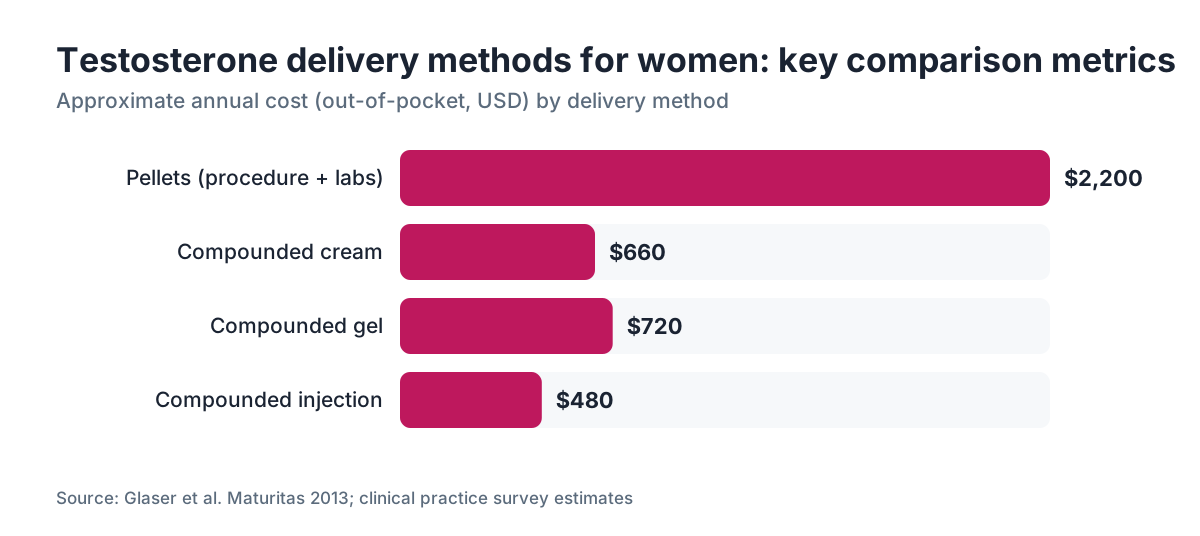
Out-of-pocket costs swing widely by practice and region. The insertion procedure alone usually runs $300 to $600 per session. Sessions happen every 3 to 6 months, so the procedure costs $600 to $2,400 a year before labs [1]. Some practices bundle labs and follow-up into a membership or concierge fee that can push the yearly total to $2,000 to $4,000 or more.
Compare that to compounded testosterone cream at $30 to $80 a month depending on the pharmacy, so $360 to $960 a year. Compounded gel lands in the same range. Neither is usually covered by insurance either, but the dollar gap is real.
Lab monitoring is not optional. Before insertion you need baseline total testosterone (and ideally free testosterone), a complete metabolic panel, and hematocrit. Four to six weeks after insertion, you recheck testosterone to confirm you're in range and recheck hematocrit to rule out polycythemia. That monitoring adds $100 to $300 per cycle depending on your lab and what's covered.
WomenRx offers telehealth hormone evaluation that includes a review of whether pellets or a different testosterone formulation fits your situation, with no pressure to lock into one delivery method.
What lab work do you need before and after testosterone pellet insertion?
Any responsible prescriber runs labs before your first insertion and at follow-up. Here's what those labs should actually cover.
Before insertion: total testosterone (the most widely available test, though its accuracy at low female levels is poor), free testosterone or calculated free testosterone if your practice uses it, sex hormone-binding globulin (SHBG, since it decides how much testosterone is biologically active), estradiol (because estrogen deficiency can mimic low-testosterone symptoms), a complete blood count with hematocrit, a lipid panel, and, in women with any relevant history, a look at liver function.
Timing matters. Testosterone fluctuates with the menstrual cycle in premenopausal women, usually peaking mid-cycle. For accuracy, draw blood in the morning, ideally during the follicular phase (days 1 to 10) if you're still cycling [11].
Four to six weeks after insertion: recheck total and free testosterone to confirm you're in an appropriate range. The Endocrine Society recommends targeting the normal premenopausal range (roughly 15 to 70 ng/dL for most assays, though lab reference ranges vary) and specifically not going above it [3]. Recheck hematocrit at the same time. If testosterone comes back too high or androgen excess symptoms appear, the pellet can't come out, but the prescriber needs to document it and recalculate the next dose.
Ongoing: labs every 3 to 6 months, timed with insertion cycles, plus a yearly lipid panel since testosterone can modestly lower HDL cholesterol at higher doses [8].
Who should not use testosterone pellets?
Some women should not use testosterone pellets, or should walk in with extra caution.
Active or past hormone-sensitive cancers. Women with current or recent breast cancer or endometrial cancer should not use testosterone without an explicit talk with their oncologist. The data can't call testosterone safe in that setting, and the irreversibility of a pellet makes it especially risky [5].
Pregnancy and breastfeeding. Testosterone is teratogenic. It virilizes a female fetus. This isn't theoretical: FDA labeling for testosterone products carries the warning explicitly [2]. Women with any chance of pregnancy should not use pellets.
Severe polycythemia or clotting disorders. Testosterone raises hematocrit, so women with already-high red blood cell counts or clotting disorders face higher clot risk.
Severe acne or existing androgenic hair loss. Adding testosterone can worsen both, and a pellet dose that runs too high can speed up hair loss in women genetically prone to it.
First-time testosterone users. The single strongest argument against starting with a pellet is reversibility. If you've never taken testosterone and your dose is off, you could spend 4 to 5 months living with side effects you can't stop. A cream or gel lets you titrate and quit. Once you know your dose and how you respond, moving to pellets is a fair conversation.
Women with unreliable follow-up. Pellets require post-insertion lab checks. If you won't come back for blood work 4 to 6 weeks out, pellets are not a responsible choice.
How does the testosterone pellet insertion procedure actually go?
Knowing how it goes takes a lot of the fear out of it. The whole thing runs 15 to 30 minutes in a clinical office.
The provider cleans and numbs the site, usually the upper outer buttock or hip. Once the local anesthetic kicks in (2 to 5 minutes), they make a small incision, about 5 to 10 mm. Using a trocar (a hollow, needle-like instrument), they slide the pellets into the fat layer under the skin, usually 1 to 3 inches from the incision. The cut gets closed with adhesive strips and a small bandage.
Aftercare usually means keeping the area dry for 3 to 5 days, skipping swimming and baths for a week, and going easy on lower-body exercise for 5 to 7 days to cut extrusion risk. Pushing hard too soon is one of the more common reasons pellets migrate or work loose.
Discomfort is usually mild: bruising and tenderness for a few days, sometimes a small lump that smooths out over a week or two. Serious complications (infection, a large hematoma, extrusion that needs the pellet removed) are uncommon but not rare enough to wave off.
The number of pellets depends on the dose. Women usually get 1 to 4 pellets based on body weight, symptom severity, and the prescriber's protocol. Individual pellets typically hold 12.5 mg to 25 mg of testosterone, so a woman getting two 25 mg pellets receives 50 mg total, released over the pellet's lifespan.
Can testosterone pellets help with menopause symptoms beyond low libido?
This is where the marketing runs ahead of the evidence, and being honest about the gap matters.
Libido and sexual function: strong evidence. The 2019 Lancet meta-analysis across 36 trials found real improvement in sexual function, desire, arousal, orgasm, and satisfaction [4]. This is the most defensible reason to use it.
Energy and fatigue: plausible, weak. Androgen receptors sit throughout the body, brain included, and testosterone does affect mitochondrial function and red blood cell production. Women with truly low testosterone often report better energy. But controlled trials with fatigue as a primary endpoint in women are very limited.
Cognitive function: interesting, not proven. Small studies hint testosterone might help verbal memory and processing speed in postmenopausal women. Nothing yet reaches the level of a clinical recommendation.
Mood: mixed. Some women feel steadier and less irritable. Others feel more irritable, especially at high doses. The link between testosterone and mood in women isn't a straight line.
Muscle mass and body composition: real, dose-dependent. Testosterone is anabolic. Supraphysiologic doses in women clearly build muscle. At the physiologic range appropriate for women, the effect is real but modest. Resistance training amplifies it.
Hot flashes and sleep: testosterone alone doesn't reliably treat vasomotor symptoms. Estrogen is the primary treatment for hot flashes [10], and menopause age and when does menopause start cover what the research shows about timing those interventions.
Bone density: modest, inconsistent. Estrogen has far stronger data for bone protection. Using testosterone as your only bone strategy isn't supported.
What questions should you ask a provider before getting testosterone pellets?
The pellet market has careful, experienced practitioners and also plenty of practices where the protocols are thin and the dose math is proprietary and unvalidated. These questions tell one from the other.
What assay do you use to measure testosterone, and what range are you targeting? A good answer references the premenopausal female range (roughly 15 to 70 ng/dL depending on the assay) and admits that many standard immunoassays are poorly validated at low female levels. Mass spectrometry testing is more accurate [11].
How do you calculate my dose, and what happens if it's too high? If the answer is a proprietary algorithm and the response to "what if it's too high" is "we'll adjust next time," that's a real gap in risk disclosure.
What monitoring do you do after insertion? The answer should include a post-insertion lab check at 4 to 6 weeks, at minimum testosterone and hematocrit.
What's your extrusion rate, and what do you do if I extrude a pellet? Any practice that inserts pellets should be able to answer this on the spot.
Have you looked at whether optimizing my estrogen first would fix these symptoms? A good testosterone prescriber knows low estrogen drives perimenopausal symptoms far more often than low testosterone, and will already have checked your estrogen status.
For women who want a thorough hormone workup before committing to any method, WomenRx's telehealth team reviews your full hormone panel and symptom picture before recommending a path.
It also helps to think through how testosterone fits your broader hormone plan. For many women that means reading up on hormone replacement therapy options before the appointment.
Are there alternatives to testosterone pellets worth considering?
Yes, several, and for a lot of women they're better places to start.
Compounded testosterone cream applied to thin-skinned areas (inner labia, clitoral hood, inner arm) reaches effective local and systemic levels at very low doses (0.5 to 2 mg per day is typical for a systemic effect). Testosterone cream side effects for women are real but manageable and reversible, because you can stop any day. Some practitioners argue the low systemic doses in women's creams carry less androgenic risk than a pellet that loads a larger total dose all at once.
Compounded testosterone gel applied to the arm or thigh is another route. Testosterone gel side effects for women mirror the cream: acne, hair changes, and skin reactions are all possible. Transfer to partners and children through skin contact is the main practical downside. The FDA has issued formal guidance about this risk with the male-formulated products, and the same principle carries over to compounded female products [2].
Intramuscular or subcutaneous testosterone injections (typically 2 to 10 mg weekly for women, compounded) give you dose flexibility and reasonable consistency when given weekly. Less convenient than pellets, far more reversible.
For women whose main complaint is low sexual desire specifically, flibanserin (Addyi) is FDA-approved for premenopausal women with acquired HSDD. It's not a hormone. It acts on brain serotonin and dopamine receptors, and it comes with its own side effect profile (dizziness, drowsiness, low blood pressure with alcohol) [9]. It won't fix a genuine testosterone deficiency, but it's an option for women who prefer a non-hormonal path.
For the wider hormone picture, getting estradiol and progesterone right first often clears up symptoms that were pinned on low testosterone to begin with.
Frequently asked questions
How long do testosterone pellets last for women?
Most women need re-insertion every 3 to 6 months. Active women, especially those who train hard, tend to burn through a pellet faster and may need re-insertion closer to the 3-month mark. Sedentary women often get the full 5 to 6 months. Your prescriber should check testosterone levels 4 to 6 weeks after insertion to confirm you're in range, and that same follow-up helps predict your next insertion timing.
Do testosterone pellets cause weight gain in women?
Testosterone generally isn't tied to fat gain in women. At physiologic doses it tends to support lean mass and may modestly improve body composition. Some women notice mild water retention in the first few weeks after insertion. If real weight gain shows up, check whether the dose is supraphysiologic, because very high testosterone can affect insulin sensitivity and cortisol signaling in ways that shift weight over time.
Can testosterone pellets cause hair loss in women?
Yes. Testosterone converts to dihydrotestosterone (DHT) through the enzyme 5-alpha reductase, and DHT is the main driver of androgenic alopecia (female pattern hair loss). Women with genetic sensitivity to DHT can see significant thinning on testosterone therapy, pellets included. Finasteride or dutasteride can partly blunt this, but those drugs carry their own risks. Hair loss from pellets may not fully reverse after you stop.
Are testosterone pellets FDA-approved for women?
No. There's no FDA-approved testosterone pellet product for women. Every pellet used in women is compounded by specialty pharmacies and sits outside the FDA's standard approval process. Manufacturing quality, dose accuracy, and sterility don't get the same oversight as approved drugs. The FDA has raised concerns about compounded hormones generally, though it doesn't ban their use when a licensed practitioner prescribes them.
What is the typical testosterone pellet dose for women?
Doses vary a lot by practice and patient. A common approach inserts pellets totaling 50 to 100 mg of testosterone, released over 3 to 6 months, aiming for a serum total testosterone around 50 to 100 ng/dL for symptom relief. The Endocrine Society recommends not exceeding the premenopausal normal range (roughly 15 to 70 ng/dL on most assays). Many pellet practices use doses that push levels above guidelines, which is a real safety concern.
Can you feel the testosterone pellet under the skin?
Some women can feel a small, firm lump at the site for a few weeks, especially right after insertion. As the pellet dissolves and the tissue settles, it usually becomes undetectable. If you can still feel a hard lump weeks or months later, it may mean incomplete dissolution, fibrous encapsulation, or partial extrusion, and you should call your prescriber.
What happens if my testosterone pellet dose is too high?
Too high a dose usually brings androgenic side effects: acne, oily skin, extra body hair, clitoral sensitivity or enlargement, and sometimes mood changes. Because the pellet can't come out, those symptoms last until it fully dissolves, which takes 3 to 6 months. Your prescriber should document the elevated levels and use a lower dose next time. This is the main clinical argument against using pellets for a first testosterone trial.
Can testosterone pellets affect my voice permanently?
Voice deepening is an androgenic effect that can happen with supraphysiologic testosterone exposure. It's considered potentially irreversible because it reflects changes to the laryngeal cartilage and vocal cords. It's reported more often at very high doses or with prolonged supraphysiologic levels. It's one reason the Endocrine Society and NAMS warn against exceeding the normal premenopausal testosterone range in women.
Do testosterone pellets help with anxiety or depression in women?
The evidence here is genuinely limited. Some small studies and observational reports suggest testosterone may improve mood, motivation, and sense of well-being in women with low levels. Controlled trial data aren't enough to support testosterone as a primary treatment for anxiety or depression. If mood symptoms dominate, estrogen optimization (which has better evidence for perimenopausal mood) and evaluation for clinical depression should come before blaming testosterone deficiency.
How soon after testosterone pellet insertion do you feel results?
Most women notice early effects within 2 to 4 weeks, with libido and energy often the first to lift. Full effect usually shows by weeks 4 to 6, which is when testosterone levels peak after insertion. Some women say it takes the second or third insertion cycle to feel optimally dosed, because dose adjustments happen at each insertion based on the prior cycle's labs and symptoms.
Is there a risk of breast cancer with testosterone pellets for women?
Current data don't show a statistically significant rise in breast cancer risk with testosterone therapy in women, but the evidence isn't enough to rule it out. Most trials are short and underpowered to catch cancer outcomes. NAMS 2022 says data are insufficient for a firm conclusion. Women with active hormone-sensitive breast cancer should not use testosterone. Women with a personal or strong family history should have this conversation directly with their oncologist first.
How do testosterone pellets compare to testosterone cream for women?
The big differences are reversibility and convenience. Cream can be stopped immediately if side effects appear; a pellet cannot. Cream means daily application but allows dose changes any time. Pellets go in every 3 to 6 months with no daily effort. Pellets carry no skin-transfer risk; cream does if skin-to-skin contact happens before it dries. For a first trial, cream gives you far more control. Pellets make more sense once your dose is set and stable.
Do testosterone pellets affect fertility or menstrual cycles?
Testosterone can suppress ovarian function and disrupt menstrual cycles, which matters a lot for premenopausal women. It's also teratogenic, meaning it can virilize a female fetus. Women who haven't reached menopause and aren't using reliable contraception should not use testosterone pellets. The FDA requires contraception counseling with testosterone products, and compounded pellets carry the same biological risks even without the FDA label.
Sources
- Glaser R, Dimitrakakis C. Testosterone therapy in women: myths and misconceptions. Maturitas. 2013.
- FDA. Medication Guide and Warnings for Testosterone Products (AndroGel, Testim). FDA Drug Safety Communications.
- Endocrine Society. Testosterone Therapy in Women: An Endocrine Society Clinical Practice Guideline. J Clin Endocrinol Metab. 2019.
- Islam RM et al. Safety and efficacy of testosterone for women: a systematic review and meta-analysis of randomised controlled trial data. Lancet Diabetes Endocrinol. 2019.
- North American Menopause Society. NAMS 2022 Hormone Therapy Position Statement. Menopause. 2022.
- Davis SR et al. Global Consensus Position Statement on the Use of Testosterone Therapy for Women. J Clin Endocrinol Metab. 2019.
- Wierman ME et al. Androgen therapy in women: a reappraisal. J Clin Endocrinol Metab. 2014.
- FDA. Addyi (flibanserin) Prescribing Information. FDA-approved labeling.
- Shifren JL et al. The North American Menopause Society recommendations for clinical care of midlife women. Menopause. 2014.
- Jayasena CN et al. A systematic review of randomized controlled trials investigating the efficacy and safety of testosterone therapy for female sexual dysfunction. Clin Endocrinol. 2019.