Testosterone levels for women: what's normal, what's optimal, and when to act
TL;DR: Normal total testosterone in adult women runs roughly 15 to 70 ng/dL by most lab reference ranges, though the Endocrine Society notes no universally agreed 'normal' range exists for women. Levels decline steadily after your 20s. Low testosterone can cause fatigue, low libido, and muscle loss. Treatment is possible but remains off-label, and the evidence base is narrower than most clinics admit.
What is the normal testosterone level for women?
Most commercial labs report a female reference range of roughly 15 to 70 ng/dL for total testosterone, though the exact cutoffs shift by lab, by assay method, and by the age bracket being tested. [1] Quest Diagnostics and LabCorp publish slightly different ranges, and neither is more 'correct' than the other. That variation matters. A result that reads low at one lab reads normal at another.
Free testosterone, the fraction not bound to sex hormone-binding globulin (SHBG), typically runs between 0.3 and 1.9 pg/mL in premenopausal women, though again these numbers vary by assay. [2] Free testosterone is often more clinically meaningful than total, because SHBG levels fluctuate with thyroid status, liver function, and oral estrogen use. If you're on an oral estrogen pill, your SHBG goes up and your free testosterone goes down, even when total testosterone hasn't moved.
Here's the honest answer: there is no single agreed normal range for women. The Endocrine Society's 2014 clinical practice guideline on androgen therapy in women named 'the lack of normative data for testosterone levels in women of different ages' as one of the main barriers to evidence-based treatment. [1] The International Society for the Study of Women's Sexual Health (ISSWSH) said the same in its 2019 position statement on testosterone for hypoactive sexual desire disorder (HSDD): serum levels do not reliably track symptoms. [3]
What is the optimal testosterone level for women, and does it differ from 'normal'?
'Normal' is a statistical range pulled from a population. 'Optimal' is what actually makes you feel well. The two don't always match.
The ISSWSH 2019 consensus paper is the closest thing we have to an evidence-based target. It recommends that when testosterone treats HSDD in postmenopausal women, the goal is to restore levels to the premenopausal physiologic range, not to exceed the top of that range. [3] In practice, that means aiming for a total testosterone somewhere between 15 and 70 ng/dL, not pushing toward male-range levels (300 to 1000 ng/dL), which some poorly supervised clinics still do.
For women in perimenopause and the early postmenopausal years, some clinicians target the upper quarter of the female reference range, roughly 50 to 70 ng/dL, when treating low libido or fatigue. That ceiling is not a regulatory number. It's a clinical convention built around avoiding androgenic side effects like acne, hair thinning, and voice changes.
Free testosterone targeting is even less standardized. No FDA-approved threshold for free testosterone in women triggers a treatment decision. If a provider tells you your 'optimal' free testosterone is a precise number like 1.5 pg/mL, ask them to show you the study behind that claim. Most cannot, because the data for that kind of precision does not exist.
How do testosterone levels change with age in women?
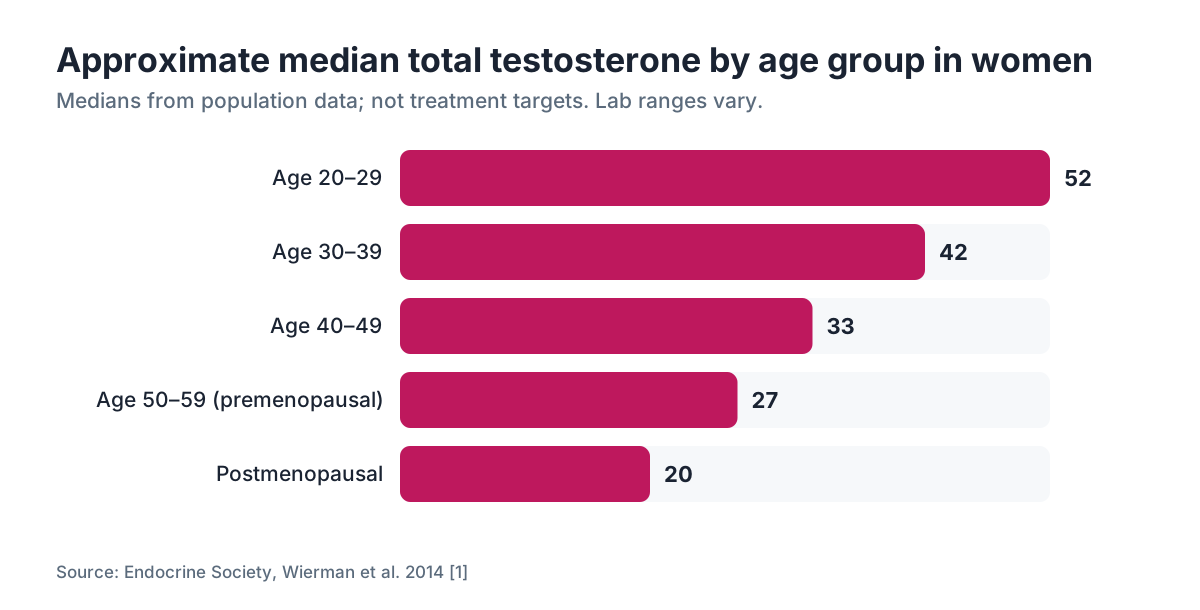
Testosterone in women peaks in the mid-20s and slides down from there. By the time a woman reaches her 40s, her total testosterone is roughly half of what it was at age 20. [4] The decline is slower and steadier than the estrogen drop at menopause. Estrogen falls off a cliff. Testosterone slopes downhill.
Oophorectomy (surgical removal of the ovaries) is the exception. It causes an abrupt 40 to 50 percent drop in testosterone, because the ovaries make roughly half of a woman's total. The rest comes from the adrenal glands and from peripheral conversion of androstenedione in fat tissue. [4]
Natural menopause is gentler than many women expect. Levels may dip slightly around the final menstrual period, but they don't plummet the way estradiol does. Some women actually see a modest rise in free testosterone after menopause, because SHBG falls along with estrogen and frees up more of whatever total testosterone remains. [1]
This trajectory matters clinically. A 28-year-old with a total testosterone of 18 ng/dL may have a real deficiency. A 58-year-old with the same number may be right in the expected postmenopausal range for her age. Context is everything, and the symptom picture has to be part of the diagnosis.
The table below shows approximate median testosterone values by age group from population-level data. These are medians, not targets.
| Age group | Approximate median total testosterone (ng/dL) | |---|---| | 20 to 29 | 48 to 55 | | 30 to 39 | 38 to 45 | | 40 to 49 | 28 to 38 | | 50 to 59 (premenopausal) | 22 to 32 | | Postmenopausal | 15 to 25 |
Source: Endocrine Society, Wierman et al. 2014 [1]
What symptoms suggest low testosterone in women?
The symptom picture for female androgen deficiency is real but nonspecific. Low libido is the most studied symptom and the one with the most trial evidence. [3] Fatigue, trouble building or keeping muscle, reduced bone density, and a general flatness of mood or motivation also show up, though these overlap heavily with low estrogen, thyroid problems, iron deficiency, and depression.
The Endocrine Society does not recommend diagnosing female androgen deficiency on lab values alone. [1] The diagnosis takes symptoms plus a low or low-normal lab value in a setting where other causes have been ruled out. That ruling-out step is where a lot of direct-to-consumer testosterone therapy cuts corners.
Some specific symptoms worth bringing to your provider:
- Persistent low libido that doesn't improve once adequate estrogen and relationship factors are accounted for
- Significant loss of muscle mass despite reasonable exercise and protein intake
- Bone density loss faster than expected for your age (a bone density test can quantify this)
- Severe fatigue not explained by thyroid, sleep, or iron studies
None of these prove low testosterone. They're reasons to order labs and have a real conversation, not reasons to self-prescribe.
What causes low testosterone in women?
The most common cause is simply age. Levels drop steadily from the mid-20s onward, and there's nothing pathological about that. It's biology. [4]
Surgical menopause from oophorectomy is the most abrupt cause and the one where testosterone replacement has the strongest rationale. Women who lose both ovaries before natural menopause lose a major production site overnight.
Oral contraceptives and oral estrogen therapy both raise SHBG, which binds more testosterone and lowers the free fraction. A woman who feels fine until she starts an oral contraceptive pill and then notices a sharp drop in libido may be feeling OCP-induced reduction in free testosterone. Switching to a transdermal estrogen (like an estrogen patch) instead of oral avoids that SHBG spike.
Hypopituitarism, adrenal insufficiency, and hyperprolactinemia can all suppress testosterone production, so these belong on the differential before anyone blames primary androgen deficiency. [1]
Chronic stress, poor sleep, and very low body fat can suppress adrenal androgen output too, though the size of that effect varies and is hard to pin down with a single lab draw.
How is testosterone measured, and which test should you ask for?
There are two main measurements: total testosterone and free testosterone. For most women, a total testosterone drawn by liquid chromatography-tandem mass spectrometry (LC-MS/MS) is the gold standard. [2] Immunoassay-based tests, which are cheaper and more widely used, are less accurate at the low concentrations women have. The Endocrine Society recommends an LC-MS/MS method whenever possible for female patients. [1]
Free testosterone can be measured directly (equilibrium dialysis is the most accurate method) or calculated from total testosterone, SHBG, and albumin. Calculated free testosterone is a reasonable clinical tool if the lab doesn't offer direct measurement.
DHEA-S (dehydroepiandrosterone sulfate) is sometimes measured alongside testosterone because the adrenal gland is a major androgen source. It's not a substitute for testosterone measurement, but a very low DHEA-S can point toward adrenal insufficiency as a contributor.
Timing of the draw matters less than in men, but most guidelines suggest morning testing for consistency. If you're still cycling, the follicular phase (days 8 to 12 of your cycle) gives the most interpretable baseline.
Always test SHBG at the same time as testosterone. A high SHBG can make total testosterone look normal while free testosterone is genuinely low.
Is testosterone therapy FDA-approved for women?
No. As of 2025, no FDA-approved testosterone product exists for women in the United States. [5] There was one in development, a testosterone patch called Intrinsa, but the FDA never approved it. It was approved in Europe in 2006 and withdrawn by the manufacturer in 2012 for commercial reasons, not safety. [6]
So every testosterone prescription a woman gets in the US is off-label: a low-dose compounded preparation, a male-labeled product used at a fraction of the dose, or an off-label use of something like testosterone cypionate or testosterone gel. Off-label prescribing is legal and common in medicine. It doesn't mean unsafe. It does mean the specific dosing, safety monitoring, and long-term cardiovascular data for women are thinner than they'd be for an approved indication.
The FDA's 2015 safety communication on testosterone products warned that these products are approved only for men with specific medical conditions, flagged concerns about cardiovascular risk, and stated that 'the use of these products in women is not recommended due to the risk of virilization.' [5] That guidance has not been revised to address the expanding off-label use in women, which is a real gap.
If you're exploring testosterone therapy, the ISSWSH 2019 consensus and the Global Consensus Position Statement on testosterone in women (endorsed by NAMS, ISSWSH, and the British Menopause Society, among others) are the most current evidence-based frameworks clinicians should be using. [3][7]
What does the evidence say about testosterone therapy for women's symptoms?
The evidence is strongest for hypoactive sexual desire disorder (HSDD) in postmenopausal women. A 2019 systematic review and meta-analysis in The Lancet Diabetes and Endocrinology, covering 46 randomized controlled trials and nearly 8,000 women, found testosterone improved sexual function scores compared to placebo or comparator, with a standardized mean difference of about 0.36. [8] That's a modest but real effect. The same meta-analysis found no significant effect on mood, cognitive function, or musculoskeletal outcomes in the trials reviewed.
For premenopausal women, the evidence is much thinner. Most trials enrolled postmenopausal women, so extrapolating to women in their 30s and 40s who are still cycling calls for caution.
Muscle mass and bone density are biologically plausible targets for testosterone therapy in women, and small studies show measurable benefits. But no large long-term trial in women has confirmed clinically meaningful outcomes for these endpoints at the doses used for female replacement. [1]
Long-term cardiovascular and breast cancer data are genuinely sparse. The Lancet meta-analysis found no increase in adverse events over the short durations of the included trials (most under 6 months), but the authors flagged the 'absence of long-term safety data.' [8] That's not a reason to refuse therapy. It's a reason to get it through a provider who will monitor you, not a subscription box.
Platforms like WomenRx that specialize in women's hormones are built to pair lab monitoring with prescribing, which is the standard ISSWSH and the global consensus recommend. The monitoring is the part that matters.
What are the risks of testosterone therapy for women?
The most common side effects at physiologic doses are acne, increased facial or body hair (hirsutism), and scalp hair thinning. These are dose-dependent and usually reversible once dosing comes down. [7]
Voice deepening and clitoral enlargement are androgenic effects that can be permanent even after stopping therapy, which is why exceeding the top of the female reference range is strongly discouraged by every major guidelines body. [3]
Cardiovascular risk is the open question. Testosterone in men at supraphysiologic levels raises hematocrit and has been linked to adverse cardiovascular events. In women at physiologic female doses, the Lancet meta-analysis found no significant increase in cardiovascular events in trials of up to 12 months. [8] But 'no signal in short trials' is not the same as 'safe for 20 years,' and any woman with existing cardiovascular disease should talk this through with her cardiologist before starting.
Breast cancer risk comes up constantly. The Global Consensus Statement reviewed the available data and concluded that 'there is no evidence to link testosterone therapy with breast cancer risk' at physiologic doses, while acknowledging the evidence is too limited to draw firm conclusions. [7] Women with hormone-sensitive breast cancer are generally counseled to avoid testosterone, in line with the precautionary approach most oncologists take.
Polycythemia (high red blood cell count) is a known risk with testosterone, worth watching with a CBC if therapy continues past a few months.
How does testosterone interact with estrogen and progesterone in perimenopause and menopause?
Hormones don't act in isolation. In perimenopause, the first hormone to turn erratic is usually progesterone, followed by estrogen, while testosterone declines more slowly in the background. [9] Many women in their early 40s with low libido and fatigue are low in both estrogen and testosterone at the same time, and treating only one gives a partial result.
Estrogen and testosterone interact at the receptor level and through SHBG. Adding estrogen (especially oral estrogen) to a regimen raises SHBG and can blunt the effect of whatever testosterone you're replacing. That's one reason transdermal estrogen is preferred over oral when testosterone is also prescribed. The estrogen patch format skips the first-pass liver effect that drives SHBG upward.
Progesterone doesn't directly compete with testosterone, but it matters for the overall picture. If you have an intact uterus and take estrogen, you need progesterone to protect the uterine lining, and some data suggest micronized progesterone has less negative impact on mood and libido than synthetic progestins. [10] The full picture of hormone replacement therapy involves all three hormones, and a good hormone specialist looks at them together.
Women entering menopause who started perimenopause in their late 30s may spend a decade in a state of suboptimal hormones before conventional treatment thresholds are met. Understanding perimenopause age and what hormonal shifts to expect is context worth having before your first lab draw.
What should you expect from a testosterone lab workup and follow-up?
A reasonable initial workup before starting testosterone should include total testosterone (LC-MS/MS preferred), free testosterone or SHBG, DHEA-S, estradiol, FSH, a thyroid panel (TSH, free T4), a complete blood count, and a basic metabolic panel. This isn't excessive. It's a baseline that catches competing diagnoses and gives you a reference point for future monitoring. [1]
If you start testosterone, most guidelines recommend rechecking total and free testosterone at 3 to 6 weeks after any dose change, then every 6 months once stable. [3] Check hematocrit periodically. Check lipids at baseline and at least yearly, given testosterone's potential to lower HDL at higher doses.
The Global Consensus Statement specifically recommends that 'testosterone levels should not exceed the physiologic premenopausal range,' meaning you need lab evidence that you haven't drifted above 70 ng/dL. [7] That's a safety floor, not a bureaucratic formality.
If your provider refuses to order follow-up labs, or says 'you feel good so we don't need to test,' find a different provider. The monitoring is the medicine here, as much as the prescription is.
When does low testosterone warrant treatment versus watchful waiting?
Not every low-normal testosterone number needs treatment. The decision hinges on symptoms, not labs alone. [1] A woman with a total testosterone of 18 ng/dL who feels fine, has normal libido, holds onto muscle easily, and sleeps well does not need testosterone therapy. A woman with the same number who has had zero sexual desire for two years despite a good relationship, normal thyroid, and adequate estrogen therapy has a reasonable case for a trial.
The ISSWSH recommends a structured shared decision-making process: a validated symptom questionnaire (like the Female Sexual Function Index or the Decreased Sexual Desire Screener), a thorough medication review, and a conversation about realistic expectations. [3] Testosterone is not a cure-all. That 2019 standardized mean difference of 0.36 in sexual function scores means something at a population level, but it translates to moderate improvement in individual women, not a transformation.
Watchful waiting makes sense when:
- Symptoms are mild and manageable
- Estrogen and progesterone haven't yet been optimized
- The woman is premenopausal and cycling normally (testosterone deficiency in this group is harder to define and treat)
- The clinical picture points to another cause (thyroid, iron, depression, relationship factors) that hasn't been addressed
If you want the full hormone picture around when does menopause start and what to expect as your estrogen shifts, that context helps you gauge how much of what you're feeling is likely testosterone-related versus estrogen-related.
Frequently asked questions
What is the normal testosterone range for a 40-year-old woman?
At age 40, most labs report a reference range of roughly 15 to 70 ng/dL for total testosterone, but the actual median for women in their early 40s sits closer to 28 to 38 ng/dL based on population data. Labs vary. What matters most is your symptom picture alongside the number, not the number alone.
What is the optimal testosterone level for a postmenopausal woman?
The ISSWSH and Global Consensus Statement recommend keeping postmenopausal testosterone therapy within the premenopausal physiologic range, roughly 15 to 70 ng/dL total testosterone. No specific 'ideal' number within that range is evidence-based. Most clinicians target the mid-to-upper range (40 to 70 ng/dL) when treating symptoms, staying below the male range to avoid virilization.
Can low testosterone cause weight gain in women?
Testosterone supports lean muscle mass, and lower muscle mass reduces resting metabolic rate, which can contribute to gradual weight gain over time. The direct causal link is hard to isolate because low testosterone coincides with aging and estrogen loss, both of which affect body composition on their own. No clinical trial shows testosterone therapy reliably produces weight loss in women.
Is testosterone therapy safe for women long-term?
Short-term trials (up to 12 months) show a reasonable safety profile at physiologic female doses, with the main risks being acne, increased hair growth, and possible HDL lowering. Long-term cardiovascular and breast cancer data beyond 2 years are sparse. The Global Consensus Statement concludes there is currently 'no evidence of serious adverse events' at physiologic doses but explicitly flags the absence of long-term data.
How is testosterone measured in women, and which test is most accurate?
Total testosterone measured by liquid chromatography-tandem mass spectrometry (LC-MS/MS) is the most accurate method for women, because standard immunoassays are unreliable at the low concentrations women have. Test SHBG at the same time. Free testosterone via equilibrium dialysis or a validated calculated method adds clinical context, especially if SHBG is high or low.
Does testosterone help with low libido in women?
Yes, with caveats. A 2019 Lancet Diabetes and Endocrinology meta-analysis of 46 RCTs found testosterone significantly improved sexual function in postmenopausal women with HSDD compared to placebo. The effect size was moderate (SMD ~0.36). Evidence in premenopausal women is much thinner. It's the only symptom in women with a solid trial evidence base for testosterone treatment.
Can testosterone levels be too high in women, and what happens?
Yes. Testosterone above the female reference range (above roughly 70 ng/dL total) causes androgenic side effects: acne, excess facial or body hair, scalp hair thinning, and at sustained high levels, voice deepening and clitoral enlargement. Voice changes can be permanent even after stopping therapy. This is why regular lab monitoring is non-negotiable and exceeding the physiologic female range is strongly discouraged by every major guidelines body.
Does high SHBG affect testosterone results in women?
Significantly. SHBG binds testosterone, so a high SHBG (which oral estrogen or hyperthyroidism can cause) lowers free testosterone even when total testosterone looks normal. A woman with a total testosterone of 45 ng/dL but very high SHBG may have a free testosterone in the lowest quartile. Always test SHBG alongside testosterone and ask for free testosterone if SHBG is elevated.
What is DHEA and how does it relate to testosterone levels?
DHEA (and its sulfate form DHEA-S) is an androgen precursor made by the adrenal glands. The body converts DHEA to testosterone and estrogen in peripheral tissues. DHEA-S declines with age and is one reason overall androgen levels fall over time. Some clinicians use DHEA supplementation as a gentler alternative to direct testosterone therapy, though it carries similar monitoring considerations and has weaker evidence for sexual function outcomes.
Should I check testosterone levels during perimenopause?
It can be worth testing if you have unexplained low libido, significant fatigue, or rapid muscle loss that persists after estrogen and progesterone have been addressed. Testing alone during perimenopause is hard to interpret because levels fluctuate with the menstrual cycle and the reference ranges are not well-validated for this transitional phase. Symptoms plus labs together give the most useful picture.
Is compounded testosterone for women the same as an FDA-approved product?
No FDA-approved testosterone product exists for women in the US, so compounded preparations are what most women receive. Compounded products are not FDA-approved, meaning they haven't gone through the same manufacturing and potency verification requirements. Quality varies by compounding pharmacy. This doesn't make them unsafe, but it reinforces the need for regular lab testing to confirm you're actually absorbing the dose you were prescribed.
How long does it take testosterone therapy to work in women?
The ISSWSH notes that improvements in sexual desire and function typically emerge within 4 to 12 weeks of starting therapy at physiologic doses. A 3-month trial is generally recommended before concluding the therapy isn't working. Muscle and body composition changes, if they occur, take longer, typically 3 to 6 months of consistent dosing alongside adequate resistance exercise and protein intake.
Can I test my testosterone at home?
Home testosterone tests exist and use dried blood spot or saliva collection. They are not recommended by the Endocrine Society or ISSWSH as the primary diagnostic tool. Salivary testosterone correlates poorly with serum levels in women. Dried blood spot LC-MS/MS assays are more reliable but still lack the clinical validation of a full venous blood draw processed by a certified lab. Home tests can start a conversation with your doctor, but they shouldn't drive treatment decisions.
Does testosterone therapy affect bone density in women?
Testosterone has anabolic effects on bone in men, and small studies in women suggest it may help maintain bone mineral density, particularly in women who had surgical menopause. The evidence in naturally menopausal women is less conclusive. If bone density is a primary concern, getting a bone density test first gives you a baseline, and estrogen therapy has a stronger and more established evidence base for fracture prevention in women than testosterone does.
Sources
- Endocrine Society, Wierman et al. 'Androgen Therapy in Women: A Reappraisal' 2014 Clinical Practice Guideline
- Journal of Clinical Endocrinology and Metabolism, Rosner et al. 'Position Statement: Utility, Limitations, and Pitfalls in Measuring Testosterone'
- International Society for the Study of Women's Sexual Health (ISSWSH), Parish et al. 2019 Position Statement on Testosterone for HSDD
- National Institutes of Health, National Library of Medicine (PubMed) indexed review of androgen production and decline in women
- U.S. Food and Drug Administration, Safety Communication on Testosterone Products (March 2015)
- European Medicines Agency, Public Assessment Report, Intrinsa testosterone patch, 2006
- Global Consensus Position Statement on the Use of Testosterone Therapy for Women, Davis et al. 2019, Climacteric / Menopause
- Lancet Diabetes and Endocrinology, Islam et al. 2019, 'Safety and efficacy of testosterone for women: a systematic review and meta-analysis of randomised controlled trial data'
- North American Menopause Society (NAMS), Menopause Practice: A Clinician's Guide, 2022
- Menopause (NAMS journal), Schiff et al. 'Micronized progesterone vs synthetic progestins: effects on mood and sleep'