Testosterone injections for women: what the evidence actually says
TL;DR: No testosterone injection is FDA-approved for women in the US. Doctors prescribe it off-label at doses 10 to 20 times lower than men's. The strongest evidence supports treating low sexual desire (HSDD). Side effects include acne, hair changes, and permanent voice deepening at high doses. Many prescribers prefer a topical cream over injections for easier dose control.
What is testosterone therapy for women and why do doctors prescribe injections?
Testosterone is not only a male hormone. Women make it in the ovaries and adrenal glands, and blood levels peak in the late twenties, then slide through midlife. By natural menopause, a woman's testosterone runs roughly half of what it was at peak [1]. That drop matters. Testosterone feeds libido, energy, mood, bone density, and muscle in women, at a fraction of male concentrations.
Doctors prescribe testosterone injections off-label when a woman has measurable low testosterone plus symptoms: flat libido, stubborn fatigue after thyroid and iron come back normal, trouble building or keeping muscle, and sometimes low mood that estrogen or antidepressants haven't fixed. "Off-label" means the FDA approved these injectable products (testosterone cypionate, testosterone enanthate) for men only, and any use in women falls outside that approval [2].
Injections are one delivery method among several. Creams, gels, pellets, and patches all exist. A woman picks injections when she wants a longer gap between doses, when getting a correctly compounded low-dose topical is hard, or when she'd rather skip the worry of a cream rubbing off on a kid or a partner. The tradeoff is the shape of the curve. Injections spike, then trough, and that can feel uneven across the week. Topicals stay flatter. Understand that difference before you commit to a needle.
If you're reading up on hormone replacement therapy or menopause care in general, testosterone is usually the hormone left out of the conversation, even though its decline lines up with the perimenopause age window when symptoms start piling up.
Is testosterone FDA-approved for women in the US?
No. As of 2025, no testosterone product carries FDA approval specifically for women in the United States [2]. That gap shapes everything downstream. A testosterone patch called Intrinsa was approved in Europe for postmenopausal women with HSDD in 2006, never approved by the FDA, and later pulled from European markets for commercial reasons rather than safety ones.
The FDA approved testosterone cypionate injection (Depo-Testosterone) and testosterone enanthate injection for hypogonadism and delayed puberty in males [2]. Compounded testosterone, including low-dose injectable preparations, can be prescribed off-label for women through licensed compounding pharmacies under a valid physician order.
The Endocrine Society's clinical practice guideline on androgen therapy in women says it does not recommend testosterone for women except to treat HSDD, and even then only after careful evaluation and informed consent about the off-label nature of the treatment [3]. The North American Menopause Society (NAMS) lands in the same place: evidence supports short-term use for HSDD with physiologic dosing and monitoring [4].
Here's what that means for you at the pharmacy counter. No shelf holds a pre-filled, FDA-labeled testosterone injection sized for women. You get either a compounded preparation or a male product with instructions to draw a much smaller dose.
What dose of testosterone do women actually use?
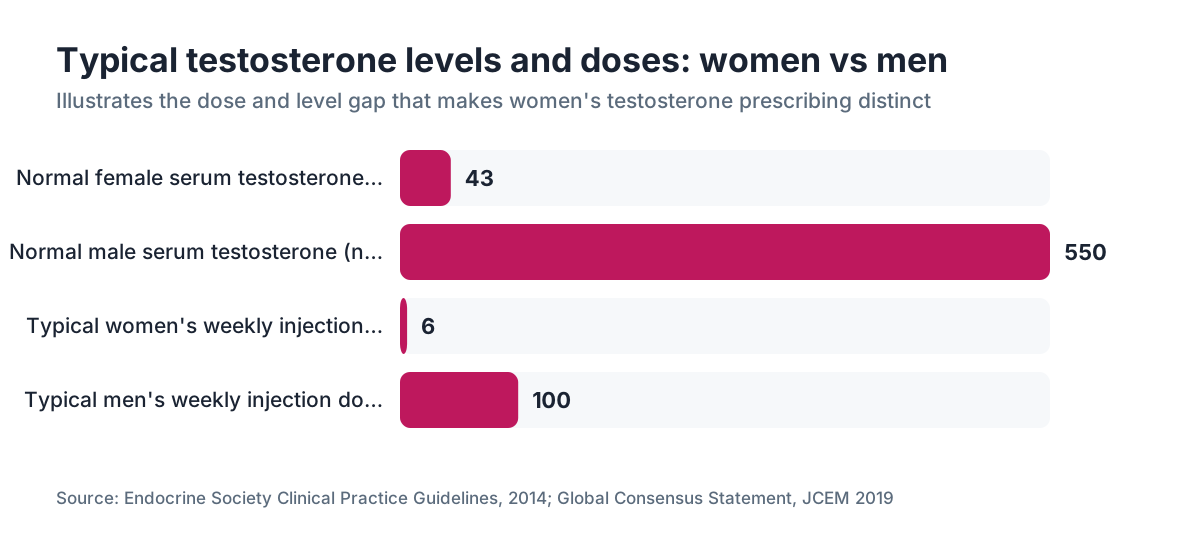
Women's physiologic testosterone runs roughly 15 to 70 ng/dL, against 300 to 1000 ng/dL in men [1]. That's a 10 to 20-fold gap, which is exactly why women's injectable doses are a sliver of male doses.
Most prescribers give women testosterone cypionate or enanthate at 2 mg to 10 mg per week, injected subcutaneously (under the skin, not into muscle). Men run 50 to 400 mg per week for hypogonadism [11]. Some protocols use a slightly larger dose every two weeks, but weekly shots hold levels steadier.
The table gives a rough comparison:
| Parameter | Typical men's dose | Typical women's off-label dose | |---|---|---| | Testosterone cypionate weekly dose | 50 to 200 mg/week | 2 to 10 mg/week | | Target serum testosterone | 400 to 700 ng/dL | 15 to 70 ng/dL | | Injection route | Intramuscular | Subcutaneous preferred | | Monitoring interval | Every 3 to 6 months | Every 3 to 6 months | | FDA approval | Yes (male hypogonadism) | No |
The target is the upper end of normal for a premenopausal woman, not supraphysiologic levels. Sustained levels above 150 ng/dL are where androgenic side effects in women get predictable [3]. Check labs before starting, again 4 to 6 weeks after any dose change, then every 6 months once stable.
One thing prescribers often skip: standard testosterone assays (immunoassay) are not accurate at the low concentrations women carry. Liquid chromatography-mass spectrometry (LC-MS) is the recommended method for measuring testosterone in women [10]. If your provider is running a routine panel, the numbers may not be trustworthy.
What are the side effects of testosterone injections for women?
Side effects split into two buckets: those from too high a dose, and those from the injection itself.
At physiologic doses, the common ones are mild acne, more body hair (face or abdomen especially), and slightly oilier skin. These track with dose. Most women who hold a low dose and check labs don't run into meaningful androgenic effects.
At higher or unmonitored doses, the list gets serious:
- Clitoral enlargement (clitoromegaly), which may be permanent
- Voice deepening, irreversible once it happens
- Male-pattern hair loss at the temples or crown
- Acne bad enough to need its own treatment
- Lower HDL cholesterol on a lipid panel [3]
- Erythrocytosis (elevated red blood cell count), more common with injections than topicals because of higher peaks [5]
- Liver enzyme changes, much less common with injectable than oral forms
The injection itself can cause local pain, bruising, and rarely infection at the site. Subcutaneous shots in the abdomen or thigh tend to sting less than intramuscular ones for women, since the volume is tiny.
Here's the one people miss. Injectable testosterone peaks 1 to 3 days after the shot, then drifts down, so some women feel great midweek and flat or anxious by the end of the interval. This peak-trough swing is the strongest practical argument for starting a topical instead, especially if you're new to testosterone. It's not a dealbreaker. It's just real.
Pregnancy is an absolute contraindication. Testosterone harms a fetus and is Pregnancy Category X [2]. Any woman who hasn't confirmed menopause needs reliable contraception while on it.
Does testosterone improve libido, mood, and energy in women?
Libido is where the evidence is strongest. A 2019 systematic review and network meta-analysis in The Lancet Diabetes and Endocrinology pooled 36 randomized controlled trials with more than 8,000 women and found that testosterone, against placebo or estrogen alone, significantly improved sexual function: desire, arousal, orgasm frequency, and satisfaction [6]. The effect size was modest to moderate statistically, but women in the trials felt it.
The same review found improvements in self-reported wellbeing. Energy and fatigue are harder to pull apart from placebo in trials, but in practice many women report a real shift in energy within 4 to 8 weeks of hitting stable levels.
Mood is messier. Testosterone is not an antidepressant the way estrogen has partial antidepressant properties. Some women with low testosterone feel low mood lift once levels normalize, but that may run through better sleep and libido rather than a direct hit on mood circuitry. Anyone with clinical depression should not treat testosterone as a substitute for mental health care.
Bone density is genuinely interesting. Testosterone converts to estradiol via aromatase in bone, and some data suggest it supports bone mineral density independent of estrogen [5]. The evidence isn't strong enough to make it a primary bone strategy. If you're tracking bone density tests in your menopause care, bring testosterone up with your provider, but don't swap it for proven options like estrogen or bisphosphonates.
Muscle and body composition data look encouraging, mostly from small studies. Women on physiologic testosterone show modest gains in lean mass and drops in fat mass, sharper when paired with resistance training [5].
How does testosterone injection compare to creams, pellets, and patches?
Every route has real tradeoffs, and the best one depends on your life, your provider's experience, and how much dose variability you'll tolerate.
Injections (testosterone cypionate or enanthate in oil) give reliable absorption, low cost per dose, and flexible timing. The downside is the peak-trough curve. Levels spike within 48 hours, then fall over the following days. In men on high doses, this drives the mood and energy swings people call the "testosterone roller coaster." Women on low doses feel it less, but it's still on the table.
Topical creams and gels, often compounded to 1% or 2%, mean daily application with very stable levels. The catch is skin-to-skin transfer to partners and kids, plus the discipline of applying every day. Many researchers and the Endocrine Society consider topicals the preferred route for women because they mimic natural release more closely [3].
Pellets (crystallized testosterone implanted under the skin every 3 to 6 months) are popular at some specialty clinics and have the worst controllability of any method. Once it's in, you cannot lower the dose if levels run high. Some pellet protocols dose women at male levels, which carries real risk of irreversible androgenic effects. Neither the Endocrine Society nor NAMS endorses pellets for women [3][4].
No testosterone patch is currently sold in the US for women. The Intrinsa patch (300 mcg/day) studied in Europe delivered a physiologic dose with good safety data, then got withdrawn.
My honest take for most women starting out: begin with a properly dosed topical cream if your provider can prescribe one. Move to injections if topicals are impractical or you can't get them. Skip pellets unless your provider has a long track record keeping women in range and you fully accept the irreversibility.
Who should not use testosterone injections?
Some contraindications are clear, and worth knowing before your first appointment.
Absolute contraindications: pregnancy (testosterone is teratogenic and virilizes a female fetus), current or suspected hormone-sensitive cancers (breast and uterine especially, though the breast cancer risk with physiologic testosterone is genuinely uncertain), and polycythemia (high red blood cell counts, since testosterone drives red cell production).
Relative contraindications: untreated sleep apnea (testosterone can worsen it), severe acne, significant androgenic hair loss, and a history of problems tied to elevated red blood cells, like deep vein thrombosis or stroke. Women with cardiovascular disease deserve a full risk conversation first.
Liver disease is less of a worry with injections than with oral testosterone (which gets first-pass liver metabolism), but it still gets monitored.
A woman who isn't yet in menopause and hasn't ruled out pregnancy with real contraception should not use testosterone. How testosterone plays against hormonal birth control is another talk to have, since some progestins in contraceptives have androgenic activity that could stack.
Breast cancer history is an area of active research and honest disagreement. Current Endocrine Society guidance does not recommend testosterone for women with hormone-sensitive breast cancer [3], though some oncologists are starting to discuss it in specific survivorship situations. Don't make that call without a specialist at the table.
How do you get a testosterone prescription as a woman?
The plain answer: you need a licensed physician, nurse practitioner, or physician assistant who is comfortable prescribing off-label testosterone for women. That pool is narrower than you'd think. Plenty of primary care doctors don't know women's physiologic dosing and either refuse to prescribe or accidentally hand out male-sized doses.
Start with a provider who orders the right labs. Before prescribing, a good one measures total testosterone (by LC-MS, not immunoassay), free testosterone, sex hormone-binding globulin (SHBG), a complete blood count (CBC), a lipid panel, and context hormones like estradiol, FSH, and LH [12]. They should also rule out other fixable causes of your symptoms: thyroid trouble, iron deficiency, untreated sleep apnea.
Telehealth platforms built around women's hormones have made access easier. WomenRx works with licensed providers who evaluate your history, read the right labs, and prescribe compounded low-dose testosterone where it fits clinically. Any legitimate prescriber, in person or online, should follow the same evaluation framework.
Expect the script to route to a compounding pharmacy, since no commercial product is dosed for women. Costs vary. Compounded testosterone cypionate for women runs roughly $30 to $80 per month depending on pharmacy and concentration, and most insurance won't cover it because it's off-label and compounded [3].
Monitoring matters as much as the prescription. Labs every 3 to 6 months through the first year, then annually once you're stable, is the standard [3][4].
What does testosterone therapy do to women's estrogen levels?
More women should ask this before starting. Testosterone is a precursor to estradiol. An enzyme called aromatase, in fat tissue, the liver, and the brain, converts testosterone to estradiol. Take testosterone, and some of it becomes estrogen.
At the low physiologic doses women use, the estrogen made from aromatization is small and usually not clinically meaningful on its own. But if a woman already takes an estrogen patch or another estrogen as part of menopause hormone therapy, adding testosterone can nudge her total estrogen exposure up. Usually not a problem, but her prescriber should know and may want to watch estradiol.
Aromatization matters more at higher testosterone doses. Women pushed onto inappropriately high doses (aggressive pellets, or other sources) can end up with elevated estradiol as a knock-on effect, which brings its own considerations, especially with a history of estrogen-sensitive conditions.
Women who've had surgical menopause (oophorectomy) sit in a different hormonal landscape. Ovarian testosterone production drops sharply once the ovaries are gone [9]. For them, testosterone replacement is often more clearly indicated, and the interaction with estrogen therapy is something a gynecologist or menopause specialist should manage on purpose.
If you're reading about progesterone in your protocol, know that progesterone, testosterone, and estrogen all interact. A good prescriber looks at the whole board, not one piece.
What does the research still not know about testosterone in women?
Honest answer: a lot. The Lancet 2019 meta-analysis is the best evidence we have, and even its authors flagged the missing long-term safety data. Most trials ran 6 to 24 weeks. Nobody has a well-powered randomized trial following women on testosterone for 10 years the way the Women's Health Initiative followed estrogen-progestin users [6][7].
Breast cancer risk is the biggest open question. Observational data are mixed. Some studies suggest testosterone is neutral or even slightly protective for breast tissue because it competes with estrogen at receptors. Others raise flags about conversion to estradiol in breast tissue. The Endocrine Society calls the evidence "insufficient" to determine breast cancer risk with physiologic testosterone in women [3]. Not reassuring if you're trying to decide, but it's the honest state of the literature.
Cardiovascular effects are also incomplete. Testosterone lowers HDL a bit, raises lean mass, and shifts insulin sensitivity. Whether that mix nets out positive, negative, or neutral for cardiovascular outcomes in women over 10 to 20 years is unknown [5].
Cognitive effects and Alzheimer's risk are under study. Some preclinical and small human data hint testosterone may be neuroprotective, but that's nowhere near actionable yet.
Another gap: nearly all the research is in postmenopausal women. Data on perimenopausal women, women with premature ovarian insufficiency (POI), and premenopausal women with low testosterone are much thinner. If that's you, the evidence backing your exact situation is limited.
How long does it take for testosterone injections to work in women?
Most women notice something within 4 to 8 weeks of reaching stable therapeutic levels. Libido usually moves first and most consistently. Energy tends to follow. Body composition shifts (more muscle, less abdominal fat) take at least 3 to 6 months of steady dosing, and they're far more pronounced with regular strength training.
Hair and skin changes from too-high levels can show up within weeks, which is exactly why early monitoring matters. New acne or increased facial hair in the first month is a signal that levels may be running high and you need a lab check.
Voice changes and clitoral changes, when they happen, come with prolonged supraphysiologic exposure. These are irreversible or very slow to reverse. They're avoidable with appropriate dosing and monitoring.
One expectation to set: testosterone is not a quick fix, and it works best inside a broader midlife plan. If you're not sleeping, chronically stressed, or carrying undertreated thyroid disease, results get blunted. Testosterone amplifies a working baseline. It doesn't build one for you.
Is low-dose testosterone safe with other hormone therapies?
For most women, yes. Combining low-dose testosterone with estrogen and progesterone in a full hormone therapy protocol is reasonable and common at menopause specialty centers. The Endocrine Society and NAMS both acknowledge this use in their guidance [3][4].
The combination question that comes up most: testosterone plus estrogen in a woman who still has a uterus. If you have a uterus and take estrogen, you need a progestogen to protect the uterine lining. Testosterone does not stand in for that. The standard stays estrogen plus progesterone, with testosterone added if libido or other androgen-deficiency symptoms call for it.
Testosterone with tirzepatide or semaglutide is increasingly common as GLP-1 use grows among women. There's no known pharmacologic interaction between testosterone and GLP-1 receptor agonists. Both shift body composition favorably, and some clinicians find the pairing useful for women managing weight and hormone symptoms at once. If you want to see how GLP-1s fit for women in midlife, semaglutide for weight loss and semaglutide vs tirzepatide are worth reading.
One pairing to handle carefully: testosterone plus DHEA supplementation. DHEA converts to both testosterone and estrogen, so layering them can push androgen levels higher than you intended. Have that conversation with your prescriber directly.
Blood pressure meds, statins, and antidepressants don't have well-documented interactions with physiologic-dose testosterone in women, but your full medication list belongs in the evaluation every time.
Frequently asked questions
Can women use men's testosterone injections at a lower dose?
Yes, and this is how most injectable testosterone prescriptions for women work in the US. Products like testosterone cypionate (Depo-Testosterone) are FDA-approved for men, but a licensed prescriber can direct a woman to draw a much smaller volume. More often, a compounding pharmacy prepares a lower-concentration formulation for women, which makes accurate dosing easier and reduces the risk of accidentally drawing a male-sized dose.
How often do women inject testosterone?
Most women inject once weekly, subcutaneously, to keep levels steadier. Some protocols use every-two-week injections, but the longer interval widens the peak-trough swing. Weekly injections at low doses (2 to 10 mg of testosterone cypionate) tend to produce steadier levels and fewer mood or energy fluctuations between doses.
Will testosterone injections cause me to look masculine?
At physiologic doses with proper monitoring, the risk is low. Masculinizing effects like voice deepening, clitoral enlargement, and heavy facial hair show up mainly with supraphysiologic levels, meaning levels above what a healthy premenopausal woman naturally carries. Voice and clitoral changes can be permanent. That's why starting at the lowest effective dose and checking labs 4 to 6 weeks after any dose change matters.
Does testosterone therapy cause hair loss in women?
It can, particularly in women genetically prone to androgenic alopecia (female-pattern hair loss). Testosterone can convert to dihydrotestosterone (DHT), the androgen that drives hair follicle miniaturization. Women with a personal or family history of pattern hair loss should raise this before starting. At low physiologic doses, the risk is real but modest for most women.
Can testosterone injections help with menopause symptoms like hot flashes?
Testosterone is not primarily indicated for hot flashes. Estrogen is the most effective treatment for vasomotor symptoms. Some women report that adding testosterone to an estrogen protocol improves overall wellbeing, energy, and mood, which can make menopause feel more manageable, but testosterone does not directly cut hot flash frequency or severity the way estrogen does.
Will insurance cover testosterone injections for women?
Rarely. Because no testosterone product is FDA-approved for women, insurers typically deny coverage as off-label. Compounded testosterone, which is what most women receive, is almost never covered. Cash prices for compounded testosterone cypionate for women run roughly $30 to $80 per month at most pharmacies, relatively affordable next to other hormone therapies, though provider visits and labs add to total cost.
How is testosterone measured in women, and what is a normal level?
The preferred method is liquid chromatography-mass spectrometry (LC-MS), not the standard immunoassay in routine panels. Immunoassays lose accuracy at the low concentrations normal for women. A normal total testosterone range for premenopausal women is roughly 15 to 70 ng/dL, though reference ranges vary slightly by lab. Free testosterone and sex hormone-binding globulin (SHBG) add context, since SHBG affects how much testosterone is biologically active.
Can I use testosterone if I have had breast cancer?
Not per current guidelines. The Endocrine Society guideline explicitly does not recommend testosterone therapy for women with hormone-sensitive breast cancer, citing insufficient safety data. Some oncologists are beginning to discuss testosterone in breast cancer survivorship in specific circumstances, but that requires specialist involvement and is not standard practice. Do not start testosterone without disclosing your breast cancer history to your prescriber.
How long do I have to stay on testosterone therapy?
There's no fixed duration. Symptoms often return if therapy stops, which suggests ongoing use is needed for ongoing benefit. The Endocrine Society recommends reassessing every 6 to 12 months to confirm the indication still applies and levels stay in range. Some women use it for a few years through perimenopause and then taper off; others continue long-term. Revisit the decision regularly instead of treating it as an automatic refill.
Is subcutaneous or intramuscular injection better for women?
Subcutaneous injection is generally preferred for women's low-dose testosterone. The small volume sits easily under the skin (abdomen, thigh, or upper outer arm), absorption is reliable at low doses, and it hurts less than intramuscular. Intramuscular injection is standard in male protocols using much larger volumes, but offers no advantage for the 0.1 to 0.2 mL volumes typical in women's dosing.
What happens if my testosterone levels go too high on injections?
High testosterone in women causes androgenic side effects: acne, more body and facial hair, oily skin, and at sustained high levels, voice changes and clitoral enlargement. Elevated levels also lower HDL cholesterol and can raise red blood cell counts (erythrocytosis). If labs show levels above the female reference range, your prescriber should cut the dose or frequency. Some effects reverse when levels normalize; voice and clitoral changes may not.
Can testosterone therapy help women with premature ovarian insufficiency (POI)?
Women with POI lose ovarian hormone production, testosterone included, before age 40. Testosterone replacement is a reasonable consideration here, though the evidence is thinner than for postmenopausal women. These women are generally managed with estrogen and progesterone first, testosterone added if androgen-deficiency symptoms persist. POI care should involve a reproductive endocrinologist or menopause specialist, not a general practitioner working from limited experience.
Does testosterone affect fertility in women?
Yes. Exogenous testosterone suppresses ovulation by disrupting the hypothalamic-pituitary-ovarian axis. Women who want to conceive should not use testosterone therapy. Women who are perimenopausal and haven't confirmed menopause should use effective contraception while on testosterone, since residual fertility is possible and testosterone harms a fetus.
How is testosterone different from DHEA supplements sold over the counter?
DHEA (dehydroepiandrosterone) is a precursor the body converts to both testosterone and estrogen. OTC DHEA supplements are not regulated for purity or dose by the FDA. They produce unpredictable hormone levels and are not the same as prescribed, measured testosterone. Prescription intravaginal DHEA (Intrarosa, FDA-approved for painful sex in menopause) works locally in vaginal tissue with minimal systemic hormone, a different situation entirely from systemic testosterone [8].
Sources
- Endocrine Society, Journal of Clinical Endocrinology and Metabolism: Davison et al., 'Androgen Levels in Adult Females,' 2005
- FDA, Depo-Testosterone (testosterone cypionate injection) prescribing information
- Endocrine Society, Clinical Practice Guideline: 'Androgen Therapy in Women,' 2014
- North American Menopause Society (NAMS), 'Position Statement on Testosterone Therapy for Women,' The Menopause Journal
- Davis SR et al., 'Global Consensus Position Statement on the Use of Testosterone Therapy for Women,' Journal of Clinical Endocrinology and Metabolism, 2019
- Islam RM et al., 'Safety and efficacy of testosterone for women: a systematic review and network meta-analysis,' The Lancet Diabetes and Endocrinology, 2019
- NIH National Heart, Lung, and Blood Institute, Women's Health Initiative, official study page
- FDA, Intrarosa (prasterone) prescribing information
- Shifren JL, 'Androgen Deficiency in the Oophorectomized Woman,' Fertility and Sterility, 2002
- Handelsman DJ et al., 'Measurement of testosterone by immunoassay vs LC-MS in women,' Journal of Clinical Endocrinology and Metabolism, 2012
- FDA, Prescribing Information: Testosterone Enanthate Injection (Delatestryl)
- Wierman ME et al., 'Androgen Therapy in Women: An Endocrine Society Clinical Practice Guideline,' JCEM, 2006