Testosterone gel for women: what it does, who needs it, and how to get it
TL;DR: No FDA-approved testosterone product exists for women in the US, but doctors prescribe male-labeled testosterone gels and creams off-label at doses roughly one-tenth of what men use. The evidence is strongest for low sexual desire in postmenopausal women. Compounded testosterone gels are also widely available through telehealth. Typical female dosing is 0.5 to 2 mg per day.
What is testosterone gel and why would a woman use it?
Testosterone is not a male hormone. Women make it too, in the ovaries and adrenal glands, and it matters for libido, energy, muscle maintenance, mood, and bone density. The catch: levels fall hard across perimenopause and menopause, and for many women estrogen and progesterone therapy alone does not touch the fatigue, the flat mood, or the disappearance of sexual desire.
Testosterone gel is a topical preparation, usually a clear alcohol-based gel or cream, applied to the skin once daily. It absorbs through the dermis and raises circulating testosterone without the peaks and crashes of injections. For men, approved products like AndroGel deliver 50-100 mg per day. For women, the same gels get used at a fraction of that, typically 0.5 to 2 mg per day, applied to the inner arm, thigh, or abdomen.
The reason most women seek testosterone is hypoactive sexual desire disorder (HSDD), the persistent, distressing loss of sexual interest that affects an estimated 10-15% of women across the lifespan and climbs sharply after menopause [1]. Testosterone is also used off-label for fatigue, cognitive fog, and mood support in women whose levels test below the normal premenopausal range, though the evidence for those uses is thinner than the libido data.
One thing worth saying plainly: the research on testosterone for women is genuinely good. This is not wishful thinking. The 2019 Global Consensus Position Statement on testosterone therapy for women, endorsed by 11 major medical societies including the International Menopause Society, concluded that testosterone improves sexual function in postmenopausal women and that short-term safety at physiologic doses is supported by current evidence [2].
Is testosterone for women FDA-approved or is it off-label?
No testosterone product is FDA-approved specifically for women in the United States as of mid-2026. Every testosterone prescription a US woman receives is off-label. Intrinsa, a testosterone patch designed for women, was approved in Europe in 2006, but the FDA declined to approve it here, citing gaps in long-term safety data [9]. That decision has not been revisited in any formal way since.
What that means in practice: doctors prescribe male-labeled products at lower doses, or they write for compounded testosterone from specialty pharmacies. Both are legal and medically accepted. Off-label prescribing is common across medicine, and especially common in women's health, where hormonal products were historically studied mainly in men.
The Endocrine Society's 2014 clinical practice guideline on androgen therapy in women recommended against routine testosterone use in premenopausal women but acknowledged the evidence supporting its use for HSDD in postmenopausal women [3]. That position has not reversed. If anything, the evidence has grown since.
The FDA has approved two non-testosterone drugs for HSDD: flibanserin (Addyi), a daily oral pill approved in 2015, and bremelanotide (Vyleesi), an injectable approved in 2019. Both have modest effect sizes and specific restrictions. Neither corrects an actual hormone deficiency, which is the argument most practitioners make for testosterone.
Compounded testosterone is a separate regulatory category. Pharmacies operating under 503A or 503B designations can legally produce testosterone creams and gels for individual prescriptions. The FDA does not approve compounded preparations, but they are permitted under federal law [10].
What does the evidence actually show for women?
The strongest evidence comes from randomized controlled trials using the testosterone patch that was approved in Europe. A 2008 systematic review published in the Journal of Clinical Endocrinology and Metabolism pooled data from eight trials involving nearly 4,000 postmenopausal women and found that the 300 mcg per day patch significantly increased satisfying sexual events and desire scores versus placebo, with an improvement of roughly one additional satisfying event per four weeks [5]. That sounds small. It matches what the women themselves rated as clinically meaningful.
The 2019 Global Consensus Statement synthesized decades of trials and said it directly: "There is a moderate quality evidence that testosterone therapy significantly improves sexual function (desire, arousal, orgasm, and pleasure) in postmenopausal women" [2]. The same statement flagged that there is not enough data to conclude safety in women with hormone receptor-positive breast cancer, a limitation practitioners take seriously.
For premenopausal women with low testosterone, data is thinner. Small trials suggest benefit for libido and energy, but the 2019 statement stops short of recommending routine use in this group. The honest read: the evidence exists, it is not as clean as the postmenopausal data, and any premenopausal woman using testosterone should be doing it with careful monitoring.
For bone density, the data is suggestive rather than settled. Testosterone converts to estradiol via aromatization in bone tissue, and some observational data links low testosterone in women to higher fracture risk. If bone loss is on your radar, review your bone density test results with your provider before adding or adjusting any hormone therapy.
Nobody has good long-term cardiovascular data specific to women using physiologic testosterone doses. The closest we have is reassuring short-term trial data showing no meaningful change in lipid panels at female dosing ranges, but the 2019 consensus names this as an evidence gap [2].
What dose of testosterone gel do women actually use?
This is where the confusion lives, because the packages on pharmacy shelves are dosed for men at 50 mg or 100 mg per day. Women need roughly 1-2% of that.
The physiologic testosterone level in a premenopausal woman is roughly 15-70 ng/dL total testosterone. The treatment target sits at the upper end of the normal female range, around 50-100 ng/dL, and never above the top of the premenopausal reference range. The goal is to restore, not to push levels high.
Typical daily doses by preparation:
| Preparation | Typical female dose | Notes | |---|---|---| | Male-labeled testosterone gel 1% (e.g., AndroGel) | 0.5-1 g gel = 5-10 mg testosterone, applied as a small amount | Often requires cutting the packet or using a metered pump at a fraction of a dose | | Compounded testosterone cream 2-10% | 0.1-0.2 mL = 2-10 mg | Easier to dose accurately at female levels | | Compounded testosterone gel 1-2% | 0.1-0.5 mL = 1-10 mg | Most common compounded form | | Intrinsa patch (Europe only) | 300 mcg per day | Not available in the US |
Most US practitioners who reach for male-labeled products still prefer the compounded route for women, because dosing accuracy is better. A 2% compounded cream dispensed in a calibrated syringe or pump is far easier to titrate than splitting a sachet meant for a 200-pound man.
Application sites matter. Rotating between the inner forearm, upper inner thigh, and lower abdomen helps prevent local skin effects. Avoid the breast area. Wash your hands after application, and keep the site covered if close skin-to-skin contact with children or partners is likely, because transdermal transfer is real [6].
What are the side effects and risks women should know?
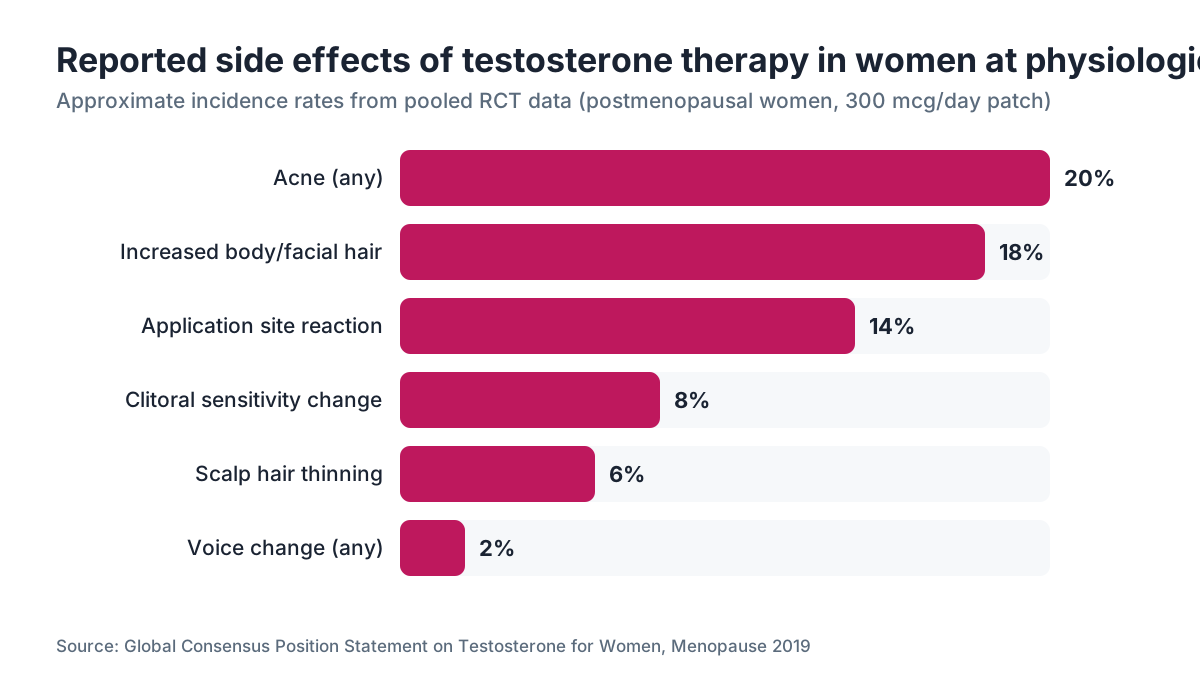
At physiologic doses, testosterone in women is generally well tolerated. The most common side effects reported in trials are androgenic: acne (usually mild), increased facial or body hair (hirsutism), and clitoral sensitivity or enlargement. These tend to be dose-dependent and often resolve when the dose comes down [2].
The more serious concerns:
Voice deepening. Vocal changes can be permanent. This is rare at physiologic doses but worth knowing. If your voice pitch shifts at all, drop the dose right away and talk to your provider.
Scalp hair thinning. Testosterone can cause androgenic alopecia in genetically susceptible women, particularly those with a family history of female-pattern baldness. Again, dose-dependent, and more likely if levels get pushed above the normal female range.
Transfer to partners or children. Testosterone gels move through skin contact. Cover the application site or let it fully dry before contact. This is the FDA's primary stated concern with male-labeled products in households with women and children, and the same logic applies in reverse.
Breast cancer. The relationship between exogenous testosterone and breast cancer risk in women is genuinely uncertain. Some in vitro data suggests testosterone may be protective via androgen receptors. Other data suggests aromatization to estrogen in breast tissue could stimulate growth. The 2019 consensus states that testosterone "should not be recommended" in women with or at high risk for hormone-sensitive breast cancer until better data exists [2]. That is the right call.
Cardiovascular effects. Short-term trials show no meaningful adverse lipid changes at female physiologic doses, but long-term data is limited. Women with pre-existing cardiovascular disease need a careful risk discussion [12].
Polycythemia (elevated red blood cell count). Common with high-dose testosterone in men, rarely seen at female doses. Hematocrit monitoring is still standard practice.
One fact that often gets missed: testosterone therapy does not cause masculinization when levels stay within the normal female range. The horror stories about women growing beards are almost always cases of doses meant for men, not the 1-2 mg range used in evidence-based female prescribing.
How is testosterone gel different from other forms women use?
Women can receive testosterone via gel, cream, pellet, injection, or patch (outside the US). Each has real trade-offs.
Gels and creams are the most commonly prescribed in the US for women. They absorb quickly, allow flexible dosing, and can be stopped immediately if side effects show up. The downside is daily application and transfer risk.
Pellets are small cylinders inserted under the skin every 3-6 months. They deliver steady levels without daily fuss, which patients often love. The problem: if your levels run high or side effects appear, you cannot simply stop. You wait months for the pellet to dissolve. Several professional societies, including NAMS, note that pellets can deliver supraphysiologic levels in some women and that the evidence for pellets specifically is lower quality than for transdermal preparations [7].
Injections (typically testosterone cypionate in sesame or cottonseed oil) create peaks and troughs. Some practitioners use them in women at very low doses, but they are hard to titrate to female ranges and cause big swings. Not ideal for most women.
Vaginal testosterone is a separate, smaller-scale use: a tiny amount of testosterone cream applied intravaginally or to the vulva to address genitourinary syndrome of menopause (GSM), particularly dryness and pain with intercourse. This route gives minimal systemic absorption and appeals to practitioners who want a local effect without raising systemic levels [8].
For most women, a transdermal gel or cream at a calibrated compounded dose is the practical first choice. It is reversible, adjustable, and the evidence base maps most directly onto this delivery method.
What lab tests do you need before and during testosterone therapy?
A responsible practitioner will not prescribe testosterone to a woman without baseline labs, and will recheck levels after starting. Here is what to expect.
Before starting, you need total testosterone, free testosterone (or calculated free testosterone using SHBG), SHBG (sex hormone binding globulin), and ideally a complete metabolic panel and lipid panel. Some providers also check DHEA-S, the adrenal precursor to testosterone, and estradiol. If you are still menstruating, timing matters: labs drawn in the morning during the follicular phase (days 8-10 of your cycle) are most interpretable.
After starting, most guidelines recommend rechecking testosterone 4-6 weeks after any dose change, then every 6-12 months once stable. The goal is total testosterone in the upper quartile of the normal premenopausal female range, which most labs set at roughly 15-70 ng/dL, with a target often around 50-80 ng/dL. If levels consistently run over the upper limit of normal, the dose comes down.
Hematocrit gets checked annually. Lipids get checked annually, especially if you have cardiovascular risk factors. Some practitioners check liver function initially, particularly if other medications are in play.
One practical note: female testosterone levels sit at the very low end of most lab assays' detection range. Standard immunoassay methods are not accurate at female levels. If accurate measurement matters (and it does), ask for liquid chromatography-mass spectrometry (LC-MS/MS), which is more precise at low concentrations [11]. Not every lab offers it, but specialty labs and women's health panels do.
Where can you buy testosterone gel for women, and do you need a prescription?
Yes, you need a prescription. Testosterone is a Schedule III controlled substance under the Controlled Substances Act, which means it cannot be legally bought without a prescription from a licensed practitioner in the US [4]. There is no legal over-the-counter testosterone gel for women here. Anything marketed online as a "testosterone booster" for women without a prescription is either a supplement with no actual testosterone (often DHEA or herbal blends) or an illegal product.
Where to get a legitimate prescription:
Your OB-GYN, internist, or menopause specialist can prescribe testosterone off-label. Not all will. Awareness and comfort with testosterone in women varies a lot by practitioner. If your provider dismisses the question without engaging, finding a menopause-specialized provider (NAMS keeps a directory at menopause.org) is a reasonable next step.
Telehealth platforms that specialize in women's hormones can prescribe and coordinate compounded testosterone. WomenRx is one, connecting women with practitioners experienced in hormone care including testosterone, and coordinating with compounding pharmacies for accurate female dosing. This works well if you cannot easily find a local specialist or your primary care provider is not comfortable with the off-label protocol.
For male-labeled products at a traditional pharmacy: once you have a prescription for, say, testosterone gel 1% (AndroGel), any retail pharmacy can fill it. The cost will likely be steep, because insurance rarely covers off-label female use. A tube of AndroGel 1.62% 75 g (the metered pump) runs $400-600 per month at retail without insurance. GoodRx and similar discount cards can cut that.
Compounded testosterone gel or cream from a 503A compounding pharmacy typically runs $30-80 per month and requires a prescription sent directly to the compounding pharmacy. Quality varies between compounders. Ask whether the pharmacy is PCAB-accredited (Pharmacy Compounding Accreditation Board), or at minimum verify they are licensed in your state.
Do not buy testosterone from websites shipping from overseas or from supplement stores. Legality aside, the purity, concentration, and actual hormone content of unregulated products is not verifiable.
How does testosterone therapy fit with estrogen and progesterone?
For most postmenopausal women, testosterone is the third piece of the hormonal picture, not the first. The standard approach addresses estrogen and progesterone deficiency first, because the symptoms of estrogen deficiency (hot flashes, vaginal atrophy, sleep disruption) are usually the most acute. Then you reassess whether low libido and energy persist. If they do, that is when testosterone earns a look.
Testosterone and estrogen interact. Estrogen raises SHBG, which binds testosterone and can lower free testosterone. So a woman who starts estrogen replacement may end up with less bioavailable testosterone even if her total testosterone has not changed. This is one reason some women on estrogen therapy still report flat libido and benefit from adding testosterone.
Progesterone's relationship with testosterone is less direct but relevant. Some synthetic progestins (particularly the 19-nortestosterone derivatives like norethindrone) have androgenic activity of their own and interact with androgen receptors. Micronized progesterone does not. For women on testosterone, progesterone choice matters and is worth discussing with your provider.
The broader framework is hormone replacement therapy as a coordinated system, not a stack of independent prescriptions. Layer testosterone on top of estrogen and progesterone and the clinical picture often improves more than any single hormone can manage alone. So does the complexity of monitoring. Levels of all three need tracking.
Women using GLP-1 medications for weight management should know that big weight loss changes hormone levels and distribution. Body fat is a major site of aromatization (testosterone to estrogen conversion), so losing substantial fat can shift the testosterone-to-estrogen ratio in ways worth watching. That matters if you are using semaglutide for weight loss or similar drugs alongside hormone therapy.
What does testosterone gel cost and will insurance cover it?
The cost picture for testosterone in women is honestly frustrating, and it comes straight from the off-label status.
Insurance coverage: most commercial plans cover FDA-approved testosterone products for men with diagnosed hypogonadism. For women, coverage is sporadic at best. With no approved female indication, insurers typically deny claims or demand prior authorization that practitioners are unlikely to win. Medicare follows the same logic. Medicaid coverage varies by state.
Out-of-pocket costs:
| Source | Product | Estimated monthly cost | |---|---|---| | Retail pharmacy, no insurance | AndroGel 1.62% 75g pump | $400-600 | | Retail pharmacy with GoodRx | AndroGel 1% generic | $80-200 | | PCAB-accredited compounding pharmacy | Compounded testosterone cream 2% | $30-80 | | Telehealth platform + compounding pharmacy | Compounded testosterone gel | $50-120 (may include consultation) |
Compounded testosterone is almost always the most cost-effective option for women, which is an argument in its favor on purely practical grounds. The clinical evidence does not require a branded product. The 2019 consensus and most trial protocols used transdermal preparations at physiologic doses, which is exactly what a good compounding pharmacy provides.
One thing to watch: some direct-to-consumer testosterone offerings for women are sold as "DHEA" rather than testosterone. DHEA is a precursor the body can convert to testosterone and estrogen. It is not a controlled substance, does not require a prescription, and sells as a supplement. The 2023 NAMS position statement on DHEA acknowledges some evidence for vaginal DHEA (prasterone) in treating GSM, but the conversion to testosterone is variable and uncontrolled compared to a direct testosterone preparation [7].
Who should not use testosterone gel?
Some situations rule testosterone out, and others call for extra caution.
Known or suspected hormone receptor-positive breast cancer. The 2019 consensus says clearly this is not a population where testosterone can be recommended yet [2]. A personal history of ER/PR-positive breast cancer means a detailed conversation with your oncologist before considering testosterone.
Pregnancy or planned pregnancy. Testosterone is a teratogen. Women who could become pregnant should not use it without reliable contraception. This applies to perimenopausal women who may still ovulate irregularly.
Polycystic ovarian syndrome (PCOS). Many women with PCOS already have elevated testosterone. Adding more is almost never appropriate and can worsen metabolic and skin symptoms.
Active liver disease. Topical testosterone has less hepatic impact than oral androgens, but baseline liver function should be normal.
Erythrocytosis (elevated hematocrit). Testosterone stimulates red blood cell production. Women with already elevated hematocrit need careful monitoring or may not be candidates.
Unexplained abnormal uterine bleeding. Testosterone can affect the endometrium. Any woman with a uterus who has unexplained bleeding should get that evaluated before starting hormone therapy of any kind.
Acne-prone skin or hirsutism. Not absolute contraindications, but worth discussing, because testosterone can worsen both. Women with a history of severe cystic acne or significant facial hair may decide the benefit-risk math does not work for them.
Age under 35 with normal ovarian function. Routine supplementation in young women with normal testosterone levels lacks evidence and adds risk for no clear reason. This is not a wellness add-on for healthy young women.
How long does it take testosterone gel to work in women?
The honest answer depends on what you are treating and how depleted your baseline was.
For libido specifically, most women in clinical trials who responded did so within 4-12 weeks of consistent therapy at an adequate dose [5]. Some notice changes in desire and arousal within 2-4 weeks. Others take 3 months. If nothing has shifted at all by week 12 and your levels are confirmed in the therapeutic range, the response may be limited, and continuing on faith alone is not necessarily the right call.
Energy and cognitive fog, the less well-evidenced uses, tend to improve more gradually. Some women report meaningful clarity and motivation at 6-8 weeks. Others notice little. Because the evidence here is weaker, it is harder to predict who responds.
Muscle maintenance and body composition changes take longer still, usually several months of consistent therapy combined with resistance training. Testosterone does support lean mass in women, but it is not a shortcut. The effect is modest at physiologic doses compared to what you get from actual exercise.
A few things to keep in mind. If your estrogen is inadequately replaced, testosterone alone will not fix symptoms driven mainly by estrogen deficiency. Sleep disruption, hot flashes, and vaginal dryness are predominantly estrogen-driven. If those are still uncontrolled, they muddy the picture for judging testosterone response.
For perimenopause, the timeline question gets more complicated, because hormone levels are swinging on their own. Symptoms may come and go regardless of therapy during this transition, which makes it harder to pin changes definitively on testosterone.
Frequently asked questions
Can I buy testosterone gel over the counter for women?
No. Testosterone is a Schedule III controlled substance in the US and requires a prescription from a licensed practitioner. Products marketed online as testosterone for women without a prescription either contain no actual testosterone or are illegal imports. DHEA supplements are available without a prescription but are not the same as testosterone, and conversion is unpredictable.
What testosterone level is too low for women?
Most labs set the normal premenopausal female range at roughly 15-70 ng/dL for total testosterone. There is no single agreed cutoff for deficiency in women the way there is for men, which is part of why the Endocrine Society recommends basing treatment decisions on symptoms combined with levels, not on a number alone. Levels below 15 ng/dL in a symptomatic woman are generally considered below the normal range.
Will testosterone gel cause hair loss or beard growth in women?
At physiologic female doses targeting the upper normal range, facial hair growth is possible but usually mild: a few extra hairs that respond to standard removal methods. Significant hirsutism or beard growth means the dose is too high. Scalp hair thinning can occur in genetically susceptible women. Both effects are dose-dependent and generally reversible with dose reduction.
Can testosterone gel help with menopause fatigue?
There is some evidence that testosterone improves energy and wellbeing in postmenopausal women, but it is less consistent than the libido data. The 2019 Global Consensus Statement notes evidence clearly supports improvements in sexual function; energy and mood improvements show up in trials but as secondary outcomes. For fatigue specifically, ruling out thyroid dysfunction, sleep apnea, and iron deficiency first makes clinical sense.
Is compounded testosterone gel as good as brand-name products?
Quality-controlled compounded testosterone from a PCAB-accredited pharmacy can match brand products on efficacy. For women, compounded preparations carry a practical advantage: they can be formulated at the low doses (1-2 mg per day) that make accurate female dosing possible without splitting products designed for men. Unverified compounding pharmacies are a different matter; source matters enormously for consistency.
Can testosterone therapy increase breast cancer risk in women?
The data is uncertain. Some observational studies suggest no increased risk at physiologic doses; others raise questions about aromatization to estrogen in breast tissue. The 2019 Global Consensus Statement recommends that women with hormone receptor-positive breast cancer or at high risk for it avoid testosterone therapy until better long-term data exists. Women with a personal history of breast cancer should discuss this with their oncologist.
Where can I find a doctor who prescribes testosterone to women?
The North American Menopause Society (NAMS) maintains a directory of certified menopause practitioners at menopause.org. Reproductive endocrinologists and some gynecologists who specialize in midlife women's health are also good sources. Telehealth platforms focused on women's hormones, including WomenRx, connect patients with practitioners experienced in off-label testosterone prescribing for women.
How do I apply testosterone gel to minimize transfer to my partner or children?
Apply to a site that is easily covered: inner forearm, upper inner thigh, or abdomen. Allow 5-10 minutes to dry before dressing. Cover the area with clothing before close contact. Wash your hands thoroughly after application. If direct skin-to-skin contact with a child or partner is expected within a few hours, bathing before contact adds another layer of protection. The FDA flags transdermal transfer as a primary safety concern with any testosterone gel.
Does testosterone gel affect fertility in women?
Yes. Testosterone is teratogenic and can disrupt ovulation. Women who are trying to conceive should not use testosterone. For perimenopausal women who may still occasionally ovulate, reliable contraception is required during testosterone therapy. If you are pursuing fertility treatment, discuss any hormone supplementation with your reproductive endocrinologist before starting.
How is testosterone gel different from pellets for women?
Gels and creams are applied daily and can be stopped immediately if side effects occur, making dose adjustment straightforward. Pellets are inserted under the skin every 3-6 months and cannot be removed if levels run high. Several professional societies, including NAMS, note that pellets can produce supraphysiologic levels in women and that pellet-specific evidence quality is lower than for transdermal preparations. For most women, a transdermal preparation is the more controllable choice.
Can testosterone gel improve sexual desire in premenopausal women?
The evidence is thinner than for postmenopausal women. Small trials show some benefit for premenopausal women with low testosterone and HSDD, but the 2019 Global Consensus Statement stops short of recommending routine use in this group. If you are premenopausal with low levels and significant symptoms, it is a legitimate clinical conversation, but expect honest discussion of the limited evidence and the need for careful monitoring.
What happens if I use too much testosterone gel?
Doses above the normal female range raise the risk of androgenic side effects: acne, facial hair, voice changes (which can be irreversible), scalp thinning, and elevated hematocrit. Voice deepening is the side effect most often cited as permanent even after dose reduction. If you notice voice changes at any point, lower the dose immediately and contact your provider. Supraphysiologic levels also carry unknown long-term cardiovascular implications.
Does testosterone help with vaginal dryness in menopause?
Vaginal testosterone (applied locally in very small amounts) is used for genitourinary syndrome of menopause and shows benefit for dryness, irritation, and pain with intercourse with minimal systemic absorption. Systemic testosterone therapy does not reliably resolve vaginal atrophy on its own; estrogen-based local therapy, like the estrogen patch or vaginal estrogen, remains the first-line treatment for GSM symptoms.
How often are labs checked when a woman is on testosterone gel?
Standard practice is to recheck total and free testosterone 4-6 weeks after starting or changing the dose, then every 6-12 months once levels are stable. Lipids and hematocrit are typically checked annually. Using LC-MS/MS methodology rather than standard immunoassay gives more accurate readings at the low levels typical in women. Your provider should also monitor for androgenic side effects at each visit.
Sources
- NAMS (North American Menopause Society), Menopause journal 2019 Global Consensus Position Statement
- Global Consensus Position Statement on the Use of Testosterone Therapy for Women, Menopause 2019;26(10):1093-1102
- Endocrine Society Clinical Practice Guideline, Androgen Therapy in Women, J Clin Endocrinol Metab 2014
- US DEA, Controlled Substances Act Schedule III
- Bolour S, Braunstein G. Testosterone therapy in women: a review. Int J Impot Res 2005; also Kingsberg SA et al, JCEM 2008 systematic review of testosterone patch trials
- FDA, AndroGel Prescribing Information and Boxed Warning on secondary exposure
- NAMS 2023 Position Statement on DHEA and Testosterone for Women
- Kingsberg SA et al, Vulvovaginal atrophy and testosterone, Menopause 2017
- FDA, Intrinsa Advisory Committee materials, 2004
- FDA, Human Drug Compounding: Laws and Policies (503A and 503B)
- Rosner W et al, JCEM 2007: Position Statement on androgen testing in women, recommends LC-MS/MS
- FDA, Drug Safety and Availability: testosterone products