Testosterone for women: what it does, who needs it, and how to use it
TL;DR: Women make testosterone in the ovaries and adrenal glands, and levels fall by roughly 50% between ages 20 and 45. Low testosterone causes low libido, fatigue, poor muscle tone, and flat mood. Testosterone cream and other topical forms can help, though no FDA-approved product for women exists in the U.S. yet. Off-label prescribing is legal, well-studied, and endorsed for sexual dysfunction by major medical societies.
What does testosterone do for women?
Most people file testosterone under male hormone. That's wrong. Women make it too, all day long, and it does real work.
Testosterone in women comes from three places: the ovaries, the adrenal glands, and conversion of other hormones in fat and muscle tissue. Together those sources produce levels that sit roughly 10 to 20 times lower than in men, but the receptors throughout a woman's body respond to even those small amounts. Androgen receptors sit in the brain, bone, skin, muscle, bladder, vaginal tissue, and cardiovascular tissue [1].
So what does it actually do? It drives sexual desire and arousal, supports muscle protein synthesis, keeps bone mineral density up, sharpens mood and thinking, and helps regulate energy. The Endocrine Society's guidance confirms that androgens contribute to sexual function, bone health, and a woman's sense of well-being [1]. None of that becomes optional at 40 or 50.
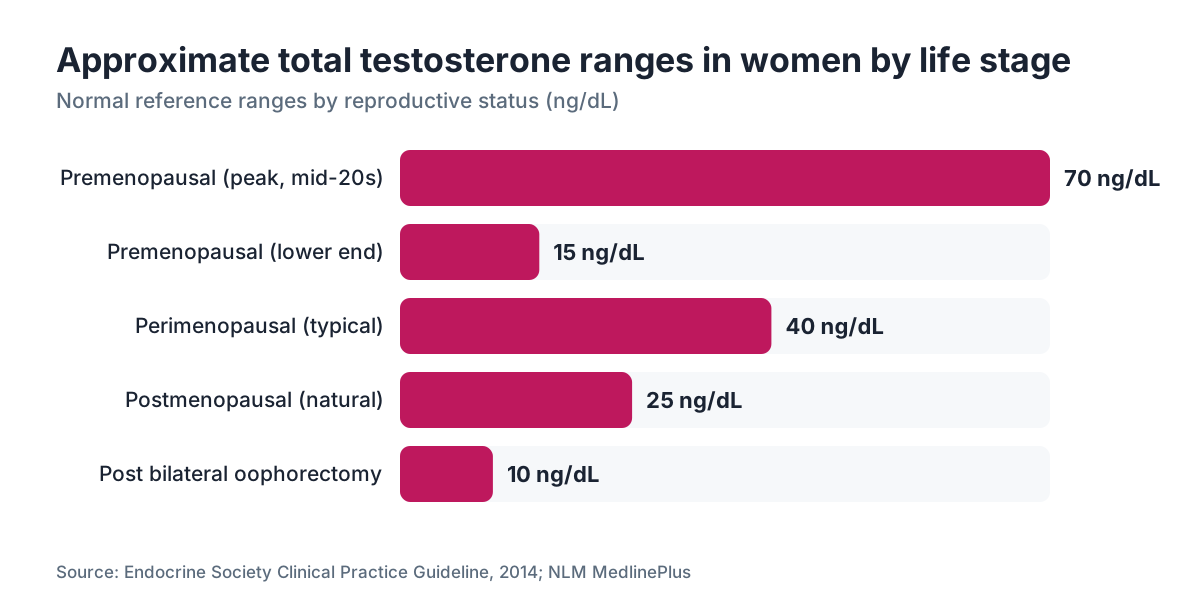
Testosterone peaks in the mid-20s and slides gradually after. By natural menopause, circulating testosterone is roughly half what it was at 20, and surgical menopause (removal of both ovaries) triggers an immediate, steep drop that estrogen therapy alone doesn't replace [2]. That gap has real clinical weight.
How do women's testosterone levels change with age?
The decline runs slow, so most women can't point to one turning point. The changes stack up instead. Libido dips. Workouts stop paying off. Sleep gets thinner. A vague flatness settles over your mood. These get blamed on stress, bad sleep, or perimenopausal estrogen swings, but falling androgens contribute directly.
Total testosterone in premenopausal women usually runs about 15 to 70 ng/dL, though the range shifts by lab and assay [11]. Free testosterone, the biologically active fraction, is a better marker but harder to measure well. The Endocrine Society notes that current assays are unreliable at the low concentrations seen in women, which makes diagnosis messier than anyone wants [1].
Women on oral estrogen (pills, not patches or gels) take an extra hit to free testosterone. Oral estrogen raises sex hormone-binding globulin (SHBG), and SHBG grabs testosterone tightly, leaving less free to act on tissue [3]. That's one reason many clinicians reach for transdermal estrogen instead: it barely touches SHBG. If you're on oral estrogen and feeling low-T symptoms, raise this mechanism with your prescriber. Our overview of hormone replacement therapy covers how delivery route reshapes your whole hormonal picture.
Surgical menopause is the sharp cliff. After removal of both ovaries, testosterone falls by about 50% within days [2]. Symptomatic women who've had that surgery have the clearest, best-documented case for testosterone therapy.
What are the benefits of testosterone for women?
The evidence base for testosterone in women is narrower than for estrogen. It's also real, and it's growing.
The strongest data covers hypoactive sexual desire disorder (HSDD), the clinical name for persistently low desire that causes personal distress. A 2019 systematic review and meta-analysis in The Lancet Diabetes and Endocrinology pooled 36 randomized controlled trials and more than 8,000 women. It found testosterone therapy significantly improved sexual function scores, desire, arousal, orgasm, and satisfaction versus placebo [4]. That's a meaningful effect across a large, mixed pool of studies.
Beyond sex, the picture looks promising but less settled:
Muscle mass and physical function. Testosterone is anabolic. Studies in postmenopausal women show modest gains in lean mass and strength at supraphysiologic doses, with smaller effects at normal-range doses [1].
Bone density. Bone carries androgen receptors. Some evidence suggests testosterone helps preserve bone mineral density after menopause, though estrogen is still the primary agent studied for it. If bone loss worries you, a bone density test is the right first move.
Mood and thinking. Mixed. Some trials report better mood, energy, and well-being; others find nothing above placebo. The benefit shows up most in women who were clearly deficient to start.
Vaginal and urogenital tissue. Androgen receptors in vaginal tissue respond to testosterone. Some clinicians use low-dose vaginal testosterone for genitourinary syndrome of menopause (GSM), especially in women who can't use vaginal estrogen. Evidence is early but encouraging [5].
One honest caveat: industry funding shaped some of this research. The Lancet authors flagged varied trial designs and short follow-up as limits [4]. Long-term safety data, especially for breast cancer risk past 24 months, is thin. The ISSWSH position statement concluded that short-term use up to 24 months, at doses keeping blood levels within the normal female range, appears safe, but called for longer trials [5].
What is testosterone cream for women and how does it work?
Testosterone cream is a topical preparation. You rub it on your skin, and it absorbs into the bloodstream through the skin instead of getting swallowed or injected. That matters for two reasons. It bypasses the liver, so it doesn't raise SHBG the way oral pills do. And absorption stays gradual and steady, which tracks the body's natural pattern better than the peaks you get from injections.
The cream is almost always compounded, meaning a compounding pharmacy mixes it to a specific concentration, because no FDA-approved testosterone product exists for women in the U.S. as of mid-2026 [6]. Gel products like AndroGel and Testim are approved for men only. The 1% gel dosed for men would push most women to supraphysiologic levels fast. Compounders usually prepare creams at 0.5% to 2%, with small doses (often 0.5 to 1 gram per application).
The mechanics are simple. Testosterone crosses the skin barrier, enters the blood, binds androgen receptors in target tissue, and the bound complex moves into the cell nucleus to switch gene expression on. Libido effects can show in weeks. Muscle and bone effects take months.
One caveat on cream versus gel: cream absorption swings with the vehicle, the base the hormone is suspended in. Some bases absorb more consistently than others. Your prescriber and your compounding pharmacy both matter here.
Where to apply testosterone cream for women
Application site changes both absorption rate and how much transfers to a partner or child, so this is a practical question with real answers.
Common sites for women are the inner forearm (thin skin absorbs well), inner thigh, lower abdomen, and the labia or vulva for local genitourinary effects. The upper arm and shoulder work too.
Inner forearm and inner thigh give the most consistent systemic absorption. Genital application gives higher local tissue levels with less systemic uptake, which some clinicians prefer when the main complaint is vulvovaginal dryness or arousal rather than whole-body low libido [5].
Practical rules most prescribers give:
- Rotate sites to avoid skin irritation and buildup in one spot.
- Apply after showering to clean, dry skin. Wet skin dilutes the product and changes absorption.
- Let it absorb fully (roughly 2 to 5 minutes depending on the base) before dressing. Clothing contact too soon wipes off the dose.
- Wash hands right after, even if you used a gloved finger or applicator. Skin-to-skin testosterone transfer to a partner or child is a documented safety concern the FDA has flagged for male products, and it applies to compounded ones too [6].
- Cover the site, or avoid skin contact there, for at least 2 hours after applying.
Got a child in the house or a partner with prostate issues? Genital application (lowest transfer risk) or applying under clothing is the safer call.
How to apply testosterone cream for women: a step-by-step guide
Getting the technique right is worth the extra minute. Sloppy application means inconsistent blood levels, and that makes it hard for your clinician to tell whether the dose is actually right.
Step 1: Check the dose on your prescription. Creams for women are usually dosed in milligrams, and your compounding pharmacy should tell you what volume equals your dose. Common doses run 0.5 mg to 10 mg daily, with 2 to 5 mg a typical starting range for systemic effects.
Step 2: Wash and dry the site. Leftover moisturizer, sunscreen, or sweat changes absorption.
Step 3: Measure the dose with the provided applicator, syringe, or pump. Don't eyeball it.
Step 4: Apply in a thin layer. Spread it over a palm-sized area instead of piling it in one spot. More surface area, better absorption.
Step 5: Rub it in gently with a gloved finger or the back of the applicator. You want full skin contact.
Step 6: Let it dry completely before covering. For a lipid-based cream, that usually takes 3 to 5 minutes.
Step 7: Wash hands thoroughly with soap and water.
Apply at the same time each day. Most clinicians suggest morning to match the body's natural cortisol and androgen rhythm, but consistency beats timing. Keep a simple log for the first few weeks: time, site, symptoms. That gives your prescriber something real to read at follow-up.
What are the benefits of testosterone cream specifically?
Testosterone cream benefits mostly overlap with testosterone therapy in general, because the cream is just a delivery method. But the route does shape the benefit profile in specific ways.
Because cream skips the liver, it doesn't raise SHBG. More of the testosterone that enters your blood stays free and active. Women on oral estrogen already run high SHBG, and adding transdermal testosterone holds free levels better than an oral testosterone would [3].
For women whose main concern is genital arousal, sensitivity, or dryness, vulvar or vaginal application delivers active hormone straight to androgen receptors in that tissue with little systemic exposure. A 2021 trial in Menopause found compounded testosterone cream applied vaginally improved sexual function scores and cut pain with intercourse in postmenopausal women [5]. The authors noted the effect was meaningful and the dose kept serum testosterone in the normal female range.
For systemic symptoms (low libido, fatigue, mood, muscle loss), inner forearm or thigh application gives a better systemic dose. Check blood levels 4 to 6 weeks after starting, then periodically, to confirm you're staying in the normal female range.
These benefits are real but not instant. Most women report libido improvement in 3 to 6 weeks, while energy, mood, and body composition shifts take 3 to 6 months to notice. If nothing's moved after 6 months at a proper dose, the diagnosis deserves a second look.
Is testosterone therapy safe for women? What are the risks?
Safety is the right place to start, and the honest answer is: probably yes at physiologic doses and shorter durations, but the long-term data is thinner than anyone would like.
The Lancet Diabetes and Endocrinology meta-analysis found no significant rise in adverse events, including serious cardiovascular events, at doses that kept testosterone in the normal female range over trial periods averaging 12 to 24 weeks [4]. A companion 2019 review in the same journal found testosterone at physiologic doses did not significantly increase cardiovascular events, alopecia, acne, or clitoromegaly versus placebo [9]. ISSWSH and the Menopause Society both state that short-term use up to 24 months at physiologic doses appears safe [5][7].
Known side effects at typical doses are mostly androgenic:
- Acne, especially on the face and upper back
- Increased facial or body hair (hirsutism)
- Clitoral enlargement (usually reversible if the dose drops)
- Scalp thinning in women predisposed to androgenetic alopecia
- Voice deepening (rare at physiologic doses, more common with supraphysiologic dosing)
Most of these track with dose and reverse when you lower or stop the cream. The whole game is keeping blood levels in the normal female range, not pushing toward male levels.
Breast cancer is where the uncertainty runs highest. Breast tissue has androgen receptors, and the biology cuts both ways: some androgen receptor signaling looks protective, but testosterone that aromatizes to estrogen in breast tissue could in theory raise risk. Current data show no increased breast cancer risk at physiologic doses, but trials weren't long or large enough to rule it out for good [4][9]. Women with a personal or strong family history of hormone-receptor-positive breast cancer should have a frank talk with their oncologist before starting.
Testosterone is a DEA Schedule III controlled substance in the U.S., so it needs a prescription and can't be bought legally without one [8]. Over-the-counter testosterone boosters sold as supplements haven't been shown to raise testosterone meaningfully in women and are no substitute.
For the wider picture of hormone safety in menopause, our menopause overview covers hormonal and non-hormonal options.
Who is a good candidate for testosterone therapy?
The clearest candidates are postmenopausal women with confirmed low sexual desire that causes personal distress, after other causes (depression, relationship strain, pain, medication side effects) have been ruled in or out. This is the best-studied group, and the one ISSWSH and the Menopause Society back with conditional recommendations [5][7].
Reasonable fits also include:
- Women who've had surgical menopause and hit an abrupt loss of energy, libido, and mood that estrogen alone doesn't fix
- Perimenopausal women with a clear drop in libido, confirmed androgen levels below the normal range, and no contraindications
- Women on oral estrogen with high SHBG and low free testosterone who stay symptomatic despite adequate estrogen
Generally not good candidates: women who are pregnant or trying to conceive (testosterone is teratogenic), women with androgen-sensitive cancers, women with unexplained abnormal uterine bleeding, and women with active liver disease [1].
Before starting, a sensible workup includes total and free testosterone (ideally the same lab across time), SHBG, a thyroid panel, and a review of every current medication. SSRI and SNRI antidepressants are among the most common causes of low libido in women this age, and they belong in the picture before you pin everything on hormones.
If you're exploring this through telehealth, WomenRx offers evaluation by clinicians who focus on women's hormonal care, order the right labs, and prescribe compounded testosterone where it's clinically appropriate.
For how testosterone sits alongside other hormonal treatments, see our articles on progesterone and estrogen patch.
Does testosterone therapy for women require an FDA-approved product?
This trips a lot of people up. No FDA-approved testosterone product exists specifically for women in the U.S. as of mid-2026 [6]. Intrinsa, a testosterone patch for women, won approval in Europe but was rejected by the FDA in 2004 over long-term safety data gaps, then later pulled from the European market for commercial reasons.
In the U.S., prescribers legally use male-approved products off-label or write for compounded testosterone. Off-label prescribing is legal and common: the FDA regulates drug approval, not how physicians prescribe. Compounded testosterone comes from licensed compounding pharmacies under state pharmacy board oversight, and for some preparations, USP standards.
The Endocrine Society's 2014 clinical practice guideline states it "recommends against the generalized use of testosterone by women" for indications other than hypoactive sexual desire disorder, but it does not recommend against treating HSDD in postmenopausal women [1]. That distinction carries real weight.
The Menopause Society issued a position statement in 2023 affirming that testosterone therapy for postmenopausal women with HSDD is supported by evidence and can be prescribed off-label with proper monitoring [7].
Bottom line: you can be prescribed testosterone legally and ethically in the U.S. You need a licensed prescriber, a legitimate pharmacy, and real monitoring.
How does testosterone interact with estrogen and progesterone in perimenopause and menopause?
Hormones don't act alone, and the relationship between testosterone, estrogen, and progesterone shapes treatment decisions more than most women expect.
In the perimenopausal transition, estrogen and progesterone swing wildly and start dropping, while testosterone declines more slowly. Some perimenopausal women find their libido holds up better than expected because testosterone stays relatively intact next to estrogen. Others feel even a modest testosterone drop hit harder when estrogen is also falling, because estrogen governs vaginal tissue, lubrication, and arousal circuitry in ways that compound the problem.
For women on hormone replacement therapy, sequencing matters. Estrogen therapy, especially transdermal, often improves vaginal dryness and arousal enough that testosterone isn't needed. But when desire stays low despite adequate estrogen and progesterone, adding testosterone often delivers a meaningful extra benefit [4].
Progesterone's link to testosterone is indirect but real. Progesterone is a precursor in the hormone synthesis pathway, and some of it converts to testosterone. Synthetic progestins (like medroxyprogesterone acetate in older HRT formulas) can carry anti-androgenic effects, blunting whatever testosterone is around. Micronized progesterone (bioidentical) doesn't, which is one reason many clinicians prefer it. See our look at progesterone for that distinction.
For women in perimenopause specifically, when to start any hormonal support and what to start with deserves its own careful conversation with a knowledgeable clinician. Testosterone alone, without addressing estrogen deficiency, usually underperforms.
The table above shows approximate normal testosterone ranges across life stages in women, drawn from Endocrine Society and MedlinePlus data.
What should you monitor while taking testosterone?
Monitoring isn't optional. It's how you stay safe and how your prescriber learns whether the dose is working.
At baseline (before starting): total testosterone, free or calculated free testosterone, SHBG, complete blood count (polycythemia is a known testosterone risk), lipid panel, and a pelvic exam if you haven't had one recently.
At 4 to 6 weeks: recheck total and free testosterone to confirm absorption and that levels sit in the normal female range, not up in male range. Watch for early side effects: acne, hair changes.
At 3 to 6 months: repeat testosterone and SHBG, hematocrit, and a symptom review. Lipids at 6 months if baseline was borderline.
Annually after that: full panel, plus a gynecologic exam and breast exam or imaging appropriate for your age.
The Endocrine Society recommends keeping total testosterone below 70 ng/dL in women, within the upper limit of the normal female range, and measuring serum testosterone 4 to 12 weeks after starting therapy [1][12]. Levels above the normal female range call for a dose cut, not a wait-and-see.
If you're applying compounded cream vaginally, systemic absorption is lower, and serum levels may not reflect local tissue exposure well. Some clinicians lean more on symptom response than serum numbers here, checking blood levels mainly to rule out unexpected systemic absorption.
Women on testosterone should not donate blood while on therapy. Testosterone use is a temporary deferral criterion under FDA blood donation guidance [6].
Frequently asked questions
Can testosterone cream help with menopause symptoms?
Testosterone cream helps with specific menopause symptoms, especially low libido, reduced arousal, and genitourinary dryness. The evidence for sexual dysfunction is strong enough that both the Menopause Society and ISSWSH support off-label prescribing for postmenopausal women with HSDD. Evidence for other symptoms like hot flashes is much weaker; estrogen stays the primary treatment for those.
How long does it take for testosterone cream to work in women?
Most women notice libido and arousal changes within 3 to 6 weeks of starting testosterone cream at a proper dose. Energy and mood improvements often take 6 to 12 weeks. Muscle tone or body composition changes take 3 to 6 months and need consistent resistance training to show. If nothing changes after 3 months at a dose confirmed in the normal range by blood work, revisit the diagnosis.
What is the right dose of testosterone cream for women?
Typical starting doses of compounded testosterone cream for women run 0.5 mg to 5 mg daily for systemic effects, with doses as low as 0.1 to 0.3 mg for local vaginal application. The goal is restoring serum testosterone to the normal female range, roughly 15 to 70 ng/dL total, not exceeding it. Your prescriber should check blood levels 4 to 6 weeks after starting and adjust from there.
Is testosterone safe for women with a history of breast cancer?
This is genuinely uncertain. Current trials show no increased breast cancer risk at physiologic doses, but they weren't long or large enough to rule it out. Women with a personal history of hormone-receptor-positive breast cancer should talk to their oncologist before starting. The Menopause Society recommends against testosterone in women with active or recent breast cancer without oncology guidance.
Can women get testosterone without a prescription?
No. Testosterone is a DEA Schedule III controlled substance in the United States and requires a prescription from a licensed clinician. Over-the-counter supplements marketed as testosterone boosters don't contain actual testosterone and have no meaningful evidence for raising testosterone in women. Getting testosterone through unapproved channels carries legal and health risks.
Does testosterone cream cause weight gain in women?
At physiologic doses, testosterone cream doesn't typically cause meaningful weight gain. Testosterone is anabolic and tends to support lean muscle while trimming fat mass slightly, particularly visceral fat. Supraphysiologic doses can cause water retention and body composition changes. If weight is a concern alongside hormonal symptoms, it's worth asking whether a GLP-1 medication also belongs in your care plan.
Can testosterone cream cause hair loss in women?
Androgenetic alopecia (female pattern hair loss) is driven by DHT, a metabolite of testosterone. Women with a genetic predisposition may notice more scalp thinning on testosterone therapy, particularly at higher doses. This is dose-dependent and usually reverses when the dose drops. If scalp hair loss already worries you at baseline, mention it before starting therapy.
What is hypoactive sexual desire disorder (HSDD) and how does testosterone treat it?
HSDD is persistent, distressing low sexual desire not explained by another condition or medication. It's the most common female sexual dysfunction, affecting an estimated 10% to 14% of U.S. women. Testosterone acts on androgen receptors in the brain, in regions tied to motivation and reward, and in genital tissue. Clinical trials show testosterone significantly improves desire, arousal, and satisfaction scores in women with HSDD versus placebo.
How does testosterone affect mood and energy in women?
Androgen receptors are spread widely across the brain, including regions that regulate mood, motivation, and thinking. Some women on testosterone therapy report better energy, less brain fog, and steadier mood, particularly if they were clearly deficient to start. Randomized trial evidence is mixed, with some showing benefit and others finding nothing above placebo. Women with surgical menopause tend to show the clearest response.
Is compounded testosterone cream the same as FDA-approved testosterone?
No. Compounded testosterone cream isn't FDA-approved; a licensed compounding pharmacy prepares it from pharmaceutical-grade testosterone. There's no FDA-approved testosterone product for women in the U.S. Male-approved products (like AndroGel 1%) contain far higher doses than women need. Compounded formulas allow precise female dosing. Quality varies by pharmacy, so using an accredited one (PCAB-accredited or a 503B outsourcing facility) matters.
Can testosterone cream be used vaginally by women?
Yes. Low-dose testosterone cream applied intravaginally or to the vulva is used for genitourinary syndrome of menopause, including dryness, atrophy, reduced sensitivity, and pain with intercourse, especially in women who can't or prefer not to use vaginal estrogen. A 2021 trial in Menopause found vaginal testosterone cream improved sexual function and reduced pain while keeping serum testosterone within normal female ranges.
What is the difference between testosterone cream and testosterone pellets for women?
Testosterone pellets are small implants inserted under the skin every 3 to 6 months. They give steady, continuous release but can't be adjusted or removed if side effects hit, and pellet dosing in some clinics has been linked to supraphysiologic levels in women. Cream allows dose adjustment and easy discontinuation. Most major medical society guidelines prefer reversible, titratable methods like creams or gels over pellets.
Does testosterone therapy affect cholesterol or cardiovascular risk in women?
At physiologic doses via transdermal delivery, testosterone therapy hasn't been shown to significantly worsen lipids or raise cardiovascular events in women in short-term trials. Some studies show a modest HDL drop with oral testosterone, one reason transdermal routes are generally preferred. Long-term cardiovascular data in women is limited; women with existing cardiovascular disease warrant extra monitoring.
Can perimenopausal women take testosterone, or is it only for postmenopausal women?
Most of the strongest trial data sits in postmenopausal women, but perimenopausal women with confirmed low testosterone, symptomatic low libido, and no contraindications can be candidates for off-label therapy. Perimenopause is a time of heavy hormonal flux, so establishing a real baseline and ruling out other causes matters before starting. See our overview of perimenopause age for what's happening hormonally in this transition.
Sources
- Endocrine Society, Androgen Therapy in Women: An Endocrine Society Clinical Practice Guideline (2014)
- Shifren JL et al., Androgen deficiency in the oophorectomized woman, Fertility and Sterility, 2002
- Plymate SR et al., Inhibition of sex hormone-binding globulin production in the human hepatoma (Hep G2) cell line by insulin and prolactin, Journal of Clinical Endocrinology and Metabolism, 1988
- Davis SR et al., Testosterone for low libido in postmenopausal women not taking estrogen, The Lancet Diabetes and Endocrinology, 2019
- International Society for the Study of Women's Sexual Health (ISSWSH), Position Statement on Testosterone Therapy for Women, Journal of Sexual Medicine, 2021
- U.S. Food and Drug Administration, Medication Guides for Testosterone Products (MedWatch)
- The Menopause Society (formerly NAMS), Position Statement on Testosterone Therapy for Postmenopausal Women, Menopause, 2023
- U.S. Drug Enforcement Administration, Controlled Substances Schedules
- Islam RM et al., Safety and efficacy of testosterone for women: a systematic review and meta-analysis of randomised controlled trial data, The Lancet Diabetes and Endocrinology, 2019
- Kingsberg SA et al., Hypoactive Sexual Desire Disorder, Obstetrics and Gynecology Clinics of North America, 2017
- U.S. National Library of Medicine, MedlinePlus: Testosterone
- Wierman ME et al., Androgen therapy in women: a reappraisal, Journal of Clinical Endocrinology and Metabolism, 2014