Testosterone cream for women: side effects you should actually know
TL;DR: Testosterone cream for women most often causes acne, oily skin, unwanted hair growth, and mild clitoral enlargement. These effects track with dose and reverse if you catch them early. The serious ones, like voice deepening or permanent clitoral changes, happen mostly above the doses evidence supports. At physiologic doses (roughly 1-10 mg daily), the risks are real but manageable with regular labs.
What are the most common side effects of testosterone cream for women?
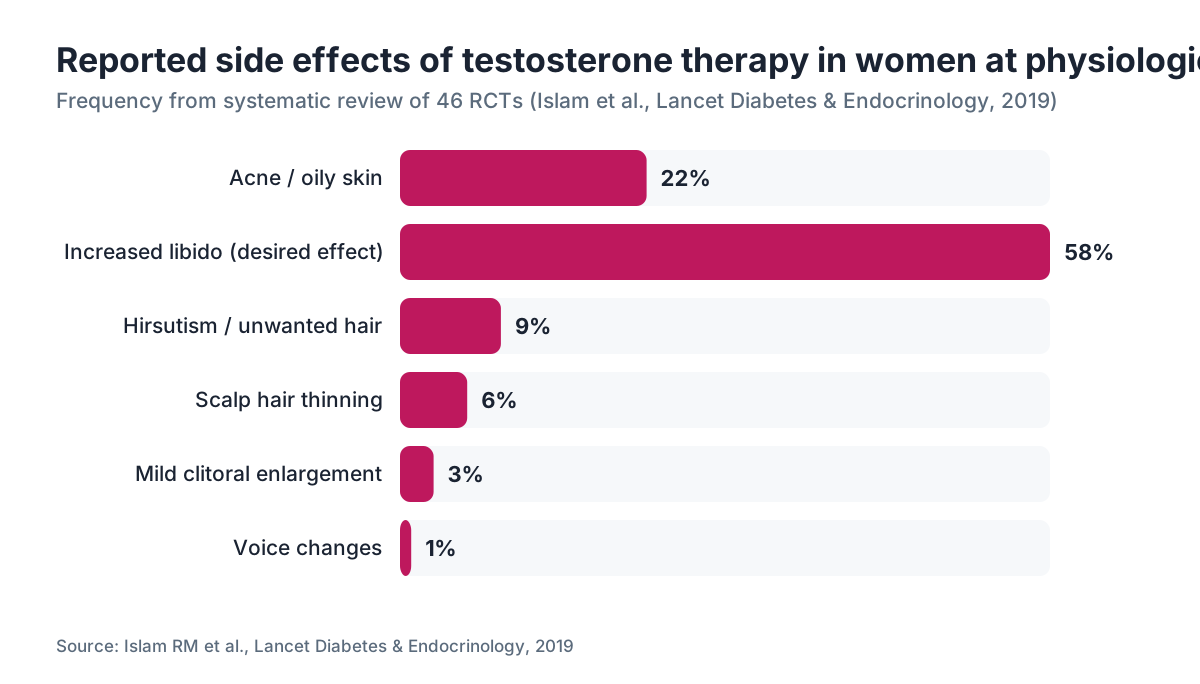
The side effects you notice first are on your skin. Acne is the most reported complaint, showing up in roughly 20-30% of women in clinical trials at doses used for hypoactive sexual desire disorder [1]. Oily skin comes with it, because androgens push sebaceous glands harder, and cream delivers testosterone straight through skin. The first place it acts is exactly where you rubbed it in.
After acne, the next most common effects are unwanted hair growth (hirsutism) on the face, chin, chest, or abdomen, plus some scalp thinning, mostly in women who already carry a genetic tilt toward androgenic alopecia. Those two sound contradictory. They run on the same mechanism: androgen receptors in facial follicles respond one way, scalp follicles the other.
Local site reactions count too. Cream on the inner thigh, vulva, or clitoral hood can cause mild clitoral enlargement (clitoromegaly). Studies report mild enlargement in 1-4% of women at standard doses [2], but the real-world range is wider because doses vary so much.
Mood shifts get reported anecdotally far more than they show up in controlled trials. Some women describe irritability or a shorter fuse at higher doses. Others get better mood, less anxiety, and better sleep, which are the effects you actually want at physiologic levels. The split usually comes down to one thing: does the dose keep free testosterone inside the normal female range, or above it?
Which side effects of testosterone cream are reversible and which are not?
This is the question to answer before you start. Most side effects reverse if you stop the cream promptly. A small number do not.
Reversible with dose reduction or stopping:
- Acne and oily skin (usually clear within 2-4 weeks)
- Mood changes and irritability
- Increased libido (the one most women want to keep)
- Mild clitoral swelling in most cases
- Scalp hair thinning, if caught early
Potentially irreversible or slow to reverse:
- Significant clitoral enlargement from prolonged high-dose exposure
- Voice deepening (the larynx change is the one most likely to stick)
- Severe scalp hair loss after prolonged androgen excess
- Facial hair that has turned terminal (thick and dark) from vellus hairs
The Endocrine Society's 2019 clinical practice guideline on androgen therapy in women recommends against generalized testosterone use for any indication other than HSDD, and cautions that virilizing side effects may be irreversible at supraphysiologic doses [3]. Sit with that word, irreversible. It is not alarmism. It is a dosing instruction.
The reversibility window is real. Women who catch rising testosterone on a blood test and lower the dose before virilization sets in almost always recover fully. The ones who end up with permanent changes usually used compounded creams at poorly standardized doses for months with no labs at all.
How do side effects compare at different testosterone cream doses?
Dose is the whole game with testosterone in women. The gap between a therapeutic range and a dose that causes trouble is narrow, which is why monitoring labs are not an optional add-on.
The table below lays out the dose ranges used in research and the side effect profile that goes with each.
| Dose (topical daily) | Free T target | Common effects | Virilization risk | |---|---|---|---| | 1-5 mg | Low-normal female range | Mild acne, mild libido increase | Very low | | 5-10 mg | Mid-normal female range | Acne, mild hirsutism possible | Low with monitoring | | 10-25 mg | Upper-normal or above | Oily skin, hirsutism, clitoral changes | Moderate | | >25 mg | Supraphysiologic | Voice changes, significant virilization | High |
For context, the testosterone patch studied for women (Intrinsa, delivering about 300 mcg daily) was approved in Europe but never in the US. The FDA's 2004 advisory committee flagged long-term cardiovascular and breast cancer safety questions that were never fully answered, and the patch was not approved here [4].
Most compounded testosterone creams for women are prescribed at 1-10 mg daily. Some compounding pharmacies mix concentrations that make it easy to apply too much, especially when the instructions say something vague like "a pea-sized amount" without naming the concentration. Know the concentration (mg per gram) of what you have, and do the math on your actual daily milligram dose. That single number tells you more than any label.
Can testosterone cream affect your cardiovascular health or cholesterol?
The cardiovascular data for testosterone in women is genuinely thin. Nobody has good long-term randomized data here. The closest we have is the APHRODITE trial, a two-year study of a 300 mcg/day testosterone patch in surgically menopausal women, which found no significant adverse cardiovascular events and no meaningful change in lipids at that dose [5].
At higher doses the picture gets less reassuring. Androgens at supraphysiologic levels tend to lower HDL and can raise LDL and triglycerides. That is the same lipid shift seen in women with polycystic ovary syndrome (PCOS) who run chronically high androgens, and it tracks with higher cardiovascular risk over time.
Red blood cell count (hematocrit) is another signal to watch. Testosterone drives erythropoiesis, and a high hematocrit thickens the blood and raises clot risk. This concern is studied far more in men on testosterone replacement, but the mechanism applies to women too, especially anyone already prone to thrombosis.
If you use testosterone cream and have a history of cardiovascular disease, a clotting disorder, or metabolic syndrome, get a baseline lipid panel and complete blood count before you start, then recheck at 3-6 months. The Endocrine Society recommends checking testosterone, hematocrit, and lipids at follow-up visits for women on androgen therapy [3].
Does testosterone cream cause weight gain in women?
This is a common fear, and the evidence is mostly reassuring. At physiologic doses, testosterone does not cause meaningful weight gain in women. It has anabolic effects on muscle and may slightly improve body composition by adding lean mass and trimming fat, particularly visceral fat.
The APHRODITE trial found no significant change in body weight or BMI over two years [5]. Smaller studies of testosterone in postmenopausal women have shown either a neutral effect on weight or a small shift toward a better lean-to-fat ratio.
Where the weight worry has some teeth: fluid retention can push the scale up 1-3 pounds short-term in some women, mostly early on. And if testosterone lifts appetite or energy (which it can, through better mood and drive), calories can creep up without you clocking it.
Women working on weight alongside hormonal health sometimes ask about semaglutide for weight loss or hormone replacement therapy as part of the bigger picture. The two are not mutually exclusive. They are separate conversations with different evidence behind them.
What happens to your skin and hair when you use testosterone cream?
Skin changes are the most visible and the fastest to show. Here is what actually happens in the tissue.
Testosterone converts to dihydrotestosterone (DHT) in skin via the enzyme 5-alpha reductase. DHT is the stronger androgen, and it binds receptors in sebaceous glands and hair follicles. In sebaceous glands, DHT cranks up sebum. More sebum means oilier skin and, when pores clog, acne, usually along the jawline, chin, back, and upper chest.
In hair follicles the effect depends on location. On the scalp, DHT miniaturizes follicles in genetically susceptible women, so you get diffuse thinning that shows most at the crown. On the face and body, DHT does the reverse: it turns fine vellus hairs into thicker, darker terminal hairs. Same hormone, same body, thinning your scalp and growing hair on your upper lip at once.
The face is usually where women spot the problem first. A few new dark hairs on the chin or upper lip in the first few months is a signal to recheck labs and probably lower the dose. Once a terminal hair follicle is set, it can stick around even after you stop testosterone.
For women already in perimenopause age or past menopause, skin is already adjusting to lower estrogen, which thins the dermis. Testosterone at physiologic doses can actually help collagen content, but the acne-prone effects still show up, and they may read more clearly on already-changing skin.
Can testosterone cream affect your vagina, clitoris, or sexual function?
Testosterone applied to or near the vulvar area has direct local effects that are separate from what it does systemically.
Clitoral enlargement gets the most airtime. Mild enlargement shows up in clinical trials at low-to-moderate doses, and most women find it either neutral or welcome, depending on their experience. Significant clitoromegaly from prolonged high-dose exposure is a different animal: it can be permanent, and it can be distressing.
Vaginal and vulvar tissue carries androgen receptors alongside estrogen receptors. At the right dose, testosterone can improve tissue health, lubrication, and sensitivity, which is part of why it gets prescribed for genitourinary syndrome of menopause (GSM) in some women. Low-dose testosterone applied to the vulva has been studied for this specifically and shows benefit without the systemic androgen load you get from inner-thigh or abdominal application [2].
Libido is the most reliably positive effect, and the research here is the strongest for any testosterone indication in women. The APHRODITE trial and its predecessors found statistically significant gains in satisfying sexual events, desire, and arousal in postmenopausal women with HSDD [5]. The North American Menopause Society (NAMS) backs this evidence specifically [6].
One note on transfer: cream on the genitals or inner thighs can move to a male partner during sex. This is documented. Partners can absorb enough to see effects if skin touches skin in the hours after you apply. Let it absorb fully before contact, or cover the site.
How does testosterone cream interact with estrogen and progesterone therapy?
Most women using testosterone cream are also on estrogen, and often progesterone, because testosterone is rarely the only hormone running low in perimenopause or menopause.
Testosterone and estrogen do not cancel each other out, but they do interact. Estrogen raises sex hormone binding globulin (SHBG), the protein that binds testosterone in the blood and parks it as inactive. Oral estrogen raises SHBG more than transdermal, so women on oral estrogen carry more bound (inactive) testosterone and may need a slightly higher dose to hit the same free level. Switch from oral to transdermal estrogen (like an estrogen patch) and your SHBG can fall, your free testosterone rises, and a dose that was fine last month is suddenly too high.
Progesterone matters too, mostly the synthetic progestins rather than bioidentical progesterone. Older progestins like norethindrone and levonorgestrel are moderately androgenic. If you are on one of those and add testosterone cream, the combined androgen load is higher than your testosterone dose alone suggests. Bioidentical micronized progesterone (Prometrium) has minimal androgenic activity and is a cleaner pairing.
Women on combined hormone replacement therapy who add testosterone should recheck free testosterone and SHBG 6-8 weeks after any change to the estrogen formulation, even more than when the testosterone dose itself changes [12].
What lab values should you monitor when using testosterone cream?
Monitoring is what separates safe testosterone therapy from the kind that ends with permanent side effects. Here is what to track and when.
Before starting:
- Total and free testosterone (baseline)
- SHBG (to gauge how much will be bioavailable)
- Complete blood count (CBC) including hematocrit
- Fasting lipid panel
- If you still have ovaries, LH and FSH to place where you are in the transition
At 6-8 weeks after starting or changing dose:
- Free testosterone (the number that matters most; keep it inside the female reference range)
- Total testosterone
- Hematocrit
At 3-6 months, then annually:
- All of the above
- Lipid panel
- Blood pressure check
- Clinical check for signs of virilization
The target free testosterone for most women on therapy is the upper half of the normal female range, roughly 1.5-4.2 pg/mL depending on the assay [8]. Supraphysiologic levels, above the female upper limit, are where the serious side effects start stacking up.
The Endocrine Society's 2019 guideline recommends measuring testosterone at 3-6 weeks after starting, then at 6 months, then annually [3]. Treat that schedule as a floor, not a ceiling. Plenty of providers check more often through the first year while dialing in the dose.
Is testosterone cream safe to use long-term?
The honest answer: we do not have decades of long-term safety data for testosterone in women the way we do for estrogen. The longest high-quality trial ran two years, APHRODITE [5]. Past that, we work from registry data, case series, and extrapolation.
What the two-year data show is reassuring at low doses: no increase in breast cancer incidence, no significant cardiovascular events, no worrying bone changes (testosterone may even support bone density, which matters for anyone thinking about their bone density test results).
The breast cancer question draws the most attention. The theoretical worry is that testosterone can aromatize to estradiol in breast tissue and stir estrogen-sensitive cells. No clinical trial has shown increased breast cancer risk from testosterone at physiologic doses in women. The NAMS position statement concludes that available data do not support an increase in breast cancer risk, while acknowledging the long-term data are too limited for definitive claims [6].
For women with a history of hormone-receptor-positive breast cancer, testosterone stays controversial. Most oncologists advise against it, and that caution fits, given the aromatization pathway, even with thin direct evidence of harm.
WomenRx clinicians who prescribe testosterone pair it with annual follow-up labs and clinical check-ins, which is the standard both the Endocrine Society and NAMS recommend for ongoing therapy.
So the bottom line on long-term use is two-part. Physiologic-dose testosterone with regular monitoring has a reassuring short-to-medium-term safety profile. Using it indefinitely with no labs is an entirely different risk calculation.
How are testosterone cream side effects different from pellet or injection side effects?
Delivery method changes both the side effect profile and how easily you can fix a problem once it starts.
Creams and gels let you titrate in real time. If testosterone comes back high at week eight, you cut the amount you apply and recheck in six weeks. That flexibility is a genuine safety advantage.
Pellets are the opposite. A pellet goes in under the skin and dissolves over 3-6 months. You cannot pull it out if your levels run high or you develop acne, hirsutism, or clitoral changes. Some women on pellets end up with free testosterone 5-10 times the female upper limit for weeks before the pellet burns down to a safer level. Side effects that build in that window may not fully reverse.
Injections (usually testosterone cypionate) run a spike-and-trough pattern. Levels peak in the days after the shot and fall before the next one. Some women feel mood and libido swing across the cycle, and side effects during peaks can be significant.
Sublingual and troche forms have high first-pass absorption variability and inconsistent serum levels, which makes monitoring harder.
For women new to testosterone therapy, cream or gel is the safest starting point, because you can stop, adjust, and recheck. If you want the wider frame on where testosterone fits within menopause care, that context helps you decide which delivery method makes sense.
When should you stop using testosterone cream?
Stop and call your provider promptly if you notice any of these: significant new facial or body hair, voice changes (cracking, lowering, hoarseness), clitoral enlargement beyond what you were told to expect, or acne getting worse despite topical treatment.
Also pause and recheck labs for new or worsening headaches, rising blood pressure, an agitated or driven energy that feels off rather than good, or unusual scalp shedding.
Scheduled stops matter too. Many guidelines suggest reassessing the reason for treatment once a year. If you started testosterone for HSDD and your sexual function has held steady for a year, it is reasonable to trial a lower dose and see whether the benefit holds, or whether it was fixing a temporary deficit that has since resolved.
Here is the one scenario where most providers say stop now and do not restart without a full endocrine workup: any blood test showing free testosterone well above the female upper limit (this varies by lab, but generally above 6-8 pg/mL on most immunoassay platforms) with no dose error to explain it. That level needs investigation before you continue [9].
Frequently asked questions
How quickly do side effects from testosterone cream appear?
Acne and oily skin can show within 2-4 weeks. Libido changes often land within 3-6 weeks. Hair changes, including new facial hair or scalp thinning, take longer, usually 2-4 months. Voice changes and significant clitoral changes need sustained supraphysiologic exposure over months. The early side effects are your warning system. Catching them fast and adjusting the dose prevents the slow, irreversible ones.
Can testosterone cream cause acne, and will it go away if I stop?
Yes. Acne is the most common reported side effect, affecting roughly 20-30% of women in clinical trials. It runs on DHT stimulating sebaceous glands. In most cases it clears within 2-4 weeks of stopping the cream or lowering the dose. Persistent cystic acne that scars is uncommon at physiologic doses, but more likely if testosterone stayed elevated for months without monitoring.
Will testosterone cream cause facial hair or a beard?
At supraphysiologic doses, yes. At physiologic doses, mild new fine hair on the upper lip or chin is possible, especially in women genetically prone to hirsutism. Fully androgenic beard-type hair needs sustained high exposure. If you notice new dark facial hairs in the first few months, check your free testosterone right away. Intervening early, before follicles turn terminal, works well.
Can testosterone cream lower my voice permanently?
Voice deepening needs prolonged exposure to supraphysiologic androgen levels. It does not happen at standard physiologic doses in well-monitored therapy. If your voice gets hoarse or drops in pitch, stop the cream and get labs the same week. Voice changes from short-term mild excess often reverse. Changes that have been present for months alongside high testosterone may be permanent.
Does testosterone cream affect fertility?
In premenopausal women, exogenous testosterone can suppress ovulation and disrupt cycles, which affects fertility. It is not a contraceptive, because ovulation can still happen unpredictably. Women trying to conceive should not use testosterone cream. For postmenopausal women, fertility is no longer the concern, and ovarian function is already gone, so the question does not apply the same way.
Can testosterone cream transfer to my partner or children?
Yes. Cream on skin can transfer to anyone who touches the application site before it fully absorbs, usually within 2-4 hours. Children who absorb testosterone show early pubic hair and accelerated bone aging. Male partners can absorb enough to shift their hormonal profile. Wash your hands after applying, keep the site covered, and wait for full absorption before skin contact.
Is testosterone cream safe if I have a history of breast cancer?
This is genuinely contested. Testosterone can aromatize to estradiol in breast tissue, which raises theoretical concern for hormone-receptor-positive cancer. No clinical trial has shown a clear increased risk at physiologic doses, but long-term data are too limited to settle it. Most oncologists advise against testosterone in women with a hormone-receptor-positive breast cancer history. If that is you, this conversation belongs with your oncologist, even more than your hormone prescriber.
What is a safe dose of testosterone cream for women?
Most evidence-based prescribing stays between 1-10 mg daily for physiologic replacement. The goal is to keep free testosterone in the upper half of the normal female range, roughly 1.5-4.2 pg/mL depending on the assay. The only way to know your dose is safe is regular blood monitoring. The label dose is a starting estimate. Your lab value is the real answer.
Can I use testosterone cream if I'm in perimenopause, not menopause?
Yes, testosterone can be used in perimenopause. Testosterone declines gradually through a woman's 30s and 40s, so some perimenopausal women have measurable deficits. The same monitoring rules apply. Because perimenopausal women still make some ovarian testosterone, start conservatively, and lean hard on labs to avoid pushing levels above the normal range. See our overview of perimenopause age for where you might be in the transition.
Does testosterone cream cause mood swings or anxiety?
At physiologic doses, testosterone generally improves mood, softens irritability, and can lower anxiety in women who are deficient. At supraphysiologic doses, irritability, aggression, and mood instability get more likely. If you feel notably more irritable or anxious after starting, check your free testosterone. It may simply be too high. Dose reduction usually settles mood symptoms within 1-2 weeks.
Can testosterone cream help with vaginal dryness?
Yes, especially applied locally to the vulvar area. Androgen receptors in vaginal and vulvar tissue respond to testosterone, and topical application can improve tissue health, elasticity, and lubrication. Low-dose vulvar testosterone has been studied specifically for genitourinary syndrome of menopause with positive results. This is a different use than cream on the inner thigh for systemic absorption, and local doses are usually much smaller.
How is testosterone cream different from DHEA for women?
DHEA (like Intrarosa, FDA-approved for vaginal atrophy) is a precursor hormone that converts to both testosterone and estrogen locally in vaginal tissue. Its systemic androgen impact is lower than direct testosterone cream at equivalent doses. Testosterone cream delivers the active androgen directly and hits harder per milligram. DHEA has an FDA-approved indication. Compounded testosterone cream for women does not, which changes how both are regulated and monitored.
What are the side effects of testosterone cream on the clitoris?
Mild clitoral swelling and increased sensitivity are the most common local effects, and most women find them acceptable or positive. Significant clitoromegaly, meaning noticeable permanent structural enlargement, needs sustained supraphysiologic exposure. Clinical trials at standard doses report mild clitoral enlargement in roughly 1-4% of participants. If you see changes beyond mild swelling in the first weeks, recheck your free testosterone and adjust your dose.
Sources
- Davis SR et al., Journal of Clinical Endocrinology & Metabolism, 2008 (APHRODITE study adverse event data)
- Labrie F et al., Menopause, 2009 (intravaginal testosterone for GSM)
- Endocrine Society, Clinical Practice Guideline: Androgen Therapy in Women, 2019
- FDA Advisory Committee, Intrinsa (testosterone patch for women) briefing document, 2004
- Davis SR et al., New England Journal of Medicine, 2008 (APHRODITE trial, 300 mcg testosterone patch, 814 surgically menopausal women, 2 years)
- North American Menopause Society (NAMS), Position Statement on Testosterone Therapy for Women, 2023
- Shifren JL et al., New England Journal of Medicine, 2000 (transdermal testosterone in surgically menopausal women)
- Wierman ME et al., Journal of Clinical Endocrinology & Metabolism, 2014 (Endocrine Society guideline update on androgen deficiency in women)
- FDA, Drug Safety and Availability, testosterone products caution for women
- Islam RM et al., Lancet Diabetes & Endocrinology, 2019 (systematic review of testosterone for women, 46 RCTs)
- NAMS, Menopause Practice: A Clinician's Guide, 6th edition