Testosterone booster for women: what actually works and what doesn't
TL;DR: Women's testosterone peaks in their twenties and falls about 50% by menopause. Over-the-counter boosters are mostly unproven in women. The best-supported moves are resistance training, sleep, and stress control. For women with documented low levels and real symptoms, off-label testosterone therapy from a clinician does more than any supplement on the shelf.
Why do women need testosterone at all?
Testosterone is not a male hormone that women happen to carry a little of. Women make it in the ovaries and adrenal glands, and it supports libido, muscle, bone density, mood, and mental sharpness. Estrogen gets the attention in women's health. Testosterone is actually the most abundant biologically active sex hormone in women across the whole reproductive lifespan [1].
The numbers are worth knowing. A premenopausal woman's total testosterone typically runs 15 to 70 ng/dL, against 300 to 1,000 ng/dL in men [2]. The amounts are tiny. The receptors are sensitive, so small shifts get noticed.
Decline starts early, often in the late twenties. By menopause, levels sit at roughly half the peak [1]. Women who have both ovaries removed (bilateral oophorectomy) drop hard and fast, because the ovaries supply a big share of production. That fall is not gradual. It is abrupt, and the symptoms can hit like a wall.
So asking whether to raise your testosterone is fair. The harder question is how.
What symptoms suggest low testosterone in women?
Low testosterone in women rarely shows up as one clean symptom. It arrives as a cluster: sexual desire that drops for no obvious reason, weaker arousal and satisfaction, fatigue that sleep does not fix, trouble building or holding muscle, and mood changes like low motivation or a flat sense of wellbeing [1][3].
The condition with the clearest link to low testosterone is hypoactive sexual desire disorder (HSDD), meaning distressing, persistent loss of desire. The Endocrine Society's 2019 clinical practice guideline named HSDD in postmenopausal women as the one indication where testosterone therapy has consistent trial support [3].
Brain fog, joint aches, and lower exercise tolerance often come up in the same conversation, but the evidence tying testosterone to those symptoms is thinner. For many women they track more closely with low estrogen or progesterone. Get the full hormone picture before you pin everything on testosterone.
One thing catches a lot of women off guard: a normal lab value does not rule out meaningful low testosterone. There is no validated lower limit for women that reliably predicts symptoms [3]. If your number sits in the low-normal range but your symptoms fit, that gap is still worth a conversation with a clinician.
Do over-the-counter testosterone boosters work for women?
Short answer: probably not in any meaningful way, and the research on women specifically is nearly nonexistent.
Most OTC boosters were built and tested in men. The usual ingredients are zinc, magnesium, D-aspartic acid, fenugreek extract, ashwagandha, DHEA, and tribulus terrestris. Here is what the evidence actually shows for each.
Zinc and magnesium (as in ZMA): Deficiency in either suppresses testosterone production. If you are genuinely deficient, fixing that normalizes production. Dosing above sufficiency adds nothing [4]. Most women eating a varied diet are not deficient in either.
D-aspartic acid: The trials are in men, mostly mixed. No good human trials in women.
Fenugreek: A few small trials in men showed modest effects on free testosterone, likely by slowing the enzyme that converts testosterone to estrogen. The mechanism could apply to women in theory, but trials in women are missing. Even in men the effect was small.
Ashwagandha: This one has the most interesting data for women. A randomized controlled trial in stressed adults, about half of them women, found ashwagandha significantly reduced cortisol [5]. Chronically high cortisol suppresses testosterone production, so cutting cortisol is a plausible indirect path. A later trial reported improved sexual function in women. The effect was real but modest, and the mechanism was not direct testosterone elevation.
DHEA: A precursor hormone made in the adrenal glands that converts to both estrogen and testosterone. It is sold OTC in the US, which is odd, because it is a real hormone. Trials in women with adrenal insufficiency show clear benefit. In healthy women the results are mixed. Oral DHEA converts more heavily to estrogen than testosterone, and the ratio varies by person. Intravaginal DHEA (Intrarosa, FDA-approved) raises local testosterone and estrogen in vaginal tissue and has solid evidence for genitourinary symptoms of menopause [6]. Systemic OTC DHEA is a different animal: worth discussing with a doctor, not something to self-prescribe.
Tribulus terrestris: Heavily marketed. The human evidence is weak, and it probably does not raise testosterone in women.
The FDA does not review OTC supplement efficacy before sale. A label can claim it "supports healthy testosterone levels" without proving anything. Some ingredients have plausible mechanisms. None of the common boosters have the trial evidence in women to call them reliable.
If you are going to spend money here, the two with the most defensible rationale for women are ashwagandha (the cortisol pathway) and possibly DHEA if your DHEA-S is actually low on labs. Everything else is a longer shot.
What are the most effective natural ways to raise testosterone in women?
The lifestyle moves with the strongest evidence are not glamorous. They are real.
Resistance training is the best documented. Lifting acutely raises testosterone in women, and months of training raise resting levels and improve receptor sensitivity [7]. The effect is smaller than in men but consistent. Two to three sessions a week of compound lifts (squats, deadlifts, rows) is enough to see it. Aerobic exercise alone does not produce the same response.
Sleep is underrated. A 2011 JAMA study found that one week of sleep restriction to five hours a night cut testosterone by 10 to 15% in young healthy men [8]. The female equivalent is less studied, but the hypothalamic-pituitary-gonadal axis that runs testosterone production is tied to sleep quality in both sexes. Fixing sleep costs nothing and almost certainly helps.
Chronic stress matters for the same cortisol reason ashwagandha works on indirectly. Sustained high cortisol competes with testosterone production at the adrenal level. Meditation, breathwork, cutting overcommitment, and treating anxiety all have downstream hormonal effects.
Excess alcohol is worth flagging. Regular drinking suppresses the HPG axis and raises both cortisol and sex hormone-binding globulin (SHBG), which binds testosterone and takes it out of play. Even moderate chronic drinking can measurably drop free testosterone.
Body composition cuts both ways. Significant obesity raises SHBG and speeds the conversion of testosterone to estrogen. Very low body fat, from undereating or overtraining, shuts down the HPG axis. There is a middle ground, and it is not extreme in either direction.
These are the natural testosterone boosters for women with actual mechanistic and some trial support. Stack them and you can shift where your levels sit without a single pill.
How do doctors actually treat low testosterone in women?
Here is where it gets complicated. The United States has no FDA-approved testosterone product for women. The FDA approved testosterone for men and never for women, so any clinician prescribing it for a woman is doing so off-label [3].
That does not make it fringe medicine. The Endocrine Society's 2019 guideline, the International Society for the Study of Women's Sexual Health (ISSWSH), and the British Menopause Society all support off-label testosterone in postmenopausal women with HSDD who have adequate estrogen on board and no contraindications [3]. The North American Menopause Society (NAMS) position statement states that "testosterone therapy has demonstrated efficacy for the treatment of HSDD in postmenopausal women" [9].
The products doctors reach for most:
- Compounded testosterone creams or gels: Custom-made at compounding pharmacies to female doses (roughly 5 to 10% of male doses). This is the most common US route, because no commercial female-dose product exists.
- AndroGel or Testim, used at a fraction of the male dose: Sometimes prescribed off-label in very small amounts. The hard part is dosing accuracy when you are diluting from male concentrations.
- Testosterone pellets: Implanted under the skin, lasting 3 to 6 months. Blood levels swing more than with topicals. Some practitioners use them routinely, but the Endocrine Society has flagged the monitoring problems.
When doctors prescribe for women, they target premenopausal physiologic levels: total testosterone roughly 15 to 70 ng/dL, with monitoring every six months. Pushing above the normal female range raises the risk of acne, unwanted hair growth, clitoral enlargement, and, in theory, cardiovascular effects with very high chronic exposure [3].
More is not better here. The goal is restoration, not supraphysiologic levels.
If you are in perimenopause or menopause and want to explore this, understand the full hormone picture first, including estrogen and progesterone status, because testosterone works better when estrogen is adequate. Many practitioners will not prescribe testosterone alone when estrogen is also low.
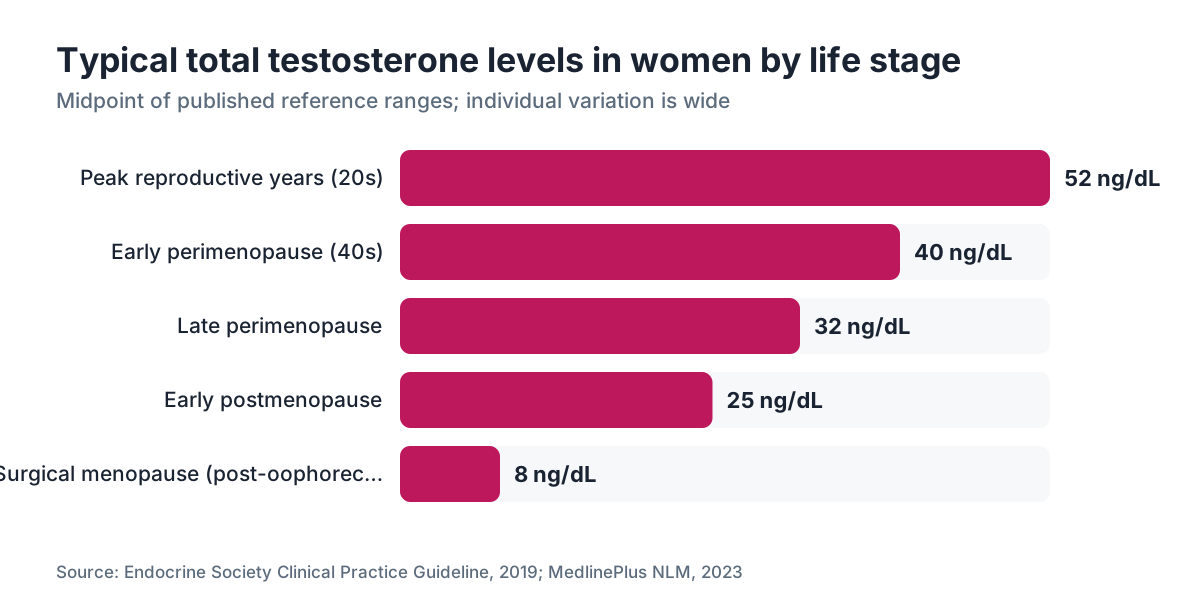
How do testosterone levels compare across a woman's life?
Knowing where you sit in the hormonal arc sets realistic expectations for what any intervention can do.
| Life stage | Typical total testosterone (ng/dL) | Notes | |---|---|---| | Peak reproductive years (20s) | 35 to 70 | Highest natural levels | | Early perimenopause (40s) | 25 to 55 | Gradual decline begins | | Late perimenopause | 20 to 45 | Decline accelerates | | Early postmenopause | 15 to 35 | Ovarian production drops sharply | | Bilateral oophorectomy (surgical menopause) | <10 (abrupt) | Steeper than natural menopause | | DHEA supplementation effect | +5 to 15 depending on dose and conversion | Highly variable by individual |
Source: Endocrine Society Clinical Practice Guideline, 2019 [3] and NAMS Position Statement [9]
Notice one thing: even the "low" postmenopausal numbers are not zero. The adrenal glands keep making androgens, including DHEA-S and androstenedione, throughout life. The ovarian contribution is what falls hardest. That is why surgical menopause tends to trigger sharper androgen-related symptoms than natural menopause.
When you get tested, ask for both total and free testosterone. SHBG binds testosterone and makes it unavailable. A woman can post a normal total testosterone while most of it sits bound and useless, leaving her with the functional status of someone who is low. High SHBG is common in women on oral estrogen or oral contraceptives, because the liver ramps up SHBG production in response [3].
Is testosterone therapy safe for women? What are the real risks?
The honest answer: long-term safety data in women is limited, partly because no drug company has had the financial reason to fund the large trials that would settle it.
What the existing evidence shows [3][9]:
Short-term (up to 2 years): At doses that keep blood levels in the premenopausal female range, testosterone therapy looks reasonably safe. Side effects are mostly androgenic: acne (the most common), increased body hair, and in a minority of women mild clitoral sensitivity changes. These are dose-dependent and often reverse when the dose comes down.
Cardiovascular risk: This is the biggest unknown. High testosterone in men links to certain cardiovascular risks, but the female cardiovascular system responds to androgens differently. Current data does not show increased risk at physiologic female doses, though trial data past two years is thin [3].
Breast cancer: The most asked-about concern. The data is genuinely reassuring but limited. Testosterone does not appear to stimulate breast tissue the way estrogen does, and some preclinical work even hints at protective effects. No randomized trial has found higher breast cancer incidence with female-dose testosterone. But many breast cancer cell lines do carry androgen receptors, so ongoing monitoring and honest uncertainty are appropriate [9].
Fertility: High-dose androgens can suppress ovulation. Premenopausal women using physiologic doses for HSDD should still use contraception.
The Endocrine Society guideline states: "we suggest against the use of testosterone in women with breast or reproductive cancers" and recommends against prescribing testosterone for women who are not in natural or surgical postmenopause outside a careful clinical context [3].
Those are reasonable guardrails, not a wall for the right patient with the right picture.
What supplements have the best evidence for women's testosterone?
A practical breakdown, ranked honestly by evidence quality in women specifically.
DHEA (oral or intravaginal): The most evidence. Intravaginal DHEA (Intrarosa) is FDA-approved for painful intercourse from genitourinary syndrome of menopause [6]. Oral DHEA has trial support in women with adrenal insufficiency and some support in postmenopausal women with low DHEA-S. Its effect on systemic testosterone is real but modest and highly variable. Worth discussing with a clinician if your DHEA-S is below the normal postmenopausal range.
Ashwagandha (KSM-66 extract, 300 to 600 mg/day): Moderate evidence for stress reduction, some for female sexual function. The mechanism is likely cortisol-mediated, not direct testosterone elevation. Reasonably safe in available trials. Probably the single most justifiable supplement on this list for women also dealing with stress-driven hormone disruption.
Zinc (8 to 11 mg/day, from food or a low-dose supplement): Only relevant if you are actually deficient. Oysters, red meat, pumpkin seeds, and legumes cover most women. Dosing above the recommended dietary allowance does not help, and doses above 40 mg/day can harm [4].
Magnesium glycinate or malate (200 to 400 mg/day): Some evidence it lowers SHBG, which could free more testosterone. The effect is small. Many women run mildly low, so there are other reasons to consider it.
Vitamin D3 (1,000 to 2,000 IU/day, targeting serum 25-OH-D above 30 ng/mL): Vitamin D receptors sit on testosterone-producing cells in both ovaries and adrenals. Deficiency tracks with lower testosterone in observational data. Correcting deficiency has shown modest testosterone gains in deficient populations [10][11].
Nothing here doubles your testosterone. If your levels are genuinely low and your symptoms are heavy, supplements are a starting point, not an endpoint. A clinician who can measure your levels and prescribe real treatment is the more direct path.
When should you see a doctor instead of trying supplements?
Try supplements when your symptoms are mild, you want to optimize a healthy baseline, and nothing is seriously disrupting your quality of life.
See a doctor when:
- Your libido has dropped hard and it bothers you and your relationship
- You have unexplained fatigue, muscle loss, or mood changes that lifestyle changes are not touching
- You had a bilateral oophorectomy and hit sudden, significant androgen-loss symptoms
- You are already on hormone replacement therapy and still have the symptoms above
- You want to know your actual testosterone level instead of guessing
A clinician who works with women's hormones will typically order total testosterone, free testosterone, SHBG, DHEA-S, estradiol, FSH, and a thyroid panel, because thyroid problems mimic many testosterone-deficiency symptoms. You cannot meaningfully read a testosterone result without the rest of the picture.
WomenRx is a telehealth platform built for exactly this kind of evaluation. You can get hormone labs and a clinical review from a provider who understands women's testosterone, without waiting months for a specialist. Platforms like this exist because most primary care visits are too short to work through the layered hormone picture midlife women actually carry.
If you end up needing a prescription, knowing your full hormone picture first also lets you judge whether hormone replacement therapy covering estrogen and progesterone belongs in the plan. Testosterone does not work in a vacuum.
Does testosterone affect weight in women?
This comes up constantly, and the relationship is real but more indirect than supplement marketing wants you to believe.
Testosterone supports lean muscle. More muscle means a higher resting metabolic rate. Women with very low testosterone often struggle to build or hold muscle, which over time drives the body composition shift many notice in perimenopause: less muscle, more fat, roughly the same number on the scale.
Restoring testosterone to physiologic levels can bring back your muscle-building response to resistance training. But testosterone is not a weight loss drug. Women on appropriate doses do not shed significant fat without also changing diet and exercise [3][9].
For women facing real weight gain in perimenopause or menopause, GLP-1 receptor agonists like semaglutide have a far larger and more direct evidence base for weight reduction than testosterone does. Different tools, different jobs. Some women need both conversations, because midlife weight gain often has hormonal drivers pulling from several directions at once.
If you are weighing options, understanding when menopause starts and how hormone replacement therapy fits gives you a fuller framework than fixating on any single hormone.
How is testosterone different from DHEA for women?
DHEA and testosterone are related but distinct. DHEA (dehydroepiandrosterone) is a precursor made mostly in the adrenal glands. The body converts it downstream into androgens, including testosterone, and into estrogens. DHEA-S, the sulfate form, is what shows up on standard labs.
DHEA declines with age too. DHEA-S peaks in the mid-twenties and drops about 1 to 2% a year after that, reaching roughly 20 to 30% of peak by the late seventies [1].
Here is the difference that matters for supplementing: taking oral DHEA is not the same as taking testosterone. How much converts to testosterone versus estrogen varies a lot by person, by enzyme activity in your tissues, and by your existing hormone mix. You can take DHEA and end up making mostly estrogen. You cannot steer it the way you can with actual testosterone.
That makes DHEA a blunter tool than testosterone therapy for someone trying to hit low testosterone specifically. For women who want to address the whole androgen and estrogen axis and have no access to testosterone therapy, DHEA with lab monitoring is a reasonable conversation to have with a clinician.
If your DHEA-S is low on labs, correcting that is more defensible than taking DHEA on spec when it is already normal.
What lab tests do you need before starting any testosterone treatment?
Measuring your testosterone before you spend money on supplements or treatment is the rational first step. A reasonable baseline panel for a woman worried about low testosterone looks like this:
- Total testosterone (ng/dL)
- Free testosterone (pg/mL, calculated or by dialysis)
- Sex hormone-binding globulin (SHBG, nmol/L)
- DHEA-S (mcg/dL)
- Estradiol (pg/mL)
- FSH (mIU/mL, to place you in the menopause transition)
- LH (mIU/mL)
- TSH and free T4 (thyroid, because hypothyroidism is common and mimics androgen deficiency)
- Complete metabolic panel (baseline liver function, especially if you plan to use oral products)
- Lipid panel (baseline before any hormonal therapy)
Testosterone testing in women has a reliability problem at low concentrations. Standard immunoassay labs, the kind most commercial labs use, are not accurate below about 50 ng/dL. Since most women run below that, the Endocrine Society recommends liquid chromatography-tandem mass spectrometry (LC-MS/MS) for accurate measurement [3]. Quest Diagnostics and LabCorp both offer it. Specify it when you order.
Timing matters. If you are still cycling, testosterone peaks in the follicular phase (roughly days 1 to 14). Draw labs at a consistent point so you can compare over time.
If you are postmenopausal, cycle timing does not apply, but test at the same time of day, because testosterone has a mild diurnal rhythm and runs higher in the morning.
Are there risks specific to women taking testosterone long-term?
Beyond the general safety picture above, a few things matter for women thinking about long-term use.
Polycythemia (high red blood cell count): Mostly a concern at supraphysiologic doses. At female physiologic doses it is uncommon, but hematocrit should be checked periodically [3].
Voice changes: The voice can deepen at androgenic doses, and that change is not reliably reversible. At doses targeting female physiologic ranges it is rare. It shows up more with pellets, which can deliver inconsistent and sometimes high doses.
SHBG suppression: Testosterone lowers SHBG over time, which frees up more testosterone and quietly raises the effective dose. This is why monitoring matters. A dose that started as physiologic replacement can drift supraphysiologic without adjustment.
Bone density: This one is a potential benefit. Testosterone supports bone directly and through conversion to estradiol. Women with very low testosterone, especially after surgical menopause, face higher fracture risk. Knowing your baseline with a bone density test is worthwhile in that setting.
Risks at female physiologic doses are manageable with monitoring. Risks at supraphysiologic doses are real and avoidable. The difference comes down to working with a clinician who knows the terrain, not self-prescribing from online pharmacies.
For the broader hormone context, what perimenopause age looks like varies widely, and testosterone is only one thread in the story.
Frequently asked questions
What is the best testosterone booster for women over 40?
The best-supported options for women over 40 are resistance training, adequate sleep, and managing chronic stress, all of which have real mechanistic effects on testosterone. Among supplements, ashwagandha and DHEA (if DHEA-S labs are low) have the most defensible evidence. For women with documented low testosterone and significant symptoms, off-label prescription testosterone therapy from a clinician is far more effective than any OTC product.
Can women safely take testosterone boosters?
Most OTC boosters are safe in the sense of unlikely to cause immediate harm, but they are largely unproven in women. Prescription testosterone therapy is safe at physiologic female doses under clinician monitoring. Side effects like acne, hair changes, and voice changes are dose-dependent and mostly avoidable with proper dosing. Supraphysiologic doses carry real risks.
What are normal testosterone levels for women by age?
Total testosterone typically runs 35 to 70 ng/dL in women in their twenties, declining to roughly 15 to 35 ng/dL by early postmenopause. No validated lower limit reliably predicts symptoms, so symptoms and lab context both matter. Women who have had their ovaries removed can drop below 10 ng/dL abruptly. Standard immunoassay tests are often inaccurate at these low female levels; LC-MS/MS is more reliable.
Does DHEA raise testosterone in women?
Yes, oral DHEA can raise testosterone in women, but the conversion varies. DHEA is a precursor the body turns into both androgens and estrogens, and which way it goes depends on individual enzyme activity. Intravaginal DHEA (FDA-approved as Intrarosa) raises local testosterone and estrogen in vaginal tissue with minimal systemic conversion. For systemic effects, labs before and during use show whether DHEA is doing what you want.
Is there an FDA-approved testosterone treatment for women?
No. As of 2025, the FDA has not approved any testosterone product specifically for women in the United States. Testosterone therapy for women is prescribed off-label, most often as compounded topical gels or creams made to female doses at compounding pharmacies. The Endocrine Society, NAMS, and ISSWSH all support this off-label use in postmenopausal women with HSDD who have adequate estrogen on board.
How quickly does testosterone therapy work in women?
Most women using testosterone therapy for HSDD report better desire within 4 to 8 weeks, with fuller effects at 3 to 6 months. Muscle and body composition changes take longer, often 3 to 6 months of consistent resistance training alongside therapy. If there is no meaningful improvement after 6 months at an appropriate dose, it is worth reassessing whether testosterone is the main driver of your symptoms.
Can low testosterone cause weight gain in women?
Low testosterone contributes to muscle loss, which lowers resting metabolic rate and can shift body composition toward more fat over time. That mechanism is real but indirect. Testosterone therapy at physiologic doses helps restore the muscle-building response to exercise but is not a direct fat-loss treatment. Women with significant menopause weight gain usually need a broader evaluation covering estrogen, insulin sensitivity, and thyroid.
What does ashwagandha actually do for women's testosterone?
Ashwagandha lowers cortisol, and chronically high cortisol suppresses testosterone production through the hypothalamic-pituitary-gonadal axis. By dropping cortisol, ashwagandha indirectly supports the environment for testosterone production. A randomized trial found improved female sexual function with ashwagandha supplementation. The evidence does not support it as a direct testosterone elevator, but the cortisol and stress pathway effect is real and relevant for many women.
Will testosterone therapy cause me to grow facial hair or sound more masculine?
At doses targeting normal female levels (roughly 15 to 70 ng/dL total testosterone), these side effects are uncommon. Some mild increase in fine facial hair is possible and usually reverses with a lower dose. Voice deepening is rare at proper female doses but more common when doses run above the female physiologic range, as can happen with pellets or poorly monitored compounded therapy. Regular lab monitoring prevents dose creep.
Can I buy testosterone for women without a prescription?
In the United States, testosterone is a Schedule III controlled substance and requires a prescription. You cannot legally buy it OTC. DHEA is the exception, sold OTC as a supplement despite being a real hormone precursor. Online pharmacies offering testosterone with no prescription are operating illegally in the US. Compounded testosterone from a licensed pharmacy still requires a valid prescription from a licensed clinician.
Does testosterone interact with birth control or HRT?
Oral contraceptives and oral estrogen both raise sex hormone-binding globulin, which binds testosterone and cuts free levels. Women on oral birth control or oral HRT often have lower free testosterone as a result. Switching to non-oral estrogen (patch, gel, or vaginal ring) can lower SHBG and modestly raise free testosterone without adding prescription testosterone. Worth exploring before adding testosterone to an already-complex regimen.
Is low testosterone the same as androgen insufficiency?
The terms overlap but are not identical. Androgen insufficiency is the broader label covering low testosterone, low DHEA-S, and other androgens. The Endocrine Society concluded in 2006 that there was insufficient evidence to define a clinical syndrome of female androgen insufficiency by lab values alone. Practice has shifted somewhat since, especially around HSDD in postmenopausal women, but the diagnostic ambiguity is real, and honest clinicians say so.
What is the difference between compounded testosterone and commercial testosterone for women?
Compounded testosterone is custom-made at a compounding pharmacy to a dose and concentration suited to women (typically 0.5 to 2 mg/day in cream or gel). Commercial products like AndroGel are approved for men at 50 to 100 mg/day, which makes accurate female dosing from them technically hard. Compounded products are not FDA-approved, but they are the standard US approach for women given the lack of an approved female product.
Can testosterone help with menopause brain fog?
The evidence is suggestive, not definitive. Androgen receptors sit throughout the brain, and some observational data links low testosterone to cognitive complaints in postmenopausal women. But randomized trials showing cognitive improvement with testosterone in women are limited and inconsistent. Menopause brain fog tracks more reliably with low estrogen and poor sleep, so those are better-supported targets first. Testosterone may be part of the picture for some women.
Sources
- Davis SR et al., Nature Reviews Endocrinology, 2015 — Testosterone in women: the clinical significance
- MedlinePlus (U.S. National Library of Medicine) — Testosterone levels test
- Endocrine Society Clinical Practice Guideline — Testosterone Therapy in Women, 2019
- NIH Office of Dietary Supplements — Zinc Fact Sheet for Health Professionals
- Chandrasekhar K et al., Indian Journal of Psychological Medicine, 2012 — A prospective, randomized double-blind, placebo-controlled study of safety and efficacy of a high-concentration full-spectrum extract of ashwagandha root in reducing stress and anxiety in adults
- FDA Drug Approvals and Databases — Intrarosa (prasterone) prescribing information
- Kraemer WJ & Ratamess NA, Sports Medicine, 2005 — Hormonal responses and adaptations to resistance exercise and training
- Leproult R, Van Cauter E, JAMA, 2011 — Effect of 1 week of sleep restriction on testosterone levels in young healthy men
- North American Menopause Society (NAMS) — Position Statement on Testosterone for Women
- Pilz S et al., Hormone and Metabolic Research, 2011 — Effect of vitamin D supplementation on testosterone levels in men
- NIH Office of Dietary Supplements — Vitamin D Fact Sheet for Health Professionals
- Wierman ME et al., Journal of Clinical Endocrinology & Metabolism, 2006 — Androgen therapy in women: an Endocrine Society clinical practice guideline