Synthetic hormones vs bioidentical hormones: what the evidence actually says
TL;DR: Bioidentical hormones have the same molecular structure as hormones your body makes. Synthetic hormones differ structurally. FDA-approved bioidentical options (estradiol, micronized progesterone) have strong safety data from large trials. Custom-compounded bioidenticals lack that evidence. For most women, FDA-approved bioidentical formulations are the clearest first choice, but the hormone type matters less than the dose, delivery route, and your individual health history.
What does 'bioidentical' actually mean, and how is it different from 'synthetic'?
Bioidentical means the hormone molecule is structurally identical to the one your ovaries make. Estradiol (17-beta estradiol), micronized progesterone, and DHEA are all bioidentical. Your estrogen receptors can't tell the lab-made molecule from the one you produced at 30.
Synthetic hormones are structurally modified. The modifications usually do a real job: they make the molecule more stable for oral use, extend half-life, or allow patent protection. Medroxyprogesterone acetate (MPA), the progestin in the original Premarin+Provera regimen studied in the Women's Health Initiative, is synthetic. So is norethindrone acetate. Conjugated equine estrogens (CEE), derived from horse urine, contain estrogen compounds no human ovary produces, so they're also technically not bioidentical.
The marketing world has muddied this badly. 'Bioidentical' now gets stretched to mean almost anything a compounding pharmacy makes, which is a different thing entirely. Many FDA-approved products are already bioidentical: the estradiol patch, estradiol gel, vaginal estradiol rings, and oral micronized progesterone (Prometrium) are all bioidentical and all FDA-approved with the full safety-testing package that implies [1].
So the real split isn't bioidentical versus synthetic. It's FDA-approved versus compounded, estradiol versus other estrogens, and progesterone versus progestins. Those three distinctions carry more clinical weight than the marketing term ever will.
What are the main types of synthetic and bioidentical hormones used in menopause therapy?
Here's how the landscape actually breaks down.
| Category | Hormone | FDA-Approved? | Bioidentical? | Common brand example | |---|---|---|---|---| | Estrogens | 17-beta estradiol | Yes | Yes | Vivelle-Dot patch, Divigel gel, Estrace | | Estrogens | Conjugated equine estrogens (CEE) | Yes | No | Premarin | | Estrogens | Ethinyl estradiol | Yes (mostly in contraceptives) | No | Various OCs | | Progestogens | Micronized progesterone | Yes | Yes | Prometrium | | Progestogens | Medroxyprogesterone acetate (MPA) | Yes | No | Provera, Prempro | | Progestogens | Norethindrone acetate | Yes | No | Aygestin | | Custom blends | Compounded estriol/estradiol/estrone mixes (Biest, Triest) | No | Marketed as yes | Compounding pharmacies | | Androgens | Testosterone (off-label for women) | No (female use) | Yes | Various compounded forms |
The hormone replacement therapy umbrella covers all of these. The specific molecule, the dose, and how it gets into your body (patch, pill, gel, vaginal ring) drive the risk-benefit calculation, not whether the package says 'bioidentical.'
Which has better safety evidence: bioidentical or synthetic hormones?
The data doesn't split cleanly along the bioidentical-versus-synthetic line, and that surprises most people.
The Women's Health Initiative (WHI), the largest randomized trial of hormone therapy ever run, used conjugated equine estrogens (CEE) plus medroxyprogesterone acetate (MPA) in one arm, and CEE alone in the other. The combined arm showed a small but real increase in breast cancer risk. The estrogen-only arm, women who'd had hysterectomies, actually showed a decrease in breast cancer incidence over the trial period [2]. That finding shifted a lot of clinical thinking.
Here's where bioidentical progesterone pulls ahead of synthetic progestins. The E3N cohort study, a large French observational study following more than 80,000 women, found that women using transdermal estradiol plus micronized progesterone had no statistically significant increase in breast cancer risk, while those using synthetic progestins had a clearly elevated risk [3]. This isn't a randomized trial, so it can't be called definitive, but the signal repeats across multiple European cohorts.
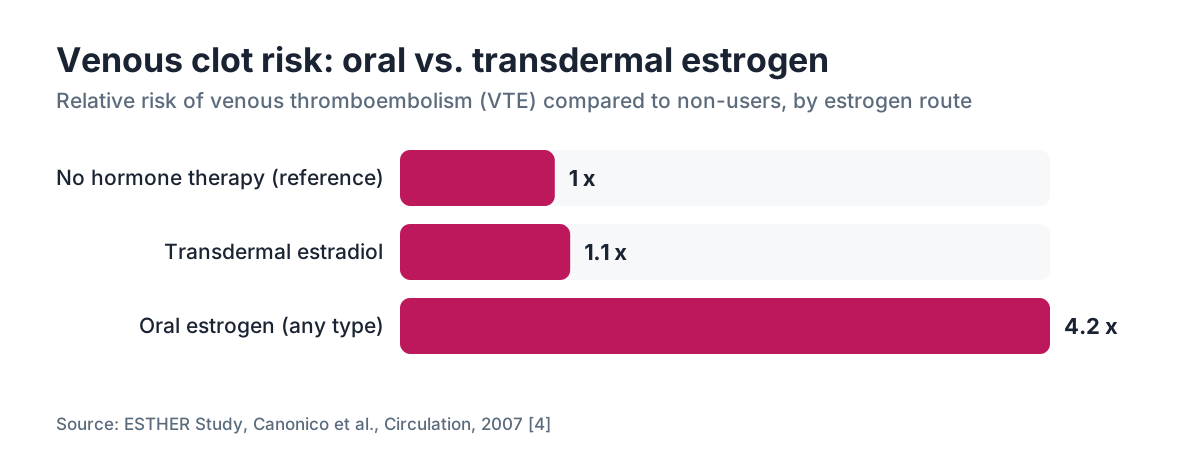
On the estrogen side, transdermal estradiol (bioidentical) carries a meaningfully lower clot risk than oral CEE or oral synthetic estrogens. Oral estrogens go through the liver first, which raises clotting factors. Transdermal estradiol skips that first-pass metabolism entirely. The ESTHER study found that transdermal estradiol was not associated with increased venous thromboembolism (VTE) risk, while oral estrogen was [4]. That difference matters in the clinic.
Nobody has run a randomized trial comparing bioidentical to synthetic hormones head-to-head over 10 or more years with hard endpoints. The closest evidence is WHI data plus the European cohorts, and they point the same way: estradiol plus micronized progesterone carries a more favorable safety profile than CEE plus MPA.
Compounded bioidenticals are a separate story. The FDA has warned that custom-compounded hormone preparations lack the clinical testing of FDA-approved products, and their quality, purity, and potency can vary from batch to batch [5].
Does micronized progesterone (bioidentical) actually protect the uterus as well as synthetic progestins?
Yes, with one small but real caveat.
Any woman with a uterus who takes systemic estrogen needs something to oppose it in the uterine lining. Unopposed estrogen raises the risk of endometrial hyperplasia and cancer. Synthetic progestins like MPA do this job reliably, and their endometrial protection data runs decades deep.
Micronized oral progesterone (Prometrium 200 mg taken 12 days per month, or 100 mg daily) is also FDA-approved for endometrial protection and performs well in studies. The PEPI trial found micronized progesterone better than MPA at preserving the HDL cholesterol benefits of estrogen [6]. That matters for cardiovascular health.
The caveat: Prometrium is peanut oil-based, so women with peanut allergies can't use it. Compounded progesterone in other bases exists, but it doesn't carry the same safety dossier.
For progesterone dosing specifics, cyclic versus continuous, a prescriber conversation is non-negotiable. The dose that protects your uterus depends on which estrogen you're taking and at what dose.
Are compounded bioidentical hormones safer or more effective than FDA-approved versions?
No good evidence says they are. The marketing has outrun the science here.
Compounded hormones are prepared by a pharmacist for one patient, usually when a commercial product isn't available in the needed dose or form. That's a legitimate use. The problem is the broader claim that custom-compounded bioidenticals are inherently better than FDA-approved products, which has no clinical trial support.
The Endocrine Society's 2016 position statement concluded that there is 'no evidence that custom-compounded bioidentical hormones are safer or more effective than government-approved menopausal hormone therapies' [7]. The North American Menopause Society (NAMS) holds the same position [1].
Specific concerns about compounded products: batch-to-batch variability in hormone concentrations, no sterility testing equivalent to pharmaceutical manufacturing, and unverified claims around salivary hormone testing (often used to guide compounded dosing but not validated for it). The FDA has issued multiple warning letters to compounding pharmacies making unsupported safety claims about hormone therapies [5].
This doesn't make compounded hormones useless. If you need a dose or delivery method that doesn't exist commercially, compounding is a reasonable route. But picking a compounded product over Prometrium or an estradiol patch because you think it's safer or more 'natural' isn't backed by the evidence.
What are estriol (E3) and Biest, and are they worth considering?
Estriol is a weaker estrogen your body makes in large amounts during pregnancy. Biest is a compounded blend of estriol (typically 80%) and estradiol (20%). Triest adds estrone to the mix.
Proponents argue estriol is gentler and maybe breast-safe. The honest answer is we don't know. Estriol has not been studied in large randomized trials for menopause symptoms or long-term safety. Estriol-based products are not FDA-approved for menopause treatment in the United States. Europe has approved some low-dose estriol vaginal preparations for genitourinary symptoms.
One fair point: estriol applied vaginally acts very locally, with minimal systemic absorption, much like vaginal estradiol. For genitourinary symptoms of menopause (dryness, recurrent UTIs, painful sex), low-dose vaginal estriol is an option some women and their doctors weigh, particularly those wary of systemic estrogen.
For systemic menopause relief, Biest doesn't have the evidence to recommend over estradiol. The estradiol component is doing the work; the estriol is mostly along for the ride at typical Biest concentrations. You're paying for a compounded product and taking on the quality-control uncertainties when an FDA-approved, well-studied estradiol patch already exists.
How do delivery routes change the risk picture for both types?
Delivery route is arguably more important than whether a hormone is bioidentical or synthetic. Same molecule, different route, different risk.
Oral estrogens, whether estradiol or CEE, pass through the liver before reaching circulation. This first-pass metabolism raises C-reactive protein, sex hormone binding globulin, and clotting factors. That's why oral estrogen carries roughly 2- to 4-fold higher venous clot risk than transdermal [4].
Transdermal estradiol (patches, gels, sprays) delivers the hormone straight into the bloodstream through the skin. The ESTHER study found no significant rise in VTE risk with transdermal estradiol. For women with clot risk factors, migraine with aura, or high triglycerides, transdermal is strongly preferred.
Vaginal estradiol (rings, creams, tablets) works locally with minimal systemic absorption. It treats genitourinary symptoms without meaningful systemic effects. An estrogen patch gives systemic relief; a vaginal ring or tablet gives mostly local relief. Both have legitimate uses depending on what you need.
For progesterone and progestins, oral micronized progesterone produces a sedative effect (it's often taken at bedtime for this reason), because the liver converts some of it to metabolites that act on GABA receptors. Progesterone delivered vaginally or transdermally avoids this, but it may not provide adequate endometrial protection at typical doses. That point is still debated in the literature.
What does the Women's Health Initiative actually show, and how does it apply to bioidentical hormones?
The WHI findings published in 2002 triggered a massive, arguably overcorrected, drop in hormone therapy prescribing. What the WHI actually studied matters for putting the risks in context.
WHI used oral CEE (not estradiol) and MPA (not micronized progesterone), in women whose average age was 63, well past the average menopause age of 51. Many had cardiovascular disease or risk factors. The trial was never designed to study women in early menopause or perimenopause.
The 'timing hypothesis' or 'window of opportunity' has since emerged from WHI data and other studies: starting hormone therapy within 10 years of menopause, or before age 60, appears to carry a more favorable risk profile than starting later. Women in the WHI who were 50-59 had different outcomes than those who were 70-79 [11].
On breast cancer: in the estrogen-plus-progestin arm, after about 5 years of use, there was an increased risk (8 additional breast cancers per 10,000 women per year). In the estrogen-only arm, risk was actually lower than placebo. The progestin component, MPA specifically, appears to be the main driver of breast cancer concern in combined therapy.
The takeaway for bioidentical hormones: WHI did not test estradiol plus micronized progesterone, so applying WHI risk figures to that regimen is scientifically imprecise. European cohort studies using estradiol plus micronized progesterone show more favorable safety signals, though they're observational, not randomized [3].
For context on when menopause starts and how timing shapes your hormone therapy decisions, that matters as much as any molecule choice.
How much do these hormones cost, and does insurance cover them?
Cost splits sharply between FDA-approved products and compounded preparations.
FDA-approved bioidentical hormones are generally covered by insurance when prescribed for menopause. Generic estradiol patches run roughly $30 to $80 per month without insurance. Prometrium (micronized progesterone) generics cost $20 to $60 per month. Brand-name versions cost more.
Compounded hormones are almost never covered by insurance. Patients pay out of pocket, typically $50 to $200 per month depending on the compounding pharmacy and the specific formulation. Some specialty compounding pharmacies charge well above that.
Generic estradiol is one of the most cost-effective hormone therapy options available. If cost is a factor, a generic estradiol patch plus generic micronized progesterone gets you FDA-approved bioidentical therapy at a fraction of the price of custom compounds.
Some telehealth platforms, including WomenRx, connect women with prescribers who can order FDA-approved or compounded hormones depending on clinical need, with transparent pricing. If a provider pushes you toward compounded products without a clear clinical reason, asking why is fair.
What do NAMS and the Endocrine Society recommend?
Both major professional societies support FDA-approved hormone therapy for symptomatic women, starting with estradiol and micronized progesterone as the preferred regimen where clinically appropriate.
NAMS's 2022 hormone therapy position statement concludes that for women under 60 or within 10 years of menopause without contraindications, the benefits of hormone therapy outweigh the risks for symptom relief and quality of life [1]. NAMS does not recommend custom-compounded bioidenticals over approved products.
The Endocrine Society similarly endorses hormone therapy for menopausal symptoms and advises against using compounded preparations as a substitute for FDA-approved products, citing the lack of safety and efficacy data [9].
Neither society says synthetic progestins are always wrong or that bioidentical progesterone is always right. They say individualize. The woman with a personal history of breast cancer needs a different conversation than the woman with premature ovarian insufficiency at 38.
For perimenopause age considerations, when you start matters, and both societies address this directly in their guidelines.
Who should avoid hormone therapy entirely, regardless of type?
Bioidentical or synthetic, certain situations are genuine contraindications to systemic hormone therapy.
Women with a personal history of estrogen-receptor-positive breast cancer are generally advised to avoid systemic estrogen. This isn't absolute (there is emerging research on hormone therapy after breast cancer treatment), but it requires specialized oncology input. Women with unexplained vaginal bleeding, active liver disease, uncontrolled high blood pressure, active or recent clotting events (DVT or pulmonary embolism), or known or suspected estrogen-sensitive cancers should not start systemic hormone therapy without a thorough evaluation.
For women with high VTE risk, transdermal estradiol rather than oral estrogen is the standard approach if hormones are used at all.
None of these contraindications are specific to bioidentical versus synthetic. They apply to hormone therapy in general. The choice of molecule matters less at this level than the decision of whether to use hormones at all.
Women asking whether hormones are right for them should start with a bone density context, cardiovascular risk assessment, and family history review. A bone density test is often part of that baseline picture for women approaching or in menopause.
So which should you actually choose?
If I were advising a close friend, I'd say start with FDA-approved bioidentical options. Estradiol patch or gel plus oral micronized progesterone (if you have a uterus) gives you the best combination of bioidentical molecular structure and real clinical trial evidence behind the safety profile. That's not a marketing claim. It's where the data points.
I'd skip Biest and Triest unless a prescriber has a specific, articulable clinical reason for them that standard estradiol can't meet. I'd be skeptical of any provider who dismisses all FDA-approved hormones as 'too synthetic' and pushes expensive custom compounds as the default.
Synthetic progestins aren't evil. For some women, norethindrone acetate or MPA is a practical, appropriate choice, particularly in intrauterine devices (like Mirena) where the dose is tiny and mostly local. The hormone debate gets reductive fast.
The variables that matter most: which estrogen, which progestogen, what dose, what route, when you start relative to menopause, and your personal risk factors. Get all six right and the bioidentical-versus-synthetic question mostly answers itself.
WomenRx prescribers work through exactly this framework during initial consultations, matching women to FDA-approved options first and compounded preparations only when there's a clinical gap nothing else can fill.
For the broader landscape of options, the hormone replacement therapy page covers what's available and how different regimens are structured.
Frequently asked questions
Are bioidentical hormones FDA-approved?
Some are, some aren't. FDA-approved bioidentical hormones include estradiol patches, gels, sprays, and rings, plus oral micronized progesterone (Prometrium). Custom-compounded bioidentical hormones are not FDA-approved, meaning they haven't gone through the same clinical testing for safety, efficacy, and manufacturing quality. The 'bioidentical' label alone tells you nothing about FDA approval status.
Is Premarin a bioidentical hormone?
No. Premarin is made from conjugated equine estrogens derived from horse urine. It contains estrogen compounds your body doesn't naturally produce. It's an effective estrogen for menopause symptoms with decades of safety data, but it's not bioidentical. If you want a bioidentical alternative to Premarin, estradiol patches or gels are FDA-approved and well-studied.
Is medroxyprogesterone acetate (MPA, Provera) safe?
MPA is FDA-approved and effectively protects the uterine lining when combined with estrogen. The Women's Health Initiative showed a small increased breast cancer risk with long-term combined CEE plus MPA use. European cohort data suggest micronized progesterone may carry a more favorable breast cancer profile than MPA. MPA is still prescribed and reasonable in many situations, but for women with breast cancer risk concerns, micronized progesterone is now the more common prescribing choice.
Can bioidentical hormones be tested through saliva?
Salivary hormone testing is commonly offered by compounding pharmacies to guide dosing, but it's not validated for that purpose. Salivary hormone levels swing significantly across the day and don't reliably reflect tissue hormone activity. NAMS and the Endocrine Society do not recommend salivary testing for monitoring menopausal hormone therapy. Serum (blood) testing is the standard, though even blood levels require careful clinical interpretation.
Do bioidentical hormones cause weight gain?
Menopause itself tends to shift body composition toward more visceral fat, independent of hormone use. Well-dosed hormone therapy doesn't reliably cause weight gain and may modestly improve body composition by opposing the metabolic effects of estrogen loss. The evidence here is mixed and the effect sizes are small. Progestins, particularly MPA, can cause water retention in some women. Micronized progesterone is less likely to do so.
What is the difference between progesterone and progestins?
Progesterone is the bioidentical hormone your body makes, structurally identical whether it comes from your ovaries or a lab. Progestins are synthetic compounds designed to mimic progesterone's effect on the uterine lining. They differ in how they bind to other receptors, including androgen and glucocorticoid receptors, which explains their different side effect profiles. Micronized oral progesterone is more sedating; many progestins are more androgenic.
Is testosterone therapy for women bioidentical or synthetic?
Testosterone prescribed off-label for women (most commonly for low libido) is bioidentical when compounded as the human testosterone molecule. No FDA-approved testosterone product exists specifically for women in the US. Women typically use much lower doses than men, usually one-tenth to one-quarter of a male dose. The compounded nature means the usual caveats about quality variability apply, but low-dose testosterone for women has a reasonable evidence base from multiple clinical trials.
Are bioidentical hormones better for your heart than synthetic?
Transdermal estradiol (bioidentical) carries meaningfully lower venous clot risk than oral synthetic estrogens because it bypasses first-pass liver metabolism. The ESTHER study found no significant VTE increase with transdermal estradiol versus a 4-fold increase with oral estrogen. For women with cardiovascular risk factors, transdermal estradiol is the strongly preferred route. Whether micronized progesterone beats progestins for cardiovascular outcomes is less clear from current data.
How do I know if a compounding pharmacy is reputable?
Look for PCAB (Pharmacy Compounding Accreditation Board) accreditation. Avoid pharmacies making unsupported claims about hormone safety or relying solely on salivary testing to guide dosing. The FDA regulates compounding pharmacies under 503A (patient-specific) and 503B (outsourcing facility) frameworks. A 503B facility must meet Current Good Manufacturing Practice standards, offering more quality assurance than a standard 503A compounding pharmacy.
What's the lowest-risk way to start hormone therapy for menopause?
Most clinicians start with the lowest effective dose of transdermal estradiol (typically 0.025 to 0.05 mg per day via patch) plus oral micronized progesterone for women with a uterus. This approach uses bioidentical hormones, avoids first-pass liver metabolism, and matches NAMS and Endocrine Society guidance. Starting within 10 years of menopause onset or before age 60 carries a more favorable risk-benefit profile based on current evidence.
Do bioidentical hormones help with bone density?
Yes. Estradiol, whether from a patch, gel, or other transdermal route, is effective at slowing the bone loss that accelerates after menopause. The FDA has approved estradiol-based therapies for prevention of postmenopausal osteoporosis. If you're in early menopause with significant bone loss concerns, hormone therapy can be part of the prevention strategy alongside calcium, vitamin D, and weight-bearing exercise. A baseline bone density test helps quantify your starting point.
Can you use bioidentical hormones if you've had a hysterectomy?
Yes, and if you've had a hysterectomy you don't need a progestogen at all. Estrogen-only therapy carries a more favorable safety profile than combined therapy. The WHI estrogen-only arm actually showed a decrease in breast cancer incidence over the trial. Women who've had a hysterectomy can use estradiol alone (any route) without progesterone or progestins, which simplifies the regimen and removes the progestin-related variables from the risk equation.
How long does it take bioidentical hormones to work?
Hot flashes and night sweats often improve within 2 to 4 weeks of starting estradiol at an adequate dose, with full effect usually seen by 8 to 12 weeks. Vaginal dryness and genitourinary symptoms can take longer, sometimes 3 to 6 months for full tissue restoration. Mood and sleep improvements can be faster. If you've had no meaningful relief by 12 weeks, a dose adjustment or route change is worth discussing with your prescriber.
Is there any evidence bioidentical hormones reduce Alzheimer's risk?
This is an active research area with no settled answer. Observational data suggest estrogen exposure in early menopause may protect cognitive health. No randomized trial has shown hormone therapy prevents Alzheimer's disease. The Women's Health Initiative Memory Study found increased dementia risk in older women starting hormones, but those women started at age 65 or older, well outside the timing window most researchers now focus on. The data aren't there yet to recommend hormones specifically for dementia prevention.
Sources
- North American Menopause Society (NAMS), 2022 Hormone Therapy Position Statement
- NIH, Women's Health Initiative Study Results
- Fournier A et al., Breast Cancer Research and Treatment, 2008 (E3N cohort study)
- Canonico M et al., Circulation, 2007 (ESTHER study)
- U.S. Food and Drug Administration, Bioidentical Hormones consumer guidance
- Writing Group for the PEPI Trial, JAMA, 1995
- Endocrine Society, Bioidentical Hormones Position Statement, 2016
- U.S. FDA, Drug Approvals and Databases (Orange Book)
- Stuenkel CA et al., Journal of Clinical Endocrinology and Metabolism, 2015 (Endocrine Society Clinical Practice Guideline)
- Manson JE et al., JAMA, 2013 (WHI timing hypothesis analysis)
- Davis SR et al., Journal of Clinical Endocrinology and Metabolism, 2019 (Global Consensus Statement on testosterone for women)