Symptoms of too much progesterone: what to watch for
TL;DR: Too much progesterone, from supplements, HRT, or a luteal-phase surge, most often brings fatigue, drowsiness, bloating, breast tenderness, and mood shifts including low mood and anxiety. High doses can blur coordination and thinking. Symptoms usually ease once the dose drops or the timing changes. A blood level above roughly 25 ng/mL outside pregnancy is a red flag to raise with your prescriber.
What does too much progesterone actually feel like?
Most women describe high-progesterone days the same way. A wall of fatigue that lands an hour after a pill or a dab of cream. A bloated belly that has nothing to do with lunch. A foggy, half-detached feeling that won't lift until morning. Some call it the progesterone hangover.
Those symptoms are real and have a clear pharmacological cause. Progesterone and its metabolites, especially allopregnanolone, bind GABA-A receptors in the brain, the same receptors that benzodiazepines and alcohol act on [1]. That sedating, sometimes dysphoric effect scales with dose. At physiologic levels it's mild. At supraphysiologic levels it can feel disabling.
Delivery matters as much as dose. Oral micronized progesterone (the most common prescription form, sold as Prometrium) produces high levels of these neuroactive metabolites because it passes through the liver first. Vaginal or rectal progesterone mostly skips the liver and produces much lower allopregnanolone peaks, so the sedation is far milder [2]. Topical creams absorb unpredictably, which makes dosing a guessing game.
What follows is a symptom-by-symptom map: what high progesterone looks like, what the research shows, and how to separate a normal luteal-phase response from a genuine excess.
What are the most common symptoms of too much progesterone?
Fatigue and excessive sleepiness. The most reported symptom. In the Women's Health Initiative, women taking oral progestin reported sleep disturbances and daytime fatigue more often than those on estrogen alone [3]. Oral micronized progesterone at bedtime is actually prescribed as a sleep aid in some practices for exactly this reason. Push the dose higher and "aid" turns into "impairment."
Bloating and water retention. Progesterone relaxes smooth muscle throughout the body, which slows the gut and holds onto fluid in the days before a period or during supplementation. A distended, gassy abdomen with no dietary cause is a classic sign. Weight can tick up 1 to 3 pounds of pure fluid.
Breast tenderness. Sore, heavy breasts are well documented in women with elevated progesterone, both in the natural luteal phase and on HRT. The North American Menopause Society lists breast tenderness as a known side effect of progestogen therapy [4].
Mood changes, depression, and irritability. This one is tricky. Some women feel calmer on progesterone. Others feel noticeably low, anxious, or emotionally flat. The split likely comes down to how allopregnanolone hits each woman's GABA-A receptors: calming for some, depressing for others. A 2019 review in Maturitas found synthetic progestogens (like medroxyprogesterone acetate) drew more mood complaints than micronized progesterone, though both can trigger symptoms in sensitive women [5].
Headaches and migraines. Fluctuating and high progesterone tracks with headache in some women. This is separate from estrogen-withdrawal headaches and tends to feel more like pressure or a dull ache.
Dizziness and poor coordination. Well above the physiologic range, progesterone dulls balance and fine motor control through its GABA action. If you feel genuinely unsteady after your dose, it may be too high or timed wrong.
Cognitive fog. Trouble concentrating, slow word retrieval, a general mental sluggishness. Women describe feeling "stupid" for a few hours. Research on exogenous progesterone and cognition is mixed, but the reports are consistent.
Nausea. More common with oral forms. It usually eases if you take the dose with food or move it to bedtime.
Decreased libido. Progesterone competes with testosterone at androgen receptors and can flatten sexual interest. That's one reason the week before a period, when progesterone peaks, tends to be the low point in the libido cycle.
Hot flashes (paradoxical, less common). Some women on progesterone-only therapy report flushing, which feels backwards. The mechanism isn't fully worked out.
What progesterone blood levels are considered too high?
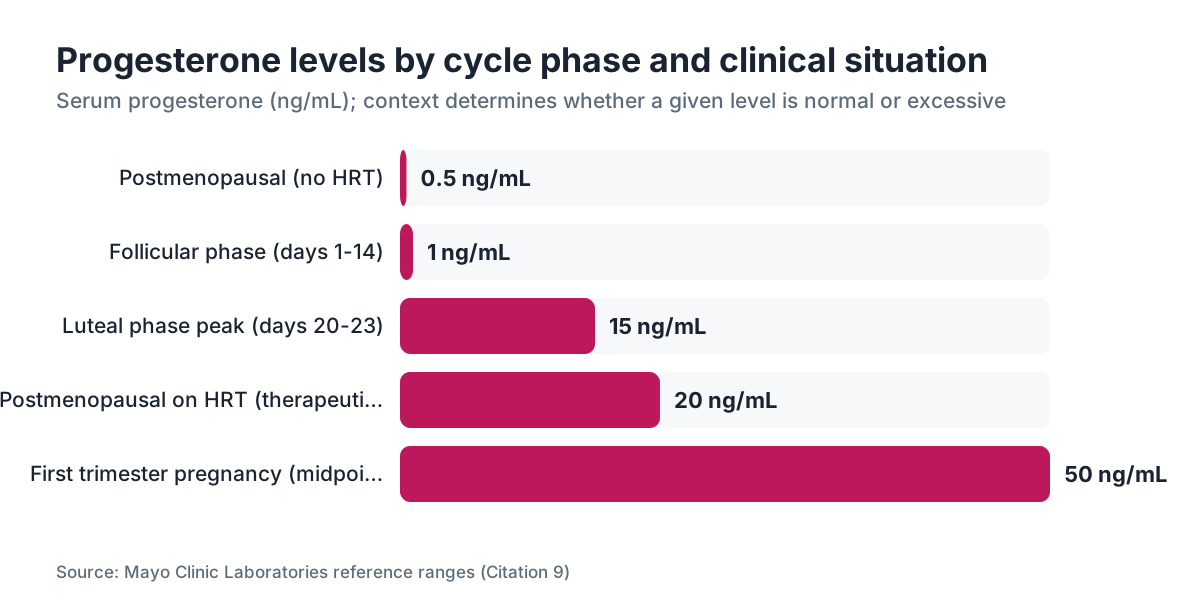
Normal progesterone swings hugely by cycle phase, so "too high" is always about context. A 15 ng/mL reading is textbook-normal on day 21 and a reason to investigate in a postmenopausal woman off therapy.
| Phase or situation | Typical progesterone range (ng/mL) | |---|---| | Follicular phase (days 1-14) | < 1 | | Luteal phase peak (days 20-23) | 5 to 20 | | First trimester of pregnancy | 11 to 90 | | Postmenopausal (no HRT) | < 0.5 | | Postmenopausal on HRT (therapeutic) | 3 to 25 (target varies) |
For a postmenopausal woman on HRT, a level above 25 ng/mL on a standard dose is worth flagging. For a premenopausal woman mid-luteal phase, 15 ng/mL is nothing to worry about.
Reference ranges differ by assay and by lab, so read any result against that specific lab's values and tell your clinician where you were in your cycle when the blood was drawn. The Endocrine Society's clinical practice guidelines note that serum progesterone is most useful for confirming ovulation (any value above 3 ng/mL suggests it happened) rather than for precise therapy monitoring [6].
There's little consensus on an ideal target level during HRT. Most prescribers steer by symptom control and endometrial protection, not a serum number. If you have symptoms of excess and your level runs high-normal or above range for your situation, that's real data even when it lands inside some lab's broad reference band [9].
Can too much progesterone cause weight gain?
A little, through specific mechanisms, but not the kind of weight gain most women fear. Progesterone doesn't lay down fat the way chronically high insulin or cortisol does.
It raises water retention through aldosterone-related pathways, which explains the 1 to 3 pound fluctuation many women notice. It can nudge appetite up, carbohydrate cravings in particular, the same pull as the premenstrual week. And its sedating effect saps the motivation to move.
Studies comparing HRT regimens generally find the estrogen component drives more fat redistribution than the progesterone component does. The bloating and fluid weight usually clear within days of lowering the dose or stopping.
It gets more complicated for women also managing weight on a GLP-1 medication. Heavy sedation from progesterone that cuts activity and stacks onto GLP-1 nausea can make the whole thing harder. Flag that to whoever is running both prescriptions.
What causes progesterone levels to get too high?
A handful of distinct situations push progesterone into excess, and for most women reading this it's the prescription dose or an over-the-counter product, not something rare.
HRT dosing that overshoots. The most common clinical cause. A woman gets 200 mg of oral micronized progesterone nightly, a standard dose for uterine protection, but she clears it slowly or absorbs more than expected. Cutting the dose or moving to a lower-dose vaginal form usually settles it.
Supplementing on top of already-normal levels. Some women in late perimenopause still ovulate but add progesterone cream anyway, driving total levels past the physiologic range. Check levels before you start, more than after.
Progesterone cream with poor quality control. Over-the-counter creams vary wildly in actual content. Some compounded creams sold for menopause have tested far above their labeled dose [7][11]. The FDA doesn't regulate OTC progesterone creams as drugs, and independent testing keeps finding this variability.
Luteal cysts. A corpus luteum cyst can pump out extra progesterone for several weeks before it resolves. Usually temporary, often caught by chance on pelvic ultrasound.
Congenital adrenal hyperplasia (non-classical). Less common, but the adrenal glands can overproduce progesterone precursors. A 17-hydroxyprogesterone test usually surfaces it.
The fix, in most cases, is a conversation with your prescriber, not a panic.
If you're sorting through HRT options or wondering whether your current regimen still makes sense, hormone replacement therapy is a solid place to start.
How does high progesterone differ from low progesterone symptoms?
Too much progesterone feels sedating and heavy. Too little, especially against relative estrogen dominance, feels agitated and anxious. Women in perimenopause struggle to tell them apart because both can show up in the same month depending on whether ovulation happened.
| Symptom | Too much progesterone | Too little progesterone | |---|---|---| | Energy level | Fatigue, sedation | Anxious, wired, poor sleep | | Mood | Low mood, emotional blunting | Anxiety, irritability | | Bloating | Yes (smooth muscle relaxation) | Less pronounced | | Breast tenderness | Yes | Can occur with relative dominance | | Sleep | Excessive sleepiness | Insomnia, trouble staying asleep | | Hot flashes | Rare, paradoxical | Common | | Cycle irregularity | Can shorten luteal phase at extremes | Short luteal phase, spotting |
Neither pattern is definitive on symptoms alone, so blood work read against cycle timing does the real work of telling them apart.
Progesterone breaks down normal physiology in detail if you want the baseline before you try to read your numbers.
Can too much progesterone cause anxiety or depression?
Yes, and clinical practice under-recognizes it. The standing assumption is that progesterone calms you (because of its GABA activity), so plenty of clinicians are caught off guard when a patient reports worse anxiety or low mood on progesterone therapy.
The truth is messier. Allopregnanolone, the neuroactive progesterone metabolite, acts as a positive allosteric modulator of GABA-A receptors in most brain regions, which is generally calming. But in some regions and in some women, especially those with a history of premenstrual dysphoric disorder (PMDD) or sensitivity to hormonal shifts, the same compound provokes dysphoria and negative affect [1].
Work from Hantsoo and Epperson in Psychoneuroendocrinology reports that women with a PMDD history show significantly greater negative mood responses to progesterone administration than controls, even at matched blood levels [8]. If you have a history of severe PMS or PMDD, that's context your prescriber needs.
Here's the practical part. If you start progesterone and feel markedly more depressed, anxious, or emotionally numb, that isn't "adjustment" and no one should tell you to ride it out for months. A dose reduction, a route change (oral to vaginal), or a timing change is warranted. The volatility of perimenopause age makes these responses even harder to predict, which is one more reason to act on them rather than wait.
Is too much progesterone dangerous, or just uncomfortable?
For most women at typical HRT doses, excess progesterone is uncomfortable but not acutely dangerous. The real concerns are functional impairment (sedation heavy enough to affect driving or raise fall risk) and, over the long term, the cardiovascular and breast-tissue effects seen with synthetic progestogens.
The cardiovascular data deserves attention. The Women's Health Initiative found that medroxyprogesterone acetate combined with conjugated equine estrogen carried higher cardiovascular and breast cancer risk than placebo [3]. Micronized progesterone looks more favorable in observational data, though it isn't free of concern at high doses or with long use. The Endocrine Society and NAMS both recommend the lowest effective progestogen dose for the shortest time consistent with your treatment goals [4][6].
At truly supraphysiologic levels, say from a very high-dose compounded cream, there's a theoretical worry about receptor downregulation and unpredictable systemic effects. Nobody has good randomized data on that specific scenario, because it's hard to study ethically.
An acute overdose from a single large oral dose would mostly produce heavy sedation, dizziness, and possibly vomiting. It isn't known to be acutely lethal the way some drugs are, but a large accidental ingestion still warrants a call to Poison Control at 1-800-222-1222.
How do you fix symptoms of too much progesterone?
The fix depends on why progesterone is high. Start with the smallest change that could work.
If you're on HRT. For oral micronized progesterone, try shifting from morning to bedtime dosing. The sedation becomes sleep instead of daytime fog. If that isn't enough, your prescriber can lower the dose (say, 200 mg down to 100 mg nightly) or switch you to a vaginal form. Vaginal progesterone delivers high local endometrial concentrations with much lower systemic and CNS levels, which cuts side effects sharply for most women [2]. WomenRx clinicians work through this kind of dosing adjustment constantly, because one size fits no one in HRT.
If you're using OTC progesterone cream. Stop it. The absence of dose certainty or regulatory oversight makes symptoms genuinely hard to manage. If you want progesterone, a prescription product with known bioavailability is the rational choice.
If you're in the luteal phase with natural high-progesterone symptoms. Lifestyle helps more than you'd expect. Morning exercise, less alcohol (it compounds the GABA sedation), lighter carbohydrate loads, and protected sleep. Symptoms should clear within a day or two of your period starting.
If you suspect a luteal cyst or an adrenal issue. That needs imaging and a hormonal workup, not self-management.
Tracking symptoms against your cycle or supplement timing is the single most useful thing you can do before an appointment. Two weeks of a simple diary (energy, mood, bloating, each scored 1 to 5) gives a clinician far more to work with than "I feel terrible sometimes."
For the bigger picture, menopause covers how progesterone fits into the full hormonal shift.
Does too much progesterone affect thyroid, cortisol, or other hormones?
Yes, with caveats worth knowing.
Progesterone competes with thyroid hormone at the receptor level and can raise thyroid-binding globulin, which may lower free thyroid hormone availability. A woman already hypothyroid on levothyroxine sometimes needs a dose bump after starting progesterone. If you start progesterone and pick up classic hypothyroid signs (cold intolerance, hair loss, constipation), a TSH recheck is reasonable.
Progesterone is also a precursor to cortisol. In theory, very high progesterone could shift steroidogenesis toward cortisol production, but that's a claim cited more in functional medicine circles than shown rigorously in trials. The evidence here is thin, and I'd treat it as speculation.
The clearer interaction is with testosterone. Progesterone competes with testosterone at androgen receptors, so supraphysiologic progesterone can lower effective androgen activity and drag down libido, muscle maintenance, and energy. Women on testosterone therapy who also take high-dose progesterone may find the testosterone underperforms.
Estrogen and progesterone work together. Adequate estrogen is needed to upregulate progesterone receptors, which means progesterone works better (and may need a lower dose) when estrogen is dosed well. When estrogen drops, as it does in perimenopause, progesterone receptors downregulate, and piling on more progesterone doesn't fix it. That mismatch trips up a lot of HRT management.
What should you tell your doctor if you think your progesterone dose is too high?
Be specific. "I feel off" gets you far less than a detailed account. Bring the exact product, dose, route, and timing (for example, "200 mg oral micronized progesterone at 9 pm"). Note when symptoms hit relative to dosing (within an hour points to peak effect), how long they last, and whether they cluster on certain cycle days. Mention any recent changes to other medications, supplements, and thyroid drugs included.
Ask for a progesterone level drawn in the morning, 12 to 24 hours after your last dose, and tell the lab your cycle day if you're still cycling. Ask whether a 17-hydroxyprogesterone level makes sense if adrenal causes haven't been ruled out.
If your clinician waves off your symptoms as unrelated to progesterone without engaging the mechanism, push back. The GABA sedation is established pharmacology, not a complaint to be normalized away [1]. A clean ask works: "Can we try a dose reduction or route change and see if symptoms improve over four to six weeks?"
If you want a clinician already fluent in this, WomenRx focuses on hormonal health for women and can review your regimen. Any knowledgeable OB-GYN or endocrinologist can handle it just as well.
Can you have high progesterone without supplementing, from natural causes?
Yes. Where you are in your cycle is the foundation for reading any progesterone symptom. Four natural scenarios push levels up.
Normal luteal phase peak. In an ovulatory cycle, the corpus luteum drives progesterone from near zero to 5 to 25 ng/mL between days 20 and 23. Entirely normal, and the source of the premenstrual symptoms most women know: bloating, breast tenderness, mood shifts, and changed sleep. When these are severe, the diagnosis is PMS or PMDD, not progesterone excess as such.
Pregnancy. Progesterone climbs sharply in early pregnancy, sometimes touching 90 ng/mL in the first trimester. Early-pregnancy fatigue and nausea overlap heavily with progesterone-excess symptoms. If pregnancy is possible and you have these symptoms, test before blaming a supplement.
Corpus luteum cyst. When a follicle ovulates and then fails to reabsorb, it can form a cyst that keeps making progesterone for weeks. Levels can run 25 to 50 ng/mL and higher. Symptoms mirror other high-progesterone states. Most cysts clear on their own within two to three cycles.
Congenital adrenal hyperplasia (non-classical). An enzyme deficiency, most often 21-hydroxylase, makes the adrenals overproduce progesterone precursors. Non-classical CAH shows up subtly in adult women, often with irregular periods, hirsutism, and acne. A morning 17-OHP above 2 ng/mL warrants an endocrinology referral.
Frequently asked questions
How long do symptoms of too much progesterone last?
If the cause is a prescription dose, symptoms usually peak one to two hours after oral progesterone and settle within six to eight hours. Adjust the dose or timing and improvement typically shows within days. Symptoms from a corpus luteum cyst can run two to eight weeks until the cyst resolves. Symptoms from OTC cream are harder to predict because absorption varies so much.
Can too much progesterone cause hair loss?
High progesterone can theoretically add to hair shedding by competing with the androgens hair follicles need for cycling. Some women notice more shedding during high-progesterone phases. Even so, hair loss in perimenopause and menopause more often tracks declining estrogen and androgens than progesterone excess. Check a full hormone panel, thyroid included, before pinning hair loss on any single hormone.
What does too much progesterone do to your period?
Supraphysiologic progesterone can suppress ovulation and scramble cycle regularity. High exogenous progesterone given in the follicular phase can delay or block ovulation, shortening or lengthening the cycle. Withdrawal bleeding happens as progesterone falls, so irregular spotting or a late period can follow. Women in perimenopause using progesterone supplements often find this makes cycle tracking even harder to read.
Can too much progesterone cause high blood pressure?
Progesterone has mild vasodilatory properties and isn't typically tied to raising blood pressure. Its effect on aldosterone can promote sodium retention and mild fluid gain, but real hypertension from progesterone alone isn't well established. If your blood pressure rose after starting a progestogen, investigate it, but synthetic progestogens like medroxyprogesterone acetate are more often implicated than micronized progesterone.
Is too much progesterone bad for your heart?
It depends heavily on which progestogen and for how long. The Women's Health Initiative found medroxyprogesterone acetate plus estrogen raised cardiovascular risk versus placebo. Micronized progesterone looks more neutral on cardiovascular measures in observational data, though it lacks large randomized trial evidence. NAMS recommends the lowest effective dose for the shortest time consistent with treatment goals for any progestogen.
Can high progesterone cause hot flashes?
Paradoxically, yes, in some women. Hot flashes are driven mostly by estrogen fluctuation, but some women on progesterone-only regimens or at high doses report flushing. The mechanism is poorly understood. If hot flashes worsen or appear after you start progesterone, tell your prescriber. It may reflect an imbalance in the estrogen-to-progesterone ratio rather than either hormone on its own.
What is a normal progesterone level on HRT?
There's no single agreed target. Most clinicians aim for endometrial protection, the clinical goal, rather than a set serum number. In practice, a postmenopausal woman on 100 to 200 mg oral micronized progesterone nightly might show a trough of 3 to 15 ng/mL the morning after dosing. Levels consistently above 25 ng/mL with symptoms warrant review. Always read results against the draw timing and the specific assay used.
Does progesterone cream cause the same symptoms as oral progesterone?
Yes, but the intensity and predictability differ. Oral micronized progesterone produces high neuroactive metabolite levels, so more sedation and mood effects. Topical cream skips first-pass liver metabolism, so those metabolite levels are lower, but systemic absorption from cream is highly variable. Some women absorb very little, others a lot. Progesterone also builds up in fatty tissue with cream use, which can produce delayed or unpredictable effects.
Can too much progesterone cause insomnia?
Excess progesterone is more often tied to oversleeping than insomnia. But some women hit a rebound: groggy and sedated while levels are high, then disrupted sleep as levels fall. Women with PMDD-like sensitivity may also get anxiety-driven insomnia during progesterone exposure. If insomnia follows your progesterone timing rather than a random pattern, adjusting when you take it (earlier or later) may help.
How do I know if my progesterone is too high on bioidentical HRT?
The clearest signal is symptoms: persistent fatigue, afternoon sedation, mood changes, and bloating that line up with when you take your progesterone. A blood level drawn 12 to 24 hours after your last oral dose gives a trough reading; above 20 to 25 ng/mL in a postmenopausal woman is worth discussing. Symptom timing relative to dosing is often more useful than a single number.
Should I stop taking progesterone if I have bad side effects?
Don't stop abruptly without talking to your prescriber first, especially if you have a uterus and take estrogen. Progesterone protects the endometrium from estrogen-driven overgrowth. Stopping it without a plan can raise endometrial cancer risk if you keep taking estrogen. The right move is a same-week call or message to discuss a dose reduction, route change, or a different progestogen formulation.
Can progesterone cream from a health food store cause too-high levels?
Yes. Independent testing of OTC progesterone creams has found significant variability in actual content, with some products holding far more than labeled. Progesterone also accumulates in fatty tissue with repeated cream use, so levels can build over weeks even when daily doses seem modest. If you use OTC cream and have symptoms of excess, a serum level is the only way to know where you actually stand.
What tests should I ask for if I think my progesterone is too high?
Start with a serum progesterone drawn in the morning, 12 to 24 hours after your last dose, with the cycle day noted. Add a 17-hydroxyprogesterone if adrenal causes haven't been ruled out. Check thyroid function (TSH, free T4) because high progesterone can affect thyroid hormone binding. A full panel with estradiol and testosterone gives your clinician the context that one number can't.
Sources
- Bäckström T et al., Psychoneuroendocrinology 2014, GABA-A receptor and allopregnanolone review
- de Lignières B, Climacteric 1999, oral vs vaginal progesterone pharmacokinetics
- NIH National Heart, Lung, and Blood Institute, Women's Health Initiative
- North American Menopause Society, Menopause Practice: A Clinician's Guide
- Stute P et al., Maturitas 2019, mood effects of progestogens in menopause
- Endocrine Society Clinical Practice Guideline, Menopause Hormone Therapy
- FDA, Drug Safety and Availability (OTC progesterone cream regulatory status)
- Hantsoo L, Epperson CN, Psychoneuroendocrinology 2015, PMDD and progesterone sensitivity
- Mayo Clinic Laboratories, Progesterone serum reference ranges
- FDA, Drugs@FDA (Prometrium micronized progesterone prescribing information)
- Stephenson K et al., International Journal of Pharmaceutical Compounding 2008, progesterone cream variability
- Stanczyk FZ, Pharmacology & Therapeutics 2003, routes of progestogen administration