Symptoms of perimenopause at 44: what's normal and what to do
TL;DR: At 44, perimenopause is completely normal. Most women enter this transition between ages 40 and 51, and symptoms can include irregular periods, hot flashes, sleep disruption, mood changes, brain fog, vaginal dryness, and weight shifts. Symptoms can last 4 to 10 years. Hormone therapy and lifestyle changes are both real options, and you do not have to white-knuckle through it.
Is 44 too young for perimenopause?
No. Forty-four is squarely within the normal range.
The average age of menopause in the United States is 51 to 52, and perimenopause, the hormonal transition leading up to it, typically begins 4 to 10 years before that final period [1]. That puts the onset window somewhere between 41 and 47 for most women. A 44-year-old noticing changes is not early. She is right in the middle of when this most commonly starts.
About 1 in 10 women does enter perimenopause before 45, and roughly 1 percent experience premature ovarian insufficiency before 40 [2]. So if you are 44 and something feels different, the most likely explanation is not thyroid disease, not stress alone, and not "just getting older." It is almost certainly ovarian aging.
That said, perimenopause symptoms overlap a lot with thyroid dysfunction, anemia, and mood disorders. A good clinician does more than nod and say "you are perimenopausal" without ruling out those conditions first. More on testing below.
For a broader look at how age affects the transition, see our guide on perimenopause age.
What are the most common symptoms of perimenopause at 44?
The list is longer than most women expect, and the symptoms rarely arrive in a tidy package.
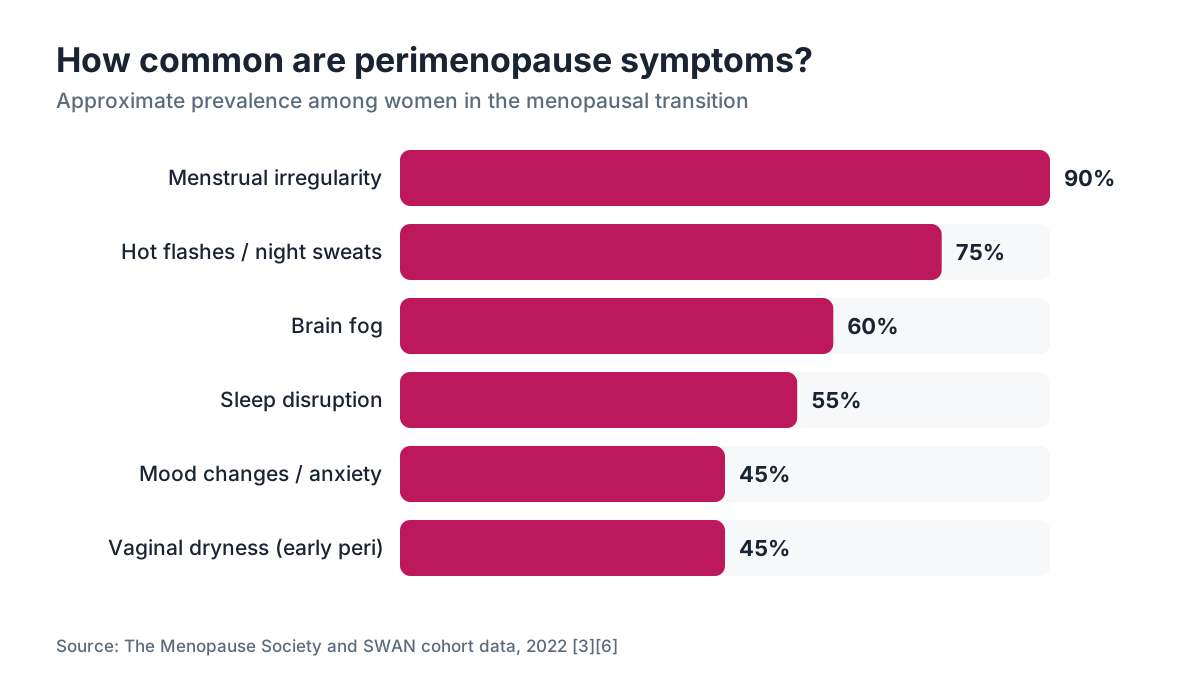
The North American Menopause Society (NAMS) identifies the following as the most reported perimenopausal symptoms [3]:
Menstrual irregularity is usually the first sign. Cycles may shorten to 21 days, then stretch to 35 or 45 days, then skip entirely for a month or two before returning. Heavy bleeding happens too, more often than lighter or skipped periods. If you are soaking through a pad or tampon every hour for two hours straight, that warrants a same-day call to your clinician.
Hot flashes and night sweats affect roughly 75 percent of women in perimenopause [3]. A hot flash is a sudden wave of heat, often with flushing and sweating, that typically lasts 1 to 5 minutes. Night sweats are the nocturnal version and are one of the main reasons sleep falls apart.
Sleep disruption goes beyond night sweats. Many women report trouble falling asleep and early waking with no sweating at all, likely tied to falling progesterone affecting GABA receptors in the brain [4].
Mood changes including irritability, anxiety, and low mood are common. A 2006 study in JAMA Psychiatry found that women in late perimenopause were about 2.5 times more likely to report significant depressive symptoms than premenopausal women, even after controlling for prior depression history [5]. That is not a trivial increase.
Cognitive changes ("brain fog") including word-finding problems, forgetfulness, and trouble concentrating are reported by up to 60 percent of perimenopausal women in some cohort studies [6]. Most of this is temporary and improves after menopause, though the mechanism is still being studied.
Vaginal dryness and genitourinary symptoms tend to appear later in perimenopause and worsen after menopause. Estrogen receptors line the vaginal wall, bladder, and urethra. As estrogen drops, tissue thins, lubrication decreases, and urinary urgency or recurrent UTIs can increase.
Weight gain and body composition shifts. Even women who have not changed how they eat or exercise often watch the scale creep up or fat redistribute to the abdomen. Estrogen influences where fat gets stored, and its decline favors central fat.
Joint pain and headaches get less airtime but are genuinely common. Estrogen has anti-inflammatory properties, and some women notice more joint stiffness or an increase in migraine frequency as levels swing.
| Symptom | Approximate prevalence in perimenopause | Typical onset in transition | |---|---|---| | Menstrual irregularity | 90%+ | Early perimenopause | | Hot flashes / night sweats | ~75% | Mid perimenopause | | Sleep disruption | ~50-60% | Mid perimenopause | | Mood changes / anxiety | ~40-50% | Variable | | Brain fog | ~60% | Mid to late | | Vaginal dryness | ~45% early, 80%+ post-menopause | Late perimenopause | | Weight / body comp change | Common, less quantified | Throughout |
Source: North American Menopause Society and SWAN cohort data [3][6]
How do doctors diagnose perimenopause at 44?
Perimenopause is a clinical diagnosis. There is no single blood test that confirms it.
FSH (follicle-stimulating hormone) gets ordered often, but NAMS notes plainly that FSH levels swing so much during perimenopause that a single elevated reading does not diagnose the condition, and a normal reading does not rule it out [3]. An FSH above 25 IU/L drawn on day 2 or 3 of your cycle leans toward perimenopause, but the overlap with normal ranges is real. Anti-Mullerian hormone (AMH) is a more stable marker of ovarian reserve, though insurance does not always cover it for this purpose.
What your clinician should also check: TSH (thyroid), CBC (to rule out anemia if you are bleeding heavily), fasting glucose, vitamin D, and, depending on your symptoms, a full metabolic panel. If mood symptoms dominate, have an honest conversation about whether this is perimenopausal mood dysregulation or a primary anxiety or depressive disorder.
Your symptom history is the most useful diagnostic tool you have. A menstrual calendar going back 6 to 12 months, a note of when hot flashes started, and a description of your sleep beat a single lab draw every time.
If you want to understand how the full timeline unfolds, our guide on when does menopause start covers the staging framework clinicians actually use.
Why are periods so irregular in perimenopause?
The short version: the ovaries get less consistent about recruiting and releasing eggs, which throws off the hormonal signals that set cycle length.
In a regular cycle, the brain releases FSH, which stimulates follicles to grow and produce estrogen. As estrogen rises, it triggers an LH surge, ovulation happens, the corpus luteum forms and secretes progesterone, and if no pregnancy occurs, both hormones fall and you bleed. Tidy. Predictable.
In perimenopause, the ovaries have fewer responsive follicles. Some cycles you ovulate normally. Some cycles you do not ovulate at all (anovulatory cycles). An anovulatory cycle means no corpus luteum, no progesterone peak, and the uterine lining keeps building under estrogen until it sheds irregularly, often in a heavier-than-usual bleed [4].
Short cycles (less than 21 days) tend to come first as the follicular phase compresses. Then longer cycles and skips. This variability is the hallmark of perimenopause, sometimes called the menopausal transition.
One thing to be clear about: you can still get pregnant in perimenopause. Ovulation is erratic, not absent. Women who do not want to conceive need contraception until they have gone 12 consecutive months without a period, which is the definition of menopause [1].
For more on the progesterone side of this story, including why low progesterone specifically drives so many sleep and anxiety symptoms, we cover that in depth.
Can perimenopause cause anxiety and depression at 44?
Yes, and the biology is real. This is not psychological weakness.
Estrogen modulates serotonin, dopamine, and GABA pathways. As estrogen fluctuates and progesterone falls, these neurotransmitter systems destabilize. Many women have their first-ever panic attacks, generalized anxiety, or significant low mood during perimenopause, even with no prior psychiatric history [5].
The SWAN (Study of Women's Health Across the Nation) cohort, which followed over 3,000 women through the menopausal transition, found that depressive symptoms peaked during late perimenopause and the first two years after menopause [6]. Women with a history of PMS or postpartum depression appear especially sensitive to hormonal fluctuations and carry higher risk.
This matters for treatment. Antidepressants can help, but if the root cause is estrogen fluctuation, hormone therapy often works better and more directly for these specific mood symptoms in perimenopausal women. The 2022 NAMS Hormone Therapy Position Statement says hormone therapy is the most effective treatment for vasomotor symptoms and also addresses the mood instability tied to the transition [3].
If you are 44 and your doctor reaches for an SSRI without mentioning hormones, it is reasonable to ask whether perimenopause has been considered.
What causes weight gain during perimenopause at 44?
Several mechanisms hit at once, which is why it feels so stubborn compared to weight changes earlier in life.
Estrogen influences insulin sensitivity, appetite hormones, and fat distribution. As estrogen falls, insulin sensitivity often drops, making fat easier to store and harder to lose. Lipoprotein lipase activity rises in abdominal fat tissue when estrogen is low, which is part of why fat shifts centrally instead of spreading proportionally [7].
Sleep disruption compounds this. Poor sleep raises ghrelin (appetite-stimulating) and lowers leptin (satiety-signaling), so you are hungrier and less satisfied without changing a thing about your diet. Night sweats that wake you at 2 AM for weeks on end are not benign. They have downstream metabolic effects.
Muscle mass also declines with age, and the rate of loss speeds up around menopause. Muscle is metabolically active tissue, so losing it lowers resting energy expenditure.
For women whose weight gain is significant and does not respond to diet and exercise changes, GLP-1 receptor agonists are now an option. WomenRx clinicians see this overlap often: a woman in perimenopause whose weight climbs despite real effort. Whether a GLP-1 fits alongside hormone therapy is an individual conversation, not a blanket answer. If you are curious how GLP-1 medications work for women, our semaglutide for weight loss overview is a good starting point.
How does perimenopause affect sleep?
Badly, and through more than one mechanism.
Night sweats are the obvious driver, but not the only one. Progesterone has sedating, GABA-modulating effects. As progesterone drops in perimenopause, some women lose what was a natural sleep aid. Estrogen affects thermoregulation and the architecture of sleep itself, particularly REM sleep. Fluctuating estrogen can make sleep lighter and more fragmented even on nights without overt sweating.
The consequences pile up fast. One or two bad nights, fine. Months of fragmented sleep hits cognition, mood, metabolic function, and cardiovascular health. That is not a small thing to wave off.
What actually helps? The evidence hierarchy here is reasonably clear. Hormone therapy cuts hot flash frequency and severity, which removes the primary physical cause of nighttime waking [3]. Cognitive behavioral therapy for insomnia (CBT-I) is the most evidence-based non-hormonal approach for sleep disruption specifically. Magnesium glycinate (300-400 mg before bed) has modest evidence and is generally low-risk. Melatonin helps with circadian issues but does nothing for night sweats. Alcohol reliably worsens night sweat frequency even when it makes falling asleep feel easier.
What are the treatment options for perimenopause symptoms at 44?
You have real options, and the right combination depends on which symptoms bother you most and your personal health history.
Hormone therapy (HT) is the most effective treatment for hot flashes, night sweats, sleep disruption, mood instability, and vaginal dryness tied to perimenopause. The 2022 NAMS Position Statement confirms: "For women who are younger than 60 years or within 10 years of menopause onset and have no contraindications, the benefit-risk ratio is favorable for treatment of bothersome vasomotor symptoms" [3]. At 44, you are well within that window. The fear-driven avoidance of hormone therapy that followed the initial 2002 Women's Health Initiative publication has been substantially revised. The WHI results applied to older women, and the risks at 44 are very different.
Typical hormone therapy at this stage combines estrogen (by patch, gel, or spray, to avoid the small blood clot risk of oral estrogen) with progesterone if you have a uterus. An estrogen patch is often the first-line delivery method because it produces stable levels without the first-pass liver metabolism oral estrogen goes through. For more on the role of hormone replacement therapy broadly, we have a full breakdown.
Non-hormonal medications for hot flashes include low-dose SSRIs and SNRIs (paroxetine, escitalopram, venlafaxine), which carry modest but real evidence. Fezolinetant (Veozah), an NK3 receptor antagonist the FDA approved in 2023, is a newer non-hormonal option specifically for moderate to severe vasomotor symptoms, with trial data showing about a 60 percent reduction in hot flash frequency [8].
Lifestyle interventions are useful but should be positioned honestly. Cutting alcohol, keeping the bedroom cool, wearing moisture-wicking fabrics, and practicing paced breathing can reduce hot flash intensity. They are not equal to hormone therapy for severe symptoms, but they are not nothing either.
Vaginal estrogen (cream, ring, or tablet) works locally for genitourinary symptoms and carries minimal systemic absorption. It is safe for most women, including those who choose not to use systemic hormone therapy.
Bone health. Estrogen protects bone density. The rate of bone loss speeds up in the first several years after menopause. At 44, you are not in crisis, but knowing your baseline is worth it. A bone density test is typically recommended at menopause or earlier if you have risk factors.
What blood tests should a 44-year-old get if she suspects perimenopause?
A reasonable baseline panel includes:
FSH and estradiol drawn on day 2 or 3 of your cycle if you are still cycling. As noted earlier, a single reading is not diagnostic, but it gives context. FSH above 10 IU/L with a low estradiol on cycle day 2-3 is suggestive. If you cannot predict your cycle, the result is harder to read.
TSH. Thyroid dysfunction is extremely common in women in their 40s and mimics perimenopause almost perfectly (fatigue, mood changes, irregular periods, weight changes). Always check it.
CBC. If you are having heavy periods, ruling out anemia matters both for your health and for understanding why you are exhausted.
Fasting glucose and HbA1c. Insulin resistance rises through the perimenopausal transition. Many women get a surprise prediabetes diagnosis in their mid-40s that is partly hormonally driven.
Vitamin D. Low vitamin D is common in this age group and affects mood, bone health, and immune function.
AMH (Anti-Mullerian hormone) is sometimes added to gauge remaining ovarian reserve. It is more stable than FSH across the cycle and across the day.
AMH levels below 1.0 ng/mL in a woman in her early-to-mid 40s suggest significantly reduced ovarian reserve and are consistent with approaching menopause, though reference ranges vary by lab [2].
How long does perimenopause last?
The honest answer: anywhere from 4 to 14 years, with 7 years being a commonly cited median [1].
That range is genuinely wide, and the variation is real, not a rounding error. Some women transition in 4 years with fairly manageable symptoms. Others are in hormonal chaos for a decade or more. Women who start perimenopause earlier (at 44 or younger) sometimes have longer transitions.
The STRAW+10 staging system, developed by the Endocrine Society and collaborating organizations, defines perimenopause in two stages: early (variable cycle length, FSH beginning to rise) and late (skipped cycles of 60 days or more) [4]. The late stage lasts 1 to 3 years on average before the final menstrual period.
Menopause itself is defined backward: 12 consecutive months without a period. You do not know you have hit it until a year has passed. After that point you are postmenopausal, and many symptoms (particularly hot flashes) typically improve, though genitourinary symptoms often worsen without treatment.
For a detailed look at how the full timeline unfolds, see menopause age and our overview of menopause itself.
What lifestyle changes actually help perimenopause symptoms?
Some have solid evidence. Others are popular but modest. Here is an honest ranking.
Exercise, particularly resistance training, has the best evidence base for mood, sleep, body composition, and probably bone preservation. A menopause exercise trial found vigorous aerobic exercise reduced hot flash frequency by about 28 percent, and resistance training improved sleep quality scores more than stretching controls [9]. Neither result is as large as hormone therapy, but both are meaningful and carry zero downsides at reasonable intensities.
Cutting alcohol is probably more impactful than most women expect. Alcohol is a vasodilator and disrupts sleep architecture. Both mechanisms directly worsen night sweats and hot flashes. Even moderate drinking (one drink a night) can meaningfully increase hot flash frequency.
Dietary changes. Cutting refined carbohydrates helps with insulin sensitivity and the associated weight gain. Some evidence supports increased soy isoflavone intake for mild hot flash relief, though the effect size is small and the research is mixed. A Mediterranean-style eating pattern appears protective for cardiovascular and metabolic health during perimenopause.
Stress management. Hot flashes get triggered by a narrowing of the thermoneutral zone in the hypothalamus. Psychological stress raises core body temperature and tightens that zone, making flashes more frequent. CBT, mindfulness-based stress reduction, and paced breathing (slow, diaphragmatic breathing during a flash) have all shown statistically significant reductions in perceived hot flash severity, though not necessarily frequency [3].
Sleep hygiene fundamentals matter more here than at any other life stage because sleep loss is both a symptom and an amplifier of every other symptom.
When should you see a doctor about perimenopause symptoms at 44?
If symptoms are affecting your quality of life, that is reason enough. You do not need to wait until they are severe.
Some situations warrant faster attention:
Heavy bleeding (soaking through protection hourly for two hours or more, or passing clots larger than a quarter) should be evaluated promptly to rule out fibroids, polyps, or endometrial changes.
If you have gone 60 days without a period at 44, tell your clinician. This can be normal perimenopause, but pregnancy is still possible, and other causes deserve a look.
New or worsening depression, especially with passive thoughts of self-harm, needs same-week evaluation. Perimenopausal mood changes can precipitate serious depressive episodes in vulnerable women.
Chest pain, palpitations, or significant shortness of breath should always be evaluated, no matter where you are in the transition. Estrogen withdrawal does affect cardiac function, but these symptoms can also signal primary cardiac disease.
Persistent joint pain, hair loss, or extreme fatigue may point to autoimmune conditions (rheumatoid arthritis, lupus, thyroid disease) that are more common in women in their 40s and can appear alongside or mimic perimenopause.
If your primary care doctor dismisses your symptoms as stress or "just aging," a second opinion from a menopause specialist is entirely reasonable. The Menopause Society (formerly NAMS) has a provider locator on its website [3].
Frequently asked questions
Can you be in perimenopause at 44 with regular periods?
Yes. Early perimenopause often begins while cycles are still relatively regular, with subtle shortening or lengthening before noticeable irregularity appears. Symptoms like hot flashes, mood changes, or sleep disruption can precede obvious cycle changes by a year or more. FSH and AMH labs can add context, but a normal-seeming period does not rule out the transition beginning.
What does a perimenopause hot flash feel like?
Most women describe a sudden intense heat starting in the chest or face, spreading upward, often with visible flushing, sweating, and then a chill afterward. They typically last 1 to 5 minutes. Some women feel heart palpitations or a wave of anxiety alongside the heat. Frequency ranges from a few per week to dozens per day in severe cases.
Is it normal to have brain fog in perimenopause at 44?
Very common. Up to 60 percent of perimenopausal women report word-finding difficulties, forgetfulness, or trouble concentrating. The good news: research from the SWAN study shows this cognitive fogginess largely resolves once the transition is complete. It is a real neurological effect of estrogen fluctuation, not early dementia, and it is not permanent for most women.
Can perimenopause cause weight gain even without diet changes?
Yes. Declining estrogen reduces insulin sensitivity, shifts fat storage toward the abdomen, and disrupts sleep in ways that raise appetite hormones. Muscle mass also declines with age and speeds up around menopause, lowering resting metabolism. Most women notice a 5 to 10 pound gain in the perimenopausal years even with no change in diet or exercise.
Is hormone therapy safe to start at 44?
For most healthy women at 44 with no contraindications, the evidence strongly supports that hormone therapy benefits outweigh risks. NAMS says the benefit-risk ratio is favorable for women under 60 or within 10 years of menopause onset. Transdermal estrogen (patch or gel) with micronized progesterone avoids the blood clot risk of oral estrogen and is the preferred formulation for most women.
What is the difference between perimenopause and menopause?
Perimenopause is the hormonal transition leading up to the final period, typically lasting 4 to 10 years. Menopause is a single point in time defined as 12 consecutive months without a menstrual period. After that point you are postmenopausal. Most women do not realize they have reached menopause until a year has already passed without a period.
Can stress cause perimenopause symptoms to be worse?
Yes, in a few specific ways. Psychological stress raises cortisol, which competes with progesterone production and can destabilize an already-fluctuating hormonal environment. Stress also narrows the brain's thermoneutral zone, making hot flashes more frequent and more intense. Women with high baseline stress tend to report more severe perimenopausal symptoms in cohort studies.
Can you get pregnant during perimenopause at 44?
Yes. Ovulation is irregular but not absent in perimenopause. Pregnancy is possible until you have completed 12 consecutive months without a period. Women in their mid-40s have lower fertility than in their 30s, but unintended pregnancies in perimenopause do occur. Contraception is needed until menopause is confirmed unless you are using a method specifically to avoid pregnancy.
How do I know if my anxiety is from perimenopause or something else?
Perimenopausal anxiety tends to cluster with other hormonal symptoms: worse in the week before your period, worse at night, paired with hot flashes or sleep disruption, and possibly new-onset if you had no prior anxiety history. That pattern points toward hormonal fluctuation as a driver. A clinician should still rule out thyroid dysfunction, which causes identical anxiety symptoms and is extremely common in women in their 40s.
Do I need a bone density test at 44 because of perimenopause?
Not routinely, unless you have specific risk factors (long-term steroid use, family history of osteoporosis, eating disorder history, early surgical menopause). Routine DEXA screening is typically recommended at menopause or at age 65. Still, knowing that bone loss speeds up in the first few years after your final period is reason to act now on calcium, vitamin D, weight-bearing exercise, and to discuss hormone therapy if you are symptomatic.
What is the STRAW+10 staging system and does it apply at 44?
STRAW+10 (Stages of Reproductive Aging Workshop) is the standard framework clinicians use to classify where a woman is in the menopausal transition. It runs from peak reproductive years through postmenopause, defined by cycle variability and FSH levels. At 44 with shortening or irregular cycles and rising FSH, most women fall into early perimenopause (Stage minus 2) on this scale, developed by the Endocrine Society and collaborating groups.
Are there non-hormonal prescription options for perimenopause hot flashes?
Yes. Low-dose SSRIs and SNRIs (paroxetine 7.5 mg is FDA-approved for this specifically; venlafaxine and escitalopram are used off-label) reduce hot flash frequency by roughly 50 to 60 percent in trials. Fezolinetant (Veozah), FDA-approved in 2023, is a non-hormonal NK3 receptor antagonist for moderate to severe vasomotor symptoms and showed about 60 percent reduction in hot flash frequency in phase 3 trials.
Why does perimenopause cause joint pain?
Estrogen has anti-inflammatory and joint-lubricating effects. As estrogen fluctuates and falls, joint tissue becomes more vulnerable to inflammation, and synovial fluid may decrease. Many women notice increased stiffness, particularly in the morning, or aching in the small joints of the hands. This can be mistaken for early arthritis. The symptom often responds to hormone therapy in perimenopausal women, which helps distinguish it from primary inflammatory joint disease.
How do GLP-1 medications interact with perimenopause treatment?
There is no known direct pharmacological interaction between GLP-1 receptor agonists like semaglutide and hormone therapy. They can be used together. GLP-1s may help with the insulin resistance and weight gain that speeds up during perimenopause. Hormone therapy addresses the hormonal root cause of symptoms. Choosing between them, combining them, or sequencing them depends on your specific clinical picture and goals.
Sources
- The Menopause Society (NAMS), Menopause 101: A Primer for the Perimenopausal Woman
- ACOG Practice Bulletin No. 234, American College of Obstetricians and Gynecologists
- The Menopause Society, 2022 Hormone Therapy Position Statement
- Harlow SD et al., Executive summary of the Stages of Reproductive Aging Workshop +10 (STRAW+10), Journal of Clinical Endocrinology and Metabolism 2012
- Cohen LS et al., Risk for new onset of depression during the menopausal transition, JAMA Psychiatry (Archives of General Psychiatry) 2006;63(4):385-390
- SWAN Study (Study of Women's Health Across the Nation), National Institute on Aging
- Davis SR et al., Understanding weight gain at menopause, Climacteric 2012;15(5):419-429, International Menopause Society
- FDA Drug Approval: Fezolinetant (Veozah), U.S. Food and Drug Administration, 2023
- Sternfeld B et al., Efficacy of exercise for menopausal symptoms: a randomized controlled trial, Menopause 2014;21(4):330-338, The Menopause Society
- Endocrine Society Clinical Practice Guideline: Treatment of Menopause-Associated Vasomotor Symptoms, Journal of Clinical Endocrinology and Metabolism
- NIH Office of Research on Women's Health, Menopause and Hormones fact sheet
- FDA Drug Labeling: Paroxetine mesylate (Brisdelle) 7.5 mg, U.S. Food and Drug Administration