Symptoms of menopause after hysterectomy with ovaries intact
TL;DR: Keep your ovaries after a hysterectomy and you stop having periods, but your ovaries keep making hormones. Most women still hit full perimenopause and menopause: hot flashes, broken sleep, mood shifts, vaginal dryness. Retained ovaries may fail 1 to 3 years earlier than average, so the symptoms can show up sooner than you expect, with no missed period to warn you.
Why do you still get menopause symptoms if your ovaries are intact?
You still get menopause symptoms because your ovaries, not your uterus, make your estrogen. Take out the uterus and the estrogen tap stays open, but it eventually runs dry anyway, and often a bit earlier than it would have.
You had a hysterectomy, your ovaries stayed in, and your doctor may have said something reassuring like "you'll still make hormones." That's true. But ovaries don't last forever, and a hysterectomy can change how they age.
The uterus and ovaries share some blood supply. Removing the uterus can disrupt the vascular network feeding the ovaries, even when surgeons are careful. Several studies suggest this leads to ovarian failure roughly 1 to 3 years earlier than it would have happened naturally [1]. So if you were on track for natural menopause at 51 (the U.S. average), your ovaries might start sputtering at 48 or 49 instead.
Because you no longer have a uterus, you won't get the signal you're used to: a missed period. There's no monthly calendar to tell you something is shifting. Symptoms show up without warning, and many women blame stress, anxiety, or bad sleep before they think of hormones. That delay in recognition is one of the biggest practical problems with this situation.
The North American Menopause Society (NAMS) describes women who had a hysterectomy with ovarian conservation as having "occult" or hidden menopause, because the usual marker of a final menstrual period is gone [2]. Hormone blood tests (FSH and estradiol) become the only reliable way to confirm what's happening.
What are the most common perimenopause symptoms after hysterectomy with ovaries intact?
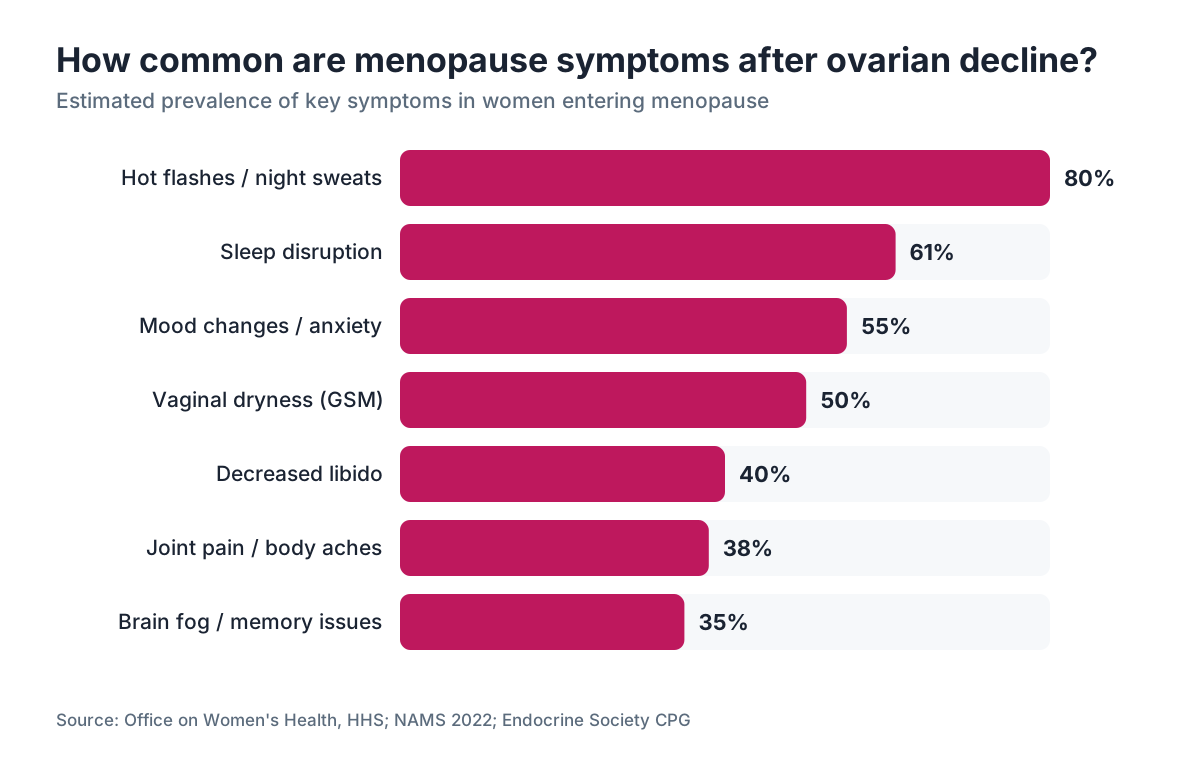
The symptoms are the same ones any perimenopausal woman gets: hot flashes, night sweats, broken sleep, mood swings, vaginal dryness. What changes is the timing, the missing period that would normally anchor the experience, and sometimes the intensity.
Hot flashes and night sweats top the list. Somewhere between 75 and 85 percent of women going through menopause get them [3]. When ovaries falter after a hysterectomy, the estrogen drop can be abrupt rather than gradual, which sometimes makes these flashes feel more sudden or severe.
Sleep disruption is often the symptom that drives women to a doctor first. It's more than night sweats waking you up. Falling estrogen changes sleep architecture directly, cutting slow-wave and REM sleep, so you wake up wrecked after a full night in bed.
Mood changes (anxiety, irritability, low mood) are common and get blamed on life stress constantly. Estrogen has real effects on serotonin and dopamine signaling, so a drop genuinely changes how your brain regulates mood. This is not a personality problem.
Vaginal and urinary symptoms are the ones most likely to stick around and worsen without treatment. As estrogen drops, vaginal tissue thins, loses elasticity, and makes less lubrication. Urinary urgency, frequency, and recurrent UTIs are part of what clinicians now call genitourinary syndrome of menopause (GSM) [4]. Unlike hot flashes, which often ease over time, GSM does not fix itself.
Joint pain, brain fog, hair thinning, skin changes, and lower libido round out the picture. These are real, they're hormone-related, and they're easy to miss when you're not expecting menopause yet.
See the table below for a symptom-by-symptom overview.
How do symptoms of perimenopause after hysterectomy compare to natural menopause?
The symptom list is basically identical. The differences are about timing and how you recognize what's happening.
| Symptom | Natural perimenopause | Hysterectomy (ovaries intact) | |---|---|---| | Hot flashes / night sweats | Very common, ~75-85% | Same prevalence, may be more abrupt | | Irregular periods | Yes, the main early signal | Absent (no uterus) | | Sleep disruption | Common | Common | | Mood changes / anxiety | Common | Common | | Vaginal dryness / GSM | Progresses over time | Same, no protection from hysterectomy | | Brain fog | Moderate prevalence | Same | | Bone loss | Begins around estrogen decline | Same, timeline depends on ovarian function | | Diagnosis method | Symptom + menstrual history | Symptoms + FSH/estradiol blood test | | Average age of onset | ~47-51 for perimenopause | Potentially 1-3 years earlier [1] |
One clinical difference worth knowing: if your hysterectomy removed the cervix (total hysterectomy), you won't need Pap smears for cervical cancer screening. But routine gynecologic and hormone care still matters, and so does bone density monitoring once ovarian function declines [5].
How do you know if your ovaries are failing after hysterectomy?
Without periods, you need lab work. Two tests do most of the work: follicle-stimulating hormone (FSH) and estradiol.
FSH rises as the ovaries make less estrogen. The Endocrine Society and NAMS both point to an FSH above 25 to 30 IU/L on two separate draws (with no hormonal contraception on board) as consistent with menopause [2][6]. Estradiol dropping below about 20 pg/mL adds further evidence.
AMH (anti-Müllerian hormone) reflects ovarian reserve and can give earlier warning that the ovaries are running low on follicles. It's not routinely ordered for this purpose, but some clinicians use it. Check thyroid function at the same time, because thyroid trouble causes overlapping symptoms (fatigue, mood changes, temperature sensitivity) and the two conditions can happen together.
If you're getting classic symptoms (hot flashes, night sweats, sleep problems) and your FSH is consistently high, that's enough to act on even without a final period to date things. Testing isn't just about confirmation. It tells you your hormone status so you and your doctor can make real decisions about treatment, bone health, and cardiovascular risk.
For a broader look at typical hormone timelines, the perimenopause age article covers when most women start to see hormonal changes and what drives that timing.
Does hysterectomy cause earlier menopause even with ovaries kept?
The honest answer: probably yes, on average, though not for every woman.
A study published in Menopause followed over 400 premenopausal women who had a hysterectomy with ovarian conservation and found ovarian failure happened about 3.7 years earlier than in a matched control group [1]. A widely cited Mayo Clinic cohort found the same direction: women with a hysterectomy (ovaries retained) reached menopause earlier than women with no surgery [11].
The mechanism is thought to be reduced blood flow to the ovaries during surgery. Laparoscopic approaches may cause less disruption than open surgery, but the head-to-head data are thin.
Not every woman follows this pattern. Some women's ovaries keep working normally for years after a hysterectomy. Age at surgery, surgical technique, baseline ovarian reserve, and individual vascular anatomy all factor in. Here's the practical takeaway: if you had a hysterectomy before 45, stay alert to symptoms and get tested sooner rather than waiting for the "average" age. Read more about when does menopause start for context on natural timelines.
What are the long-term health risks of menopause after hysterectomy?
Menopause, however it arrives, carries real health risks beyond the day-to-day symptoms. Estrogen protects bone, the cardiovascular system, and metabolic function. When it drops, that protection fades.
Bone loss is the most time-sensitive concern. The fastest bone loss happens in the first 2 to 5 years after estrogen decline, and it's irreversible at the cellular level. Women who lose ovarian function earlier after a hysterectomy face a longer stretch of low estrogen and therefore higher cumulative fracture risk [5]. A bone density test (DEXA scan) is recommended at menopause for women with added risk factors, and some guidelines suggest earlier screening for surgical menopause.
Cardiovascular risk rises after menopause. Estrogen supports favorable lipid profiles and arterial flexibility. Post-menopausal women see LDL climb and HDL fall. The heart disease gap between pre- and post-menopausal women narrows sharply after menopause, which is one reason early hormone therapy has drawn renewed clinical attention.
Urogenital atrophy, as noted above, progresses without treatment. Recurrent UTIs, pelvic floor dysfunction, and pain with sex are not minor quality-of-life issues. They affect relationships, mental health, and how much you move.
Metabolic changes, including more visceral fat and insulin resistance, also tend to speed up after menopause. That's why many clinicians now fold weight management into menopause care instead of treating it as a separate problem. GLP-1 medications have entered this conversation, and semaglutide for weight loss is worth understanding if metabolic changes are part of your picture.
Do you need progesterone after hysterectomy with ovaries intact?
This is one of the most misunderstood questions in menopause care.
Short answer: if you take hormone therapy and you have no uterus, you generally don't need progestogen (synthetic progesterone or natural progesterone) to protect the uterine lining, because there's no lining left to protect. That's the classic teaching.
But it's more nuanced than that. Some clinicians prescribe progesterone after hysterectomy for its own effects: better sleep, mood support, possible breast tissue protection. Progesterone (the bioidentical form, not synthetic progestins) has a different receptor profile from progestins and some evidence for sleep benefit. The NAMS 2022 Position Statement acknowledges these uses without making a blanket recommendation [2].
If you had a hysterectomy for endometriosis, there's a specific reason progesterone might still matter: endometrial implants outside the uterus can stay active and could theoretically respond to unopposed estrogen. This is where individual clinical judgment beats a general rule.
For most women with a straightforward hysterectomy and no remaining endometrial tissue, estrogen alone is standard. That matters because estrogen-only therapy avoids some of the breast cancer risk signal seen with combined estrogen-progestin therapy in the Women's Health Initiative [12]. Read more at hormone replacement therapy and the specific considerations around progesterone.
What are the treatment options for menopause symptoms after hysterectomy?
You have more options than many women realize, and because you have no uterus, your hormone therapy choices are actually simpler in some ways.
Estrogen therapy (ET) alone is the most effective treatment for vasomotor symptoms (hot flashes, night sweats) and GSM. The FDA has approved multiple delivery methods: oral tablets, transdermal patches, gels, sprays, and vaginal rings [7]. Transdermal estrogen skips first-pass liver metabolism and has a different clotting risk profile than oral estrogen, which many clinicians prefer, especially for women with cardiovascular risk factors.
Local vaginal estrogen (low-dose cream, ring, or tablet) targets GSM specifically with minimal systemic absorption. It's safe long-term and doesn't carry the risks tied to higher-dose systemic estrogen. The American College of Obstetricians and Gynecologists supports its use even in some women with a breast cancer history [8].
Non-hormonal options exist for women who can't or won't use estrogen. The FDA approved fezolinetant (Veozah) in 2023 as the first non-hormonal prescription treatment specifically for moderate to severe vasomotor symptoms; it blocks the neurokinin 3 receptor pathway involved in hot flash signaling [9]. SSRIs and SNRIs (paroxetine, venlafaxine, escitalopram) are used off-label with meaningful evidence for hot flash reduction, though they're less effective than estrogen.
For sleep, cognitive behavioral therapy for insomnia (CBT-I) has the strongest evidence of any sleep intervention across menopause stages. It can be delivered digitally and doesn't require a prescription.
WomenRx offers telehealth-based hormone evaluation for women in this post-hysterectomy transition, including FSH/estradiol testing and estrogen therapy options, without an in-person visit.
If weight gain or metabolic changes are part of your picture, the overlap of menopause and GLP-1 therapy is increasingly relevant. An estrogen patch combined with metabolic support may address more of what's happening hormonally than either alone.
How soon after hysterectomy can perimenopause symptoms start?
There's no single answer. It depends on your age, your ovarian reserve at the time of surgery, and how much vascular disruption happened.
Some women notice symptoms within months of surgery. Others coast for years before their ovaries begin to fail. The vascular disruption theory suggests the early effect happens closer to surgery; the later effect (the 1 to 3 year earlier menopause) reflects cumulative ovarian aging on a shorter timeline.
Age at hysterectomy is probably the biggest variable. If you were 40 at surgery with a few years of perimenopause ahead of you anyway, the disruption might speed things up noticeably. If you were 35 with plenty of ovarian reserve, you might not notice anything hormonal for years.
What's consistent across studies and clinical experience: waiting to see if symptoms develop is reasonable. Routine FSH monitoring starting one to two years after surgery, or right away when symptoms appear, is a practical approach. You shouldn't have to wait for a dramatic presentation to get bloodwork.
Can hysterectomy cause surgical menopause even with ovaries intact?
Technically, surgical menopause means menopause caused by removing both ovaries (bilateral oophorectomy). If your ovaries are intact, you haven't had surgical menopause in the strict clinical sense.
But that distinction can hide what's actually happening. Some women do get sudden ovarian shutdown shortly after a hysterectomy, and the clinical picture looks almost identical to surgical menopause: abrupt severe hot flashes, dramatic mood changes, and fast symptom onset instead of the gradual perimenopausal slide most women get. Blood tests in these cases show FSH levels consistent with postmenopause.
That's why the distinction matters mainly for prognosis and treatment intensity. True surgical menopause (bilateral oophorectomy) carries higher risk of severe symptoms, cardiovascular effects, bone loss, and cognitive effects, especially in women under 45 [6]. For women whose ovaries technically remain but fail early, the picture can look similar, and the treatment approach should be just as proactive.
If it feels like your hysterectomy pushed you into menopause even though your ovaries stayed, you may be right. Get the labs done. The label matters less than the hormone levels.
What should you ask your doctor after hysterectomy about hormone health?
A lot of women leave their post-hysterectomy follow-up with no plan for monitoring hormone status. Here are the specific things worth asking about.
First, ask when to start checking FSH and estradiol. Many gynecologists don't start this testing proactively if the ovaries stayed in. Request a baseline within the first year if you're over 40, and ask for repeat testing if symptoms develop.
Second, ask about your bone density baseline. If you're approaching or in your 40s after surgery, knowing your starting point matters for tracking future change. The bone density test article explains what DEXA scanning involves and when guidelines recommend it.
Third, ask specifically about hormone therapy options for someone without a uterus. Your options differ from women who still have a uterus, and some physicians default to combination therapy out of habit. Estrogen alone is generally the right starting point for you.
Fourth, ask how your cardiovascular and lipid risk should be tracked going forward. Menopause changes lipid profiles, and knowing your numbers before symptoms appear gives you a cleaner read on what's hormone-driven versus something else.
Fifth, if you had the hysterectomy for endometriosis, ask directly whether any residual endometrial tissue was found and how that affects hormone therapy decisions. This changes the clinical picture meaningfully.
Is weight gain after hysterectomy a menopause symptom?
Often, yes, at least in part. Estrogen shapes fat distribution, metabolic rate, and insulin sensitivity. As estrogen falls, women tend to pile on more visceral (abdominal) fat even without changing diet or exercise. This is a hormone effect, not a willpower problem.
Weight gain after a hysterectomy has two possible drivers: the surgery itself (less activity during recovery, changes in gut motility, stress) and the hormonal shift if ovarian function starts declining. Teasing them apart is hard, but the metabolic changes that track with low estrogen are well-documented [6].
Hormone therapy can partly offset this. Studies suggest women on estrogen therapy after menopause carry less central fat than those not on hormones, though it doesn't stop weight gain entirely.
GLP-1 receptor agonists have become a serious option for women dealing with significant menopause-related weight changes. Semaglutide and tirzepatide both work on hunger signaling and metabolic rate, and early evidence suggests they may be especially useful in the post-menopausal metabolic environment. If you're deciding between options, semaglutide vs tirzepatide breaks down the clinical differences. Neither replaces addressing the underlying hormones, but they work on different mechanisms and can be combined.
WomenRx evaluates both hormone status and metabolic health as part of its approach to post-hysterectomy care, because treating one without the other often leaves women feeling only partly better.
Frequently asked questions
Can you get hot flashes after hysterectomy if your ovaries are still there?
Yes. Hot flashes come from a drop in estrogen, not from losing your uterus. If your ovaries are intact but starting to fail, whether from natural aging or vascular disruption from surgery, estrogen declines and hot flashes follow. Research shows ovarian failure after hysterectomy with ovarian conservation can happen 1 to 3 years earlier than in women who haven't had surgery.
How do you know if you're in perimenopause after a hysterectomy?
Without periods as a signal, blood tests are your main tool. FSH (follicle-stimulating hormone) above 25 to 30 IU/L on two separate draws and estradiol below about 20 pg/mL are consistent with menopause or late perimenopause. Symptoms like hot flashes, night sweats, sleep problems, and mood changes in a woman over 40 with a hysterectomy should prompt hormone testing, even without a classic menstrual history.
Do you still need hormone therapy after hysterectomy if your ovaries are intact?
Not automatically, because your ovaries still make hormones until they don't. But once your ovaries start failing (which may happen earlier than average after hysterectomy), and symptoms are hurting your quality of life or your bone and heart health, hormone therapy is a reasonable option. Women without a uterus typically need estrogen only, which avoids the added breast cancer risk signal seen with combined estrogen-progestin therapy.
Does a partial hysterectomy (uterus removed, cervix kept) still cause earlier menopause?
The research on vascular disruption and earlier ovarian failure applies whether the cervix was kept or removed. The key factor is whether the ovarian blood supply was affected during surgery. Both total and subtotal (cervix-sparing) hysterectomy can influence ovarian aging, though the size of the effect varies by individual anatomy and surgical technique.
Can you get vaginal dryness after hysterectomy with ovaries intact?
Yes. Vaginal dryness comes from estrogen deficiency, not from the presence or absence of the uterus. As ovarian estrogen production declines with age (potentially earlier after hysterectomy), vaginal tissue thins and lubrication drops. This is genitourinary syndrome of menopause (GSM) and it's progressive without treatment. Local low-dose vaginal estrogen is safe, effective, and can be used long-term.
How long do menopause symptoms last after hysterectomy?
Duration varies widely. Vasomotor symptoms (hot flashes, night sweats) typically peak in the first 2 years after menopause and ease for many women over 4 to 7 years, though about 10 to 15 percent have symptoms into their 70s. Genitourinary symptoms tend to be permanent and progressive without treatment. With hormone therapy, most symptoms stay well controlled for as long as therapy continues.
What blood tests should I ask for after hysterectomy to check my hormone levels?
Ask for FSH, estradiol, and thyroid function (TSH, free T4). Some clinicians also check AMH as a marker of remaining ovarian reserve. Testosterone is worth including if low libido or fatigue is prominent, since the ovaries make testosterone too. If you're having significant symptoms, a lipid panel and fasting glucose add useful metabolic context, since estrogen loss affects both.
Is there a difference between perimenopause and menopause after hysterectomy?
Yes, conceptually. Perimenopause is the transitional phase of fluctuating hormones before the ovaries fully stop; menopause is confirmed (in women without a uterus) when FSH is consistently elevated and symptoms are sustained rather than erratic. The perimenopausal phase can still happen after hysterectomy, it just can't be tracked by menstrual irregularity. Some women go through a classic hormone-fluctuating perimenopause; others have a more abrupt shift.
Can anxiety after hysterectomy be a perimenopause symptom?
Yes. Estrogen modulates serotonin and GABA pathways in the brain. When estrogen fluctuates or drops, many women get new or worsening anxiety, irritability, or low mood. This is a neurochemical effect, not a psychological weakness. It's one of the most commonly missed menopause symptoms because it gets pinned on the surgery, life stress, or a new mood disorder instead of hormone change.
Does keeping your ovaries protect you from menopause symptoms indefinitely?
No. It delays them compared to having your ovaries removed, but your ovaries will eventually stop producing estrogen regardless. For women with a hysterectomy, ovarian conservation delays the hormone drop compared to bilateral oophorectomy, but evidence suggests that drop still comes about 1 to 3 years earlier than it would have without any surgery. You'll still go through menopause; you just may not see it coming as clearly.
Do you need a DEXA bone density scan after hysterectomy?
Guidelines recommend DEXA scanning at age 65 for all women, and earlier for those with risk factors including early menopause. If your ovaries are failing earlier than average due to hysterectomy, you have an extended window of low-estrogen exposure, which raises fracture risk. Many clinicians recommend a baseline scan around the time ovarian failure is confirmed if you're under 60, so there's a reference point to track change against.
Can you use an estrogen patch after hysterectomy?
Yes, and for many women it's the preferred delivery method. Transdermal estrogen patches bypass first-pass liver metabolism, so they don't raise clotting factors the way oral estrogen can. Since women without a uterus need estrogen only (no progestogen required in most cases), a patch delivering a steady daily dose of estradiol is a straightforward, well-tolerated option. Dose and brand selection depend on your specific symptom profile and medical history.
What is the average age of menopause after hysterectomy with ovaries intact?
The U.S. average age of natural menopause is about 51. Studies suggest women who had a hysterectomy with ovarian conservation reach ovarian failure roughly 1 to 3.7 years earlier, putting the rough average somewhere in the 47 to 50 range. This varies a lot based on age at surgery, baseline ovarian reserve, and individual factors. Testing FSH and estradiol gives you a real answer rather than relying on averages.
Are menopause symptoms worse after hysterectomy than natural menopause?
Not necessarily worse in type, but potentially more abrupt. In natural menopause, hormone fluctuations tend to be gradual over several years. After a hysterectomy, some women get a faster drop in ovarian function, which can produce more sudden-onset symptoms. The absence of period changes also means women often don't recognize symptoms as menopause-related until they're well advanced, which can make the whole thing feel more disorienting.
Sources
- Menopause Journal, Farquhar et al. – Hysterectomy and ovarian failure
- North American Menopause Society – NAMS 2022 Hormone Therapy Position Statement
- Office on Women's Health, U.S. Department of Health and Human Services – Menopause
- American College of Obstetricians and Gynecologists – ACOG Practice Bulletin on Genitourinary Syndrome of Menopause
- National Institutes of Health Office of Dietary Supplements – Calcium and Bone Health in Menopause
- Endocrine Society – Clinical Practice Guideline: Menopause Hormone Therapy
- FDA – Approved Hormone Therapy Products for Menopause
- American College of Obstetricians and Gynecologists – Local Vaginal Estrogen Use in Breast Cancer Survivors
- FDA – Fezolinetant (Veozah) Approval 2023
- NIH National Institute on Aging – Menopause Overview
- Mayo Clinic Proceedings – Hysterectomy and Risk of Early Ovarian Failure
- NIH National Heart, Lung, and Blood Institute – Women's Health Initiative Results