Switching from semaglutide to tirzepatide: what to expect
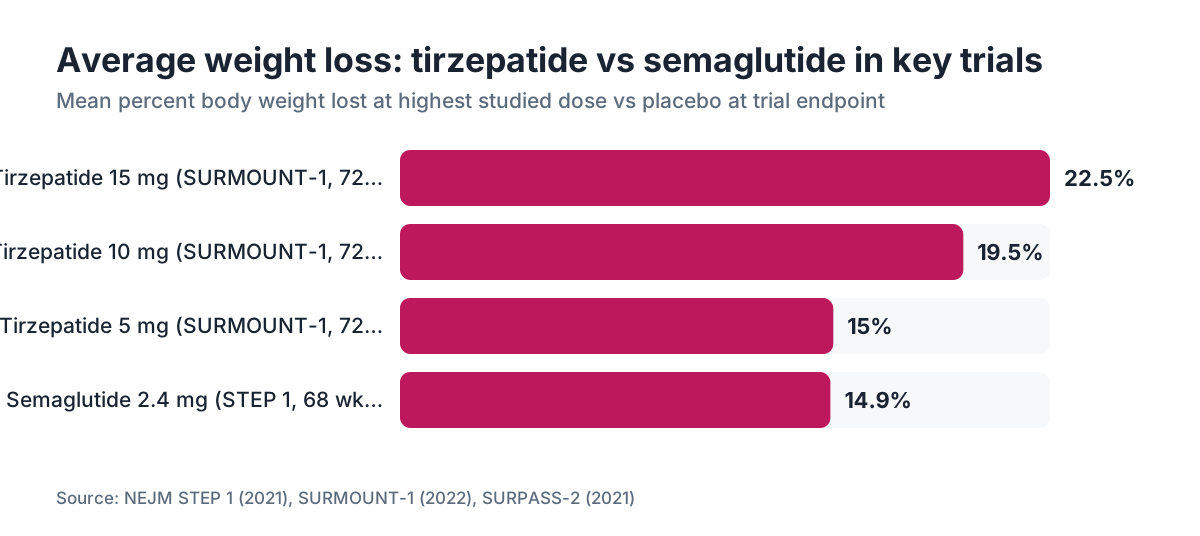
TL;DR: Most women switching from semaglutide (Ozempic/Wegovy) to tirzepatide (Mounjaro/Zepbound) skip the washout entirely. Take your last semaglutide dose, start tirzepatide seven days later at 2.5 mg. Tirzepatide adds GIP receptor action on top of GLP-1, and SURMOUNT-1 showed 22.5% average body weight loss versus 14.9% for semaglutide in STEP 1. Expect a full dose restart and some nausea in weeks one to three.
Why would you switch from semaglutide to tirzepatide?
The most common reason is a plateau. You lost weight for several months, then the scale stopped moving even at the highest dose you could tolerate. That plateau is real. It's physiological, and it doesn't mean you failed.
The second reason is tolerability. Some women handle semaglutide's nausea, constipation, or fatigue fine at low doses but can't push to the full 2.4 mg weekly Wegovy dose without miserable GI symptoms. Tirzepatide works through a different mechanism and, for some people, sits better at therapeutic doses. The evidence for that is soft, so treat it as a maybe.
The third reason is the efficacy data. Tirzepatide is a dual agonist: it activates both the GLP-1 receptor and the glucose-dependent insulinotropic polypeptide (GIP) receptor [1]. That dual action produces more average weight loss. In SURMOUNT-1, adults on 15 mg tirzepatide lost an average of 22.5% of body weight over 72 weeks [2]. In STEP 1, adults on 2.4 mg semaglutide lost an average of 14.9% over 68 weeks [3]. Those are different outcomes.
The fourth reason is money and access. If your insurance covers Zepbound but not Wegovy, or your compounding pharmacy's semaglutide supply dried up after FDA shortage policies shifted, you may need to switch for reasons that have nothing to do with how well the drug worked. Our comparison of semaglutide vs tirzepatide breaks down the clinical evidence in more depth.
None of these reasons require an emergency or a dramatic conversation with your prescriber. This is a routine medication change in obesity medicine.
Do you need to stop semaglutide before starting tirzepatide?
No washout period is required. Both drugs are weekly injectables that reach steady state over several weeks, and there's no known dangerous interaction between them. The standard approach: give your last semaglutide dose, then begin tirzepatide seven days later on the same injection day [4].
This is not the same as doubling up on one drug. Semaglutide's half-life is roughly one week, so by the time you inject tirzepatide, semaglutide levels are falling but not gone. That residual overlap is usually well tolerated, but it can make nausea a bit sharper in week one. Start tirzepatide with food, drink plenty of water, and keep portions small that first week.
Here's what you should never do: take both injections in the same week, thinking you'll get a stronger effect. You won't. You'll get additive nausea and vomiting and no extra weight loss to show for it.
If you've been on compounded semaglutide, the timing rule is identical, but confirm the concentration and dose you were actually taking so the tirzepatide starting dose makes sense. Compounded semaglutide formulations vary more than branded products do.
What dose of tirzepatide should you start at after semaglutide?
You restart at the beginning. Tirzepatide's FDA-approved starting dose is 2.5 mg weekly for four weeks, no matter what dose of semaglutide you were on [5].
That feels backwards when you've been tolerating 1 mg or 2.4 mg of semaglutide without trouble. But the GIP component changes the GI side effect profile enough that starting too high creates real misery. Obesity medicine physicians describe the same pattern over and over: patients who rush to a higher starting dose spend three weeks barely able to eat.
The standard titration schedule looks like this:
| Weeks | Dose | |---|---| | 1-4 | 2.5 mg weekly | | 5-8 | 5 mg weekly | | 9-12 | 7.5 mg weekly | | 13-16 | 10 mg weekly | | 17-20 | 12.5 mg weekly | | 21+ | 15 mg weekly (maintenance) |
Many women find a comfortable stopping point between 5 mg and 10 mg, especially if they're also on hormone therapy, which has its own favorable effects on metabolic rate and body composition [6]. You don't have to reach 15 mg. The target is the lowest dose that works.
If you were on a high semaglutide dose and your prescriber has experience with GLP-1 switching, they may compress the titration, moving up every two weeks instead of four when each step goes smoothly. That's a judgment call, not a protocol violation.
How much more weight loss can you realistically expect from tirzepatide?
More, but not dramatically more for everyone. That's the honest answer.
SURMOUNT-1 (n=2,539, 72 weeks, tirzepatide 5/10/15 mg vs. placebo) found mean weight loss of 15.0%, 19.5%, and 20.9% at the three doses [2]. The 15 mg arm reached 22.5% in the per-protocol population. STEP 1 (n=1,961, 68 weeks, semaglutide 2.4 mg vs. placebo) found mean weight loss of 14.9% [3].
SURMOUNT-5 put the two drugs head to head. It compared tirzepatide against semaglutide 2.4 mg and found tirzepatide produced about 47% more relative weight loss (20.2% vs 13.7%). The New England Journal of Medicine states the trial "showed the superiority of tirzepatide to semaglutide with respect to reduction in body weight" [7]. That's the strongest direct comparison we have.
For women in perimenopause or postmenopause, the picture gets more specific. Estrogen loss pushes fat storage toward visceral and abdominal depots, and insulin sensitivity tends to slide. Both GLP-1 drugs help with both problems. The added GIP activity in tirzepatide may do a little more for insulin sensitivity independent of weight loss, though the menopause-specific subgroup data from SURMOUNT hasn't been published separately.
A realistic frame: if you lost 10% of your body weight on semaglutide and stalled, switching to tirzepatide at a therapeutic dose may get you another 5 to 10%. That's meaningful. It's not guaranteed. It rides on dose tolerance, diet, and activity.
Our full article on semaglutide for weight loss covers what drives response differences between women.
Will side effects be worse when you switch?
Expect some early side effects to come back. Nausea, loose stools, and reduced appetite usually return at lower intensity than when you first started semaglutide, because your gut has already adapted to GLP-1 stimulation. But they do return, mostly in weeks one through three.
Tirzepatide's GIP component adds a modest twist to the side effect profile. GIP receptors sit in the gut and pancreas, and their activation shapes the overall tolerability picture. Some patients find tirzepatide easier on the stomach than semaglutide at equivalent doses; others find them about the same. The FDA label for Zepbound lists the same main adverse events: nausea, diarrhea, vomiting, constipation, abdominal pain, and injection site reactions [5].
Pancreatitis risk exists with both drugs. If you develop persistent, severe upper abdominal pain that radiates to the back, stop the injection and go to the ER. That rule holds for both medications.
Hair loss (telogen effluvium) shows up in a meaningful number of women on both GLP-1 and GIP/GLP-1 agonists, usually three to six months after significant weight loss begins. It's not listed as a common adverse event on the FDA label, but it's real. It tracks with caloric restriction and rapid weight change more than with the drug itself, and it usually resolves [8]. The best defense is adequate protein: at least 1.2 g per kg of body weight daily.
Muscle loss is the other worry with any rapid weight loss. Women over 45 already face faster muscle loss from declining estrogen. GLP-1 drugs don't spare muscle preferentially, so resistance training and protein targets matter more here than in any other weight loss situation.
Does being in perimenopause or menopause change how the switch works?
Hormonal status doesn't change the switching protocol, but it changes what you should watch and expect.
Estrogen helps maintain lean mass and shapes how the body distributes fat. Women in perimenopause or postmenopause who aren't on hormone therapy tend to carry more visceral fat relative to total body weight. GLP-1 drugs cut visceral fat preferentially, which is a genuine advantage for this group.
If you're on estrogen and progesterone therapy, the interaction with tirzepatide is indirect. Estrogen improves insulin sensitivity. Tirzepatide improves insulin sensitivity. Stack them and some women find appetite suppression stronger and weight loss faster than they expected. That's not a problem, but it's worth knowing so you don't undereat and burn through muscle mass.
Bone density is a legitimate concern. GLP-1 receptor agonists have been studied for their effect on bone metabolism, and the available data suggest no significant negative effect on bone mineral density. But most of those studies weren't designed specifically for postmenopausal women, and weight loss from any cause can shave bone density slightly [9]. If you're postmenopausal and switching to a more effective weight loss drug, a bone density test around the time of the switch is reasonable. Continuing or starting hormone replacement therapy remains one of the strongest evidence-based ways to protect bone during weight loss.
For women in their late 30s and 40s trying to figure out where they are hormonally, our articles on perimenopause age and when does menopause start cover the timeline.
WomenRx clinicians see this combination, GLP-1 therapy plus hormone therapy, all the time, and can help you decide whether your current hormone regimen needs adjusting as your weight changes.
What happens to your blood sugar and insulin levels during the switch?
If you have type 2 diabetes or prediabetes, this question has clinical urgency. If you're using GLP-1 therapy purely for weight loss with no glucose disorder, the answer is quieter but still worth knowing.
Both semaglutide and tirzepatide lower fasting glucose and A1c. Tirzepatide's effect is generally stronger. In SURMOUNT-1, done in participants without diabetes, tirzepatide reduced fasting insulin and improved insulin resistance markers [2]. In people with type 2 diabetes, the SURPASS-2 trial found tirzepatide 15 mg reduced A1c by an average of 2.46 percentage points versus 1.86 for semaglutide 1 mg [10].
If you're on any other glucose-lowering medication (metformin, a sulfonylurea, insulin), your prescriber needs to reassess those doses when you switch. Sulfonylureas carry real hypoglycemia risk when combined with a more potent GLP-1/GIP agent.
For women without diabetes, what you'll likely notice during the switch is fewer carbohydrate cravings, steadier energy, and fewer postmeal crashes. Those are effects of improved insulin sensitivity, not the drug making you feel artificially calm.
How long does it take tirzepatide to start working after you switch?
Appetite suppression usually kicks in within the first week, often day two or three after your first injection. That's the GLP-1 effect working fast on gastric emptying and satiety signaling.
Meaningful weight loss, defined as at least 5% of body weight, typically shows up within the first eight to twelve weeks in people who respond. By week sixteen on tirzepatide, you'll know whether this drug is doing more for you than semaglutide did.
If you're not losing weight at a therapeutic dose (7.5 mg or above) by week twelve, the conversation with your prescriber shifts. Is the dose high enough? Is a medication or hormonal factor blunting the response? Is a dietary pattern undercutting the drug? Tirzepatide is not a sure thing. Roughly 10 to 15% of people are low or non-responders to GLP-1 class drugs, and that number doesn't drop to zero with tirzepatide.
Steady state for tirzepatide takes about four to five weeks at any given dose [5]. That's why the titration schedule moves in four-week steps: you need to reach steady state before you can judge tolerance and decide to go up.
How does the cost of tirzepatide compare to semaglutide?
This is where it gets complicated. The branded list prices, before insurance or manufacturer coupons, run about $1,350 per month for Wegovy (semaglutide 2.4 mg) and about $1,060 per month for Zepbound (tirzepatide) as of mid-2025 [11]. List prices are not what most people actually pay.
With commercial insurance, your out-of-pocket cost depends entirely on your plan's formulary. Zepbound has landed on more commercial formularies faster than Wegovy in many markets, partly because Eli Lilly pushed harder on payer negotiations. Wegovy has some Medicare Part D coverage for cardiovascular risk reduction that Zepbound doesn't have in the same way, so check your specific plan.
Eli Lilly's savings card for Zepbound can bring the cost to around $550 per month for commercially insured patients who qualify. Novo Nordisk runs a comparable program for Wegovy [11].
Compounded versions of both drugs exist, but the FDA moved against compounded semaglutide once the shortage designation was lifted in 2025, and compounded tirzepatide faces similar pressure. The legal and quality landscape for compounded GLP-1 drugs changes fast. Read our compounded semaglutide article for the current status before you make a decision based on compounded cost.
What should your prescriber check before and after switching?
Before the switch, a careful prescriber reviews your current semaglutide dose and how long you've been on it. They look at your recent weight trend and ask whether the plateau is genuine (steady weight for six-plus weeks at maximum tolerated dose) or situational (recent travel, stress, dietary changes). They order a basic metabolic panel if you haven't had one in six months, and check thyroid function, since both hypothyroidism and the drugs themselves affect weight. If you have a personal or family history of medullary thyroid carcinoma or MEN2, tirzepatide is contraindicated, same as semaglutide [5].
After the switch, check in at four to six weeks to assess GI tolerance and appetite response. A weight check at twelve weeks is a reasonable benchmark for early efficacy.
For women on hormone therapy, watch for any change in how your estrogen patch or oral estrogen behaves. Weight loss can shift how transdermal estrogen distributes in fat tissue, and your hormone levels may need retesting if you're losing weight faster than expected. Oral estrogen is mostly affected by changes in liver metabolism rather than fat distribution, but weight loss can still move the hormonal picture enough to warrant a check.
A platform like WomenRx puts GLP-1 prescribing and hormone expertise on one clinical team, which matters when you're managing both at once.
What is the practical week-by-week experience of switching?
Week 1: You take your last semaglutide injection on your usual day. Seven days later, you inject 2.5 mg tirzepatide. Mild nausea is possible, especially if residual semaglutide is still active. Eat lightly. Skip the high-fat meals.
Weeks 2-4: You're on 2.5 mg. Appetite suppression may feel different, more like a quieter hunger than the nausea-driven food aversion some people get on semaglutide. Weight may hold steady or drop a little. Some women feel less constipated than on semaglutide. Others notice the opposite.
Weeks 5-8: Dose moves to 5 mg. This is when many women notice a real shift in appetite. Energy tends to settle. If semaglutide left you dragging, that often lifts here.
Weeks 9-16: You titrate through 7.5 mg and possibly 10 mg. This is the window where most of the extra weight loss over semaglutide shows up. Protein and resistance training matter most in this phase to hold onto muscle.
Week 20 and beyond: Maintenance at 10 or 15 mg. Weight loss slows and eventually plateaus, as it does with every GLP-1 class drug. The job shifts to sustaining the loss and protecting metabolic health for the long haul.
The whole titration from first tirzepatide dose to maintenance takes about five months. That's not fast. But it's how you get there without side effects derailing the process.
Frequently asked questions
Can you switch from semaglutide to tirzepatide without a break?
Yes. No washout period is needed. Take your last semaglutide dose, then start tirzepatide 2.5 mg exactly one week later on the same day of the week. There's no clinically significant interaction between the two. Some mild overlapping nausea is possible in the first week because semaglutide's half-life is roughly seven days, but it fades quickly.
What dose of tirzepatide is equivalent to semaglutide 1 mg or 2.4 mg?
There's no simple dose equivalence between the two drugs. Even coming from semaglutide 2.4 mg, you start tirzepatide at 2.5 mg and titrate up. The drugs work through overlapping but different mechanisms, and the GIP component changes the dose-response curve. Most people reach an effective maintenance dose somewhere between 7.5 mg and 15 mg of tirzepatide.
Will tirzepatide work if semaglutide stopped working for me?
For most people, yes. A true semaglutide plateau is not the same as general GLP-1 resistance. Adding GIP receptor agonism changes the metabolic signaling enough that weight loss usually resumes. SURMOUNT-1 data showed continued weight loss through 72 weeks, which suggests tirzepatide can push past plateaus. A meaningful minority, around 10 to 15%, respond poorly to the whole GLP-1 class regardless of which agent they use.
Is tirzepatide better than semaglutide for belly fat?
The evidence points to yes, modestly. Both drugs cut visceral (abdominal) fat preferentially over subcutaneous fat. Tirzepatide's greater total weight loss in SURMOUNT-1 (up to 22.5% versus 14.9% in STEP 1) implies proportionally more visceral fat reduction. GIP receptor activity also has direct effects on fat cell metabolism independent of appetite suppression, which may add to abdominal fat loss, though that mechanism is still being studied.
Can you switch back from tirzepatide to semaglutide?
Yes. The reverse switch follows the same logic: last tirzepatide injection, then start semaglutide one week later at its lowest dose and retitrate. People switch back over cost, formulary changes, or side effect preference. The retitration from scratch is annoying but necessary. Your prescriber can compress the schedule somewhat if you tolerated the previous semaglutide dose well.
Does tirzepatide affect hormones like estrogen or progesterone?
Not directly. Tirzepatide has no known direct effect on sex hormone production. But weight loss itself reduces the peripheral conversion of androgens to estrogen that happens in fat tissue. Postmenopausal women who rely on that conversion for residual estrogen may see a subtle estrogen decline with significant weight loss. Women on prescribed hormone therapy should have their levels rechecked after losing more than 10% of body weight.
How long do you have to be on tirzepatide to keep the weight off?
Long-term, likely indefinitely for most people. The SURMOUNT-4 trial showed participants who stopped tirzepatide after 36 weeks regained an average of 14% of body weight over the following 52 weeks, while those who continued kept their loss. This mirrors semaglutide data from the STEP 4 withdrawal trial. These drugs manage obesity as a chronic condition; stopping them typically reverses the benefit over time.
What happens to muscle mass when you switch to a more effective GLP-1 drug?
Faster weight loss means greater risk of lean mass loss if you don't actively counter it. Aim for at least 1.2 grams of protein per kilogram of body weight daily, and do resistance training at least twice a week. Some early data on peptides like BPC-157 and on creatine supplementation hint at benefits for preserving lean mass during GLP-1 therapy, but none of it is proven in large trials yet.
Does tirzepatide require a different injection technique than semaglutide?
The injection sites are the same: abdomen, thigh, or upper arm, rotating weekly. The autoinjector pens look different, but the technique is similar. Tirzepatide (Zepbound) comes as a single-dose autoinjector pen. Read the instructions that come with Zepbound specifically, since the cap removal and activation steps differ slightly from Wegovy's pen.
Should I tell my gynecologist or hormone prescriber when I switch to tirzepatide?
Yes. If you're on hormone therapy, your prescriber should know you're moving to a more potent weight loss drug. Faster weight loss can shift hormone levels, change how transdermal hormones distribute, and move your metabolic baseline quickly enough that your hormone doses may need adjustment. This matters especially for women on testosterone, where weight loss changes androgen metabolism noticeably.
Is tirzepatide FDA-approved for weight loss specifically?
Yes. Zepbound (tirzepatide) received FDA approval for chronic weight management in adults with obesity, or overweight plus at least one weight-related condition, in November 2023. Mounjaro is the same molecule approved for type 2 diabetes. For weight loss, the correct branded product is Zepbound. Prescribing Mounjaro off-label for weight loss happens but isn't the FDA-indicated pathway.
Can you switch to tirzepatide if you are pregnant or planning to become pregnant?
No. Both semaglutide and tirzepatide are contraindicated in pregnancy. Women planning pregnancy should stop tirzepatide at least two months before trying to conceive, given the drug's long half-life and effects on fetal development seen in animal studies. Discuss timing with your OB-GYN and the prescriber managing your GLP-1 therapy before making any changes.
What labs should I get when switching from semaglutide to tirzepatide?
At minimum: a basic metabolic panel for kidney and liver function, fasting glucose and A1c if you have prediabetes or diabetes, thyroid-stimulating hormone (TSH), and a lipid panel. If you're postmenopausal and on hormone therapy, add estradiol and, if relevant, testosterone. These give you a baseline to compare against at your 12-week follow-up after the switch.
Sources
- FDA, Zepbound (tirzepatide) Prescribing Information
- Jastreboff AM et al., NEJM 2022 (SURMOUNT-1 trial)
- Wilding JPH et al., NEJM 2021 (STEP 1 trial)
- Endocrine Society, Clinical Practice Guideline: Pharmacological Management of Obesity
- FDA, Zepbound (tirzepatide) Full Prescribing Information, 2023
- The Menopause Society (NAMS), 2022 Hormone Therapy Position Statement
- Aronne LJ et al., NEJM 2025 (SURMOUNT-5 trial)
- American Academy of Dermatology, Telogen Effluvium
- Compston JE et al., Nature Reviews Endocrinology 2019
- Frías JP et al., NEJM 2021 (SURPASS-2 trial)
- GoodRx, Zepbound and Wegovy pricing data, 2025
- Aronne LJ et al., NEJM 2024 (SURMOUNT-4 trial)