Supplements to increase progesterone: what actually works
TL;DR: No supplement has been proven in rigorous human trials to meaningfully raise progesterone levels. A few, including chasteberry (Vitex agnus-castus) and magnesium, show modest signal in small studies, mostly by supporting the hypothalamic-pituitary axis or lowering the stress hormones that suppress progesterone. For women with confirmed low progesterone, bioidentical progesterone prescribed by a clinician is the only evidence-backed fix.
Why do progesterone levels drop in the first place?
Progesterone comes almost entirely from the ovary after ovulation, made by a temporary structure called the corpus luteum. Levels climb sharply in pregnancy once the placenta takes over. Outside of pregnancy, no ovulation means little to no progesterone that month.
That is the core issue. Stress, under-eating, hard training, thyroid dysfunction, and perimenopause can all suppress or eliminate ovulation [1]. Aging drives the biggest change: as women move through their 40s, cycles increasingly happen without an egg released (anovulatory), and progesterone output falls well before estrogen does [2]. Low-progesterone signs like short luteal phases, broken sleep, heavy or irregular periods, and rising anxiety often show up years before the last period.
After menopause, ovarian progesterone production essentially stops. The adrenal glands make small amounts of progesterone precursors, but the contribution to circulating levels is minimal.
This biology tells you exactly what a supplement can and can't do. If the problem is anovulation from chronic stress or eating too little, fixing the root cause can bring progesterone back. If the problem is aging ovaries losing their capacity, no herb rewrites that. For how progesterone fits the larger hormonal picture, see progesterone; for the timing of these shifts, see perimenopause age.
Can any supplement actually raise progesterone levels?
Honest answer: probably a little, in specific situations, and the data is thin.
The studies that exist are mostly small, short, and run in women with luteal phase defect or mild hyperprolactinemia, not in peri or postmenopausal women. None of the supplements below have been tested in the kind of large randomized trials that would let anyone say "take this, your progesterone rises by X ng/mL." The most studied option is Vitex agnus-castus (chasteberry), and even there the evidence base is modest.
What supplements can plausibly do is reduce the things that suppress progesterone. High cortisol from chronic stress competes with progesterone because they share a precursor, pregnenolone. High prolactin from poor sleep or certain medications blunts the LH surge that triggers ovulation. Shortfalls in zinc or vitamin B6 slow the enzyme steps the corpus luteum depends on. Fix those upstream problems and progesterone may recover, not because a pill stimulated production, but because you cleared a roadblock.
Keep that distinction in mind as you read on.
What does the evidence say about chasteberry (Vitex agnus-castus)?
Chasteberry has the most human evidence behind it for progesterone-related symptoms. It works, to the extent it does, by binding dopamine D2 receptors in the pituitary and reducing prolactin secretion [3]. Lower prolactin lets the LH surge happen more cleanly, which supports ovulation and the luteal phase.
A 2017 systematic review in the Journal of Alternative and Complementary Medicine looked at 13 trials using Vitex for premenstrual syndrome and luteal phase defect. The authors reported "statistically significant improvements" in luteal phase length and progesterone in some trials, but flagged that study quality was generally low and samples were small [3]. One often-cited German trial found that 40 mg/day of a standardized Vitex extract (Ze 440) raised progesterone in women with luteal phase defect over three cycles compared to placebo.
Dose range studied: 20 to 40 mg/day of a standardized dry extract, or 4 to 40 mg of the liquid extract, taken daily for at least three months. Effects come slowly. Expect nothing meaningful before 8 to 12 weeks.
Who might benefit: premenopausal women with short luteal phases, PMS, or mild hyperprolactinemia (not the kind confirmed by imaging). Useless after menopause, when ovulation has stopped entirely.
Who should skip it: women on hormonal birth control (it may interfere), anyone with hormone-sensitive cancers, and women who are pregnant or trying to conceive without a physician involved. Vitex can also interact with dopamine-related medications.
Does magnesium help with low progesterone?
Magnesium does not directly build progesterone, but it does two useful things. It calms the HPA (stress) axis and helps lower cortisol. It also supports GABA receptor activity, which eases anxiety and improves sleep, and both of those independently support ovulatory function [4].
About 48% of Americans fall short of the estimated average requirement for magnesium from food alone, per NHANES data reviewed by the NIH Office of Dietary Supplements [4]. Women in perimenopause and after menopause absorb less magnesium from food, and diuretics or proton pump inhibitors (common in this age group) speed its loss.
No clinical trial has shown magnesium directly raising serum progesterone by a measurable amount. What the evidence does support: adequate magnesium reduces PMS severity, improves sleep, and may modestly lower cortisol, all of which build a better environment for ovulation.
Practical dose: 200 to 400 mg elemental magnesium daily, ideally as glycinate or malate (better absorbed, less laxative pull than oxide). Take it at night. The sleep benefit is real.
What role does zinc play in progesterone production?
Zinc is required to make and release LH and FSH from the pituitary, and it directly supports the enzymes in the corpus luteum that produce progesterone [5]. Animal data is fairly clear. Human data is thinner.
A small but well-designed study in Nutrition Research found that zinc supplementation in women with luteal phase deficiency increased both mid-luteal progesterone and luteal phase length compared to placebo [5]. The effect was modest but statistically significant.
Zinc shortfall is more common than people think, especially in women who eat little red meat, take in a lot of phytate from whole grains and legumes, or use certain medications. Mild zinc deficiency looks a lot like low progesterone: mood changes, thinning hair, irregular cycles.
Dose: 8 to 25 mg elemental zinc daily. The RDA for adult women is 8 mg and the tolerable upper limit is 40 mg. More than that long term can strip copper, so if you take zinc past a few months, add 1 to 2 mg of copper. Zinc picolinate and zinc citrate absorb better than zinc oxide.
Can vitamin B6 support progesterone and the luteal phase?
Vitamin B6 (pyridoxine) was one of the first supplements studied for PMS, back in the 1970s and 80s. It is a cofactor in making dopamine and serotonin, which sit upstream of prolactin control. It also seems to support progesterone activity at the receptor, though that mechanism isn't fully pinned down.
A Cochrane review of nine randomized trials found B6 up to 100 mg/day beat placebo for overall PMS symptoms and premenstrual depression, though the evidence quality was rated low [6]. Direct progesterone measurement in these trials was inconsistent, so nobody can claim B6 reliably raises progesterone. The better reading is that B6 may make women more responsive to the progesterone they already produce.
Dose: 25 to 100 mg/day. Above 200 mg/day taken long term carries a real risk of peripheral neuropathy, so this is not a supplement to push high. The P5P form (pyridoxal-5-phosphate) is the active form and may work better for women with absorption trouble.
Does vitamin C help raise progesterone?
This one surprises people, and there's a plausible mechanism. The corpus luteum holds one of the highest vitamin C concentrations of any tissue in the body, and vitamin C appears to support its function. A small randomized trial in Fertility and Sterility (Henmi et al., 2003) found that 750 mg/day of vitamin C for six months raised mid-luteal progesterone and improved pregnancy rates in women with luteal phase defect compared to placebo [7].
That is a single trial with fewer than 100 participants. It has not been replicated at scale. So the honest position: a plausible signal, a dose that is safe (the tolerable upper intake level for vitamin C is 2,000 mg/day), and almost no downside to trying it for most women.
Dose from the trial: 750 mg/day. Plain ascorbic acid is fine. The pricey liposomal forms have not been tested for this purpose.
What about ashwagandha and other adaptogens?
Ashwagandha (Withania somnifera) does not directly raise progesterone, but it has the best human evidence of any adaptogen for lowering cortisol. A 2019 double-blind RCT in Medicine found that 240 mg/day of ashwagandha root extract cut serum cortisol by 22.2% over 60 days versus placebo [8]. That matters because chronic cortisol elevation suppresses the GnRH pulse that drives ovulation.
A separate 2015 RCT reported that ashwagandha improved thyroid hormone levels (T3 and T4) in subclinical hypothyroid patients, which is relevant because even mild hypothyroidism can cause anovulatory cycles.
Rhodiola and maca are popular but lack solid progesterone-specific data. Maca has some evidence for easing subjective menopause symptoms, but the mechanism looks independent of any change in serum estrogen or progesterone [9].
If you carry a lot of stress and sleep badly, ashwagandha is a reasonable addition to a progesterone-support plan. It is not a hormone. It is a cortisol buffer.
How do these supplements compare? A quick evidence table
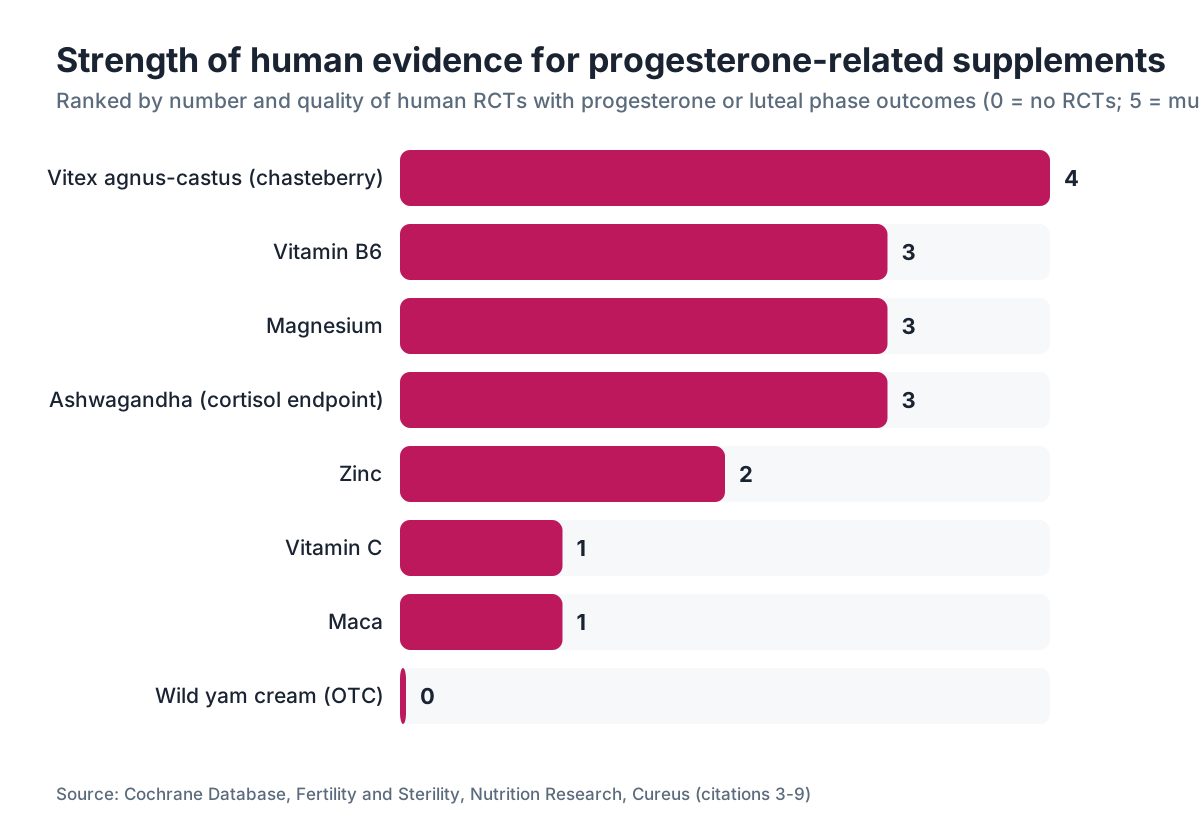
The table below sums up the quality of evidence and likely mechanism for each supplement discussed. This is not a ranking of effectiveness. It is a ranking of how much we actually know.
| Supplement | Mechanism | Human RCT data | Best candidate for | |---|---|---|---| | Vitex agnus-castus (chasteberry) | Lowers prolactin via D2 agonism | Moderate (multiple small RCTs) | Luteal phase defect, PMS, premenopausal | | Magnesium | Lowers cortisol, supports GABA | Indirect (RCTs for PMS/sleep) | Stress-related anovulation, sleep disruption | | Zinc | LH/FSH support, corpus luteum enzyme cofactor | Limited (1-2 small RCTs) | Women with likely zinc deficiency | | Vitamin B6 | Dopamine/serotonin precursor, lowers prolactin | Low-moderate (Cochrane, PMS endpoint) | PMS, receptor sensitivity | | Vitamin C | Corpus luteum support | Very limited (1 RCT) | Luteal phase defect | | Ashwagandha | Cortisol reduction | Moderate (2-3 RCTs, cortisol endpoint) | Stress-driven cycle disruption | | Maca | Unknown, not hormonal | Limited | Menopause symptom relief (not progesterone) |
Nothing here replaces a serum progesterone test and a conversation with a clinician. For women in perimenopause or after menopause, supplements almost certainly will not restore progesterone to a meaningful physiological level. The ovaries have to be cycling for any of this to work.
What about progesterone creams sold over the counter?
Over-the-counter progesterone creams sit in a strange regulatory limbo. The FDA has not approved any OTC topical progesterone as effective for systemic hormone therapy. Most products contain wild yam extract, which supplies diosgenin, a compound that can be converted to progesterone in a lab but not by the human body [10]. "Natural progesterone" on a wild yam cream label is mostly marketing.
Some OTC creams do contain actual USP progesterone, chemically identical to what the body makes. The FDA has treated these as misbranded new drugs when marketed for menopausal symptoms, because systemic progesterone therapy requires a prescription drug with proper labeling [10]. Transdermal absorption from creams is highly variable and unpredictable, and serum progesterone may barely move even as the hormone builds up in fat tissue in ways nobody fully understands.
The practical read: OTC progesterone creams are not a reliable stand-in for prescription bioidentical progesterone. If you need progesterone therapy, get a prescription. To see how progesterone fits into a full hormone replacement therapy regimen, those pages go deeper on the clinical options.
When should you see a doctor instead of trying supplements?
Supplements are reasonable to try if your symptoms are mild and your cycles are still present, if you want to rule out fixable deficiencies before committing to prescription therapy, and if you are not actively trying to conceive (in which case a reproductive endocrinologist should be in the loop).
See a clinician without delay if you have had two or more consecutive miscarriages (low progesterone is a known contributor), your cycles have become very irregular or absent, you have severe symptoms like insomnia, heavy bleeding, or a mood disorder, or you are in perimenopause with symptoms hurting your quality of life.
A simple day-21 serum progesterone test (or 7 days before the expected period in a regular cycle) can confirm whether you ovulated and give a rough sense of corpus luteum output. A value above 10 ng/mL is generally consistent with ovulation; values below 3 ng/mL in the luteal phase suggest inadequate production [1]. Don't treat those numbers as rigid diagnostic lines. Cycle timing matters a lot.
For women in the menopause transition, the North American Menopause Society states that a progestogen "is required to protect the uterus in women with a uterus who use systemic estrogen" [11]. That is prescription-level medicine, not supplement territory. Services like WomenRx can help you get tested and, if appropriate, started on evidence-based treatment without a long wait for an in-person appointment.
If broader hormonal concerns are on your mind, the evidence on hormone replacement therapy is a logical next stop.
Are there lifestyle changes that matter as much as supplements?
Yes, and for most women they matter more.
Sleep is the most underrated progesterone intervention. Deep sleep is when cortisol bottoms out and growth hormone peaks, both of which support reproductive hormone balance. Regularly getting under six hours tracks with higher cortisol and more anovulatory cycles.
Eating enough matters enormously. The hypothalamus reads energy availability through leptin and insulin. Sit in a big caloric deficit and the brain dials down reproductive function as a survival move. Taken all the way to lost periods, this is called hypothalamic amenorrhea, but milder luteal suppression happens well before periods stop.
Body fat has a U-shaped relationship with progesterone. Very low body fat (under roughly 17 to 18% in most studies) links to anovulation. Very high body fat drives excess estrogen through aromatization in fat tissue, which can dominate and relatively suppress progesterone.
Exercise: moderate, steady training generally supports hormonal health. Push training volume above roughly 10 hours a week, especially alongside low intake, and progesterone reliably drops in premenopausal women.
None of these are as fast or dramatic as a prescription. But if you are buying supplements while sleeping five hours a night on 1,200 calories, the supplements will not close that gap.
What does bioidentical progesterone prescription therapy look like?
When supplements and lifestyle work aren't enough, prescription micronized progesterone (brand name Prometrium in the US, or from a compounding pharmacy) is the clinical standard. Prometrium is FDA-approved and chemically identical to the progesterone your ovaries make [12].
Doses vary by reason for use. A common regimen for endometrial protection in postmenopausal women on systemic estrogen is 200 mg/day for 12 days of a 28-day cycle. For luteal phase support in premenopausal women, 100 to 200 mg/day during the luteal phase (roughly days 15 to 26) is typical. Some clinicians use 50 to 100 mg at bedtime, where the sedating effect is a bonus rather than a nuisance.
Progesterone cream from a compounding pharmacy is also available by prescription at higher concentrations than OTC products, though absorption still varies with the topical route.
The Endocrine Society's 2015 menopausal hormone therapy guideline notes that micronized progesterone and dydrogesterone "appear to have a more favorable safety profile than other progestogens" for breast cancer and cardiovascular risk [13]. That is not the same as risk-free. Any hormone therapy has a benefit-risk profile tied to your individual history.
For the full picture on hormone replacement therapy, including how progesterone works alongside estrogen, that article covers the major trial data.
Frequently asked questions
Can supplements raise progesterone levels enough to make a real difference?
For most women, probably not in a dramatic way. Vitex and zinc show modest effects in small studies of premenopausal women with luteal phase defect. They cannot restore ovarian progesterone if ovulation has stopped due to age or menopause. For meaningful hormonal change, prescription bioidentical progesterone is the clinically validated option.
What are the symptoms of low progesterone?
Common signs include a short luteal phase (fewer than 10 days between ovulation and period), heavy or irregular periods, mid-cycle spotting, sleep trouble in the second half of the cycle, more anxiety or mood swings before periods, and difficulty getting or staying pregnant. In perimenopause, progesterone drops first, so these symptoms often appear years before periods stop.
How do I know if my progesterone is actually low?
A serum progesterone blood test drawn 7 days before your expected period (roughly cycle day 21 in a 28-day cycle) is the standard check. A level above 10 ng/mL generally confirms ovulation happened. Values consistently below 3 ng/mL in the luteal phase suggest inadequate output. Testing on the wrong day is the most common cause of misleading results.
Is chasteberry (Vitex) safe to take long term?
Most studies have used Vitex for 3 to 6 months without notable safety problems. Side effects are usually mild: nausea, headache, an acne flare in some women. Don't combine it with hormonal birth control, dopamine-related medications, or antipsychotics. Women with hormone-sensitive conditions should talk to a doctor first. Safety data beyond one year is limited.
Does wild yam cream actually raise progesterone?
No. Wild yam contains diosgenin, a precursor to progesterone in laboratory synthesis, but the human body cannot make that conversion. Rubbing wild yam cream on skin will not raise serum progesterone. Some OTC creams add USP progesterone, but absorption is unpredictable and the FDA has raised concerns about marketing these products for menopausal symptoms without approval.
Can low progesterone cause weight gain?
Indirectly, yes. Progesterone has a mild thermogenic effect and can support thyroid function. When progesterone is low relative to estrogen (estrogen dominance), women often see bloating, fluid retention, and more appetite, especially for carbohydrates. These effects are modest, though. Significant unexplained weight gain deserves a broader workup including thyroid and cortisol testing.
Do magnesium supplements help with progesterone-related sleep problems?
Magnesium at 200 to 400 mg at bedtime (as glycinate or malate) has good evidence for improving sleep quality and lowering cortisol, both of which support the hormonal environment for progesterone. It does not directly raise progesterone, but better sleep and lower nighttime cortisol remove a real suppressive pressure on the reproductive axis in premenopausal women.
Can stress really lower progesterone?
Yes. Chronic stress raises cortisol, which competes with progesterone for the shared precursor pregnenolone. High cortisol also suppresses GnRH pulsing, blunting the LH surge needed for ovulation. No ovulation means no corpus luteum and no progesterone that cycle. This pathway is well established, not theoretical, and it is one reason stress management genuinely matters for hormonal health.
Is progesterone supplementation the same as hormone replacement therapy?
Progesterone is one component of HRT. For women with a uterus, NAMS recommends that systemic estrogen always be paired with a progestogen to protect the uterine lining from estrogen-driven overgrowth. Progesterone used alone, without estrogen, is sometimes prescribed in perimenopause for sleep, anxiety, and irregular cycles, but a full HRT regimen usually includes both hormones tailored to the individual.
Can vitamin D help with progesterone levels?
Vitamin D receptors sit in ovarian granulosa cells and may influence follicle development and corpus luteum function. Observational data links severe vitamin D deficiency with lower progesterone in some populations, but trials testing vitamin D's direct effect on progesterone are limited and inconclusive. Correcting a documented deficiency is worthwhile for many reasons, including bone health, but it is not a proven progesterone booster.
Are progesterone supplements safe during early pregnancy?
Prescription progesterone is routinely used to support early pregnancy in women with luteal phase defect or recurrent miscarriage, under physician supervision. OTC supplements are a different story: none have been studied for safety in early pregnancy. Vitex in particular should be stopped once pregnancy is confirmed. Never self-treat with any supplement during pregnancy. Work with an OB or reproductive endocrinologist.
How long does it take for supplements to affect progesterone?
At minimum, three full menstrual cycles (roughly 3 months) before drawing any conclusions. Vitex trials typically run 3 to 6 months. Micronutrient repletion (zinc, magnesium, B6) may improve symptom scores sooner, within 4 to 8 weeks, but progesterone lab values tend to lag symptom improvement. If nothing has shifted in three cycles, supplements alone are unlikely to be enough.
Does ashwagandha interact with any medications?
Ashwagandha may have mild thyroid-stimulating effects, so women on thyroid medication should recheck levels after starting it. It also has sedative properties that can add to benzodiazepines or sedating antihistamines. There are theoretical interactions with immunosuppressants and blood pressure medications. At standard doses of 240 to 600 mg/day of root extract it is generally well tolerated, but check with your prescriber.
Can I take multiple progesterone-supporting supplements at once?
Stacking magnesium, vitamin B6, zinc, and vitamin C at reasonable doses is unlikely to cause harm and covers several potential deficiencies at once. Adding Vitex on top is common in functional medicine practice. The main risks are a zinc-copper imbalance if zinc runs long at high doses, and B6 toxicity above 200 mg/day. Stay within studied ranges and reassess in three months.
Sources
- NIH MedlinePlus, Progesterone test overview
- NAMS (North American Menopause Society), Menopause Practice: A Clinician's Guide
- Verhoeven MO et al., Journal of Alternative and Complementary Medicine 2017, systematic review of Vitex agnus-castus
- NIH Office of Dietary Supplements, Magnesium Fact Sheet for Health Professionals
- Takasaki A et al., Nutrition Research 2009; zinc and luteal phase progesterone
- Wyatt KM et al., Cochrane Database of Systematic Reviews 1999; vitamin B6 and PMS
- Henmi H et al., Fertility and Sterility 2003; vitamin C and luteal phase
- Salve J et al. 2019, Cureus; ashwagandha cortisol RCT
- Meissner HO et al., International Journal of Biomedical Science 2006; maca and menopause symptoms
- FDA, information for consumers on compounded and OTC bioidentical hormone products
- The North American Menopause Society, 2022 Hormone Therapy Position Statement
- FDA, Prometrium (progesterone) prescribing information, Drugs@FDA
- Endocrine Society, Menopausal Hormone Therapy Clinical Practice Guideline 2015